Author: Tim Culpan
Translated by: Shenchao TechFlow
Shenchao Introduction: This year, Computex has attracted the largest number of overseas technology CEOs in history, but they are not here for a fashion show. This article reveals a neglected truth: the fate of chip manufacturers is determined not by brand companies like Dell and HP, but by the supply chain engineers in Taiwan who do modularization, cooling, and assembly. Understanding this bottom-up power structure is key to grasping the true operational logic of the tech industry.
Good evening, Taipei. The Computex Taipei Computer Show opens tomorrow (Tuesday, June 2), and this annual event is more popular than ever before.
Recently, someone asked me what is different about this year’s Computex and why it suddenly became so popular. The answer is: there is nothing different. I have been attending it every year since 2000, and the show itself has hardly changed.
What has changed in recent years is that the world has rediscovered its interest in computers, while suddenly realizing that Taiwan dominates this industry. This year, servers—those giant computers housed in large and dull black boxes—have become an unprecedented part of public discourse and cultural discussion.
This is my guide for Computex, teaching you how to attend efficiently and how to understand what is really happening behind the scenes of the world’s most important exhibition.
The origin story of Computex is written in the name itself: Computer Expo. Even as the world’s interest in computers waxes and wanes, this annual event remains true to its original intent.
Over the years, the rise of consumer electronics, gaming consoles, and smartphones has made computers seem less interesting. But this exhibition has never strayed from its original purpose and has always been a stage for computer manufacturers to showcase desktops, laptops, servers, motherboards, cables, peripherals, and everything that makes up the PC industry.
The exhibition officially begins on the Tuesday of the first week of June. Monday is not an official exhibition day, but some companies will hold events. Saturday is the last day, open to the public. I suggest avoiding visiting Computex on Saturday.
Computex is divided into three main parts:
- Industry Keynotes
- Forums
- Exhibition Floor
Keynotes
The keynotes are opportunities for executives to pitch their companies, ecosystems, and latest products to the audience. Remember, the target audience of Computex is engineers, product managers, supply chain buyers, and global procurement heads. This is a group of people who are technically savvy and understand soldering and motherboards. Bus speeds and thermal thresholds are everyday topics for these individuals.
For many years, Intel has specifically reserved one of its annual chip releases for Computex. AMD often does the same. One year, VIA Technologies became the hero at Computex, while Intel became the villain because it burst this little rival’s balloon (literally, I’m not joking). Graphics chip manufacturers ATi and Nvidia heavily rely on Computex to introduce their niche products to a focused audience.
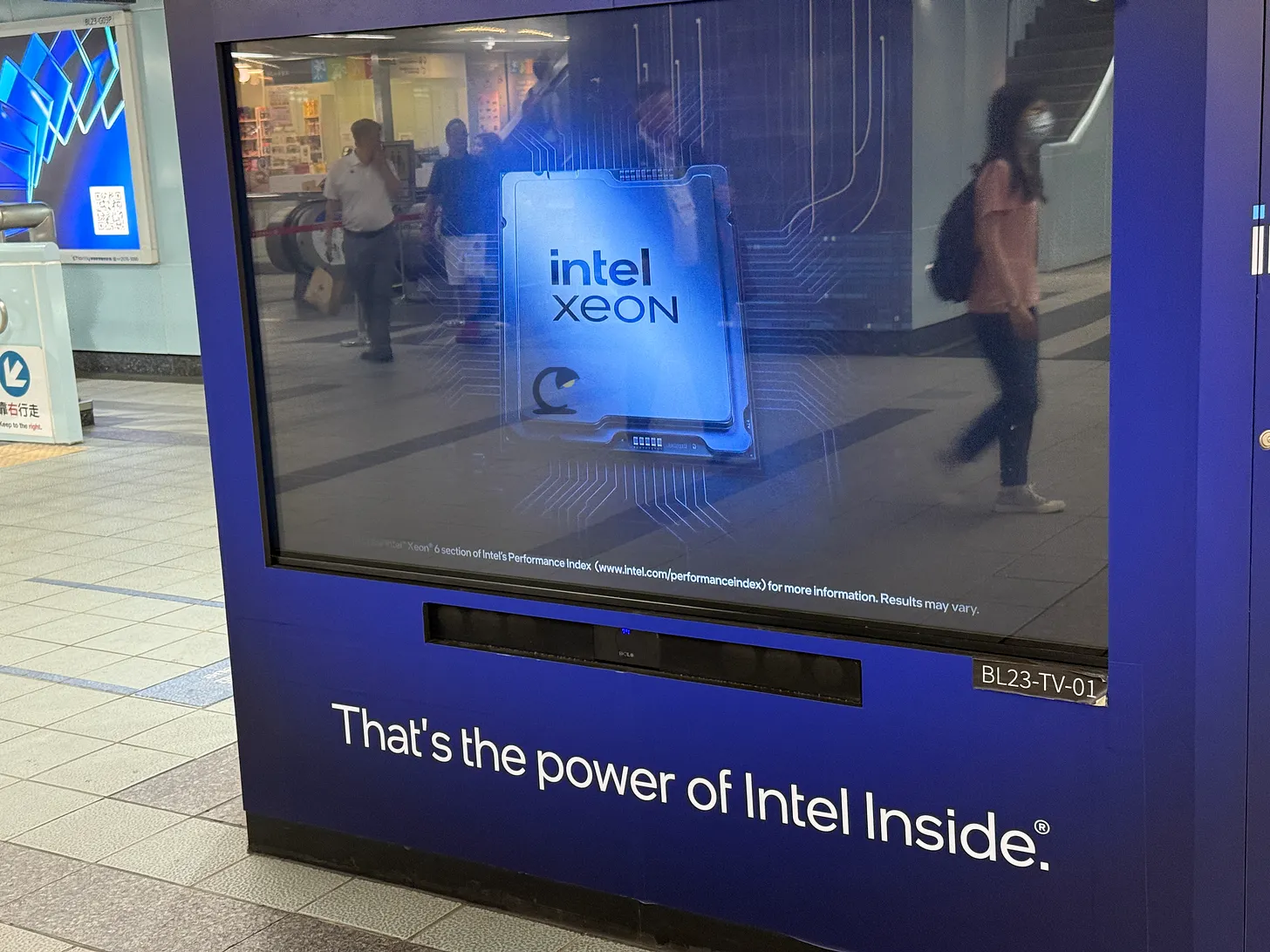
Well-known brands occupy golden marketing positions around the exhibition halls
Image: Tim Culpan/Culpium
Computex has been, and still is, the premier computer exhibition in the world.
Therefore, the CEO of Intel usually gives a keynote, along with one or two other bosses who may make appearances. The few foreign CEOs are almost all we can expect, while local leaders like Asus' Jerry Shen or Acer's Gianfranco Lanci wave the flag for Taiwan. Regional or vice president-level executives from global companies often act as ambassadors for their companies.
This year, Computex has attracted the most overseas bosses I can remember, including:
Qualcomm, Cristiano Amon
Intel, Lip-Bu Tan
Arm, Rene Haas
AMD, Lisa Su
Nvidia, Jensen Huang
Marvell, Matt Murphy
NXP, Rafael Sotomayor
The importance of Computex is not because all these tech CEOs come to Taipei. Quite the opposite, they come to Taipei because Computex is so important.
The global industry elite come to Taipei to kiss the ring of tech power.
I count AMD's Lisa Su among the list as well, even though she arrived in town before Computex and not specifically for the exhibition itself. Nvidia’s Jensen Huang actually didn’t appear at Computex. At least not officially. His GTC keynote on Monday is not on Computex's official schedule.
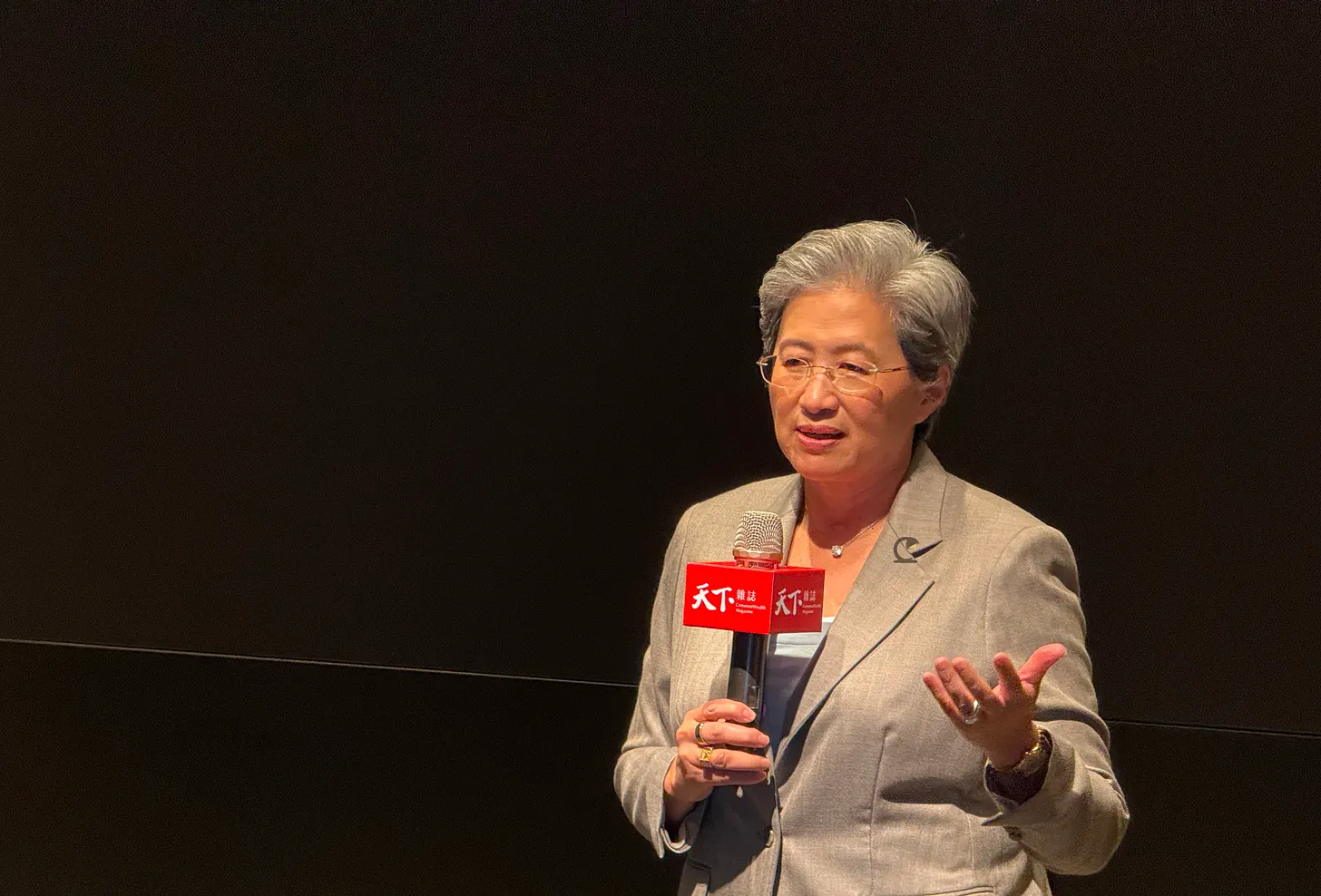
AMD CEO Lisa Su speaks to reporters after an event before the Compute 100 conference in Taipei.
Photo: Tim Culpan/Culpium
But this precisely illustrates the problem. So many executives recognize how important Computex, and the broader Taiwan landscape, is to their business that they find ways to squeeze into this packed schedule. They want to make major announcements while the world is watching, then meet key figures in closed-door meetings to build relationships that will either make or break their business in the next 12 months.
The real action actually doesn’t happen in the keynotes. All the news naturally flows out from embargoed interviews and press releases, coinciding perfectly with the moment when the bosses take the stage.
Forums
Since the keynotes have been extensively covered by the media, press releases, and social media, your time might be better spent focusing on smaller forums that concentrate on super niche topics. For example, ABB Robotics’ Managing Director Craig McDonnell will host a forum this year on industrial-grade physical AI in robotics. If that’s not your cup of tea, consider the talk by Google DeepMind’s Ed H. Chi on the future of personalized general assistants. There’s more. There are also themed events, like Innovex, which focuses on startups and emerging enterprises.
Companies want to showcase at these forums to promote their vision and ecosystem. They also want to sit in the audience to understand what their competitors and partners are doing and exchange business cards. I guarantee you will learn more from a few carefully selected forums and build quality connections than attending every keynote.
Exhibition Floor
I’m always surprised to find Computex visitors scheduling their departures for Wednesday or Thursday. But if you don't know where the real treasures are, this is an understandable choice. I think these early departures happen because most other exhibitions do indeed lack good offerings in the final days.
But the most exciting action is neither in the keynotes nor in the forums. Everything happens on the exhibition floor, in those VIP areas of the 3x3 booths, in the invitation-only hotel suites, and in the meeting rooms of tech companies’ offices near the Taipei Exhibition Center in Nangang and Neihu districts.
Many businesses, including local tech firms and foreign companies' local offices, mark Computex as a closed day on the calendar, banning vacations or business trips to ensure everyone's presence.
International clients are the lifeblood of Taiwan’s industry, especially the tech sector, and local partners are prepared for this annual pilgrimage. Experienced attendees come because they understand something that many visitors do not: winning the PC ecosystem is crucial for them to gain market share among end buyers.
The tech ecosystem is more bottom-up than many people imagine. Foreign clients have money, but local suppliers have talent and relationships.
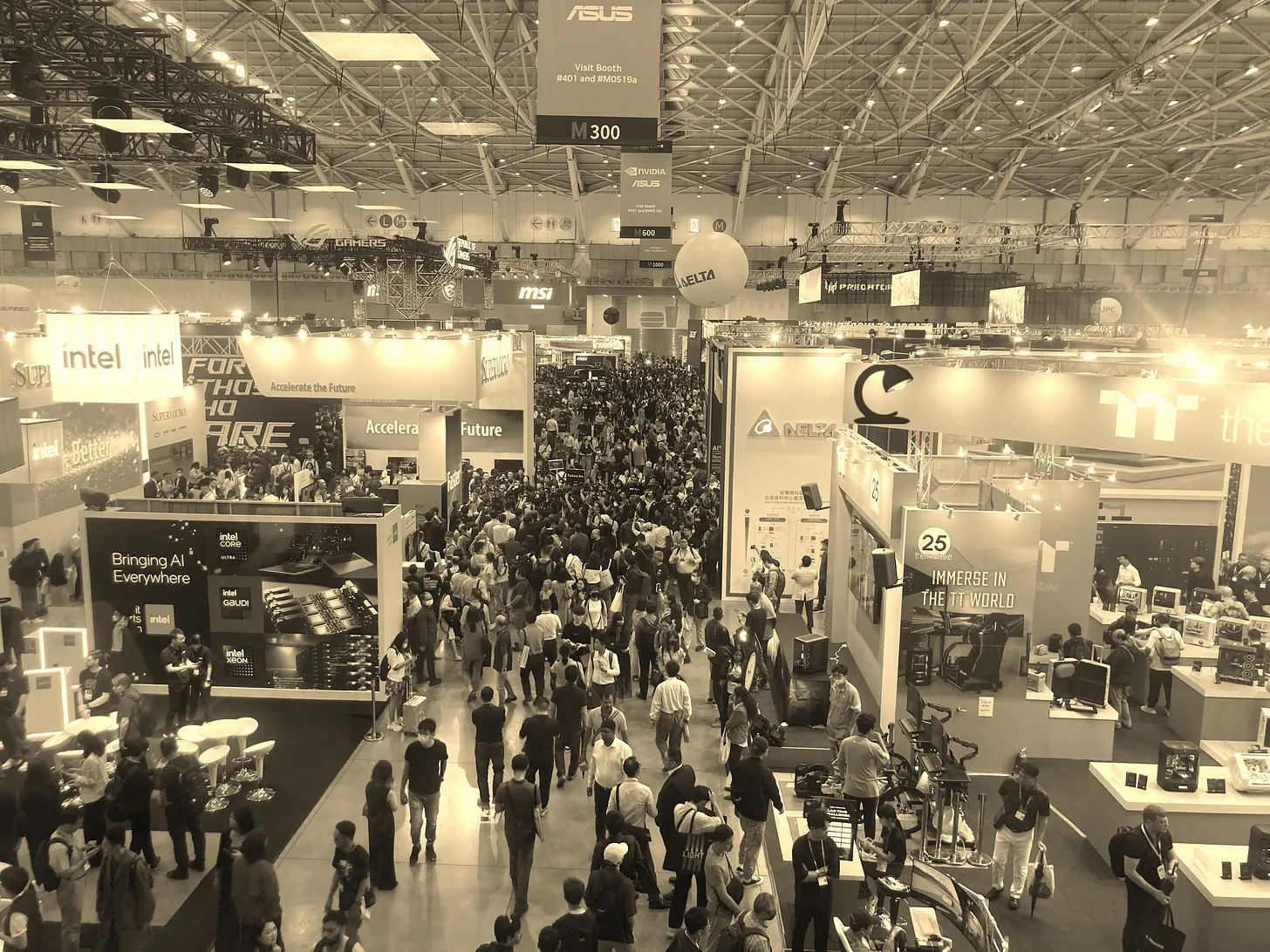
Another trade show? Perhaps not?
Image: Tim Culpan/Culpium
A module manufacturer that doesn't want to design a circuit board around your chip won't advocate for your product. A thermal management or mechanical parts manufacturer that isn't willing to spend time learning and building around your specifications won’t have ready products when assembly companies need them.
And an assembler that doesn’t want to invest time and resources into developing an integrated product system with yours, partly because upstream manufacturers aren't ready with their parts, won’t even bother to showcase it to brand PC manufacturers.
While Dell, HP, Lenovo, Acer, and Asus decide what products, specifications, and prices to sell, they are powerless if the other parts of the ecosystem aren't interested.
A little-known reality is that system manufacturers and their suppliers make many important product and engineering decisions even before showcasing to brand customers. These choices indicate whether your components are taken seriously or become just another product that barely ships.
While many parts are manufactured in South Korea, Japan, China, or even the United States, the real directive flows from Taiwan's hardware gang. An uninterested assembler, or a confused and fatigued module manufacturer, can kill your product before it leaves TSMC's wafer fab. This is not a conspiracy. This is cold, hard pragmatism.
The tech cycles are short. Profit margins are thin. The technological entry barriers are high. The only speed at which this industry can operate is fast. Doing this requires collaboration between competitors and partners. As Lisa Su recently said in Taipei when discussing her rivals, "We are all friends because we grew up together." Bringing new things to market is a massive risk for every potential manufacturer involved.
The exhibition floor and hidden back rooms are where these relationships develop. It is at these booths that niche manufacturers display their products like thermal plates, high-speed cables, or multilayer printed circuit boards. Then they listen as existing or potential customers share engineering problems, outline their sales forecasts, and then seek advice on how to produce products under oppressive profit margins and impossible deadlines.
Have ideas? Please share.
For large companies like Intel, AMD, Nvidia, Qualcomm, and Marvell, not being mentioned in these discussions means your chips are being rejected by those manufacturing the final products. Likewise, failing to show up and support these manufacturers will lead them to collaborate with suppliers willing to do so.
Like any industry, relationships and interoperability are important. What’s unique about tech hardware is that the manufacturing of physical products combines with product development cycles operating at tech speed.
Computex provides a unique opportunity to observe this ecosystem. You just need to know where to look.
免责声明:本文章仅代表作者个人观点,不代表本平台的立场和观点。本文章仅供信息分享,不构成对任何人的任何投资建议。用户与作者之间的任何争议,与本平台无关。如网页中刊载的文章或图片涉及侵权,请提供相关的权利证明和身份证明发送邮件到support@aicoin.com,本平台相关工作人员将会进行核查。


