Written by: Dayu
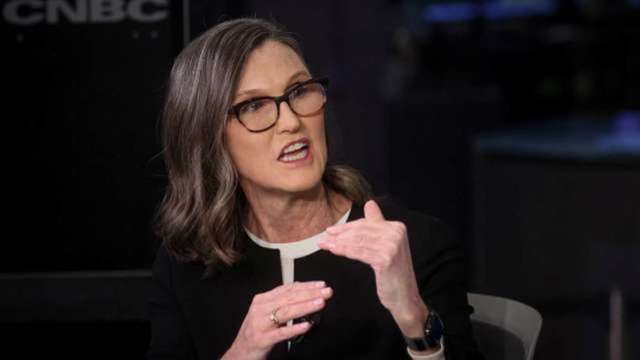
Circle is the stock I pay the most attention to, I have always believed that players from other industries can better understand this company. I have written a lot about it, and I personally feel the most stunning investor is Cathie Wood, her operations in this stock are textbook-level: from "jumping at the opening," to "selling at a high," then back to "buying low," earning hundreds of millions of dollars in the process.
Interestingly, she is not a swing trader; she is the kind of person who looks at narratives long-term and holds for the ultra-long term while ignoring fluctuations, but her operations in this stock make me feel that she clearly understood the short-term volatility—so clearly that even a long-term holder had to simply operate a bit.
With the upcoming listing of QNT, it is worthwhile to review Cathie Wood’s operations on Circle.
1. Jumping at the Opening: Why Can a New Stock Double Before the Opening
In this IPO of Circle, 34 million shares were publicly offered, priced at 31 dollars, raising about 1.1 billion dollars. The underwriting team (led by JPMorgan Chase, Citigroup, and Goldman Sachs) initially set the range at 24 to 26 dollars, later raised to 27 to 28 dollars, and finally confirmed at 31 dollars—an upward adjustment itself signals strong demand.
According to Bloomberg, this issuance was oversubscribed by about 25 times; BlackRock also planned to take 10% of the issuance.
What really decided that jump at the opening was the circulating share count.
When Circle went public, the total share capital was about 223 million shares, but only the publicly issued 34 million shares were available for trading, accounting for about 15% of the total share capital. The remaining approximately 85% of the shares, held by founders, early investors, and employees, were locked up and could not be sold in the short term.
The supply was stuck at this small number of 34 million shares, while demand had piled up due to the 25 times oversubscription. These two factors collided, and the price could only jump up to find equilibrium. So Circle opened directly at 69 dollars (123% above the offering price), during the day it even touched 103.75 dollars (up 235%), closing at 83.23 dollars (up 168%).
This 168% opening day increase is the highest among billion-dollar US stock IPOs in over thirty years.
This is the physical structure of the "jumping at the opening": popular sector, low circulating shares, high oversubscription, with these three combined, the opening will inevitably see a violent gap up. It has nothing to do with whether the company is worth that price, it is purely due to "the money wanting to buy" being far greater than "the stocks available for sale" in the short term.
However, the lockup period will not last forever. Once that locked 85% is released, the extreme supply-demand imbalance at the opening will gradually be filled, which is evidenced by Circle's subsequent crash.
2. Cathie Wood’s Three Steps: Subscription, Selling, Buying Back
Cathie Wood's positive outlook on Circle wasn't formed on the listing day. ARK has been betting on crypto assets and digital financial infrastructure for a long time, and she has publicly expressed her optimism about stablecoins multiple times. So this trade, she started working on it before the listing.
1. Before the Listing: Obtaining Core Chips at the Offering Price
In Circle's prospectus, ARK expressed its subscription intention, planning to buy up to 150 million dollars worth of stock in this issuance. Ultimately, it obtained about 4.49 million shares, distributed across its three actively managed funds ARKK, ARKW, and ARKF, at a cost of about 139 million dollars, basically hitting its self-set subscription limit.
To bet on Circle, ARK sold some other crypto-related positions on the listing day: Coinbase (COIN) for about 39 million dollars, Robinhood (HOOD) for about 18.5 million dollars, Block (XYZ) for about 10.4 million dollars. They didn’t increase crypto exposure; instead, they shifted positions from other crypto assets to Circle.
On the first day of listing, closing at 83.23 dollars, the market value of ARK's 4.49 million shares was about 373 million dollars, so the media often wrote it as "ARK bought 373 million dollars of Circle." But 373 million is the market value of this position at closing, not the cash cost she paid; what she really paid is about 139 million dollars at the offering price. The primary market shares hadn’t even been touched by regular investors before the paper value had already doubled. This portion of profit is the segment exclusive to the allocation at the offering price in the "jumping at the opening."
Regular investors saw the first price of 69 dollars in the secondary market, while ARK’s cost was close to 31 dollars.
2. Boosted by Policy, Selling Off
Circle rose sharply after going public. What truly propelled it to the sky was government policy.
On June 17, 2025, the US Senate passed the **GENIUS Act** (Stablecoin Act) by a vote of 68 to 30, establishing a regulatory framework for dollar stablecoins at the federal level for the first time. When the news came out, on June 18, Circle surged 33.8% in a single day, closing at 199.59 dollars; it continued to climb on the 20th; on the 23rd, it touched 298.99 dollars during the trading session, becoming its highest price to date, corresponding to a market value of about 66 billion dollars. It’s worth noting that at that time, the total circulation of USDC was about 61.7 billion dollars, meaning that Circle as a company was once valued more than all the stablecoins it issued combined.
During this wave of policy-driven market, Cathie Wood began systematic profit-taking.
The first sale occurred on June 16, about 340,000 shares, at the closing price of 151.06 dollars; then on the 17th, 20th, and 23rd, she sold additional shares of approximately 300,000, 610,000, and 420,000 respectively. Over four transactions, she sold about 1.7 million shares, cashing out approximately 352 million dollars, at an average price of about 210 dollars based on the closing price. The cost of these shares was close to the offering price of 31 dollars, resulting in a considerable profit margin.
Why did she choose to sell at this point? There are two reasons.
One reason is discipline. ARK has a mechanical rule: if a single stock's weight in a certain fund approaches or exceeds 10%, it triggers rebalancing. Circle's rapid rise naturally pushed its weight up, and the rule itself forced her to reduce her position.
The other reason is supply. As mentioned earlier, the previously locked 85% will eventually be unlocked. In fact, Circle set pre-release conditions: if the stock price exceeds the offering price by 15% for five consecutive trading days, it triggers unlocking; JPMorgan released 11.5 million shares on August 13; on August 15, Circle issued another 10 million shares, priced at 130 dollars, of which 8 million shares came from existing shareholders reducing their holdings.
While the policy pushed prices to the sky, the supply gates were gradually opening. Smart money was well aware of this. Cathie Wood didn’t sell at the peak. She sold her first two lots around 150 dollars and her last lot only at 263 dollars, while the stock had previously touched 299 in the session. Looking at each individual transaction, she didn’t sell at the very top. But she wasn’t betting on the highest point; she was realizing profits piece by piece at different positions in the upward trend segment by segment, which is precisely a repeatable approach—her buying back later followed a similar reflective logic.
3. Buying Back During the Deep Drop
After peaking on June 23, Circle began a prolonged decline.
The downward pressure was cumulative:
- the valuation corresponding to a 66 billion dollar market cap had long deviated from the fundamentals;
- unlocked supply continued to flood out;
- and additionally, the market began to bet on an interest rate cut by the Federal Reserve, while Circle's revenue heavily depended on interest income from reserves, and a rate cut directly impacted its profit expectations.
When it rises, it's all good news; when it falls, it's all bad news.
On November 12, Circle announced its third-quarter financial report, with a net profit of 214 million dollars, three times that of the same period last year, and earnings per share of 0.64 dollars, far exceeding the market expectations of 0.20 dollars, the numbers looked good. However, the stock fell 12% on that day, closing at 86.30 dollars. There were three reasons overlapping:
- the main lock-up period was set to expire two days later (on November 14), allowing another batch of insiders to sell;
- the company raised its expense guidance;
- and concerns about interest income in light of rate cuts.
A good financial report became "good news fully priced in."
On that day, Cathie Wood re-entered the market. On November 12, she bought about 350,000 shares for about 30.4 million dollars; the following day she bought again, totaling about 540,000 shares over two days for about 46 million dollars, with an average purchase price between 82 and 86 dollars—this was her first buy back of Circle since reducing her position in June.
After that, she continued to buy along with the decline. By March 2026, Circle had once again dropped to around 100 dollars. She bought in again for about 16.3 million dollars. Circle eventually fell to a low of 49.90 dollars, an 83% drop from its peak.
By the end of the first quarter of 2026, according to the 13F disclosure, ARK's holding of Circlehad returned to about 4.5 million shares, matching the scale on the first day of listing—the batch sold at just over 200 dollars was bought back between 80 and 130 dollars. Now, CRCL is the sixth largest holding of ARKK, with about 300 million dollars held in just ARKK alone.
Her buy-back process was also not perfect. The earliest purchases were made at over 80 dollars, while the stock would eventually drop to 50 dollars—some of these early entries continued to be in the red. However, she kept averaging down as it dropped, relying on the same unchanged judgment: Circle's business model is promising in the long run.
3. What Can Be Honestly Learned
In reviewing, aside from the advantage of “low cost,” three points were executed well:
First, an independent judgment on Circle's eventual outcome. The judgment was made before the trade. She dared to take a large position close to the offering price and bought back starting at over 80 dollars because she believed that stablecoins are the underlying infrastructure for digital dollars, with USDC being a core component. Without this judgment, what is supposedly high purchases and deep buying back would just be a rephrasing of "chasing highs and cutting losses."
Second, segmenting, not betting on peaks. Sell in segments as it rises, buy back in segments as it falls. In June, she reduced her position in four transactions, with an average price of about 210 dollars; in the downturn, she also made multiple purchases, buying from above 80 dollars down to around 50 dollars, and continued to add at 100 and 130 dollars after the rebound. Any single transaction viewed alone wasn’t optimal, but collectively they formed a clean "high reduction, low addition." This approach doesn’t require forecasting peaks and troughs, just execution according to discipline when extreme prices occur.
Third, there is an upper limit on position size. What forced her to reduce her position in June was largely that mechanical rule of "any single stock weight over 10% triggers rebalancing." This rule locked in profits when Circle soared to 299, and after the decline, it allowed her to have cash and room to buy back.
Position discipline is something ordinary retail investors lack the most.
For most people, "jumping at the opening" is the most dangerous action. That jump at the opening is a dividend prepared for those who obtained allocations before the listing; by the time ordinary people can buy in the secondary market, they are most likely to catch the highest segment pushed up by supply-demand imbalance. Circle dropped from 299 to 50, a retreat of 83%; those who chased above 200 dollars probably remain deeply trapped today. Similarly participating in Circle, Cathie Wood executed beautifully, relying on her judgment on the outcome, the cost at the offering price, independent judgment, and position discipline; lacking any of these could lead to a completely different conclusion.
免责声明:本文章仅代表作者个人观点,不代表本平台的立场和观点。本文章仅供信息分享,不构成对任何人的任何投资建议。用户与作者之间的任何争议,与本平台无关。如网页中刊载的文章或图片涉及侵权,请提供相关的权利证明和身份证明发送邮件到support@aicoin.com,本平台相关工作人员将会进行核查。


