Author: Think AI, Aaron
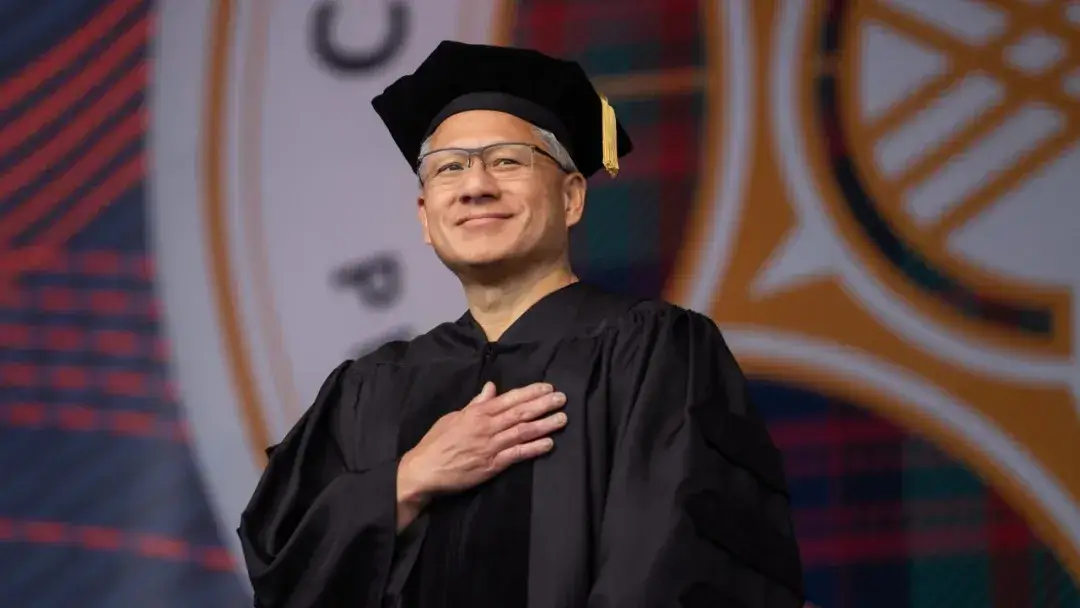
Recently, Nvidia's founder Jensen Huang has been quite eye-catching, just recently making headlines after treating the entire venue during a late-night snack in Taipei, and today he is reported by the Financial Times:
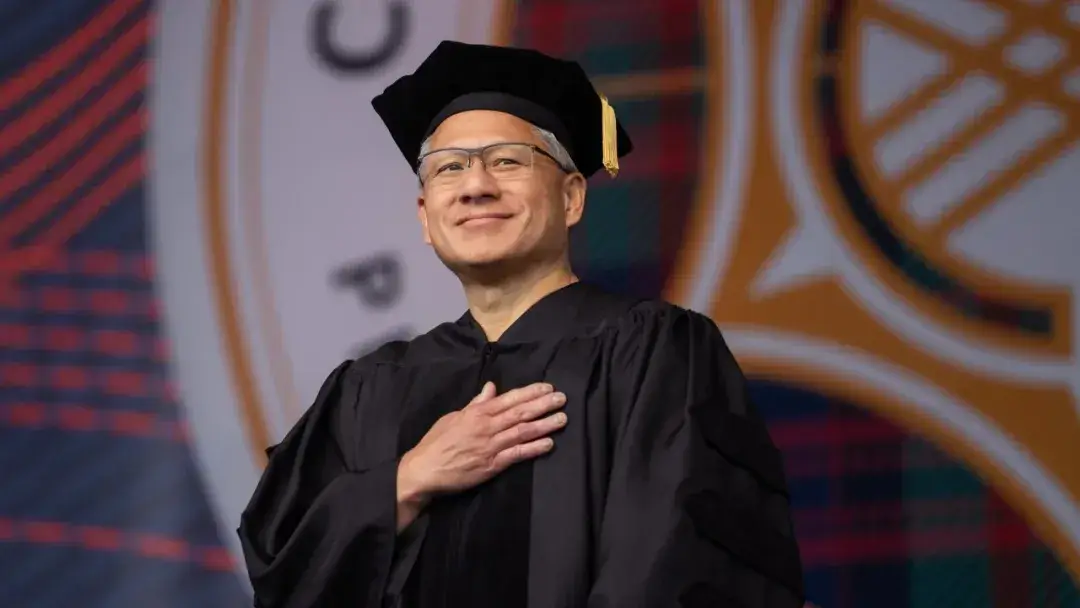
Jensen Huang will join the Advisory Committee of the Tsinghua University School of Economics and Management, marking a new "teacher" for Tsinghua.
This is also Jensen Huang's first time joining an advisory institution of a university in mainland China; previously, he had joined similar higher education institutions like National Taiwan University, Stanford University, and Harvard University, but had yet to enter mainland China.
What "unspeakable secrets" lie in this?
It's important to know that this committee currently has 65 members, all of whom are big names in the American fintech sector. Our familiar friend Elon Musk joined ten years ago; why has Jensen Huang been unable to enter until now?
Of course, the primary reason is the extraordinarily high standards of the Advisory Committee of the Tsinghua School of Economics and Management.
The "weight" of joining
The Advisory Committee was established in 2000, when the dean was Premier Zhu Rongji, who actively promoted the establishment of this top-notch think tank.
The core mission of the committee is to provide top-level guidance on the college's development strategy, international cooperation, talent construction, and to build a dialogue bridge between China's and the global business elites.
This committee consists of top talents from various industries, and during their annual meetings, national leaders personally meet with the attending members; General Secretary Xi Jinping has met with them in person twice and made one video address.
Currently, the chairman of the committee is Apple's former CEO Tim Cook.
With Jensen Huang's addition, the five giants of the American tech sector are now formally gathered, with the other three being Tesla's Elon Musk, Microsoft's Satya Nadella, and Meta's Mark Zuckerberg.
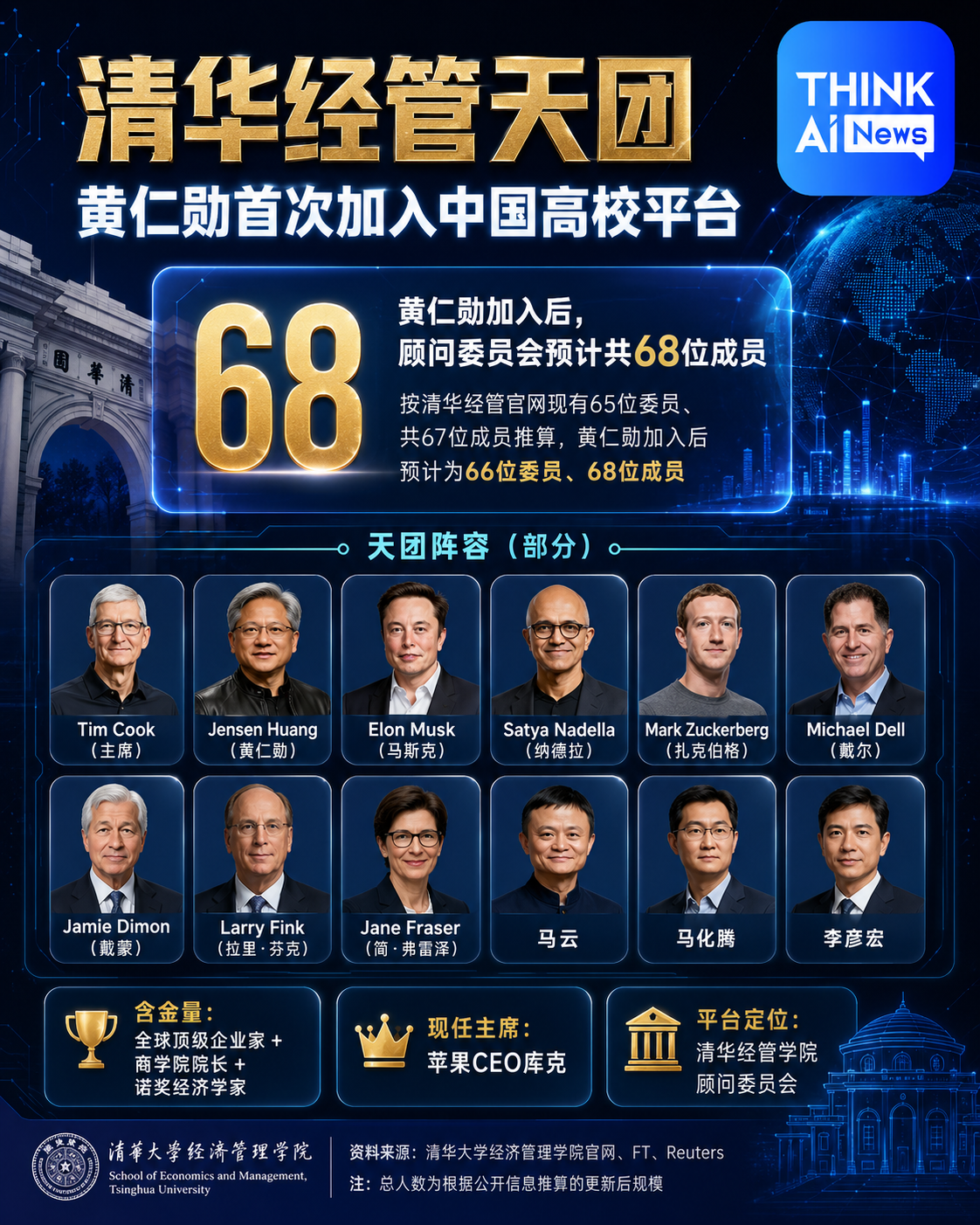
The finance circle is filled with Wall Street's top giants, such as JPMorgan's Jamie Dimon, Blackstone's Stephen Schwarzman, BlackRock's Larry Fink, and Bridgewater's Ray Dalio.
Additionally, there are leaders of globally renowned top companies, like BMW, Siemens, Coca-Cola, and more.
Within the country, big names like Jack Ma, Pony Ma, Robin Li, and Terry Gou are also present.
From the above list, one can see that it is not an ordinary academic advisory group but one of the highest caliber and most influential circles of business elites globally.
Why now?
Also being a tech giant CEO, why could Elon Musk join in 2015, while Jensen Huang has to wait until now?
There indeed have been many twists and turns, and now Jensen Huang's joining is a natural development.
Back in 2015, the China-U.S. relationship was relatively relaxed, and tech cooperation was in a honeymoon period, making it the right time for Musk's entry.
At that time, the committee already had Cook and Ballmer (former Microsoft CEO) in the tech sector, but lacked leaders from the new energy and aerospace fields, which Musk's Tesla and SpaceX perfectly filled;
Moreover, in 2015, Tesla had not yet established a factory in China, but Musk had a positive outlook on the Chinese market and expressed goodwill multiple times with no policy friction;
Coincidentally, the 2015-2016 academic year was when the committee had a turnover, adding 2 new seats, and Musk became the only new member in the tech field;
Musk's image as an "innovative disruptor" highly matched Tsinghua's goal of cultivating top talent, with no political risk.
However, Nvidia's strategic position at that time was not as crucial as it is today, and the AI field had not yet shown disruptive potential. In other words, Jensen Huang did not have that qualification at that time.
Immediately following 2018, the China-U.S. relationship gradually became tense. Even though Nvidia was rapidly developing and Jensen Huang's wealth skyrocketed, it was comparatively difficult to find a good opportunity during this time.
With the U.S. sanctions against China, Nvidia became a core target, and both Tsinghua and Nvidia had to be influenced by the larger environment.
In addition, the quota for the Tsinghua School of Economics and Management committee was also very scarce, with the tech circle being long full, adjusting only slightly each year. Early this year, a slot became available.
From a market perspective, Nvidia, even without exporting high-end chips, maintained a monopoly position in domestic AI chips until the past two years, when domestic chips began to rise strongly, making it necessary for Jensen Huang to find new connections and open new circles to penetrate the Chinese market.
Recently, after Trump's visit to China, the China-U.S. relationship has welcomed a thaw, and Jensen Huang's participation in the visit helped alleviate some political risks, allowing him to send a more friendly signal towards China.
Jensen Huang's "academic" dynamics
It must be said that in today's tech circle, Jensen Huang is one of the tech company founders who loves to join academic circles the most, which also makes his joining the committee perfectly fitting.
One point to note is that the news about his joining Tsinghua has been confirmed by Jensen Huang himself, but Nvidia and Tsinghua have not yet officially announced it. Follow-up updates can be anticipated.
Jensen Huang personally holds a Master's degree in Electrical Engineering from Stanford University.
Additionally, he has been awarded a total of 7 honorary doctorates from schools spanning the globe, including Taiwan, the United States, Hong Kong, and Sweden, in recognition of his industry achievements.
Similar to the Tsinghua School of Economics and Management Advisory Committee, Jensen Huang has also joined the Advisory Committee of the Dean of Harvard Business School, the Advisory Committee of Stanford University, and the Advisory Board of the College of Business at National Taiwan University.
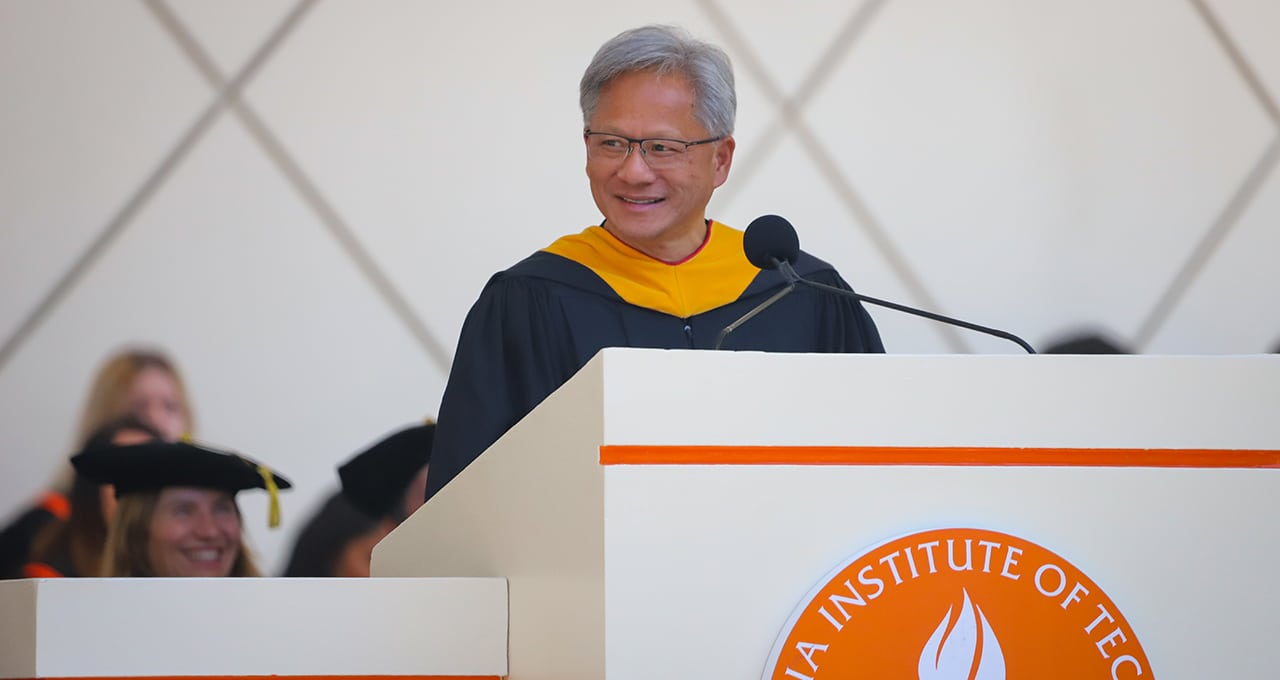
Jensen Huang's university speeches in the past two years have also produced many famous quotes.
He pointed out that "you are not replaced by AI, but by those who can use AI." At the same time, he strongly refuted the claims that AI leads to layoffs.
He stated, "AI only started taking effect 6 months ago, yet they laid off workers two years ago because of AI; how could that be possible? That simply makes no sense."
Overall, Jensen Huang's joining the committee is a microcosm of a decade of geopolitical games, market changes, and interest reconstruction.
The Chinese market remains the top priority that Jensen Huang is eager to unlock.
免责声明:本文章仅代表作者个人观点,不代表本平台的立场和观点。本文章仅供信息分享,不构成对任何人的任何投资建议。用户与作者之间的任何争议,与本平台无关。如网页中刊载的文章或图片涉及侵权,请提供相关的权利证明和身份证明发送邮件到support@aicoin.com,本平台相关工作人员将会进行核查。


