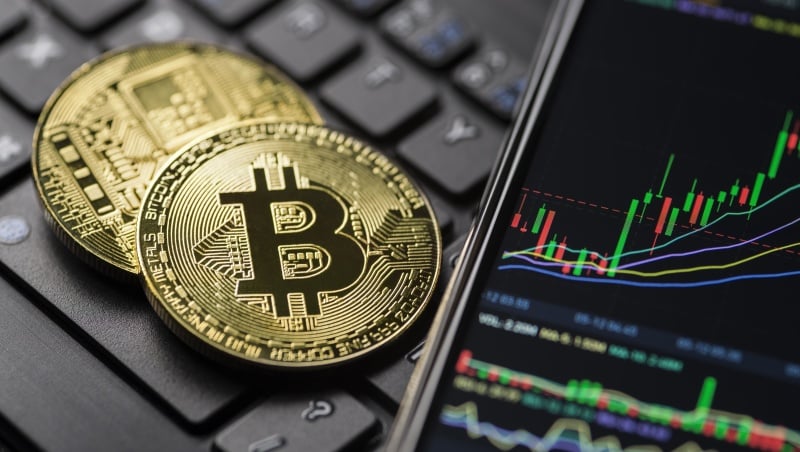
In May 2026, crypto exchanges suddenly began to collectively "change their ways".
In the past two days, the three major exchanges have almost simultaneously launched significant innovations: OKX introduced Exchange OS, lowering the threshold for anyone to deploy spot, perpetual contracts, and prediction markets; Bitget launched Reality, mapping real U.S. stocks to the blockchain, directly connecting with licensed brokers; Binance introduced Event Rush, making sports events, news events, and cryptocurrency price targets into tradable markets.
If one only looks at one of these actions, many might think: "The exchanges are just coming up with new concepts again."
But when you look at these things together, you will notice that an increasingly obvious trend is emerging: crypto exchanges are beginning to be dissatisfied with only being "crypto trading platforms." They are trying to layer Wall Street's elements onto the blockchain.
In this round of changes, Hyperliquid is likely one of the first platforms to truly achieve market influence with this model. What was once overlooked suddenly became the industry's direction. Seeing this, CEXs have also followed suit.
CEXs are collectively focusing beyond "crypto"
For the past few years, the core business of exchanges has been very simple: listing coins, contracts, leverage, memes. The competition in the entire industry has long focused on "who can list faster," "who has greater volatility," and "who is more suitable for short-term trading."
However, since last year, a significant change has emerged: more and more exchanges are starting to shift their focus to "real-world assets." U.S. stocks, indices, commodities, Pre-IPO, prediction markets... these elements that originally belonged to the traditional financial system are increasingly appearing on crypto platforms.
Moreover, this time, they are no longer just "riding the concept."
OKX: Transforming itself into infrastructure
OKX launched the Exchange OS protocol, opening up its matching capabilities—anyone can quickly deploy spot, perpetual contracts, or prediction markets on the X Layer using this protocol, with OKB as the ecological token binding it all.
This is very similar to Hyperliquid's HIP-3 approach: rather than doing all markets on their own, it's better to open up foundational capabilities and let third parties build. Trade.xyz emerged with this strategy, accumulating a trading volume of over $110 billion in less than six months since its launch.
Bitget: Rebuilding trust through compliance
Bitget's Reality is based on a completely different logic. It connects with licensed brokers, where the U.S. stock tokens bought by users correspond to real underlying securities—it's not price mapping, nor is it synthetic assets; users can enjoy liquidity and also receive dividends.
This path is extremely costly. Licensing, custody, compliance audits—all take time and money. But it directly addresses the core trust issue in this market: what are you actually buying?
Binance: Turning information itself into a market
Binance's Event Rush is on a completely different track from the previous two. Sports events, cryptocurrency price targets, breaking news—any real-world event with a clear outcome can be converted into a tradable result token, circulating like a meme.
Rather than competing with Hyperliquid on blockchain financial infrastructure, Binance chose another path—leveraging its massive retail user base as an advantage. Any event that attracts attention can become a tradable market.
Behind these actions is a common focus: exchanges are starting to pay attention to larger markets beyond crypto itself.
Wall Street's "business hours" are becoming ineffective
The traditional financial system has a default premise: markets operate at designated times. The U.S. stock market has opening and closing times, futures have trading hours, and many assets halt trading entirely during weekends.
However, on-chain markets do not operate this way. They are inherently global, 24/7, and never stop.
In the past, this was merely a characteristic of crypto, but now, an increasing number of traditional financial assets are being integrated into this system. Thus, a very interesting change has emerged: when the real world has stopped trading, on-chain markets continue to price.
This is why more and more people are starting to view on-chain markets as a "second pricing system" outside of traditional markets. Especially during sudden events, weekend news, or global macroeconomic fluctuations, the speed at which on-chain prices react is often faster than traditional markets.
This capability will, in essence, further attract traditional financial assets onto the blockchain.
Because the market will always pursue: more efficient liquidity.
The next generation of global trading entry points
What truly alerts traditional financial institutions is that on-chain markets are beginning to take over functions that originally belonged to them. Price discovery, global liquidity, 24/7 trading, cross-border markets, derivative pricing... these abilities, which long belonged to Wall Street, are now appearing more frequently on-chain.
Moreover, more critically: on-chain markets do not rely on traditional financial operating systems. They have no national borders, no account systems, no opening or closing times, and no entry barriers of traditional brokers.
This means that a new set of global financial infrastructure is gradually emerging. The recent actions by these exchanges are essentially competing for the same thing: the next generation of global trading entry points.
A larger migration might just be beginning
In the past few years, the crypto industry has been striving for recognition from Wall Street. ETFs, compliance, licenses, institutional funding... the entire industry has been working to enter the traditional financial system.
However, starting in 2026, the direction seems to be reversing. An increasing number of traditional financial assets are proactively entering the blockchain. Stocks are being tokenized on-chain, indices are going on-chain, commodities are being brought on-chain, IPOs are being listed on-chain, and real-world events are also migrating on-chain.
In the past, you had to enter Wall Street's system to participate in global asset pricing.
Now, the pricing logic of Wall Street itself is being replicated onto another set of infrastructure.
The door closed by Futu and Tiger Brokers may not be the endpoint.
It feels more like a signal: the next generation of global financial markets may already be cultivating into a different form.
*This content is for reference only and does not constitute any investment advice. The market has risks; investment requires caution.
免责声明:本文章仅代表作者个人观点,不代表本平台的立场和观点。本文章仅供信息分享,不构成对任何人的任何投资建议。用户与作者之间的任何争议,与本平台无关。如网页中刊载的文章或图片涉及侵权,请提供相关的权利证明和身份证明发送邮件到support@aicoin.com,本平台相关工作人员将会进行核查。


