Author: Yaroslav Writtle
Compiled by: Deep Tide TechFlow
Deep Tide Guide: The RWA track has been called out for a long time, but 77.6% of tokenized assets are still just "on-chain wrappers" — tokens are on-chain, while issuance, redemption, and custody are all off-chain. What really deserves attention is the 11.1% of "hybrid" assets, which are moving parts of their lifecycle on-chain. This explains why stablecoins feel far ahead of other RWAs: they are truly on-chain financial primitives, rather than digital shells of traditional processes.
Market Size Growing Faster Than Market Maturity
The effective way to understand this market is not by looking at whether it is tokenized or not.
But rather by looking at:
- Wrapper type
- Hybrid type
- Native type
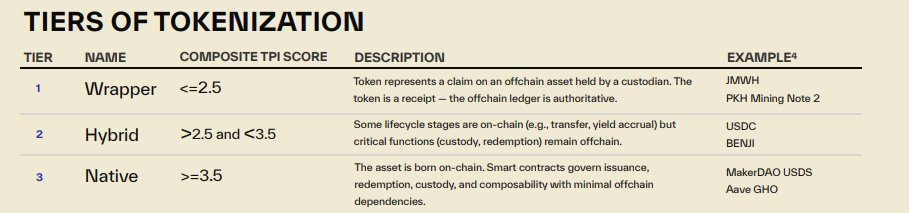
A market survey in 2026 covering 593 tokenized assets shows that 460 assets, or 77.6%, are still classified as wrapper type. Only 66 assets, or 11.1%, belong to the hybrid type, and only 16 assets, or 2.7%, have achieved native status.
This is the true shape of the market.
Wrapper Type Remains the Default Form
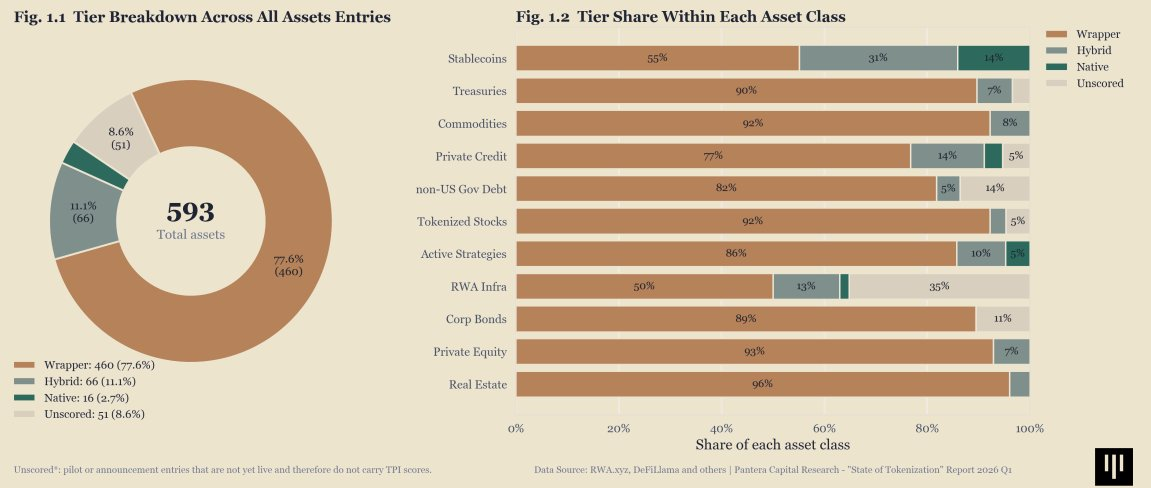
Most tokenized assets improve distribution rather than infrastructure.
Tokens exist on-chain.
Most of the lifecycle does not.
Issuance, redemption, custody, transfer permissions, pricing, and investor access still heavily rely on off-chain systems.
So the apparent growth may be real, but the on-chain autonomy remains very low.
Hybrid Type is Where the Real Transformation Begins
The hybrid type is the part of the market worth paying attention to.
This is where certain aspects of the lifecycle begin to shift on-chain:
- Transfer logic
- Settlement process
- Yield accumulation
- Partial compliance or access control
It is not fully native.
But it is no longer just a wrapper.
This intermediate category is still very small, which is why the market feels like it is progressing faster than it actually is.
Native Type is Rare for a Reason
Native assets are rare because the barriers to entry are high.
To reach that level, it is not enough for tokens to be on-chain.
The operational model must also be on-chain.
This includes:
- Issuance and redemption
- Transfer execution
- Custody assumptions
- Interoperability with other systems
Nowadays, very few assets truly meet this standard.
Stablecoins Still Seem to Lead Other Assets
This also helps explain why stablecoins still feel structurally ahead of most RWAs.
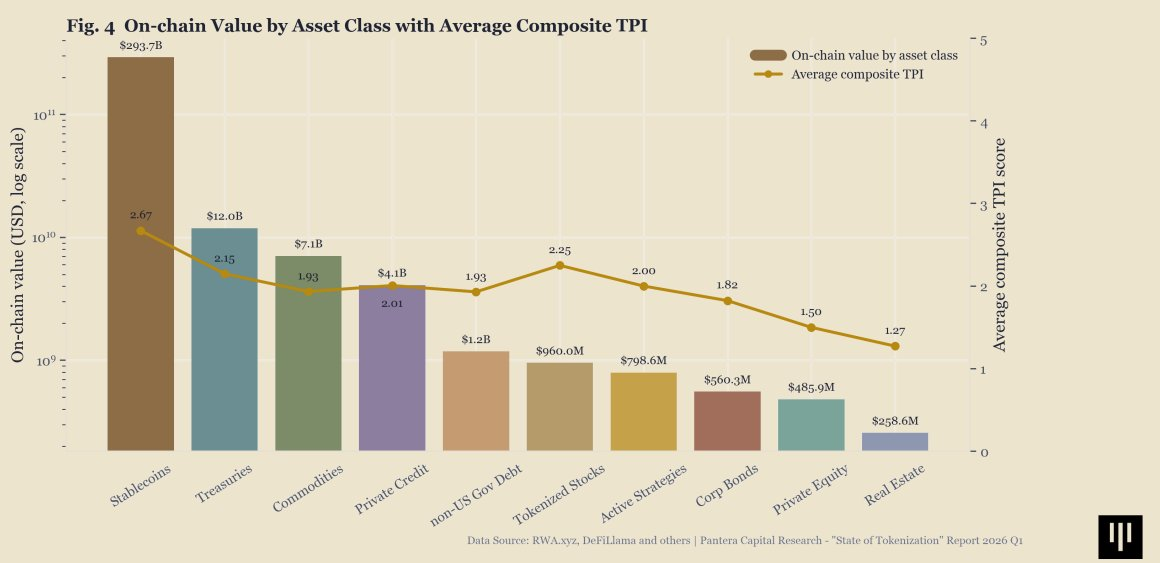
They are closer to true on-chain financial primitives.
Many other tokenized assets still resemble digital wrappers of traditional processes rather than assets functioning within an actual on-chain financial system.
What Matters Next
The market does not need more proof that assets can be on-chain.
The more useful question now is which parts of the lifecycle have truly migrated along with it.
This is where the next round of differentiation will occur.
Not between tokenized and non-tokenized.
But between assets that are still distributed on-chain and those that have begun to operate on-chain.
免责声明:本文章仅代表作者个人观点,不代表本平台的立场和观点。本文章仅供信息分享,不构成对任何人的任何投资建议。用户与作者之间的任何争议,与本平台无关。如网页中刊载的文章或图片涉及侵权,请提供相关的权利证明和身份证明发送邮件到support@aicoin.com,本平台相关工作人员将会进行核查。


