The U.S. SEC is about to launch an "innovation exemption" framework, and tokenized stocks may cause traditional exchanges to lose their monopoly on liquidity and income.
Written by: Tiger Researcher
Translated by: AididiaoJP, Foresight News
The U.S. Securities and Exchange Commission (SEC) is preparing to officially announce the "innovation exemption" framework within this week, which will allow third parties to tokenize U.S. stocks such as Apple and Tesla without the approval of the listed companies. This initiative may accelerate the migration of traditional stock markets to blockchain, while also raising deep concerns among exchanges about liquidity fragmentation and revenue loss.
According to a Bloomberg report on May 18, this framework originates from the de-regulation vision proposed by pro-crypto commissioners Paul Atkins and Hester Peirce in February of this year. Coinbase and the Blockchain Association have previously submitted letters of support, strongly advocating for granting tokenization rights to third parties. However, the guidance released by Peirce on May 22 was narrower than market expectations, applying only to on-chain stock instruments that fully retain shareholder rights, explicitly excluding synthetic stock tokens that do not come with voting or dividend rights.
Two Core Threats: Liquidity Fragmentation and Revenue Fragmentation
The core impact of tokenized stocks is "fragmentation". While the crypto industry often discusses liquidity aggregation, traditional finance views it as a structural threat.
- Liquidity Fragmentation: When the same stock is tokenized on different blockchains and decentralized platforms, the trading volume and order flow that was originally concentrated on the NYSE or NASDAQ will be dispersed across multiple venues. This can lead to price discrepancies between platforms, increased slippage on large orders, and reduced overall market efficiency.
- Revenue Fragmentation: Once trading venues are decentralized, trading fees and intermediary incomes that once belonged to local exchanges will flow to overseas or other competing platforms, directly affecting national financial competitiveness.
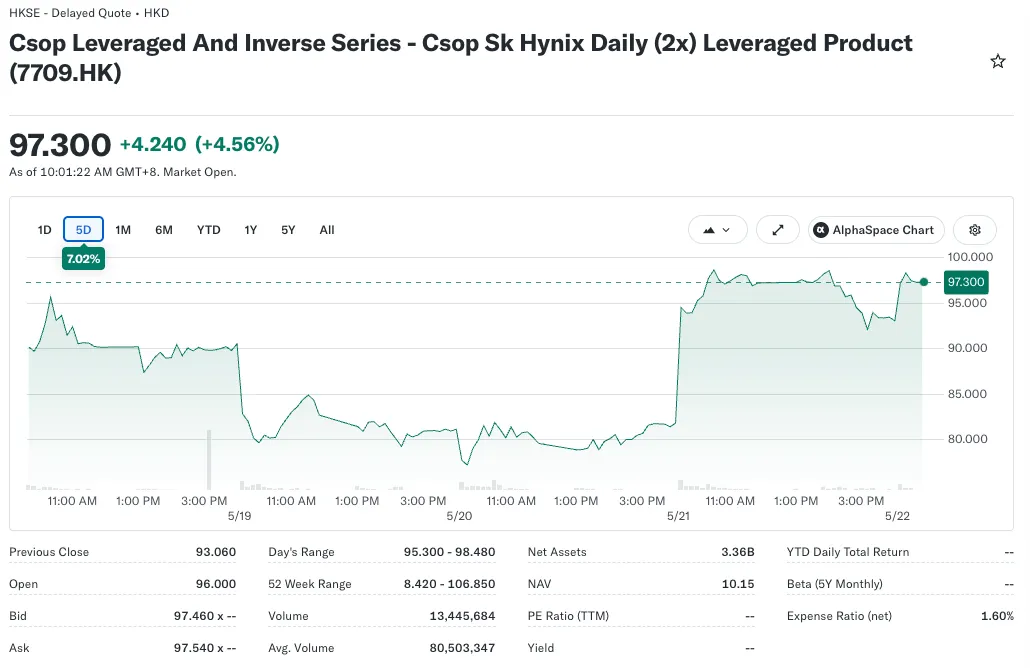
Tiger Research reports using Korea as an example: The SK Hynix 2x leveraged ETF launched by Hong Kong asset management company CSOP has grown to become the world's largest single stock leveraged ETF, with assets exceeding 11 trillion won (approximately $8 billion). If Korea can take the lead in launching similar products through a regulatory sandbox, these management fees and financial revenues could have remained domestic.
The Monopoly of Traditional Exchanges as "Supermarkets" is Facing an End
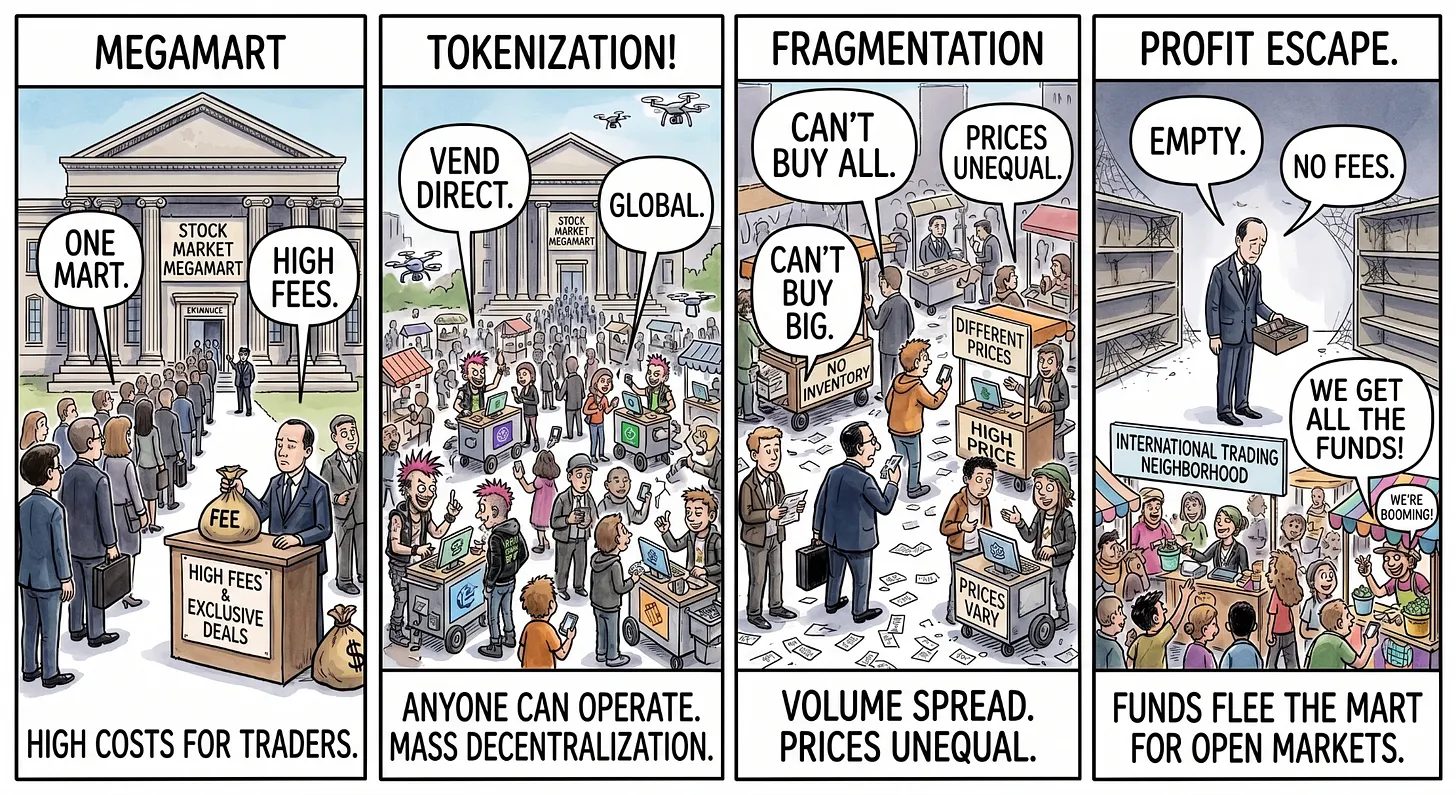
The report describes this change with a vivid metaphor: the traditional stock market is like a monopolistic supermarket, where all buyers and sellers are concentrated, and exchanges monopolize transactions and charge fees. Tokenized stocks are equivalent to allowing anyone to set up thousands of street stalls without permission, completing transactions directly outside the supermarket.
This decentralization can lead to customer loss, depleted inventories at each stall, difficulties in executing large trades, and disrupted revenue streams. If local exchanges hesitate due to regulatory limitations, competing platforms in other jurisdictions will take the lead in capturing global capital flows and intermediary revenues.
Capital Fragmentation is Already Happening
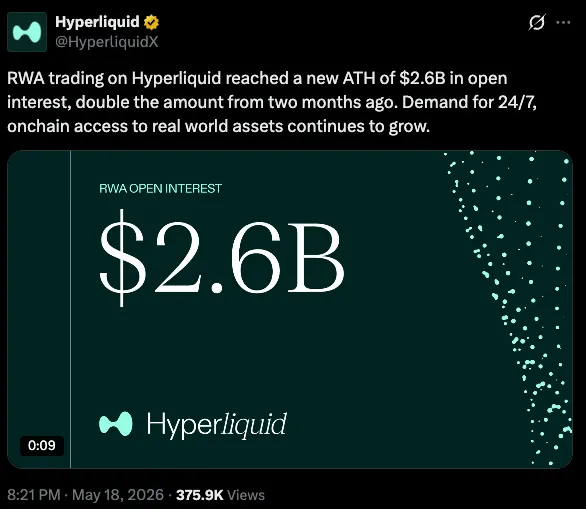
On the same day the SEC signaled the framework (May 18), the open interest for RWA (Real World Assets) on the decentralized platform Hyperliquid surpassed $2.6 billion, setting a new historical high. Driven by the demand for 24/7 on-chain trading of traditional assets, the trading volume of RWA on perpetual DEX is expected to surge further.
Traditional financial institutions and regulators are facing a dilemma: either actively build tokenized infrastructure through collaboration like the NYSE; or lobby regulators to block innovation to protect existing revenues. Regulators are also conflicted — they want to control the pace of innovation while preventing domestic revenues from being eroded by foreign platforms.
Even if the framework is officially announced, potential conflicts are just beginning. The two major focal issues looking forward include:
- The second "clarity battle" over shareholder rights;
- How to incorporate platforms like Hyperliquid that have grown up in regulatory gray areas into the regulatory framework. If deemed unlicensed exchanges, it may trigger a new wave of liquidity and uncertainty shocks.
In the era of digital assets, if financial institutions and jurisdictions cannot act quickly, they will permanently lose the long-standing right to charge fees and financial leadership, and capital will continue to disperse in all directions.
免责声明:本文章仅代表作者个人观点,不代表本平台的立场和观点。本文章仅供信息分享,不构成对任何人的任何投资建议。用户与作者之间的任何争议,与本平台无关。如网页中刊载的文章或图片涉及侵权,请提供相关的权利证明和身份证明发送邮件到support@aicoin.com,本平台相关工作人员将会进行核查。


