What is the investment logic of Sharplink as an Ethereum DAT?
Interview: Joe, Foresight News
Written by: Eric, Foresight News
In terms of time, it has been just about a year since the DAT (Digital Asset Treasury) company exploded.
However, it feels like an eternity. The days when investments reached tens of billions of dollars, stock prices skyrocketed ten times overnight, and Bitcoin and Ethereum were bought without blinking, pushing their prices above $120,000 and nearly $5,000 respectively, seem to have occurred long ago.
With the rapid decline in Bitcoin and Ethereum prices, many DAT companies' mNAV have fallen below the "final warning line" of 1, pressing pause on this crazy story. If we use the cryptocurrency market as an example, last year's market excitement was akin to the bull market in 2021, where to make money, one simply buys without asking. But now, with financial market players calming down, one cannot help but ask: What is the investment logic behind DAT?
Joseph Chalom, who worked at BlackRock for twenty years and started participating in BlackRock's digital asset business in 2018, after joining Sharplink as CEO, used his expertise in the financial field to answer this question in a clear and understandable way.
Because of belief, there is choice
"I chose to return because I firmly believe in the long-term opportunities of Ethereum."
In June 2025, Chalom retired from BlackRock. However, a phone call changed the trajectory of his life. Joseph Lubin, founder of Consensys and co-founder of Ethereum, who was then the chairman of Sharplink, invited him to join Sharplink. In the interview, Chalom candidly stated it was a choice driven by a sense of mission.
Before transitioning into an Ethereum DAT company, Sharplink was a technology company based in Minnesota, focusing on online sports betting and gaming marketing, connecting sports fans with betting platforms through affiliate marketing and data analysis services. This business model generated stable income in specific markets, but there was limited room for imagination, causing its stock price to linger at low levels for a long time.
The turning point occurred in May 2025 when Sharplink announced it had completed a private placement financing (PIPE) of up to $425 million, led by Consensys, with notable investors including Galaxy Digital, ParaFi Capital, Pantera Capital, Electric Capital, Ondo, and others. Along with this fundraising, Ethereum co-founder Joseph Lubin became the chairman of Sharplink. Ten years ago, Joseph Lubin founded Consensys to develop applications and commercialization for the Ethereum ecosystem, serving both consumers (2C) and enterprises and developers (2B & 2D), launching popular products including MetaMask and Infura.
In June 2025, Sharplink officially announced the launch of its Ethereum treasury strategy, making ETH the company's primary reserve asset. This decision made it the first publicly listed company to announce Ethereum as its core treasury asset. Since then, Sharplink rapidly began accumulating ETH holdings: through PIPE, ATM (at-the-market) equity financing, direct issuance registration, and other capital tools, the company amassed over 800,000 ETH within a few months.
Sharplink's stock price also experienced drastic changes with this transformation. Before May 2025, SBET's price hovered below $3 for a long time; by August 2025, the stock price surged to over $20, an increase of more than 400%. Even after subsequent adjustments, the company's market capitalization still far exceeded its valuation as a gaming marketing company.
Rehired Joseph Chalom has a very clear positioning for Sharplink. Even after Sharplink began accumulating ETH for a month, other companies followed suit with exaggerated "performances" crazily stuffing ETH into listed companies' pockets, which did not shake this financial veteran's underlying logic determined since the first day he entered the company building.
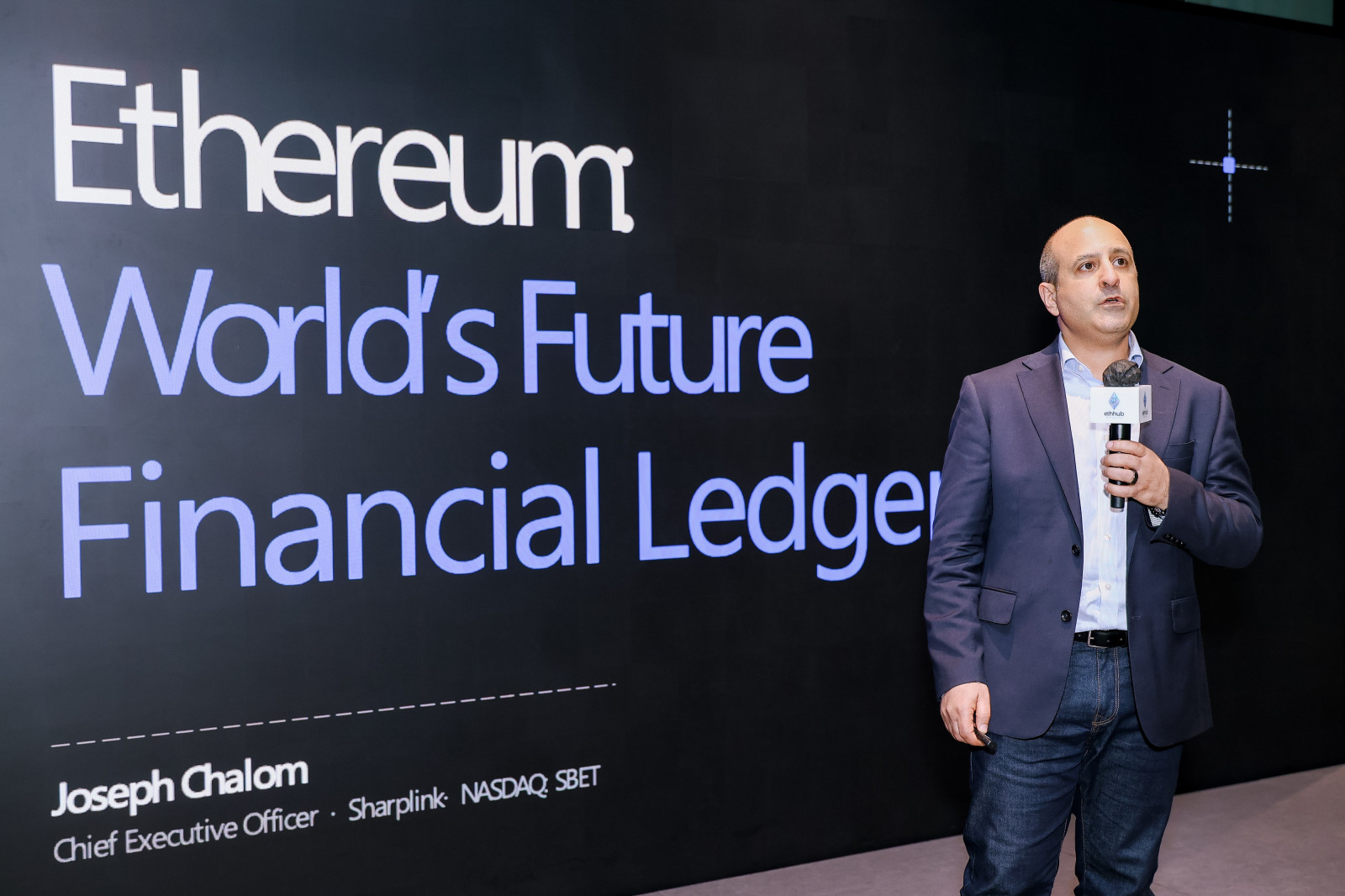
This strategic composure comes from countless past practical experiences.
In the interview, Chalom divided his career into two stages: during the first twelve years at BlackRock, he participated in the construction and scaling of the Aladdin system, one of the largest institutional investment portfolio management and risk management systems globally, serving over 1,000 top financial institutions and managing assets exceeding $10 trillion. During this period, he served as the Chief Operating Officer of BlackRock Solutions.
Starting in 2018, Chalom shifted to the digital asset field. He recalled that BlackRock formed a blockchain team in 2018, but at that time, the crypto industry was far from ready for large institutional entrants. "We met with hundreds of companies, banks, custodians, and regulators, and encountered many fraudsters," Chalom stated. "Back then, we believed the industry was not mature enough: standards were too low, security was too lacking, and institutional requirements were not understood."
This wait lasted three years. From 2018 to 2021, BlackRock's digital assets team primarily focused on three things: first, becoming a major investor in Circle (the issuer of the USDC stablecoin) and managing its stablecoin treasury portfolio; second, integrating the Aladdin system with Coinbase, allowing traditional investors to configure Bitcoin and Ethereum through a familiar interface; and third, pushing for the approval of Bitcoin ETFs and Ethereum ETFs.

Later, institutions including BlackRock succeeded in breaking the SEC's years-long blockade, officially launching Bitcoin spot ETFs in early 2024, marking a milestone moment in Web3. Additionally, Chalom was deeply involved in the creation of BlackRock's tokenized fund BUIDL, a quasi-money market fund built on the Ethereum mainnet, issuing corresponding tokenized shares that allow investors to switch freely with stablecoins while earning returns within 24 hours.
It can be said that BlackRock's ongoing exploration of crypto assets over the past eight years has shaped Joseph Chalom's understanding of this emerging industry. Unlike many crypto-native young people, Chalom perhaps cannot fully grasp the many novel experiments on-chain, but he has a unique understanding of how to present Ethereum appealingly to institutional investors.
Why Ethereum? Why not just buy Ethereum directly?
If you were to interview Joseph Chalom, this would likely be the first question that comes to mind: why choose Ethereum as the reserve asset? Why don't investors buy Ethereum directly and instead invest in Sharplink's stock?
In response to the first question, Chalom provided five reasons.
First, Ethereum is a "productive asset." While both Bitcoin and Ethereum can serve as stores of value, the unique staking mechanism of Ethereum allows it to generate native yield. "You can earn about 2.75% annual yield," Chalom explained, "the productivity of Ethereum is very different from that of Bitcoin."
Second, the structural flaws in ETF products provide opportunities for DAT companies like Sharplink. The initial Ethereum ETF in the U.S. did not allow staking. Even later when some ETFs were approved for staking, due to the SEC's requirements for daily liquidity, ETF issuers could only stake about 50% to 70% of their holdings. Staking requires long queue times and un-staking also requires about a week of queue time, and ETFs must always meet investors' redemption needs. Additionally, ETFs charge management fees and retain about 18% of staking yields. "If you invest in Sharplink," Chalom emphasized, "we stake almost 100% of our holdings."
The remaining three points are less critical, highlighting Ethereum's advantages such as instant settlement, 24/7 trading, cross-border liquidity, programmability, and its transformative power over traditional finance, as well as security and liquidity depth. Chalom noted, "55% of stablecoins operate within the Ethereum ecosystem; the technology stack used by Coinbase's Base, Robinhood's implementation, and BlackRock's tokenization efforts are all built on Ethereum." He believes that Ethereum will become the "chain of capital markets," while other chains may serve more to speed-sensitive scenarios like gaming and meme coins where security requirements are lower.
An even more crucial question follows: since Ethereum is so good, why don't investors buy ETH directly, but instead "settle" for investing in Sharplink's stock?
Chalom's reasoning is clear: "This is actually two questions—one is why investors want exposure through an Ethereum DAT company, and the other is why they choose Sharplink as their target."
Before DAT, investors could buy ETH directly or gain exposure indirectly through centralized institutions. For high-net-worth investors, purchasing ETH directly means either building their own security system or incurring additional costs for custody. As for the latter, the issues faced by institutions like BlockFi, Celsius, Genesis, Babel, etc., that collapsed in 2022 have already illustrated the problems: you need to confront opaque counterparty risks.
Moreover, if you want to earn additional yields through staking, it becomes even more complex: what kind of staking method should you choose? How to select a reliable provider? Chalom stated that as a publicly traded company, there are strict regulatory requirements for disclosures, audits, etc. How the company handles reserve assets, which staking provider it chooses, and how to ensure security are all issues that require careful consideration.
For a long time last year, DAT companies emphasized mNAV, which is the ratio between the company's market value and the held crypto assets. When that number is greater than 1, the flywheel of issuing shares and accumulating crypto can gain momentum. However, in the author's view, Sharplink may not need these "parameters"; for this DAT company, it suffices that the market value does not diverge excessively from the value of the ETH held.
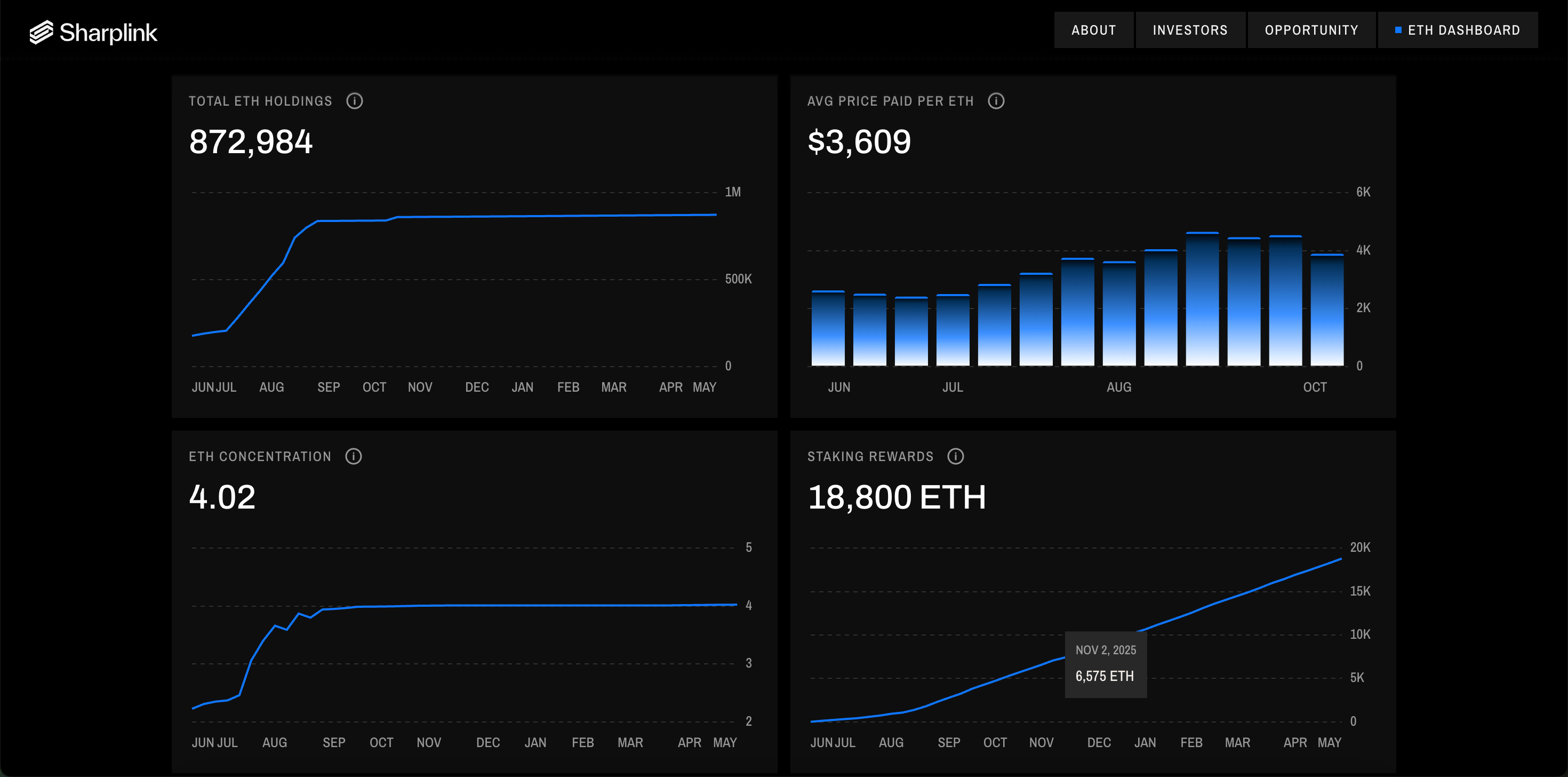
Essentially, Sharplink functions more like a fund specifically managing Ethereum. The difference is that you do not need to pay management fees, and the fund itself does not need to prepare liquidity for redemptions, nor does it share the staking yields. From this perspective, you will find that while Sharplink holds a stable position as the "second largest Ethereum DAT company," its visibility is far less than that of another Ethereum DAT company, primarily due to the fundamental logical differences between the two.
This brings us to Joseph Chalom's answer to the second question: why choose Sharplink as the target?
Sharplink began staking the ETH it initially purchased immediately upon receipt and chose to build and manage the team independently. The company hired professionals from traditional finance and the crypto field to handle ETH acquisition, custody, and staking. "Our asset management costs are fixed, which are simply our personnel salaries. If the price of ETH doubles, our treasury value doubles, but our costs do not double. I prefer to bear fixed costs rather than pay extra for an ever-growing pie."
Data indicates that this difference directly impacts the structure of institutional holdings: about 46% of Sharplink's shares are held by large institutional investors, who clearly favor its pure, low-cost, institutional ETH exposure model. Looking back now, it's evident that Sharplink had already considered this path from the beginning: not relying on storytelling to garner attention, but rather focusing on how to create an investment target that could appeal to institutions and potentially replace Ethereum itself.
Judgments about the future: the long-term ecology and application infrastructure of Ethereum
When asked whether he would feel disappointed or lose faith during a drop in Ethereum's price, Chalom's response demonstrated the maturity of an institutional veteran who has gone through multiple cycles.
"The volatility of the crypto market means it will rise and fall." He recalled that in the past seven years, he has experienced six similar cycles: prices surging, large amounts of speculation and leverage flooding in, followed by corrections lasting about six months, culminating in new highs. "After each correction, the market returns with better standards and security."
What surprised Chalom was the extreme optimism in the fundamentals of the latter half of 2025 contrasting with price performance. "For about five months, the price of Ethereum has been sluggish, but every signal and announcement around is the most optimistic: the NYSE announced 24/7 trading, Nasdaq followed suit, BlackRock has tokenized everything, Hong Kong's stablecoin law, new legislation in Korea, Japan passed new regulations… beneath all these real news, the price is so low, which is unusual."
He attributed this divergence to the macro environment: geopolitical conflicts, tariff disputes, tension in trade between Trump and China leading to a decrease in overall market risk appetite. "I believe Ethereum will succeed in the long run. What worries me is the overall macroeconomic negative attitude towards gold, stocks. There are too many wars, too many tariffs, too much risk, and people are unwilling to take on more risk."
Regarding Ethereum's ceiling, Chalom declined to provide specific price predictions but proposed two judgment benchmarks: first, is on-chain activity increasing? Are stablecoins, real-world asset tokenization, and economic activities of DeFi expanding? Second, is Ethereum's market share in these activities increasing or decreasing? If the answers to both are positive, that signals the best news for ETH.
Sharplink chose to pause ATM financing when its mNAV was below 1, opting to use cash and staking yields for buybacks, which also illustrates Sharplink's discipline in some respects.
As for possible future developments, Chalom revealed several possibilities in the interview but remained cautious: "Our primary strategy is to become the most important digital asset treasury for Ethereum. However, perhaps in the future, we can build an Ethereum-based full-ecosystem company with real application scenarios, maybe an Ethereum protocol, or an infrastructure company—someone needs to write blocks, confirm blocks, sort blocks, and earn fee income from that."
But Chalom stressed that the core principle is risk management and compliance first: "We manage $2 billion in ETH; you cannot afford to make mistakes."
A bridge connecting "new assets" and "old money": the institutional ecological door of Ethereum
The story of Sharplink essentially represents a bridge connecting traditional finance and the crypto-native world. Joseph Chalom's twenty-year career at BlackRock has given him a deep understanding of the pain points and thresholds of institutional investors, while the technical characteristics of Ethereum provide solutions that meet these needs.
Unlike the aggressive expansion of other DAT companies, Sharplink chose a path that is more Ethereum-native, more aligned with Ethereum's core philosophies, more institutional-focused, and more cost-effective and risk-managed. Building a proprietary asset management and technical team, nearly 100% staking, fixed cost structure, strict compliance standards, and independent coverage by eight bank analysts—all these elements collectively form Sharplink's brand core: it is not a crypto speculation company trying to create topics but a public market tool that allows traditional investors to securely and efficiently access the long-term value of the Ethereum ecosystem.
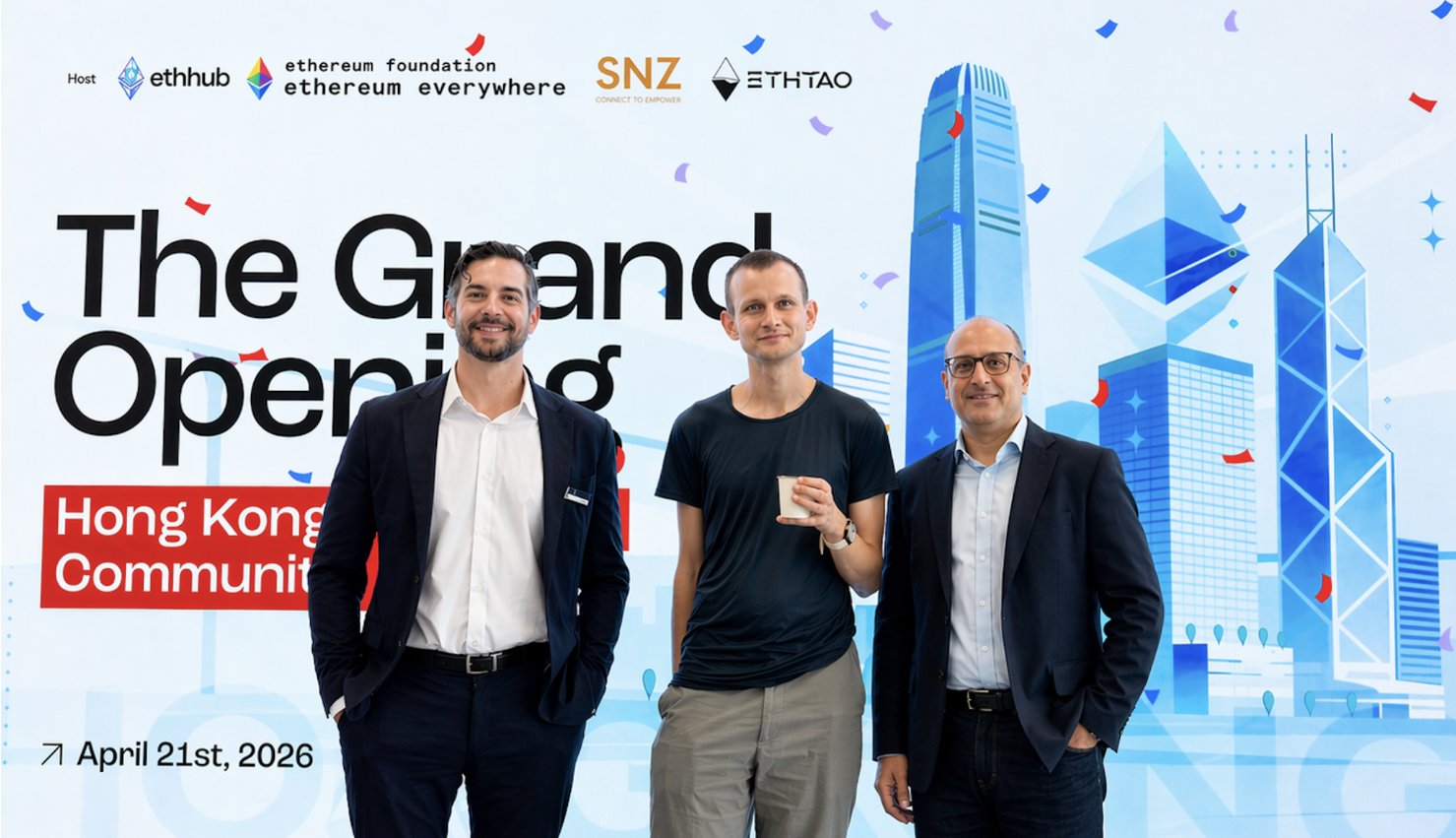
With the co-founder of Ethereum serving as chairman, the head of the financial systems at the world's largest asset management company and early promoter of digital assets as CEO, along with a former CIO (Chief Information Officer) of Bridgewater and the CDO (Chief Data Officer) responsible for business at Consensys, this combination best represents the underlying digital asset ecology among all DAT companies. In Chalom's words, "We understand Ethereum the best."
Ten years ago, Joseph Lubin left the Ethereum Foundation to establish Consensys to more efficiently improve the tools and infrastructure necessary for the development of the Ethereum ecosystem. Ten years later, Joseph Lubin co-founded Sharplink, opening the institutional ecological door for Ethereum, inviting a veteran of the largest asset management company and an expert in digital and financial technology products to serve as CEO. This "second revolution" initiated for Ethereum aims, just like back then, to lay a solid foundation for an ecosystem poised to explode.
Chalom expressed a very confident viewpoint in the interview: "The asset is Ethereum; the code is SBET." Behind this simple yet powerful equation is the deep conviction of a Wall Street veteran in the Ethereum ecosystem and the tightening bond between traditional finance and the decentralized future. Regardless of short-term fluctuations in the price of Ethereum, this structural integration trend may be the most noteworthy signal behind the phenomenon that is Sharplink.
免责声明:本文章仅代表作者个人观点,不代表本平台的立场和观点。本文章仅供信息分享,不构成对任何人的任何投资建议。用户与作者之间的任何争议,与本平台无关。如网页中刊载的文章或图片涉及侵权,请提供相关的权利证明和身份证明发送邮件到support@aicoin.com,本平台相关工作人员将会进行核查。


