Powell's Eight Years: Rescuing the Crisis from the Pandemic, Misjudging Inflation at a Luxurious Cost, Completing the Miracle of a Soft Landing; Facing Political Attacks from Trump, He Stood Tall in Resistance and Chose to Stay Even After His Term Ended. Achievements and Mistakes Exist, But Perhaps That Last Battle to Defend the Independence of the Federal Reserve is His Most Precious Historical Legacy.
Written by: Xu Chao
Source: Wall Street Journal Insights
On the way to the office, Powell passes by a portrait every day.
It is of his predecessor, Arthur Burns. No one knows how many times this Federal Reserve Chairman has silently told that antique portrait the same thing—
“I will not become you.”
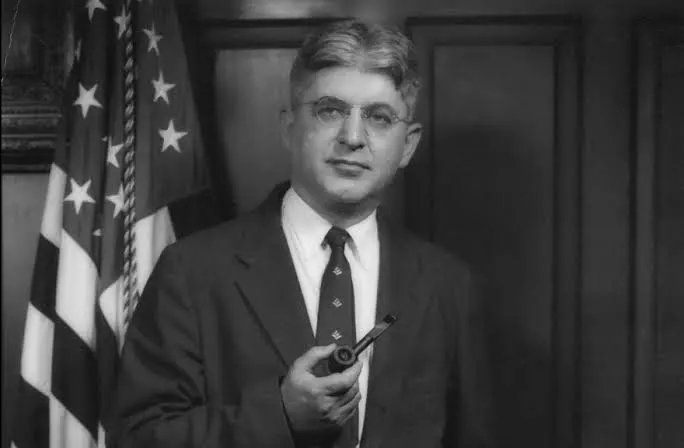
Burns’s name serves as a cautionary symbol in the historical records of the Federal Reserve: he allowed inflation to spiral out of control and eventually collapsed under Nixon’s pressure to lower interest rates. Half a century later, Powell faced an almost unsolvable test. But he ultimately did not go down that path—this may be the most profound legacy he leaves for this institution.
Power Transition, Countdown Begins
On May 13, 2026, the U.S. Senate officially confirmed Kevin Walsh as the new Chairman of the Federal Reserve with a vote of 54 in favor and 45 against.
The timeline is clear: this Thursday (May 14), Walsh is expected to take the oath of office; this Friday (May 15), Powell's term as Chairman of the Federal Reserve will officially come to an end.
But this farewell is somewhat different—Powell did not leave.
The Federal Reserve Chairman, who is not from an economics background and is a former partner at a private equity firm, will remain on the Federal Reserve Board, becoming the first Chairman to stay on after completing his term in 75 years. This decision itself is his last political legacy—and it hangs over the successor Walsh as a subtle marker.
“See You Next Time, But Not”
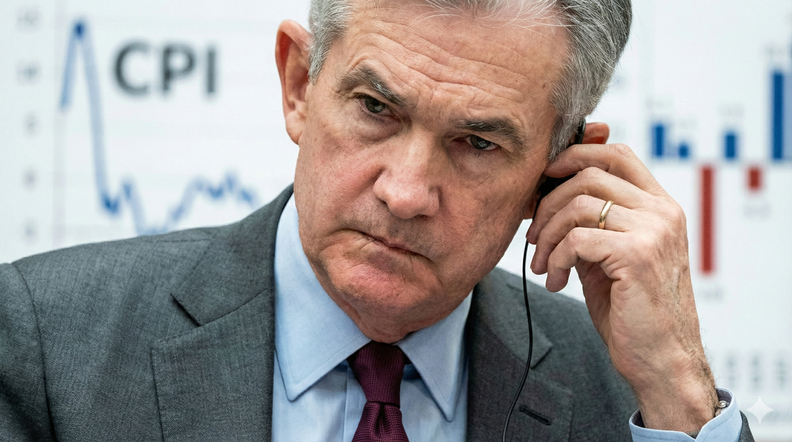
On April 29, 2026, as the Federal Reserve's routine press conference was nearing its end, Powell made a significant remark to the journalists present:
Thank you very much, see you next time, but not.
This was his last time standing in that position as Chairman of the Federal Reserve.
In the past eight years, everything he experienced transformed the position of Federal Reserve Chairman into the most dangerous and complex role in the history of central banking: a once-in-a-century global pandemic triggered the most severe panic in forty years, an unprecedented political hunt, and a nearly impossible gamble for a "soft landing".
Daleep Singh, former head of the market department at the New York Fed, provided what he believes to be the most accurate assessment: “This may be the most difficult period to serve as the central bank president since the Federal Reserve was established.”
Spring 2020: “Crossing the Line” on the Edge of a Cliff
To understand Powell's eight years, one must start from March 2020.
At that time, the COVID-19 pandemic was sweeping the globe at an alarming rate, and the U.S. bond market began to show functional failures, with internal simulations suggesting a path to a "Great Depression lasting nearly a year at 20%". Powell told his colleagues that it felt like swimming behind a speedboat—struggling to catch up, yet still falling behind.
His response was: proactive and decisive.
The Federal Reserve quickly lowered the benchmark interest rate to zero, restarted and significantly expanded quantitative easing, and unprecedentedly provided credit support directly to businesses and municipalities, expanding into areas previously untouched in its hundred-year history.
“We crossed a lot of red lines,” Powell admitted afterwards, “In that situation, you do this first, and then figure out how to deal with the aftermath.”
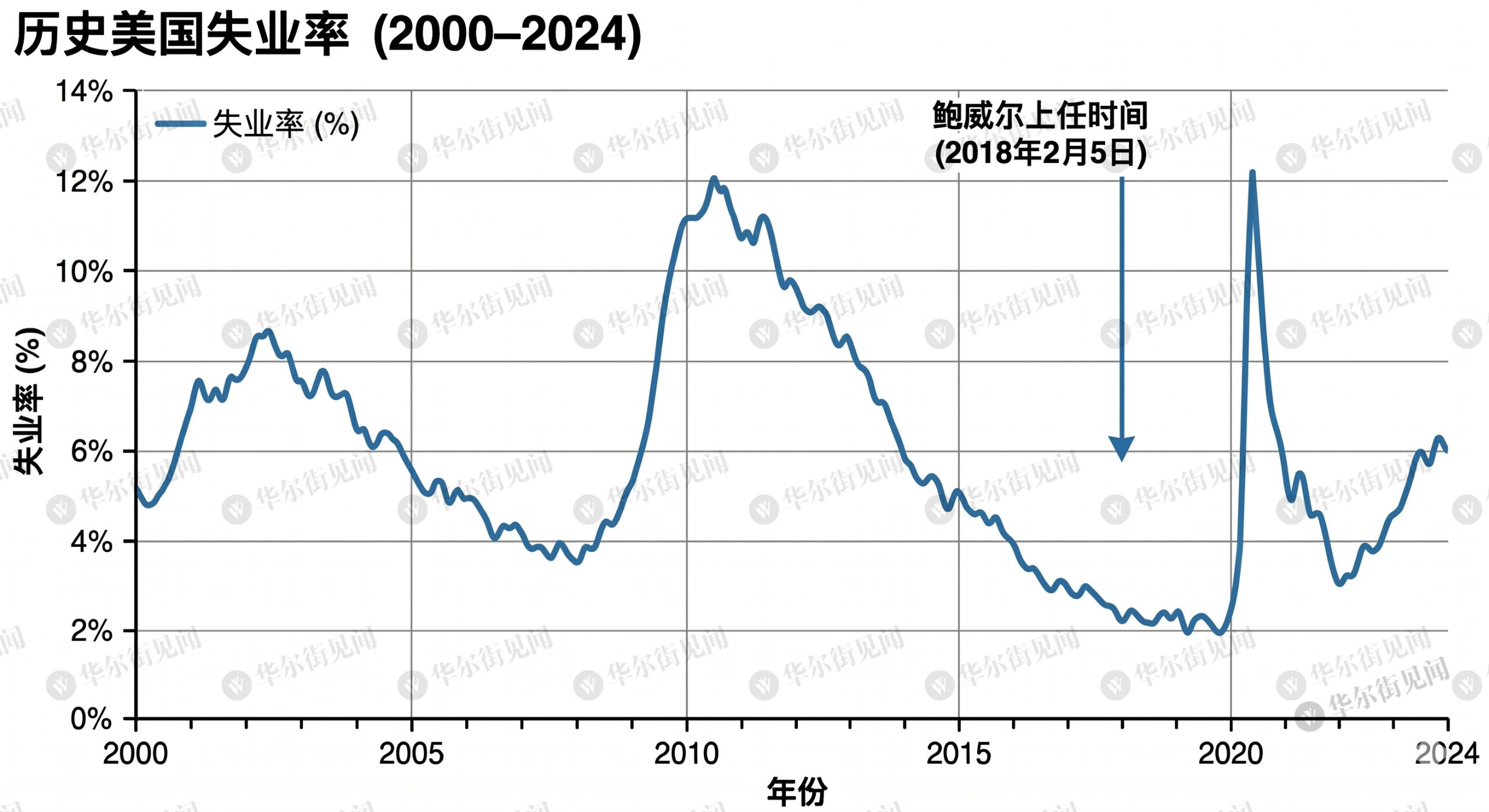
This time, he bet right. The U.S. avoided a second Great Depression, and the job market was largely restored in about two years—whereas the same repair took six years after the 2008 financial crisis. Even Trump, who had publicly called him “ignorant” and “an idiot,” called him to say he was “the biggest gain-maker.”
The Cost of “Transient”
After the successful market rescue, the real test arrived.
In 2021, with vaccine rollouts, consumer demand explosion, and continued fiscal stimulus, inflation began to rise. Powell made a judgment that he would be questioned about repeatedly later—he believed it was “transitory”.
Supply chain bottlenecks would ultimately be resolved, demand would naturally taper off, and monetary policy did not need to overreact.
This “misjudgment” became the heaviest policy stain of his eight-year term.
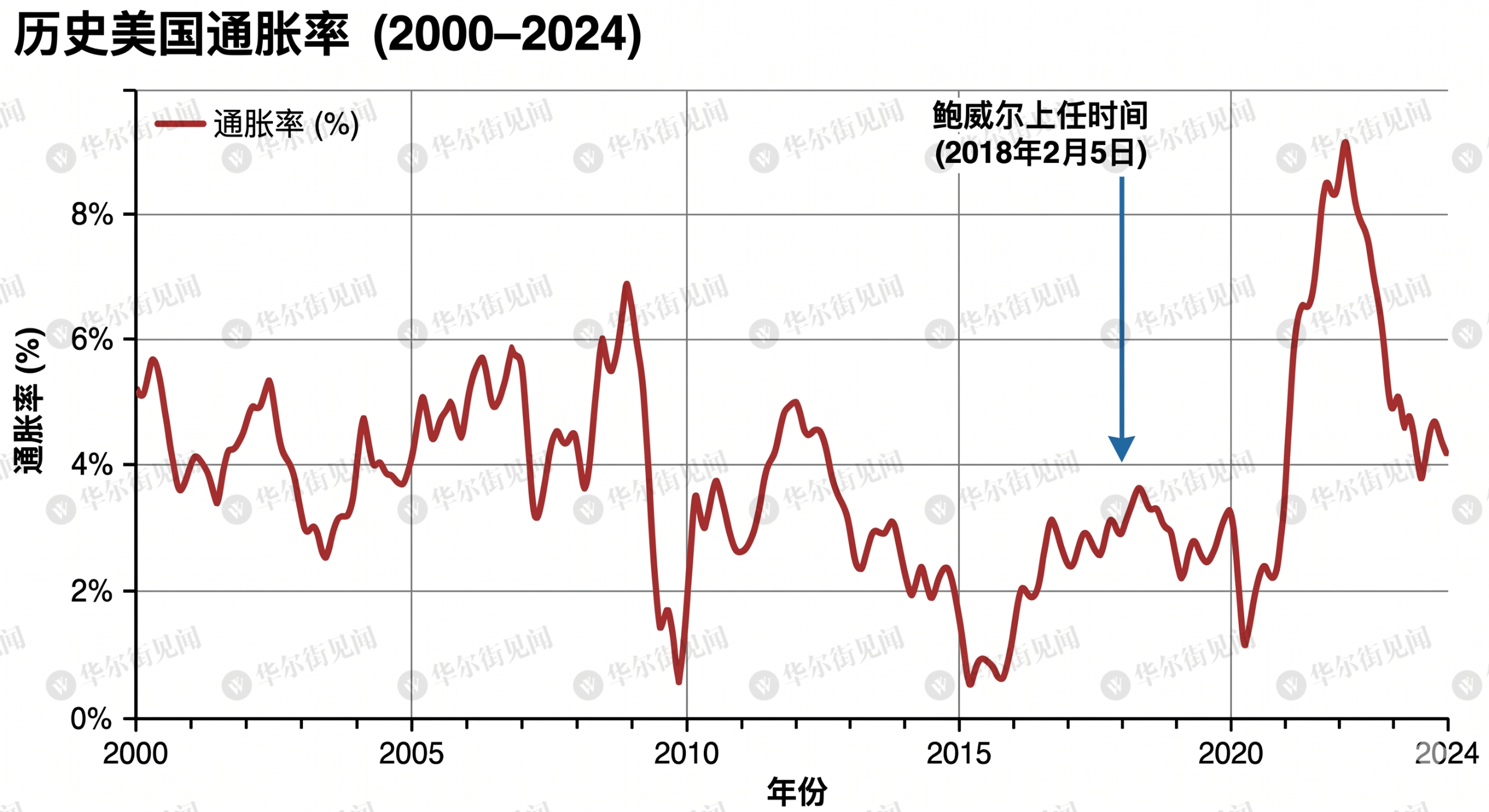
By June 2022, the U.S. CPI had risen by 9.1% year-over-year, reaching a new forty-year high. Stanford University's Hoover Institution economist John Cochrane likened the Federal Reserve's framework to a “pre-built Maginot Line”—specifically constructed to combat old threats, completely useless when new threats suddenly appeared.
When questioned by Congress, Powell did not avoid the inquiry. He was faced with a quote from Frank Sinatra:
I have some regrets, of course. Who wouldn't really like to do things differently? But to be honest, you don’t get a do-over.
Corrections came late but carried unprecedented power.
From 2022 to 2023, the Federal Reserve raised interest rates at the fastest pace in nearly forty years, with the federal funds rate increasing by more than 500 basis points. At the Jackson Hole annual meeting in August 2022, Powell delivered an eight-minute speech clearly warning that decreasing inflation would bring “pain,” inheriting the spirit of Volcker and sending a strong signal to the market.
That evening, a country band played at the reception dinner. In previous years, he would have taken to the dance floor. This time, he remained seated. He told his colleagues:
After making such a speech, you don't have the right to dance.
Soft Landing: The “Impossible Task”
However, Powell did not move to the opposite extreme.
Some economists and market participants advocated for "shock therapy”—actively creating a recession to completely crush inflation. Powell rejected it:
We just won’t raise interest rates to prevent an economic collapse and then handle the aftermath.
By the summer of 2024, that soft landing—deemed impossible by almost everyone—quietly realized: inflation fell significantly, wages only rose modestly, and the Federal Reserve began to lower interest rates in September, with no anticipated recession occurring.
This consecutive victory is, as Powell himself admitted, one of his most impressive achievements—even though inflation never returned to the 2% target during his term, this unfinished business will be left to his successor.
The Final Battle: He Did Not Become Burns
However, the historical legacy Powell leaves may not have any economic data.
When Trump returned to the White House, the political pressure on the Federal Reserve escalated from verbal insults to a systematic legal offensive.
The president publicly called Powell “the biggest loser” and “an idiot,” openly discussing the possibility of firing him; the White House pushed for a Justice Department investigation against Powell citing cost overruns from the renovation of the Federal Reserve headquarters; at the same time, the Trump administration sought to dismiss Federal Reserve Governor Lisa Cook, a case that is currently pending court ruling—this is unprecedented in the hundreds of years of history of the Federal Reserve.
Analysts generally believe the true motive behind this investigation was to pressure the Federal Reserve to lower interest rates, serving its own electoral political goals.
In January 2026, Powell did something that shocked the entire financial world.
On a Sunday evening, he released a video, proactively disclosing his own judicial investigation to the public and categorizing it as:
The Federal Reserve sets rates according to what is in the public's best interest, not based on the president’s preferred outcomes.
European Central Bank President Christine Lagarde remarked: “Powell has an inner strength and a principled understanding of responsibility that is deeply rooted in his heart.”
Cochrane, who criticized Powell for being greedy, ultimately made this historical evaluation:
Powell will be recorded in history for his last great act of opposing Trump—resisting Trump. I think this reveals his honesty, dignity, and respect for this institution. I question whether others could do better.
Staying Because the Fight is Not Over
At the last press conference, Powell announced another surprising decision for the market—he would continue to serve on the Federal Reserve Board after his term as Chairman ends.
This makes him the first former Chairman since Mariner Eccles to remain at the Federal Reserve after his term ended in 1948.
Powell set the condition for his stay: the judicial investigation must conclude in a “transparent and conclusive” manner. However, the Justice Department only provided private assurances and suggested it could be restarted at any time, without issuing any public exoneration. The decision to remove Cook is also pending. It seems that the fight to defend the institution has not truly ended.
Those familiar with Powell pointed out that this decision represents a “fundamental counterattack” against the Trump administration—rather than forcing him out the door, the criminal investigation instead solidified his determination to protect the institution.
Former senior Fed advisor Jon Foster predicted this:
Given that Powell is repeatedly proving that the government cannot constrain its threats, I expect his stay might last a considerable amount of time.
And staying also comes with costs.
Former Cleveland Fed President Mester pointed out that every future vote Powell casts on the Board will be interpreted as a political signal:
If at some point he has to cast a dissenting vote, it will raise more questions: “Is the Fed being politicized?”
Powell himself is aware of this dilemma. He stated he does not intend to become a “high-profile dissenter” nor act as a “shadow Chairman of the Federal Reserve.” What he hopes for is something simpler—“to return to respect for legal provisions and norms, allowing the Federal Reserve to do what we ought to do.”
As for how long he will remain—his term could extend until early 2028, but he has not provided a clear answer. One individual who has long served as his senior advisor stated:
I expect his term could last a considerable amount of time.
Both Achievements and Deficiencies
Eight years, two terms: one pandemic, one misjudged inflation, one soft landing, and a political offensive that almost shook the foundations of the Federal Reserve.
History’s final judgment on Powell records both achievements and deficiencies—five consecutive years exceeding the 2% target is an undeniable failure; yet that video, that battle to maintain independence, may be enough to forever separate him from Burns.
Federal Reserve historian Peter Conti-Brown said:
His place in history, based on any of these battles, is already monumental.
And the portrait in the hallway awaits the next person who passes by.
免责声明:本文章仅代表作者个人观点,不代表本平台的立场和观点。本文章仅供信息分享,不构成对任何人的任何投资建议。用户与作者之间的任何争议,与本平台无关。如网页中刊载的文章或图片涉及侵权,请提供相关的权利证明和身份证明发送邮件到support@aicoin.com,本平台相关工作人员将会进行核查。


