Author: Nancy, PANews
The crypto market is rapidly bidding farewell to its phase of grassroots expansion, and the acceleration of regulation has become a turning point for the industry's transformation towards compliance. Former crypto players are donning suits and taking their seats at the negotiation table in the mainstream world.
At the same time, the mutual engagement between traditional and crypto worlds is also noticeably accelerating. On one hand, traditional institutions are actively entering the crypto space through tokenization, stablecoins, and on-chain payments; on the other hand, the crypto industry is also embracing traditional financial assets such as stocks and precious metals, pushing for further integration of on-chain and off-chain finance.
It can be said that crypto is ushering in a mainstream moment. As larger market spaces and liquidity continue to open up, the development and competitive logic of crypto CEX (Centralized Exchanges) are also changing, with compliance upgrading from a bonus item to a ticket for entry, gradually becoming a watershed for industry differentiation.
Major upgrade in crypto regulation, TradFi is speeding into the scene
Liquidity from traditional finance is continually pouring into the crypto world. As crypto is constantly expanding the boundaries of TradFi assets and promoting financial model innovation, the industry is gaining more recognition and participation from mainstream capital, with the scale of various sub-sectors continuously expanding.
In the broader context of the crypto industry still being in a bear market cycle, these once marginal financial experiments are continuously breaking scale limits and gradually evolving into a part of the new global finance. To a large extent, this is benefiting from the clearer and more predictable compliance environment brought about by the continuous upgrading of crypto regulation.
After years of back-and-forth and hundreds of law enforcement actions, global crypto regulation is shifting towards a new regulatory cycle with clearer rules and more defined boundaries. Over the past two years, major countries and regions such as the United States, the European Union, Singapore, Hong Kong, and South Korea have successively accelerated the implementation of crypto regulation. The year 2026 is widely viewed as a key year for the transition from legislation to enforcement.
For the crypto industry, the upgrade of regulation can not only enhance market confidence but also clear obstacles for traditional institutions to enter on a large scale, thereby promoting the transition of crypto from the margins to the mainstream.
The mainstream moment has arrived, compliance is not just an option
As the crypto industry begins to enter a more certain new cycle, this means that the rules of the game are also shifting.
Currently, CEXs are gradually shifting from single trading platforms to comprehensive financial platforms. An increasing number of exchanges are launching TradFi-related products to expand their business lines, thereby enhancing user retention and revenue diversification capabilities, and competing for larger market shares and industry influence in the mainstream market.
In this transformation process, compliance has no longer been merely an option. In the past, the license application for CEXs was primarily to meet regulatory filing requirements, but with the acceleration of global crypto regulation, licenses have become a basic need for CEXs to expand their business, enter the mainstream market, achieve global expansion, and strengthen user trust. It not only unlocks more opportunities for TradFi products but also directly affects institutional entry, user stickiness, and valuation premium.
Currently, obtaining a license mainly falls into two major paths. One is the acquisition model represented by exchanges like Coinbase and Kraken, which advances quickly, can immediately acquire the licenses, customer bases, and technologies of target companies, but requires substantial upfront investment, poses integration risks, and relies on the quality of the acquisition targets. The other is the direct application model represented by Binance, OKX, and Gate, which offers strong autonomy, can customize the service range based on their business, and has better long-term compliance reputation, but takes a longer time, costs more, and has a certain degree of uncertainty in approval.
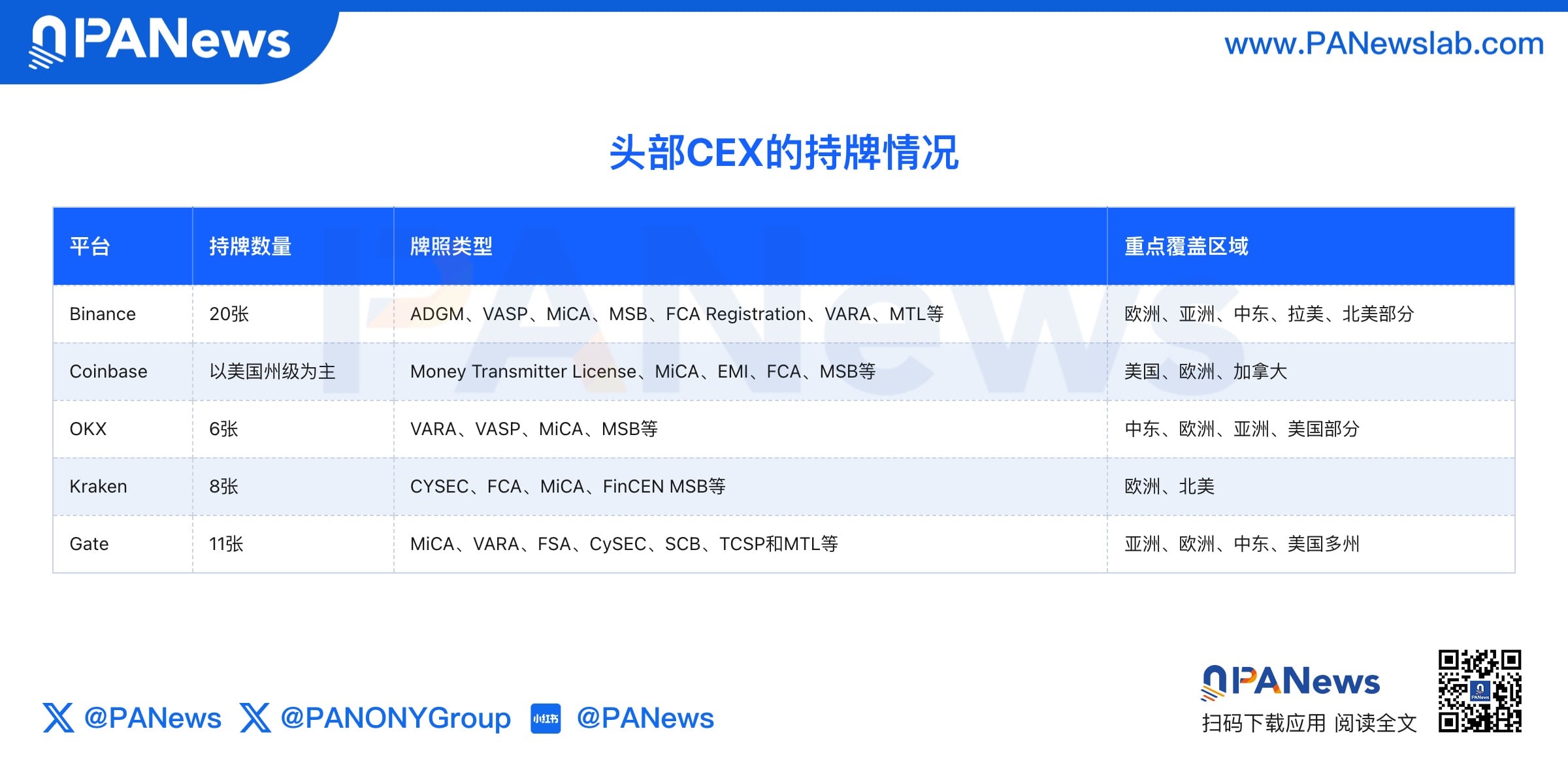
In fact, statistics show that the globalization of license acquisitions is becoming an essential asset for mainstream exchanges and is gradually becoming one of their core competencies. Compared to the early operational models that long relied on a single offshore entity, more exchanges are now establishing independent operating entities tailored for different countries and regions and actively applying for local regulatory permits. This compliance path can reduce systemic risks arising from policy changes in a single jurisdiction while adapting more flexibly to the rapidly changing global regulatory environment.
From the perspective of license numbers, various exchanges have actively built relatively broader compliance networks globally, among which Binance and Gate have demonstrated particularly vigorous compliance investments and relatively ample license reserves, showing a strong long-term operational mindset. In contrast, Coinbase, Kraken, and OKX are advancing focusing on key regions.
In terms of the range of regions covered, mainstream CEXs currently exhibit strong capabilities in global compliance operations, with Binance and Kraken reaching a relatively broader range of locations, leveraging their significant user scale advantages as well as flexible multi-country expansion strategies. However, some exchanges, besides vying for high-regulatory and high-barrier markets like the United States, Europe, and Japan, are also actively expanding into emerging markets such as the Middle East, Latin America, Southeast Asia, Australia, and Africa, to capture more incremental users and market opportunities.
Taking Gate as an example, its licenses are held by local entities: in the United States, it holds MTL licenses from 35 states, achieving compliant operations across 46 jurisdictions; in the European Union, it is leveraging CySEC licenses from Cyprus, MiCA licenses, and payment institution (PI) licenses to deepen its presence in the European market; in Japan, it penetrated the relatively high barrier market with FSA licenses; in the Middle East, it is utilizing the Dubai VARA license to enter rapidly growing new regions; in Australia, it has completed its layout through AUSTRAC registration qualifications.
However, simply comparing license numbers cannot fully reflect a CEX's compliance strength; the more critical aspect is the intrinsic value of the licenses. For instance, the Gate Group emphasizes compliance in global crypto capital hubs, and the licenses held by various entities, such as U.S. MTLs, Japanese FSA, Dubai VARA, and EU MiCA, are all considered core licenses with high global recognition and stricter audit standards. From this perspective, it also means that the more high-grade regulatory permits a CEX obtains, the stronger its international competitiveness and market trustworthiness in terms of fund safety, risk control, compliance operations, and long-term sustainable development capabilities.
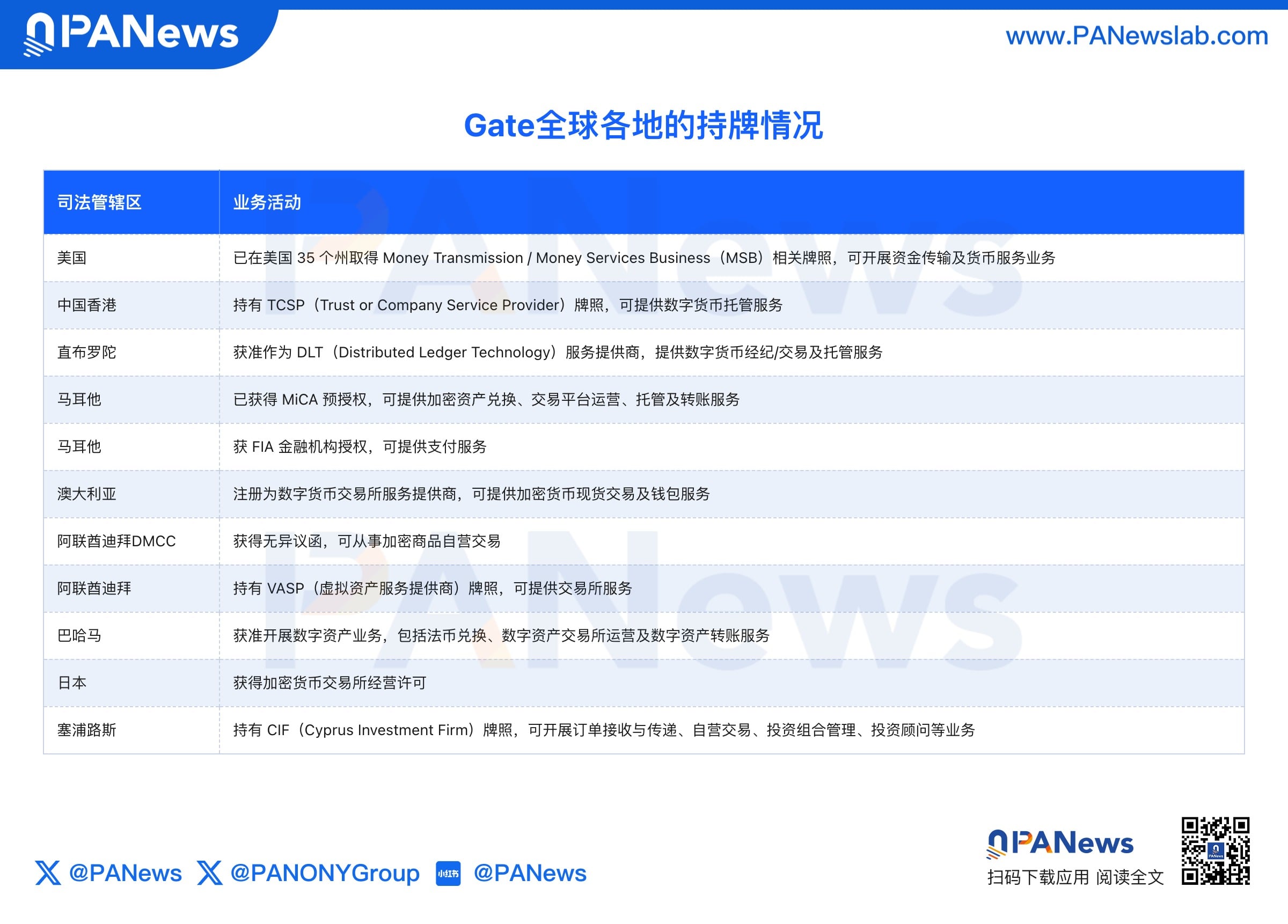
Nonetheless, with these various types of compliance licenses gradually taking effect, not only has it further enhanced the global business compliance of exchanges, but it has also provided more possibilities for expanding business lines such as derivatives, payments, custody, and institutional services, opening up new market spaces and user growth potential. For example, the Gate Group's Malta license supports cryptocurrency exchange, order execution, custody, transfer, and payment services; the Cyprus license covers investment consulting, asset management, custody, and currency exchange services.
A new round of survival battle is commencing, compliance becomes the key to competition
The continuous upgrade of crypto regulation, to some extent, is pushing it to gradually return to the regulatory framework of traditional finance. For CEXs, licenses have undoubtedly become a critical moat in this new round of competition.
In the past, the crypto industry relied long on regulatory arbitrage for expansion, often prioritizing locations with lenient regulations, then providing services to global users through offshore entities. This path once brought rapid growth advantages and led to the wild growth of the crypto industry.
However, the living space for this logic is rapidly tightening. On one hand, countries worldwide are accelerating the establishment and improvement of regulatory frameworks; on the other hand, when TradFi participants enter the crypto market, they generally consider compliance capability as a core prerequisite. Furthermore, for crypto platforms, compliance not only affects their ability to sustain operations but also directly impacts whether their products can gain mainstream users and capital, as well as regulatory recognition.
For CEXs, compliance has shifted from being a cost center to a survival threshold, even a decisive factor in competition. Licenses are essentially a long-cycle, high-investment systemic project.
Some mainstream exchanges have begun global compliance construction relatively early. For example, as early as 2018, when the crypto industry was still in a wild growth stage, Gate had already begun promoting a global compliance layout, submitting related license applications in Malta and obtaining local compliance custody and trading licenses in 2022. Since then, Gate has continually accelerated its global compliance expansion pace. To some extent, this also reflects its early judgment on regulatory trend changes and its long-term investment and strategic layout in compliance system construction.
By 2025, Gate's global compliance layout has further accelerated, becoming its year of most concentrated license acquisitions. It has obtained compliance licenses from 35 states in the U.S., covering business across 46 jurisdictions, able to provide legal and compliant services in most parts of the United States; in Europe, it has the capability to conduct compliant operations in over 20 countries; at the same time, it has also successively obtained related licenses in multiple countries and regions, including Australia and Japan, with its global regulatory footprint continuing to expand.
Moreover, acquiring high-quality licenses is even more rigorous, often requiring several months or even longer periods, costs ranging from hundreds of thousands to millions of dollars, and ongoing compliance adjustment capabilities, clearly testing the platform's time, funding, and resilience. Such long-term, systemic investments place high demands on the platform's resource allocation capabilities, execution efficiency, and organizational resilience, forming competitive barriers that are difficult to replicate in the short term, and cannot simply be achieved by "catching up" later.
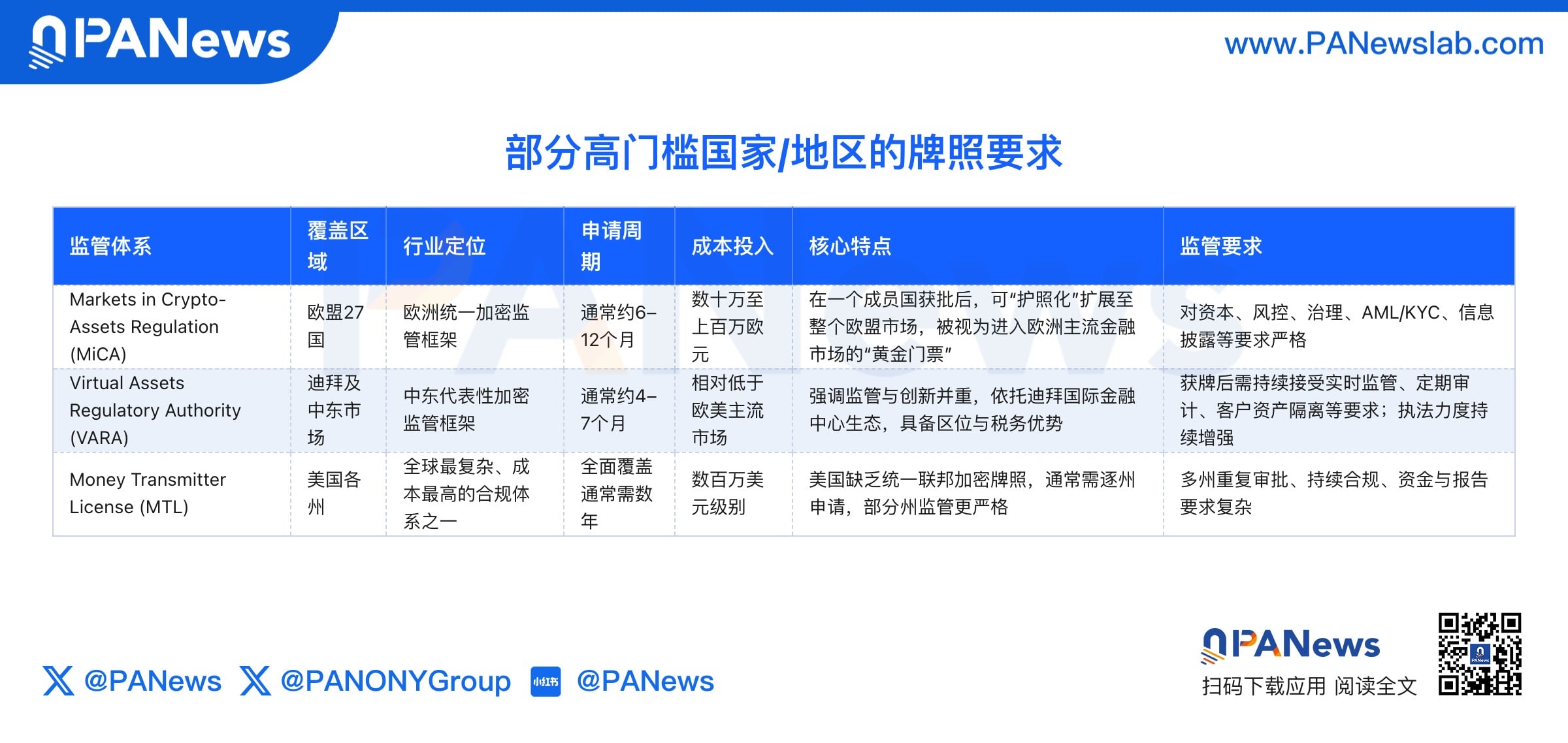
For instance, MiCA, as a unified regulation of the European Union, allows for business expansion across all 27 EU countries once authorized in one member state; thus it is regarded as a golden ticket for entering the European mainstream financial market, highly favored by institutions and mainstream banks. However, the high intrinsic value also means higher barriers. Typically, the complete application cycle for MiCA is about 6 to 12 months, with overall investment often reaching hundreds of thousands to more than a million euros.
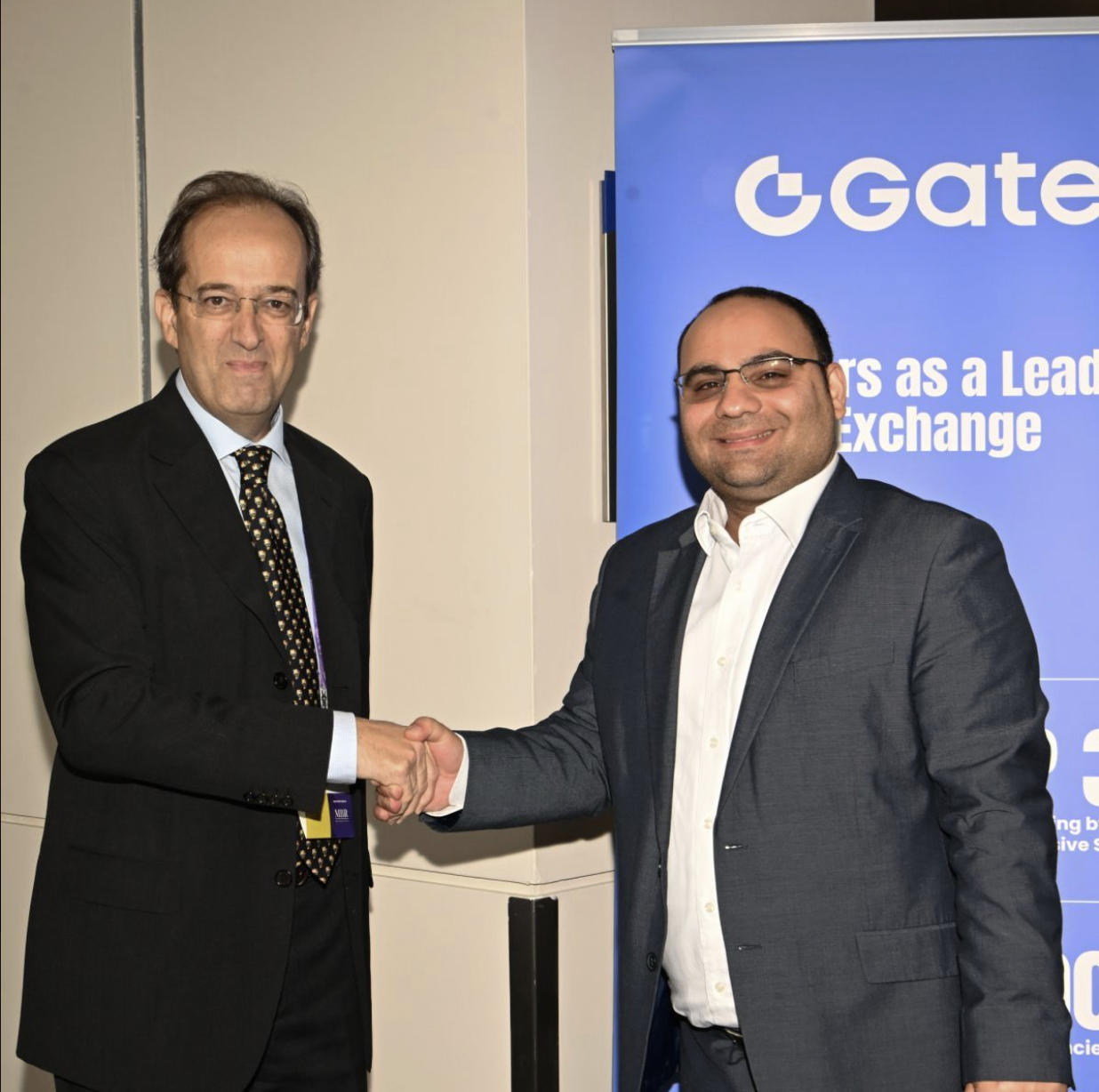
Note: Gate Europe CEO Giovanni Cunti meeting with Malta's Minister of Finance Clyde Caruana, accelerating the landing of the MiCA license for European expansion.
As one of the most representative crypto regulatory frameworks in the Middle East, Dubai VARA is seen as balancing regulatory power with innovation and openness. It imposes high entry barriers for enterprises applying for VASP licenses, and after obtaining the license, they must continuously undergo real-time supervision, regular audits, and client asset segregation compliance requirements. In the past few years, VARA has also imposed hefty fines on multiple unlicensed operators and even directly required them to cease operations, continuously enhancing regulatory enforcement. Compared to European and American markets, VARA's overall application cycle is relatively faster, typically around 4 to 7 months, and leveraging the location advantages of the Dubai International Financial Center, along with a relatively favorable banking, tax, and business environment, VARA is gradually becoming an important entry point for global crypto enterprises to layout in the Middle East market.
On the other hand, U.S. state-level MTL is considered one of the most complex and highest-cost compliance systems globally. Because the U.S. has yet to establish a unified federal crypto licensing system, crypto institutions typically need to apply for MTL licenses state by state, with some states having even stricter local regulatory requirements. For platforms hoping for comprehensive coverage of the U.S. market, the application cycle often extends for years, with total investment potentially reaching millions of dollars. However, at the same time, with the U.S. being the largest crypto capital market globally, its regulatory licenses also carry strong institutional recognition and access to financial resources, thus remaining a core compliance stronghold fiercely contested by leading platforms.
It is precisely these high barriers, high costs, and long-term investments that have led many exchanges to choose to withdraw from certain markets or slow down their global compliance expansion pace. Therefore, exchanges like Gate, which can acquire more high-barrier licenses early on, often indicate that they have already made compliance preparations and local adjustments ahead of trends in global regulation, including team building, legal framework adjustments, risk control system improvements, and long-term communication with regulatory bodies. This not only requires stronger resource investment and strategic foresight from the platform but also tests their emphasis on long-term global operations.
For crypto platforms, obtaining licenses is often just the first step in compliance construction; the real challenge lies in their long-term, continuous localization operational capabilities. Platforms must not only build local teams to engage deeply in business management but also must fully understand local social cultures, regulatory logics, and complex government-business relationships, while balancing local interest structures and compliance boundaries. This often implies long-term investment in human resources, funding, and resources; otherwise, even if they successfully obtain licenses, they risk facing business restrictions or even license revocation due to insufficient understanding of the local regulatory environment.
More importantly, regulation itself is not static. After obtaining licenses, platforms still need to maintain long-term communication with regulatory bodies and continuously adjust internal system structures, risk control models, asset custody mechanisms, and compliance team configurations to adapt to continually changing regulatory requirements. In other words, compliance is not a one-time licensing action, but requires a set of sustained, dynamic operating capabilities.
Conclusion
Faced with regulatory compliance becoming an inevitable trend for industry development, compliance construction will be a competition of "capital + execution capability + long-termism", where the quality of licenses, regional coverage capabilities, and foresight of regulatory trends will be the long-term competitiveness of CEXs.
Taking Gate as an example, it will continue to increase investment in compliance markets in 2026 and focus more on localized operations and user base expansion. While consolidating its existing compliance footprint, Gate is also continuously looking into more compliance opportunities in emerging markets and actively exploring new business license applications, extending to payments, derivatives, and other business lines besides custody and trading.
As the crypto industry stands at the turning point of mainstreaming and compliance, small and medium CEXs are being rapidly cleared out. In the future, those able to remain at the table may not be the platforms with the fastest business expansion. Compliance is also becoming a new watershed in the crypto industry.
免责声明:本文章仅代表作者个人观点,不代表本平台的立场和观点。本文章仅供信息分享,不构成对任何人的任何投资建议。用户与作者之间的任何争议,与本平台无关。如网页中刊载的文章或图片涉及侵权,请提供相关的权利证明和身份证明发送邮件到support@aicoin.com,本平台相关工作人员将会进行核查。


