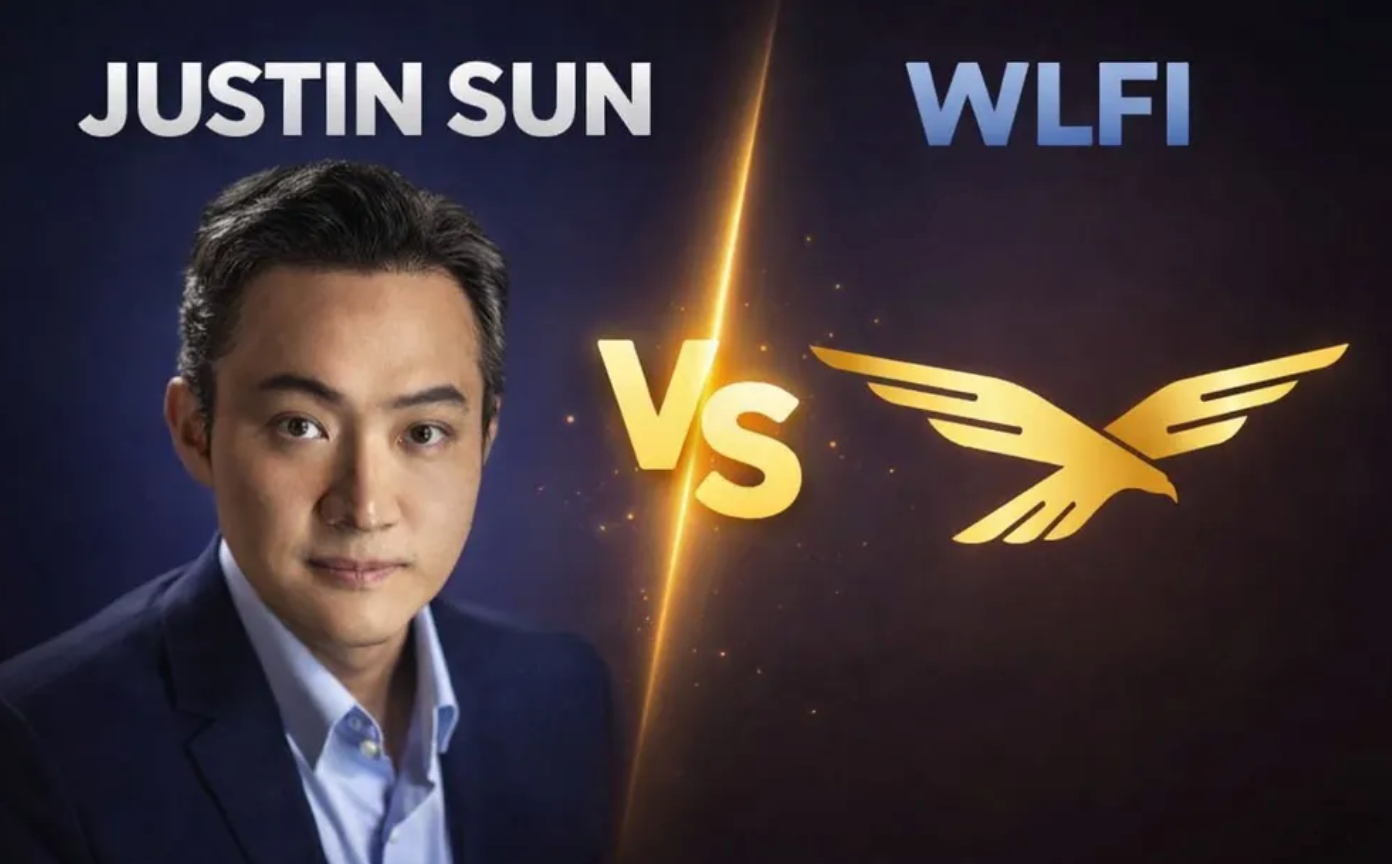
Recently, Elizabeth Warren, a senior Democratic senator and the Democratic chief member of the Senate Banking Committee, posted on the X platform, publicly criticizing the cryptocurrency project World Liberty Financial (WLFI), which is supported by the Trump family. Warren cited a recent investigative report by Bloomberg, directly pointing out that "the Trump family's crypto project is quietly cashing out, while ordinary investors are left in distress."
This is not the first time WLFI has become a topic on Washington's political agenda, but Warren's recent retweet on her official account, accompanied by critical comments, has escalated the controversy surrounding WLFI from an event in the crypto community to a public inquiry at the political level. It is noteworthy that Warren's statement coincides with a critical phase in the ongoing lawsuit between TRON founder Justin Sun and the WLFI project party.
Criticism from Legislators: From Governance Mechanism to Funding Flow
According to Bloomberg's report, the revenue obtained by WLFI through financing and selling tokens to private investors has mostly flowed to entities related to the project founding team; the project party not only sets the governance rules but also leads token issuance and collects sales revenue, while token holders face difficulties exiting. Warren commented that the ordinary investor's situation in this project sharply contrasts with the insiders of the project.
In fact, the attention of Democratic legislators on WLFI has long surpassed this recent statement. In February of this year, Warren, along with Senator Andy Kim, wrote to Treasury Secretary Scott Bessent, requesting the U.S. Foreign Investment Committee to initiate a national security review of an overseas acquisition transaction involving WLFI; in late April, Warren publicly criticized WLFI again, claiming that a governance proposal coerced token holders into voting in favor at the cost of a "permanent lockup." Several independent observation agencies have also raised questions about WLFI's token distribution structure, governance mechanism transparency, and compliance over the past year.
Core Controversy: Is it a Builder Project, or a "Concept Coin"?
The core doubt surrounding WLFI is not about its nominal identity label but rather a more fundamental question: Is this truly a Web3 project that is getting things done?
Since WLFI was established in 2024, the external understanding of its technical roadmap, product form, and development team composition has remained very limited. WLFI's market narrative heavily relies on the "Trump concept," with the official website and social media long emphasizing its connection with the Trump family, while being relatively restrained in disclosing actual product progress and protocol mechanisms.
More dramatically, as the criticism from Democratic legislators mounted, WLFI's official website quietly began to adjust its content presentation: images related to members of the Trump family were removed, and a newly added disclaimer emphasized that former President Trump and his family members have no formal positions related to the project. Some previous promotional content from Eric Trump was also deleted. This posture of "loudly binding during favorable market conditions, and swiftly cutting ties when risks arise" has further raised questions about WLFI's initial market positioning: are the political figures and celebrities brought to the forefront true participants in the project, or simply "signboards" in the marketing chain?
Team Background: Shadows of a Web3 "Familiar Circle"
If the political label is a layer of packaging WLFI presents to the outside world, then another group of faces is truly operating the resource network behind the project.
Ryan Fang, who plays an important growth role in the WLFI system, has participated in multiple projects such as ANKR, BURGER, and AUCTION over the past few years. These projects have all had grand narratives and high popularity during their respective market cycles but ultimately experienced severe price volatility or even gradually faded into silence. Shawnc, who has long been responsible for market and communication affairs, has many interactions with Jiayi (Li Jiayi), who was responsible for market work at P Network before leaving the team due to personal project controversies.
This has sparked widespread doubts among veteran crypto users: a project that repeatedly touts "decentralization" has core operators coming from a highly overlapping "familiar circle" within the industry and is able to unilaterally freeze specific users' wallet addresses without the community's knowledge or explicit authorization. This is in clear contradiction to the open governance and anti-censorship spirit championed by DeFi.
Justin Sun vs WLFI: From Individual Rights Protection to Public Issues
The WLFI project's freezing of certain early investors' tokens and blacklisting is one of the triggers for this round of controversy. In September 2025, WLFI first blacklisted Justin Sun’s wallet address, freezing all WLFI tokens he held, citing "to prevent market manipulation."
It is noteworthy that initially, Justin Sun did not choose to immediately take public action. According to reports, for several months, Justin Sun's side negotiated with the WLFI project party through various channels, hoping to resolve the asset freezing and rights limitation issues based on early investment agreements and industry standard governance rules. However, communication did not make progress, and the issues remained unresolved for a long time.
In April 2026, Justin Sun publicly voiced concerns, pointing out that the WLFI token smart contract embedded a "blacklist backdoor" function, allowing the project party to unilaterally freeze, restrict, or even destroy any user's assets without reason or recourse, harming investor rights. This accusation did not target his personal encounter, but rather the systemic risk posed by this mechanism to all WLFI holders. Justin Sun subsequently filed a lawsuit in the U.S. District Court for the Central District of California, requesting the court to determine the relevant operations illegal; WLFI, in turn, filed a countersuit in Florida, accusing Justin Sun of defamation.
As external questioning surfaced, this lawsuit, which began as an individual asset dispute, has touched on issues far beyond the scope of an investor's rights protection. It concerns whether a self-proclaimed "decentralized" project can arbitrarily control user assets in the absence of a checks-and-balances mechanism, and what "governance" should mean within the discourse of Web3.
Is a Turning Point Approaching?
From the continuous tracking of mainstream media to several Democratic legislators calling for regulatory agencies to intervene and investigate, the external pressure surrounding WLFI is spreading from the discourse in the crypto community to a broader policy and regulatory level.
Regarding the ongoing case of Justin Sun suing WLFI, the legislators' statements do not directly constitute legal effects, but the changes in the public opinion environment they reflect often resonate in the broader context outside the courtroom.
Looking back at the initial outbreak of the controversy, the general judgment of the external community was that it was an unequal game between a crypto magnate and a project party with a strong political background. However, as senior legislators like Warren publicly named names and mainstream media launched investigations, many of the questions Justin Sun previously raised—from the "blacklist backdoor" mechanism to the opacity of token distribution, from the unilateral formulation of governance rules to the lack of exit channels for investors—are being increasingly validated from different perspectives by external voices. The WLFI token price has recently hit multiple new lows, and market confidence in the project's governance continues to decline.
The final outcome of the lawsuit still requires judicial procedures to provide answers, but when Justin Sun's initial questions resonate with today's political agenda in Washington, it is not difficult to discern which direction the balance of this dispute is tipping.
免责声明:本文章仅代表作者个人观点,不代表本平台的立场和观点。本文章仅供信息分享,不构成对任何人的任何投资建议。用户与作者之间的任何争议,与本平台无关。如网页中刊载的文章或图片涉及侵权,请提供相关的权利证明和身份证明发送邮件到support@aicoin.com,本平台相关工作人员将会进行核查。


