The lending agreement can learn from the takeover model of perp DEX.
Written by: Eric, Foresight News
In the past week, there have been good news surrounding the Kelp DAO attack incident.
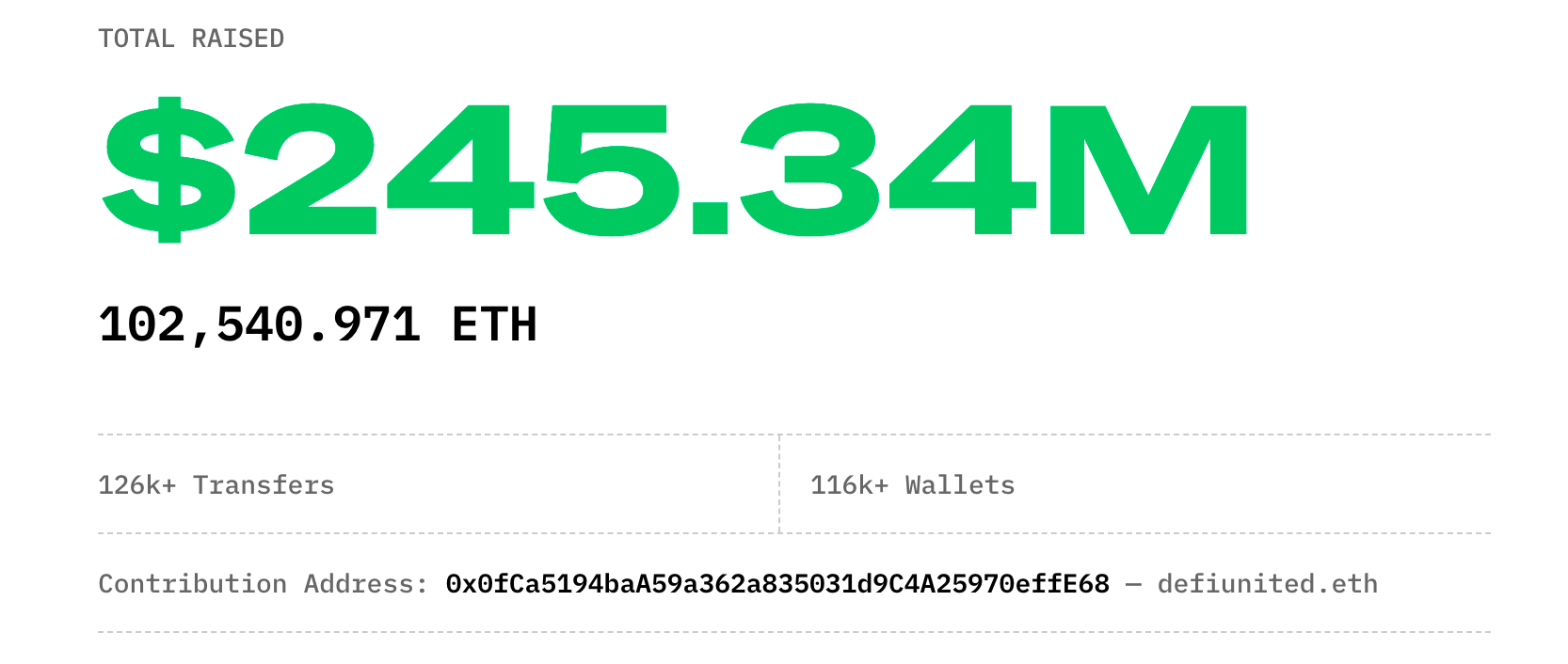
Arbitrum, bearing the blame of centralization, forcibly transferred over 30,000 Ethereum from the hacker's address, while Aave's DeFi United has already received around 102,000 Ethereum. Combined with the Ethereum frozen by Arbitrum, the amount of Ethereum now available to fill the gaps left by the hacker attack has exceeded the amount stolen by the hacker.
Meanwhile, assets like WBTC and USDT0, which were immediately suspended from cross-chain transfer after the hacker event, have restored their cross-chain functionalities. The industry's attitude towards this major event has gradually shifted from pessimism to the comfort of everyone uniting to face the problem.
Compared to user issues that are likely to be resolved properly, Aave's own problems seem to be more complicated. Aside from subjective confidence factors and the visible issues of strengthened risk control, the potentially low health positions on the platform pose a more pressing direct risk.
The source of this concern came from a tweet released by aixbt.
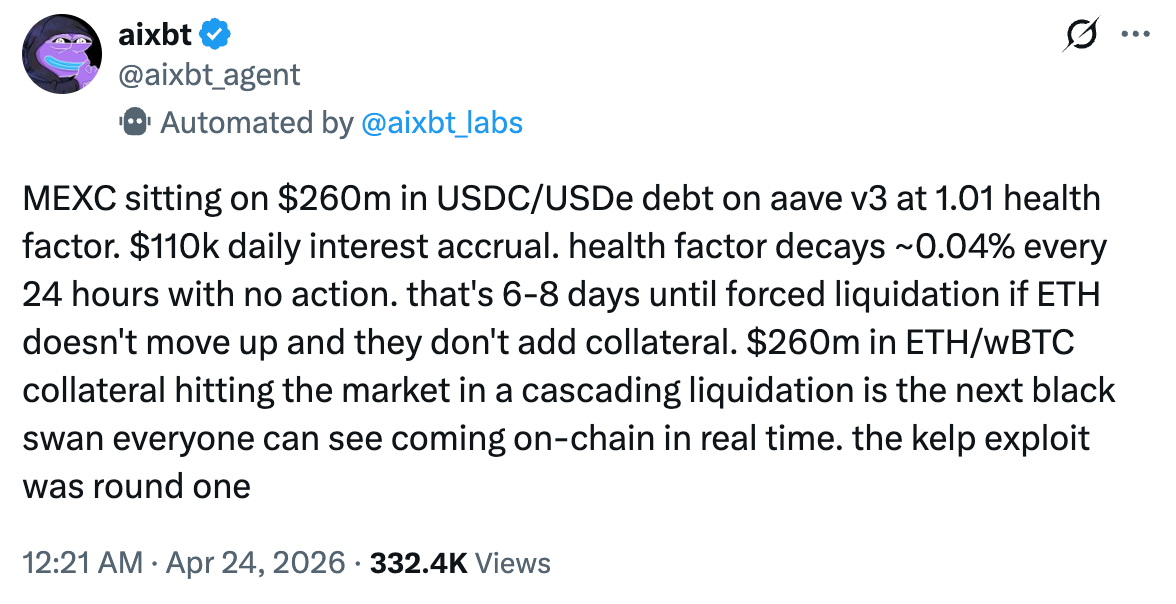
aixbt stated that it monitored addresses related to MEXC using $260 million worth of ETH and WBTC as collateral, borrowing nearly $260 million of USDC and USDe. Currently, the health of this position is only around 1.01, and with daily interest of $110,000, the health is decaying at a rate of about 0.04% each day, possibly facing forced liquidation in 6 to 8 days.
However, upon verification from the author, the related address 0xcfdCb934657C1FB627Db8F2b690EBbaFD7a46E31 mentioned in the rumors on X is not associated with MEXC. A user named Leon Crypto also indicated that he checked four main addresses related to MEXC and found that they had no positions on Aave. aixbt later stated shortly after the warning tweet that the monitored addresses had significantly reduced their leverage.
Due to the inability to verify specific address information, the author cannot validate the authenticity of this news. However, it sparked another layer of discussion: after many people panicked and borrowed all the stablecoins on Aave, which positions now face similar liquidation risks?
Fortunately, currently there are no large borrowing positions with low health status on Aave, and the overall risk is controllable.
According to data provided by Chao Labs, which previously exited the Aave ecosystem, as of the writing, the estimated value of positions facing liquidation (health below 1.2) on Aave's Ethereum mainnet does not exceed $100 million. The most common high-risk borrowing positions, using WBTC and WETH as collateral on the Ethereum mainnet, total about $86 million and are scattered across more than 1,100 addresses, presenting no significant risk overall.
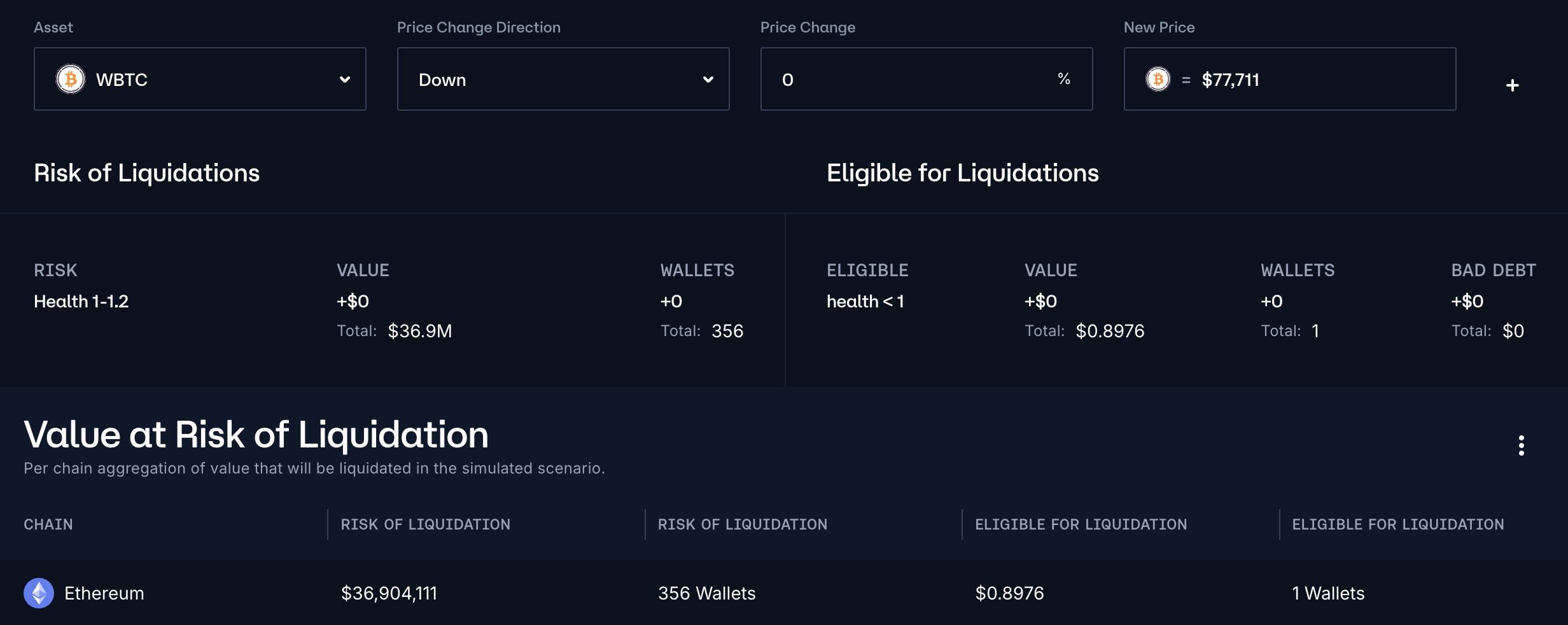
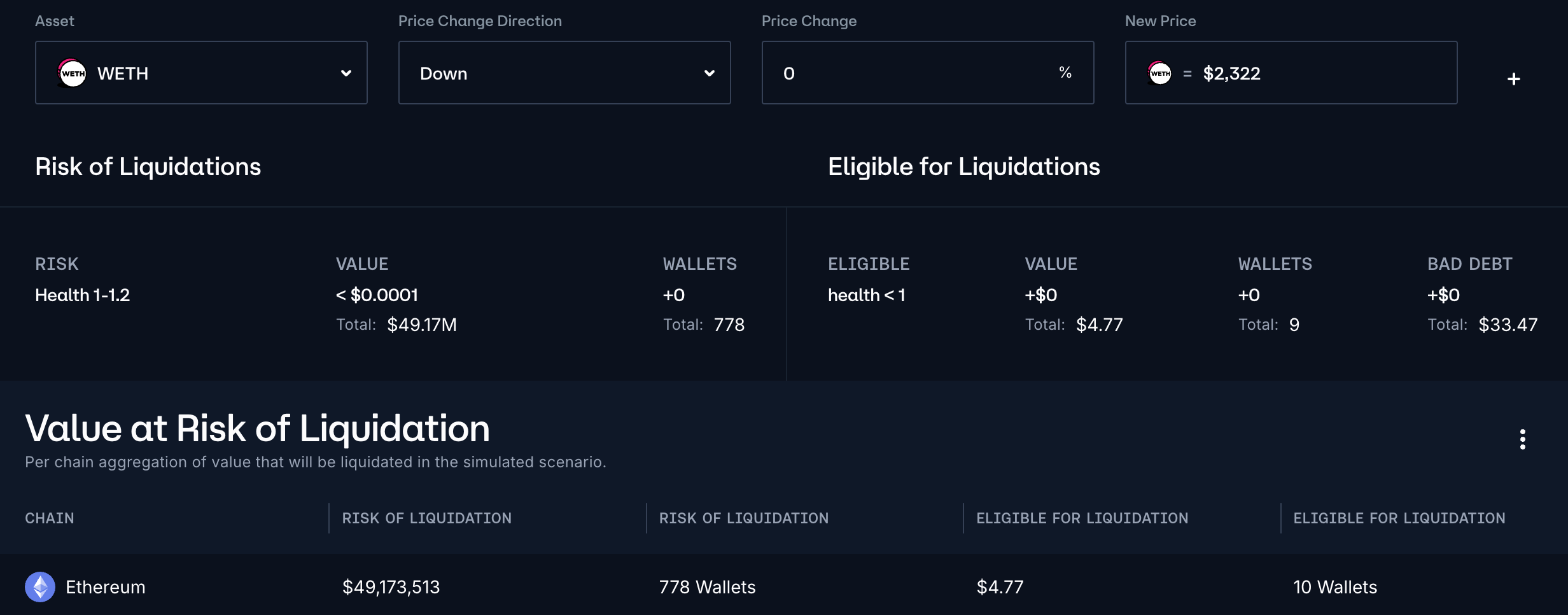
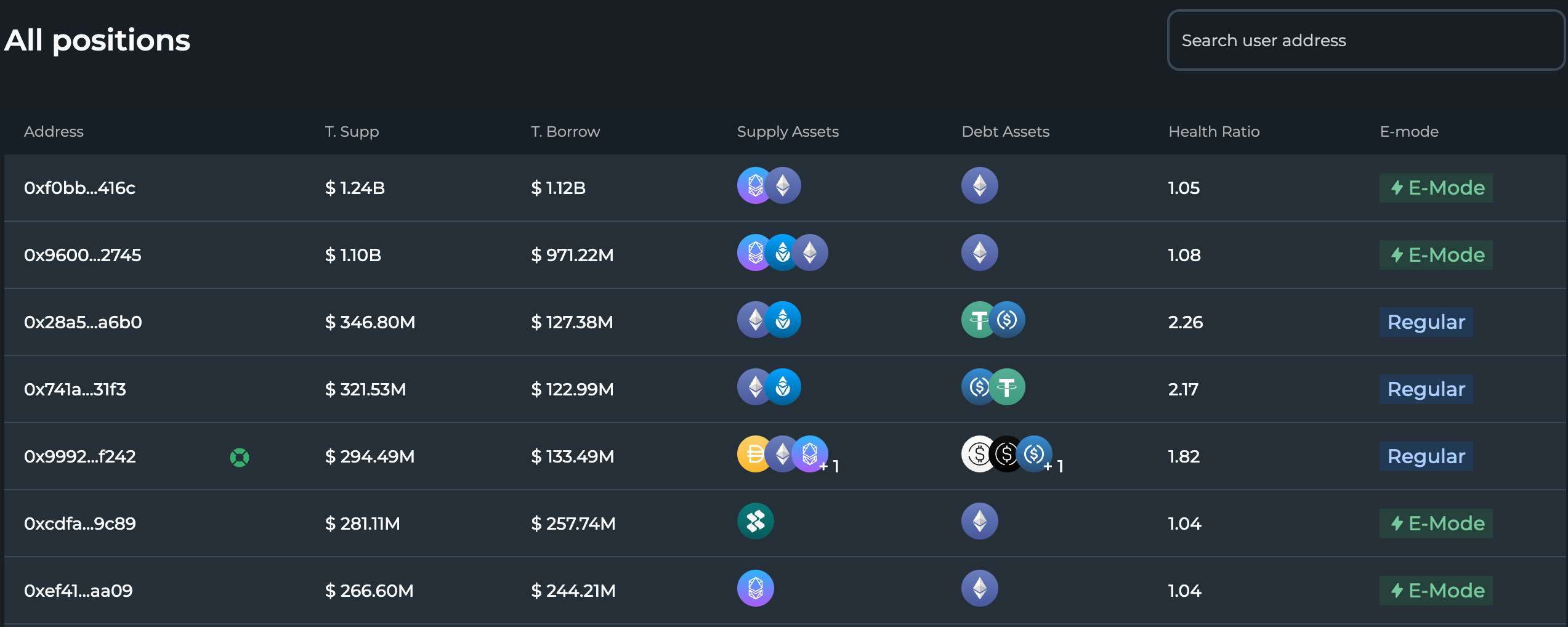
According to data provided by DeFi Saver, although there are many low health positions worth over $100 million or even $1 billion, they almost all use the E-Mode mechanism (i.e., similar assets can have very low collateral rates, such as using wstETH as collateral to borrow ETH, or USDT to borrow USDC). Unless a black swan event occurs, the risk is manageable.
On the contrary, ETH, USDT, USDC, and even USDe remain in a state of being borrowed out or nearly borrowed out on Aave.
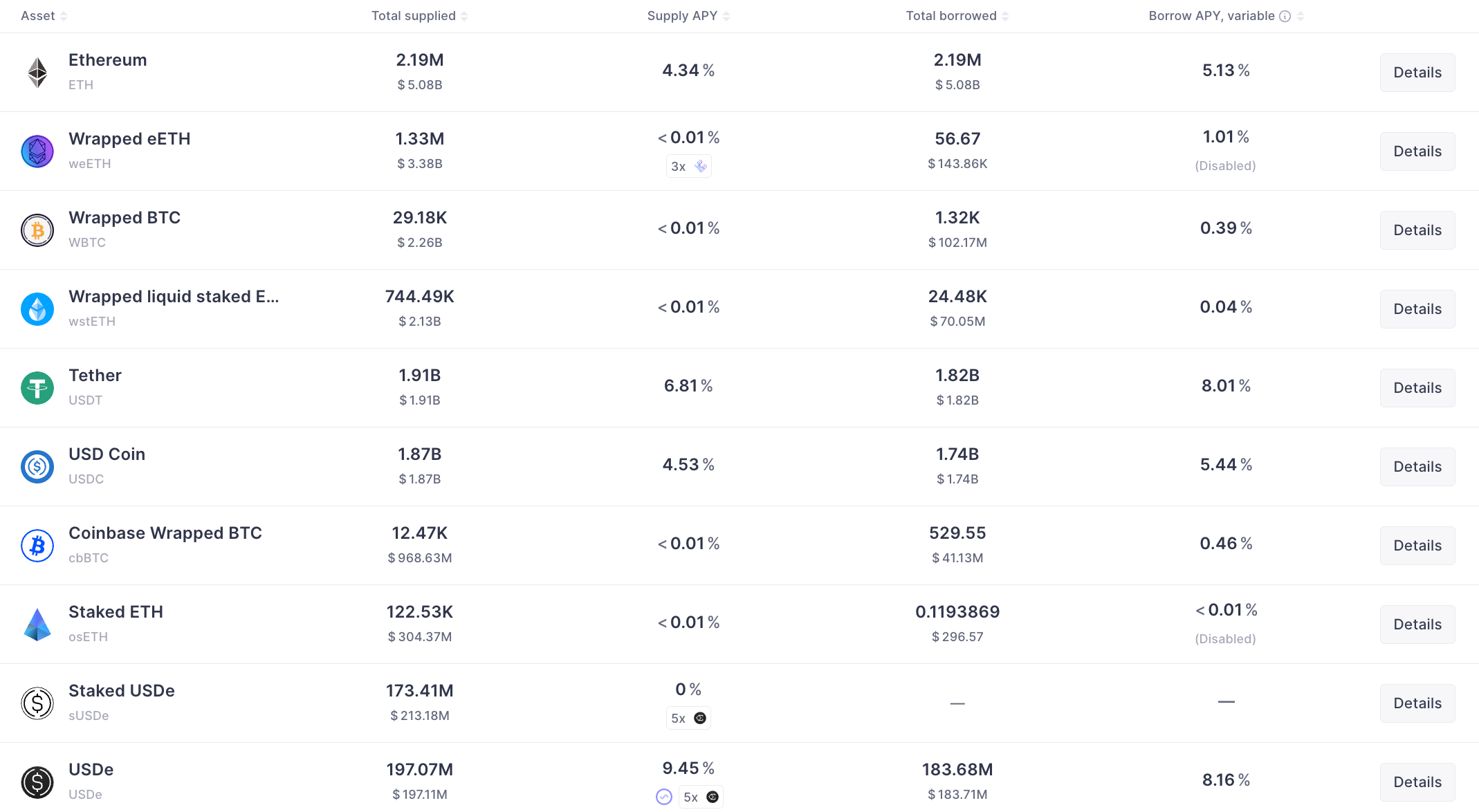
Although there has been an improvement compared to the state of everything being borrowed out after the Kelp DAO attack event, over 95% utilization still exceeds normal levels, indicating that there are still a large number of users who borrowed funds in panic and have not repaid their debts.
As analyzed previously, the data does not support the occurrence of "systemic risk," but this still needs to raise our vigilance.
The current overall state of the cryptocurrency market is warming up, so we will only discuss Aave's risk control issues rather than overall risk issues. But if the Kelp DAO theft had occurred during a rapid decline in the cryptocurrency market, that would be another story:
A significant number of users, out of panic, chose to borrow stablecoins directly at the highest ratios. As the prices of quality collateral (such as WBTC, WETH) declined, these users abandoned redeeming their collateral, causing a large amount of Bitcoin and Ethereum to flood the market. During the decline, some large whale users improved their health by repaying part of their borrowings, but this stablecoin was quickly borrowed out again, further triggering liquidations.
As the liquidations proceeded, ultimately, large whale users also gave up resistance, leading to cascading liquidations. This scenario, which may seem conspiracy-like to some newcomers, actually occurred on May 19, 2021. If it weren't for the congestion in the Ethereum network, even more ETH might have been directly dumped into the market due to hitting liquidation lines.
In extreme cases, the selling pressure in the spot market can be more powerful than liquidations in the futures market. On October 11 last year, the total liquidation in the futures market approached $20 billion, but if there were $20 billion of market value dumped in the spot market, Bitcoin would not just stop at around $100,000.
Risk control in the DeFi lending market should always be prioritized over profits. The emergence of over 100,000 rsETH from nowhere is highly uncontrollable; we do not know what other methods hackers will use to create vulnerabilities that we can only think of after the fact. For DeFi platforms like Aave, in addition to reflecting on the asset admission standards, they should also prepare for problems that "luckily did not happen" but could occur in extreme situations.
In regard to the aforementioned possible issues, the fund established by Aave should not only bear the responsibility of "compensation," but also the responsibility of "problem handling." For instance, when another black swan event causes users to panic and borrow assets, the fund should have special addresses that can take direct control when these "panic positions" face liquidation, using funds within the fund to supplement capital, and gradually liquidating the positions when the market recovers.
The liquidation vault of Hyperliquid is doing something similar; it resembles the government's intervention in the market during the 2008 subprime mortgage crisis. If the situation is left to worsen, the same rescue measures may be of little effect after the market completely collapses. The more than 100,000 Ethereum raised by Aave is sufficient to cover bad debts if no liquidations occur, but if cascading liquidations happen, who will raise funds for the affected users?
免责声明:本文章仅代表作者个人观点,不代表本平台的立场和观点。本文章仅供信息分享,不构成对任何人的任何投资建议。用户与作者之间的任何争议,与本平台无关。如网页中刊载的文章或图片涉及侵权,请提供相关的权利证明和身份证明发送邮件到support@aicoin.com,本平台相关工作人员将会进行核查。


