Source: Xinhua News Agency
According to a report by the Iranian Mehr News Agency on the 25th, citing an Iranian lawmaker, Iran has developed a comprehensive plan for managing the Strait of Hormuz. Analysts point out that Iran's move has multiple objectives, including increasing pressure on the United States and Israel, and obtaining new stable sources of income. However, charging transit vessels has sparked opposition internationally, and the United States is exerting pressure on Iran by blocking its ports and ships, making it uncertain whether Iran's control plan for the Strait can truly be implemented.
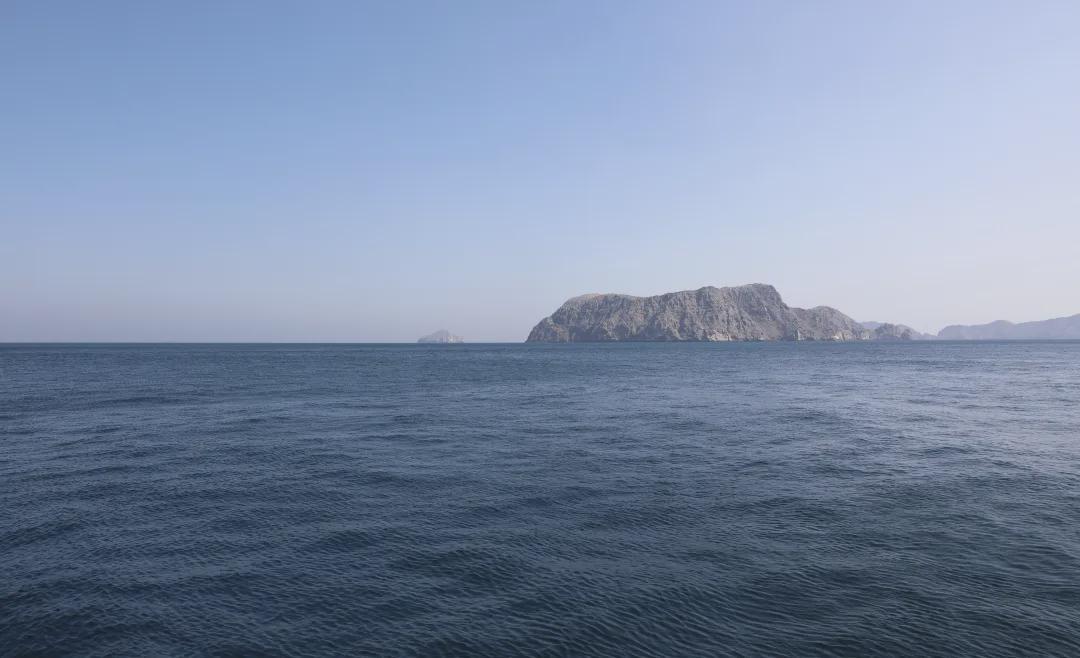
This is a file photo of the Strait of Hormuz taken on February 19, 2025. Photo by Xinhua News Agency reporter Wang Qiang
What are the objectives
According to Mehr News Agency, the above information was disclosed by Iranian Islamic Parliament member Behnam Saeidi. Iranian media previously reported that on the 5th, the Iranian parliament reviewed multiple proposals regarding the governance of the Strait of Hormuz and decided to establish a special committee to formulate a comprehensive plan and legal assurance documents for exercising jurisdiction over the Strait.
According to Saeidi, the comprehensive plan includes:
Sovereignty over the Strait of Hormuz will be fully controlled by Iran;
Vessels and ships navigating in the region must obtain permission from Iran;
Vessels passing through the area must pay relevant fees for safety, environmental protection, shipping management, and permit issuance, prioritizing payments in rials;
Vessels identified as hostile nations by Iran's Supreme National Security Council or the General Staff of the Armed Forces are prohibited from passing through the Strait of Hormuz, with Israeli vessels absolutely forbidden to pass through the area;
Countries that cause losses to Iran must first reach an agreement with Iran on compensation before Iran will issue navigation permits to their vessels.
Analysts believe that this plan reveals multiple objectives of Iran.
First, to continue exerting pressure on the U.S. and Israel. By controlling the Strait of Hormuz, a global shipping route, Iran aims to influence international oil prices, exacerbate inflation pressure and economic burdens on the U.S. and Israel, and encourage the international community to call for de-escalation and free navigation, thereby putting dual pressure on the U.S. and Israel both economically and diplomatically. Prohibiting vessels from "hostile nations" from passing further targets the U.S. and Israel. Additionally, tying the issue of Strait navigation with demands for war compensation aims to compel the U.S. to concede on compensation matters.
Second, to leave room for U.S.-Iran negotiations. Although Iran has consistently maintained a tough stance toward the U.S., it has not completely closed off negotiation channels. Recently, Iran sent Foreign Minister Amir-Abdollahian to Pakistan and stated it would not negotiate with the U.S., but communicated through Pakistan to signal that he may soon return to Islamabad. In introducing the comprehensive plan, Saeidi listed Israel as "absolutely prohibited" but did not name the U.S., which may imply that U.S. vessels navigating could serve as negotiating chips.
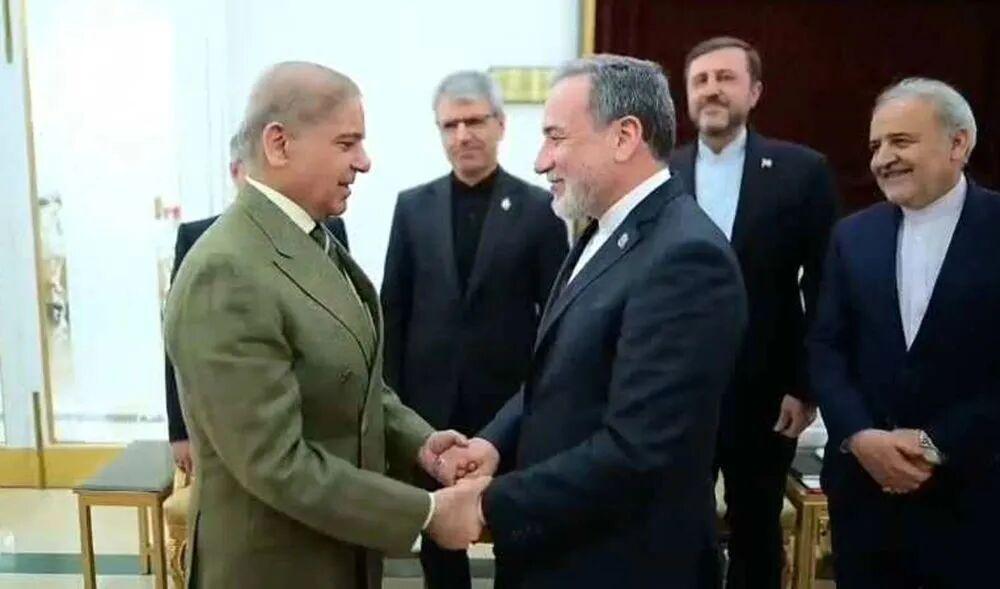
On April 25, 2026, Pakistani Prime Minister Shehbaz (left) talks with Iranian Foreign Minister Amir-Abdollahian in Islamabad, the capital of Pakistan. Photo by Xinhua News Agency (provided by the Office of the Prime Minister of Pakistan)
Third, to provide Iran with new sources of income. Statistics show that if Iran charges $1 for each barrel of oil passing through the Strait of Hormuz, based on the shipping volume before the outbreak of conflict, Iran would earn over $7.7 billion annually. International opinion believes this will become an important source of funding for Iran to resist Western sanctions and for post-war reconstruction. The requirement for payments to be prioritized in rials aims to avoid the revenue from transit fees being restricted by the dollar system.
Can it be implemented?
Regarding subsequent procedures, Saeidi said the plan has been submitted to the Iranian Islamic Parliament’s National Security Committee, and once the parliament's plenary session resumes, it will be submitted to the speaker's group for review in the plenary session. The plan may also be approved and published by the Supreme National Security Council.
In this regard, Abdulaziz Shahbani, a researcher at the Riyadh Political and Strategic Studies Center in Saudi Arabia, analyzed that approval through a plenary session would grant the plan formal legal attributes, but the process is complex and more likely to provoke opposition from the international community. Conversely, approval and publication through the Supreme National Security Council is a more flexible and quicker route, allowing adjustments according to the development of the situation.
However, Shahbani believes that from a practical standpoint, fully intercepting and charging all vessels passing through the Strait will be very difficult in the context of significant shipping volume and the presence of foreign military forces. The future execution of the plan is likely to be limited and selective.
At the same time, Iran's actions are controversial under international law and have triggered significant opposition. Charging transit fees in this maritime thoroughfare will inevitably increase transport time and costs for passing vessels, impacting the economies of multiple countries. Many countries, including Gulf nations, have expressed the hope that the Strait of Hormuz remains open. The UK and France have previously led the formation of an alliance to attempt multinational actions to ensure the Strait remains open. If Iran forcibly charges fees, it may face international pressure and diplomatic setbacks.
Furthermore, the U.S. is implementing countermeasures by blocking Iranian ports and vessels. The U.S. has clearly stated that it will not allow Iran to permanently control the Strait and establish a charging system. If the blockade continues to lead to the saturation of Iran's oil storage facilities, Iran may be forced to halt production, which could cause significant damage to its oil extraction facilities. The U.S. has also threatened to intercept and inspect all vessels that pay transit fees to Iran in international waters. This could result in no vessels passing through the Strait, leaving Iran unable to collect fees.
Of course, the U.S. blockade against Iran will come at a high cost, and the longer the blockade lasts, the more it will affect the midterm election prospects for Republicans; thus, the U.S. may not be able to maintain this stance for long. Iran may also only be using the charging fees as a bargaining chip with the U.S. in exchange for benefits, and not necessarily enforcing it. Therefore, whether the plan will be implemented and to what extent remains uncertain.
免责声明:本文章仅代表作者个人观点,不代表本平台的立场和观点。本文章仅供信息分享,不构成对任何人的任何投资建议。用户与作者之间的任何争议,与本平台无关。如网页中刊载的文章或图片涉及侵权,请提供相关的权利证明和身份证明发送邮件到support@aicoin.com,本平台相关工作人员将会进行核查。


