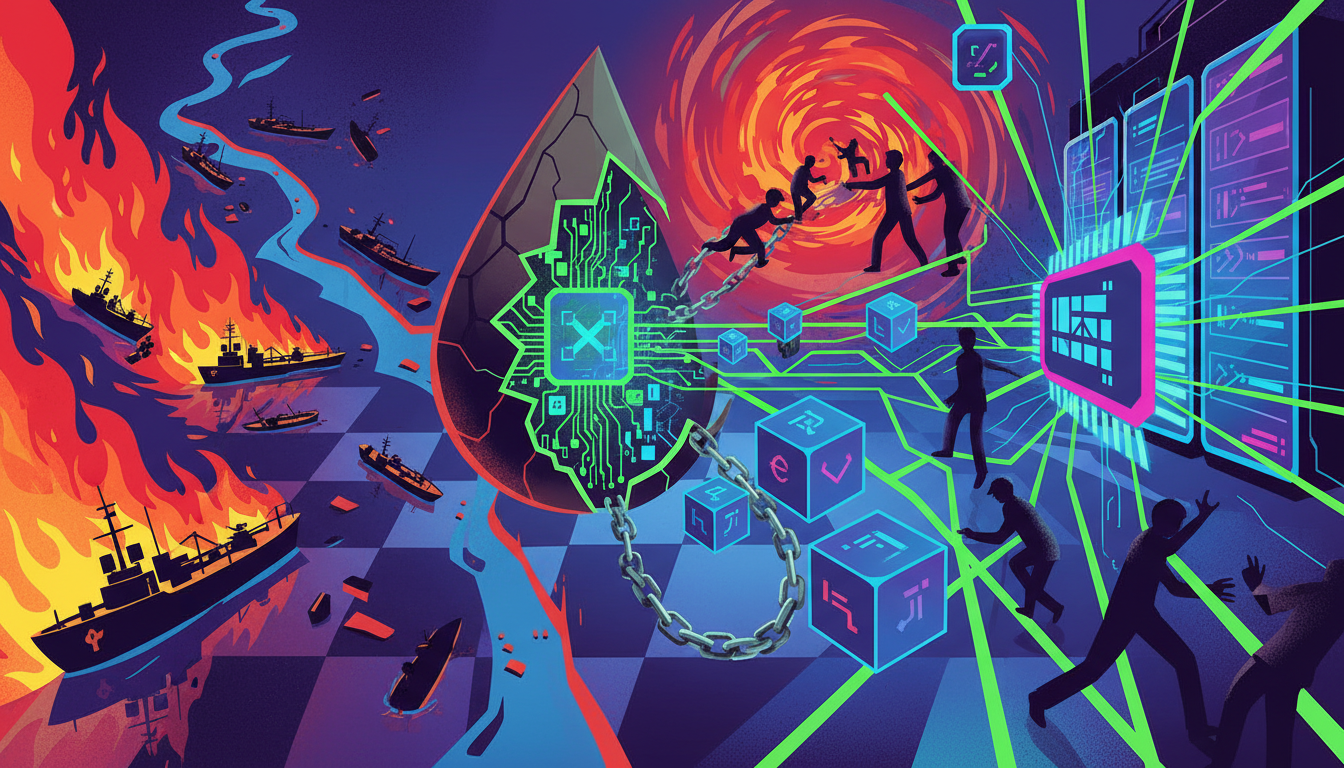
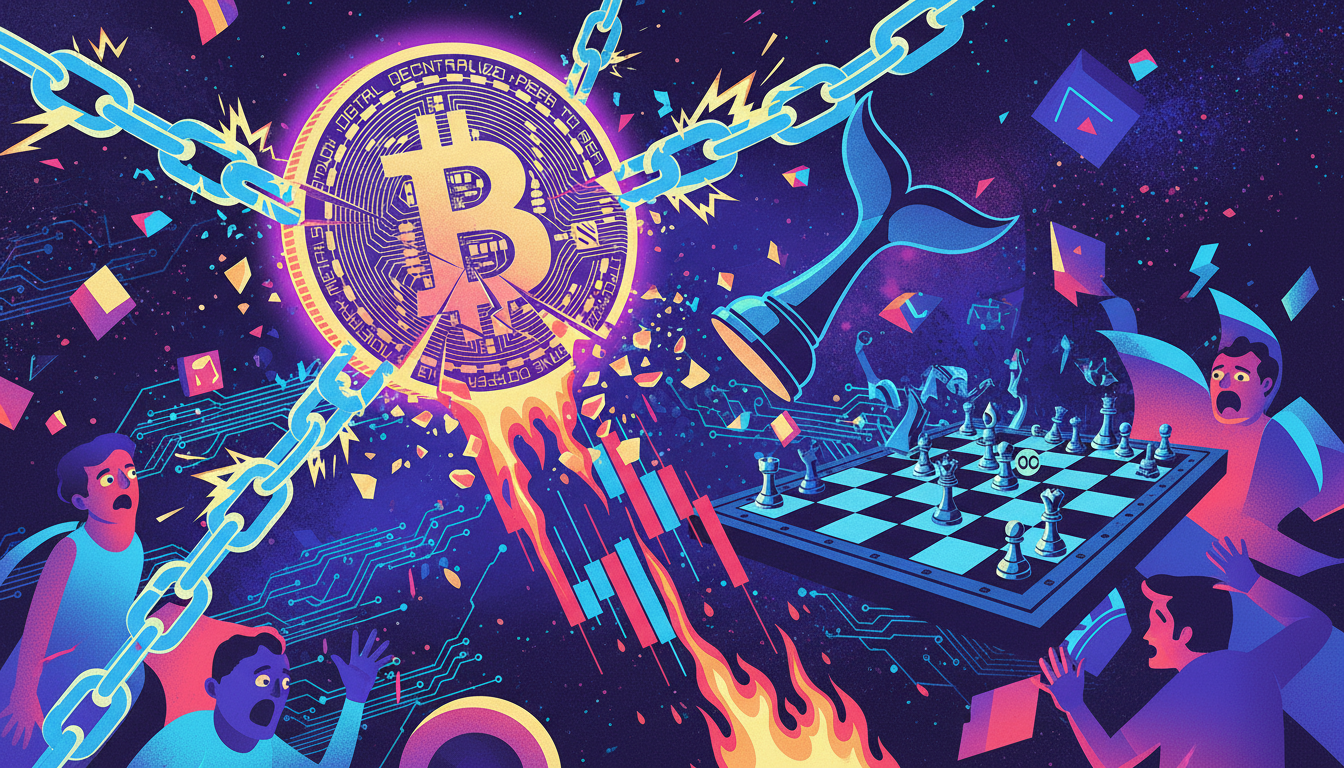
This week, the Strait of Hormuz has once again become the focus of global attention: According to public reports, the naval forces of the Islamic Revolutionary Guard Corps of Iran confronted an Indian merchant vessel in this critical waterway, leading to gunfire and temporary disruptions to traffic. The Strait of Hormuz is responsible for critical global oil and gas transportation. If safety expectations are disrupted, energy prices, shipping costs, and inflation expectations will be repriced, thereby triggering a chain reaction of volatility in global risk assets. The issue extends beyond oil prices themselves; rather, when oil routes become unstable and risk aversion rises, how the invisible "emotions and liquidity channel" between traditional markets and cryptocurrencies is activated becomes critical. What roles will Bitcoin and mainstream coins play in this narrative of geopolitical conflict?
Heightened Tensions in Hormuz: Tankers and...
From the existing public information, the immediate trigger for this escalation in tension is the recent direct confrontation between the naval forces of the Islamic Revolutionary Guard Corps of Iran and an Indian merchant vessel in the Strait of Hormuz. Briefings indicate that there was a description of "closure and fire", with details primarily coming from a single source; two Indian vessels were forced to turn back, and one super tanker was caught up in the incident, also based on reports from a single public channel. In the absence of multiple sources and an official complete report, these details can only outline the risk profile rather than serve as an infinitely detailed "battle report."
The report mentioning the two Indian merchant vessels being pushed back signifies Iran's demonstration of control over the maritime route and its ability to "deny access"; the involvement of a super tanker symbolically amplifies market associations with interruptions in energy supply. However, there have been no authoritative disclosures regarding the extent of damage to the vessels, casualties, or equipment destruction. Any depiction of combat losses or specific scales of fire remains in an information vacuum, strictly limited to "involvement" and "confrontation," avoiding dramatization of disparate facts into a theatrical war narrative.
This round of friction is not an isolated incident but is layered on the long-standing sanctions and regional strategic games involving Iran. In the face of continuous pressure from the United States and its allies, Iranian leadership has been consistently sending tough signals in diplomatic discourse. Iranian Deputy Foreign Minister Sayyed Khatibzadeh publicly stated, "The era of colonialism must come to an end," tying maritime safety to narratives of sovereignty and anti-hegemony. In this political context, every spark in Hormuz resonates far beyond just a couple of ships, impacting the pricing power of crude oil, the dollar financial order, and the rebalancing of regional power dynamics, thereby laying the groundwork for subsequent risk pricing in financial and cryptocurrency markets.
From Oil Prices to Coin Prices: Energy Waterway Storm...
Historical experience shows that whenever there is an interruption in energy supply or an escalation of conflicts in the Middle East, oil prices and traditional safe-haven assets usually react first, while the performance of Bitcoin and mainstream coins swings between the narratives of "digital gold" and "high β risk assets." Early in the phase of rising oil prices and heightened risk aversion, the crypto market often retreats alongside the stock market, reflecting high sensitivity to dollar liquidity and risk appetite; in certain periods, Bitcoin is packaged as an alternative asset for "hedging against geopolitical and currency depreciation," showing some synchronicity with gold. This alternating occurrence of synchronicity and divergence reflects the reality that crypto assets have not fully detached from the realm of high-risk assets.
If we pull back the lens to Hormuz, if the expectations for passage through this waterway continue to deteriorate, the potential impact pathways become relatively clear: first, the risk premiums of crude oil and natural gas prices will rise; secondly, freight and insurance costs will soar, pushing up costs on the global trade side; subsequently, this will manifest in data as increased inflation expectations and heightened concerns over tightening financial conditions. This chain will ultimately revert to the pricing of risk assets—when markets begin to bet on higher inflation, prolonged high interest rates, or greater economic downturn risks, stocks, credit bonds, and cryptocurrencies will find it challenging to remain unaffected, with volatility premiums being elevated overall.
In this macro framework, capital is unfolding a new round of allocation games between gold, oil, U.S. Treasuries, and Bitcoin: some funds are choosing to increase allocations to gold and high-rated U.S. Treasuries, pursuing traditional definitions of safe havens and hedging; some energy-related bulls are directly betting on oil prices and energy stocks to capture geopolitical premiums; for crypto assets, although the "digital safe-haven" narrative has significant volume on social media, in the asset allocation models of mainstream institutions, Bitcoin is often categorized as a high β risk asset—amplifying positive outcomes during liquidity expansion and rising risk appetites, and being the first to reduce holdings amid accumulating geopolitical and macro pressures. This positioning means that cryptocurrency is more likely to first endure "safe-haven sell-offs" as tensions in Hormuz escalate, and later decide whether it can be reassessed as a long-term hedging tool based on subsequent monetary policies and liquidity conditions.
Liquidity on Edge: Crypto Market...
Looking back at the history of the crypto market, it reveals that whenever macro or geopolitical uncertainties suddenly rise, trading structures often display a highly similar "defensive reaction": order book depth decreases, willingness to actively provide liquidity diminishes, and the use of leverage in perpetual contracts and options markets is rapidly compressed, tightening risk budgets. In this environment, even if spot trading volumes do not plummet instantaneously, apparent liquidity can deteriorate due to thinner depths, making the same scale of capital sufficient to trigger larger price swings. The news of gunfire in Hormuz essentially serves as a signal of "triggering increased uncertainty."
Under expectations of possibly dramatic fluctuations in energy prices, on-chain and off-chain funding behavior tends to become more defensive: on one hand, some funds choose to reduce holdings in highly volatile tokens and low market cap projects, concentrating on mainstream assets with relatively better liquidity like Bitcoin and Ethereum; on the other hand, more cautious institutions and large holders may further flow back into fiat or U.S. Treasuries and other off-chain assets, reducing overall crypto exposure while waiting for clearer macro and geopolitical signals. For exchanges, this gradual withdrawal from "long-tail tokens → mainstream coins → fiat currencies" directly manifests as a decline in transaction proportions in long-tail markets and a fragmentation of market depth.
The narrative that unfolds is: geopolitical conflicts may not immediately trigger unilateral crashes in the crypto market, but they almost certainly accelerate "liquidity dilution" and rising volatility. As participants tighten liquidity and reduce leverage, the overall "pressure-bearing capacity" of the market declines, any subsequent positive or negative news—regardless of its source, whether from regulators, project parties, or macro data—may be amplified into intense market movements on thinner depths. The flames of Hormuz more resemble an appetizer; the real risk in the crypto market lies in how many emotional shocks it can endure in a landscape already made skittish by liquidity.
RAVE Liquidity Controlled by Over 90%:...
As macro and geopolitical risk narratives intensify, the risks of liquidity manipulation at the micro level are also heightening market unease. On-chain analyst ZachXBT publicly accused that someone controls over 90% of the RAVE token liquidity, a conclusion that also comes from a single public channel and lacks further independent verification. Nevertheless, this figure alone is enough to warn the market: within an already uncertain external environment, the vulnerability of the internal market structure can turn certain small coins into dual "toys" of emotion and chips.
When liquidity is highly concentrated in the hands of a few addresses, the process of price formation no longer resembles a typical "multi-participant game" but is closer to a controllable script. The dealer can create exaggerated candlestick patterns in a short time through small-scale order cancellations or by pumping and dumping, attracting emotional traders to follow suit. During a combination of macro panic and noise from news, this structural risk is particularly fatal: external investors find it challenging to distinguish whether the panic sell-off is caused by "geopolitical conflict" or if "market makers use the opportunity to wash their holdings," forcing them to make decisions amidst high volatility and information asymmetry.
Combining previous experiences from multiple instances of small coin hunting markets, the issue does not solely lie with individual projects. Regulatory loopholes within exchanges, as well as information asymmetries in the listing and market-making processes, often provide a breeding ground for such highly concentrated liquidity structures. Whenever geopolitical risks, macro data, or policy directions exhibit drastic fluctuations, what dealers most like to do is package these "external crises" into their trading narratives: a heavy bearish candle coinciding with news from Hormuz can be interpreted as "market panic"; a surge in a small-cap coin drawn by geopolitical topics can also be marketed as "a safe-haven alternative." In this dual narrative, what truly gets harvested are the emotional funds that lack the time or tools to verify on-chain concentration and authentic liquidity.
From Hormuz to Exchanges: Regulation...
If we shift our perspective from individual tokens back to the entire market structure, we find significant discrepancies between the operational logic of traditional energy and financial markets amid geopolitical conflicts and that of cryptocurrency exchanges. The oil, shipping, and related derivatives markets typically face much stricter regulatory and information disclosure requirements during wartime or crises: from production, inventory to shipping schedules and insurance, critical data have relatively mature disclosure systems and regular reporting; participants are also clear about what type of information constitutes "significant changes." However, within cryptocurrency exchanges, the risk control and disclosure mechanisms between project parties, market makers, and platforms are far from standardized, and liquidity sources, concentration, and market-making rules are often a "black box" to retail investors.
When external macro risks soar suddenly, unconstrained project parties and dealers find "opportunities for mischief." The tensions in Hormuz, public relations offensives regarding this round of sanctions and counter-sanctions can all be edited into the candlestick stories of different tokens: some claim strong correlations with specific geopolitical sectors or energy narratives to package their surges; others attribute any drops entirely to "geopolitical conflict sell-offs," thereby covering up internal liquidations, unlocking sell pressure, or market maker exits. For ordinary investors, the true difficulty lies not in understanding how many macro news updates exist but in recognizing these news updates' "utilization in the market."
Thus, differentiating "macro risk premium" from "manipulated volatility" becomes the foremost priority at a high-risk geopolitical stage. Macro risk premiums often manifest as: multiple asset classes simultaneously repricing over a period, exhibiting cross-market coherence in volatility; while manipulated maneuvering more commonly accompanies extreme liquidity concentration, abnormal transaction volumes, and sudden shrinkage of order book depth, representing signals either on-chain or in the order book. In a geopolitical backdrop like Hormuz, simply attributing all intense market movements to the "Middle Eastern situation" not only fails to explain price behavior but risks becoming a "narrative shield" that dealers can exploit, concealing the true traces of their manipulations amidst the smoke.
The flames of war will not extinguish, but you can learn...
The chain of transmission from the flames of Hormuz to candlesticks on exchanges is not mysterious: energy waterway safety → crude oil and freight risk premiums → inflation and interest rate expectations → risk asset valuations and volatility → crypto market liquidity and emotions. At this current stage, the publicly available information predominantly remains at the level of disrupted passage and military confrontation, while the actual impact on energy supply has yet to be clearly quantified; what the crypto market feels is mainly the shocks from expectations and emotions, not immediately visible fundamental collapses.
For individual investors, managing crypto positions during high geopolitical risk phases begins with structural and leverage management: moderately reducing total leverage to avoid bearing excessive risk in thin depths; secondly, paying attention to liquidity distribution and on-chain concentration, maintaining caution around assets that exhibit apparent concentration of liquidity or are dependent on a few market-making wallets or projects, avoiding making large short-term bets on such targets; simultaneously strengthening risk controls over the funding curve, viewing macro and geopolitical variables through a longer time horizon to prevent being repeatedly led by short-term narratives.
Looking ahead, if the situation in Hormuz gradually eases and energy supply expectations stabilize, the risk premiums for oil prices and inflation expectations are likely to recede. Global risk assets may experience a reversal of the "panic correction," and the crypto market could accordingly restore some liquidity and risk appetite, with mainstream coins benefiting from it. Conversely, if the situation escalates further, resulting in broader sanctions and substantive supply disruptions, global assets will be repriced, with funds concentrating more into gold, U.S. Treasuries, and a few high-liquidity assets. Bitcoin may initially face pressure but could gradually be reassessed as a medium to long-term currency and geopolitical hedge tool. Regardless of the path taken, the only principle truly worth maintaining is: continuously track authoritative information and verifiable data, rather than being led by emotions and stories in your positions.
Join our community to discuss and become stronger together!
Official Telegram community: https://t.me/aicoincn
AiCoin Chinese Twitter: https://x.com/AiCoinzh
OKX Welfare Group: https://aicoin.com/link/chat?cid=l61eM4owQ
Binance Welfare Group: https://aicoin.com/link/chat?cid=ynr7d1P6Z
免责声明:本文章仅代表作者个人观点,不代表本平台的立场和观点。本文章仅供信息分享,不构成对任何人的任何投资建议。用户与作者之间的任何争议,与本平台无关。如网页中刊载的文章或图片涉及侵权,请提供相关的权利证明和身份证明发送邮件到support@aicoin.com,本平台相关工作人员将会进行核查。