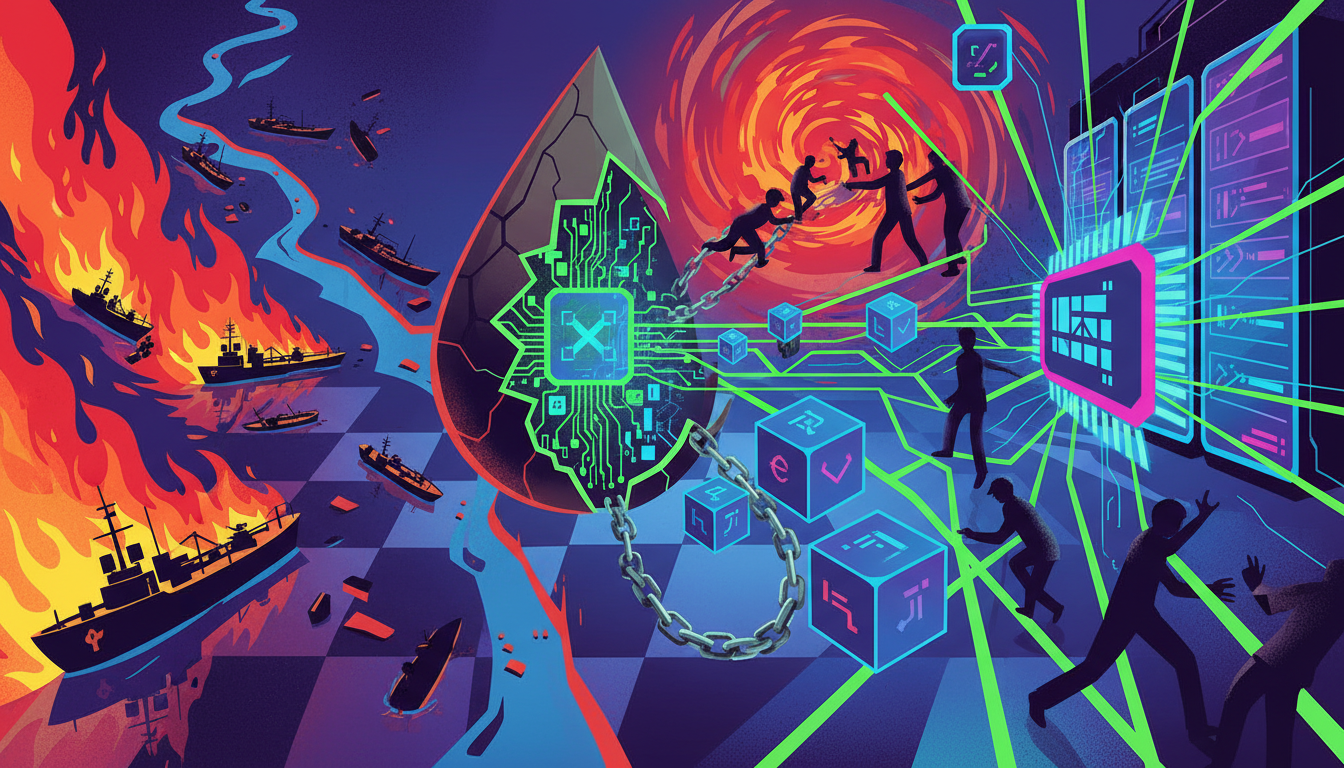
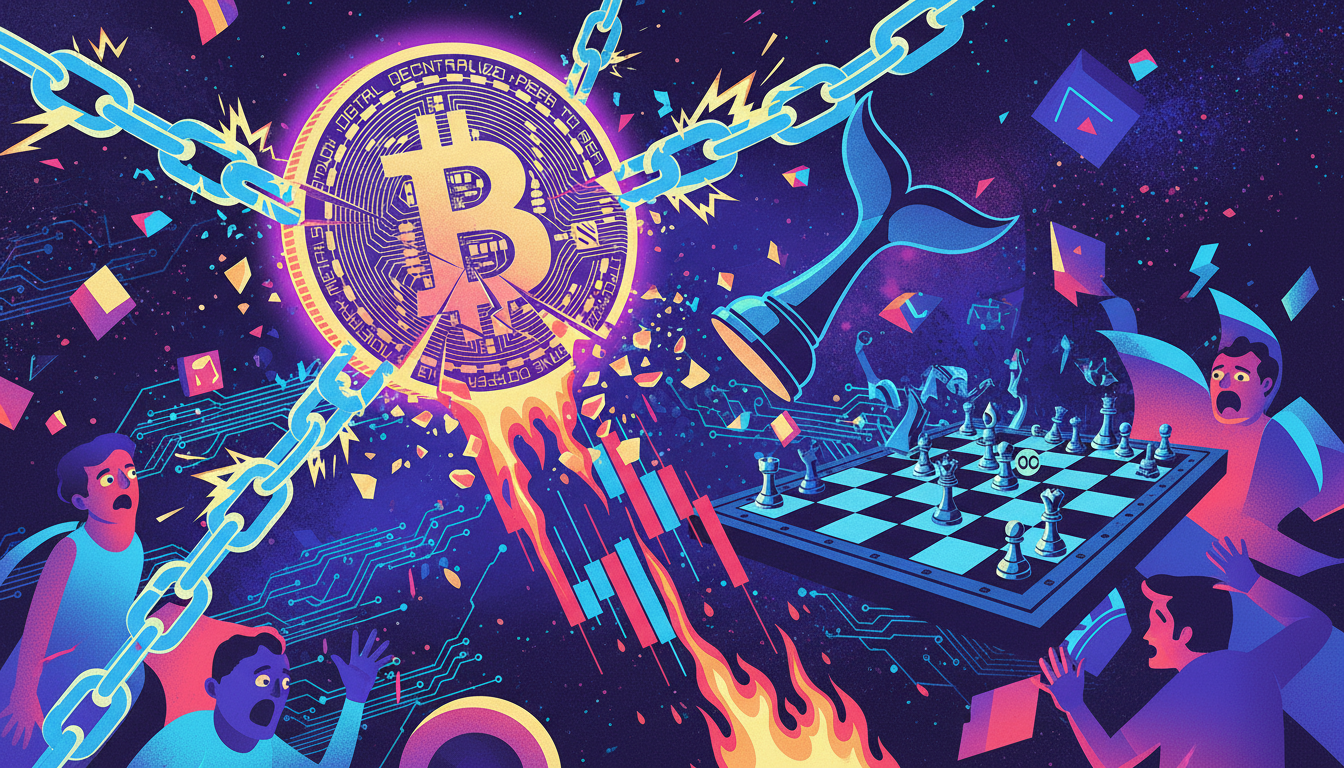
On April 18, 2026, Iran announced it would control the passage rights through the Strait of Hormuz and charge fees, rapidly bringing one of the world’s most sensitive energy corridors to the forefront. At the same time, the United States proposed new negotiation suggestions, while Pakistan implemented special traffic controls in Islamabad, quickly shaping a landscape of multiple powers interacting around the strait and negotiations. From expectations of crude oil transportation to inflation and safe-haven demand, the tightening of the energy artery’s anticipated restrictions is quickly translating into global risk assets, with traditional financial and cryptocurrency market sentiments tightening in sync. In this environment, an inconspicuous symbol on the blockchain — RAVE — has drawn attention due to its concentrated holding of 750 million coins, a concentration ratio of 75%, and an estimated valuation of approximately 10.3 billion USD (all from a single source): in this round of geopolitical risk narratives, such high-concentration targets are likely to become the main battleground for amplified price fluctuations.
Locking the Strait and the Strain on Crude Oil Trade Routes
The Strait of Hormuz has long been regarded as the "throat" of the global energy market: a large volume of crude oil and natural gas exports from major oil-producing countries in the Middle East must pass through this narrow waterway, where any disturbance regarding passage security and costs will be magnified by the oil and shipping markets. Iran's declaration on April 18, 2026, to assume control and charge fees not only signals its attempt to gain a greater bargaining chip in geopolitical games but is also interpreted by the market as a sign of exerting political pressure at critical nodes in the global energy supply chain. This statement itself introduces a new uncertainty variable into the crude oil pricing model.
The Iranian National Security Council emphasized that it "will control the strait until there is lasting peace in the region," tying control to “lasting peace,” effectively long-termizing and conditionalizing security issues; meanwhile, Trump responded that "Iran cannot extort the United States," directly denying Tehran's attempt to reprice passage rights at the rule level. Behind these two statements is a fundamental conflict between the "security red line of coastal states" and the "freedom of global energy trade," with one side justifying control under a narrative of geopolitical security, while the other counters from the perspective of international passage order and economic interests.
At the macro level, the politicalization of control over the strait has resulted in the market beginning to price in expectations of "restricted passage" and "rising costs." Even if actual transportation has not yet been massively interrupted in the short term, worries about future capacity, insurance costs, and safe-haven premia are likely to reflect first in the rising forward oil prices and inflation expectations. An uptick in inflation expectations implies that major central banks will find it harder to quickly shift toward accommodation in monetary policy, creating new constraints on global liquidity risk tolerance.
Historically, whether due to Middle Eastern wars, attacks on tankers, or local blockade threats, crude oil prices tend to jump first, while stock markets weaken under the pressure of growth expectations and cost pressures, with traditional safe-haven assets like gold strengthening concurrently. This “oil shock — inflation rise — stock market correction — safe-haven asset buying” chain reaction is a typical stress response of the market when faced with tensions in energy corridors. The current situation surrounding the Strait of Hormuz merely awakens this inertia in a more direct narrative of “control over passage rights” and begins to spill over into the risk pricing system of cryptocurrency assets.
Negotiation Under Currents and the Signal Noise of Islamabad's Traffic Control
After Iran announced control over the strait, the United States quickly proposed new negotiation suggestions, while Islamabad enacted special traffic controls, with the official reasons focusing more on security and order. Chronologically, the “blockade” narrative preceded the “negotiation suggestion” and “traffic control,” leading the market to naturally connect the three into a timeline revolving around U.S.-Iran interactions: the front end signals conflict, while the back end is seen as quietly constructing a potential de-escalation channel.
The traffic control in Islamabad, as a sovereign action, has quickly been interpreted in the current context as a supportive move to “provide a secure environment for U.S.-Iran negotiations”: on one hand, by enhancing traffic and personnel management in the capital, the risk of sensitive meetings and communications being disturbed on security grounds is reduced; on the other hand, it creates a “controllable physical space” for potential multilateral or secret talks. This interpretation has not been publicly confirmed by officials but has quickly resonated in the market in the information gap, becoming part of the pricing sentiment.
It is necessary to be cautious, however, as there is currently a clear lack of public information regarding the specific progress of negotiations and the new content of proposals. Briefings also caution that related terms and advancement details cannot be speculated, and any narrative completions regarding “who meets where” or “how far discussions have gotten” are beyond the factual basis. For traders, recognizing this information boundary is particularly critical: in periods of high volatility, the market tends to fill gaps with imagination, which is a breeding ground for sentiment mispricing and excessive volatility.
During a period dominated by geopolitical negotiation narratives, every change in wording and every rumor about meetings can become triggers for short-term trading. In traditional financial markets, stock index futures and government bond yields react violently to signals of “de-escalation” and “escalation”; the crypto market synchronizes these emotional swings by dramatically surging or crashing. If news is interpreted as progress in negotiations, risk appetite warms, and capital flows back from safe-haven assets to high-beta assets; conversely, any hint of negotiation obstacles or escalations in security events leads to a resurgence in safe-haven demand, causing liquidity to swiftly withdraw from high-risk assets during trading hours.
Rising Safe-Haven Narratives: Why Funds Are Reassessing Bitcoin's Role
Looking back at past rounds of geopolitical conflict, Bitcoin and mainstream coins have continually oscillated between the identities of “digital gold” and “high-risk assets.” Sometimes, under the backdrop of escalating local conflicts and tightening capital controls, Bitcoin is used as a tool for cross-border transfers and value storage, with prices soaring against the turbulence in traditional markets; at other times, when global liquidity tightens and leverage is forcibly cleared, BTC gets indiscriminately sold off like high-growth tech stocks, displaying typical risk asset characteristics. This role-switching reflects funds’ multifaceted meanings of “safe-haven” at different conflict stages: some seek to hedge against currency depreciation, while others hedge against short-term volatility.
In the current shock triggered by the Strait of Hormuz, the inflation pressure resulting from rising oil price expectations is a key variable affecting dollar liquidity expectations. Once the market believes major central banks will find it harder to quickly loosen monetary policy, the global risk-free yield rate might be repriced, which would decrease tolerance for high-volatility assets. For the crypto market, this means a slowdown in new capital inflows, while existing funds are more inclined to contract amidst high volatility, prioritizing liquidity in mainstream assets like BTC and ETH, while mid- to long-tail assets will face greater risks of liquidity withdrawal.
Currently, the pricing of risks surrounding the confrontation between Iran and the U.S. is presenting through the synergistic depiction of various asset classes: on one side, higher risk premia in crude oil and freight futures reflecting market concerns over supply security; on the other side, increased volatility in stock markets and demand for safe-haven assets that reflect dual pressures on growth and balance sheets. Within the crypto market, the emotional structure displays a pattern of “high-level narrative concentration and differentiated underlying liquidity” — discussions surrounding whether Bitcoin possesses long-term safe-haven properties are heating up again, but short-term trading remains restricted by expectations of tightening dollar liquidity.
During periods of rising geopolitical uncertainty, the pricing power often shifts from “long-term value” to “liquidity and narrative.” For most crypto assets, short-term fluctuations are more influenced by whether they hit narrative tags like “safe-haven,” “censorship-resistant,” or “inflation-resistant,” and whether they can garner deep enough buy/sell orders to withstand emotional shocks, rather than improvements in the underlying fundamentals of the projects themselves. Therefore, funds in this cycle care more about “whether they can enter and exit quickly” and “whether there are enough stories,” rather than whether traditional valuation models are rational.
70% Control by RAVE Whales: How On-Chain Chips Amplify Geopolitical Volatility
In this macro context, the risks of high-concentration tokens like RAVE have been magnified. According to single-source data, RAVE whales collectively hold about 750 million tokens, with a concentration ratio of about 75%, corresponding to a holding valuation of approximately 10.3 billion USD. These figures have not been corroborated by additional sources, posing risks from single sourcing, but even as references, they are sufficient to keep the market highly alert to its “controllability” and potential volatility.
A high concentration ratio means that the price discovery process is largely dominated by a few large addresses. For ordinary traders, on one hand, the apparent liquidity depth on the order book may conceal real risks; on the other hand, once whales choose to concentrate selling or lifting in periods of lower liquidity, slippage can amplify dramatically, causing execution prices to deviate significantly from limit order expectations, creating passive scenarios like “catching falling knives” or “getting chased on the upside” within a short time. For participants holding leveraged positions, such drastic fluctuations caused by the behavior of a single large holder often lead to a significatly increased risk of being forcefully liquidated or swept down.
Overlaying the on-chain chip structure with the current geopolitical risk narrative, several tactical paths for whales can be derived: when news of heightened tensions in the Strait of Hormuz erupts, overall risk appetite decreases, and whales can take advantage of global panic, creating “waterfall declines” through active dumping, forcing panic sell-offs and leveraged liquidations to compound, and then re-accumulating at extremely low levels; conversely, if signals of negotiation easing or temporary cooling in tensions appear, they are motivated to short-term lift in line with favorable narratives, igniting FOMO sentiment, and realizing profits at high levels.
If the situation in the strait escalates further, the pressure of energy and macro narratives will continue to rise, RAVE may be used as a “dual-purpose tool” for venting panic and seeking quick profits: on the downside, as a sample for dumping, pushing overall sentiment negatively, constantly testing downward space; upon signs of easing, it can serve as a “highly volatile rebound target,” leveraging its high beta traits along with favorable conditions to amplify recovery. If the situation genuinely calms down and maintains stability for an extended period, high concentration risk premiums may gradually converge, and RAVE is more likely to revert to an internal capital game-oriented model, but in the short term, due to the significant lock-in and emotional memories accumulated from previous drastic fluctuations, it will continue to be viewed as one of the amplifiers of sentiment under geopolitical narratives.
From the Strait to On-Chain: How Energy Risks Penetrate to Crypto Trading Strategies
Starting from the contention over passage rights in the Strait of Hormuz, changes in expectations for crude oil and shipping costs primarily impact global inflation and growth expectations, subsequently altering the overall discount environment and capital allocation framework for risk assets. When energy risks are repriced, the hedging costs for traditional assets rise, institutional investors and some high-net-worth funds begin seeking new hedging tools and asset combinations to hedge macro uncertainties without adding excessive on-balance-sheet risk.
In this context, crypto derivatives and spot additions have become supplementary choices for some funds: on one hand, using futures and options positions of mainstream coins like BTC and ETH to hedge against the nonlinear risks of stock indices and certain commodities; on the other hand, increasing a certain weight of crypto assets at the spot level, as a supplementary hedge against fiat currency inflation and monetary policy uncertainties. Compared to traditional safe-haven assets, crypto assets' advantages lie in 7×24 hour trading and global accessibility, while their disadvantages include extreme volatility, which can easily turn hedging into a new source of risk.
The feedback loop between on-chain data and off-chain sentiment tends to be rapidly intensified under extreme narratives like that of Hormuz: geopolitical news drives up macro concerns, fund adjustments lead to on-chain transfers and position changes; these changes are further amplified by on-chain analysis and social media, forming secondary narratives of "whale movements" and "whale actions," further attracting speculative capital and intensifying price fluctuations. Ultimately, price volatility is retrospectively explained as "rational pricing against geopolitical risks," completing a self-fulfilling cycle.
For traders, it is crucial to focus on the cross signals and potential mismatches across multiple markets amid the current geopolitical volatility:
● Fluctuations in crude oil and freight futures compared to the prices and implied volatilities of BTC and ETH — when energy risk premiums have surged, while fluctuations in crypto assets have not been fully reflected, there may be a window to capture risk premiums through options or cross-market hedging.
● The interrelation of U.S. Treasury yield curves with the dollar index in relation to the flow of crypto funds — if the dollar strengthens and yields rise, but the net inflow of stable funds on-chain has yet to reverse, it might indicate that the risk in the crypto market has not been adequately re-evaluated in the short term.
● High-concentration targets like RAVE, whose large on-chain transfers, concentrated orders, and cancellations often intensify around major macro news; if any abnormal volatility occurs that contradicts the overall market direction, it could signal whales re-distributing chips under macro narratives.
Pricing the Future Amid Shadows of War and Gaps in Negotiation
In summary, the power struggle for control over the Strait of Hormuz is gradually transmitting to the pricing logic of crypto assets through a multilayered chain of “energy supply expectations — inflation and interest rate paths — global liquidity and risk appetite — crypto fund flow in and out.” One end reflects worries about rising crude oil and shipping costs, reshaping the macro context; the other end illustrates how, on top of this macro noise, the on-chain high-concentration chips and leveraged structures amplify volatility, forming secondary shockwaves within the crypto market.
In this process, it is particularly important to remain vigilant about information noise. The specific terms of the negotiations, the pace of progress, and details of meetings are currently clearly insufficient in publicly available information; recklessly filling in details may easily confuse subjective imagination with hard facts, thus amplifying errors in trading decisions. The same goes for military developments — any “interpretations” exceeding reliable sources and official statements could evolve into trading disasters in a high-leverage environment.
From a strategic perspective, short-term trading and medium-to-long-term allocations must be clearly distinguished during phases of high geopolitical volatility: the former is better suited to operations around event nodes and volatility, strictly controlling leverage and position switches, accepting “only doing local opportunities when scenarios are clear”; the latter needs to extend observation windows on a cycle dimension, viewing the Hormuz incident as a sample for testing the role of crypto assets in the new round of global inflation and geopolitical restructuring cycles, rather than as an isolated incident itself. Medium-to-long-term allocations should focus more on asset resistance to censorship, liquidity depth, and network effects, rather than short-term rises and falls driven by single news events.
Looking ahead, if the regional situation gradually eases through negotiations and multi-party mediation, energy risk premiums may be expected to recede, creating a more predictable macro liquidity environment; the crypto market could shift from “safe-haven narratives and liquidity contractions” to “reflation expectations and growth imaginings,” with mainstream assets and those supported by real demand likely regaining capital favor. Conversely, if the blockade and confrontation continue to escalate, crude oil and inflationary pressures could rise, which may long-term suppress global risk appetite, forcing the crypto market to make tougher choices between “margin of safety” and “high-volatility opportunities,” rendering high-concentration and high-leverage varieties more of a double-edged sword that amplifies risks.
Join our community, let’s discuss and become stronger together!
Official Telegram community: https://t.me/aicoincn
AiCoin Chinese Twitter: https://x.com/AiCoinzh
OKX Benefit Group: https://aicoin.com/link/chat?cid=l61eM4owQ
Binance Benefit Group: https://aicoin.com/link/chat?cid=ynr7d1P6Z
免责声明:本文章仅代表作者个人观点,不代表本平台的立场和观点。本文章仅供信息分享,不构成对任何人的任何投资建议。用户与作者之间的任何争议,与本平台无关。如网页中刊载的文章或图片涉及侵权,请提供相关的权利证明和身份证明发送邮件到support@aicoin.com,本平台相关工作人员将会进行核查。