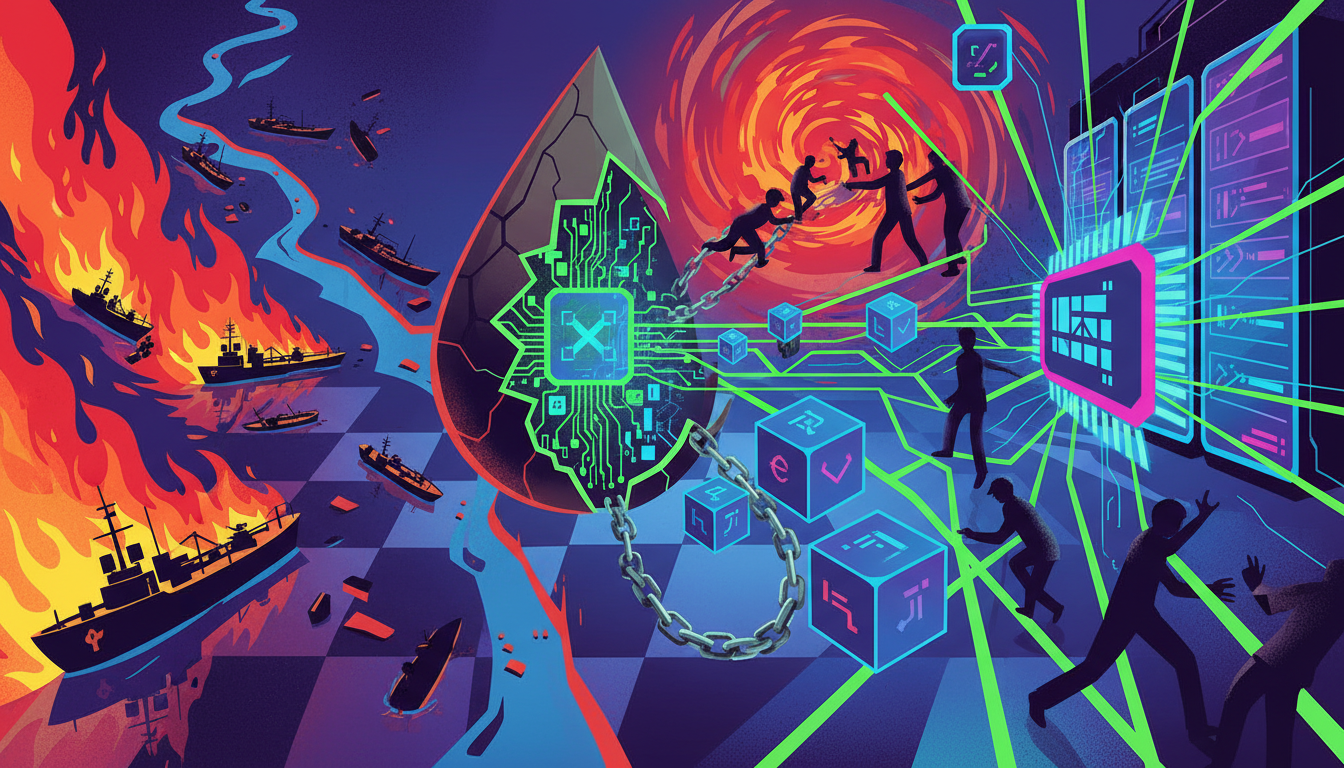
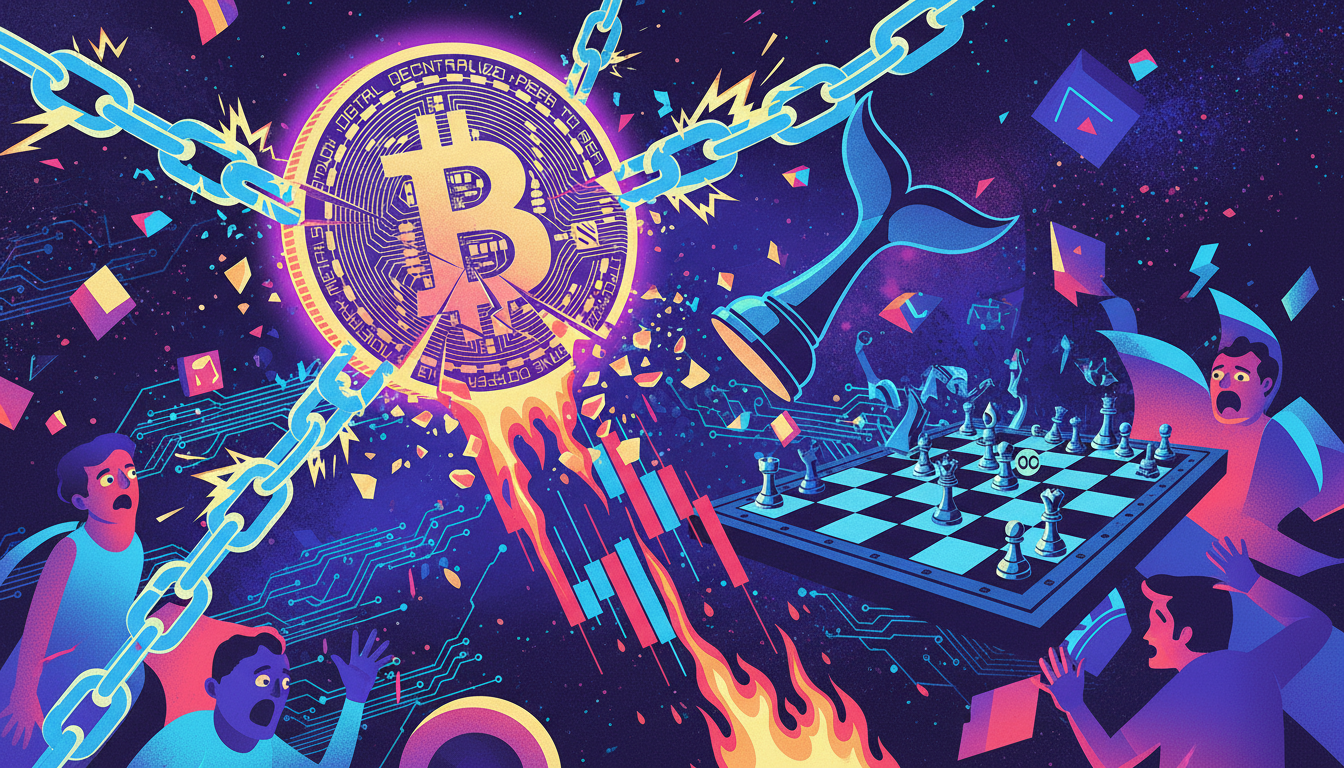
On April 18, 2026, Iran rejected the U.S. negotiation demands and Binance announced wallet product updates, two seemingly unrelated events appeared in the news flow of the same day. One side is the renewed tension in the Middle East, while the other side is the acceleration of one of the largest trading platforms in the world in updating the user entry point. Together, they reflect the same layer of emotion: anxiety about the future and a desire for more efficient tools. From expectations of escalating geopolitical conflicts to the design of "one-click quick purchase after searching for token addresses" at the trading end, market behavior is being pulled in both risk-averse and offensive directions simultaneously. The question is, as geopolitical risks and tool upgrades overlap, what kind of crypto trading era are we entering?
Iran Refuses U.S. Demands: Adding a Layer to the Middle East Front
On April 18, at 8 AM UTC+8, reports indicated that Iran communicated via Pakistani channels to the U.S. its position of refusing to negotiate related demands, which was relayed by the Tasnim News Agency as "unwilling to waste time on prolonged and meaningless negotiations." The firmness of this public statement continues the tone of confrontation between the U.S. and Iran over many years, yet it is also seen at this sensitive moment as another clear "sign of escalation."
The deadlock in U.S.-Iran negotiations has existed for a long time, from the sanction games to regional proxy conflicts; both sides have long grown accustomed to pulling between tension and relaxation. The difference this time is that the refusal to negotiate occurs at a globally sensitive phase regarding supply security, where any negative signals from the Middle East are more easily interpreted as a precursor to an escalation in the situation. In the absence of key information such as specific details of U.S. requests and a full understanding of the maritime situation, the market can only react based on the abstract expectation of "re-degradation," which itself amplifies the uncertainty premium.
In this environment, where expectations of energy tension are amplified, traditional risk assets and crypto assets are often priced in synchrony: on one hand, expectations of rising crude oil and related energy prices reflect in commodities and energy stocks; on the other hand, cryptocurrencies like Bitcoin may be adopted by some funds as "off-system" hedging tools, accumulating with macro fluctuations to form cross-asset linked trading. Each geopolitical fluctuation in the Middle East is gradually being written into this new pricing system of "macro + crypto."
Energy Clouds Pressing In: How Geopolitical Conflicts Penetrate the Mining Machine Roar
From the identity of an energy powerhouse, Iran's sensitivity in the global energy landscape is evident. When the market speculates that supply is disrupted and transportation costs are increased, the expectation of rising energy prices will subsequently affect mining costs and profitability. Rising electricity prices and increased fuel costs put direct pressure on large-scale mining farms that depend on cheap electricity; even if some of the mining power does not directly come from the Middle East, it is hard to escape the global energy pricing chain entirely.
At the same time, the potential for crypto asset adoption in the Middle East is accumulating. Facing sanctions, restrictions on capital flow, and long-term pressure on local currency credibility, some funds prefer to achieve diversified allocations through dollar assets and crypto assets. The long-standing deadlock in U.S.-Iran negotiations and the current renewed tension may intensify local demand for asset outflow and diversification: capable entities will seek more cross-border allocation channels, whether traditional financial instruments or on-chain assets.
Let’s assume a scenario: if the situation further deteriorates and regional financial risks rise, local currencies come under pressure, funds may rapidly switch between several asset classes. Some will flow into traditional safe-haven assets like gold and U.S. Treasury bonds; others may gravitate towards Bitcoin, mainstream public chain assets, and on-chain assets pegged to the dollar to hedge local political and currency risks. For the mining and computing power markets, rising energy prices and geopolitical uncertainty will overlap with inherent variables such as halving cycles and fee fluctuations, shaping a more tension-filled profit curve.
Binance Wallet Introduces Four New Features: From "Finding Tokens" to "Instant Ordering" Logic
Also on April 18, Binance announced four new core functions added to its wallet. In this iteration, the official emphasized a striking capability: users can "search for token addresses and quickly buy the corresponding token with one click". Although the announcement did not explain all updated technical details, this statement clearly communicates the product direction—extending from position management to a more direct trading entry, compressing "discovery" and "transaction" into the same operational chain.
From a design perspective, these updates are clearly more aligned with active trading and short-term users. Traditionally, users needed to switch back and forth between different pages: first confirming the contract address on a blockchain explorer or third-party information source, then switching back to the trading interface to search and place orders. Now, by streamlining the search and order process within the wallet, Binance aims to reduce friction costs, providing a smoother execution path for high-frequency decisions. During periods of volatility, this second-level decision-execution loop is particularly attractive for sentiment-driven and hotspot-driven trades.
On a deeper level, this update reflects users' practical need for one-stop asset management and fast transaction experiences. From asset browsing and risk identification to placing orders and adjusting positions, users hope to complete all actions with minimal interface transitions. For exchanges, consolidating more functions within the official wallet is not just "adding a button," but rather re-clustering trading behaviors that were originally scattered across various tools and terminals into its own ecosystem.
The Tool Arms Race in an Era of Volatility: Trading Experience is Being Rewritten
Placing this Binance wallet iteration on a longer timeline reveals a clear path of industry evolution: from the initial wallets responsible solely for sending and receiving and simple asset management to the later continuous addition of DApp gateways, cross-chain bridges, staking, and yield tools, culminating in now further compressing the time lag between "searching and ordering". The entire industry is undergoing a continuous arms race of tools. Other leading wallets and trading terminals are also racing in dimensions like contract aggregation, cross-chain routing, and one-click rebalancing, competing for the same pool of high-frequency, sensitive users who are willing to pay for liquidity.
When geopolitical and macro uncertainty rises, exchanges and wallet providers are more motivated to lower operational barriers to capture sentiment-driven traffic. For users accustomed to rapidly switching targets around hotspots, whichever product can let them "click less" often means higher fund retention and deeper transaction depth. Binance's recent update, moving the decision entry point to "search for token addresses," essentially hopes to complete the transition from interest to ordering in the moment a user develops interest.
However, the increase in efficiency is not merely a neutral technical variable; it will amplify market sentiment in a volatile market. On one hand, a smoother trading experience can significantly improve liquidity, reduce spreads, and enhance price discovery; on the other hand, the same mechanism will accelerate the rhythm of FOMO and panic entry-exit, making sentiment-driven price shocks more explosive. In a cycle filled with macro and geopolitical uncertainty, each "speeding up" of tools is quietly reshaping the form and frequency of price volatility.
From Tehran to the Trading Interface: Two Apparently Unrelated Timelines
If we place the two news stories from April 18 on the same timeline, one end represents Tehran's strong refusal to negotiate conveyed through a third country to Washington, while the other end is that smoother, more attractive "quick buy" button on a mobile screen. The former is about the power struggle and security anxieties between nations, while the latter concerns individual operational experiences in the asset world; the two seem unrelated but together form a mirror of the current "risk era."
In an environment where geopolitical risk expectations heighten, and trading tools become more efficient, whether for retail investors or institutions, their position structures and holding periods may subtly change. Some institutions may introduce more low or negatively correlated assets with macro and geopolitical factors at the portfolio level, using cryptocurrencies like Bitcoin as part of a hedging basket; simultaneously, they may rely on more professional trading tools for higher-frequency rebalancing amidst volatility. For retail investors, the convenience of "one-click buy" on their phones can easily create a loop of emotion between geopolitical news, social media, and candlestick charts, driving up turnover rates for short positions and shortening average holding times.
It is important to emphasize that we cannot mechanically link Binance's product updates directly to the Iranian situation. Current information does not provide any evidence of a causal chain between the two; they merely appeared in the same information flow on the same day by coincidence. What is genuinely worth focusing on are the psychological undercurrents these two events reveal together: in an era of heightened uncertainty, systemic risks are rising on one hand due to strengthened national-level confrontations, while market participants rely on tool iterations and asset diversification to attempt to establish a more flexible response mechanism for themselves.
Two Mirrors of the Risk Era: Policy Shocks and Tool Evolution
Returning to the starting point, Iran's refusal of U.S. negotiation demands adds another expectation of "normalization" to the Middle East’s tense situation, introducing new variables to the global macro environment; while the upgrades to Binance's wallet functions represent an instinctive self-adjustment of the market under such conditions—through more efficient tools meeting multiple needs for hedging, speculation, and asset allocation. These two threads—one from top-down shocks at the policy and geopolitical level, the other from bottom-up evolution at the market and technological level—are together shaping the undercurrents in the current crypto market.
Looking ahead, it is essential to observe several paths: firstly, whether changes in the flow of funds and assets from the Middle East will leave clear traces in on-chain data and off-exchange liquidity; secondly, whether the pace of crypto adoption in the region will be accelerated in this new round of geopolitical tensions, especially in the context of overlapping capital controls and local currency pressures; thirdly, whether leading exchanges will maintain a high-frequency iteration pace during periods of high volatility, pushing more "decision-making up-front, execution speed" functions to the foreground, thereby further reshaping trading behaviors.
For participants, higher tool efficiency and a more complex macro-geopolitical environment are two sides of the same coin. It is necessary to be cautious not to explain all price fluctuations with a single geopolitical event, nor to rationalize every market movement with a single product upgrade. Price formation is often the result of multiple overlapping variables: policies, liquidity, sentiment, and technical structures intertwine. What truly needs to be cultivated is the ability to patiently track and deconstruct these variables, rather than addressing a more complex world with a faster "buy button" in an age of information overload.
Join our community to discuss and become stronger together!
Official Telegram community: https://t.me/aicoincn
AiCoin Chinese Twitter: https://x.com/AiCoinzh
OKX Welfare Group: https://aicoin.com/link/chat?cid=l61eM4owQ
Binance Welfare Group: https://aicoin.com/link/chat?cid=ynr7d1P6Z
免责声明:本文章仅代表作者个人观点,不代表本平台的立场和观点。本文章仅供信息分享,不构成对任何人的任何投资建议。用户与作者之间的任何争议,与本平台无关。如网页中刊载的文章或图片涉及侵权,请提供相关的权利证明和身份证明发送邮件到support@aicoin.com,本平台相关工作人员将会进行核查。