Author: David, Deep Tide TechFlow
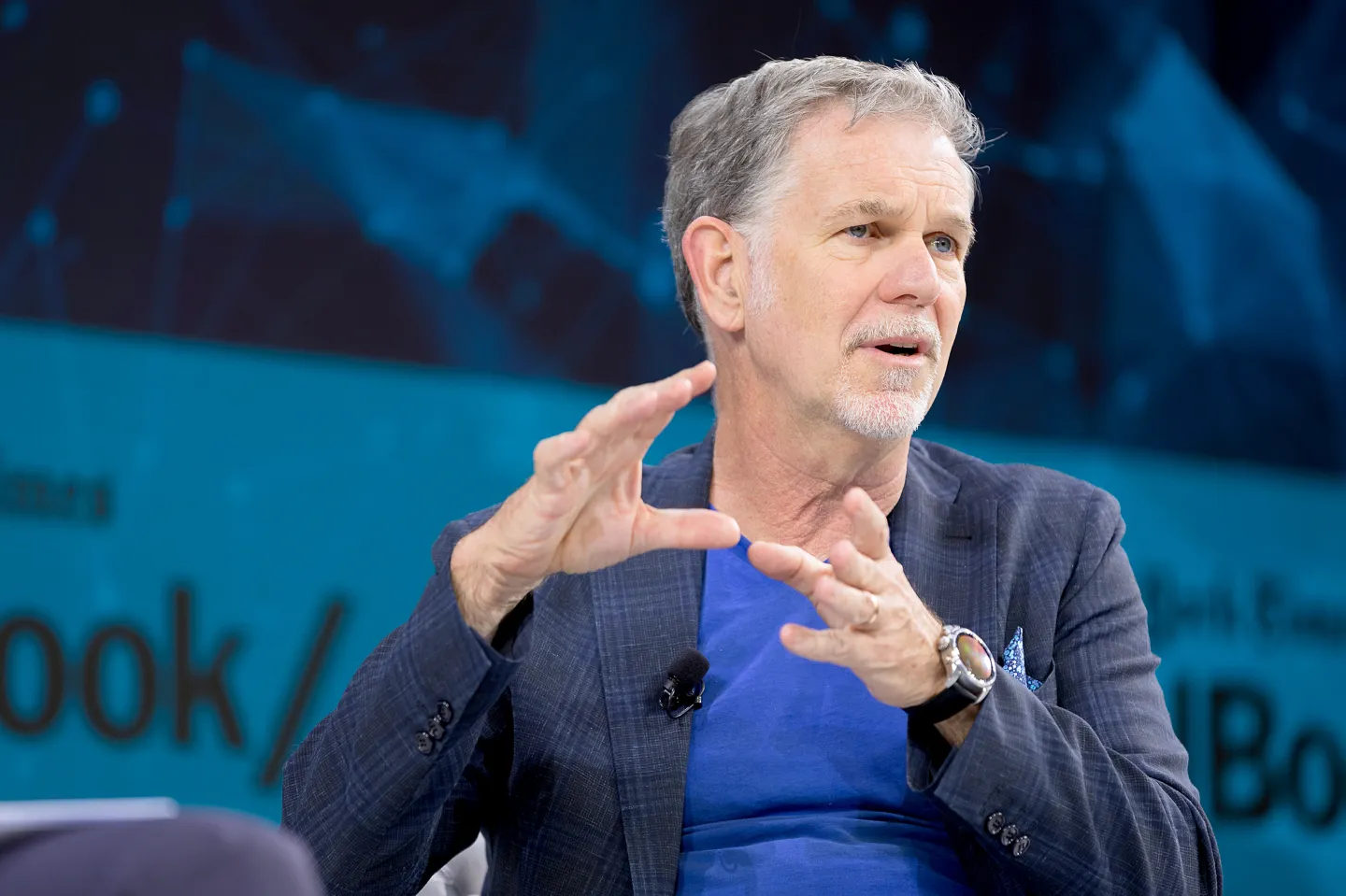
Netflix has never been as profitable as it is now, yet the founder chose to leave at this time.
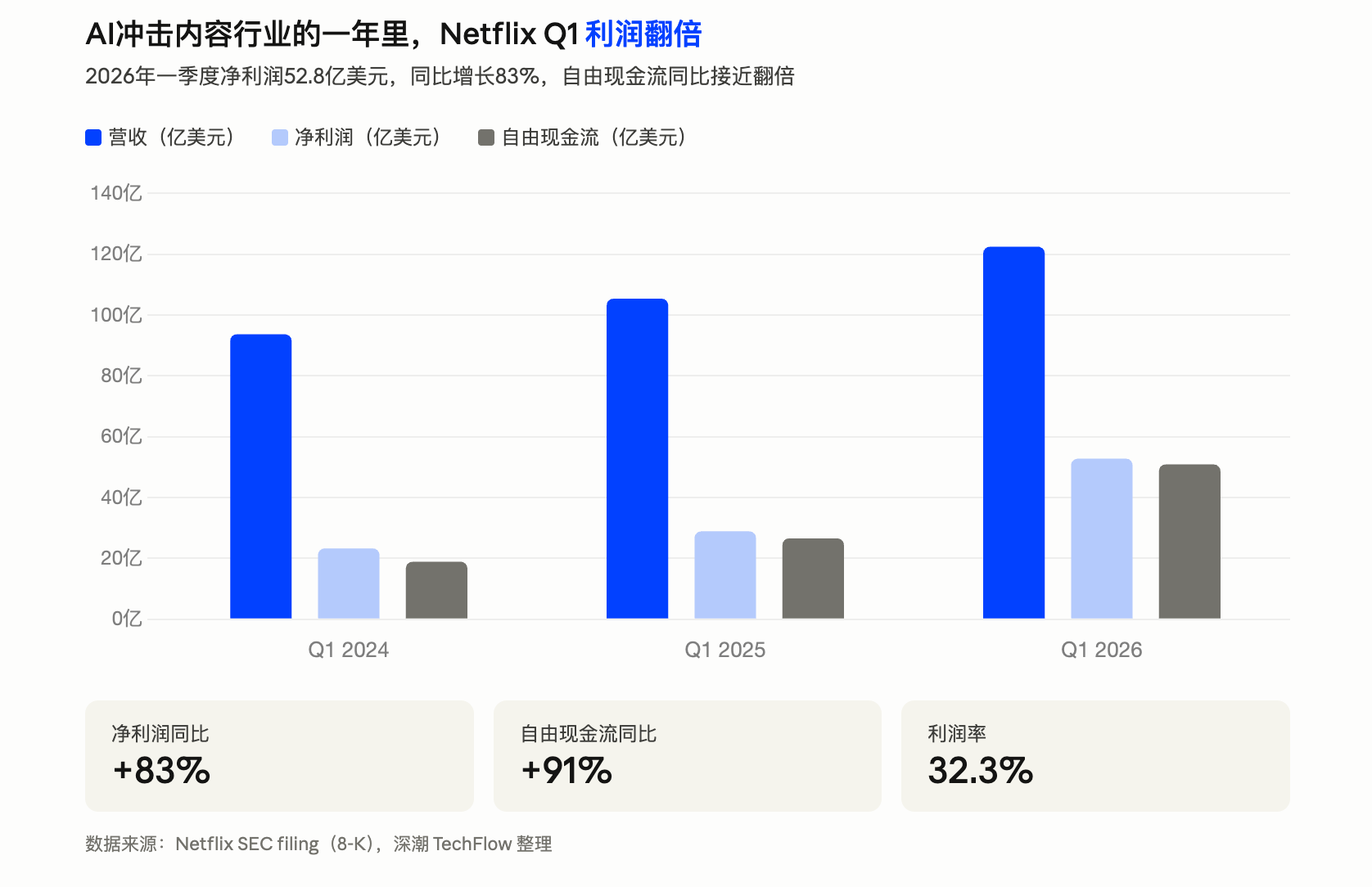
On April 16, Netflix released its Q1 2026 earnings report, with revenue of $12.25 billion, a year-on-year growth of 16%, and a net profit that rose 83% from the previous year, with earnings per share of $1.23, nearly 60% higher than Wall Street's expectation of $0.76.
However, the earnings report also announced another matter, that co-founder and current chairman Reed Hastings will not seek re-election after his term expires in June.
Hastings founded Netflix in 1997, transitioning from a DVD rental business to a streaming giant with over 325 million paid subscribers globally, operating for nearly 30 years. In 2023, he handed over the CEO position to his successor and took a step back to become chairman. Now, even the chairman position will not remain.
In the documents submitted to the U.S. Securities and Exchange Commission, Netflix specifically wrote: "This decision has no disagreement with the company."
But the more it emphasizes that there is no disagreement, the more people want to know what he is actually going to do.
A little known fact is that last May, Hastings already joined the board of Anthropic. He spent nearly 30 years in a business primarily focused on getting people to pay for content, while Anthropic's Claude, although not directly generating videos, is changing the way content is produced.
From text to images to videos, costs are decreasing, and speeds are increasing.
Netflix can be profitable because good content is worth paying for. If AI lowers the barriers to content production, does this premise still hold?
Hastings is clearly already thinking about this question.
What is he afraid of?
As a top global content producer and distributor, Netflix's founder has always had a mental concern about AI.
You might not know that Hastings studied AI for his master's degree at Stanford in 1988. That’s right, 40 years ago he was studying artificial intelligence. However, AI in that era was nothing like it is today...
At the 2022 Stanford University graduation ceremony, Hastings was invited as a speaker.
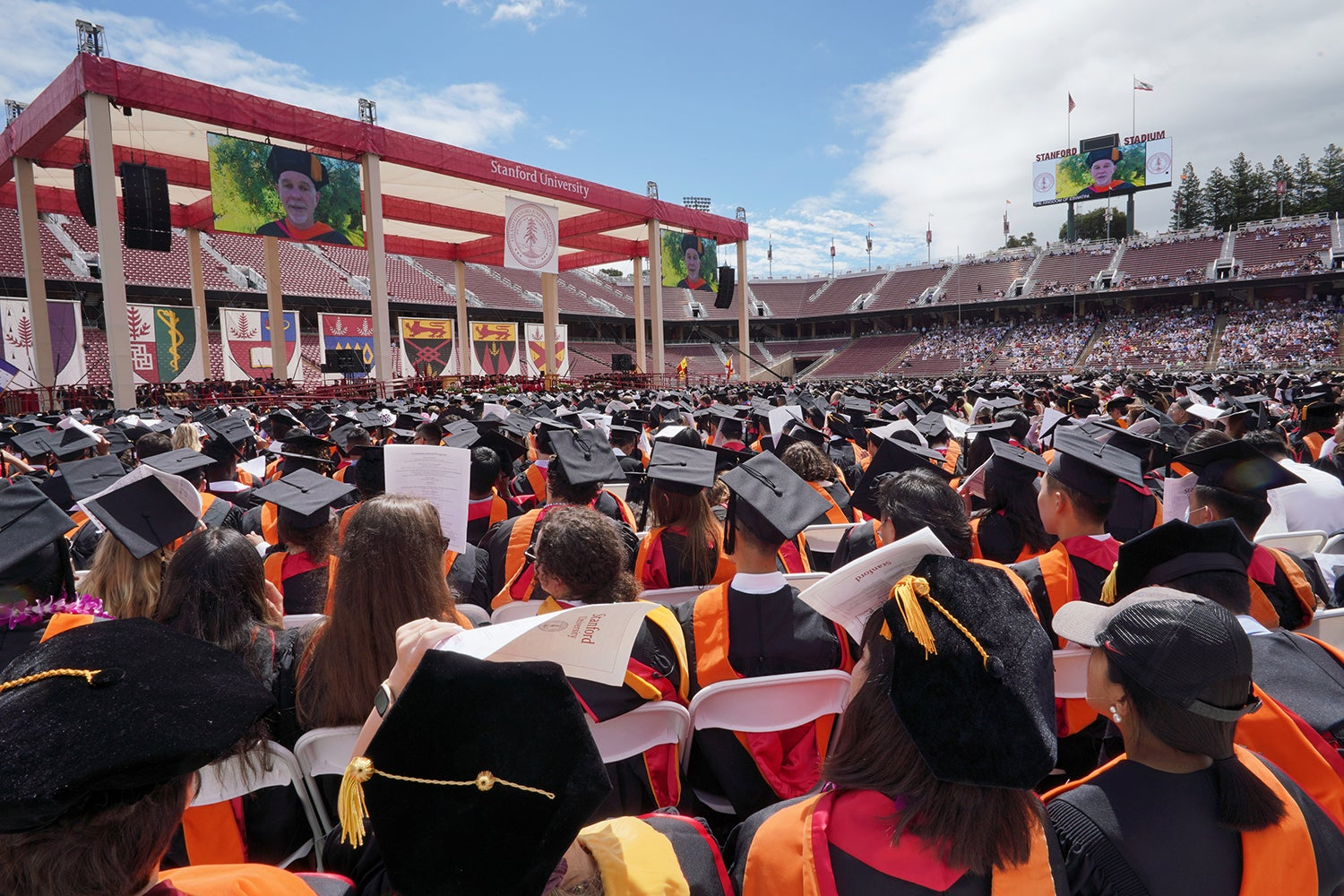
He later mentioned this event, speaking as if it were a joke about a mistake made in youth. Only that AI did not pan out, and he turned to run a software company, later founding Netflix, continuing for nearly 30 years.
It is impossible for someone who has studied AI not to pay attention to this field.
In 2024, when he was interviewed and talked about AI, he was quite relaxed at the time: "AI will help us become more creative, and we can use these tools to produce more shows." At that time, his attitude was one of embrace. AI is a tool, here to help, not to take jobs away.
In March 2025, he donated $50 million to his alma mater Bowdoin College.
This liberal arts college in Maine does not focus on large models; Hastings donated money for a research program called "AI and Humanity," specifically to study the impact of AI on work, education, and interpersonal relationships.
On the day of the donation, he made a statement that was completely different from the relaxed tone a year ago: "We will fight for the survival and prosperity of humanity."
In the year, AI rapidly advanced, and his stance shifted from AI being able to assist work to AI being a threat to humanity.
Two months later, he joined the board of Anthropic.
He was appointed by an independent agency called the "Long-Term Interests Trust," comprised of five members who do not hold any shares in Anthropic, with a sole duty: to ensure that the development of AI aligns with long-term human interests.
In March this year, he made a very clear statement on another interview show. When asked what the biggest risk Netflix faces is, he skipped over competitors and subscriber growth, directly saying two words:
AI.
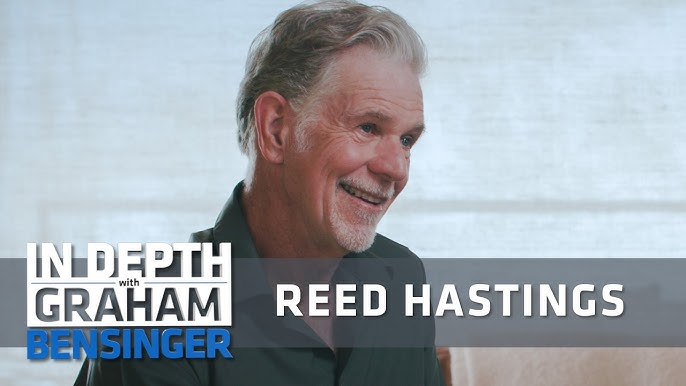
He said that if AI makes free content on YouTube cool enough and attractive enough, then young people will all go watch the free content, and who will pay for Netflix then?
From publicly available information, you can find Hastings describes himself as an "extreme technological optimist." He does not think AI itself is bad, but the problem lies in the disparity in speed.
AI technology is advancing too quickly, and humanity's moral and institutional systems cannot keep up.
This can explain the seemingly contradictory choices he has made in the past year. Declining to donate to technical AI labs, opting to fund a college that studies the humanities; joining a board without selecting any commercial AI company's advisory group, instead choosing Anthropic's safety committee.
I believe Hastings is more qualified than most to be concerned about whether AI will disrupt the industry.
Netflix itself was a disruptor in the last round; it used streaming to kill DVD rentals, severely damage cable television, and force Hollywood to rebuild its distribution system. He has personally undertaken the task of "using new technology to drive content and distribution costs down to a sufficient level to eliminate the previous generation of winners."
Now he looks at AI, likely wondering who will be next.
Therefore, Hastings is both a major shareholder of Netflix and a board member of Anthropic. He holds shares of the company he founded, while sitting at the table of an industry that might disrupt his own company.
This may not be called retirement but rather hedging.
Although AI is a shock, Netflix has actually never been better
Four years ago, Netflix was still a company with annual revenue just over $30 billion and a profit margin of less than 20%, being chased by Wall Street asking "When will you make real money?" The earnings report four years later provided an answer.
In Q1 2026, net profit was $5.28 billion, an 83% increase year-on-year. Free cash flow was $5.09 billion, almost double compared to the same period last year. At the same time, the profit margin reached 32%. The full-year revenue guidance is between $50.7 billion and $51.7 billion; if it really can achieve this by the end of the year, it represents nearly a doubling of Netflix's revenue in three years.
Apart from daily operations, Netflix has not overlooked AI either.
A few weeks ago, it spent up to $600 million to acquire InterPositive, a company that produces AI-assisted film and television production tools that can use AI to accelerate script development, scene previews, and post-production. Netflix also specifically mentioned generative AI in its earnings letter, stating it intends to use it to improve content creation and user experience.
Using AI to lower production costs and enhance efficiency is a valid approach. In fact, the entire Hollywood or content production industry is moving in this direction.
However, what founder Hastings is worried about in interviews may not be the same issue.
In February this year, ByteDance released the video generation model Seedance 2.0. Upload a photo, and in 60 seconds it generates a 2K video with camera movements, sound effects, and lip-synchronized features.
At the time, the producer of "Black Myth: Wukong," Feng Ji, remarked after testing it: "The childhood era of AIGC is over." Director Jia Zhangke posted on Weibo expressing his intention to use it to shoot short films...
More specific numbers come from within the industry. According to the Securities Times, in the e-commerce advertising sector, an individual can use Seedance 2.0 to complete in 30 minutes the workload that previously took 7 people 3 days, with a cost reduction of over 99%.
Extras, post-editing, and special effects production in Hengdian have all been expressing the same concern—anxiety about unemployment.
iQIYI's founder Gong Yu publicly stated a judgment at the end of last year: AI may reduce production costs in the film and television industry by an order of magnitude, increase the number of creators by an order of magnitude, and increase works by two orders of magnitude.
Netflix utilizing AI to reduce production costs is akin to enhancing efficiency within the existing model. But what Seedance and others are doing is lowering the barrier for "video production" from millions of dollars to just a few dollars.
The future Hastings spoke of where "content on YouTube becomes good enough" is gradually becoming a reality.
Of course, none of this may have a direct relationship with his current choice to leave Netflix. He began the handover process in 2023, with the transition of CEO and chairman roles, gradually stepping back over at least a three-year period.
However, the timing is indeed delicate. Netflix has released its most impressive earnings report in history, yet its stock fell 8% in after-hours trading. On the same day, the founder announced his complete exit.
After June, Hastings' name will disappear from Netflix's board list.
His current titles include director of Anthropic, director at Bloomberg, and owner of a ski resort in Utah. He still holds Netflix stock, with Forbes estimating his net worth at $5.8 billion, most of which is tied to Netflix.
He is taking Netflix's money to sit at the AI table.
As to whether this choice is foresight or overthinking, it may only be answered when AI can truly create a movie that audiences are willing to watch to the end.
免责声明:本文章仅代表作者个人观点,不代表本平台的立场和观点。本文章仅供信息分享,不构成对任何人的任何投资建议。用户与作者之间的任何争议,与本平台无关。如网页中刊载的文章或图片涉及侵权,请提供相关的权利证明和身份证明发送邮件到support@aicoin.com,本平台相关工作人员将会进行核查。


