Author:Zhou Yongliang
An interesting phenomenon is taking place.
In this wave of AI, the most active figures on stage are no longer the experienced "science and technology giants", but rather a large number of young individuals with liberal arts backgrounds. The age demographic has also significantly dropped from the previous golden age of around 30, with the post-2000s and even post-2010s emerging one after another.
The deeper reason behind this is that AI is transforming entrepreneurship from a "heavy" model into a "light" era.
In the past, starting a business required a grand narrative, insights into the market from top to bottom, and proof that you had the ability to leverage capital and build a team. This was a game with a very high entry barrier.
But now, AI has raised the "resolution" of the world. A small pain point or a whimsical idea from a group, or even an individual, becomes a pixel and can be the start of a product. More importantly, an individual or a small team with an idea can now deliver a complete and even excellent product.
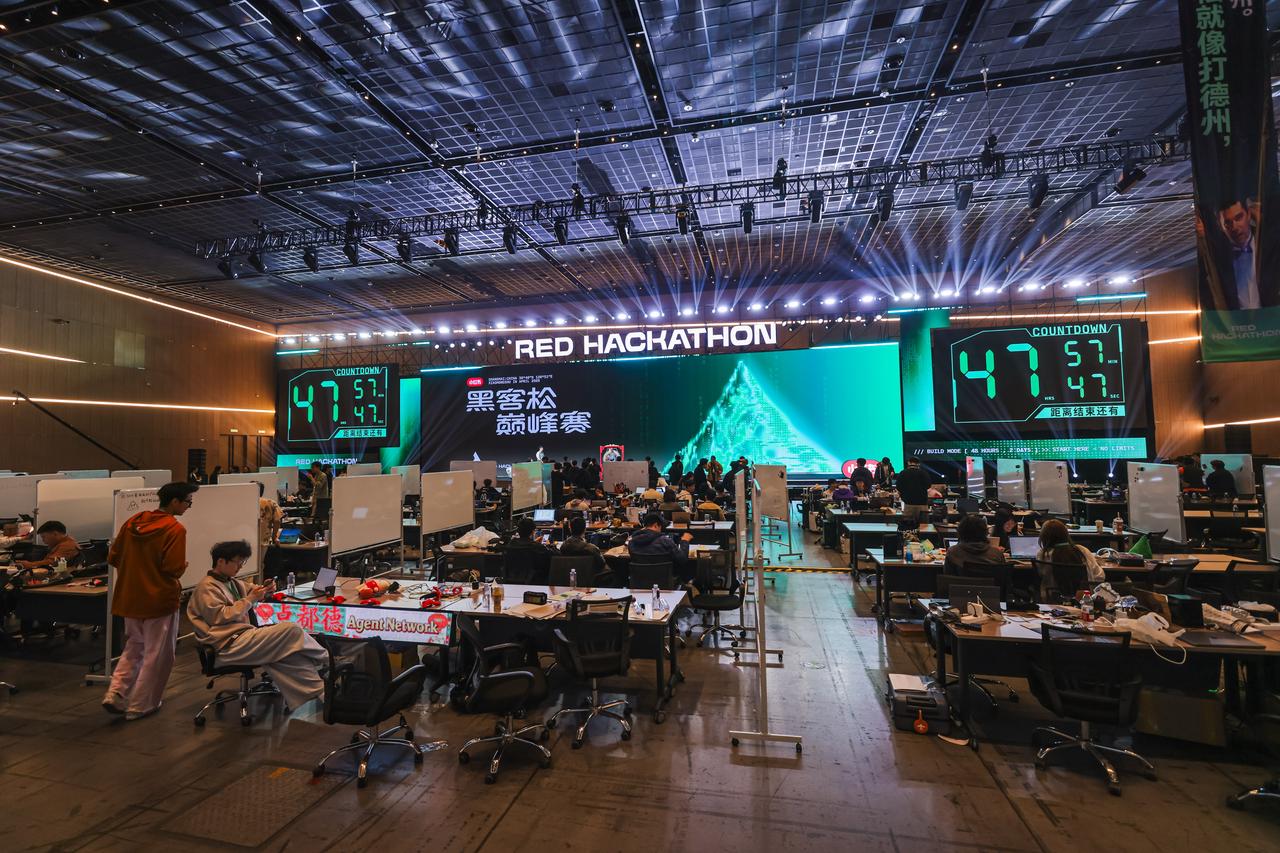
Last weekend, during the peak competition of the Xiaohongshu hackathon, I had a deeper understanding of this.
On the stage of the final pitch, there was no intense competitive feeling but rather a lively "product creation camp." Young faces appeared one after another, carrying a bit of geeky shyness and the enthusiasm of creators. Surprisingly, a team composed of middle school students aged 12 and 13 won the "AI Native" special award.
At the same time, the granularity of innovation has become extremely fine: one group was imagining "installing private servers in satellites," while the next group focused on "AI-generated PPTs being too ugly"; here, a couple was creating brain-controlled wheelchairs for the disabled; there, a team was attempting to solve the age-old problem of communicating with barber Tony using AI...
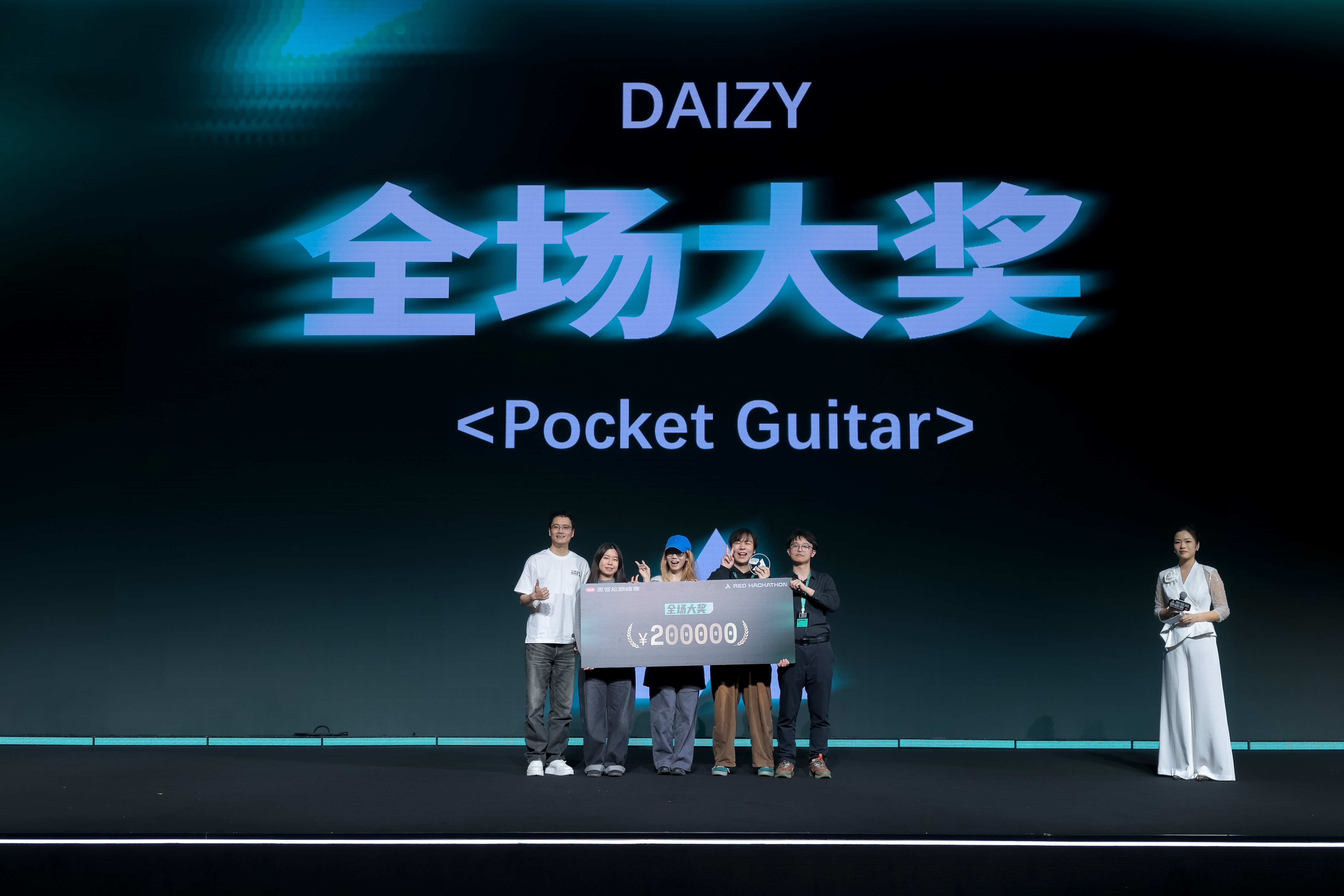
Ultimately, the grand prize was awarded to the DAIZY team for their "Pocket Guitar." Its size is only that of a smartphone, making it easy to fit in your pocket. Through clever design, it addresses three significant pain points for music enthusiasts: traditional guitars have a high barrier to entry, simplified instruments are still bulky, and mobile apps completely lose the authentic feel of strumming strings. It allows a layperson with no background to complete a decent performance in minutes.
Behind this is a clear signal: this group of young, diverse "digital natives" is redefining innovation in the AI era in a lighter way. They are the true "AI Natives": for them, AI is not a tool to be "learned," but an inherent "mother tongue."
This hackathon, rather than being a competition, was more a concentrated exhibition of this generation's daily creations, a collective "coming of age" ceremony for the new generation of AI Natives.
1. A New Entrepreneurial Story
In the past, the narrative of technological innovation followed a "Silicon Valley paradigm": an idea, a business plan, honed repeatedly before knocking on the doors of VCs. The starting point of entrepreneurship was obscure.
But at the Xiaohongshu hackathon in 2026, I saw a completely different approach among this group of post-2000s and even post-2010s, which I shall call the "Xiaohongshu paradigm." Their starting point for entrepreneurship is no longer a business plan but rather a "note." A mode called "Build in Public" is rewriting the old rules of the game.
Post-2000 entrepreneur Chen Jinchun labels himself as a "professional creative player." He has 13,000 followers on Xiaohongshu, where he posts various "quirky" AI tools, and also candidly shares his setbacks and "mystical insights" along his entrepreneurial journey.
Since January of this year, he started continuously posting about his Vibe coding project on Xiaohongshu, helping products achieve cold starts. In less than six months, the product named nuwa gained 100,000 users.
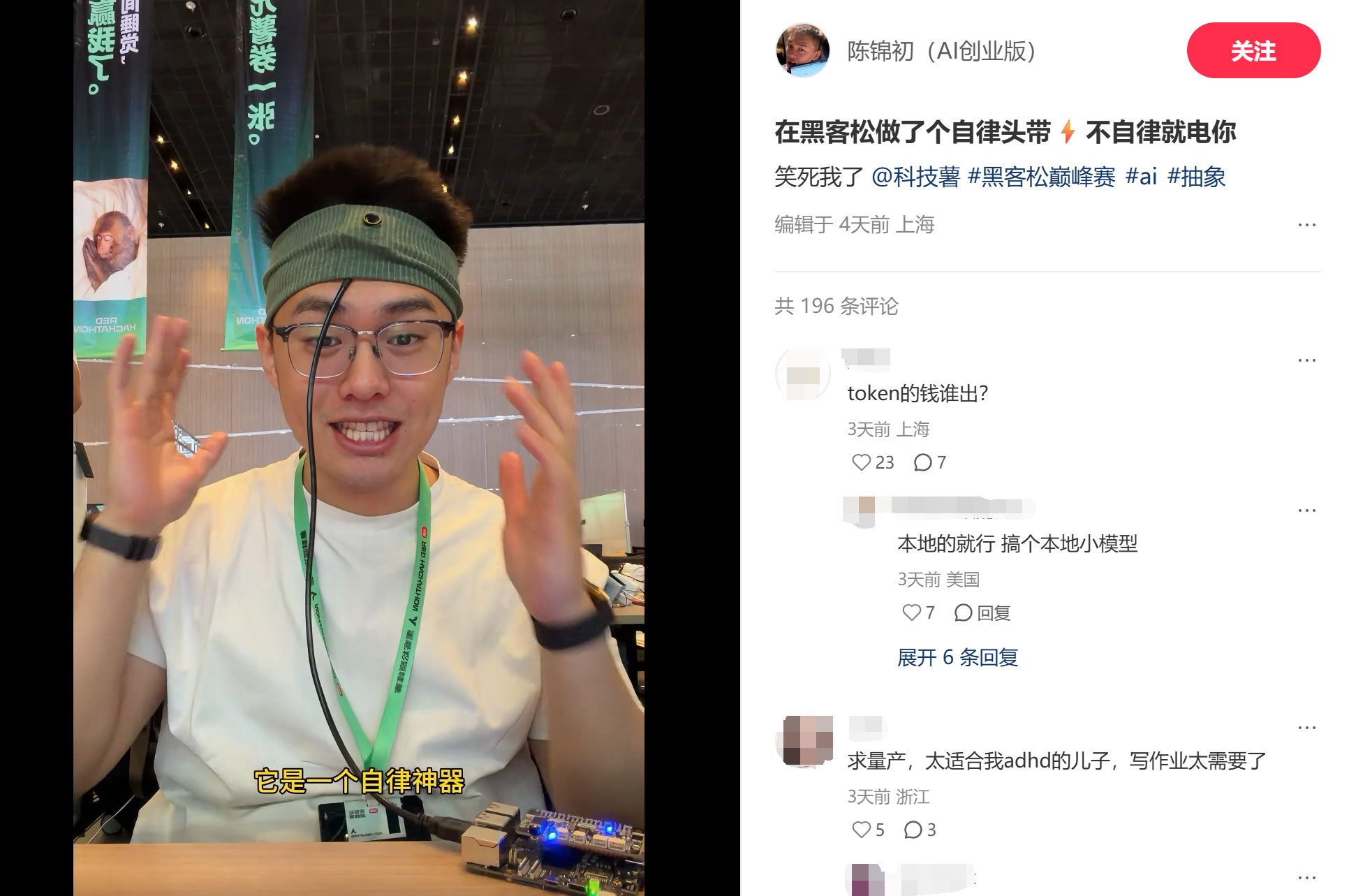
In this hackathon, his project is the "Cyber Tightening Spell," a self-discipline device that looks like a headband, embedded with a camera and microcurrent device. Users set rules in the app such as "no smoking" or "no short video watching during work hours." Once the camera on the headband detects a violation, a gentle electric current immediately "physically discourages" them.
This is a world apart from the previous "code is king" geek era. They no longer hide the development process behind the scenes but transform it into a "reality show" that evolves together with the community.
23-year-old Lai Xinlu is the founder of the open-source community Share AI Lab. Interestingly, he almost never uses traditional recruitment platforms. The core development members of his team come from all corners of the world, and their gathering often happens simply because they came across a technical discussion post on Xiaohongshu and struck up a conversation in the comments, leading to a "precise match" to join forces.
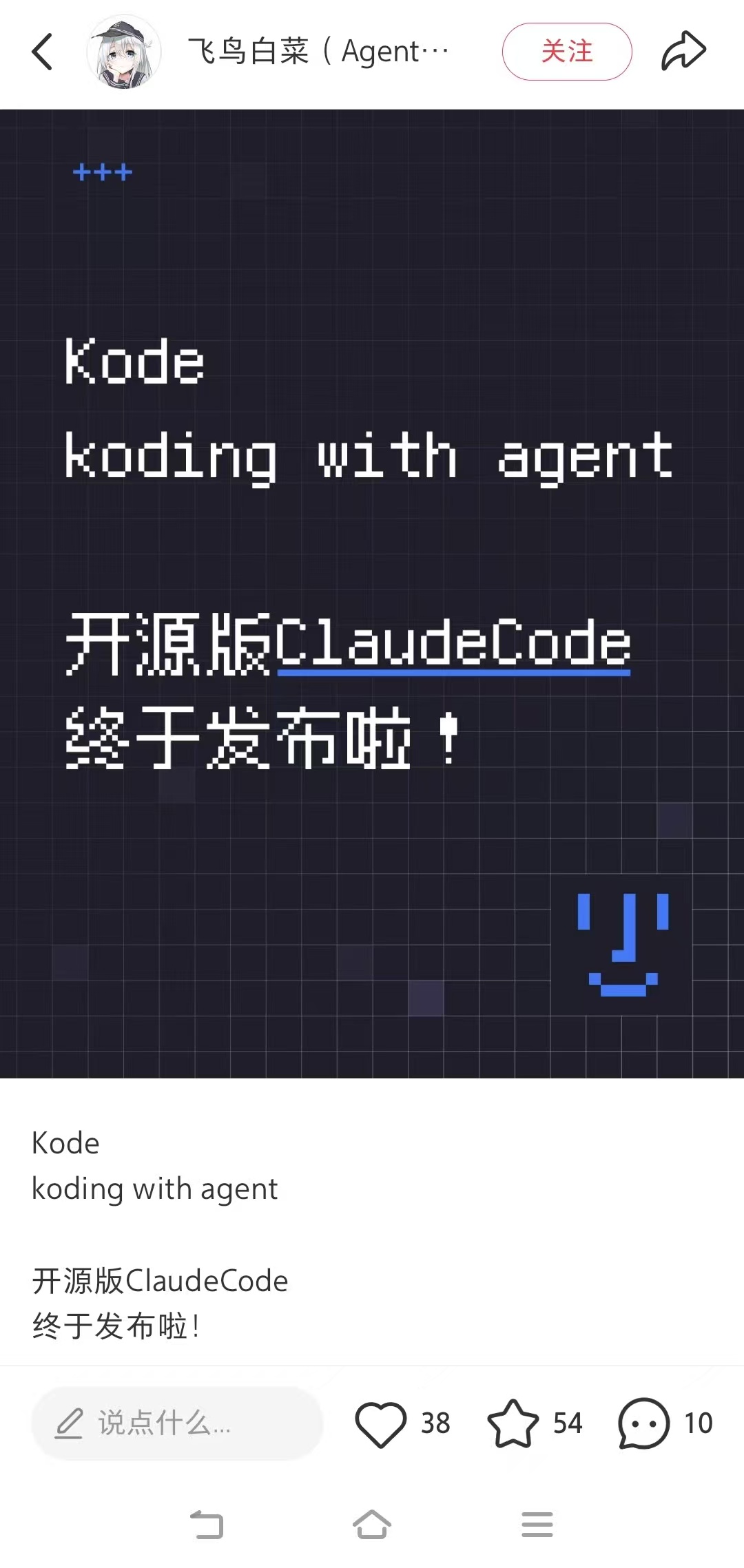
From identifying needs, forming teams, to product cold starts and continuous iterations, Xiaohongshu provides this generation of developers with a complete, ultra-low-cost innovation closed loop.
In my view, they are significantly different from the previous generation of developers. The previous generation of entrepreneurs, whether website owners in the PC internet era or app developers in the mobile internet era, were more like "hunters," searching for windfalls, meticulously crafting products, aiming for a guaranteed shot. If they missed, they would look for the next prey.
In contrast, the new generation in AI resembles "farmers." They plant ideas in the soil of online communities, watering and iterating day after day through "public building," growing together with users, watching them slowly germinate, grow, blossom, and bear fruit. This process is filled with uncertainty, but it is also more vital because of it.
2. Two Major Levers Reshaping Innovation
A new generation of AI Native entrepreneurs is emerging collectively. But we cannot help but ask: why this generation of young people? Why in a community like Xiaohongshu?
Behind this is the convergence of two major trends of the era, which together constitute unprecedented innovative potential.
The first lever is the technological inclusivity brought about by AI.
In the past, if you wanted to develop an app, you needed to master complex programming languages, database knowledge, server maintenance... the entry barrier was very high.
But today, the explosion of generative AI is unprecedentedly empowering every creative-minded person with the technical wand handed over from a few algorithm scientists and top engineers. Development capability is no longer a scarce resource; the value of creation is being magnified.
The Page One team, which won the "AI Native" special award at this hackathon, consists of four middle school students with an average age of only 13.5.
Their project, "NoteRx," is like an "AI personal doctor" for Xiaohongshu notes. It provides data-driven note diagnosis and optimization solutions for creators through a self-developed model and a "multi-round debate mechanism" with five AI agents.
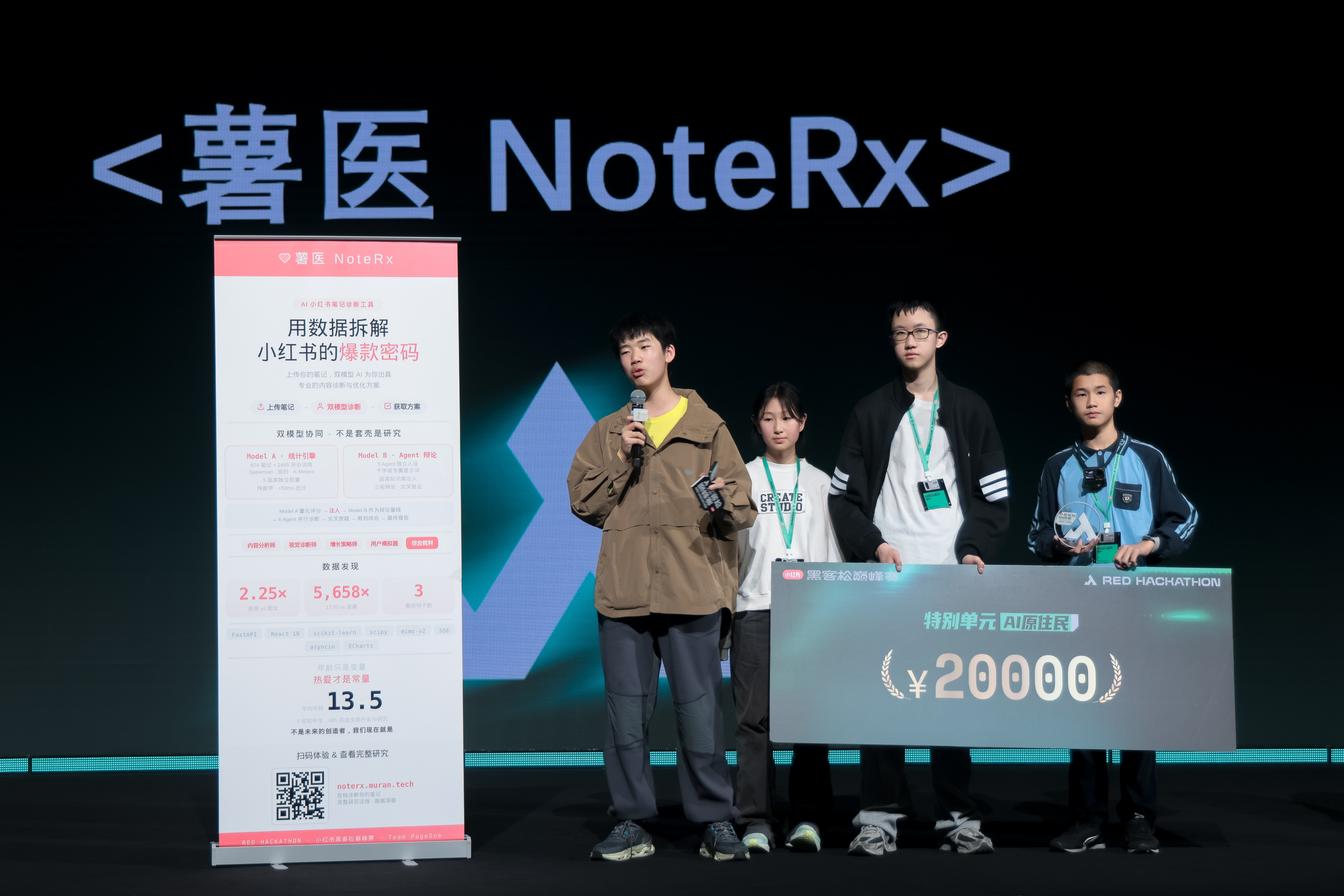
When 13-year-old Yang Xizhe spoke eloquently on stage, what you saw was not a "young genius" but a vibrant "AI Native." For him, "writing code is like playing a game," and innovation itself is full of joy. After playing "The Legend of Zelda," he wanted to make his own game and embarked on a programming path; when he encountered a programming question he couldn't solve, AI became his most patient teacher; he shared his method of using AI to memorize vocabulary on Xiaohongshu and unexpectedly garnered millions of views, with the comments filled with parents and classmates seeking help.
The second lever is the community power of "building in public" on social media.
This generation of "AI Natives" is also a generation of "social media natives." Sharing is not a strategy learned later but an inherent instinct. They are used to recording their lives and expressing their views, and naturally, they seamlessly transfer this instinct to creation and entrepreneurship.
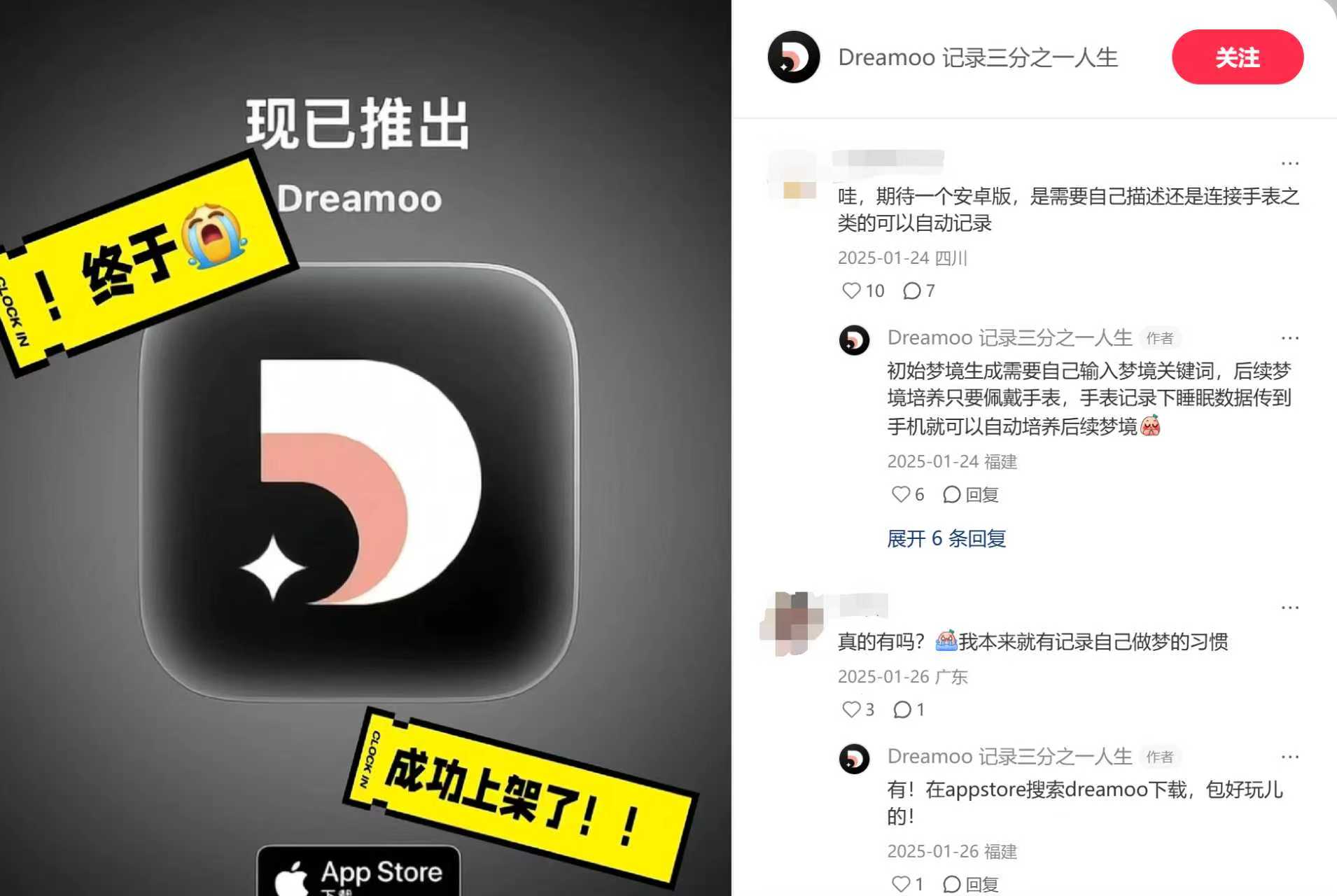
The "Dreamoo" app developed by post-2000 developer Sun Donglai almost entirely grew out of Xiaohongshu.
Its origin was a research post where his team wanted to verify whether the idea of "using AI to visualize dreams and socialize" was valid. Unexpectedly, this post, which incurred no advertising budget, received tens of thousands of views and thousands of interactions. The comment section became a natural pool of demand insights, with some saying they record 800 words of dreams every day and others who couldn't find suitable tools even serialized their dreams on a novel website.
These vivid feedbacks confirmed for Sun Donglai that he had tapped into a real need that had been overlooked. Therefore, from product naming, feature additions or reductions, to UI design, he co-created everything with users through notes. In the first month after Dreamoo's launch, it gained 3,000 seed users solely from Xiaohongshu's organic traffic and user reputation.
When "AI technology equity" combines with "community building in public," a completely new landscape of innovation emerges: AI lowers the barrier to "creation," while communities solve the challenges of "being needed" and "being discovered."
More importantly, the subjects of innovation have become unprecedentedly diverse. Middle school students, liberal arts students, designers, and people with disabilities... no matter your background, as long as you have a good idea and a keen insight into humanity, you can create truly valuable products.
These innovations rooted in the community no longer obsess over grand narratives or disruptive revolutions but are deeply grounded in specific, tangible pain points, itch points, and delight points. They are diverse, long-tail, and segmented, forming a technological ecosystem together.
3. The Innovation Evolution of a "Grass-Planting Community": From "Buy Buy Buy" to "Create Create Create"
The occurrence of all these phenomena is not coincidental.
From last year's Xiaohongshu independent developer competition to this year's hackathon, I can clearly sense that a powerful innovation potential is accumulating and evolving. It is evolving from a lifestyle community into an innovation infrastructure for the AI era, somewhat resembling the "App Store of the AI era."
The origin of Xiaohongshu is to help people solve the question of "what to buy." Through countless genuine shares from ordinary users, it has established a strong "trust" network. Subsequently, this trust naturally extended from consumer decisions to various aspects of life such as travel, food, fitness, and learning, making Xiaohongshu the entry point for people to answer the question of "how to live."
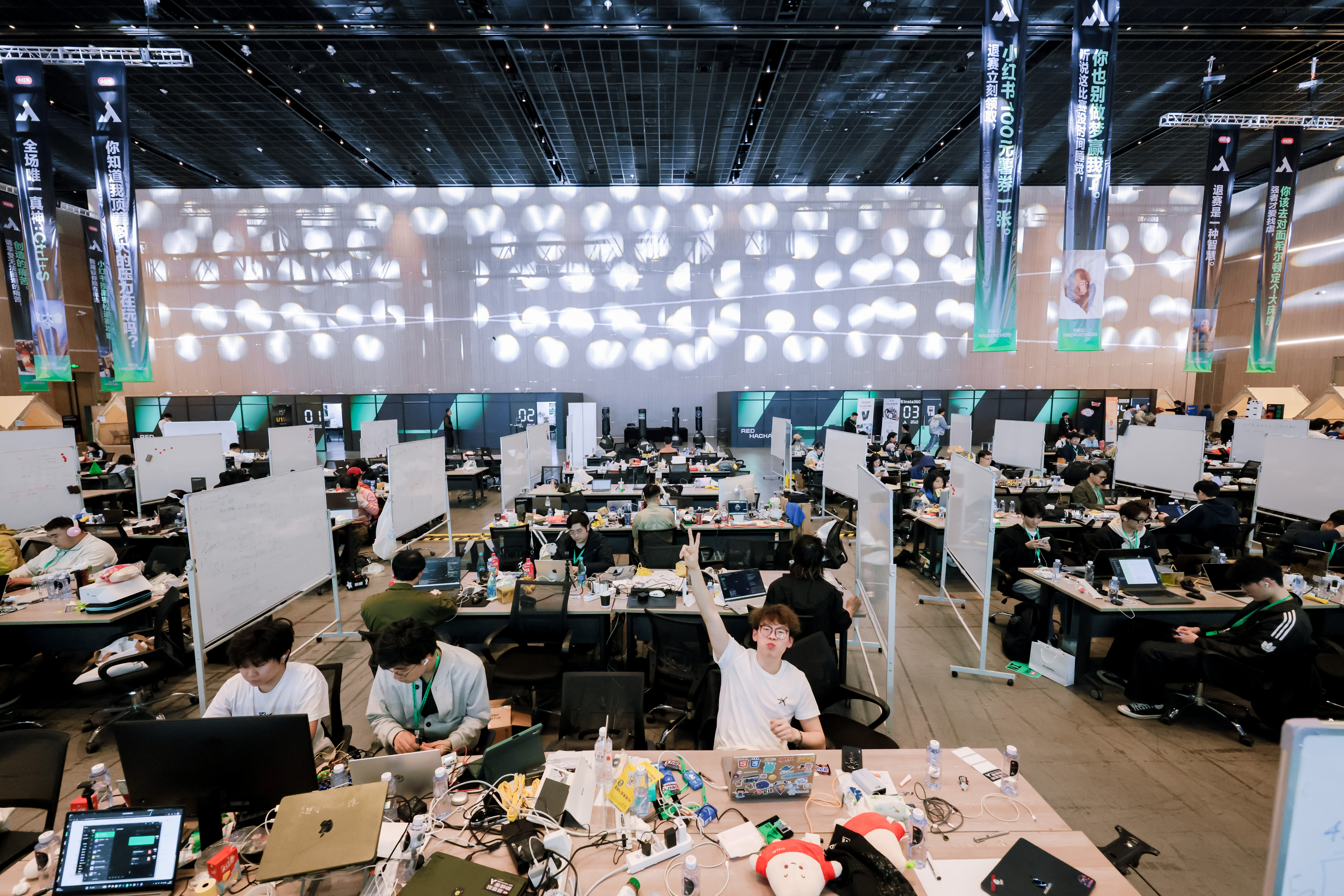
Now, a deeper layer of creativity is emerging here. As tens of thousands of developers begin to use Xiaohongshu as their core battleground for innovation, the value dimension of this community has been expanded once again. It is answering a more profound question: "What to create?" and "How to create?"
First, for creators in the AI era, the technology itself is becoming homogeneous and commoditized. The cost of calling a large model API is decreasing, while profound understanding of people and keen insights into segmented scenarios are becoming the most scarce and valuable resources.
Xiaohongshu has 350 million monthly active users, generating vast amounts of complaints, requests for help, and sharing daily, forming a vibrant and diverse repository of demand scenarios. Developers no longer need to guess what users want out of thin air; they simply need to "lurk" in relevant notes and comment sections to hear the most authentic voices. Their initial ideas and concept sketches can start the most real "echo location," verifying demand and even pre-testing products, of course also building their brand and accumulating potential users from "day one of creation."
Secondly, traditional software development involves great difficulty in finding people, money, and traffic. Xiaohongshu provides a complete closed loop from 0 to 1. From identifying a genuine need to finding like-minded partners through sharing, to publishing the first note to complete the product cold start, and even attracting the attention of investors through community influence. The entire innovation chain can be completed publicly and cost-effectively within this community.
Finally, there is the "co-creation" culture of the community. In Xiaohongshu, "Building in Public" is not just a solo performance by developers, but a duet with users. Users are no longer passive consumers but active co-creators, promoters, and advocates. They provide suggestions for the products they love, create content, and disseminate information voluntarily.
The underlying logic of Xiaohongshu is centered around "people" and "trust." When this long-accumulated community trust meets the innovation needs of the AI era, it bursts forth with astonishing energy. It provides the soil for those small but beautiful innovations arising from real life to take root and flourish.
This is an ever-evolving "coexistence" story: it once coexisted with new consumption and lifestyle content, and now it chooses to coexist with the new generation of AI builders. It is this ability to resonate with the frontier creators of the era that allows the community to find a new narrative in the AI era and constitutes its moat across cycles.
Looking back ten years, the wave of mobile internet gave rise to a generation of entrepreneurial heroes. They capitalized on the benefits of the smartphone boom, connecting online and offline with apps and transforming people's daily lives. That was an era belonging to channels and platforms, where the core of innovation was capturing major user demands, seizing entry points through scenarios, and then executing to strive for winner-takes-all in building platforms.
Today, however, AI has brought a new wave. This generation of entrepreneurs from post-2000 and even post-2005 faces opportunities and challenges that are starkly different from the previous generation. The past narrative of targeting massive user demand with the growth of mobile internet users no longer exists, but the productivity breakout brought by AI no longer requires them to first secure millions of dollars to start; one or several super individuals enhanced by AI productivity can already create good products.
So the "resolution" of the world has risen; creating better services for fewer users can also achieve higher LTV. At this moment, their entry point into innovation shifts to accurately capturing demands, possessing ultimate insight into segmented scenarios, expressing their aesthetics to the fullest, and harnessing the community cohesiveness brought by "building in public."
As the logic and environment of entrepreneurship change, and individual creation becomes mainstream, a platform like Xiaohongshu that gathers countless vibrant individuals and real needs becomes the best soil for this transformation to take root. It is evolving from a consumer decision platform into an innovation infrastructure for the AI era. Here, small innovations and inspirations from individuals can flow, collide, and validate in the most efficient way.
This is not only a huge opportunity for Xiaohongshu as a community but should also be the mission it carries. I look forward to more creative domains like hackathons. Because this is not only about the atmosphere of a platform keeping pace with the times but also, to some extent, determines what meaningful value Xiaohongshu can bring to this world.
免责声明:本文章仅代表作者个人观点,不代表本平台的立场和观点。本文章仅供信息分享,不构成对任何人的任何投资建议。用户与作者之间的任何争议,与本平台无关。如网页中刊载的文章或图片涉及侵权,请提供相关的权利证明和身份证明发送邮件到support@aicoin.com,本平台相关工作人员将会进行核查。


