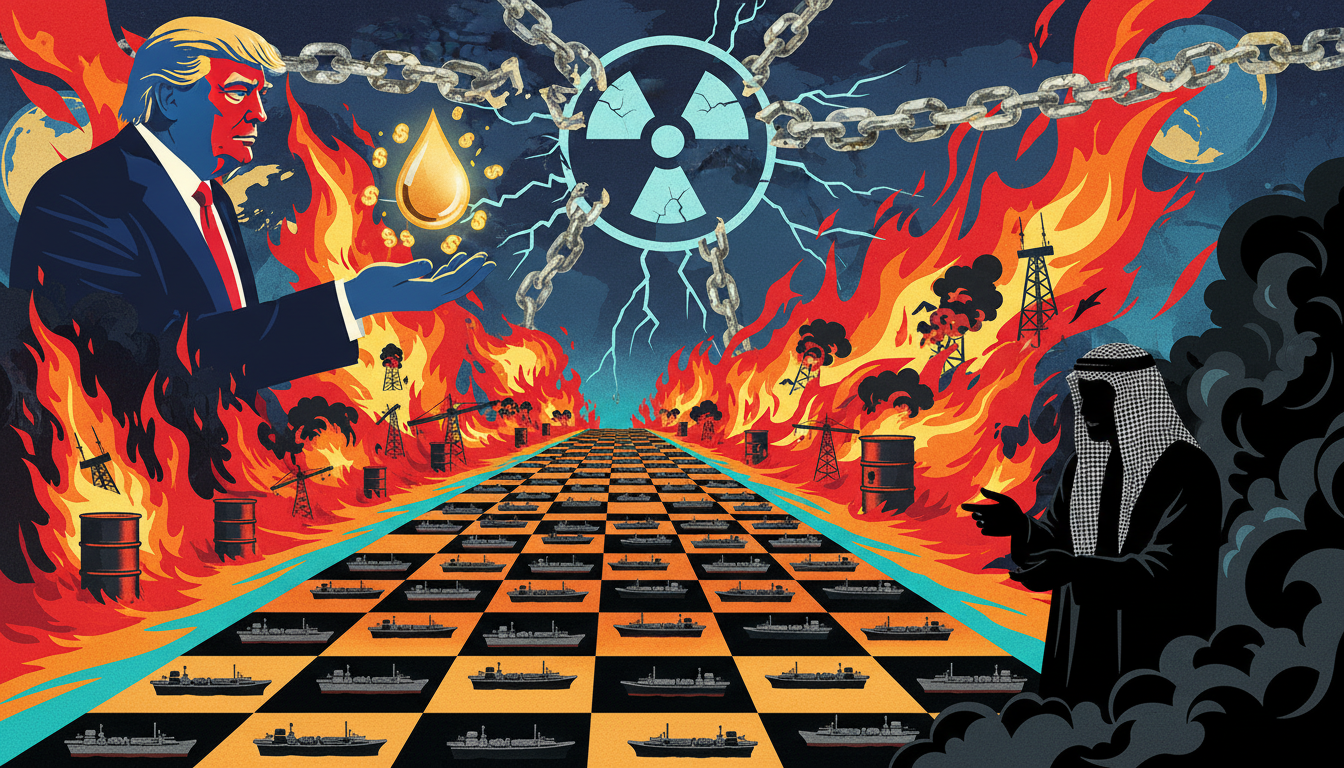
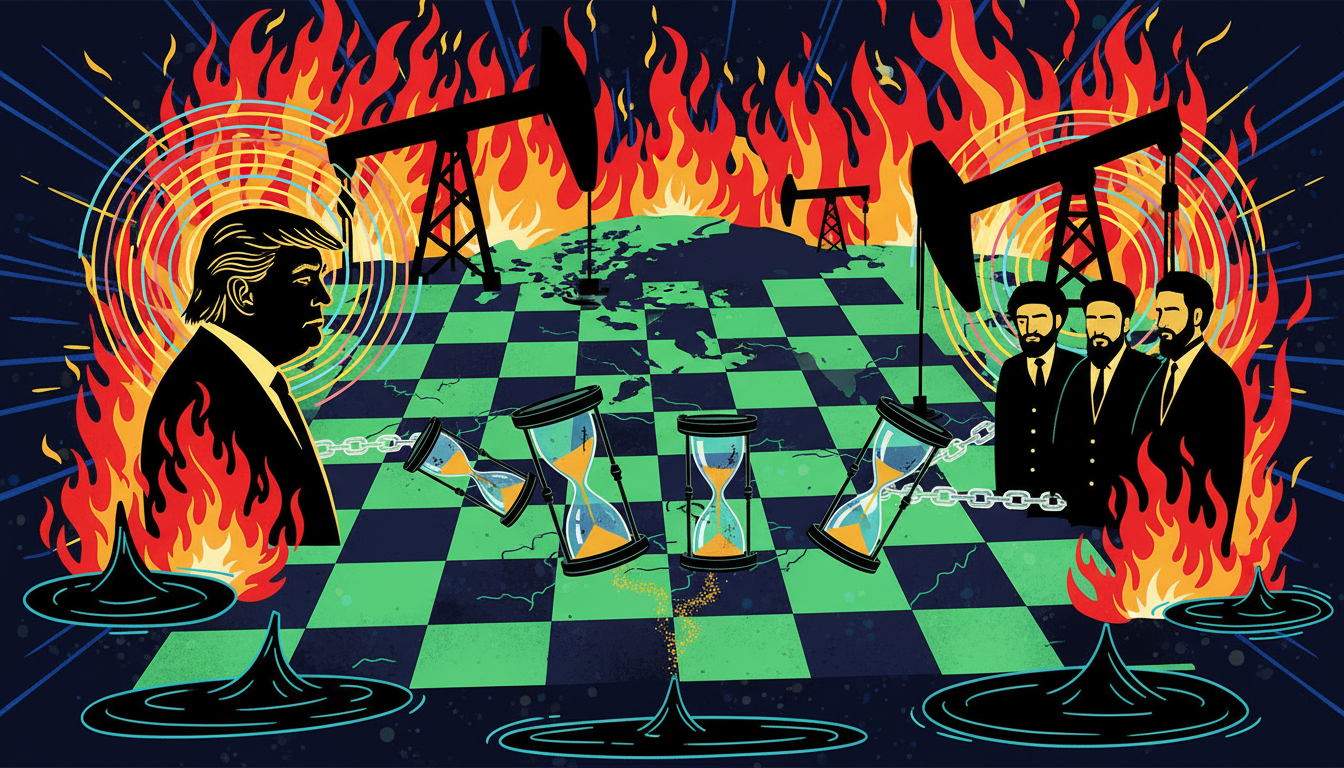
This week in East 8 Time, a statement from Trump has triggered a chain reaction between geopolitics and financial markets—he claims to have facilitated a 10-day ceasefire arrangement through communication with high-level officials from Israel and Lebanon. This claim currently majorly stems from crypto media and social platform relays and has not yet received comprehensive verification and endorsement from mainstream news organizations and government channels from both sides. Almost simultaneously with the news, Brent crude oil, seen as a global risk thermometer, surged to around $95 per barrel with a daily increase of approximately 2.94% (according to Odaily Planet Daily, a single source), highlighting the market's heightened nerves. The subsequent main line of the article raises a practical question: when both the truth and details of the ceasefire news are uncertain, how are traditional energy and crypto assets influenced by emotional drives to create a "market script" that is difficult to discern as true or false?
Rumors of De-Escalation in the Middle East: Ceasefire 1...
According to publicly available reports and the crypto media relayed version, Trump publicly claims that he has facilitated a 10-day ceasefire arrangement through communication with the Prime Minister of Israel and high-level officials from Lebanon, packaging it as yet another success case of his personal mediation abilities. In his narrative, this is not a complex outcome of multi-party and multi-round negotiations in the Middle East, but rather a direct product of "private mediation", continuing his usual emphasis on the "art of the deal" persona.
However, the critical gap in this event lies precisely in the "official confirmation." Currently, there is no formal ceasefire declaration released simultaneously by the governments of Israel and Lebanon, and authoritative channels have not provided a specific start date for the ceasefire, not to mention any publicly accessible text of the agreement. The independent verification by mainstream international media of this claim is very limited, remaining more at the level of reporting "Trump claims such and such" rather than a structural dissection of the agreement itself.
Placing this statement back within Trump's long political trajectory, it is not sudden. Whether during his term on Middle Eastern issues or during his post-presidency campaign, he repeatedly uses diplomatic achievements as personal political capital for marketing, emphasizing his ability to "achieve deals that others cannot." At the current highly sensitive moment in the election cycle and Middle Eastern situation, his release of such a ceasefire narrative in the social arena is difficult to completely detach from domestic electoral motives and agenda competition in public opinion, as his rhetoric style inherently magnifies his personal role while diminishing the emphasis on institutional constraints and multi-party negotiations.
It should be noted that there is a whole information zone around this so-called ceasefire that is off-limits: including any specific details about offline meetings between leaders, whether and how the U.S. government formally intervened, and the possible design of clauses and supervisory mechanisms in the ceasefire agreement, public data has no reliable sources to support it. Some channels mention that communication may have been conducted via phone, which is also labeled as "to be verified" information. Based on these premises, this article can only discuss within the range of existing public statements and observable market reactions, without dramatizing invisible diplomatic backroom imaginings.
Oil Prices Surge to $95: Ge...
Following the announcement of the ceasefire, the market’s most direct reaction appeared in the energy sector. According to Odaily Planet Daily citing market data, Brent crude oil prices temporarily reached around $95 per barrel, with an intra-day increase of approximately 2.94%, and the daily fluctuation has exceeded the normal range set by many institutions. On the trading front, this is a typical "geopolitical headline" driven market move: not derived from supply and demand data, but from a sharp repricing based on future expectations.
Historically, ceasefires and escalation of conflicts in the Middle East are almost always tied to oil prices. During escalated hostilities, the market worries about supply interruptions, transportation obstructions, and heightened sanctions, quickly factoring in risk premiums, often leading to a spike in oil prices; conversely, if credible ceasefire or de-escalation signals emerge, it should theoretically weaken this premium and lower expectations of future supply disruptions. It is precisely for this reason that energy traders are particularly sensitive to every piece of news from the region, where even slight wording adjustments can lead to position adjustments worth hundreds of millions of dollars in a short time.
This time, the nuance lies in the fact that the message content is "ceasefire," but the market reaction seems more like pricing in "uncertainty itself." The current battlefield situation has not shown a clear de-escalation path, and the credibility of the ceasefire claim remains to be cross-verified by mainstream channels. In this state of difficulty in discerning truth and a huge information gap, most funds tend to treat the event as a "risk event" rather than a simple positive or negative influence, with the spike in oil prices appearing more like preemptive defense against multiple possible scenarios in the future (breakdown of negotiations, renewed conflict, changes to sanctions), rather than an optimistic bet on peace itself.
This uncertainty premium at the oil level will transmit through various channels into the pricing of crypto assets. On one hand, rising oil prices drive up inflation expectations, strengthening the market's concerns over long-term interest rates and tight monetary policy, thereby constricting the overall liquidity environment; on the other hand, increased geopolitical risks activate the "safe-haven asset" narrative among some investors, with assets like Bitcoin being viewed by some funds as hedge tools akin to digital gold. The intertwining of these two forces results in crypto asset pricing being constrained by macro liquidity while being imbued with safe-haven premium imaginations, further amplifying the leverage effect of news events on its volatility.
First Response in Crypto Market: Emotion First...
Unlike traditional financial markets, the response path of the crypto market to such geopolitical developments is often "emotion first, facts lagging." When Trump’s ceasefire claim first appeared in social media and crypto information streams, many trading terminals' prices and volumes had already started fluctuating, with algorithmic strategies and high-frequency accounts being passively triggered based on keyword and volatility thresholds, followed by various news accounts and analytical institutions “catching up” to provide background and truth verification of the event. This means that many on-chain and intra-market actions occurred before the information had been systematically verified.
At such moments, some traders' instinctive reactions are not "peace is coming," but instead caution that this could become a "pump and dump" script. Some market participants expressed concerns on social platforms, believing that the timing of the ceasefire announcement coinciding with some asset price movements raises suspicions of pre-positioning by certain individuals, using strong narratives to harvest emotions. Such voices are currently marked as "to be verified public sentiment," with no regulatory investigations or on-chain tracking providing conclusions, reflecting more the market's alertness to manipulation risks rather than an affirmation of facts themselves.
Accompanying this is a general skepticism towards the sources of the news and verification paths. Many online discussions emphasize that this claim still lacks cross-verification by mainstream media and has not seen any formal documents at the government level from both sides. In the crypto space, the heavy reliance on social media, KOL retellings, and second-hand screenshots for information transmission allows news to spread faster than traditional media, but also amplifies the trust gap and misinterpretation spaces. When Reuters and Bloomberg have yet to provide structured reports, while social circles and tweets are flooding screens, the "heat curve" of information often severely misaligns with the "credibility curve."
Under such structural conditions, a relatively operational judgment framework is that until the event is falsified or formally confirmed, the crypto market is more inclined to digest such geopolitical news based on the logic of "betting on expectations." Both sides of the market engage in emotional and narrative battles, magnifying price volatility and leverage risks in the short term—bulls may bet that "ceasefire = risk easing = risk appetite recovery," while bears may bet that "the news backfires or conflict resumes = safe-haven inflow = liquidity tightening," and both of these bets essentially rest on an incomplete information foundation.
Amplifier of Unofficial Reports: Crypto Market...
Treating this ceasefire narrative as a sample, we can see the typical dissemination path of "unofficial yet highly关注ed" news in the crypto market: it often starts being thrown out on personal accounts or second-tier media, then spreads through platforms like Twitter and Telegram, being repeatedly recited and interpreted by traffic KOLs and emotion-driven accounts, forming secondary or even tertiary creations. Emotion traders quickly establish positions based on headlines and snippets, and the leverage structure of the derivatives market further amplifies this layer of emotion, resulting in a sharp price spike or trough within a short time.
At the same time, this kind of news usually first affects the "macro pricing chain" between traditional assets and crypto assets. The ceasefire or escalation in the Middle East initially influences macro assets like crude oil, gold, and stock index futures, which directly carry a repricing of supply, inflation, and risk appetite. Once these categories make directional selections, risk capital begins to redistribute weights between crypto assets—either reducing positions in high-beta coins to shrink overall exposure, or capitalizing on rising safe-haven sentiment to increase the weight of assets like Bitcoin categorized as "gold-like." The crypto market does not operate in isolation but rather follows traditional assets and acts as a backdrop for risk appetite switching.
Within this chain, suspicions of market manipulation become a highly sensitive topic. Some traders might naturally associate: if certain accounts can gain advance knowledge or guide similar high关注ed news like the "ceasefire," they might create a "script-style pump" by positioning themselves first and then amplifying public opinion. However, all related accusations currently remain at the level of concern and speculation, lacking disclosures or on-chain evidence from regulatory bodies. What can be done here is merely to document the existence of such emotions without making any qualitative judgments at the factual level.
Funds truly capable of long-term survival in this environment tend to prioritize self-protection at the trading level rather than become engrossed in the details of every narrative round. For geopolitical news lacking official documents and multi-source confirmations, professional traders often focus on two main aspects: first, the current and expected liquidity situation, and second, their total positions and leverage exposure, rather than how appealing the story itself is. They deliberately avoid stacking too much leverage on a single narrative, to prevent a "news script" from evolving into a fatal black swan at the account level.
From Trump's Diplomatic Narrative to Crypto Safe...
Returning to Trump's personal narrative itself, his discussions on Middle Eastern issues in public have long revolved around the "art of the deal." Whether it is past regional agreements he has promoted or the ceasefire he now claims to have facilitated, he always emphasizes he "personally intervened" and "resolved it with a phone call," packaging complex geopolitical negotiations into an extension of his personal brand. This narrative logic compresses achievements that originally belong to the diplomatic system and collective decision-making into the personal accomplishments of a political celebrity, serving electoral and historical positioning.
Interestingly, this personal messianic narrative is highly similar to the narrative structures of "lead traders," "faith leaders," and "prophet KOLs" in the crypto market. Both encourage market participants to focus their attention on a single source of discourse, believing that a particular individual holds information, judgments, or influence beyond that of ordinary people, thereby diminishing the importance of institutional constraints, information diversity, and independent verification. Whether on the campaign stage or in trading groups, this reliance on "personas" subtly shapes participants' risk perceptions.
When geopolitical factors, energy prices, and the crypto "digital gold" narrative intertwine, the price leverage carried by the news is further elongated. Under the shadow of war, some funds view Bitcoin as a tool to hedge against fiat currency devaluation and traditional asset risks; as oil prices rise and inflation expectations rise, similar logic is reinforced once again. As long as there are sufficiently shocking news headlines, whether "ceasefire" or "escalation," it becomes very easy to use them as story wrappers for a new round of market movements, prompting more funds to frequently switch positions between fear and greed.
The issue is that, when key facts remain unresolved and there are no formal documents and timelines from the parties involved, any investment story built on individuals’ verbal expressions could swiftly backfire on the market at the moment it is debunked. For crypto traders, such backlash is often not a slow clearing but is accompanied by high leverage forced liquidation and instantaneous evaporation of liquidity resulting in a "cliff-like" adjustment. In this respect, Trump-style diplomatic narratives and the emotional mechanisms of the crypto market mirror each other: both condense systemic risks into a few nodes and sources of discourse.
Ceasefire Uncertainty: Traders Only...
In summary, the current core contradiction is: Trump’s claim of a "10-day ceasefire" between Israel and Lebanon appears more as a powerful personal narrative rather than an agreement that can withstand institutional testing, given the absence of formal documents, multi-party endorsements, and detail disclosures. However, the market has already preemptively provided pricing reactions through Brent crude oil rising to $95, nearly 3% intra-day fluctuations, and the dramatic surge in emotions on social media—the tension between narrative and fact has been directly transmitted to the market.
For crypto traders, the primary insight from this event is not "how to bet on whether the ceasefire will hold," but rather to reassess how they handle information: when faced with geopolitical news of unknown origins or still in the verification process, the truly necessary initial question is—who is the source? Is there multi-source cross-confirmation? Is it consistent with mainstream media and official channel statements? Rather than hastily betting on unformed stories ahead of prices. Otherwise, regardless of whether the bet is correct, the volatility of the account will be outsourced to the emotional rhythm of a few sources of discourse.
On an operational level, more pragmatic principles include: reducing leverage exposure to single pieces of news and avoiding stacking large short-term positions on geopolitical events lacking informational symmetry; continuously monitoring the evolution of macro indicators like crude oil prices and interest rate expectations, using these trends of "hard data" as a basis for assessing the environment; focusing more on position and risk control rather than trying to chase every "ceasefire" or "escalation" headline. For a highly narrative-driven crypto market, learning to construct one’s decision-making framework outside of emotional scripts may be more important than understanding any ceasefire declaration.
Join our community, let's discuss together, and become stronger together!
Official Telegram community: https://t.me/aicoincn
AiCoin Chinese Twitter: https://x.com/AiCoinzh
OKX Benefit Group: https://aicoin.com/link/chat?cid=l61eM4owQ
Binance Benefit Group: https://aicoin.com/link/chat?cid=ynr7d1P6Z
免责声明:本文章仅代表作者个人观点,不代表本平台的立场和观点。本文章仅供信息分享,不构成对任何人的任何投资建议。用户与作者之间的任何争议,与本平台无关。如网页中刊载的文章或图片涉及侵权,请提供相关的权利证明和身份证明发送邮件到support@aicoin.com,本平台相关工作人员将会进行核查。