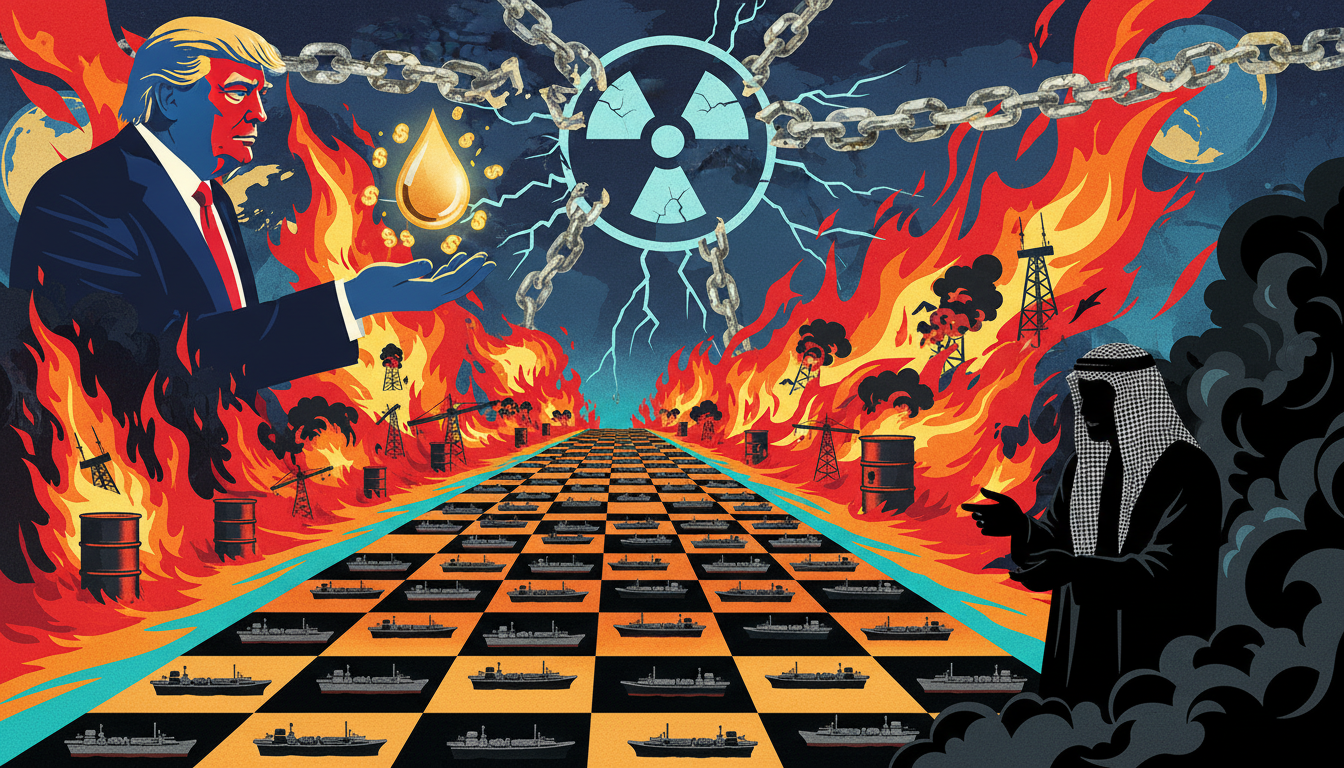
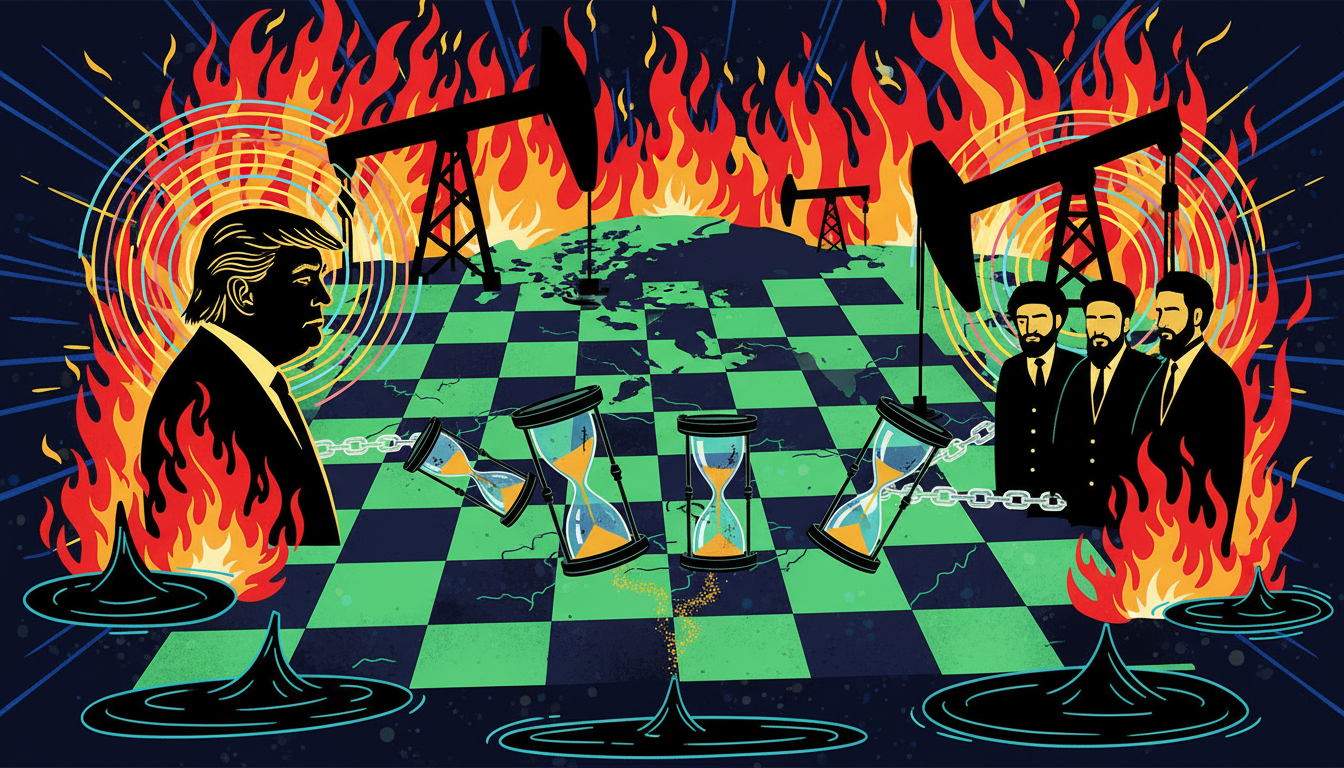
On April 16, 2026, according to reports from the Iranian Student News Agency (ISNA), Iran announced plans to levy tolls on vessels passing through the Strait of Hormuz, with payments and settlements to be completed through Iranian banks. This news was subsequently relayed by various Chinese media outlets. This seemingly technical charge and settlement arrangement directly affects the cost distribution method of one of the world's most critical energy corridors, quickly stirring tensions in the shipping and energy markets. Unlike traditional narratives of geopolitical conflict, this time it resembles an experiment surrounding payment pathways, non-dollar settlements, and financial gamesmanship: who will bear the additional costs of this "oil and gas throat," and how the funds will flow through different channels will become a key observation point in understanding the Middle Eastern energy landscape and global settlement order in the near future.
Global Oil and Gas Toll Hike: Who’s Forced to Foot the Bill
The Strait of Hormuz has long been viewed as a strategic "throat" for global oil and gas transportation, as crude oil and natural gas from major oil-producing countries in the Middle East must pass through this narrow waterway to reach international markets. In recent years, ongoing games over navigation safety and military presence have continuously raised the risk premium associated with this corridor. Now, on top of this existing risk, a toll arrangement led by the coastal countries adds another layer of institutional cost.
In terms of cost transmission pathways, shipping companies are the first to face the pressure of tolls, as they need to recalculate the marginal returns and risks of passing through Hormuz in their pricing and route choices. Looking upstream, oil-producing countries will try to embed the new costs into the export shipping contract prices during negotiations between buyers and sellers; looking midstream, refining and petrochemical enterprises will face issues of rising procurement costs, inventory strategy adjustments, and reevaluation of the pricing system for finished products; ultimately, these layered costs will be partially transmitted to end industrial users and residential consumer prices through the linkage of oil, gas, and freight prices.
This means that the toll through Hormuz is not just an "additional fee," but could amplify an already volatile oil price narrative. As the market begins to price Middle Eastern barrels using a new framework of "toll cost + geopolitical premium," the cost structure for regional energy transportation is rewritten, and any adjustments regarding tolls, exemption scopes, or enforcement rigor could amplify expectations for violent fluctuations in oil and freight prices, further enhancing the leverage of this strait in global energy finance.
Collecting Tolls in Tehran: A New Opening for the Iranian Banking System
One core detail of this arrangement is that tolls must be paid and settled through Iranian banks. Unlike traditional international shipping settlements that rely more on cross-border clearing networks, third-party financial centers, or multilateral banking systems, this design shifts the key point of fund flow to the doorstep of local financial institutions in Iran, changing the geographical and institutional coordinates of payment routing.
Amid ongoing sanctions and SWIFT restrictions, the Iranian banking system has long been locked out of the mainstream global payment networks. Incorporating the rigid toll fees from Hormuz into the domestic banking collection system effectively opens a stable cash flow entry for Tehran with leverage for negotiation, providing it with additional sway in settlement beyond just the right of passage. For certain energy exports and shipping businesses that must pass through Hormuz, this point has shifted from being a "discretionary pathway" to a "regulatory threshold."
Although current public information does not disclose specific payment currencies or technical details, and the related speculative space (such as what financial instruments or account structures to use) needs to remain restrained, it is predictable that under this institutional arrangement, some shipping or trading entities may begin to assess how to explore alternative payment channels or intermediaries that do not violate existing sanction frameworks, balancing between settling through Iranian banks and avoiding secondary sanction risks.
Non-Dollar Settlement Experiment: Financial Imagination for Energy Channels
From the perspective of "non-dollar settlement practices," the toll arrangement at Hormuz opens up new space for diverse settlement narratives. The fact that tolls will be collected through Iranian banks shifts the financial interface of a critical link in the energy trade chain from traditional cross-border clearing networks to regional, or even more confined, financial systems, providing the possibility for stakeholders to restructure their accounting processes, offsets, and banking choices.
Under the current regional sanction pattern, some countries that have relatively close ties with Iran, or that are more inclined to seek leeway outside the Western financial system, may theoretically be more willing to cooperate with localized or multilateral settlement arrangements led by Iran: for example, processing Hormuz tolls alongside other trade transactions through regional banks, bilateral agreements, or specific financial instruments. However, these ideas currently mostly remain in the realm of policy and geopolitical speculation, lacking public technical detail support.
At the same time, outside interpretations of “Iran implementing some sort of financial control or settlement repricing through this” still belong to unverified information. According to research briefs, such judgments should rely on subsequent published policy documents and specific operational details rather than on media summaries or second-hand commentary. For market participants, a more prudent stance is to view the Hormuz toll as a potential experiment in non-dollar settlements, maintaining cautious phrasing like "according to reports" or "sources say" until definitive rules and participant lists are seen, to avoid overly betting on a particular path of de-dollarization.
The Cost of Bypassing the Strait: Alternative Routes from Banias Port
In discussions of the "risks and cost hikes associated with Hormuz," the feasibility of regional alternative routes naturally comes to the forefront. The research brief cites a statement from the Syrian oil company claiming that the closure of the Strait of Hormuz had previously driven Iraq to transport oil through the Syrian Banias Port, but it needs to be emphasized that this is a single-source report that has not been widely verified, and thus should be marked for its limitations when used.
Even putting aside this specific case, logically, when the costs and risks of passage through Hormuz rise simultaneously, other ports and land routes in the region may indeed welcome theoretical "opportunity for substitution": some oil-producing countries may increase their evaluations of inland pipelines, alternative ports, and multi-segment transportation solutions to reduce long-term over-reliance on a single throat. However, these opportunities often come bundled with infrastructure shortcomings and geopolitical security risks.
Bypassing Hormuz has never been simply a matter of "taking a different route," but involves a systemic project of restructuring the entire supply chain, meaning significant infrastructure investment, longer transportation times, more transit stages, and new exposed security risk points. For energy trades relying on high turnover and low marginal costs, such diversions only become economically feasible when the “Hormuz toll + security premium” is regarded as an irreversible trend over the long term. Thus, currently, the market is more reflecting a "bypassing expectation premium" at the pricing level, rather than immediately triggering a fundamental reshaping of route maps.
Policy Signals and Market Imagination: The Unresolved Information Void
Focusing the timeline on April 16, 2026, in the East 8 timezone, it is clear that the news relayed by ISNA and various Chinese media still has a significant amount of information voids. Specific toll standards, whether differentiated by tonnage or vessel type, implementation timelines, and whether there will be a transition period have not yet been made public; official responses from international shipping organizations and major shipowner associations are similarly absent. These omissions mean that any price and route-related speculation can only unfold in a "lacking parameters" model.
The research brief also cautions that April 16, as the publication date, still needs to be verified by the original ISNA text, so a more prudent approach in the narrative would be to use phrases such as “according to reports” or “sources say” to limit the certainty of the information rather than treating it as a pre-established policy that has entered the execution phase. This caution not only holds responsibility for facts but also serves as an important buffer to avoid pushing market sentiment towards unilateral extremes amid a highly sensitive geopolitical context.
In the gaps where details are unclear, markets and media often spontaneously weave narratives with “expectations filling the void”: on one side, oil and freight prices react with amplified risk premiums to any news that could elevate costs; on the other side, stories of geopolitical tension and financial system gamesmanship are continuously elevated and emotionally relayed on social media. This mechanism of emotional amplification may have a heavier impact on energy and shipping asset pricing in a short time than the substantive policies themselves, while the real landing plans and execution strength often do not begin to manifest until official documents and multi-part responses are gradually disclosed, allowing the market to start secondary pricing and narrative corrections.
The Beginning of Reshaping Oil Routes: Looking at Three Mainlines from a Toll
In summary, Iran's push for a Hormuz toll and its collection through domestic banks releases long-term signals along at least three mainlines: at the level of energy costs, it adds a new institutional charge to the global oil and gas transport structure, which will be embedded in the pricing models of oil and freight prices together with geopolitical premiums; at the level of regional maneuvering, it extends control over the right of passage to the dimension of settlement rights, providing Tehran with a new chip that has both cash flow and bargaining power in the Middle Eastern energy chessboard; at the level of payment systems, it provides a symbolically significant real-world testing ground for non-dollar settlements and localized financial channels, although this is currently mostly in the narrative and expectation stage.
In the short term, it is more likely that market expectations and risk premiums surrounding this news will dominate fluctuations in oil and freight prices, rather than an immediate reshuffle of the transportation landscape. Route changes, infrastructure investments, and settlement system restructuring are slow variables measured in years, while market sentiment and geopolitical news rapidly switch on scales of days or even hours. For trading and asset allocation, establishing one's own timing framework between these two rhythms will determine the quality of risk exposure.
Looking ahead, key observation indicators worth tracking include: whether Iran issues a formal toll document and its detailed rules; the public statements and response strategies of major shipping companies, shipowner associations, and key oil-producing countries; whether there are substantial investment and policy tilt signals in alternative routes and infrastructure projects within the region. Only when these "hard facts" gradually materialize will the Hormuz toll evolve from a high-profile news story into a structural variable reshaping global oil routes and settlement order.
Join our community to discuss and grow stronger together!
Official Telegram community: https://t.me/aicoincn
AiCoin Chinese Twitter: https://x.com/AiCoinzh
OKX Benefits Group: https://aicoin.com/link/chat?cid=l61eM4owQ
Binance Benefits Group: https://aicoin.com/link/chat?cid=ynr7d1P6Z
免责声明:本文章仅代表作者个人观点,不代表本平台的立场和观点。本文章仅供信息分享,不构成对任何人的任何投资建议。用户与作者之间的任何争议,与本平台无关。如网页中刊载的文章或图片涉及侵权,请提供相关的权利证明和身份证明发送邮件到support@aicoin.com,本平台相关工作人员将会进行核查。