Author: Anthony Pompliano
Translator: Blockchain in Plain Language
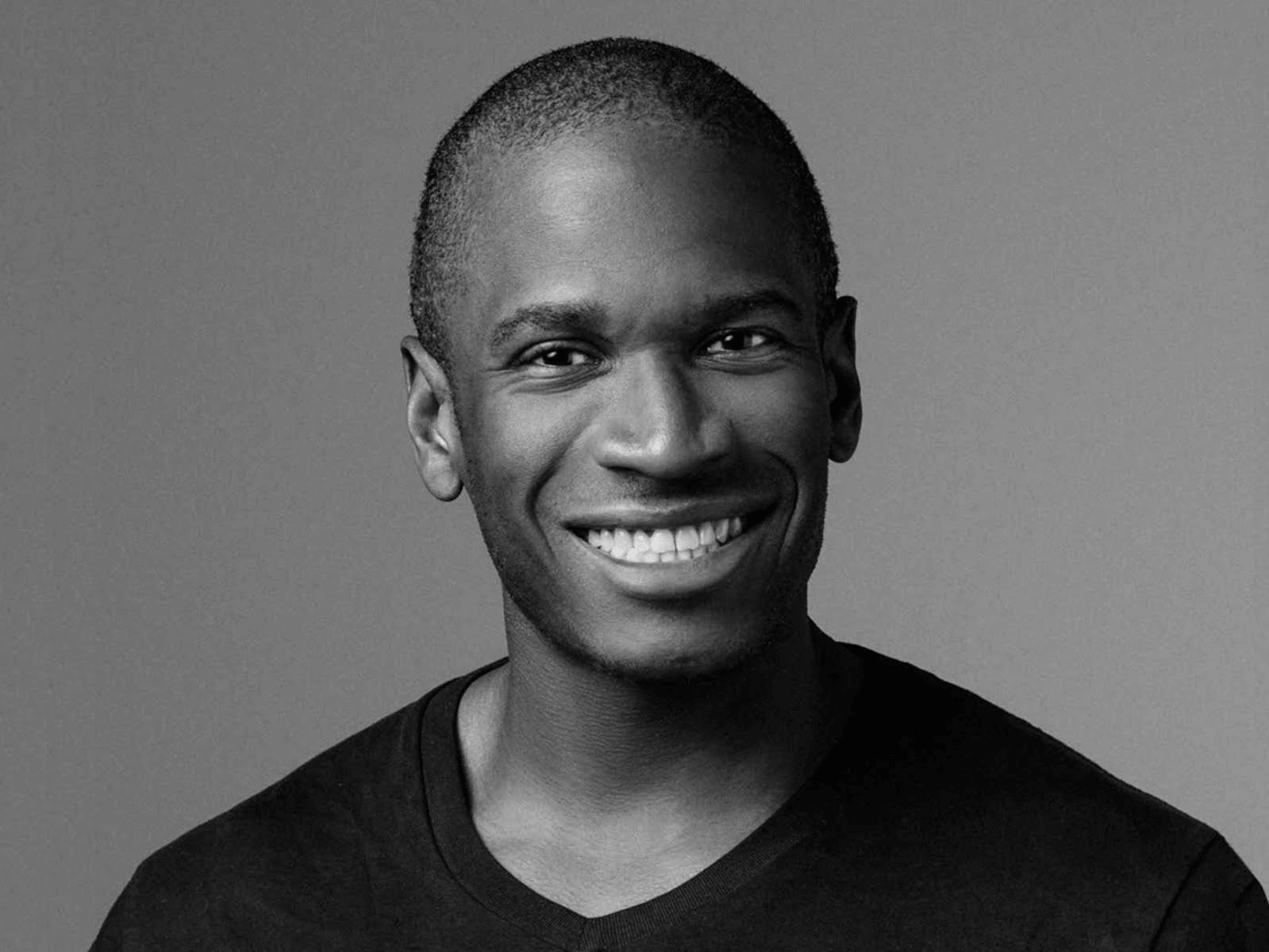
What truly gives Bitcoin its value? Arthur Hayes provides a soul-stirring answer: Without retail users, Bitcoin is worthless.
In this rare in-depth dialogue, Maelstrom's Chief Investment Officer and former BitMEX founder, Arthur Hayes, uses his consistently sharp and profound perspective to analyze the most complex macro situation today. From the truth about oil prices behind the war in Iran to the fierce tug-of-war between AI-induced deflation and energy inflation; from gold quietly reshaping the trade system to Bitcoin's unique role as a "liquidity smoke detector," he offers distinct judgments.
Even more surprising is Hayes's bold assertion: insider trading should be legalized because what the market needs most is real information; over 90% of his assets are still in Bitcoin, yet he has high hopes for Hyperliquid and Zcash; he openly criticizes various regulatory bills, insisting that Bitcoin's value has never relied on Wall Street but rather on the real needs of ordinary people worldwide.
This is not just a collision of macro and crypto; it's a profound reflection on the free market, information transparency, and the future financial order.
Want to know what truly valuable assets to hold in the tumultuous year of 2026? Want to hear how a seasoned trader views war, AI, privacy, and power? Please keep reading; this may be the most politically incorrect yet thought-provoking conversation you hear this year.
1. The Iran War and Oil Prices: The Only Important Indicator
Host: If Bitcoin lacks retail attributes, it is worthless. I think this is what many people do not understand, so I say: veto all these bills. I hope Trump vetoes every single bill. We don't need them. We didn't need them in 2009, didn't need them in 2018, and certainly don't need them in 2026.
Hello everyone, today we have Arthur Hayes with us for an insightful conversation. He is the Chief Investment Officer of Maelstrom. In this conversation, he will explain the current macro environment, how the Iran war might affect inflation, deflation, gold, Bitcoin, and other assets in traditional markets. Then we will delve into some crypto projects he is currently very excited about: Hyperliquid, Zcash, and prediction markets. Finally, Arthur will tell us why he believes insider trading should be legalized, and his explanations will open your eyes and make you think critically about what he says and his reasons.
Here is my latest conversation with Arthur Hayes.
Host: Alright, Arthur. Let's start with the Iran war. Clearly, the situation has been fluctuating: war is on, war is off, ceasefire, and then no ceasefire. Oil prices are skyrocketing, and everyone is panicking. What is your view on what is actually happening? Should investors be concerned?
Arthur Hayes: Basically, I made a chart on Bloomberg showing the price spread between the first and sixth contracts of WTI crude oil futures. I wanted to see the difference between these two contracts. Obviously, until February 28, right before the war began, they were basically synchronized. The front-month contract surged significantly because we had supply disruptions and shutdowns, many carriers were unable to get through the strait, making spot oil prices very expensive. However, while the forward contracts also rose a bit, the increase was nowhere near as large because the market assumed that some compromise would be reached in the short to medium term, and oil would continue to flow through the strait. So forward oil prices were not as high as the front-month's. This is the spread I have been tracking.
The only important thing is whether oil can flow through this strait. Unfortunately, many people in the Middle East are dying, but for most people, they don't live there and have no family there. As long as gasoline prices are not too high, they do not care about what happens in the Middle East. For most people in the world, the only thing that matters is: Can I fly normally? Is food affordable? Can I live as I did before the conflict started?
If oil is flowing, even if people all over the Middle East are suffering, it won't affect the bigger picture. But if oil isn't flowing, we have big problems. So I look at one chart to judge the Iran war, which is the price spread between these two contracts. If forward oil prices start to rise steadily, we know that oil is not getting through the strait, no matter what it costs to make oil flow. If you can achieve that, and forward oil prices remain within a controllable range, then we are fine. If not, we have bigger issues.
That's how I view the Iran war. This ceasefire, maybe it works, maybe it doesn't. But if the relevant parties believe that the current situation is sufficient to maintain the flow of oil, and the Trump administration doesn't have to take extreme measures, the conflict in the Middle East might continue, but it won't be critical for most people globally. So that's how I see the Iran situation: looking at the oil price chart, looking at that spread.
Host: Do you pay attention to what people say? For example, the strait is closed, but it seems the transponder was turned off, and price fluctuations occur. Do you just look at the prices? Price is the true truth, and all the narratives, what's closed and what's not, live photos, and all this crazy stuff are actually entertaining, right?
Host: But ultimately, isn't it the price that tells the true story of whether the strait is open?
Arthur Hayes: It is the price because everything else is propaganda, anecdotes, or unverifiable. I read an article related to this and thought it was well written, and everything has nuances. There are no absolute black and white distinctions, no complete openness or complete closure; it all depends on the situation. And "depends on" is very difficult for investors to deal with. So we are always looking for an objective measure that can price this uncertainty, and that is the spread between the front-month and near-month oil price contracts.
If oil is flowing, then news and rhetoric can cause oil prices to fluctuate. But is there actually oil passing through? Can I sign contracts to receive oil, jet fuel, or fertilizer months from now? If all this is still happening, it may require some additional cost, but the world can continue to function, inflation may rise slightly, but overall it remains manageable.
2. The Tug-of-War between Inflation and Deflation: The Conflict of AI and Energy
Host: Before all this erupted, my view of the world was that there were deflationary forces at work: deportation, tariffs, AI, and robots are consuming the U.S. economy. You started to see some prices dropping on indicators. People began to think the risk of deflation might be greater than inflation. Suddenly, oil prices soared, and everyone immediately turned to worry about super-high inflation coming back. What do you think about the battle between inflation and deflation? Do you care about what the actual answer is?
Arthur Hayes: Inflation is the inflation of what you need, and deflation is the deflation of what you want, right? If we consider the AI issue you mentioned, the replacement of knowledge workers is accelerating. It's happening. Companies are laying off workers everywhere because using AI agents to perform specific knowledge work is much easier than hiring humans, and this trend is only going to strengthen and accelerate. This leads to deflation in the "wants" that you want. You want the new items, bags, cars, or luxury homes you see on social media; you actually don't need them, you just want them. Now you might be unemployed, having lost your high-paying tech job, and it may be hard to recover your previous spending levels in the short term. So the "needs" pushed by those affected are actually deflationary, and the underlying credit is a problem for the banking system, an issue that will only get worse.
But what confuses central banks is that the things we still need are experiencing inflation. The entire world economy is essentially a derivative of energy; if energy is disrupted from flowing through the strait, whether it is fertilizer for food production or crude oil as a raw material, inflation will arise, impacting the entire economy. As a central bank, you are faced with a conundrum: should I lower interest rates or raise them? So different parts of the economy are experiencing both inflation and deflation simultaneously.
Host: What about Kevin Warsh coming into the Federal Reserve? Do you think he will take a specific stance or just look rationally at the data? Many analysts closely dissect the speeches of Federal Reserve officials.
Arthur Hayes: I think it doesn’t matter. Ultimately, the Federal Reserve is an arm of the U.S. government, and they will do what the government needs them to do to ensure it can pay its bills. If there is an AI-driven deflationary time bomb, and they need to print money to rescue the banking system, they will do that, and then economists will provide justification. If Trump decides to take a tough stance that requires a big budget, the Federal Reserve will also cooperate by lowering interest rates and providing liquidity. Who is sitting in that position doesn't matter. They will do what needs to be done to ensure the government can afford its expenses. As a leveraged investor, the timing you need may not come immediately, but in the long run, the Federal Reserve will always provide support in the way the government needs.
3. Gold, Bitcoin, and Non-Sovereign Assets
Host: Let's talk about gold. Gold has been performing well recently, with many central banks buying in. But now Iran is reportedly going to charge fees for passage through the strait; they are not asking for gold but for Bitcoin. So it seems that non-sovereign neutral assets have multiple use cases. Depending on the purpose, whether for defense or payment, gold and Bitcoin now seem interchangeable. The use case for this non-sovereign asset has been very prominent in the past 18 months. Do you agree?
Arthur Hayes: Absolutely. In recent months, the largest U.S. export has been non-monetary gold. All the talk about re-industrialization and increasing exports has not been confirmed by data. Data shows that the U.S. is exporting gold to Switzerland, which is then refined and sent to China. This quietly indicates a new gold standard is being established. If you need to buy goods from China but do not have a trade surplus, how do you obtain renminbi? They are willing to accept gold. So gold becomes the sovereign layer that facilitates trade. It is not an official gold standard, but it is gradually happening beneath the surface. As for whether they are actually charging Bitcoin or just expressing a stance, actual transaction records will need to confirm that.
Host: What do you think about the fact that since the war began, stocks, gold, bonds, etc., have fallen, while Bitcoin has remained relatively flat or even increased slightly?
Arthur Hayes: Bitcoin has fallen about 50% from its historical high. Since the war started, it has outperformed other assets, but that provides little comfort for most holders. Oil prices have surged; it would be better if Bitcoin could keep up with hydrocarbon prices, but at least it has performed better relative to oil prices among major asset classes.
Host: Why do you think Bitcoin has not outperformed gold or stocks in the past few years?
Arthur Hayes: I believe the deflationary effect brought by AI has made Bitcoin like a liquidity smoke detector, warning us that problems exist. Printing money is not enough; AI and data centers consume a massive amount of capital, and global central banks and banks have not created enough credit. Therefore, as the most credit-sensitive asset, Bitcoin has declined. Elon Musk mentioned that AI is so deflationary that people might demand the government print more money. Bitcoin fell sharply starting in Q3 last year, likely because it sensed the onset of a deflationary period instead of the anticipated inflation. So Bitcoin may need to wait until deflationary pressures ease before it can significantly recover.
Even if the Iran war ended today, Bitcoin would not simply return to $100,000 because of peace. I believe the impact of AI on the value of human labor is a very large issue, especially in flexible economies like the United States. Many companies are laying off workers because the productivity of AI teams is far superior to that of ordinary employees. While this improves corporate efficiency, it will have a substantial impact on consumer spending-driven economies.
Host: What percentage does Bitcoin currently occupy in your portfolio? How are you handling it?
Arthur Hayes: Over 90% of my net worth is in Bitcoin. My approach is to do nothing. It doesn’t matter if it rises or falls; my cost basis is very low. But the question is: should I put in more fiat currency or sell some Bitcoin to buy other assets that might appreciate faster? Among altcoins, I am most optimistic about Zcash and Hyperliquid. But if you ask me if I would buy Bitcoin today with new fiat currency, I would say no, as we are still waiting for a massive money printing event. Central banks need to recognize that AI might lead to pressures on the banking system. Currently, they believe that AI will enhance productivity, so no additional action is necessary, but until that worldview changes, Bitcoin prices will reflect credit shortages.
Host: Have you ever sold Bitcoin to buy other things, or do you just refrain from investing new dollars?
Arthur Hayes: I have sold Bitcoin to buy Zcash and Hyperliquid, but not to convert back into fiat. If new fiat enters the portfolio, it goes somewhere to earn treasury yields.
Host: What about outside of crypto? Do you have other assets?
Arthur Hayes: Not outside of crypto, but gold. I hold physical gold and gold mining stocks. That is basically my entire portfolio—crypto and gold, nothing more. It’s that simple for Maelstrom.
4. Thoughts on Hyperliquid, Prediction Markets, and Insider Trading
Host: When you look at different crypto technologies and companies, many are already public, and new challengers are emerging, from prediction markets to Hyperliquid. How do you view their competition with giants like Coinbase and Binance?
Arthur Hayes: The biggest challengers are Hyperliquid and its DEX model, which pose an existential risk to Coinbase and Binance. Since the invention of perpetual contracts, we have been trying to realize permissionless listing, and Hyperliquid has finally executed it well. The reason I like it is that it offers global users 24/7 leveraged trading and has found product-market fit. It is taking over some of the price discovery for assets, especially those that cannot be traded through traditional channels. Now anyone with stablecoins or Bitcoin can gain leveraged exposure. This is truly a game changer. Centralized trading platforms find it difficult to quickly respond to innovations from such a small team. Hyperliquid is about to launch prediction market features and significantly lower fees, which will create an interesting competitive landscape.
I believe insider trading should be legalized across all asset classes. We want the market to reflect real-time information, rather than waiting for media reports. When government officials bet on prediction markets, it can let the market know more quickly what they are doing. This is more valuable than propaganda.
Host: If someone shares information for personal gain, do we accept this trade-off? Are they providing a public service to the market?
Arthur Hayes: I think so. The market should aggregate all available information. If some information can be shared at certain times and not at others, what is the meaning of the market? Yes, there are ethical issues, but as a trader, I want all the information. We can deal with government officials later, but similar behavior already exists in most countries. Making information public can lead to better pricing and a continuous flow of information, as putting money on the line is the best way to express real opinions.
Host: What about fragile markets, like those manipulating with assassinations?
Arthur Hayes: I am a believer in free markets. Let everything happen. Such events will happen regardless. If we price it, we can know whether the risks are rising, and perhaps alert authorities. These markets can provide more information beyond negative uses. What the market gives us is the price aggregated from the wisdom of crowds.
5. Bitcoin's Retail Attributes, Privacy Coins, and Future Expectations
Host: Let's talk about Trump's commitments to Bitcoin and crypto. Many people expect strategic Bitcoin reserves and regulations, but Bitcoin's price is basically still where it was at the time he was elected. What do you think?
Arthur Hayes: People always say we need institutional investors, thus we need these bills. I say, who cares? This is a retail-driven movement. The reason it has value is that it provides options for those who previously had no financial services. We have created another financial system outside of the traditional banking system. If we just join a pile of rules to attract large funds, it will dilute its value. Banks are interested because there are billions of ordinary people trading it. If Bitcoin loses its retail attributes, it’s worthless. So I hope all those bills are vetoed. We never needed them.
Host: What about stablecoin yields?
Arthur Hayes: I hope that stablecoins can offer yields competitive with banks, but the reality is that political factors will hinder it. Stablecoins are a significant challenge for banks because they could lead to deposit outflows. People are learning how politics works: stakeholders will ensure that bills unfavorable to them do not pass.
Host: After your past legal disputes, has your perspective changed?
Arthur Hayes: Not at all. My views have remained consistent before and after. It’s just that now I feel more profoundly the banking system's hostility towards what we've built. This is not a cute little game; it's a competition that comes at a cost.
Host: What is your view on Zcash?
Arthur Hayes: Bitcoin is transparent, which has its pros and cons, but it is not completely private cash. In the age of AI and big tech, it becomes easy to de-anonymize, and if you want complete privacy, zero-knowledge proof protocols like Zcash are very valuable. The demand for privacy will increase over time, and Zcash's price is expected to reflect that. It will not be fully embraced by the mainstream financial system, just as cash is no longer economic for modern banking, but it is very important for individuals and certain scenarios.
Host: What do you see as the most bearish in the crypto space?
Arthur Hayes: I am bearish on many Layer 2 projects that lack customers and product-market fit. Too many projects rely on unhealthy VC capital formation. We need to return to crowdfunding fundamentals, letting the community have economic stakes so that incentives can align better, and project performance will be healthier.
Host: What do you see as the prospects for perpetual contracts on Wall Street?
Arthur Hayes: I believe that similar products offered by traditional finance will fail due to settlement mechanism issues. Crypto's limited loss and socialized mechanisms allow for high leverage and 24/7 trading, which is what retail users want. Hyperliquid has the potential to become a very large trading platform because it serves billions of people globally, not just a few developed countries. Buying HYPEToken is like owning a piece of the future largest trading platform, and the buyback mechanism will give it deflationary attributes.
Host: What is the situation with the equity fund you are raising?
Arthur Hayes: As prices have fallen, many non-trading platform crypto companies with solid cash flows and excellent teams have been undervalued. Founders want to exit, and we provide liquidity through buyouts, bringing in operators for optimization, and waiting to exit after the market recovers. This is a very attractive time.
Host: Where can people find you?
Arthur Hayes: I’m on X platform @CryptoHayes, and also on Substack Crypto Hazes, where I publish articles.
Host: To sum up your current market view, it is that money will continue to be printed long-term. You’re bullish on Bitcoin, gold, Hyperliquid, Zcash, and undervalued crypto companies in the market.
Arthur Hayes: Yes, it’s that simple. I’m not an AI stock player; I prefer doing what I am familiar with and don’t need to constantly monitor the screen.
Host: Thank you for accepting the interview; we’ll talk again soon.
Article link: https://www.hellobtc.com/kp/du/04/6285.html
Source: https://www.youtube.com/watch?v=CELblcz2AYk
免责声明:本文章仅代表作者个人观点,不代表本平台的立场和观点。本文章仅供信息分享,不构成对任何人的任何投资建议。用户与作者之间的任何争议,与本平台无关。如网页中刊载的文章或图片涉及侵权,请提供相关的权利证明和身份证明发送邮件到support@aicoin.com,本平台相关工作人员将会进行核查。


