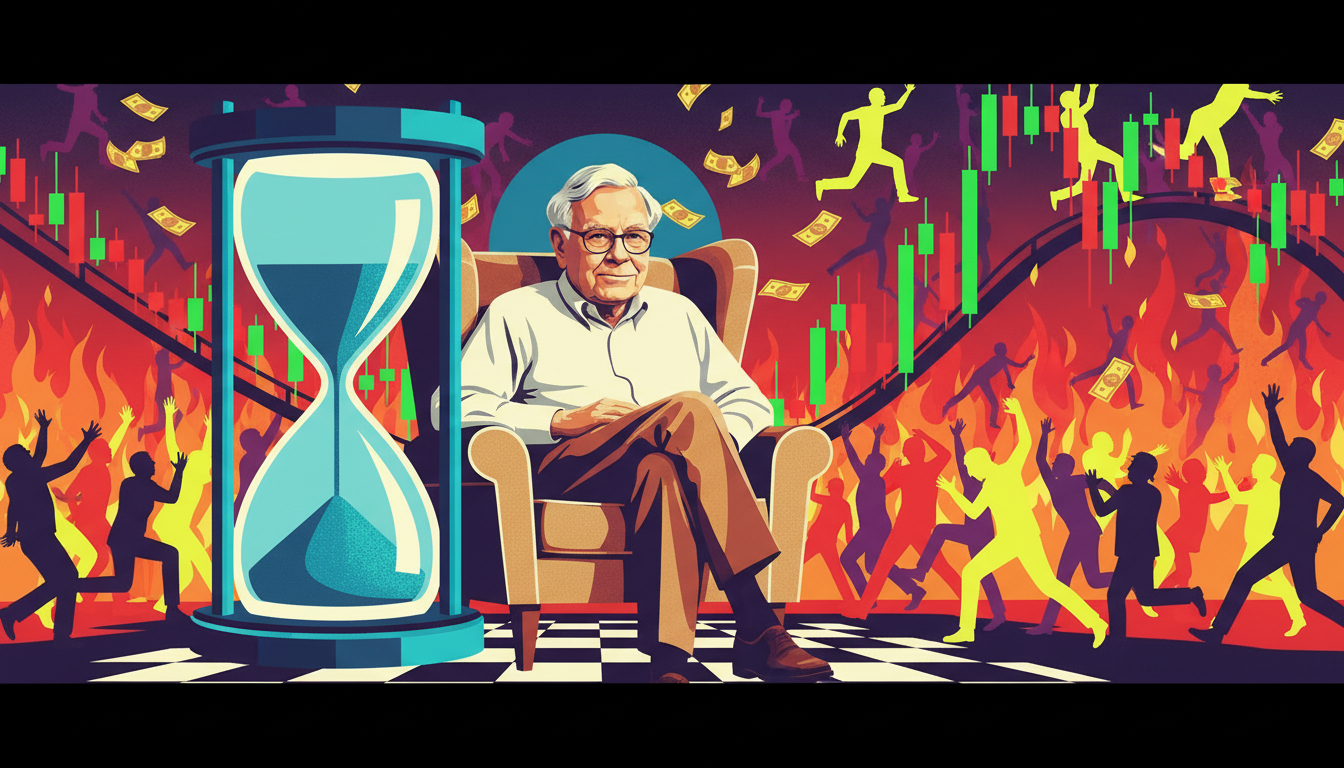
On March 31, 2026, a white paper released by the Google Quantum AI Team presented quantum computing, previously considered a "sci-fi threat," to the blockchain world with engineering parameters and timelines for the first time. The key information provided by the paper is simple yet harsh: the resource demand for breaking ECDLP-256 is lower than mainstream expectations. This is not a distant mathematical term game—ECDLP-256 is the mathematical cornerstone that underpins the security of the secp256k1 curve, widely used in public chains like Bitcoin. In other words, the "lock" that guards your private key may not be as thick as imagined in the face of quantum technology.
Even more pressing is the timeline. Google proposed in the white paper that 2029 should be regarded as the “deadline” for completing the transition to post-quantum cryptography (PQC), otherwise mainstream blockchain systems will be exposed to the gradually materializing risk of decryption. From this moment forward, the "quantum threat" is no longer just a topic of debate in forums, but has become a ticking clock—a countdown written with a year for the world of public chains.
Google Takes the Lead: Quantum Threat Awakened Early
The true impact of this white paper on market perception lies not in the introduction of a brand new attack model, but in the lowering of the psychological threshold for the resources needed to crack ECDLP-256. In the past, many developers habitually thought that breaking the 256-bit elliptic curve discrete logarithm problem would require far beyond foreseeable quantum computing power, hence “there’s nothing to worry about in this lifetime.” The Google team did not provide the specific number of qubits and runtimes that outsiders are most concerned about, but clearly stated overall: resource demand is lower than previously imagined levels, turning from "impossible" into "engineering worth serious planning."
To understand the weight of this, one must align the abstract ECDLP-256 with the real-world secp256k1. You can imagine ECDLP-256 as a highly complex cryptographic puzzle, while secp256k1 is the specific implementation of this puzzle in Bitcoin wallets—your private key is the answer, and the public address is the question. Under classical computers, deriving the answer from the question is virtually impossible, akin to guessing the combination on a cosmic-level lock; however, the advent of quantum algorithms thins this “lock” effectively. If ECDLP-256's defenses are gradually eaten away by quantum technology, it means that the door which only you should be able to open begins to physically exist as potentially unlockable.
The 2029 “deadline” for PQC transition that Google provided comes from this engineering perspective: it is not to say that a machine capable of breaking secp256k1 will definitely appear by 2029, but rather a reminder to all systems relying on the security of ECDLP-256—before that, you must complete the transition from the old lock to the new lock. This also marks a turning point in the narrative: quantum is no longer a theoretical risk in mathematics journals, but a clear timeline written into technical roadmaps.
Interestingly, market sentiment surrounding this threat is extremely divided. Some still scoff, viewing it as another marketing round of “quantum hype”: real usable quantum computers are still a long way off, so there is no need to waste time on illusions; while others slide directly into doomsday narratives, imagining all private keys and on-chain assets as “digital deposits” that will be simultaneously looted at some early morning. Both ends of the sentiment point to one fact: there is a huge information gap—those who understand cryptography and engineering rhythms discuss “how to migrate”; the majority of users and some practitioners are still stuck arguing “is there a threat.”
Bitcoin Hesitates, Ethereum Makes a Move: Misalignment of Upgrade Anxiety
In this quantum countdown that has been forcibly fast-forwarded, the atmosphere between the Bitcoin and Ethereum communities is starkly contrasted. A review of community discussions reveals that the Ethereum circle is more active on the topic of post-quantum cryptography (PQC), with researchers, core developers, and external academia exploring multiple routes around “how to introduce PQC while maintaining composability.” Even though most ideas remain in the research and design phase, the consensus that “something needs to be done” is already rooted, with PQC seen as one of the necessary options in the medium to long term.
Conversely, the overall attitude in Bitcoin is noticeably more restrained and even indifferent. While there are certainly technical voices within the community that recognize the quantum threat deeply, no widely accepted formal migration plan has yet formed: there is no clear timetable written into the protocol evolution roadmap, nor has there been a strong sense of urgency on the consensus level regarding “must prepare for quantum.” This is closely tied to Bitcoin’s consistent conservative culture and its high degree of caution regarding changes to scripts and signature algorithms—this conservatism has maintained a minimal yet robust core amidst numerous soft and hard fork controversies, but it also makes it harder to pivot in the face of new threats.
Thus, a subtle contrast emerges: the once “safest choice” may paradoxically become “the chain exposed to risks for the longest time” under the quantum narrative. Ethereum’s “head start” does not imply it has ready answers but signifies that it embraces uncertainty, prioritizing the quantum threat as a high-ranked technical issue; Bitcoin’s hesitation rests some of its security bets on the assumption that “quantum progress is not that fast.”
Even more tension arises from the psychological stratification of different participants. Within the developer community, one end consists of technical optimists: they believe that with enough discussion and time, the community will ultimately complete a smooth transition from ECDSA to PQC, seeing quantum merely as a new engineering challenge; the other end comprises defense anxious individuals: constantly reminding about scenarios of “quantum eavesdropping” and “recording now for future decryption,” worrying that every year of delay exposes an additional year of decipherable historical data on-chain. For miners, the focus is more pragmatic—any actions involving consensus upgrades and forks could mean a reshuffle of hash power distribution and transaction fee revenues; while regular holders often lack clear actionable paths, oscillating between “I’ve heard about quantum risks” and “what should be done.”
Upgrade or Fork: The Tough Choice in a Decentralized World
If the Google white paper sounded the technical alarm, then CZ’s comment pointed directly at governance issues. He stated from a macro perspective: theoretically, cryptocurrencies only need to upgrade to quantum-resistant algorithms to counter quantum computing threats, so there’s no need to panic. This statement sounds casual yet accurately represents a common delusion—designing a new algorithm on paper is not difficult, what’s hard is how to seamlessly replace that running old heart within a decentralized system of tens of thousands of global nodes, billions of users, and hundreds of billions in market value.
When CZ later added that "the actual execution of upgrading to quantum-resistant algorithms in a decentralized world is not easy... it may lead to chain splits," this contrast becomes even more glaring. Technically, switching from ECDSA to a certain PQC signature seems like just “changing an algorithm”; but at the program level, any adjustments to verification rules, script semantics, and transaction formats could trigger the complex game of soft and hard forks: who defines the new standards? How much hash power or staked support is considered “legitimate migration”? How to deal with the old nodes and old assets that refuse or are unable to upgrade?
Once quantum is viewed as a real threat, upgrading to PQC inevitably steps on all the pain points of decentralized systems:
● Soft and Hard Fork Risks: If new and old signature algorithms need to coexist for a period, how to ensure that old assets can gradually migrate without being “caught in the middle” by quantum? Soft forks may be seen as the mild option but can leave behind complex compatibility logic; hard forks are clean-cut but could lead to two mutually unrecognized chains, replicating the past scenarios of “splitting up” multiple times.
● Node Coordination and Legacy Assets: The truly tricky part is those addresses that lost private keys early on and are no longer maintained—these cannot actively migrate to new algorithms and may transform into "pickable asset pools" when quantum arrives. How should the protocol balance protecting legacy assets and ensuring the overall security of the system? Any design leaning towards one side will be embroiled in serious ethical and governance controversies.
Imagine an extreme yet not absurd scenario: the old signature algorithm of a mainstream chain is cracked for the first time in practical combat, and a small number of high-value addresses are accurately stolen. Once the news spreads, panic migration and on-chain congestion erupt simultaneously, forcing developers to push urgent PQC upgrade plans within days or weeks. Some nodes and ecological projects choose to quickly follow up and form an “anti-quantum version”; others adhere to conservative principles or doubt the new algorithm, continuing to mine blocks on the old chain. User funds rush to flee or gamble between two chains, with demands for tracing, freezing, and arbitration surging—this is not merely a technical accident but a political crisis about “who represents the original chain”.
Thus, the question ultimately returns to a sharp counter-question: as the quantum clock ticks faster, do we trade a more centralized, efficient decision-making mechanism for a shortened security window, or do we stick to a decentralized, slow decision-making rhythm and accept a longer time exposed to the attack surface? This is not just a question of cryptography, but a litmus test for the values of the crypto world.
Elon Musk and CZ: Two Statements Exposing the Emotional Spectrum
In the public opinion arena, the quantum threat often does not spread from white paper summaries but rather from a “fun” remark. Musk once half-jokingly commented on the impact of quantum computing: “On the bright side, if you forget your wallet password, you might still be able to reopen your wallet in the future.” This teasing optimism precisely captures the public's complex mindset toward the quantum concept—both curiosity about “superpowered technology” and subtle unease about existing security boundaries being breached, with the latter being more easily masked under laughter.
In contrast, CZ’s frequently quoted statement that “from a macro perspective, cryptocurrencies only need to upgrade to quantum-resistant algorithms to counter quantum computing threats, so there’s no need to panic” represents an “engineering rationality” within the industry: do not be bound by doomsday narratives; as long as there is enough time and resources, a sufficiently secure new generation of cryptographic solutions can always be iterated. The media’s amplification of “quantum crisis” and the practitioners’ assertion that “the problem is controllable” collide clearly in this statement.
However, when CZ adds, “in a decentralized world, the actual execution of upgrading to quantum-resistant algorithms is not easy… it may lead to chain splits,” we find that even the most optimistic industry leaders must acknowledge potential cracks when it comes to execution. These three layers of statements form an intriguing emotional curve: starting from “just need to upgrade,” to “upgrading is hard,” and finally to “may split,” shifting from a light confidence to a gradual infiltration of unspoken worries about a multi-chain existence or even fracture in the future.
If we place Musk’s joke and CZ’s technical assessment on the same spectrum, we see a complete emotional landscape of today's society regarding the intersection of quantum and crypto: one end holds a frivolous fantasy of quantum as a “universal key,” as if forgetting the password is no longer a problem; the middle segment embodies an engineer’s pragmatic optimism, believing systems can extend their lifespan through algorithmic iterations; while the other end exhibits governance pessimism, envisioning repeated upgrade disputes, fork storms, and legal recourse, worrying that the true challenge in upgrading isn't the algorithms, but human consensus and heart.
Beyond the Quantum Threat: The Tightening Regulatory Noose
As the technological clock approaches 2029, another dial of regulation is also speeding up. At the geopolitical level, the Russian government has approved a draft bill that proposes to centralize domestic cryptocurrency trading activities to licensed intermediary institutions and set an annual purchase limit of approximately $3,700 for retail users (according to a single source). This means that, from certain sovereign perspectives, crypto assets are being re-standardized as a financial instrument requiring strict monitoring and quota controls, no longer an unbounded technological experiment.
If quantum brings pressure on security from the bottom up—forcing public chains to upgrade at the cryptographic level—then such bills reflect top-down compliance pressure: pulling decentralized, peer-to-peer activity back under the jurisdiction of a few licensed intermediaries. The former pushes for technological upgrades like PQC, while the latter imposes KYC, quota management, and transaction flow scrutiny, creating a dual squeeze on users and projects.
In the context of quantum threats, this regulatory logic may also be further packaged as “national security” and “financial stability.” Once the argument “quantum can break existing encryption systems” is accepted by policymakers, they can easily draw a straightforward conclusion: since the technological security window is shrinking, nations have reason to preemptively confine crypto activities within a more controllable scope to avoid the potential scenario of large-scale funds being stolen by quantum attacks, leading to systemic risks. This provides additional excuses for stricter on-chain scrutiny, address blacklists, and transaction monitoring.
For individual users and project teams, when the technological security window shortens and compliance space tightens simultaneously, initially leisurely planned asset migrations and business layouts may be forced to unfold prematurely or in a more rushed manner. Will funds move faster to jurisdictions with more robust PQC preparations and looser regulatory environments? Should new public chains design for quantum protection and compliance-friendliness from the outset? The answers to these questions greatly depend on how different countries interpret the quantum narrative in the coming years—whether as a reason to encourage local technological investment or as a new tool to strengthen capital controls.
The 2029 Lifeline: Who Completes Self-Transformation First
When Google marks 2029 as the “deadline” for PQC transition in its white paper, it has unwittingly attached a countdown clock for the entire industry. Whether you are a veteran public chain running for over a decade or a budding network just starting out, this milestone suggests: if you plan to carry valuable assets beyond that, you must complete some form of post-quantum transformation beforehand. In this sense, 2029 resembles a “lifeline” for technology and narrative—it won’t create a catastrophic disaster at that moment, but will gradually distinguish between “the world that has completed migration” and “the world still exposed to old risks” afterwards.
In the three to five-year window ahead, Bitcoin, Ethereum, and various new public chains are likely to pursue vastly different strategic paths. One path is conservative adherence: minimizing protocol layer changes while focusing energy on external protection and monitoring, hoping for a slowdown in quantum progress or extending the lifespan of the old algorithm through other means; another path is radical migration: proactively incorporating PQC into the core roadmap, undergoing substantial restructuring in signatures, key management, and even consensus mechanisms, even if this entails short-term sacrifices in performance, experience, and ecosystem compatibility; some might choose to start from scratch, directly designing a “quantum-native” security architecture on a new chain, viewing the old chain as a legacy of the transition era.
Whichever path is taken, it ultimately leads to the same real issue: developers, institutions, and ordinary holders all need to make choices in advance between quantum risks, governance paths, and asset mobility. Developers must decide which route they are willing to write code for, whether to patch up a conservative fortress or pave the way for a new system; institutions need to assess the on-chain security duration of custodial assets and how much migration friction their clients can endure; regular users need to contemplate whether their main assets should be diversified into ecosystems that deploy PQC earlier or continue to trust the inertia and reputation of established public chains.
In the end, the answer that Google’s white paper does not provide may in fact be the most critical part of this countdown: what truly determines the fate of the crypto world—is it the number of qubits, or the choices humanity makes between consensus and security? As the limits of technology are continually refreshed, are we willing to pay the cost of decentralization for higher security, or conversely, accept longer exposure to risks by insisting on openness and autonomy? 2029 will not conclude this debate; it simply brings a tangible year to this question for the first time.
Join our community to discuss and become stronger together!
Official Telegram group: https://t.me/aicoincn
AiCoin Chinese Twitter: https://x.com/AiCoinzh
OKX Welfare Group: https://aicoin.com/link/chat?cid=l61eM4owQ
Binance Welfare Group: https://aicoin.com/link/chat?cid=ynr7d1P6Z
免责声明:本文章仅代表作者个人观点,不代表本平台的立场和观点。本文章仅供信息分享,不构成对任何人的任何投资建议。用户与作者之间的任何争议,与本平台无关。如网页中刊载的文章或图片涉及侵权,请提供相关的权利证明和身份证明发送邮件到support@aicoin.com,本平台相关工作人员将会进行核查。