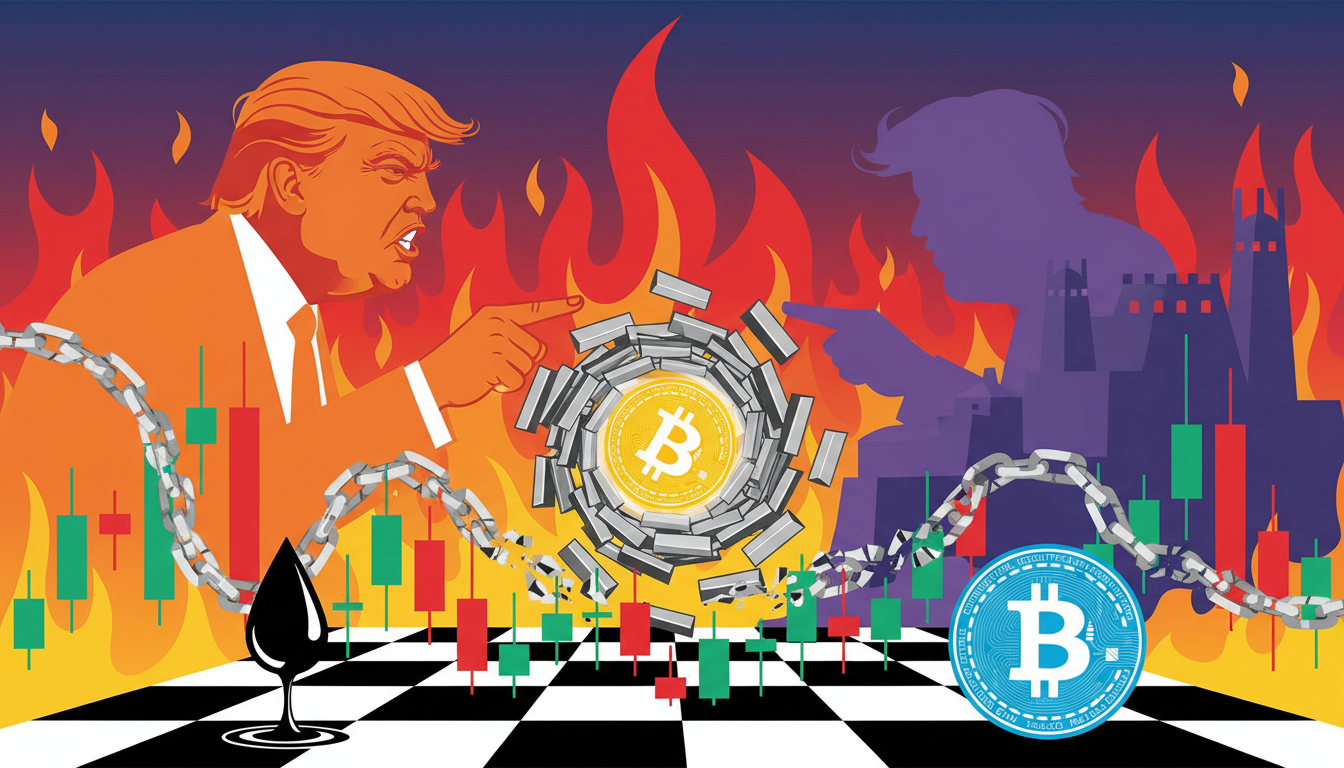
On February 11, 2026, the proposal to combat quantum computing attacks, BIP360, was officially integrated into the Bitcoin Core repository and has already been deployed on the testnet. This marks a substantial engineering step for Bitcoin in the direction of quantum security. Developers chose to start modifying the underlying protocol structure while quantum threats remain at the theoretical and laboratory stage, essentially preparing technology reserves for an extreme scenario that has yet to arrive. Despite significant internal disagreements within the cryptography and engineering communities about the timeline for when quantum computing will genuinely threaten secp256k1 and even the safety of Bitcoin assets, the narrative around "quantum countdown" has been ignited: some believe the crisis is exaggerated, while others insist on taking early action, and Bitcoin is trying to save itself amid this uncertainty.
Taproot’s Surgical Intervention: From Exposed Public Keys to Reduced Attack Surface
When Taproot was activated in 2021, it was seen as a key upgrade to enhance privacy and scalability, but it also exposed new vulnerabilities in the quantum era. In the traditional Taproot spending paths, key-path spend allows users to complete payments with just one public key and one signature, providing significant advantages in efficiency and privacy, but it also means that once funds are spent, the corresponding secp256k1 public key is completely exposed on-chain. Under classical cryptographic assumptions, this is not an issue, but once a scalable Shor algorithm quantum machine emerges, the exposure of public keys would provide attackers with a direct target to attempt to recover the private keys.
The technical idea behind BIP360 is to minimize such opportunities for direct public key exposure without undermining the original design intent of Taproot. The proposal reconfigures the outputs by removing Taproot's key-path spend and structuring them around a Merkle root, allowing the spending paths to rely more on script trees instead of a single public key. Consequently, observers on the chain find it more difficult to directly access public key data that could be utilized by Shor's algorithm at the protocol level, effectively shrinking the potential quantum attack surface. In other words, this is a surgical intervention targeting the "public key exposure surface," rather than a simple swap of signature algorithms.
It is important to emphasize that BIP360 is currently still in Draft status and is only being tested on the testnet, with a considerable distance from any form of mainnet voting or consensus activation. What developers are doing now is validating design assumptions and compatibility, rather than pushing for an immediate switch. For ordinary users, even if the mainnet adopts such changes in the future, the experience changes in wallet interfaces are likely to be mild or even imperceptible — surface processes like transaction methods, confirmation waits, etc., will not drastically alter. However, deep within the protocol, the security model regarding "when and in what form public keys are exposed" is being redrawn, which is a fundamental and profound adjustment for an asset hoping to survive for decades or even longer.
Old Addresses Become Minefields: Who is Really on the Quantum Cutting Edge
Quantum threats do not uniformly affect every single BTC. OneKey founder Yishi points out that early-used P2PK (pay-to-public-key) addresses directly write public keys on-chain by design, and once funds remain inactive for a long time, these public keys will be "naked" on-chain for years, naturally making them easier targets for future quantum algorithms. These addresses held significant historical importance in Bitcoin's early days, accommodating mining rewards from the genesis stage and part of early large holders, but have gradually been replaced by P2PKH, P2WPKH, Taproot, and other more modern script forms in the subsequent standardization process.
In contrast, mainstream standard addresses currently have a significantly smaller window for public key exposure during normal use. A typical process is: addresses themselves only display hashed identifiers, and it is only at the moment of initiating a transaction and spending UTXOs that the corresponding public key gets added to the chain along with the transaction input, with limited exposing time and occurrences. Under classical computational security assumptions, this mode of operation is highly controllable, and even projected into a future scenario where quantum machines gradually evolve, as long as migration is completed ahead of feasible large-scale quantum attacks, the risk remains within manageable limits. This is why current discussions are more focused on "how to handle historically high-exposure assets" instead of claiming the entire system is immediately rendered ineffective.
In this context, BIP360 was designed with a clear priority to address early high-risk address groups. By altering the structure and spending methods of Taproot-related outputs, developers aim to provide those old addresses that have already exposed or will inevitably expose public keys with safer migration and upgrade paths, including offering more secure encapsulation and transition options for high-risk UTXOs without forcibly disturbing low-risk users. There has been ongoing community discussion around specific details such as "how to migrate old coins" and "whether special incentives are needed," but no resolution has been reached yet.
Importantly, current discussions can only remain at the level of qualitative risk stratification. Research briefs explicitly point out the difficulty of estimating precisely how many BTC are currently at high quantum risk, partly due to the complex statistical criteria involving P2PK and other early addresses, and partly because any specific figures are likely to be exaggerated by the market as a "countdown clock." What engineers can do is identify which types of address structures are more vulnerable and prepare migration mechanisms for them, rather than providing a seemingly exact yet highly uncertain panic number.
Quantum Timelines Tear Consensus: Ten Years or Fifty Years
There has not been a unified consensus within the tech community regarding the timeline for quantum threats. Ethereum researcher Justin Drake provided a relatively aggressive judgment: by 2032, quantum computers will have at least a 10% probability of recovering secp256k1 private keys. This statement has been clearly marked as his personal research viewpoint, rather than industry consensus, yet it has sparked intense discussion within the community. Because once 2032 is seen as a non-zero probability "capability threshold," the time left for Bitcoin to accomplish a major migration at the protocol level is only around one complete bull-bear cycle.
In the meantime, many cryptographic scholars and engineering practitioners are more conservative, believing that a general, scalable, and operational large-scale Shor algorithm quantum machine is still far off. They emphasize that we must not underestimate the technical, cost, and physical limitations of all current quantum paths; assuming "it will definitely arrive within ten years" can lead to shortsighted resource allocation. This divergence directly impacts the urgency of upgrading: whether to act like epidemic prevention with "better too much than too little," or to insist on "waiting for more empirical evidence before acting."
In light of this tension, a typical game has formed: the opportunity cost of proactively deploying anti-quantum plans versus the catastrophic consequences of delaying. On one hand, Bitcoin consensus is extremely conservative, and every change to the underlying protocol incurs significant costs in auditing, manpower, ecological adaptation, and potential compatibility; on the other hand, if actions are postponed until the emergence of a clear timeline for quantum attack technology or even empirical attack samples, it may already be too late to safely and orderly migrate all sensitive funds. Proposals like BIP360 that are initiated years in advance effectively choose to build the "bridge" while opportunity costs are still acceptable, in case a torrent truly rushes in the future.
This uncertainty naturally splits into two factions at the narrative level within the community. The conservatives worry that once discussions about quantum threats are treated as marketing language, it will undermine Bitcoin’s core image of being "simple and robust"; while the optimists believe that current quantum capabilities are grossly overestimated, and hastily changing the underlying protocol equates to trading real risks for comfort against imaginary threats. BIP360 just happens to stand in this gap: it is seen by some as responsible preventive engineering, while others question it as premature and even a "technical endorsement" providing ammunition for a new round of narratives.
Calm and Turmoil in the Off-Chain World: From Brokerages Opening Up to Public Funds Entering the Scene
While Bitcoin developers are discussing BIP360, Taproot, and quantum attack surfaces, the concerns in the off-chain world appear starkly different. Interactive Brokers Europe, under regulatory frameworks, has opened up trading for 11 types of cryptocurrency assets, reflecting a traditional brokerage's acceptance of the demand for cryptocurrency asset allocation: it responds to client demands for asset diversification and trading convenience, rather than the cryptographic details at the protocol level. Such institutions are more concerned with market volatility, compliance risks, KYC/AML responsibility delineation, and how to embed assets like BTC into existing risk control systems.
In this context, the priority of quantum security issues is evidently lower. For most traditional institutions, the primary concerns over the next 5–10 years are severe price volatility, uncertainties around regulatory policies, and operational risks in custodianship; whether quantum machines can substantially threaten secp256k1 a decade later is often just a small section in compliance and technical due diligence reports. Compared to the urgency felt by on-chain engineers who are working tirelessly on public key exposure, Merkle roots, and script paths, this reflects a relatively slow or even "calm" attitude.
On the other hand, policies are quietly incorporating Bitcoin into a longer-term asset allocation vision. Research briefs mention that Illinois is discussing allowing public funds to allocate up to 5% to Bitcoin-related products, signaling a clear message: in the eyes of certain local governments, Bitcoin is no longer just a high-volatility speculative subject but can be systematically managed as a configuration tool within a "long-term asset pool." Having the ability to enter the perspective of public funds and pensions, signifies that society is beginning to measure its risk-return structure in terms of 10 or 20 years.
Thus, the narrative lines of on-chain developers strengthening security and off-chain institutions expanding their positions form two superficially parallel but actually interforming storylines. On one side, Bitcoin must prove on a technical foundation that it can withstand future unknown threats, including quantum computing; on the other side, more and more traditional financial actors hope to gradually incorporate it as a "digital long-term asset" under compliance frameworks into their balance sheets. Proposals like BIP360, though not directly appearing in institutional pitch decks, are invisibly supporting their confidence assumption that "Bitcoin will still be secure and usable in 2030 and even 2040."
Technological Reserves or Narrative Leverage: How Quantum Fears are Amplified
Within the market discourse, security upgrade proposals are often packaged into new narrative themes. Whether it's early years of isolated witness, Taproot, or now BIP360, they are first and foremost engineering solutions proposed by developers to tackle real-world and potential problems, but once they enter the trader’s view, they can easily be translated into "new stories": anti-quantum, enhanced privacy, breakthrough scalability, and other labels become overlaid on top of price expectations, amplifying emotions and valuation fluctuations in the short term. Quantum threats are especially pronounced since they intrinsically carry a sense of science fiction and apocalyptic narrative, making it easy to push them to extremes in media copy.
The reality shows the temperature difference: quantum threats are exaggerated in the media, while developers’ advancement of BIP360 is particularly pragmatic. The briefs contain no language indicating "urgent switches," only cautious statements such as testnet deployment, draft status, and reduced attack surfaces. The pace of these engineering decisions is closer to "purchasing a black swan insurance several years in advance," rather than "immediate end of the world." However, in social media and secondary markets, any mention of quantum linked with "private key theft" or "old coins being robbed" is often interpreted as either "immediately doomed" or "immediately speculative," presenting an extreme binary choice.
If Bitcoin is to continue playing a role akin to "digital sovereign bonds" in the macro narrative, its discourse around security will inevitably need to align with national-level cryptographic standards. The cryptographic systems behind sovereign currencies typically have clear upgrade paths and long-term support from national laboratories, whereas Bitcoin must demonstrate its resilience against systemic threats like quantum through open source, community governance, and multiple rounds of BIP evolution. BIP360 may not solve all the issues, but it at least conveys one signal: Bitcoin will not passively wait for the emergence of quantum machines but will continuously tighten its exposure within its capacity limits.
From a longer-term perspective, quantum security is highly likely to become a new battleground for differentiation between Bitcoin and other public chains. Different public chains exhibit significant differences in signing algorithms, address structures, and upgrade mechanisms, with some opting for more aggressive cryptographic primitives while others adhere to a conservative evolution. Once the tangible threat of quantum computing gradually becomes clear, factors like "who can upgrade more easily," "who has fewer historical burdens," and "who's governance can achieve consensus within a limited timeframe" will all become part of investor consideration. Bitcoin holds both the advantage of substantial volume and stable ecology in this competition, as well as the inherent challenge of "the larger it is, the harder it is to pivot."
Rebuilding Bitcoin's Security Consensus Amid Quantum Uncertainty
Returning to the starting point, BIP360 is more like an embodiment of engineer culture buying insurance against extreme black swans years in advance, rather than a flash-in-the-pan marketing stunt. It targets a threat scenario that remains highly uncertain but would have catastrophic consequences if realized: quantum computers recovering secp256k1 private keys at acceptable costs. By reconstructing parts of the output structure and reducing public key exposure before risks become immediate, developers have pushed "operational defensive actions" forward a few years, rather than waiting for the market and regulators to react passively in panic.
From the perspective of systemic risk, the real risk lies not in when quantum arrives, but in whether the community can achieve consensus and take the time to complete upgrade migrations. Even if the quantum threat is severely overestimated, as long as consensus can gradually form around "preventive upgrades," Bitcoin can maintain technological agility; conversely, even if quantum machines appear many years later than expected, the system may become paralyzed before the first real-world attack if it loses the ability to coordinate migration politically and governally. BIP360 is just a starting point; it tests not only code quality but also the community's decision-making culture in the face of long-term uncertainty.
In the coming years, the progress of quantum computing and the entry of regulatory funds — seemingly unrelated curves — will jointly reshape market expectations of Bitcoin's security baseline. On one end, there are technical reports from IBM, Google, and various research institutions regarding quantum bit counts and error-correcting capabilities; on the other end, there's Illinois' ceiling of 5% public fund allocation and institutions like Interactive Brokers expanding their cryptocurrency asset product lines. The cutting edge of technology and the direction of capital flow will converge at some point into a new question: as pensions, insurance funds, and multinational corporations partially bet on Bitcoin, how will society define the standard of "sufficiently safe," and who gets to decide when this standard is met?
The quantum countdown for Bitcoin may not be a precise series of year numbers, but rather a long-term test of how to self-iterate in the face of the unknown.
Join our community, let’s discuss and become stronger together!
Official Telegram community: https://t.me/aicoincn
AiCoin中文Twitter: https://x.com/AiCoinzh
OKX benefits group: https://aicoin.com/link/chat?cid=l61eM4owQ
Binance benefits group: https://aicoin.com/link/chat?cid=ynr7d1P6Z
免责声明:本文章仅代表作者个人观点,不代表本平台的立场和观点。本文章仅供信息分享,不构成对任何人的任何投资建议。用户与作者之间的任何争议,与本平台无关。如网页中刊载的文章或图片涉及侵权,请提供相关的权利证明和身份证明发送邮件到support@aicoin.com,本平台相关工作人员将会进行核查。