Text | Sleepy.md
In April 1976, three men signed the partnership agreement of Apple Inc. in a garage in California. Twelve days later, one of the men withdrew from the partnership. If he hadn't withdrawn, enduring a long half-century until today, his 10% stake would be worth $400 billion. This amount of money would be enough for him to buy half of a Middle Eastern oil empire or to rub Elon Musk’s name in the dirt on the Forbes rich list.
This man’s name is Ronald Wayne. When the public discusses Apple’s 50-year history, they tend to mythologize the persistence of Steve Jobs and Steve Wozniak and then mock Wayne for cowardly and shortsightedly selling his shares for $800 back then.
However, Wayne, who was 41 years old at the time, was the only one of the three who had a proper job, assets, and even a family. Meanwhile, Jobs, in order to borrow money for parts, was willing to pawn everything he owned. Wayne looked at the long-haired young man with a blank stare and felt nothing but unease. Because if the company went bankrupt, according to the partnership laws at the time, the creditors would go after two broke young men and legally seize every car, house, and penny in savings that Wayne had.
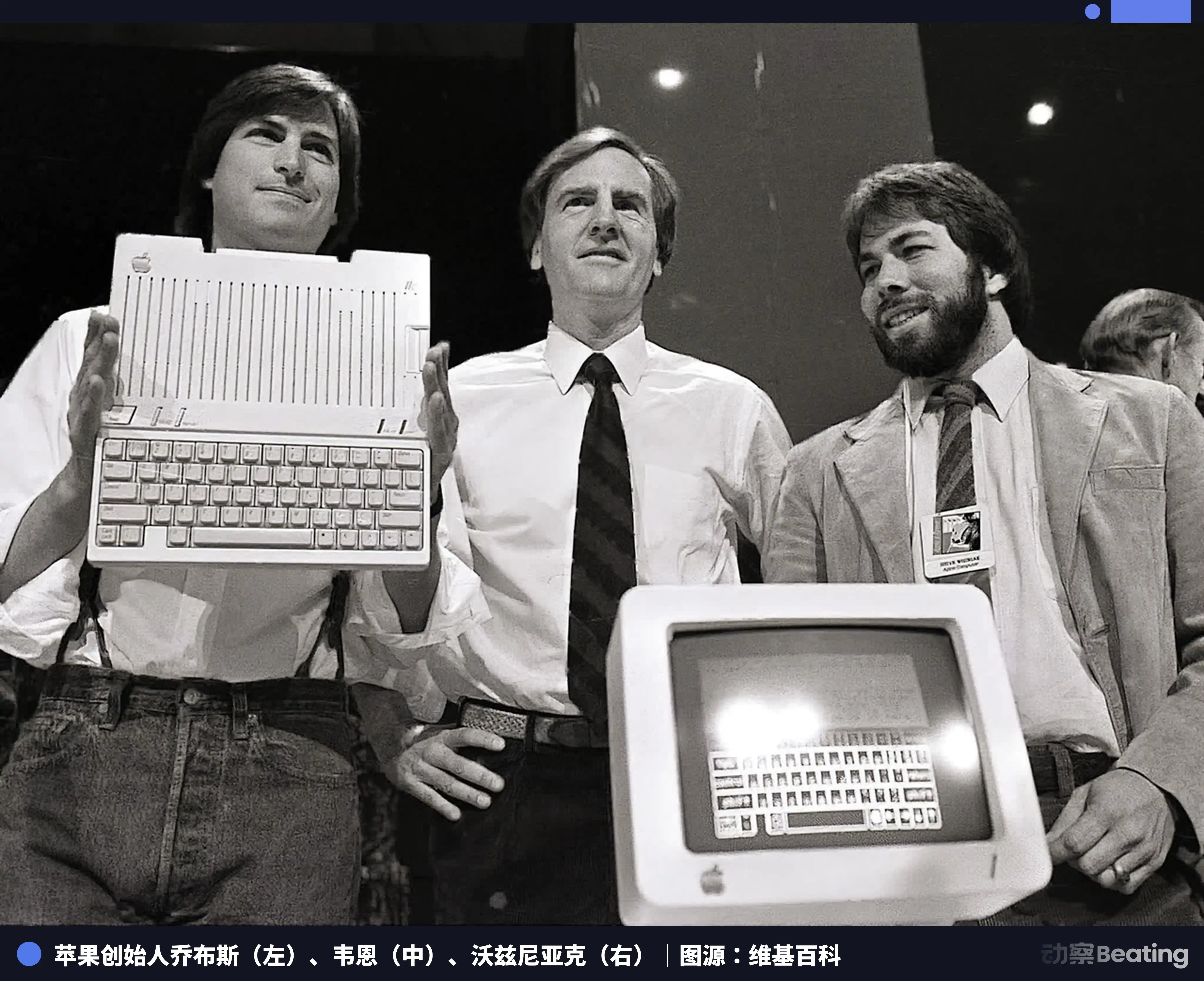
Wayne’s withdrawal was a rational calculation of an ordinary person facing "extreme uncertainty." He fled back to his safe life.
Wayne left Apple out of fear of risk, and the irony of history is that Apple, over the next 50 years, became another Wayne.
The company outwardly proclaimed "Think Different," but at its core, it had an extreme aversion to risk. Wayne left Apple because of his aversion to risk, and since then, the genius was responsible for creating myths, while the system was responsible for strangling uncertainty. Apple’s 50 years is not just a story about "genius changing the world," but rather a victory of the system over the individual, where calculation replaced inspiration.
In its early days, Apple relied on Jobs’ personal heroism to combat risks, so how did this giant, when it truly matured, use hundreds of billions of dollars in real money to buy absolute security in the capital market?
Hedge Fund Disguised as a Technology Company
Jobs hated dividends and stock buybacks. In his view, every penny Apple earned should be reinvested in research and development. Even in 2010, when Apple’s cash reserves had piled up like a mountain, facing pressure from Wall Street, Jobs still held firm.
But after Jobs passed away, new CEO Tim Cook couldn’t withstand the pressure from shareholders and announced Apple's first dividend and a multi-billion dollar stock buyback plan on March 19, 2012. From that day on, in the eyes of Wall Street, Apple gradually transformed from a world-changing technology company into a "hedge fund" disguised as a technology company.
According to statistics from Creative Planning and various financial institutions, Apple’s total stock buybacks from 2013 to the end of 2024 reached $700.6 billion.
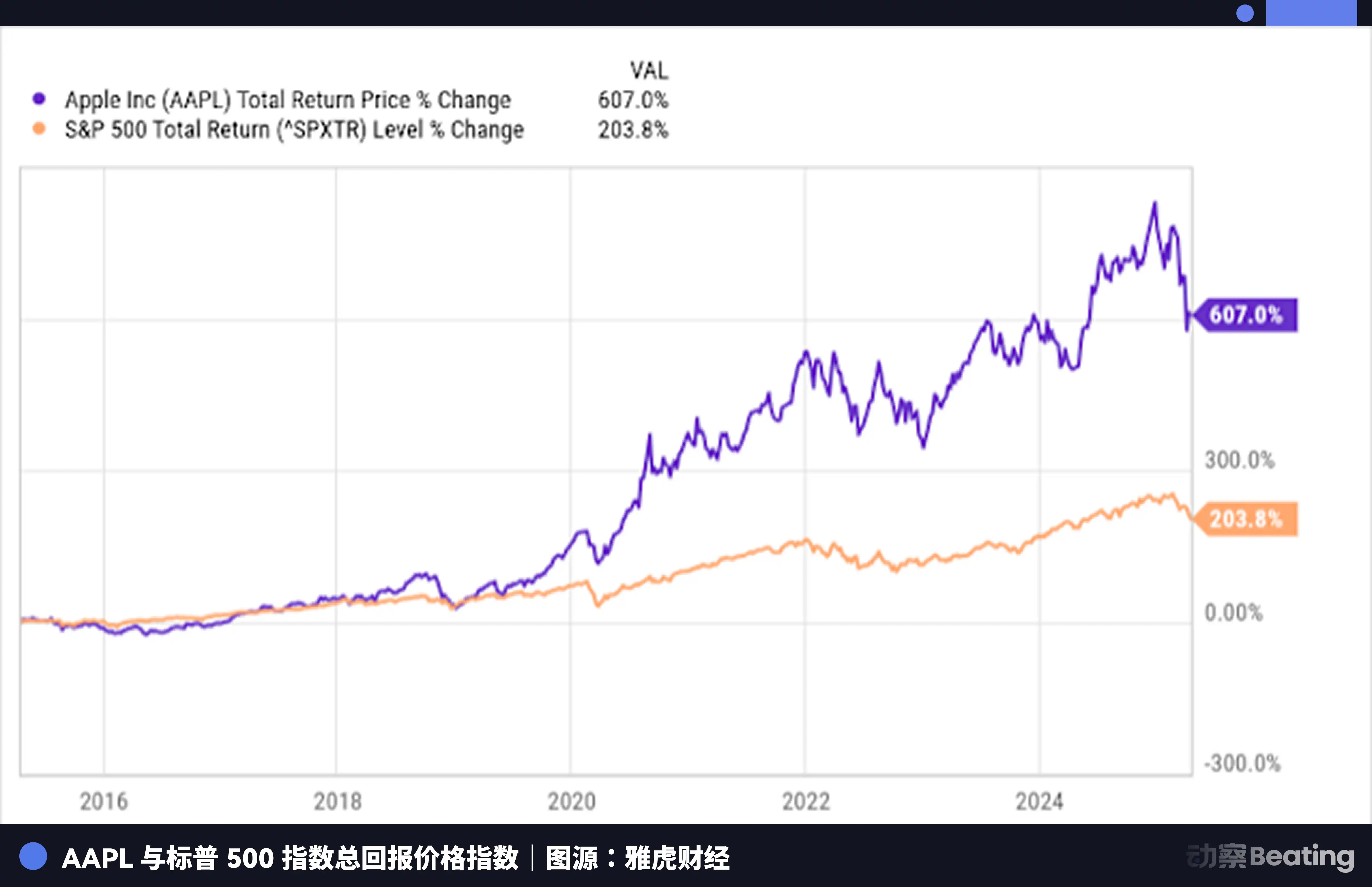
In the S&P 500 Index, this figure exceeds the total market value of 488 companies. In other words, the money Apple used to buy back its own shares is enough to directly purchase any publicly traded company outside of the 13th place in global market value rankings, such as Eli Lilly, Visa, or Netflix.
And when we extend the timeline to the present AI frenzy, while Amazon, Google, and Meta are madly burning money on AI large models and computing power, with total investments nearing $700 billion in an attempt to bet on an uncertain future at a table where the cards are not clear, Apple, however, uses a similar scale of money to buy back its own stock.
Technological innovation carries risks; if you invest $100 billion, you might not hear a sound; but reducing the floating share capital and increasing earnings per share is 100% certain in financial statements. Over the past decade, although Apple’s net profit growth has slowed, through aggressive buybacks, its EPS has been artificially boosted by nearly 280%.
In recent years, Buffett has heavily invested in Apple, even at one point making it an absolutely major holding, accounting for over 20% of Berkshire Hathaway’s portfolio. The old man isn’t buying the growth potential of a tech stock; he is purchasing the absolute certainty that this precise machine brings during a time of technological mediocrity. In the mature phase of the industry cycle, financial engineering makes money much faster and more securely than technology research and development.
Apple no longer needs to shock the world with a groundbreaking product; it only needs to function like an unwearied pump, drawing profits and accurately pouring them into Wall Street’s reservoir.
On the financial statements, Apple has bought absolute certainty for $700 billion. But how is the profit supporting this massive number game extracted from the production lines in the physical world?
Great Supply Chain Migration
In March, Tim Cook appeared in China once again, full of smiles. He sipped Chinese afternoon tea and smiled at the camera, saying, "The Chinese supply chain is vital to Apple; we could not have achieved today’s success without our Chinese suppliers."
However, behind this warm public relations rhetoric, Apple is quietly undergoing an epic supply chain migration.
By 2025, the number of iPhones assembled by Apple in India had reached 55 million, a staggering 53% increase over the previous year. This means that for every four iPhones produced globally, one comes from India.
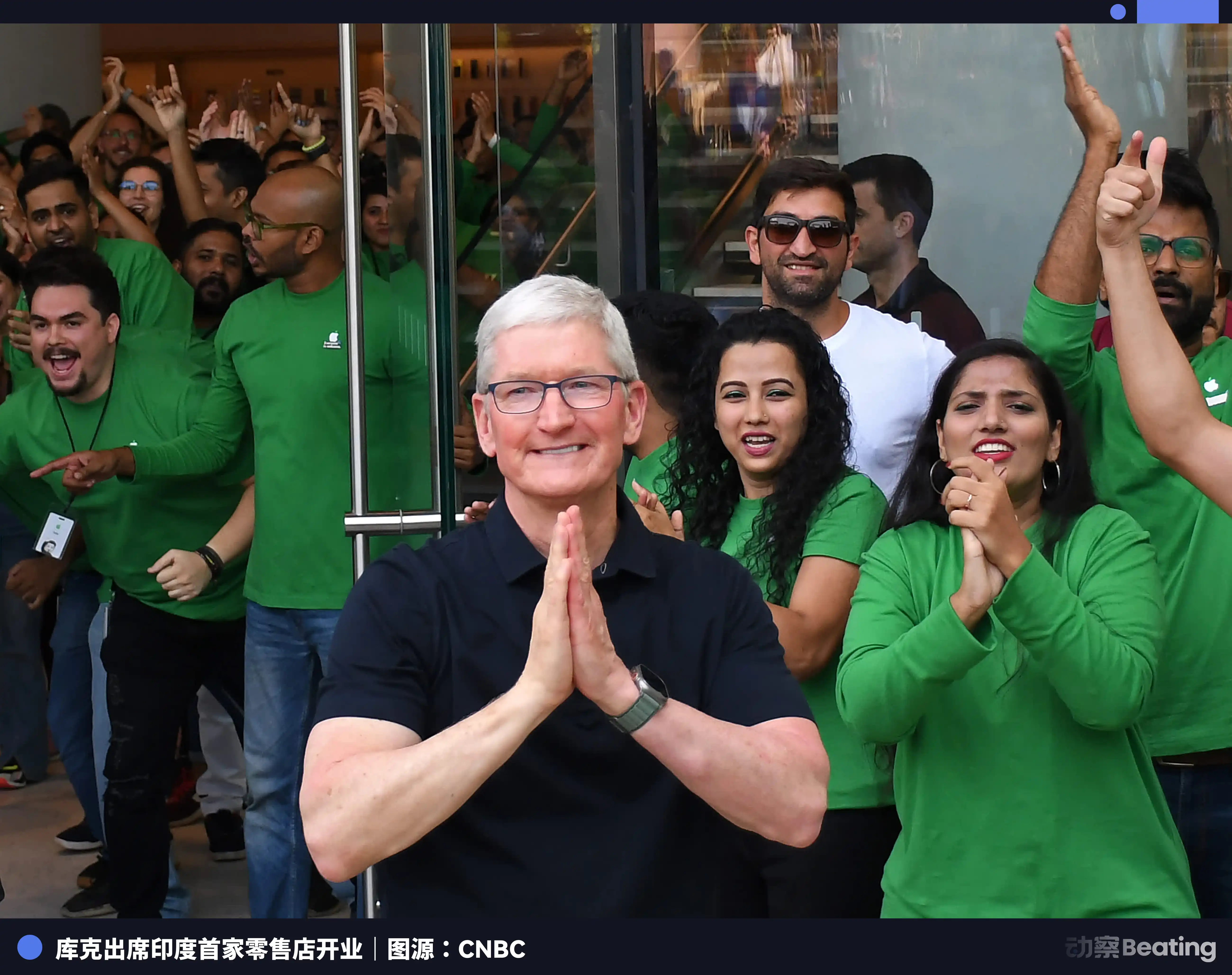
Tata Group has just built a huge new factory in Hosur, Tamil Nadu, intending to double its workforce to 40,000; meanwhile, Foxconn's factory in India has exported iPhones worth $4.4 billion to the United States in just the first five months of 2025, and the latest iPhone 17 series has already achieved full model assembly in India.
The reasons behind the transfer of the supply chain are not as simple as "seeking cheaper labor." It is a surgical operation by Apple’s system to eliminate geopolitical uncertainties and single-node risks. Apple treats the global supply chain as a motherboard in its design: wherever there is risk, it removes the capacitor from there and plugs it into another, safer place.
In this process, whether it’s the workers on Foxconn's assembly line in China who once created the "Zhengzhou Speed," or the young workers just donning anti-static clothing in the Hosur factory in India, there is essentially no difference within Apple's system. They are merely seasonal replacements for the gears of this massive machine.
What Apple cares about is the stability and cost of the gear operation. It tightly controls the design rights of its products in its spaceship headquarters in California while perfectly outsourcing the dirty, laborious tasks and managing conflicts to Foxconn and Tata. Within this solidified supply chain system, all suppliers and workers are merely interchangeable consumables.
After completing such a suffocating control in the physical world, how will this giant employ the same techniques against the fiercest AI wave in the digital world?
Toll Booth to the Gold Mine
In 2024, as the wave of generative AI swept in, ChatGPT made the entire Silicon Valley exclaim that the "iPhone moment" had returned. Analysts mocked Apple, saying Siri was like a fool, that Apple was falling behind in the AI era, and that Apple was doomed.
However, by 2026, when AI large model companies were burning money for computing power to the point of vomiting and were losing their hair over commercialization, a piece of data from AppMagic astonished everyone.
In 2025, generative AI applications paid nearly $900 million in commissions to Apple just to be listed on the App Store, commonly known as the "Apple Tax." Of this amount, nearly 75% was paid by ChatGPT alone. Musk's Grok ranked second, contributing 5%.
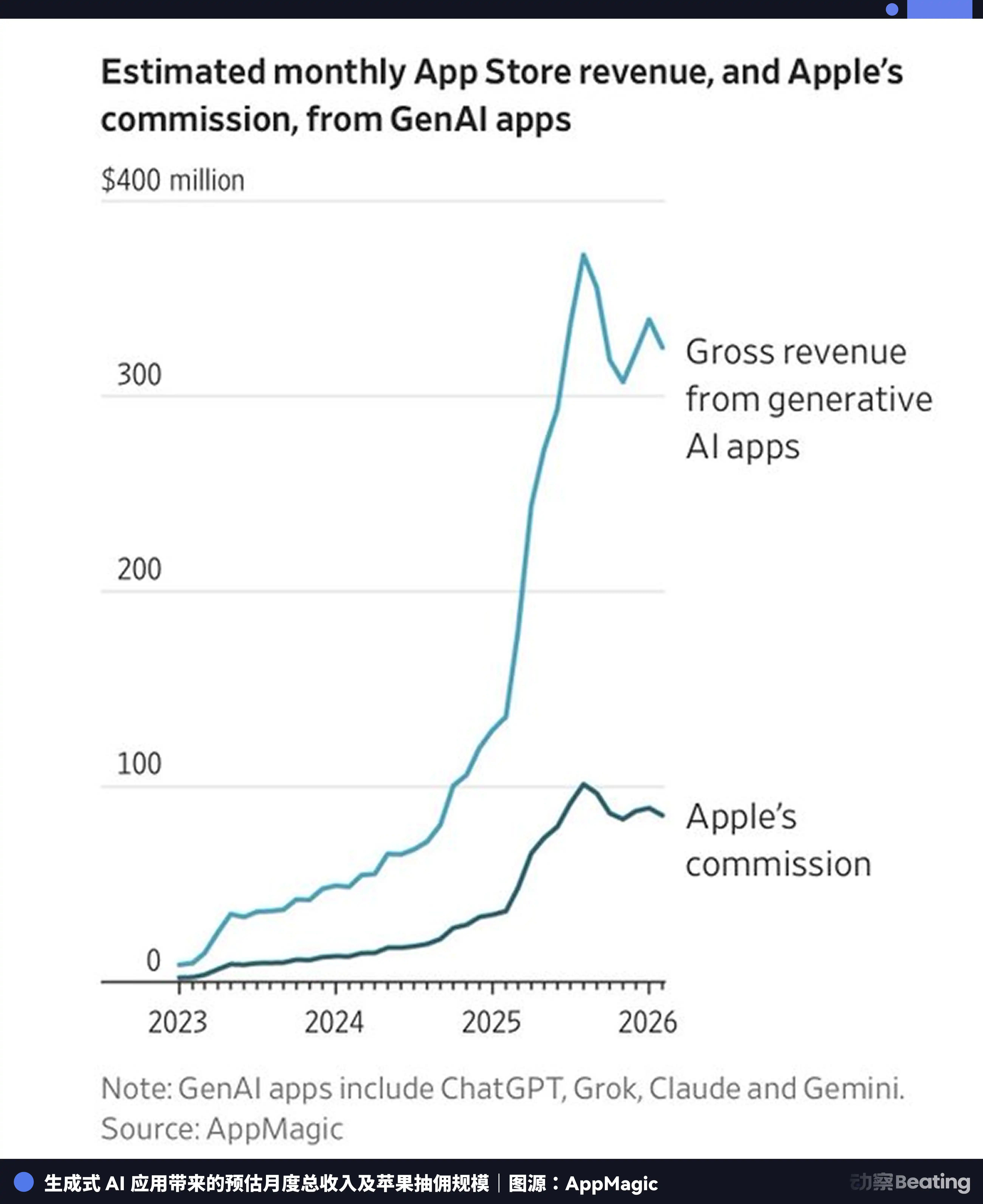
This is the most terrifying aspect of Apple. Although it hasn’t created the gold-digging shovel, it directly controls the only road leading to the gold mine, and then built a toll booth.
Whether you are Claude or OpenAI, as long as you want to reach billions of high-net-worth iOS users globally, you must obediently heed Apple’s rules and hand 30% (or 15%) of your revenue over to Cook. Amid the fervent AI bubble, Apple, wielding an almost rogue ecological monopoly, has forcibly transformed all AI innovations attempting to disrupt it into steadily growing service revenues on its financial reports.
In the fourth quarter of the 2025 fiscal year, Apple’s service revenue set a historical record of $28.8 billion, a year-on-year increase of 15%. Among this, those AI applications regarded by outsiders as Apple’s disruptors contributed the most lucrative profits.
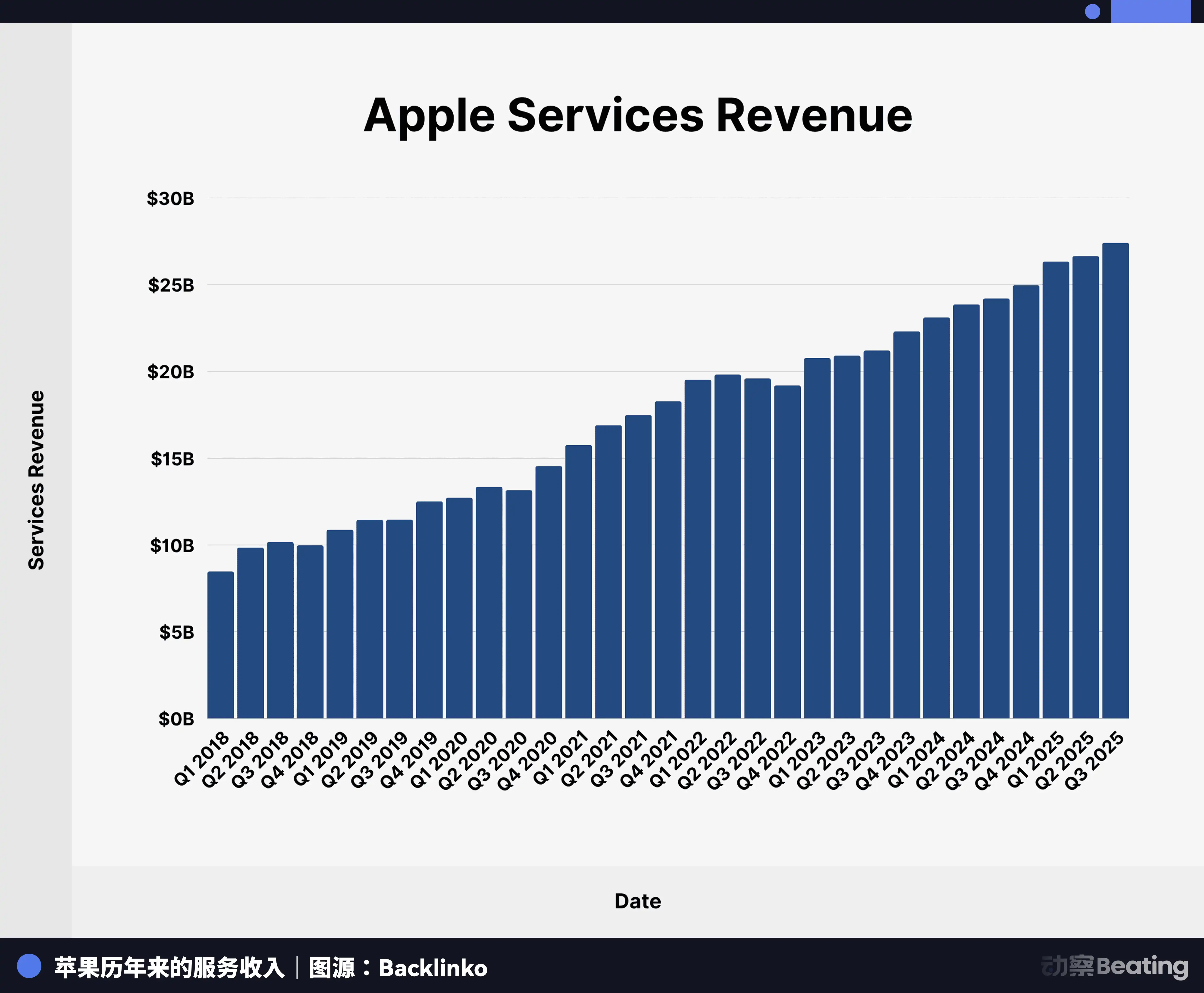
Of course, this approach has also attracted the hammer of antitrust. On March 15, 2026, facing tremendous regulatory pressure, Apple rarely made concessions in the Chinese market, reducing the standard commission of the App Store from 30% to 25% and cutting micro-developer commissions from 15% to 12%. Yet, this hardly hurt its fundamentals.
From the physical world’s supply chain to the digital world’s App Store, Apple has perfected its systemic control. When this machine reaches its peak precision, does the person sitting in the cockpit still need to be a genius?
The Final Victory of the Cooks
At the 50th anniversary of Apple, the biggest gossip in Silicon Valley isn’t about a revolutionary new product, but rather about Cook's successor.
All clues point to one name: John Ternus.
This 50-year-old Senior Vice President of Hardware Engineering at Apple is essentially another version of Tim Cook. He graduated from the University of Pennsylvania with a degree in Mechanical Engineering in 1997, joined Apple in 2001, and has been there for 24 years. His resume is very clean, lacking the craziness of Jobs seeking spiritual mentors in India or other radical anecdotes.
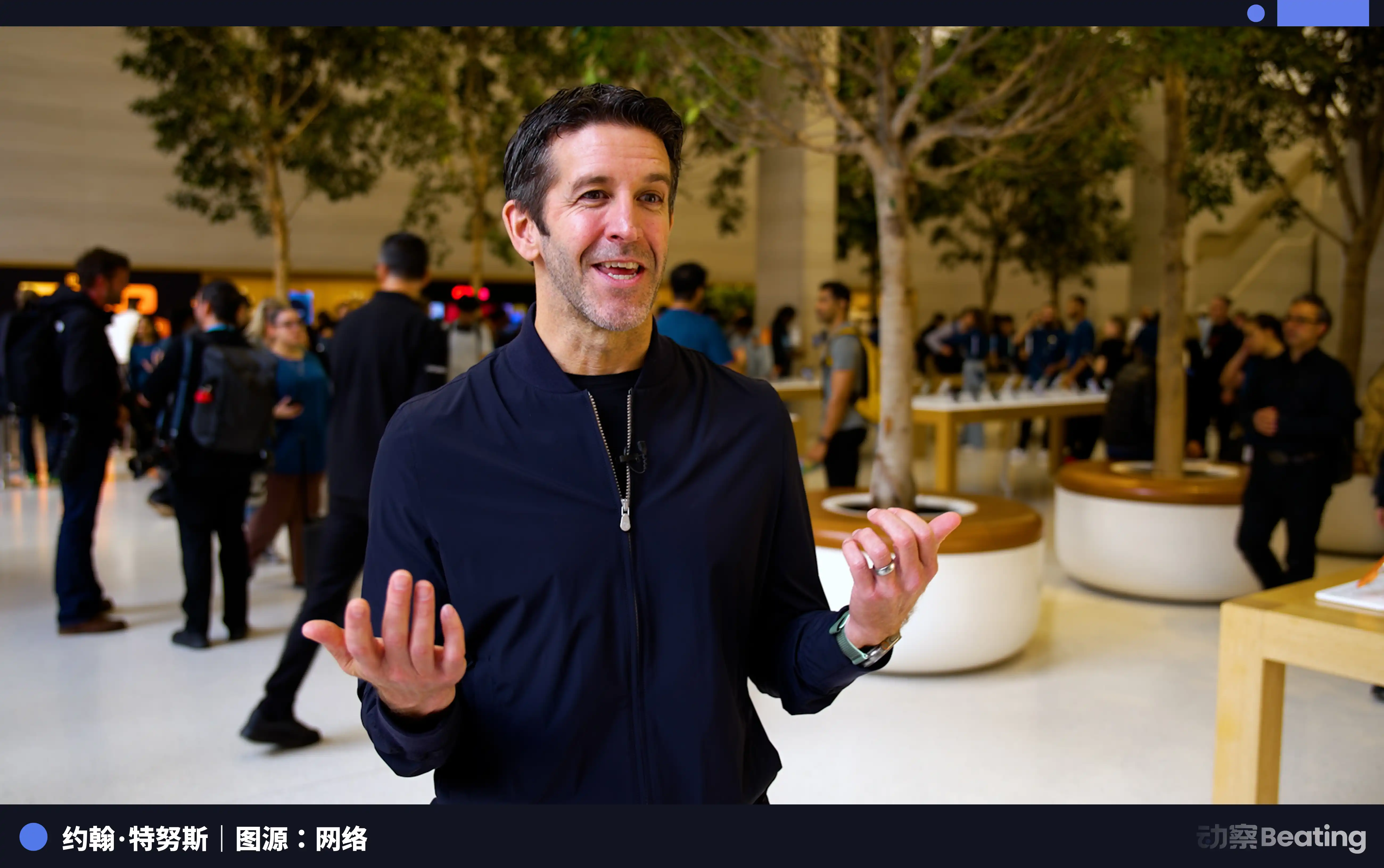
A deep report from The New York Times mentioned that when Ternus was promoted, the company arranged for him a private office with a door, but he refused. He chose to continue sitting in the open office filled with his engineering team. He is pragmatic, low-key, and extremely focused on team collaboration. Even in driving critical decisions like iPadOS and iPhone Pro’s LiDAR radar, he showed a kind of business calculation that seeks absolute balance between product definition and commercial interests.
If Ternus successfully takes over, it will be Apple's last physical severance from "personal heroism."
The market always adores dreamers like Jobs; they descend like gods, splitting chaos with dazzling light and showing you what the future looks like. But what truly supports the seamless operation of a $40 trillion empire are those Tim Cooks, who meticulously account for every penny and screw.
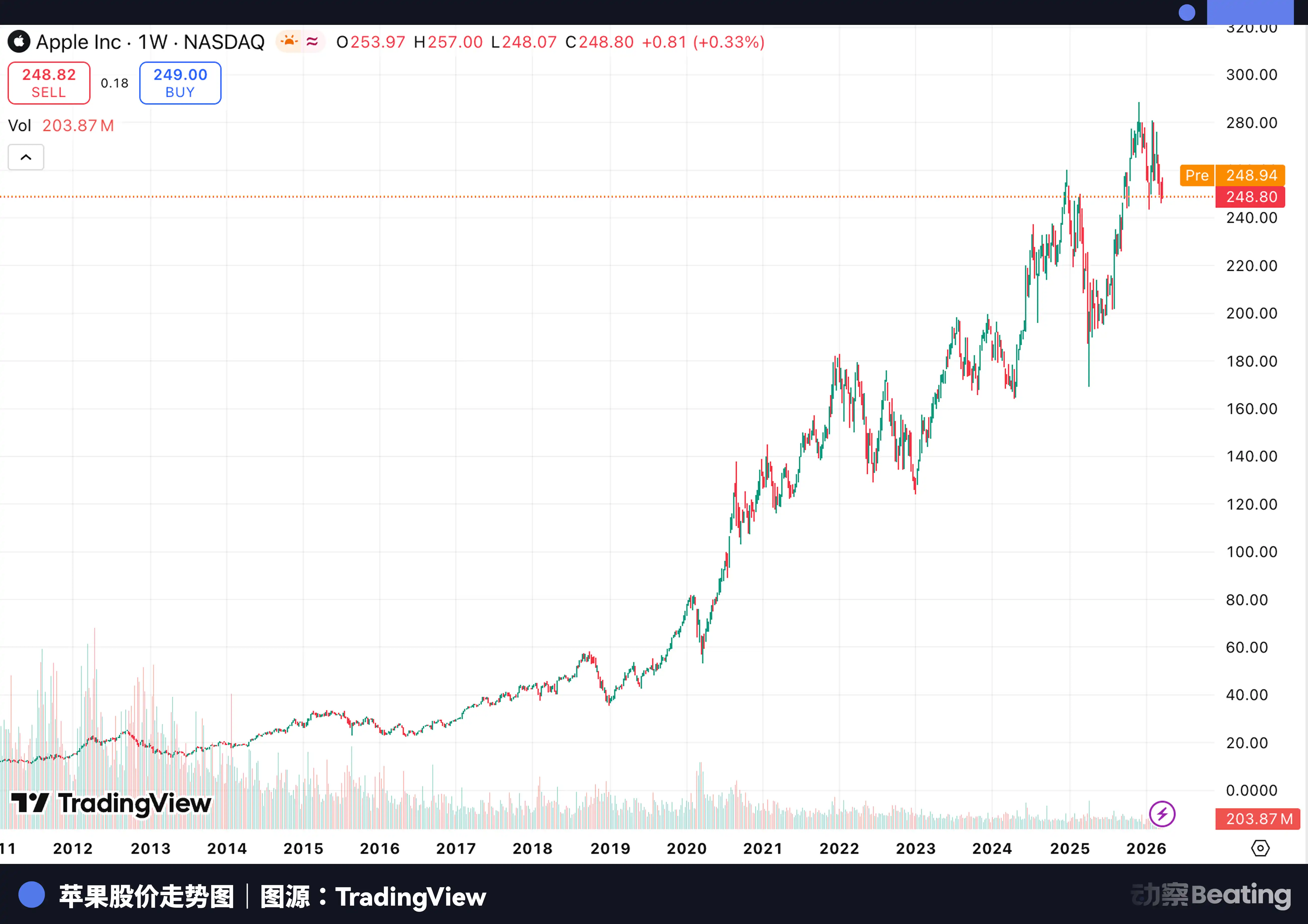
When Cook took over Apple, the company's market value was $349 billion. Fifteen years later, amidst a chorus of "no innovation," he has pushed Apple’s market value to nearly $4 trillion, more than a tenfold increase. What he relied on was not flashes of inspiration but the meticulous squeezing of the supply chain, the ultimate application of financial buyback tools, and the almost domineering collection of rents from the App Store ecosystem.
Ternus's rise to prominence means that Apple has completely given up on searching for the next dreamer. This company has fully embraced Cook’s philosophy that during the maturity period of the tech industry, operational genius is more critical than product genius.
We miss Jobs because we long for an era when technology still made our hearts race; we cannot do without Cook because we have become accustomed to technology being as stable, mundane, but indispensable as tap water.
Apple’s 50 years started with Wayne, an ordinary person afraid of taking risks, and ultimately concluded with a super system that is extremely precise, massive, and averse to all uncertainties. It eliminated the risks of capital through $700 billion in buybacks, the risks of manufacturing through a global supply chain migration, the risks of technological iterations through App Store tolls, and finally, it eliminated the risk of "person" by having Ternus succeed Cook.
At fifty, Apple has finally become that cold, precise, and profitable Big Brother that it smashed in its own screen back in 1984.
Genius exits, machines live on.
免责声明:本文章仅代表作者个人观点,不代表本平台的立场和观点。本文章仅供信息分享,不构成对任何人的任何投资建议。用户与作者之间的任何争议,与本平台无关。如网页中刊载的文章或图片涉及侵权,请提供相关的权利证明和身份证明发送邮件到support@aicoin.com,本平台相关工作人员将会进行核查。


