Written by: Demir
On March 24, Sam Altman sent an email to internal employees announcing the shutdown of Sora.
There was no grand farewell, no roadmap, no "we will come back with a better product." Only one statement: we will use our computing power in more important places.
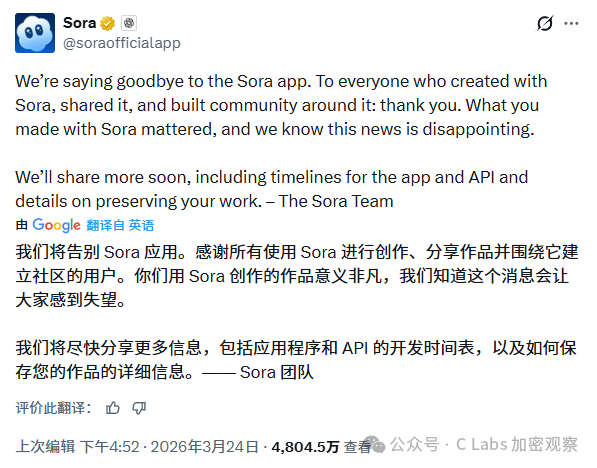
Today, The Wall Street Journal published an exclusive big news, revealing the inside story of Sora's shutdown~
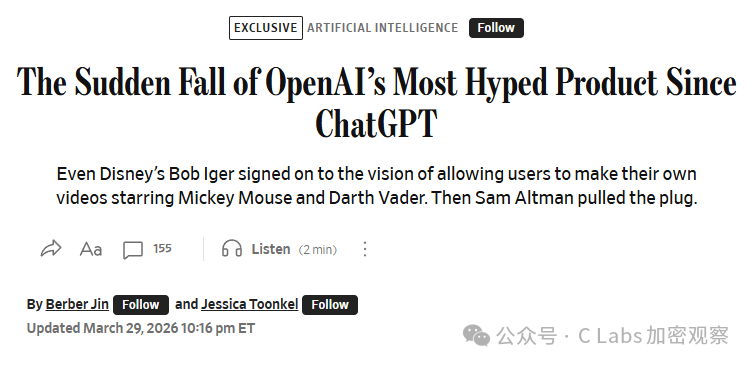
01 The Direct Cause of Sora's Shutdown and the Cooperation Mishap
The direct cause of Sora's demise was the high cost, with Sora burning approximately one million dollars in computing costs every day. Peak users were less than one million, followed by a continuous decline, with active users below five hundred thousand before the shutdown.
Meanwhile, total revenue for the entire product lifecycle was only two million one hundred thousand dollars.
Disney had promised one billion dollars in cooperative investment, not only providing funds but also authorizing Sora to use iconic characters like Mickey Mouse, Iron Man, and Darth Vader.
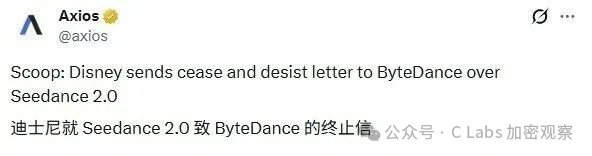
No wonder Disney is so excited about the development of Seedance...
An executive from OpenAI once compared this deal to "the end of the silent film era with the arrival of talkies."
However, Disney learned about Sora's imminent shutdown less than an hour before the announcement, which was quite awkward...
02 OpenAI's Technical and Strategic Disadvantages
While Sora was being shut down, ByteDance's Seedance was thriving, with independent evaluations showing Seedance leading in several performance indicators such as compliance with prompts and multi-shot consistency.
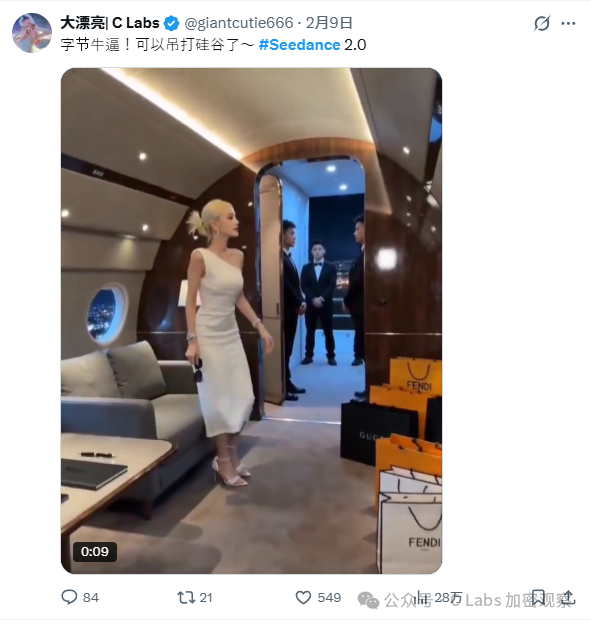
OpenAI is not only losing to competitors in video technology, but is also being crushed strategically by friendly rivals.
While the entire OpenAI team was still struggling with Sora, Claude Code was poaching software engineers and enterprise clients.
03 The Bubble Structure of the Largest Private Equity Financing in History
In the same month that Sora was shut down, OpenAI had just completed a round of financing.
The scale was 110 billion dollars, with a valuation of 840 billion dollars, the largest private equity financing in history, without exception.
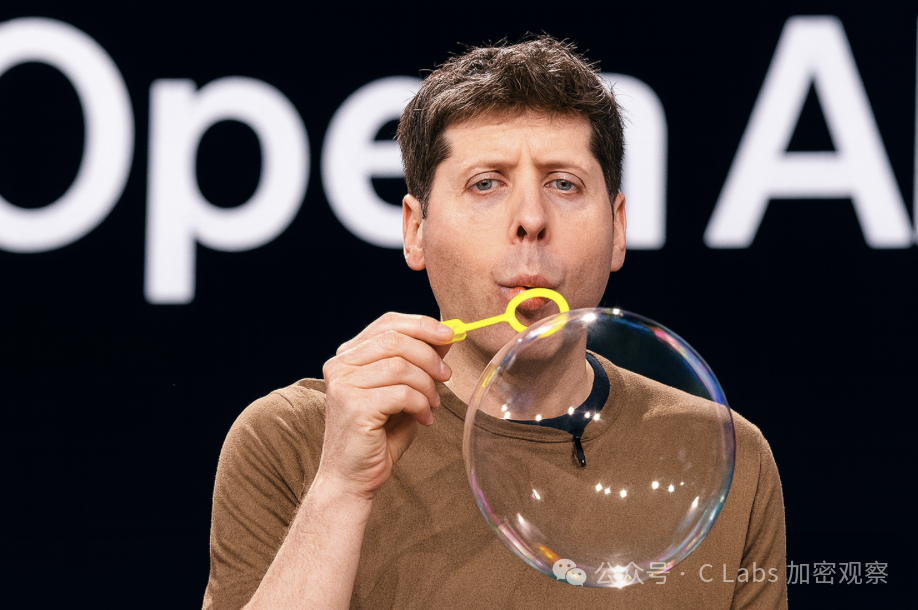
Moreover, the structure of this financing itself reflects immense bubbles:
Amazon committed 50 billion, but only 15 billion is immediate cash, the remaining 35 billion comes with conditions—according to insiders, the conditions may include OpenAI achieving specific AI capability milestones or completing an IPO by the end of 2026.
Nvidia's 30 billion is mainly a commitment for GPU computing power, not a cash equity investment. In other words, this money is essentially a "pre-order for GPUs".
SoftBank's 30 billion was initially planned to be arranged through bridge loans and financing from major financial institutions. To raise funds, SoftBank has started selling existing holdings, including Nvidia.
Therefore, by the end of March, the actual cash received by OpenAI was only 25 billion: Amazon 15 billion + SoftBank's first installment of 10 billion.
04 AI Bubble May Collapse the US Stock Market
Currently, the three major AI giants—SpaceX (which merged with XAI), OpenAI, and Anthropic—are all preparing for IPOs this year, with valuations exceeding one trillion dollars!
Before the internet changed the world, it first trapped Nasdaq investors for over a decade.
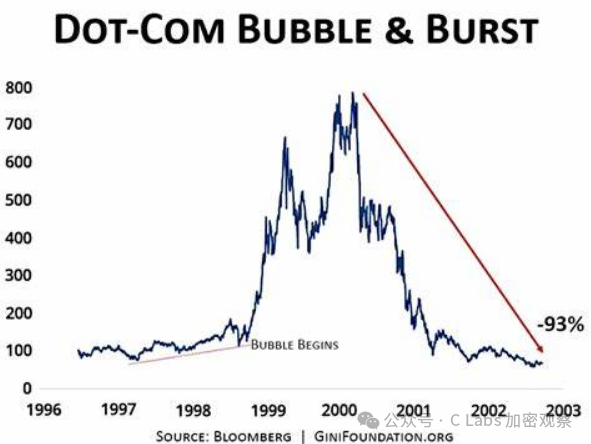
Amazon dropped from 107 dollars to 6 dollars, a 94% decline; Microsoft's stock price would only recover to its 1999 peak in 2016.
Isn't it reasonable to expect this AI bubble to trap investors for another ten to eight years?
免责声明:本文章仅代表作者个人观点,不代表本平台的立场和观点。本文章仅供信息分享,不构成对任何人的任何投资建议。用户与作者之间的任何争议,与本平台无关。如网页中刊载的文章或图片涉及侵权,请提供相关的权利证明和身份证明发送邮件到support@aicoin.com,本平台相关工作人员将会进行核查。


