Author: New Intelligence Source
The "Workplace Verdict" in the AI Era, 60 million people to be unemployed?
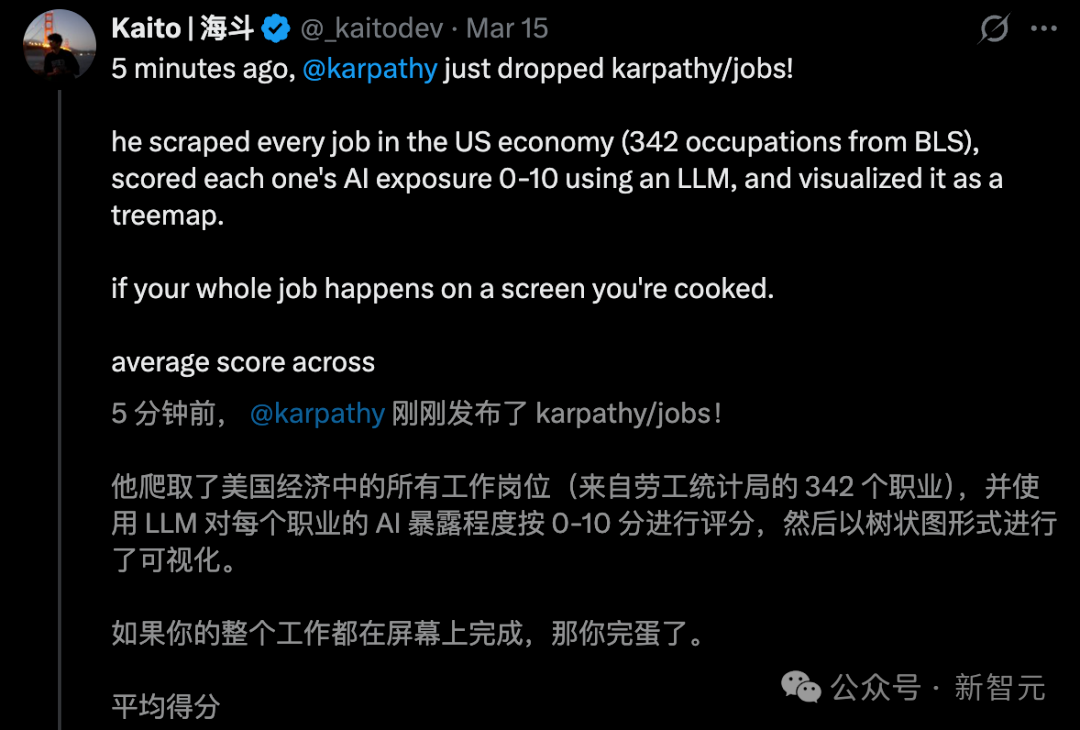
Last night, AI expert Karpathy launched a viral project—karpathy.ai/jobs/, deeply analyzing the extent of AI's "erosion" on employment.
He extracted 342 occupations from the U.S. Bureau of Labor Statistics (BLS) and assigned a risk score for AI replacement for each position (0-10).
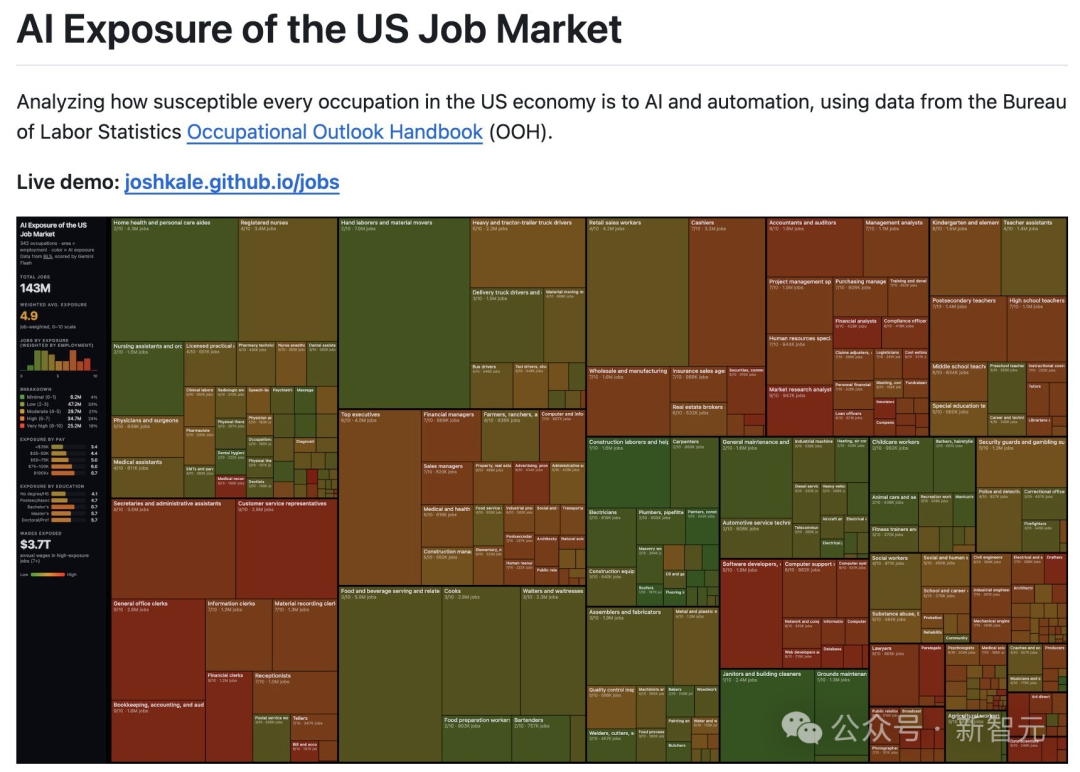
The results are shocking, with an average exposure score across all industries reaching 4.9.
In particular, "screen-dependent" occupations are all in critical danger, basically within AI's reach—
Software Developers 9/10
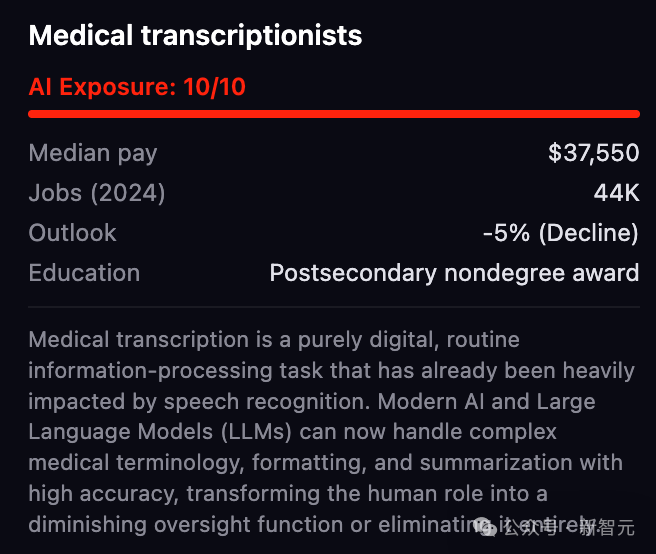
Medical Transcriptionists 10/10
Lawyers 8/10
General Office Workers 9/10
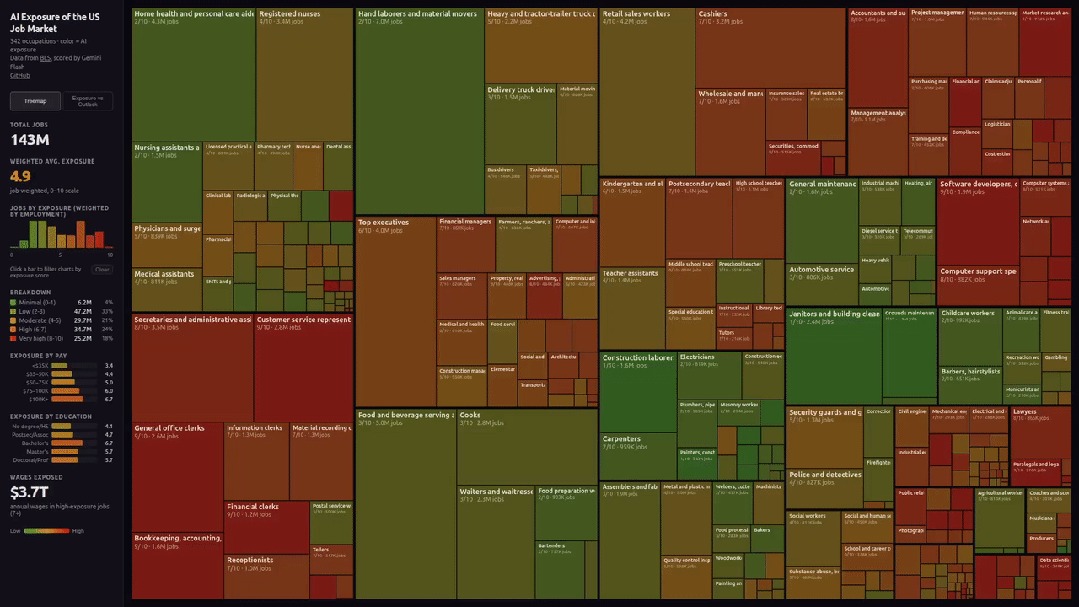
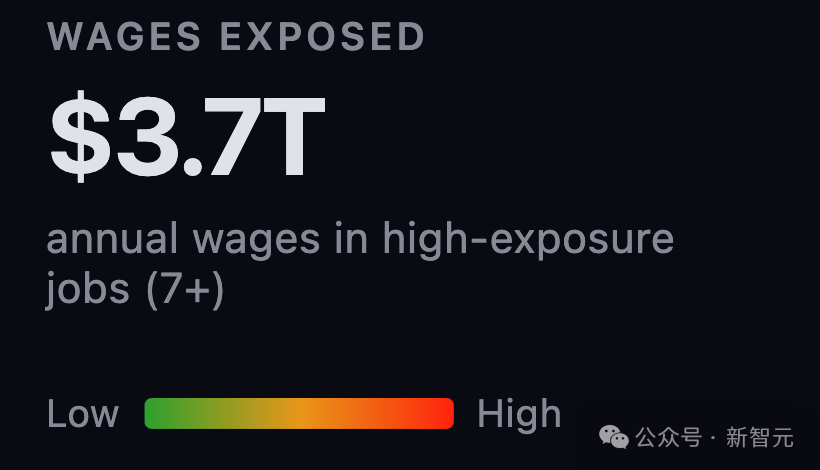
Statistics show that approximately 60 million jobs are in high-risk categories, meaning 42% have risk scores above 7, with total annual salaries reaching $3.7 trillion.
So what jobs are the safest? The answer is janitors, plumbers, and roofers; those that involve complex physical labor have become the safest havens.
|
|


Hinton once suggested: Become a plumber
To this, Musk commented, "In the future, all jobs will become optional."

Other netizens compiled a video gathering the predictions of AI leaders about unemployment.

60 million white-collar jobs in the U.S. are indeed at risk!
This project went viral online, but just a few minutes after its launch, Karpathy deleted the post, and it’s now a GitHub 404.
Fortunately, AI influencer Josh Kale cloned the entire repository before it went offline.

We can see on the project homepage that on the far left, all key indicators are marked, including exposure (Exposure) and salary.
In the U.S., 342 occupations and 143 million positions scored by Gemini Flash, with an average exposure level of 4.9.
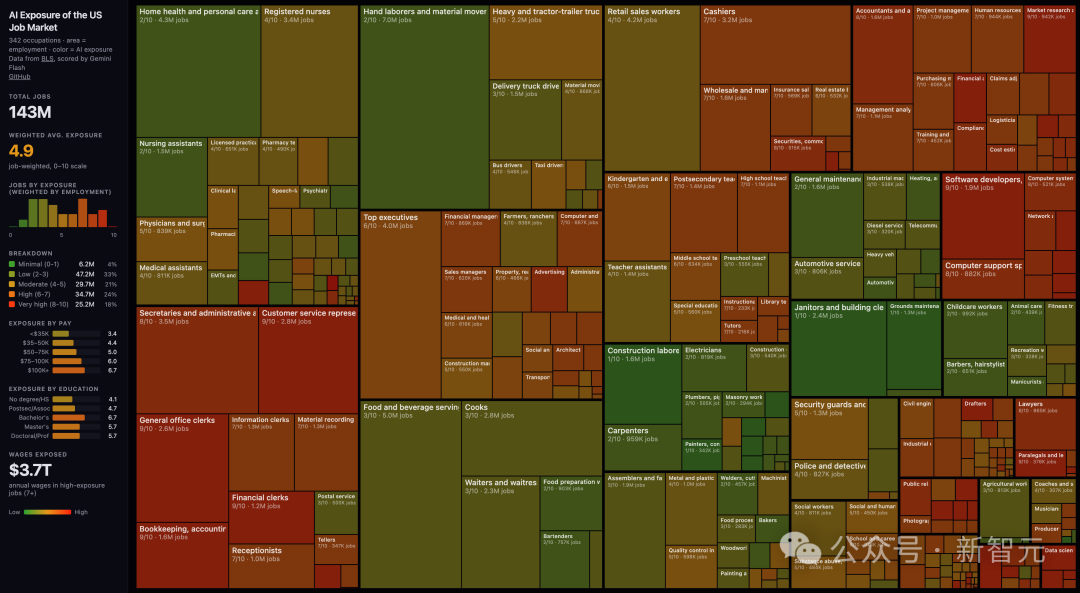
Portal: https://joshkale.github.io/jobs/
Among them, the most affected (6-10) positions account for 42%, that is 59.9 million; the least affected (0-1) only account for 4%, with only 6.2 million positions.
Positions with salaries above $100,000 (scoring 6.7) are more easily replaced by AI; while positions with salaries below $35,000 are the least affected (3.4 points).
Moreover, occupations requiring a bachelor's degree are most susceptible to AI impact.
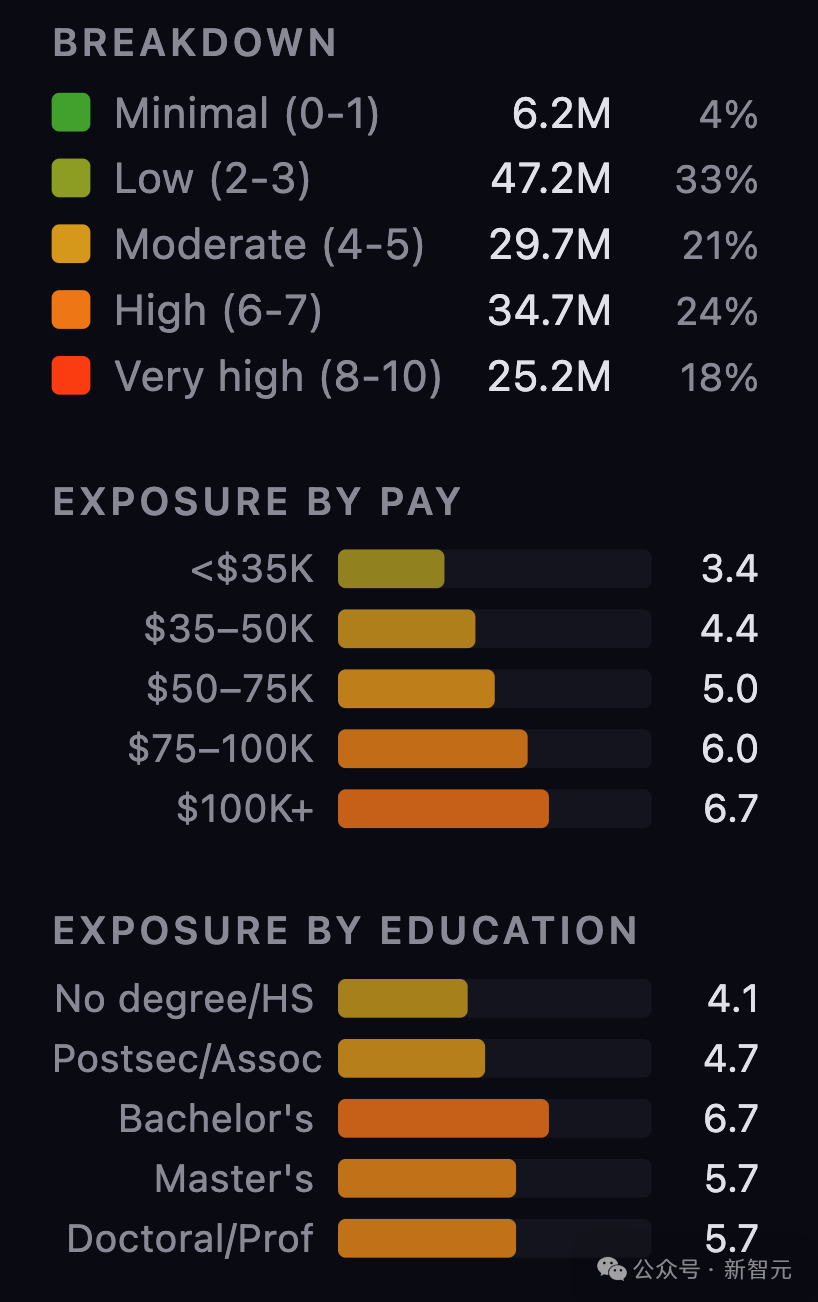
Overall trend indicates that AI is precisely targeting jobs along the line of "information processing density."
Those relying on text processing, data analysis, code writing, and standardized processes, regardless of their high salaries, have collectively "flashed red."
In contrast, jobs involving physical operations, complex interpersonal interactions, or requiring real-time judgment on-site remain in the safe zone.

Massacre of white-collar jobs
In the interactive area on the right side of the homepage, occupations of similar nature are closely aligned.
Let's first count the positions with an AI exposure index over 6 points.
In the lower left corner, mainly office and administrative positions are above 7 points, including clerks, receptionists, etc.
Moreover, their median annual salary hovers around $43,000, with educational requirements generally being high school graduation.
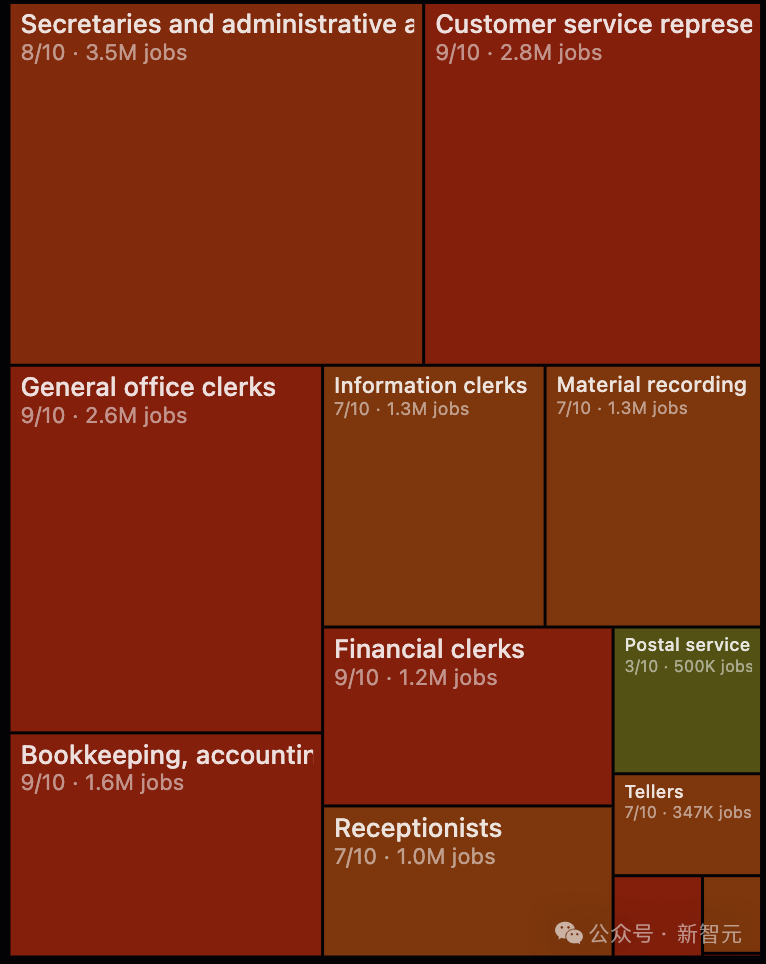
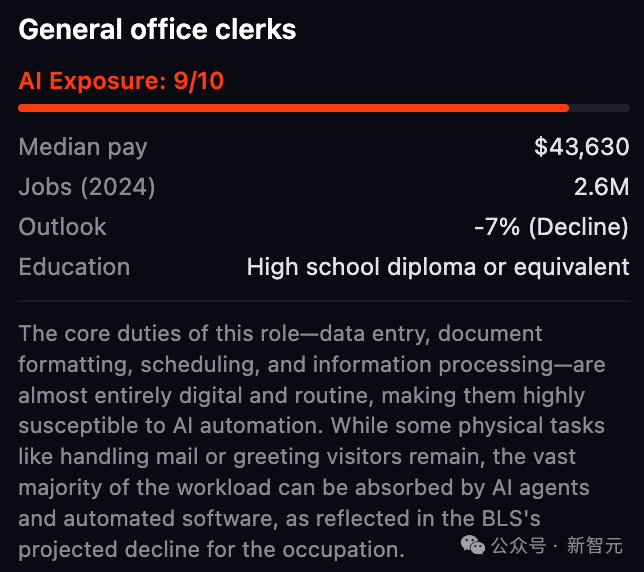
For instance, office clerks (9/10) have a median annual salary of $43,630, with a job scale of 2.6 million.
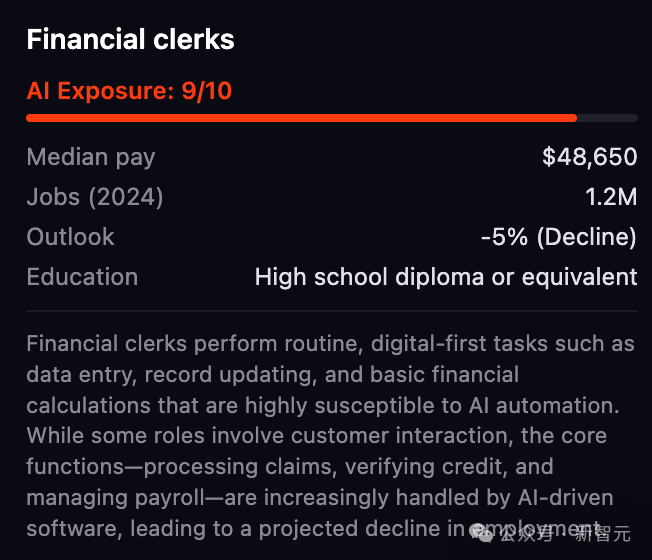
Financial clerks (9/10) have a median annual salary of $48,650, with a job scale of 1.2 million.
The core responsibilities of these positions consist mostly of routine tasks, data entry, and document formatting, which have almost completely achieved digitization and standardization, making them easily impacted by AI automation.
|
|
In the upper right corner, sub-categories of "Business and Financial Operations" are almost all marked in red.
These positions have median annual salaries between $50,000 and $100,000, requiring a bachelor's degree.
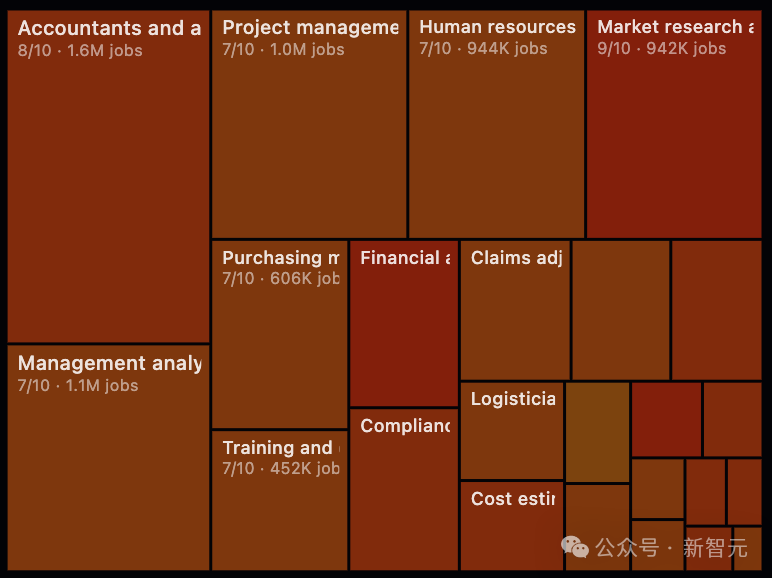
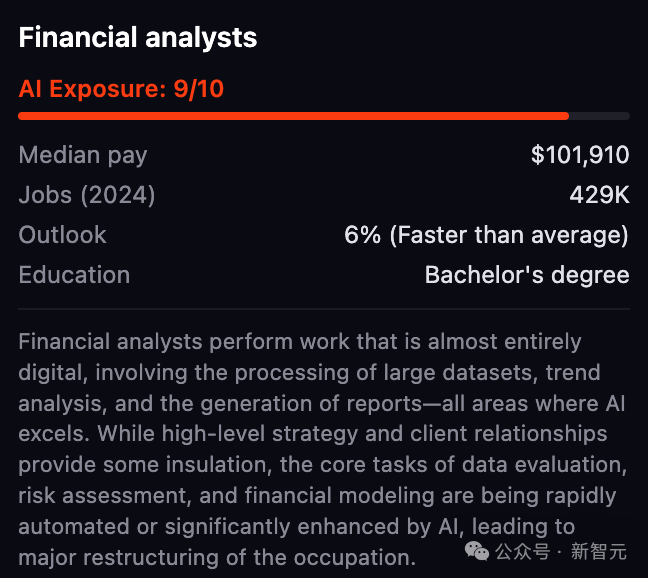
For example, financial analysts (9/10) have a median annual salary of $101,910, with a job scale of 429,000.
The content of this work is almost "fully digitalized," including large-scale data set processing, trend analysis, and report generation, which are precisely the strengths of AI.
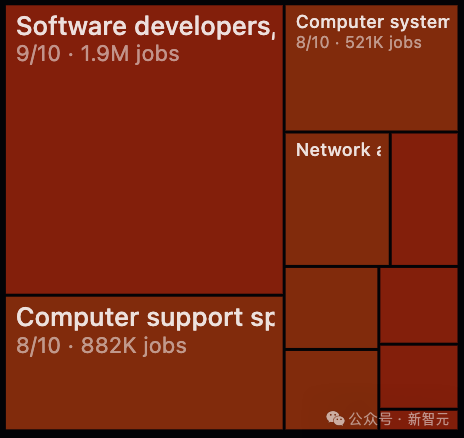
Of course, computer-related positions are also significantly impacted by AI. After all, Dario Amodei predicted that within the next 6 to 12 months, AI will replace software engineers.
In the image below, it is not difficult to see that software engineers (9/10), computer systems analysts (8/10), and computer support specialists (8/10) are all in high-risk ranges.
They hold median salaries of up to $130,000, yet are among the most easily replaceable group.
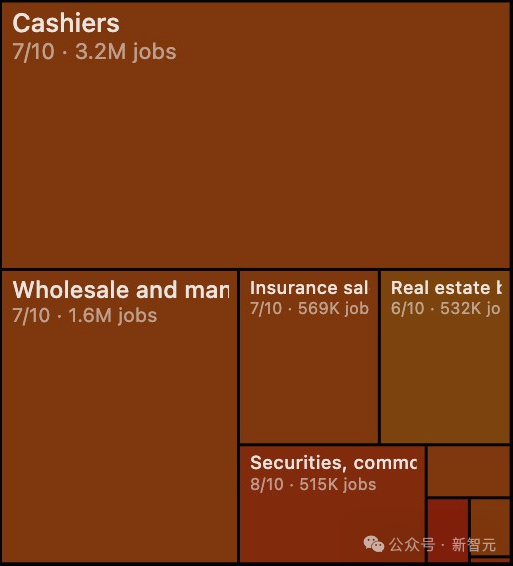
Additionally, positions such as lawyers (8/10), data scientists (9/10), graphic designers (9/10), cashiers (7/10), etc., all face high risks of being replaced by AI.
|
|
|

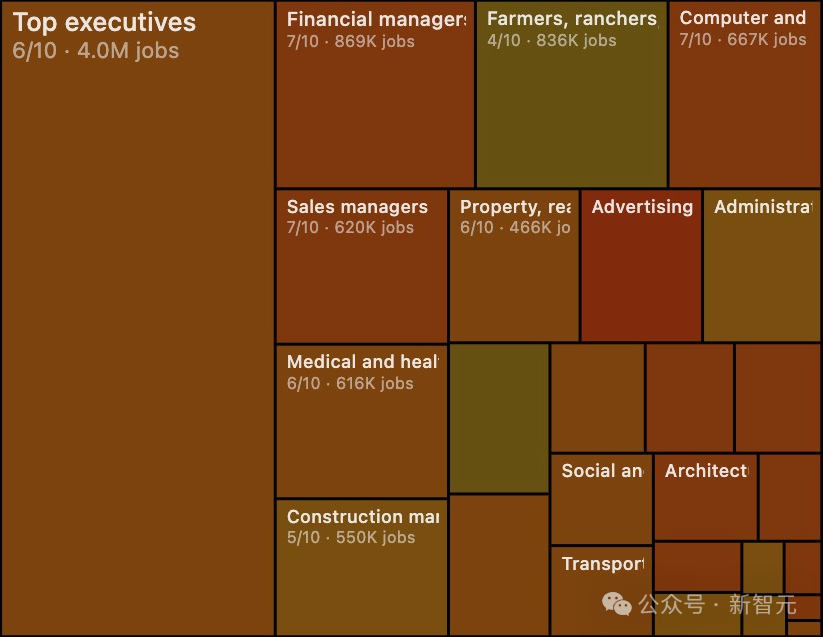
It is worth mentioning that medical transcriptionists have the highest risk among all positions.
Go become a plumber
Now, the safest professions have really boiled down to those involving "interaction with people and physical entities."
In the interactive chart, it can be clearly seen that large areas of green are mostly related to jobs in complex on-site environments requiring hands-on operations.
For instance, construction and specialized craftsmanship positions have an average exposure index between 1-3; these physical tasks must be completed by humans.
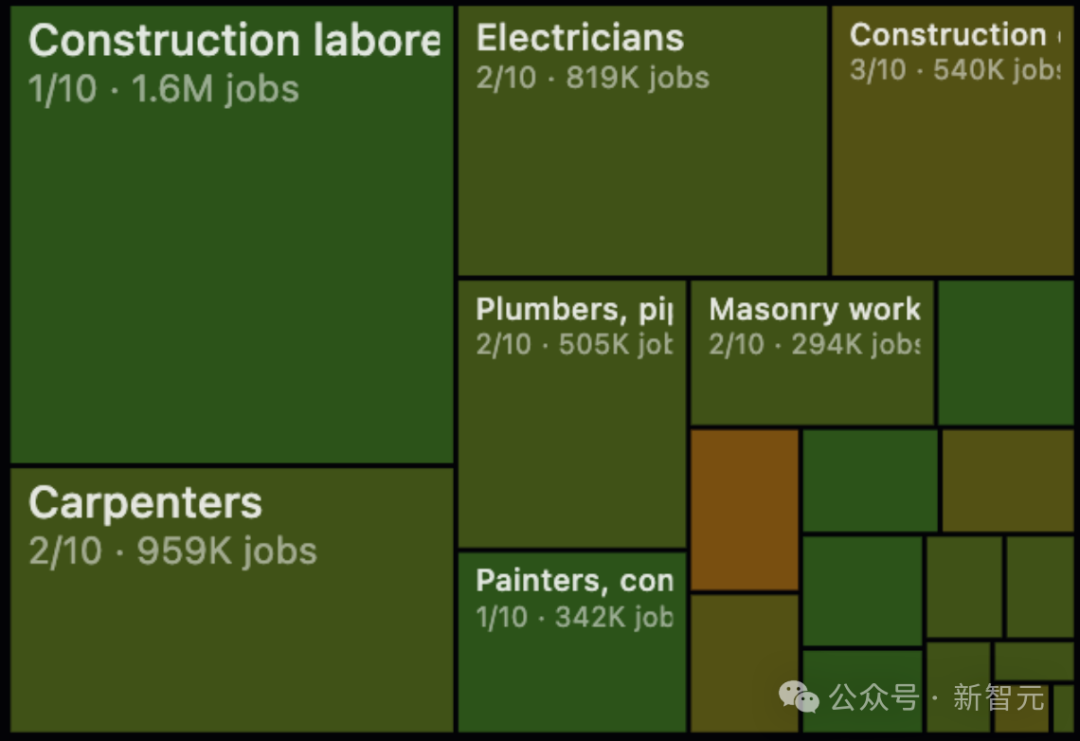
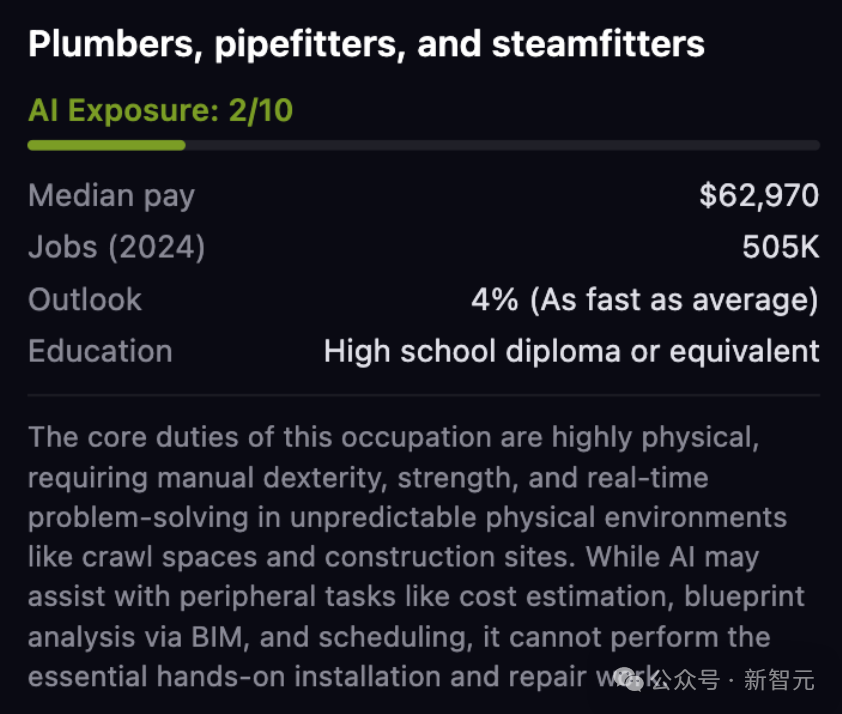
Take plumbers, pipefitters, and steamfitters as examples, requiring only a high school diploma, with a median salary of $62,970, making them the least likely to be eliminated.
Their core work involves "heavy physical labor," requiring not only quick hands and strength but also the ability to solve various unexpected situations in narrow spaces or at construction sites.
The core hands-on installation and repair tasks are still beyond the capabilities of AI.
Similarly, occupations in food service, including chefs, waiters, bartenders, and food processors, are also in the safe zone.
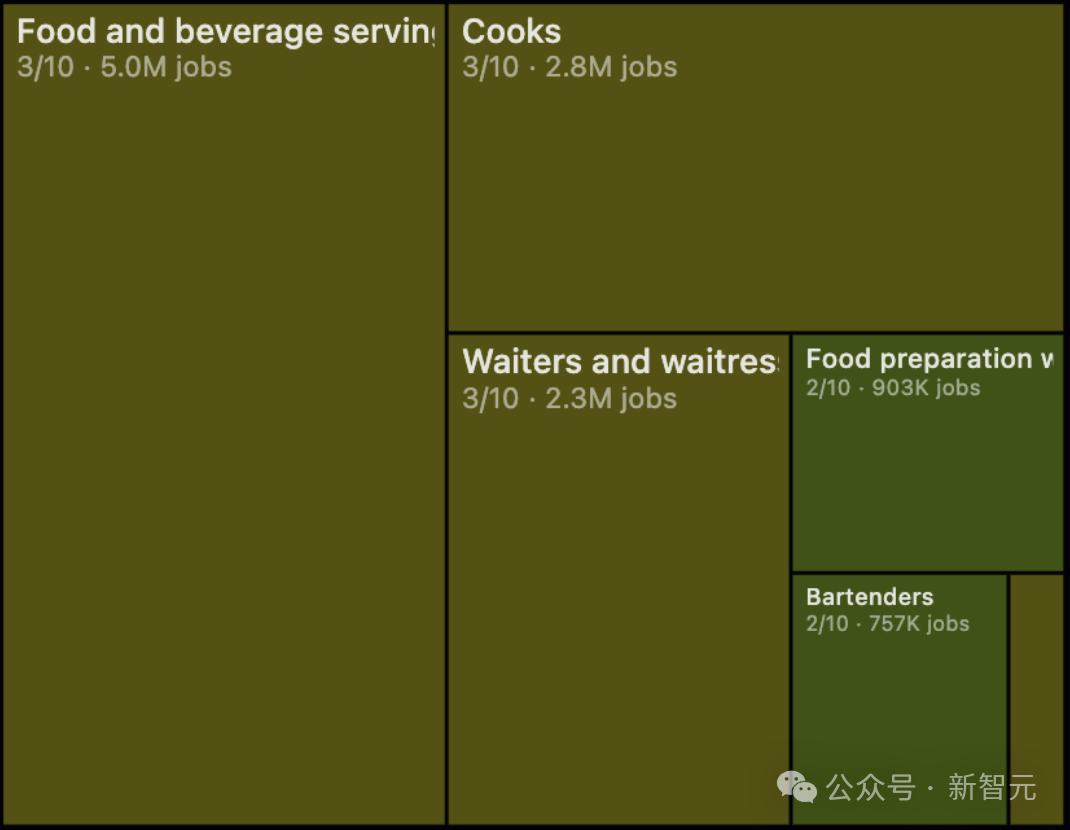
In addition, hairdressers, animal caretakers, cleaners, personal medical care, and material transport and handling are less impacted by AI.
|
|
|

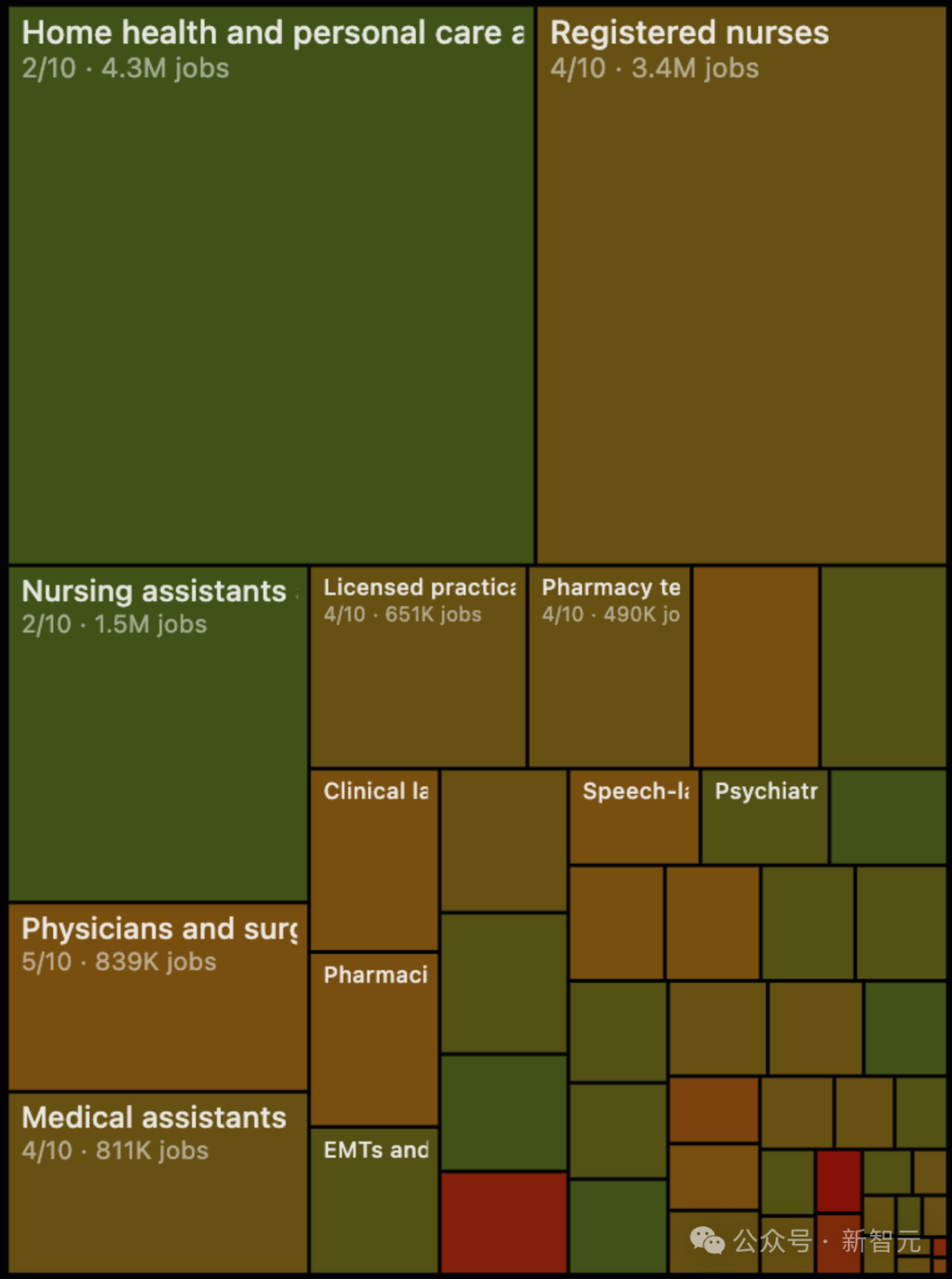
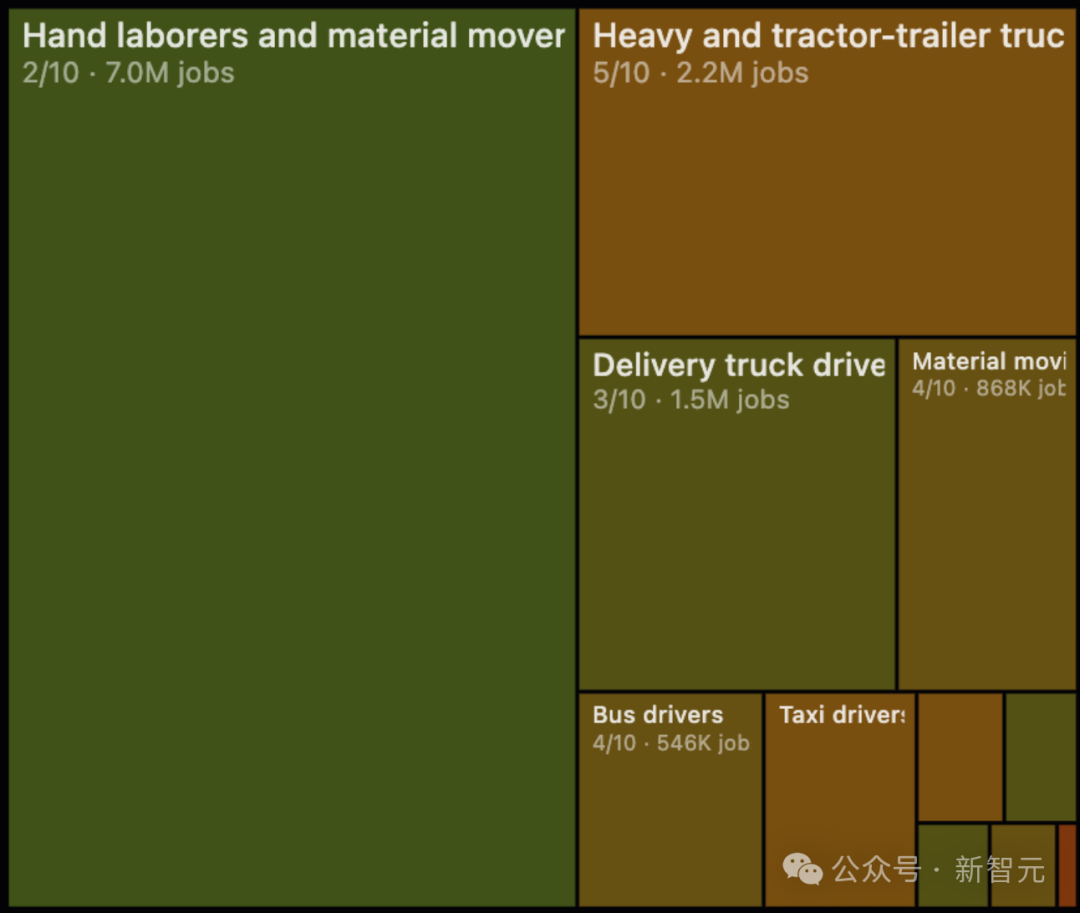
In summary, what Hinton said holds more truth now.

The internet explodes, and Karpathy responds
Last night, once this chart was released, it quickly went viral online, with many predicting that white-collar workers are in trouble now.
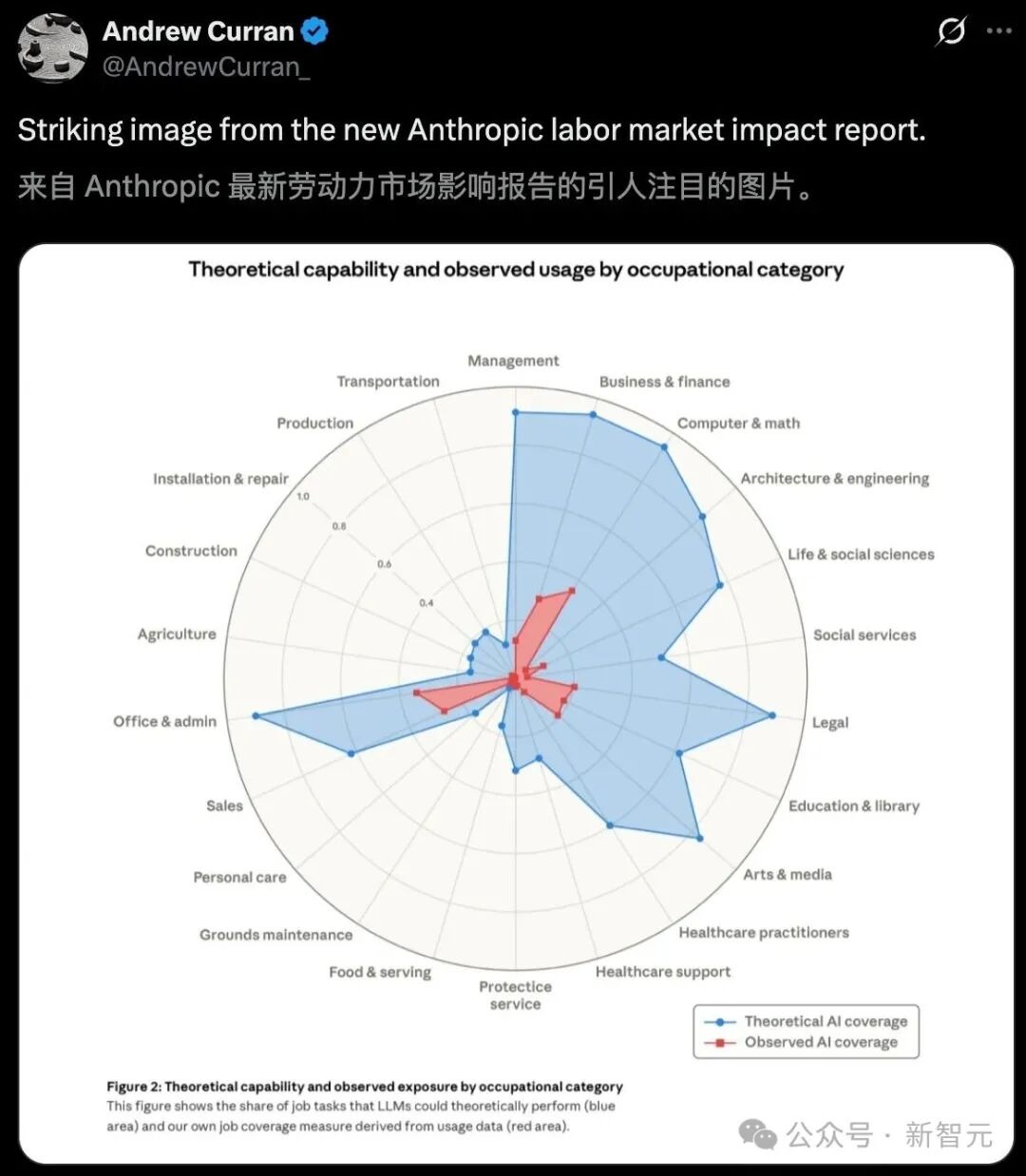
Half a month ago, Anthropic also released a report titled "The Impact of AI on the Labor Market: New Metrics and Early Evidence."
Similar to Karpathy's data, the report indicates that the task coverage of computer programmers by AI is as high as 75%.
Following closely are customer service representatives, data entry clerks, and medical record specialists, which are all "disaster areas" impacted by AI.
In contrast, about 30% of occupations are essentially unaffected, such as chefs, lifeguards, and dishwashers, as these jobs require significant human physical cooperation.
However, the actual adoption rate of AI currently only accounts for a small portion of the theoretically feasible capabilities of AI tools.
|
|
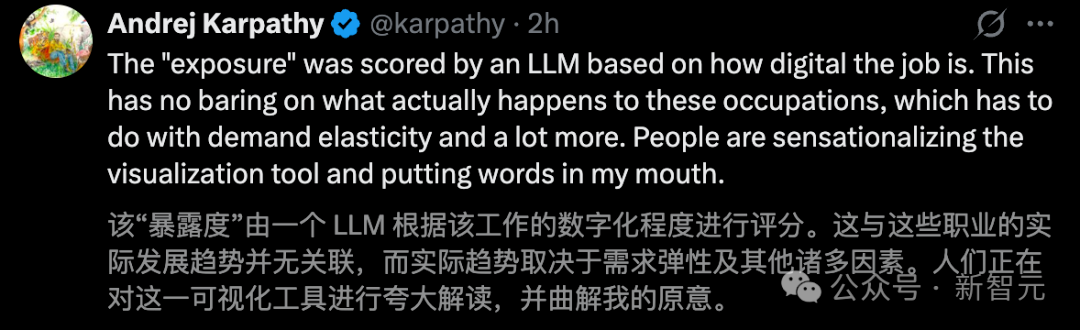
Because of this chart on social media causing massive panic, Karpathy urgently deleted the data.
He explained, "This is just a personal interest project I coded over the weekend in 2 hours 'based on feeling,' which has been over-interpreted by everyone."

Harvard's solid evidence: AI is not just "killing" jobs
Panic is real, but it is not the whole picture.
Harvard Business School professor Suraj Srinivasan, along with researchers from the Hong Kong University of Science and Technology and Ohio State University, released a heavyweight working paper titled "Substitution or Complementarity? The Impact of Generative AI on the Labor Market," providing a more hardcore and complex answer.
Paper link: https://www.hbs.edu/ris/Publication%20Files/25-039_05fbec84-1f23-459b-8410-e3cd7ab6c88a.pdf
The research team directly pulled a dataset covering nearly all online job postings in the U.S. and tracked real changes in job supply and demand from 2019 to March 2025.
First, let's look at the substitution aspect.
After the release of ChatGPT, the jobs with the highest automation potential (top 25%) saw an average decrease of 95 job postings per quarter per company, a reduction of 17%.
The finance and technology sectors are the hardest hit, with occupations such as clerical workers, payroll clerks, medical transcriptionists, and telemarketers, those "screen brick-moving" types of jobs, systematically being ousted by AI.
Now let's consider the enhancement aspect.
During the same period, the jobs with the highest enhancement potential (top 25%) saw an average increase of 80 job postings per quarter per company, a growth of 22%.
Occupations like microbiologists, financial analysts, and clinical neuropsychologists share a common feature: a portion of their work can be accelerated by AI, while another portion must rely on human experience, intuition, and social skills to navigate.
Behind these two sets of numbers is a sophisticated quantification method.
The research team evaluated over 19,000 specific tasks across 900 occupations with GPT-4o, categorizing them into four levels of "no exposure," "direct exposure," "application exposure," and "image exposure," based on whether AI could reduce the task completion time by more than half, and calculated each occupation's "automation score" and "enhancement score" based on the importance weight of each task in the job.
The differentiation at the skill level is even more alarming.
In high-automation jobs, the demand for AI-related skills plummeted by 24%, with total skill requirements also contracting simultaneously, and the frequency of new skill emergence continuously declining.
These jobs are being "hollowed out." Once AI takes over most structured tasks, the remaining work becomes simpler and more standardized, and the requirements for human workers decrease.
In contrast, in high-enhancement jobs, the trend is completely reversed. The demand for AI-related skills grew by 15%, with total skill requirements and the number of new skills rising.
These jobs have become more complex, requiring employees not only to utilize AI tools, but also to possess the ability to supervise AI output and integrate human-machine collaboration processes. For example, in finance, investment managers and analysts process vast amounts of market data with AI, but the final judgment and decisions still rest with humans.
AI does not indiscriminately attack all white-collar jobs. It resembles more of a "reorganization of profession," where pure information carriers are eliminated, whereas those who can work alongside AI become more valuable.
How much time is left in the window?
Karpathy deleted the post, but the data cannot be deleted. Harvard's paper is more composed, but its conclusions are equally unyielding.
Whether you look at Gemini Flash's scoring table or the empirical research covering the entire American job market, both point to the same fact: the restructuring of white-collar jobs by AI is already occurring.
However, it is not a one-size-fits-all slaughter, but rather a differentiation.
What is being cut are those positions whose job content can be completely described and processes can be standardized and deconstructed.

Remaining or even becoming more valuable are those positions that require making judgments in gray areas, building trust between people, and making final decisions based on AI outputs.
This differentiation brings a harsh consequence.
In the past, the career ladder for white-collar workers often started with standardized entry-level jobs, data entry, report writing, junior coding, and basic analysis.
Young people started here, doing repetitive tasks, gradually accumulating experience and judgment, ultimately becoming irreplaceable individuals.
Now, AI is removing this first rung of the ladder.
The entry point has narrowed, but the rewards at the endpoint are greater.
For everyone still in the workplace, the real question to answer is one.
What percentage of your work can AI not do?
If the answer makes you uneasy, the time to act is not tomorrow, but now.
免责声明:本文章仅代表作者个人观点,不代表本平台的立场和观点。本文章仅供信息分享,不构成对任何人的任何投资建议。用户与作者之间的任何争议,与本平台无关。如网页中刊载的文章或图片涉及侵权,请提供相关的权利证明和身份证明发送邮件到support@aicoin.com,本平台相关工作人员将会进行核查。


