Original Title: Inside OpenAI's Race to Catch Up to Claude Code
Original Author: Maxwell Zeff, Wired
Translation: Peggy, BlockBeats
Editor's Note: At a time when AI programming agents are rapidly rising, OpenAI, which once led the generative AI wave with ChatGPT, has unexpectedly become a "follower" in this critical race. In stark contrast, Anthropic, founded by former OpenAI members, has quickly gained popularity in the developer community and enterprise market with Claude Code, becoming one of the important leaders in the field of AI programming tools.
This article reveals the true process behind this competition through interviews with OpenAI executives, engineers, and several developers: from the early OpenAI Codex project being dismantled, resources shifting to ChatGPT and multimodal models, to internal teams re-integrating and accelerating the launch of AI programming products, OpenAI is undergoing a transformation from strategic neglect to comprehensive catch-up. In a sense, this is not a lag in technical capability, but rather a misalignment of strategic timing: the explosion of ChatGPT changed the company's priorities, and its partnership with Microsoft limited product pathways, while Anthropic had already bet earlier on the AI programming track.
Behind this competition, deeper issues are gradually emerging: as AI agents begin to take on more cognitive work, software development processes and even white-collar labor itself may be redefined.
The following is the original text:
Sam Altman, the CEO of OpenAI, sat with his legs crossed in his office chair, gazing at the ceiling as if contemplating some yet-to-materialize answer. To some extent, this also relates to the environment.
OpenAI's new headquarters in Mission Bay, San Francisco, is a modern building made of glass and light wood, almost resembling a "tech temple." On the display shelves behind the reception, brochures introducing the "Eras of AI" are placed, as if depicting a path to technological enlightenment. The staircase walls are covered with posters documenting milestones in AI development, one of which captures a moment where thousands of viewers witnessed through a live stream as a machine defeated a top eSports team in a game of Dota 2. In the hallway, researchers in team merchandise with slogans come and go, one of which reads: "Good research takes time." Of course, ideally, it shouldn’t take too long.
We are sitting in a large conference room. The question I throw at Altman is related to the AI programming revolution sweeping the industry, and why OpenAI seems not to be at the forefront of this wave.
Today, millions of software engineers have begun to delegate part of their programming tasks to AI, which has made many in Silicon Valley confront a reality for the first time: automation might reach their own jobs. As a result, coding agents have become one of the few applications for which companies are willing to pay a premium for AI. In theory, such a moment could very well be next "victory moment" on OpenAI's staircase wall poster. But now, the name occupying the headlines is not theirs.
The company’s competitor is Anthropic, an AI company founded by former OpenAI members. With its programming agent product Claude Code, Anthropic experienced explosive growth. The company disclosed in February that this product has contributed nearly one-fifth of its business scale, corresponding to an annual revenue exceeding $2.5 billion. In contrast, according to an informed source, by the end of January, OpenAI's own programming product, OpenAI Codex, had an annual revenue of just over $1 billion.
The question is: why has OpenAI fallen behind in this AI programming race?
However, in his view, now is the time for OpenAI to fully invest in AI programming. He believes that the company's existing model capabilities are already strong enough to support highly complex coding agents. Of course, this capability did not come by accident; the company has invested billions of dollars in model training.
Furthermore, he believes that OpenAI Codex may be "the most likely path" toward Artificial General Intelligence (AGI). By OpenAI's definition, AGI is an AI system that can outperform human performance in the vast majority of economically valuable tasks.

Sam Altman, CEO of OpenAI. Photo: Mark Jayson Quines.
However, despite Altman making confident judgments with a calm demeanor, the reality within the company over the past few years has been much more complex. To understand the full internal story, I interviewed more than 30 informed sources, including current OpenAI executives and employees who were interviewed with company approval, as well as some former employees who discussed the company's internal operations under anonymity. From these accounts, a less common picture emerges: OpenAI is striving to catch up.
Let’s rewind to 2021. At that time, Altman and other OpenAI executives invited WIRED reporter Steven Levy to their early office in San Francisco's Mission District to watch a demonstration of a new technology. This was a project derived from GPT-3, trained on a vast amount of open-source code from GitHub.
During the live demonstration, executives showcased how the tool named OpenAI Codex could receive natural language instructions and generate simple code snippets.
During that period, Altman's and Brockman's schedules were almost filled with meetings with Microsoft—the software giant that is OpenAI's largest investor. Microsoft planned to use Codex to power one of its first commercial AI products: a code completion tool named GitHub Copilot that could be directly integrated into the development environment programmers use daily.
An early OpenAI employee reminisced that at that stage, Codex "could basically only do auto-completion." Nevertheless, Microsoft executives still viewed it as an important signal of the arrival of the AI era.
In June 2022, when GitHub Copilot was officially launched, it attracted hundreds of thousands of users within just a few months.

Greg Brockman, President of OpenAI. Photo: Mark Jayson Quines.
The OpenAI team initially responsible for Codex was later reassigned to other projects. A former employee recalled that the company’s judgment at that time was that future models themselves would possess programming capabilities, so there was no need to maintain a separate Codex project team in the long term. Some engineers were shifted to work on DALL-E 2’s development, while others focused on training GPT-4. At that time, this seemed to be the key path to bringing OpenAI closer to AGI.
Then, in November 2022, ChatGPT was launched and gained over 100 million users in just two months. Almost all other projects within the company were forced to pause as a result. Over the next few years, OpenAI effectively did not have a dedicated team focused on AI programming products. A former member involved in the Codex project stated that after ChatGPT gained popularity, AI programming seemed no longer part of the company’s new "consumer-level product priority" strategy. Meanwhile, it was widely believed in the industry that this domain had already been "covered" by GitHub Copilot, which was essentially Microsoft's home ground. OpenAI mainly provided underlying model support.
Consequently, in 2023 and 2024, OpenAI allocated more resources to multimodal AI models and intelligent agents. These systems are designed to understand text, images, video, and audio simultaneously and operate the cursor and keyboard like a human. At that time, this direction seemed to align better with industry trends: Midjourney's image generation model quickly gained traction on social networks, and the industry generally believed that large language models must be able to "see" and "hear" the world to truly reach a higher level of intelligence.
In contrast, Anthropic chose a different path. Although the company is also developing chatbots and multimodal models, it appears to have recognized the potential of programming capabilities earlier. In a recent podcast, Brockman admitted that Anthropic has been "highly focused on programming capabilities" from an early stage. He noted that Anthropic not only used complex programming problems from academic competitions when training models, but also incorporated a significant amount of "messy" code issues from real code repositories.
In early 2024, Anthropic began using data from these real code repositories to train Claude 3.5 Sonnet. By the time this model was released in June, many users were impressed by its programming capabilities.
This performance was particularly validated in a startup called Cursor. Founded by a group of twenty-somethings, the company developed an AI programming tool that allowed developers to describe their needs in natural language, with the AI modifying the code directly. After Cursor integrated Anthropic's new model, its user base grew rapidly, a source close to the company disclosed.
Months later, Anthropic began internally testing its programming agent product, Claude Code.
As Cursor’s popularity soared, OpenAI attempted to acquire this startup. However, according to multiple sources close to the company, the founding team of Cursor rejected the proposal before negotiations progressed significantly. They believed the AI programming industry had immense potential and thus wished to maintain independent development.

Andrey Mishchenko, Head of OpenAI Codex Research. Photo: Mark Jayson Quines.
At that time, OpenAI was training its first so-called "reasoning model," OpenAI o1. This type of model is capable of step-by-step reasoning before providing answers. At release, OpenAI stated that this model excels at "accurately generating and debugging complex code."
Mishchenko explained that one important reason the AI models have made significant progress in programming capabilities is that programming is a "verifiable task." Code either runs or it does not, providing very clear feedback signals to the model. Once an error occurs, the system can quickly know where the problem lies. OpenAI leveraged this feedback loop to continuously train o1 on more complex programming issues.
By December 2024, several small teams within OpenAI had begun to focus on AI programming agents. One of these teams is co-led by Mishchenko and Thibault Sottiaux. Sottiaux, a former employee of Google DeepMind, is now in charge of OpenAI's Codex.
Initially, their interest in programming agents primarily stemmed from internal R&D needs, hoping to use AI to automate a significant amount of repetitive engineering work, such as managing model training tasks and monitoring GPU cluster operating status.
Another parallel attempt was led by Alexander Embiricos, who had previously overseen OpenAI's multimodal agent project and is now the product lead for Codex. Embiricos had developed a demonstration project called Jam, which quickly spread within the company.
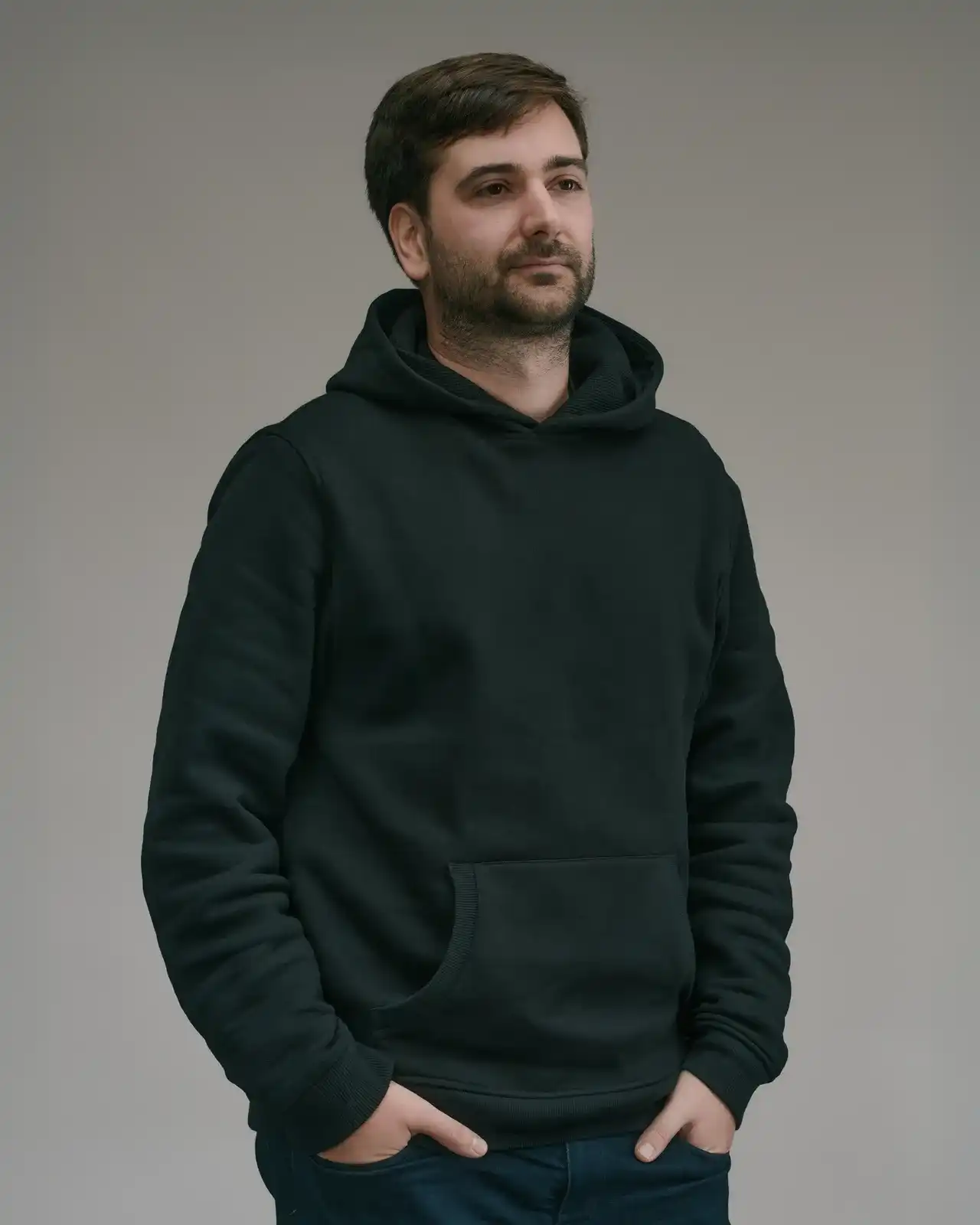
Thibault Sottiaux, Head of OpenAI Codex. Photo: Mark Jayson Quines.
Unlike controlling the computer with a mouse and keyboard, Jam can directly access the computer's command line. The Codex demonstration in 2021 merely showcased AI generating code for humans, which was then manually executed by humans; Embiricos’s version could execute the code itself. He recalled being almost shocked to see a web page that recorded Jam's real-time operation behaviors continuously refresh on his laptop.
These scattered projects took months to gradually integrate into a unified direction. By early 2025, when OpenAI completed training OpenAI o3, a model further optimized for programming tasks compared to OpenAI o1, the company finally had the technical foundation to build a truly AI programming product. But at the same time, Anthropic's Claude Code was already prepared for public release.
Before Claude Code was launched (with a "limited research preview" in February 2025 and a full rollout in May), the mainstream model in the AI programming field was still referred to as "vibe coding." Developers pushed project progress through AI-assisted tools, with humans controlling the direction, while AI contributed specific implementations along the way. These tools had already attracted hundreds of millions of dollars in investment.
However, Anthropic's new product changed this model. Like the Jam demonstration, Claude Code can run directly through the computer's command line, meaning it can access all of the developers' files and applications. Programming is no longer just "AI-assisted," but developers can hand over entire tasks directly to AI agents.
In the face of this change, OpenAI began to accelerate the launch of competitive products. Sottiaux recalled that in March 2025, he formed a "sprint team" tasked with consolidating multiple teams within the company in a few weeks to quickly launch an AI programming product.
Meanwhile, Altman also attempted to achieve a "shortcut" through acquisitions, seeking to buy AI programming startup Windsurf for $3 billion. OpenAI's leadership believed this deal would bring the company a mature AI programming product, an experienced team, and an existing enterprise customer base.
However, this acquisition deal then stalled. According to The Wall Street Journal, the issue lay with OpenAI's largest partner Microsoft. Microsoft sought to obtain access to Windsurf's intellectual property. Since 2021, Microsoft has been using OpenAI's models to support GitHub Copilot, which has also become one of the highlights in Microsoft’s earnings calls. However, as Cursor, Windsurf, and Claude Code began to launch new AI programming agent experiences, GitHub Copilot started to seem like it had stalled at the previous generation of AI tools. If OpenAI were to release another new programming product, it might not be good news for Microsoft.
This acquisition negotiation coincided with the period of greatest tension in OpenAI's relationship with Microsoft. Both parties were renegotiating their collaboration agreement, while OpenAI was trying to weaken Microsoft's control over its AI products and computing resources. Ultimately, the Windsurf acquisition became a casualty of this game. By July, OpenAI abandoned the deal. Subsequently, Google hired Windsurf's founding team, while the remaining employees were acquired by another AI programming company, Cognition.
By August, Altman decided to fully accelerate the initiative.
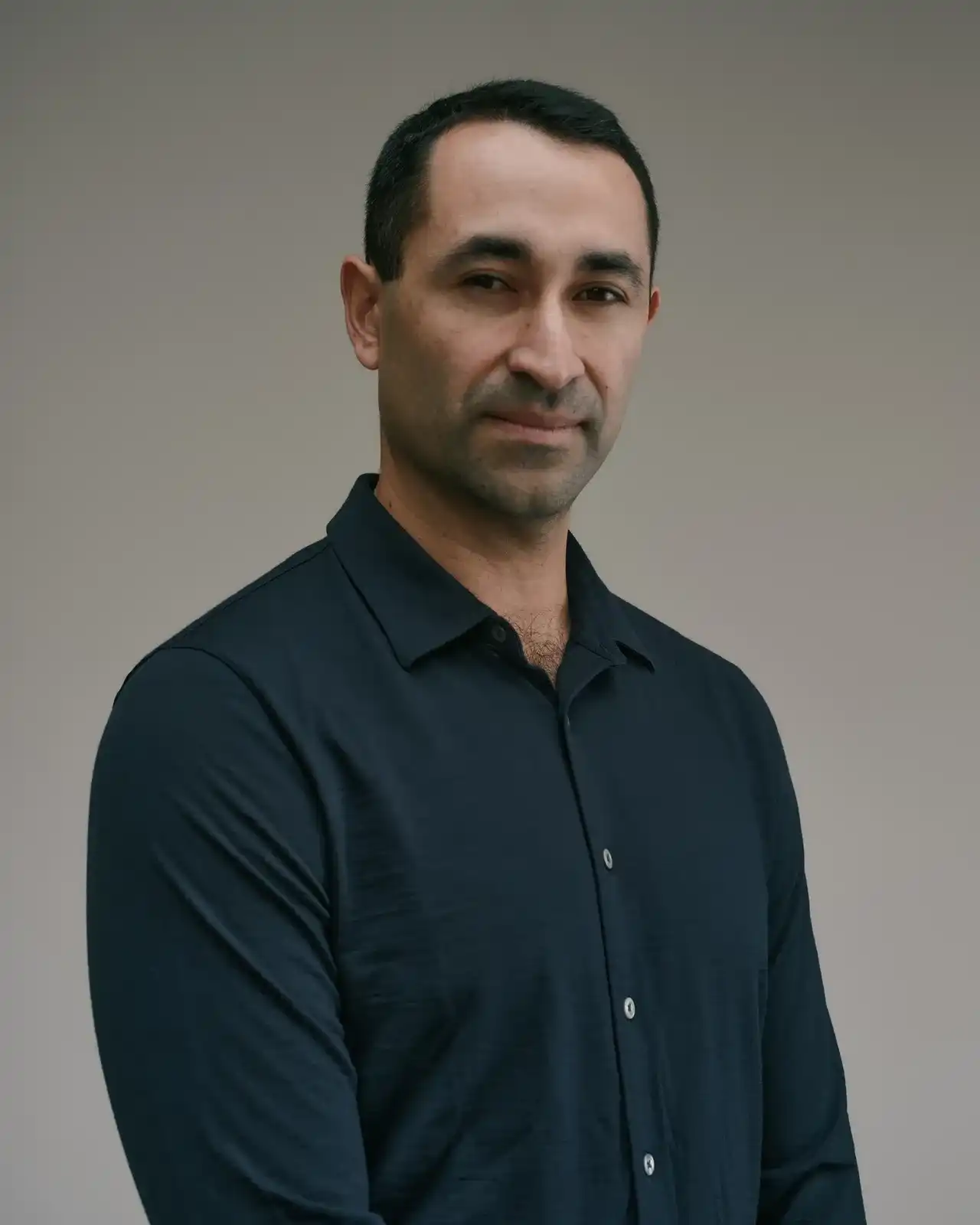
Alexander Embiricos, Product Lead for OpenAI Codex. Photo: Mark Jayson Quines.
One of the ways Greg Brockman likes to measure AI capabilities is through a mini-game he designed himself, the "Reverse Turing Test." A few years ago, he wrote the code for this game by hand, and now he hands the task to an AI agent to re-implement it from scratch.
The rules of the game are simple: Two human players sit in front of different computers, and each screen displays two chat windows. One window is connected to another human player, while the other is connected to an AI. Players need to guess which window is AI while trying to make the opponent mistakenly think they are the AI.
Brockman noted that for most of last year, OpenAI's strongest model took hours to build such a game, requiring a lot of explicit human instructions and assistance during the process. But by December of last year, Codex could generate a fully functional version directly through a carefully designed prompt, with the underlying model being the new GPT-5.2.
This change was not only noticed by Brockman. Developers around the world also began to realize that the capabilities of AI programming agents had suddenly surged. Discussions around AI programming, initially focused mainly on Claude Code, soon broke through the Silicon Valley tech circle and became a topic of mainstream media attention.
Even some regular users without programming experience have started to use AI to directly create their own software projects.
This surge in usage was not coincidental. During this period, both Anthropic and OpenAI poured significant funding into acquiring more AI programming agent users. Several developers told WIRED that their $200 monthly subscription plans for Codex or Claude Code effectively provided over $1,000 worth of usage credits. This rather "generous" cap is essentially a market strategy: to first develop a habit of using AI programming tools in daily work before charging based on usage in enterprise scenarios.
According to multiple informed sources, in September 2025, Codex's usage was only about 5% of Claude Code. However, by January 2026, Codex's user scale had risen to about 40% of Claude Code.
George Pickett, a developer who has worked in tech startups for 10 years, even recently began organizing offline meetups centered around Codex.
Meanwhile, Simon Last, co-founder of the efficiency software company Notion, which is valued at about $11 billion, stated that after the release of GPT-5.2, he and the core engineering team have shifted to using Codex, primarily due to its better stability.

Katy Shi, Researcher at OpenAI. Photo: Mark Jayson Quines.
Katy Shi, responsible for researching Codex’s model behavior at OpenAI, stated that although some have described Codex's default style as "dry bread," more and more users have come to appreciate this non-flattering mode of communication. "Much of engineering work essentially involves being able to accept critical feedback without taking it as offense." she said.
Meanwhile, some large enterprises have already begun adopting Codex. OpenAI’s application business CEO Fidji Simo stated, "ChatGPT has become synonymous with AI, which gives us a tremendous advantage in the B2B market. Enterprises are more willing to deploy technology familiar to their employees." She added that OpenAI’s core strategy for selling Codex is to package it together with ChatGPT and other OpenAI products.
Cisco's President and Chief Product Officer Jeetu Patel has made it clear to employees that they need not worry about the costs of using Codex since the key is to familiarize themselves with the tool as quickly as possible. When employees express concerns about whether "using these tools will make them lose their jobs," Patel's response is: "No. But I can guarantee that if you do not use them, you will lose your job because you will become uncompetitive."
Today, the anxiety surrounding AI programming agents has far surpassed the Silicon Valley tech circle. The Wall Street Journal attributed a recent $1 trillion tech stock sell-off partly to Claude Code, as investors worry that software development may soon be largely replaced by AI. Weeks later, after Anthropic announced that Claude Code could be used to modernize aging systems running COBOL (which are common on IBM machines), IBM's stock experienced its worst day in 25 years.
At the same time, OpenAI is also striving to push AI programming agents to the center of public discussion. The company even spent millions of dollars running an advertisement about OpenAI Codex during the Super Bowl instead of promoting ChatGPT.
Inside the OpenAI headquarters in Mission Bay, almost no one needs to be convinced to use Codex. Many engineers I interviewed stated that they rarely personally type code anymore, spending most of their time conversing with Codex. Sometimes, they even "communicate as a group."
At headquarters, I overheard a Codex hackathon. About 100 engineers were crammed in a large room, each with four hours to create the best demonstration project using Codex. An OpenAI executive stood at the front, watching their laptop while announcing team names with a microphone. Team representatives nervously walked up to the podium to introduce their AI projects in slightly trembling voices. The ultimate winner received a Patagonia backpack as a reward.
Many of the projects were developed using Codex and aimed to help engineers use Codex better. For instance, one team developed a tool that can automatically organize Slack messages into weekly reports; another group created an internal AI guide similar to Wikipedia to explain OpenAI's various internal services. In the past, such prototypes often took days or even weeks to complete, while now, an afternoon is enough.
As I was leaving, I met Kevin Weil at the door, a former executive at Instagram who is now in charge of OpenAI's "OpenAI for Science" department. He told me that Codex was completing some project tasks overnight for him, and he would check the results the next morning. This working method has become the norm for him and hundreds of OpenAI employees. One of OpenAI's goals for 2026 is to develop an "automated intern" for researching AI itself.
Simo stated that in the future, Codex will not only be used for programming but also aims to become the task execution engine across ChatGPT and all OpenAI products, completing various practical tasks for users. Altman also expressed that he hopes to launch a general version of Codex but still concerns about safety risks.
Ironically, weeks later, OpenAI announced that they had hired OpenClaw's developers.
Many developers told me that the competition between Codex and Claude Code has never been so intense. But as the capabilities of these tools continue to enhance, and as they are increasingly integrated into workflows by business managers, the societal questions that need to be faced are far beyond the simple equation of "which AI programming tool to use."

Amelia Glaese, Vice President of Research at OpenAI and Head of Alignment. Photo: Mark Jayson Quines.
Some oversight agencies worry that in the race to catch up with Claude Code, OpenAI may allow safety issues to take a backseat. A nonprofit organization called Midas Project accused OpenAI of weakening its safety commitments when releasing GPT-5.3-Codex and failing to adequately disclose the potential cybersecurity risks of the model.
In response, Glaese rebutted that OpenAI did not sacrifice safety to promote Codex, adding that the company believes Midas Project has misinterpreted its safety commitments.
Even Greg Brockman, the OpenAI co-founder who donated $25 million each to a pro-AI Super PAC and a pro-Donald Trump organization last year and still optimistically stated, "We are making planned progress toward AGI," has complex feelings about this new reality.
In Silicon Valley’s engineering circles, Brockman has long been known for a "highly committed" management style: one that would delve into codebases checking details until late the night before a product release. To some extent, this more "hands-off" working style today makes him feel relaxed. "You realize that the past brain was occupied by many details that are really unnecessary," he said.
But at the same time, when one becomes the "CEO of hundreds of thousands of AI agent fleets," executing your goals and visions through these systems, it becomes difficult to delve into the specifics of each problem-solving detail.
免责声明:本文章仅代表作者个人观点,不代表本平台的立场和观点。本文章仅供信息分享,不构成对任何人的任何投资建议。用户与作者之间的任何争议,与本平台无关。如网页中刊载的文章或图片涉及侵权,请提供相关的权利证明和身份证明发送邮件到support@aicoin.com,本平台相关工作人员将会进行核查。