Author: Culper Research (@CulperResearch)
Translation: Deep Tide TechFlow
Deep Tide Introduction: Culper Research is a well-known short-selling agency on Wall Street, having accurately targeted several famous companies. This report directly points to the core issue of Ethereum: the Fusaka upgrade in December 2025 led to a large amount of cheap block space, but real organic demand has not kept pace — the "prosperity" data on the chain is actually fabricated by address poisoning attacks. Vitalik himself has been selling off large amounts of ETH, while Tom Lee, the most steadfast bull advocate for Ethereum, is still defending it with incorrect data. This article is not a prediction but a short-selling paper backed by data and verification, worth reading carefully by anyone holding ETH.
We are shorting Ethereum and ETH-linked securities, including BMNR.
We believe that the Fusaka upgrade in December 2025 has severely damaged Ethereum's token economic model. Vitalik himself knows this and is continuously selling; meanwhile, ETH's most steadfast bull Tom Lee is throwing good money into a bad bet.
$ETH will continue to decline.

Tom Lee's Defense: Active Addresses and Trading Volume Are Increasing
Tom Lee's $BMNR defends ETH, claiming "ETH is not entering a death spiral because utility is increasing." He cites the surge in active addresses and trading volume after Fusaka as evidence of "strengthening fundamentals" and institutional adoption.
Lee's logic is flawed.
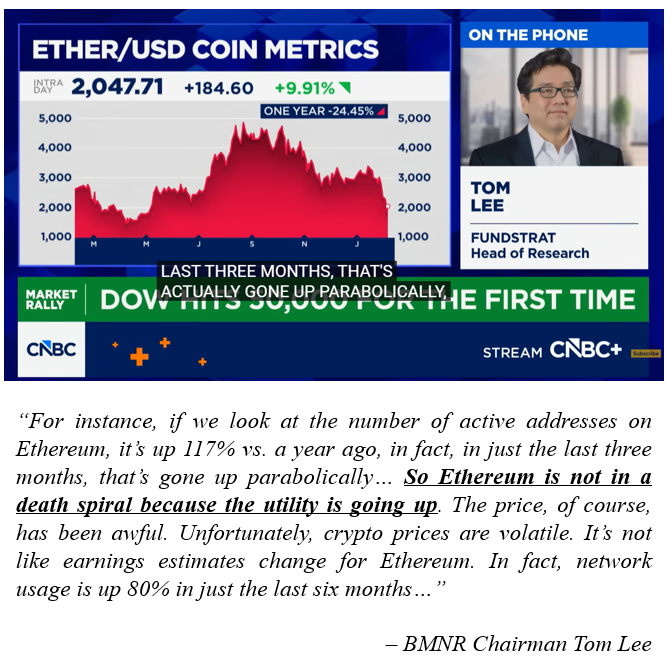
According to his logic, if the on-chain activity of ETH does not reflect real increases in utility value, then ETH is heading towards a death spiral.
Our research shows that this is exactly what is happening.
The full report and disclosure information have now been published at culperresearch.com.
The Truth of On-Chain Data: 95% of New Wallets Are Poisoning Attacks
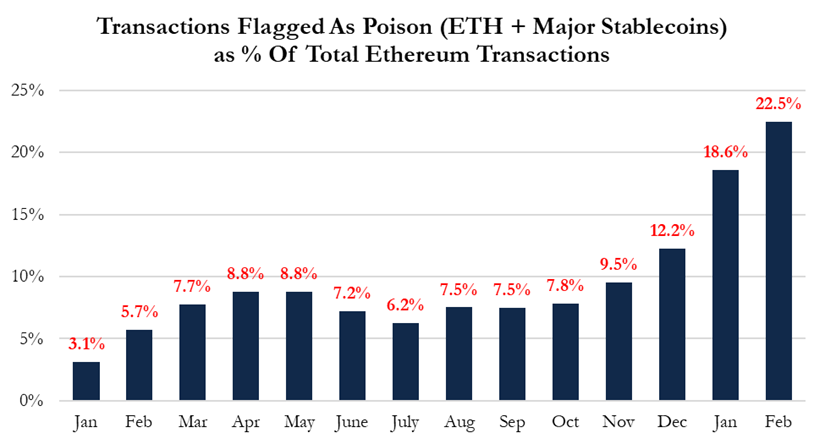
Our comprehensive analysis of on-chain data from January 2025 to February 2026 shows: the "institutional adoption" data cited by Tom Lee is actually explained by the large number of low-value address poisoning/wallet dusting attacks triggered by the surplus of block space brought by Fusaka.
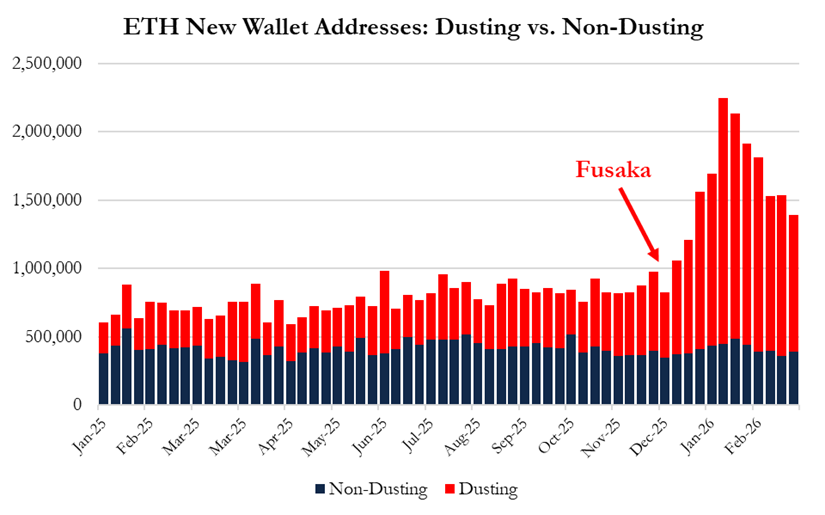
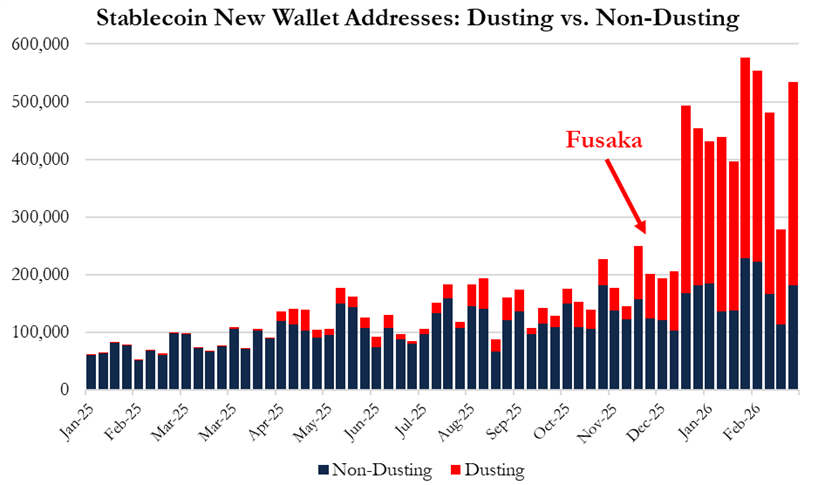
Specific data after Fusaka:
- 95% of the growth in new wallets is explained by newly created "poisonous" wallets
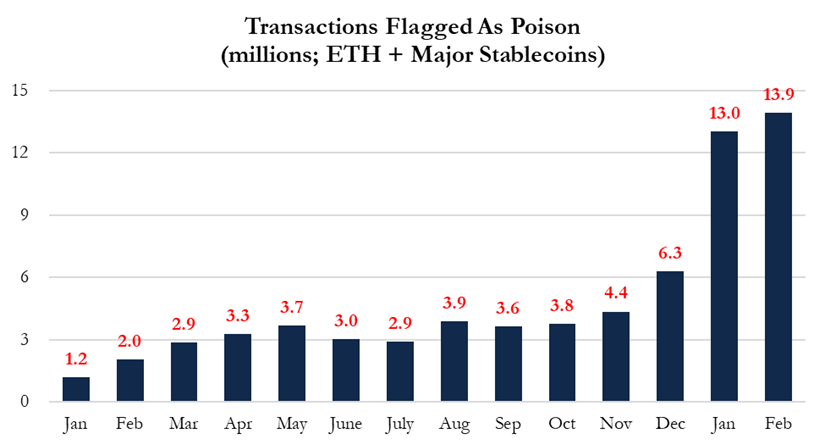
- Address poisoning attacks increased by more than 3 times
- Poisoning attacks accounted for more than 50% of the growth in ETH trading volume
- Poisoning attacks now account for 22.5% of all ETH transactions
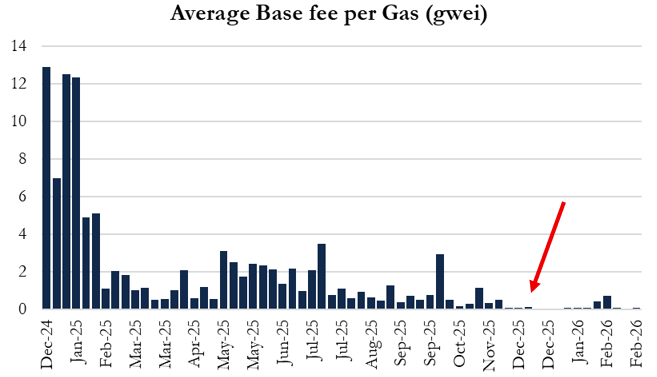
Fusaka Upgrade: Gas Fees Collapse by 90%, Much Worse Than Expected by 3-9 Times
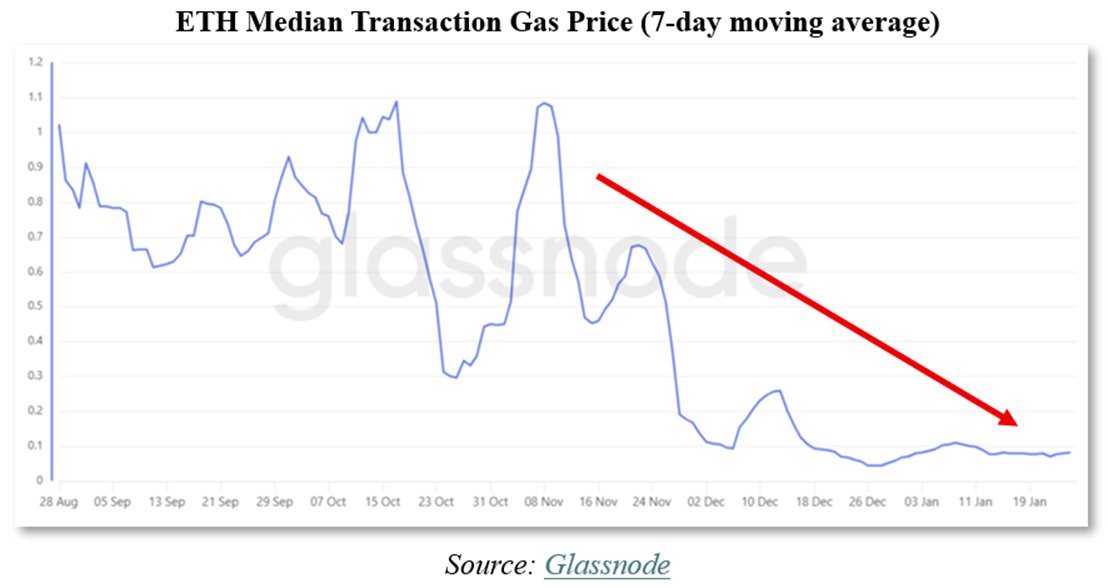
Fusaka raised the gas limit from 45 million to 60 million, aimed at expanding Ethereum L1. Vitalik and PTG estimated gas fees would decrease by 10-30%.
The reality is: gas fees have decreased by about 90%.
Vitalik and the validators seriously underestimated the elasticity of L1 demand by an error of 3-9 times — using outdated mathematical models from before EIP-1559 and the emergence of L2.

Vitalik is Selling Relentlessly
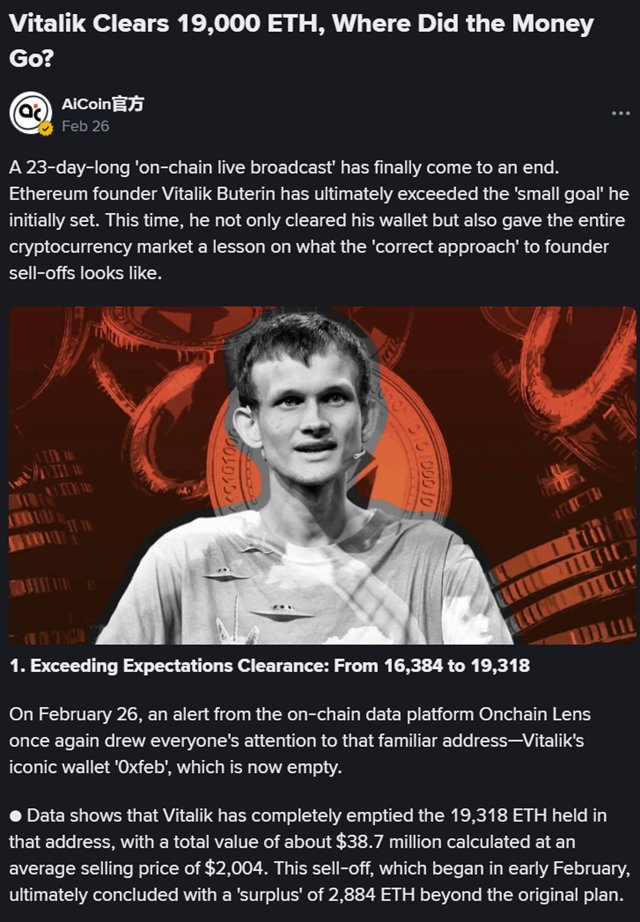
This is why we believe Vitalik is aggressively selling ETH. On January 30, he announced he would sell 16,384 ETH to fund the Ethereum Foundation's "consolidation period." Since then, he has sold over 19,300 ETH and continues to do so.
He knows what Tom Lee does not: the token economic model of ETH has already collapsed.
We Personally Verified Address Poisoning Attacks
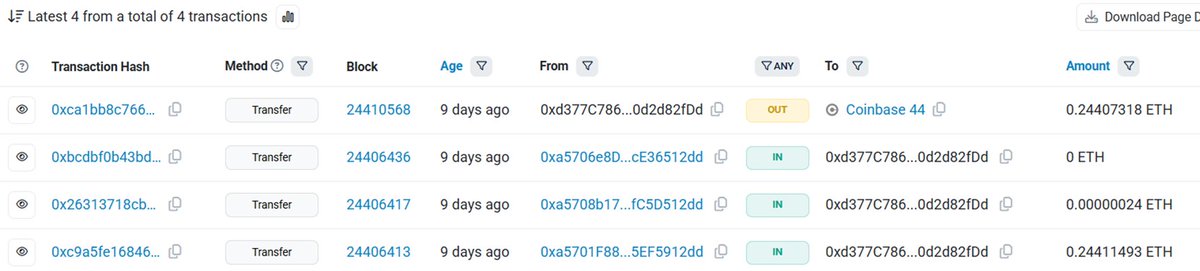
We documented the process of ETH address poisoning in the field: we created two new wallets and initiated transfers between them, and within 5 minutes faced targeted poisoning attacks.
We encourage readers to verify for themselves.
The losses from poisoning attacks have already increased at a speed over 8 times compared to before Fusaka.
The Validator Flywheel is Reversing
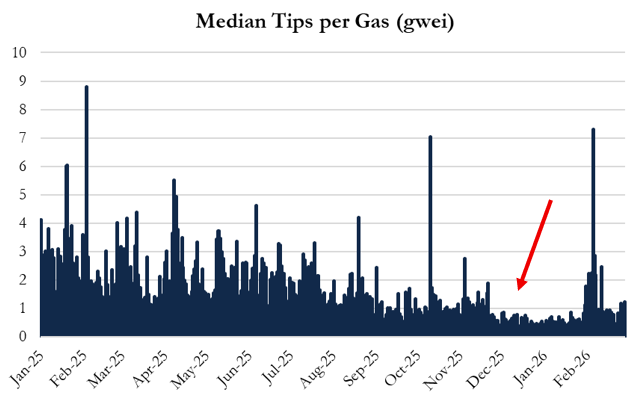
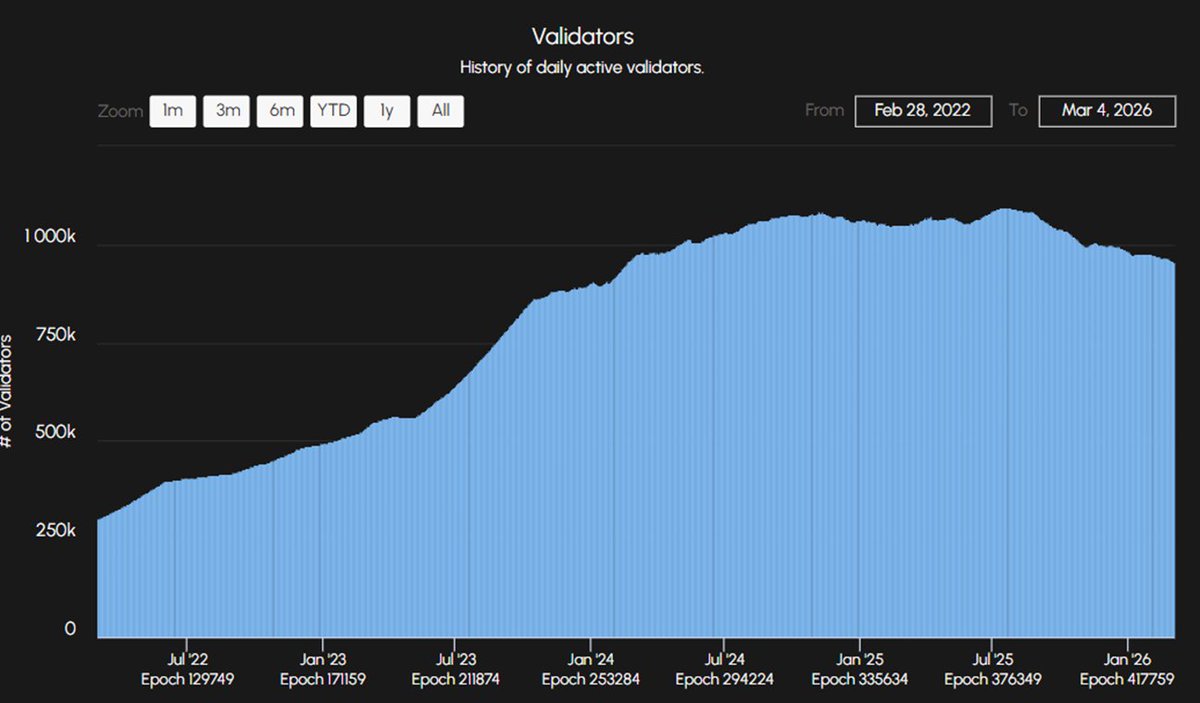
In addition, the increase in gas limits has severely impacted ETH validators, who now receive 40-50% less tips per unit of gas. Lower earnings have reduced staking demand and high-value activities, undermining the foundation for institutional adoption.
The flywheel is now turning in reverse.
Ethereum is Losing to Solana and Its Own L2
Meanwhile, ETH continues to hand over market share:
- Solana developers grew 29% in 2025, while Ethereum only grew 6%; talent is fleeing
- Visa and Citigroup chose Solana to build DeFi applications
- Solana DEX trading volume is now over twice that of Ethereum
Conclusion: The Next Nokia
During the internet bubble era, Netscape and Nokia dominated the market for over a decade, but in the end, it was Google and Apple that reaped the rewards.
We view ETH in the same light.
We believe the token economic model has collapsed, Tom Lee is in a dilemma, and $ETH will continue to decline.
免责声明:本文章仅代表作者个人观点,不代表本平台的立场和观点。本文章仅供信息分享,不构成对任何人的任何投资建议。用户与作者之间的任何争议,与本平台无关。如网页中刊载的文章或图片涉及侵权,请提供相关的权利证明和身份证明发送邮件到support@aicoin.com,本平台相关工作人员将会进行核查。


