The AI landscape in Hong Kong in 2026 is showing a trend of "high-density explosion." If the HK$3 billion computing power subsidy plan mentioned in last month's budget is seen as a shot in the arm for the industry, then the recent significant academic breakthroughs and high-end industry dialogues indicate that Hong Kong's AI is accelerating its transition from the "infrastructure setup" phase to the deep water zone of "application implementation."
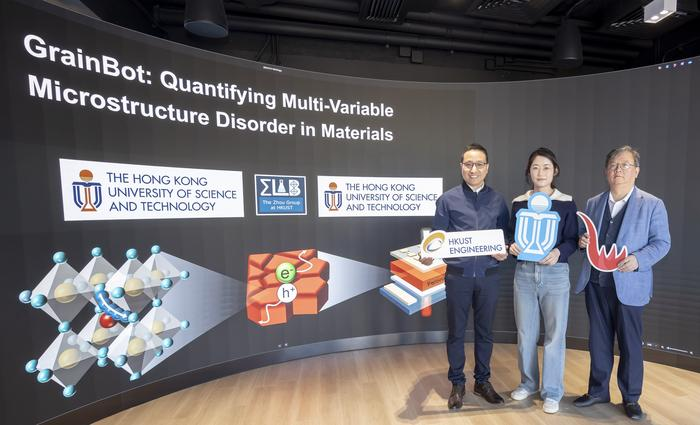
Just yesterday (March 3), while most market observers were still focused on NVIDIA's latest generation of GPU power inflation, or which astonishing parameters OpenAI has released for its general models, Professor Guo Yike, the Chief Vice President of Hong Kong University of Science and Technology, led a team that dropped a massive bombshell in academia and industry—GrainBot.
This is not just a new AI toolbox; it is a typical sample of "AI for Science" (AI4S) moving from concept to industrialization. As a long-term observer of the quantitative technology and deep tech sectors, I believe the emergence of GrainBot marks a shift in the development focus of Hong Kong's AI from "general chat" to "vertical discovery." For finance professionals, understanding the logic behind GrainBot is key to grasping the Alpha in hard technology investments over the next five years.
(Image source: analyticalscience.wiley.com)
To understand the value of GrainBot, we first need to understand the "pain points" in materials science.
In upstream high-end manufacturing, such as semiconductors, new energy batteries, and photovoltaic panels, the performance of materials often determines the fate of products. The performance of materials—whether it be conductivity, strength, or corrosion resistance—largely depends on their microstructure, namely the size, shape, and distribution of "grains." For a long time, materials scientists have been like a group of craftsmen with magnifying glasses. They use scanning electron microscopes (SEM) or atomic force microscopes (AFM) to take thousands of pictures, then rely on PhD students or researchers to spend hundreds of hours manually identifying, delineating, and labeling the boundaries of each grain. This is not only inefficient but also full of subjective human error.
The emergence of GrainBot essentially equips microscopes with an "L4 level autonomous driving brain."
According to the latest research published in the flagship journal "Matter" under Cell Press, GrainBot utilizes advanced computer vision (CV) and deep learning algorithms to automatically perform image segmentation, feature extraction, and quantitative analysis. It can accurately identify grain boundaries without human intervention and calculate complex geometric parameters such as surface area, groove geometry, and protrusion volumes.
More importantly, GrainBot is not just a "counter." It has associative analysis capabilities, linking microstructural data directly to the macroscopic performance of materials. In the validation of metal halide perovskite thin films—considered a key material for next-generation efficient solar cells—GrainBot successfully built a database containing thousands of annotated grains, revealing previously difficult-to-quantify structure-performance relationships. Professor Guo Yike made a forward-looking statement at the press conference: "As scientific workflows become more automated and data-intensive, such toolboxes will become the key engine of future 'autonomous laboratories.'
For financial capital, the emergence of results like GrainBot means we need to readjust our valuation models for AI projects. Over the past two years (2024-2025), the market's obsession with AI has mainly focused on "general large models" and "application layer SaaS." The valuation logic primarily looks at MAU (monthly active users), ARR (annual recurring revenue), and token consumption. However, with diminishing marginal effects of general models, capital is beginning to seek new growth points. AI for Science (AI4S) provides a completely different logic: its value lies not in "how many people it served," but in "how much it shortened R&D cycles" and "how many new materials it discovered."
Take GrainBot as an example: if it can reduce the R&D cycle of perovskite solar cells from 3 years to 6 months or help CATL find a new positive electrode material that increases energy density by 10%, the economic value generated will be exponential.
This is a logic of "industrial IP." The future AI unicorns may no longer be companies developing chatbots but rather those that possess core data and algorithms in specific vertical fields (such as materials, biomedicine, and chemical engineering) and can mass-produce patented technologies as "digital laboratories."
In this logic, the advantages of Hong Kong’s universities have been significantly amplified. Unlike Silicon Valley's software engineer-led ecosystem, Hong Kong has a high density of experts in materials science, chemistry, and biomedicine. The breakthrough at HKUST is the result of deep cross-disciplinary collaboration between computer science (Professor Guo Yike's team) and chemical engineering (Professor Zhou Yuanyuan's team). This combination of "AI + Domain Knowledge" is a barrier that pure internet companies find difficult to replicate.
GrainBot is not an isolated example. If we raise our perspective, we see that Hong Kong is building a new research paradigm based on "autonomous laboratories." The so-called autonomous laboratories refer to the full-process automation of experiment design, execution, data analysis, and iterative optimization using robotics and AI. In this closed loop, AI (like GrainBot) is responsible for "seeing" and "thinking," while robots are responsible for "doing." This trend has profound implications for Hong Kong's economic structural transformation. Historically, Hong Kong has been seen as a financial center and trading port but often considered to be "lacking legs" in hard tech R&D. However, with the arrival of the AI4S era, the form of R&D has changed—it has become more digital and intelligent. Hong Kong doesn’t need to have vast land like the mainland to build factories; it just needs to make good use of its computing power infrastructure and top-notch research brains to become the world's "various formulas for new materials" output hub.
Imagine, in the future Hong Kong Science Park, there may not only be office buildings but also hundreds of thousands of 7x24 hour operating "unmanned laboratories." They continuously consume data, analyze results through tools like GrainBot, and then automatically adjust experiment parameters, ultimately outputting high-value patented formulas. These formulas can be licensed for mass production to the manufacturing bases in the Greater Bay Area. This is the 2.0 version of "Hong Kong R&D + Bay Area Manufacturing."
Of course, as rational observers, we must also not overlook the problems and concerns within it.
The biggest bottleneck faced by AI for Science remains data. Unlike the massive internet texts used to train ChatGPT, high-quality scientific data (such as perfectly annotated microscopic images) are extremely scarce. GrainBot succeeded because the team invested significant effort into creating the initial high-quality dataset. Furthermore, the "island effect" of scientific data is more severe than that of the internet. Each materials company and each laboratory's data is core confidential information. Establishing a secure data-sharing mechanism (possibly combined with Web3 or privacy computing technologies) that allows AI models to "grow up eating from many families" is key to the next step of commercialization.
In the spring of 2026, when we stand on the campus of HKUST overlooking Clear Water Bay, we see not only the scenery but also the generational shift in research paradigms.
The launch of GrainBot symbolizes the perfect handshake between the "hacker spirit" (rapid iteration, algorithm-driven) and the "craftsman spirit" (meticulous observation, material refinement). For investors, the focus should no longer be solely on who owns the most NVIDIA graphics cards, but rather on who can use AI to solve the most concrete problems in the physical world.
In this new track, Hong Kong has already made a good start. GrainBot may just be the beginning; beyond the microscope's field of view, a trillion-dollar AI materials discovery market is slowly unfolding.
免责声明:本文章仅代表作者个人观点,不代表本平台的立场和观点。本文章仅供信息分享,不构成对任何人的任何投资建议。用户与作者之间的任何争议,与本平台无关。如网页中刊载的文章或图片涉及侵权,请提供相关的权利证明和身份证明发送邮件到support@aicoin.com,本平台相关工作人员将会进行核查。


