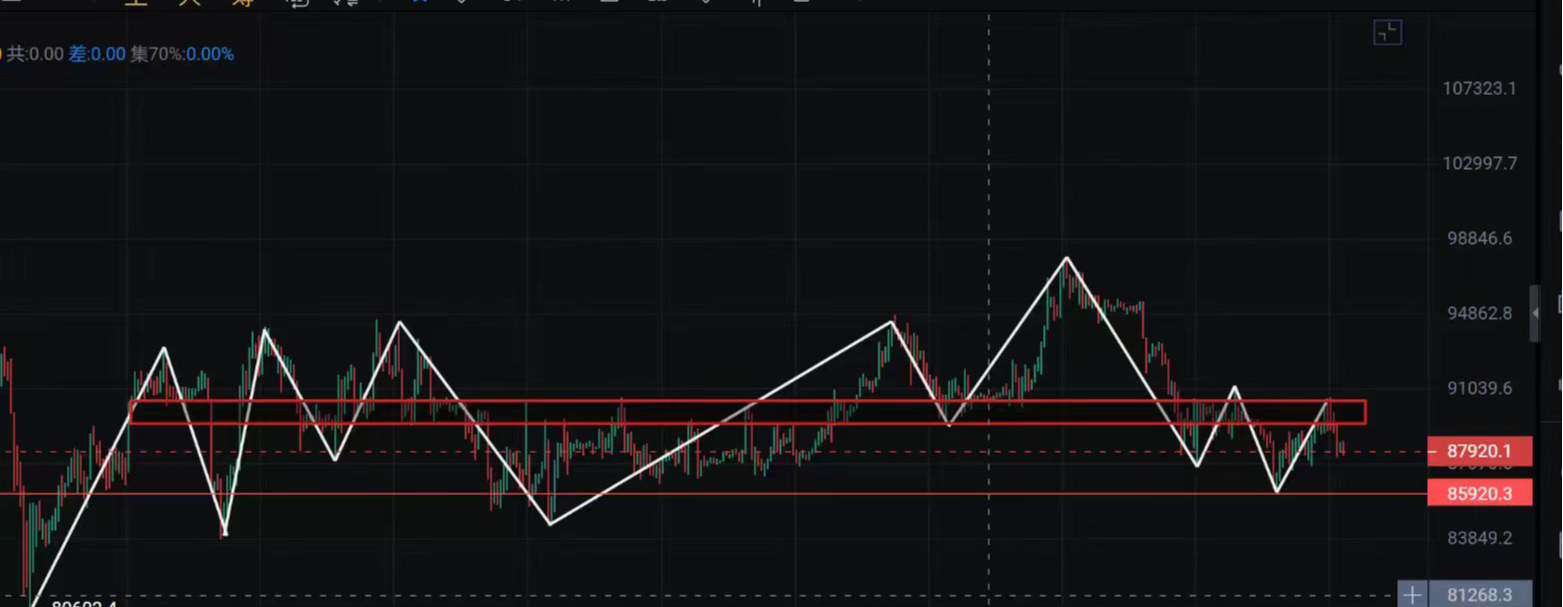
On January 29, 2026, OSL Group announced the completion of approximately $200 million (about 1.55–1.56 billion HKD) in equity financing, once again bringing this licensed cryptocurrency company based in Hong Kong into the spotlight. The management clearly stated that the funds will primarily be invested in strategic acquisitions, the global expansion of stablecoin trading and payment operations, as well as technological infrastructure and daily operations, attempting to shift OSL from a "locally licensed platform" to a new narrative of a "global compliant payment network." However, contrasting with the grand expansion blueprint, the immediate feedback from the secondary market on the day of the announcement was lukewarm, with trading sentiment leaning more towards cautious observation. This contrast of "cash on hand surging, yet stock price under short-term pressure" also indicates that OSL must navigate the reality of the capital market while telling the story of compliant payments and stablecoins.
$200 Million in Hand: What Future is OSL Betting On
● Breakdown of Fund Usage: According to the company announcement and public reports, approximately $200 million will be allocated to several directions, including strategic acquisitions to fill licensing, regional network, or technological gaps, expanding global trading and cross-border payment operations centered around dollar-denominated tokens, while also increasing investment in technology and infrastructure such as matching engines, custody security, and risk control systems, and providing flexibility for daily operations over the next 1 to 2 years. This "acquisition + self-built" hybrid approach aims to establish a complete pipeline for OSL that covers front-end trading, mid-platform settlement, and account systems.
● Management's Globalization Strategy: OSL CFO Ivan Wong emphasized in external statements that this financing will significantly enhance the company's financial strength, enabling it to "seize global growth opportunities." In an environment where compliance requirements are continuously rising and operational costs are increasing, having a thicker capital buffer means being able to counter-cyclically increase investments during market fluctuations, including bidding for compliant licenses in Europe, the U.S., and some emerging markets in Asia, or acquiring local licensed platforms in price dips. The management hopes that this round of "capital infusion" will pave the way for globalization in the coming years, rather than merely remaining a regional broker and custodian.
● Path to Seizing Compliance Heights: The subtext of OSL's current financing is to secure a position in the licensed trading + compliant payment arena. The company possesses licensed trading and custody qualifications in Hong Kong and, against the backdrop of tightening regulations and strict scrutiny of cross-border flows, aims to amplify its relative advantages of "licenses + risk control," catering to institutional funds and large merchants that wish to use dollar-denominated tokens for compliant settlements. The $200 million is not merely to fill the balance sheet but is a bet on a longer-term positioning—becoming a regulatory-recognized infrastructure provider in a future layered cryptocurrency financial system.
A Day of Stock Price Pressure: Why Financing Benefits Turned Cold
● Immediate Market Sentiment Reaction: From the market feedback on the day of the announcement, OSL's stock price did not follow the typical script of "financing benefits = stock price surge," but instead exhibited a cautious and restrained trading state. Some funds chose to wait and see, with transactions primarily driven by short-term speculative trading, while the secondary market seemed more focused on "short-term dilution and profit pressure" rather than the long-term vision painted by management. This price performance itself is a straightforward vote on market sentiment.
● Real Considerations of Dilution and Profit Pressure: While equity financing enhances capital strength, it almost inevitably triggers concerns about share dilution. For companies already facing valuation discounts in the highly volatile cryptocurrency sector, new stock issuance means that earnings per share will be temporarily lowered, and the market needs to see clear expectations of a profit turnaround before it is willing to raise valuation multiples again. Additionally, the narrative surrounding dollar-denominated tokens and payment networks has been repeatedly told in both primary and secondary markets over the past two years, leading some investors to feel fatigued with this narrative and remain skeptical about whether "another round of expansion" can quickly deliver results.
● Contrast Between Fundamental Infusion and Stock Price Adjustment: From the perspective of the company's financial structure, the $200 million is undoubtedly a solid "fundamental infusion," alleviating the constraints of insufficient capital and limited expansion; however, from the short-term stock price performance, the market chose to adjust its positions when the news landed, creating a phenomenon of "coexistence of fundamental repair and price adjustment," which lays the groundwork for the subsequent long-term and short-term capital game. In other words, while management has secured the chips to tell a bigger story, it first needs to digest the capital market's soul-searching question of whether this money is "worth it."
From Trading Platform to Payment Pipeline: The Next Step in Compliance Ambitions
● Extension of Hong Kong Licensed Foundation: OSL initially established itself with licensed trading and custody services, primarily serving institutional and high-net-worth clients, accumulating experience and a technology stack in anti-money laundering, asset custody security, and compliance review. It is this infrastructure, honed under high regulatory thresholds, that provides a natural springboard for extending into payment and settlement—transitioning from facilitating asset transactions to providing the capability for cross-border trade and corporate fund flows settled in dollar-denominated tokens.
● Scarcity Premium of Compliance Licenses: In the context of increasingly stringent global regulations and frequent actions against unlicensed platforms in certain jurisdictions, licenses + compliance operating records are becoming a "passport" for institutions and large merchants. For companies that wish to maintain stability in financial reporting and auditing, collaborating with platforms that have regulatory backing to use dollar-denominated tokens for settlements is significantly less risky than relying on service providers operating in gray areas. OSL aims to use this round of financing to enhance technology and risk control, strengthening the brand perception of "not only safe but also regulatory recognized" to attract clients who prioritize compliance attributes.
● Reimagining the Exchange Model: Traditional cryptocurrency platforms often drive growth around "matching trades + proprietary liquidity," exhibiting strong cyclical characteristics. However, the new story OSL wants to tell is to integrate trading, payments, and licenses into a package of "compliant financial infrastructure": providing entry for token buying and selling at the front end, building clearing and settlement systems in the mid-end, and protecting the moat with a matrix of licenses and regulatory connection capabilities at the back end. In this model, trading revenue is merely an entry point; the real amplified imagination lies in payment pipeline fees, settlement service fees, and compliance technology output, which is also the starting logic for management's willingness to spend money on global expansion.
Is the Dollar No Longer a Reliable Hedge? Repricing of the Track Amid Macro Headwinds
● Wall Street's Latest Evaluation of Bitcoin: According to JPMorgan strategists, Bitcoin has failed to effectively hedge against the weakening dollar in the recent round of macro volatility, while gold and some emerging market assets are seen as more direct beneficiaries. This judgment reflects a re-examination by institutions of Bitcoin's safe-haven attributes: in an environment where geopolitical risks and monetary policy battles are intensifying, Bitcoin's price performance resembles that of a high-volatility risk asset rather than a stable value anchor.
● Correlation Repricing Behind the 13% Decline: Research briefs indicate that during the same period, Bitcoin's price fell by about 13%, without exhibiting the previously observed "weak dollar, strong coin price" correlation. For macro traders, this means that the simple logic of "cryptocurrency assets = dollar hedging tools" is being dismantled, with asset pricing increasingly returning to liquidity, risk appetite, and regulatory expectations themselves. For infrastructure players like OSL, this correlation repricing is both a risk—because sentiment fluctuations will transmit to trading volume and valuations—and an opportunity—because the market begins to seek assets and services that are less related to macro hedging and more inclined towards practical and compliance attributes.
● Infrastructure Opportunities After the Cooling of the Safe-Haven Narrative: In the context of the marginal cooling of the Bitcoin safe-haven story, the truly high-frequency use cases lie in cross-border settlements, merchant acquiring, and institutional fund transfers involving USD tokens and their supporting infrastructure. The value of such businesses does not lie in providing hedges for macro positions but in replacing parts of traditional clearing networks, enhancing fund operation efficiency, and reducing costs. OSL is betting that when the market no longer focuses all its attention on the price curve, those quietly operating, compliant, and stable payment pipelines may gain more sustained valuation premiums—provided it can stand firm on both regulatory and technological fronts.
Who Will Stand by OSL: Long-Term Money and Real Risks
● Portrait of Potential Supporters: CFO Ivan Wong mentioned that this financing has received "recognition from long-term investors," implying that the subscribers are more focused on the long-term cash flow of licenses and infrastructure assets rather than short-term stock price elasticity. In terms of funding attributes, potential supporters are likely to include institutional funds that prioritize compliance, family offices looking to increase allocations to "regulated cryptocurrency infrastructure," and industrial capital with a deep understanding of licensing barriers and payment networks. Such funds typically tolerate short-term volatility but are extremely sensitive to execution capability and compliance risks.
● Amplifying Effect of Regulatory Attitudes: OSL is following a path that heavily relies on the regulatory environment. If major jurisdictions become marginally friendly regarding license issuance, mutual recognition of payment licenses, and compliance standards for cross-border settlements, the valuation of licensed platforms and clearing infrastructure may undergo a repricing—from "high-risk cryptocurrency targets" to "financial technology infrastructure." Conversely, if regulations frequently waver or impose stricter limits on dollar-denominated token payments, OSL's business model may need constant adjustments, and the path paved by financing may be compressed.
● Survival Boundaries Under Pressure from Giants: A more realistic challenge is that, globally, competitors around dollar-denominated tokens and payment networks include not only local compliant platforms but also large financial institutions and technology companies. Once these giants secure key licenses in major markets and leverage their own customer bases and ecosystem to drive network effects, whether small and medium-sized platforms can establish sufficiently strong defensive barriers in local markets will become a matter of life and death. OSL must find its own "narrow door" in serving specific institutional client groups, deepening its presence in specific jurisdictions, or providing differentiated compliance technology solutions; otherwise, the $200 million may merely serve as transit funds for others.
Short Pain and Long Dream: Is This Money Worth It for OSL?
In conclusion, this round of approximately $200 million in equity financing has clearly improved OSL's capital structure, providing ammunition for strategic acquisitions, globalization, and technological investments, and laying the foundation for the company's narrative shift from "exchange" to "provider of compliant payment and settlement infrastructure." However, for existing shareholders, the reality of share dilution and short-term profit pressure also exists, and the stock price pressure reflected on the day of the announcement indicates the market's sensitivity to the short-term cost of this money. Short-term pain is almost inevitable, but whether it is "worth it" will depend on whether management can use this funding to acquire sufficiently solid, cycle-resistant assets and businesses.
The time dimension for judging the success or failure of this financing may lie in the next 2 to 3 years: if OSL can transform capital into payment and settlement infrastructure centered around dollar-denominated tokens during this window, forming visible revenue scales, stable institutional client stickiness, and regulatory-validated compliance moats, then today's stock price fluctuations will be just a noise; conversely, if expansion is scattered and project returns do not meet expectations, this round of financing will be viewed by the market as yet another "storytelling" experiment. From a longer-term perspective, if the macro environment continues to weaken Bitcoin's safe-haven halo, truly compliant, regulatory-backed payment networks and settlement pipelines capable of handling large-scale fund flows may have the opportunity for a new round of valuation reassessment, and what OSL is doing now is using $200 million to buy itself a ticket to this reassessment game.
Join our community to discuss and grow stronger together!
Official Telegram community: https://t.me/aicoincn
AiCoin Chinese Twitter: https://x.com/AiCoinzh
OKX Benefits Group: https://aicoin.com/link/chat?cid=l61eM4owQ
Binance Benefits Group: https://aicoin.com/link/chat?cid=ynr7d1P6Z
免责声明:本文章仅代表作者个人观点,不代表本平台的立场和观点。本文章仅供信息分享,不构成对任何人的任何投资建议。用户与作者之间的任何争议,与本平台无关。如网页中刊载的文章或图片涉及侵权,请提供相关的权利证明和身份证明发送邮件到support@aicoin.com,本平台相关工作人员将会进行核查。