Author: Nikka, WolfDAO
I. Bank License: The Precise Calculation of Permanent Franchise Rights
The Trump family chose to apply for a national trust bank license instead of issuing a Meme coin or endorsing an NFT project, a choice rooted in profound power logic. Meme coins are a one-time monetization of attention, and stablecoin companies are merely ordinary commercial entities. However, a national trust bank is not a participant in the financial system; it is part of the financial system itself.
Once approved by the OCC, WLTC will have the right to directly access the national payment system, and most critically, a rare license to provide custody services for institutional clients involving crypto assets. Custody services are a necessity for traditional financial institutions entering the crypto world, but the OCC has only approved a few pure crypto banks like Anchorage Digital so far. This is a highly scarce market with strong demand and extremely high regulatory barriers.
The deeper value lies in the permanence and transferability of the license. Political influence may fade with a departure from power, but a federal bank license is a permanent institutional asset—it can be transferred, used as collateral for financing, and can continuously generate rental income. The Trump family's application is not for a project but for a financial franchise that can be inherited.
The timing is equally precise. The partial passage of the 2025 GENIUS Act and CLARITY Act provides a legal basis for stablecoins and custody services. This legislation carries a strong political background—tens of millions to over a hundred million dollars in donations from the crypto industry to the Trump camp in exchange for a regulatory-friendly environment. However, legislation merely opens the door; the real competition lies in who can pass through it the fastest. Although Circle and Ripple are stronger, they lack what WLFI possesses: a direct channel of political influence.
In this framework, the role of USD1 becomes clear—it is not the goal but a tool for obtaining the license. The $3.3 billion market cap is built up through Binance's 20% annualized yield and WLFI treasury subsidies; the existence of USD1 only needs to prove that WLFI has operational experience and cooperative channels, with surface data sufficient to meet the "business viability" requirements. Once the license is obtained, whether USD1 continues to exist is no longer critical—WLTC can provide custody for any stablecoin, collecting "toll fees" throughout the crypto financial system.
II. The Perfect Closed Loop of Rent-Seeking Power
To understand the essence of WLFI, one must return to the political donation wave of 2025. The crypto industry injected tens of millions to over a hundred million dollars into the Trump camp: $20 million from the parent company of Crypto.com, millions from Gemini, Blockchain, and founders of a16z. These donations resulted in a favorable policy environment for all crypto enterprises—a typical public good.
However, the Trump family not only enjoys this public good but also gains private benefits through WLFI: a 75% profit share, having already profited billions of dollars. This creates a perfect closed loop of interests: using industry money to purchase policy bias, using policy bias to support their own enterprises, and using enterprise profits to continue influencing policy. Traditional political donations at least have a layer of separation between donors and beneficiaries, but the WLFI model is "industry donations → family profits," where policymakers are also direct beneficiaries.
More subtly, this model is entirely legal in form. The Trump family profits by operating a "market-oriented" enterprise—there are products, business, and customers. But in reality, the core competitiveness of this enterprise is not technology or products, but political relationships and regulatory access privileges.
The discretion of the OCC is precisely where the space for rent-seeking power lies. The bank license application is not a binary decision of approval/rejection but a complex process containing countless discretionary points. What kind of capital structure is "adequate"? What kind of management experience is "qualified"? Each discretionary point provides room for political influence to exert itself. WLFI does not need the OCC to violate rules; it only needs to make "friendly" judgments at countless discretionary points—where the requirements are slightly relaxed, and where the standards are interpreted flexibly. Each individual judgment may seem reasonable, but cumulatively, they can create significant differences.
III. The Restructuring of Competition in the Crypto Industry
WLFI's bank application is essentially competing for a vast market with scarce participants—institutional-level crypto custody services. Currently, the global institutional demand for crypto asset custody is conservatively estimated to exceed $100 billion, but the number of institutions with compliant custody qualifications is very few. The OCC has only approved a handful like Anchorage Digital, while Coinbase, Gemini, and others provide custody services but do not have federal bank status.
If WLTC is approved, the most direct impact will be the reallocation of this blue ocean market's pie. Traditional financial institutions—pension funds, sovereign wealth funds, family offices—when seeking crypto asset allocation, prioritize custody security and compliance over yield. A custody institution with a federal bank license, directly regulated by the OCC, is extremely attractive to these institutional clients. This means that companies like Circle and Coinbase, which are already waiting for licenses, may watch helplessly as WLFI successfully cuts in line due to its political advantage, seizing the first-mover advantage.
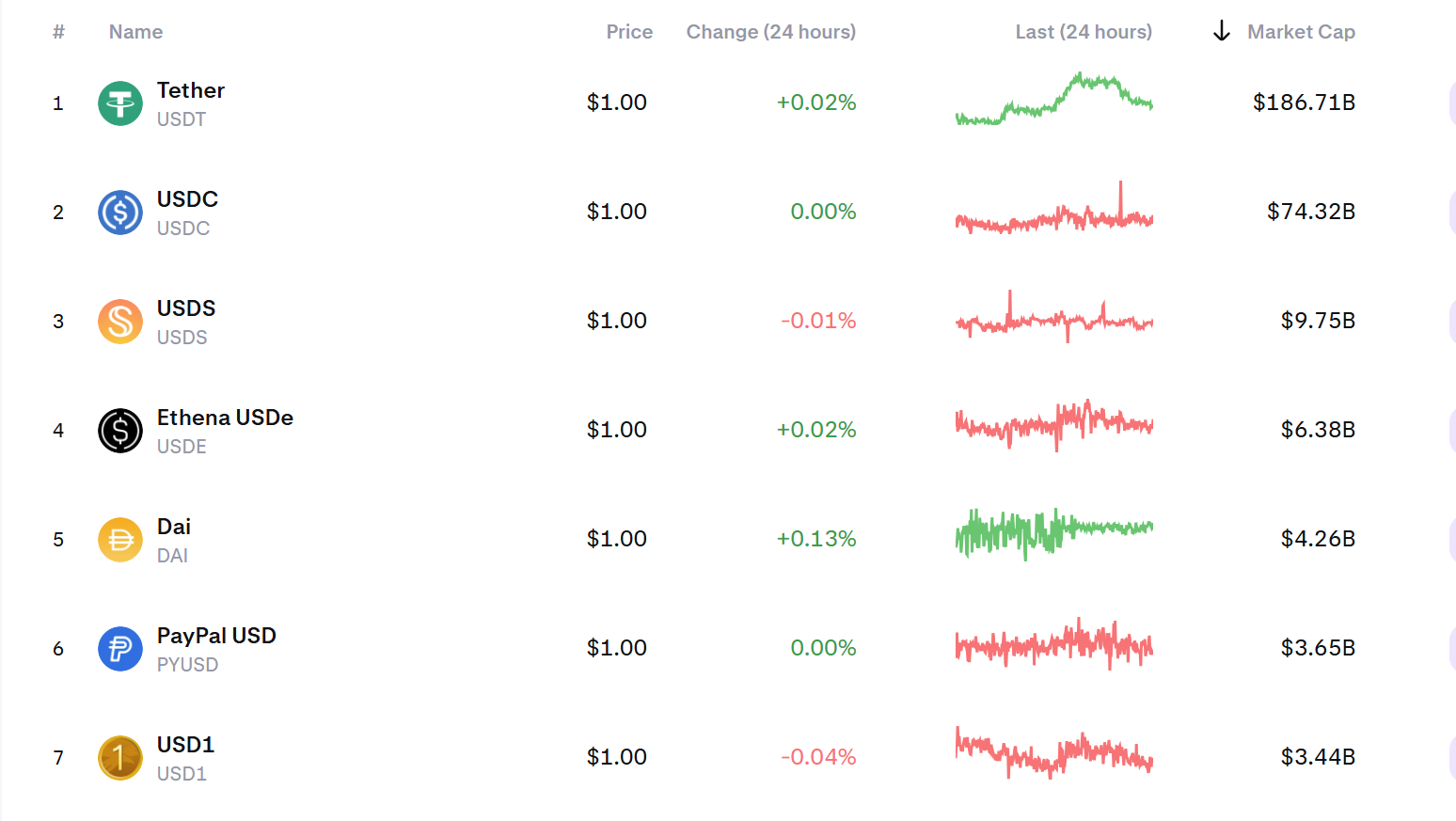
From the perspective of the stablecoin competitive landscape, the approval of WLTC will break the duopoly of USDT and USDC. Although USD1 currently has a market cap of only $3.3 billion, the institutional dividends brought by the bank license may allow it to expand rapidly in the institutional market. The key is that WLTC can provide "one-stop services"—issuing, custody, and exchange all internalized, no longer relying on third parties. For institutional clients, this means less counterparty risk, simplified compliance processes, and lower operational costs. Tether and Circle must provide similar services through multiple partner banks and custodians, while WLTC, as a federal bank, can complete this independently, creating a structural efficiency advantage.
The most pragmatic observation is that WLFI is opening a new business path: not through technological innovation or market competition, but by establishing competitive barriers through political resources and regulatory loopholes. The success of this path will attract more capital and entrepreneurs to imitate, forming a new business ecosystem centered on licenses and protected by political relationships. In this ecosystem, the rule-makers and the biggest beneficiaries may be the same group of people, while true market competition gives way to power distribution and interest exchange.
Conclusion
The most profound insight from this case is not about cryptocurrency but about power itself. It reveals the extent to which the fusion of power and capital can achieve seamless integration in the digital age. The traditional revolving door between politics and business at least has a time lag, but the WLFI model is in real-time synchronization: formulating policies while operating businesses, pushing regulations while applying for licenses. This increase in efficiency also multiplies the risk of corruption.
免责声明:本文章仅代表作者个人观点,不代表本平台的立场和观点。本文章仅供信息分享,不构成对任何人的任何投资建议。用户与作者之间的任何争议,与本平台无关。如网页中刊载的文章或图片涉及侵权,请提供相关的权利证明和身份证明发送邮件到support@aicoin.com,本平台相关工作人员将会进行核查。


