Original Author: Lawyer Zhang Qianwen
Introduction
"As long as the code is sufficiently decentralized, there is no legal entity, and regulation has no way to intervene." — This was once a refuge for many on-chain lending entrepreneurs. They attempted to establish an "algorithmic bank" without a CEO or headquarters.
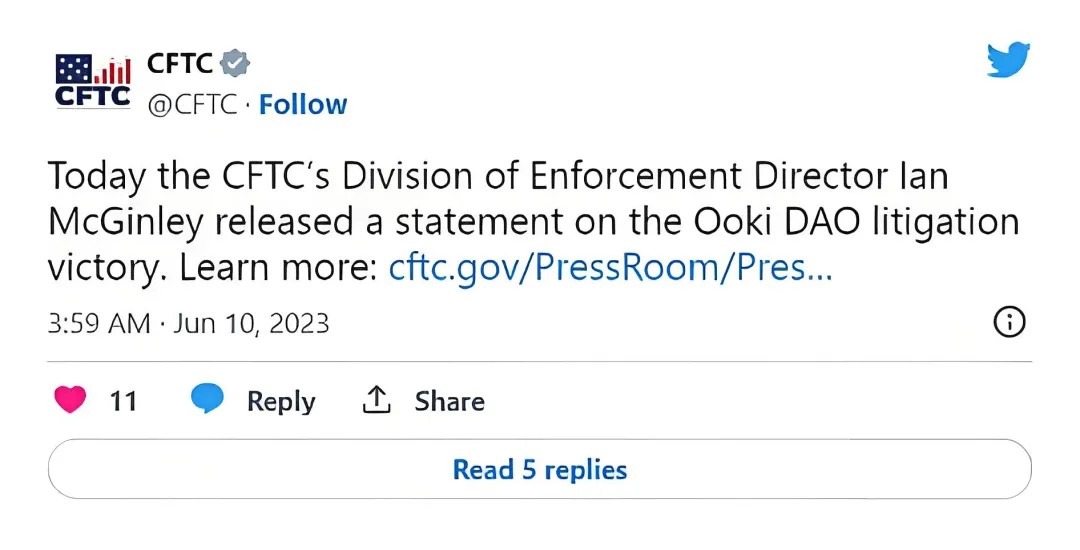
However, with the penalties imposed in the U.S. Ooki DAO case, this layer of "de-subjectification" is being pierced by regulatory agencies. Under the stricter logic of "penetrative regulation," how far can on-chain lending really go?
On-Chain Lending: The Autonomous Bank of Web3
On-chain lending can be understood as an automated lending machine that operates without human intervention, with main functions including:
- Automated liquidity pool: Lenders deposit money into a public pool managed by code, immediately starting to earn interest.
- Over-collateralization: Borrowers must pledge assets exceeding the loan amount to control risk.
- Algorithmic fixed interest rates: Interest rates are automatically adjusted by algorithms based on supply and demand, fully market-driven.
This model eliminates the intermediary role of traditional banks, achieving a 24/7 uninterrupted global automated lending market, requiring no manual review, all executed automatically by code, greatly enhancing the efficiency of capital use, releasing asset liquidity, and providing a native source of leverage for the crypto market.
The Ideal is Attractive: Why Do Entrepreneurs Pursue "De-Subjectification"?
In traditional finance, banks and lending platforms have clear corporate entities, making it easy to know whom to approach when issues arise. However, on-chain lending is designed to erase "who," pursuing not simple anonymity, but a system architecture primarily reflected in two aspects:
1. The counterpart is code, not people
You no longer sign contracts with any company or individual, but interact directly with a public, automatically executing smart contract. All lending rules, such as interest rates and collateral ratios, are hard-coded. Your trading counterpart is this piece of software.
2. Decision-making relies on the community, not management
The protocol has no board of directors or CEO. Major upgrades or parameter adjustments are decided by governance token holders distributed globally through voting. Power is decentralized, and thus responsibility becomes blurred.
For entrepreneurs, choosing "de-subjectification" is not only idealistic but also a realistic survival strategy, with the core purpose being defense:
- Defense against regulation: Traditional lending requires expensive financial licenses and compliance with strict rules. Positioning themselves as "technology developers" rather than "financial institutions" aims to bypass these thresholds.
- Defense against liability: When incidents like hacking occur and cause user losses, the team can claim "the code is open source, the protocol is non-custodial," attempting to avoid liability like traditional platforms.
- Defense against jurisdiction: Without a physical entity and with servers distributed globally, it becomes difficult for any single country to easily shut it down. This "unshuttable" characteristic is the ultimate defense against geopolitical risks.
Reality is Harsh: Why "Code is Innocent" Doesn't Work?
1. Regulatory Risks
Regulatory agencies' vigilance towards on-chain lending stems from three core risks that cannot be ignored:
1. Shadow Banking:
On-chain lending essentially creates credit but operates completely outside the central bank and financial regulatory system, representing typical shadow banking activities. Once a large-scale price drop occurs, triggering a chain liquidation, it can cause systemic risks that impact the entire financial system.
2. Illegal Securities:
Users deposit assets into liquidity pools to earn interest, which, in the eyes of regulators like the U.S. SEC, resembles the public offering of an unregistered "security." As long as there is a promise of returns, regardless of how decentralized the technology is, it may violate securities laws.
3. Money Laundering Risks:
The liquidity pool model is easily exploited by hackers: they deposit stolen "ill-gotten gains" as collateral, then borrow clean stablecoins, severing the traceability of funds and easily completing money laundering, posing a direct threat to financial security.
Regulatory Principle: Substance Over Form
- Functional Regulation: They do not care whether you are a company or code; they only care whether you are essentially engaging in banking activities of accepting deposits and lending. As long as you are conducting financial business, you must accept financial regulation.
- Penetrative Enforcement: If there is no clear legal entity to hold accountable, they will directly trace back to the developers and core governance token holders behind it. The Ooki DAO case is a precedent, where members participating in governance voting were also held accountable.
In simple terms, "de-subjectification" only makes the system appear to be "driverless," but as long as it poses a risk to financial security or harms investors, the regulatory "traffic police" will issue a ticket and find a way to identify the "owner" hiding behind the scenes.
2. Cognitive Misunderstandings
Many entrepreneurs attempt to evade regulation in the following ways, but these defenses have proven to be very fragile. The following four points are common cognitive misunderstandings:
- Misunderstanding 1: DAO governance can exempt liability: Decisions are made by community votes, and the law does not punish the crowd.
In the Ooki DAO case, token holders participating in voting were also deemed managers and penalized. If the DAO is unregistered, it may be viewed as a "general partnership," where each member bears unlimited joint liability.
- Misunderstanding 2: Just writing code without operation: I only developed the open-source smart contract; the front end was deployed by others.
Although EtherDelta is a decentralized trading protocol, the SEC still held founder Zachary Coburn responsible for writing and deploying the smart contract and profiting from it, thus bearing the responsibility of an unregistered exchange.
- Misunderstanding 3: Anonymity makes it untraceable: The team's identity is hidden, and server IPs are concealed, making it impossible to track.
Absolute anonymity is almost a false proposition! Funds being liquidated at centralized exchanges, submission records in code repositories, and social media information can all expose identities.
- Misunderstanding 4: Offshore structures are unregulated: The company is in Seychelles, and the servers are in the cloud, so the U.S. SEC has no jurisdiction.
The U.S. "long-arm jurisdiction" is very strong. As long as a U.S. user accesses it or the transaction involves a U.S. dollar stablecoin, U.S. regulators may assert jurisdiction. BitMEX was heavily fined for this, and its founders were sentenced.
Entrepreneurial Dilemma: The Real Challenges of Complete "De-Subjectification"
When entrepreneurs choose complete "de-subjectification" to evade regulation, they face numerous obstacles:
1. Inability to Contract, Difficulties in Cooperation
Code cannot act as a legal entity to sign contracts. When it is necessary to lease servers, hire auditing firms, or collaborate with market makers, no one can sign on behalf of the protocol. If signed by individual developers, they will bear personal responsibility; if not signed, it becomes impossible to establish cooperation with legitimate large institutions.
2. Inability to Protect Rights, Code is Easily Copied
Web3 advocates for open source, but this means competitors can legally replicate your code, interface, and even brand with only slight modifications (i.e., "forking"). Without a legal entity, it is difficult to protect your intellectual property through lawsuits or other means.
3. No Bank Accounts, Financing and Payroll Blocked
DAOs lack bank accounts, making it impossible to directly receive fiat investments or pay salaries and social security for employees. This not only greatly limits talent recruitment but also hinders the entry of traditional large investment institutions' funds.
4. Slow Decision-Making, Missing Crisis Response Opportunities
Completely delegating decision-making to the DAO community means that any important decision must undergo a lengthy proposal, discussion, and voting process. When facing hacking attacks or severe market fluctuations, this "democratic process" may cause the project to miss the best response opportunities, making it inefficient compared to centralized competitors.
Compliance Path: How Entrepreneurs Can "Rebuild Subjectivity"
Facing reality, top projects no longer pursue absolute de-subjectification but instead shift towards a pragmatic "Code + Law" model, with the core being to establish a compliant "shell" for the protocol.
Currently, there are three mainstream compliance structures:
1. A Dual-Layer Structure with Development and Governance Separation:
- Operating Company: Register a regular software company in Singapore or Hong Kong, responsible for front-end development, recruitment, and marketing. It claims to be a "technology service provider" and does not directly engage in financial business.
- Foundation: Establish a non-profit foundation in the Cayman Islands or Switzerland, responsible for managing the token treasury and community voting. It serves as the legal embodiment of the protocol, bearing ultimate responsibility.
2. DAO Limited Liability Company:
Directly utilize the laws of Wyoming or the Marshall Islands in the U.S. to register the DAO itself as a new type of limited liability company. This way, members' liabilities are limited to their contributions, avoiding the risk of unlimited liability.
3. Compliant Front-End and Licensed DeFi:
Although the underlying protocol cannot prevent anyone from using it, the project's official website can screen users:
- Geographic Blocking: Prohibit access from IPs in sanctioned or high-risk areas.
- Address Screening: Use professional tools to block known hacker and money laundering addresses.
- Establish KYC Liquidity Pools: Collaborate with institutions to provide services for lending pools specifically for professional users who have completed identity verification.
Conclusion: From "Code Utopia" to "Compliance New Infrastructure"
The next explosion point for on-chain lending is undoubtedly RWA, bringing real-world assets (such as government bonds and real estate) onto the chain. To attract trillions of traditional funds, a clear legal entity and compliance structure are essential.
Compliance is not a betrayal of the original intention but a necessary path for Web3 projects to move towards the mainstream. The future of on-chain lending will not be a binary choice between "decentralization or compliance," but a dual-track integration of "code autonomy + legal entity."
免责声明:本文章仅代表作者个人观点,不代表本平台的立场和观点。本文章仅供信息分享,不构成对任何人的任何投资建议。用户与作者之间的任何争议,与本平台无关。如网页中刊载的文章或图片涉及侵权,请提供相关的权利证明和身份证明发送邮件到support@aicoin.com,本平台相关工作人员将会进行核查。


