On the scale of virtual currency governance, one end represents financial security, while the other represents market innovation, with both regions attempting to find different balance points.
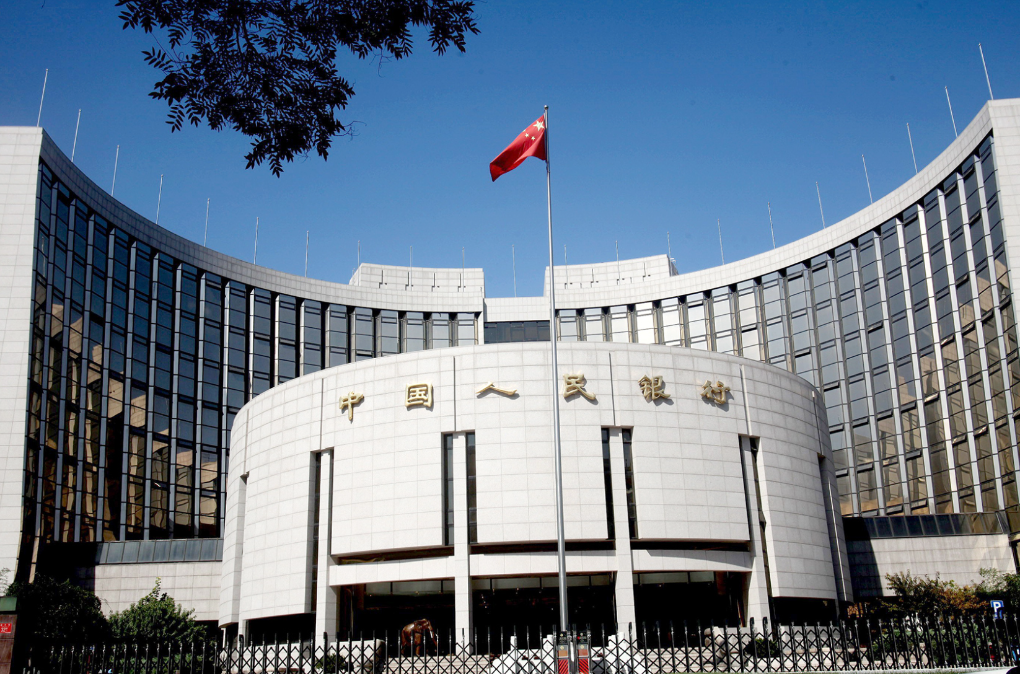
On November 28, 2025, the People's Bank of China led a meeting of the "Coordination Mechanism for Combating Virtual Currency Trading Speculation," with participation from 13 departments including the Ministry of Public Security, the Central Cyberspace Affairs Commission, the Central Financial Office, the Supreme People's Court, and the Supreme People's Procuratorate.
The meeting clearly emphasized the "continued adherence to the prohibitive policy on virtual currencies" and for the first time provided a clear definition and risk warning regarding stablecoins in an official document.
At the same time, the Hong Kong Special Administrative Region government is actively promoting the "Hong Kong Digital Asset Development Policy Declaration 2.0," aiming to establish Hong Kong as a global innovation center in the digital asset field. This contrast highlights the differentiated paths of virtual currency governance between the mainland and Hong Kong.

1. Tightening of Virtual Currency Regulation in the Mainland
The inter-departmental meeting led by the People's Bank of China represents the highest level of collaborative action in the field of virtual currency regulation in recent years.
● The meeting not only reiterated the illegality of virtual currencies but also specifically pointed out that "stablecoins are a form of virtual currency," which currently cannot effectively meet requirements for customer identity verification, anti-money laundering, and other aspects, posing risks of being used for illegal activities such as money laundering, fundraising fraud, and illegal cross-border fund transfers.
● The joint action of thirteen departments demonstrates an unprecedented regulatory strength, showcasing the national determination to firmly curb virtual currency trading speculation.
This regulatory upgrade presents three characteristics:
Multi-departmental collaboration, focusing on key areas such as information flow and capital flow, forming a comprehensive monitoring network;
Precise definition of stablecoins to close regulatory loopholes;
Clear continuity of policies to dispel market fantasies about potential policy relaxation.
It is noteworthy that the meeting pointed out that "recently, speculation and trading of virtual currencies have seen a resurgence," with related illegal activities occurring from time to time, and risk prevention facing new situations and challenges. This explains the practical background and urgency of this regulatory upgrade.
2. Clear Definition and Regulatory Scope of Virtual Currencies
● Chinese regulatory agencies have already made a very clear legal characterization of virtual currencies, and this meeting is merely a reiteration of existing policies.
The meeting reaffirmed that virtual currencies do not have the same legal status as legal tender, do not have legal compensation, and should not and cannot be circulated as currency in the market; activities related to virtual currencies are considered illegal financial activities.
● It is worth noting that this meeting for the first time provided a clear definition of stablecoins, bringing them under the regulatory umbrella of virtual currencies.
Stablecoins, as a type of crypto asset attempting to peg to specific assets or currency pools, have rapidly developed globally in recent years. However, the central bank clearly stated that they currently "cannot effectively meet customer identity verification, anti-money laundering, and other requirements," which essentially denies the compliance development space for stablecoins in the mainland market.
● From the 2021 "Notice on Further Preventing and Dealing with Risks of Virtual Currency Trading Speculation" to this meeting, China's regulatory policies on virtual currencies have maintained high coherence, covering the entire chain of activities related to virtual currency exchange, trading, matching, and token issuance financing.
3. New Developments in Hong Kong's Digital Asset Regulation
● While the mainland is strengthening virtual currency regulation, Hong Kong is steadily moving towards establishing a comprehensive regulatory framework for digital assets.
● On June 26, 2025, the Hong Kong SAR government published the "Hong Kong Digital Asset Development Policy Declaration 2.0," proposing a vision to build a trustworthy and innovation-focused digital asset ecosystem.
The declaration introduced the "LEAP" framework, focusing on four major areas:
Optimizing laws and regulations, with the Securities and Futures Commission acting as the main regulatory body for digital asset trading and custody services;
Expanding the types of tokenized products, normalizing the issuance of tokenized government bonds;
Promoting application scenarios and cross-sector collaboration;
Talent and partner development.
● Hong Kong Securities and Futures Commission CEO Ashley Alder stated, "We are finalizing the regulatory framework for digital asset trading and custody services," describing it as "the last two pieces of the regulatory puzzle" to build a robust digital asset ecosystem.
● On November 3, 2025, the Hong Kong Securities and Futures Commission issued two important circulars, namely the "Circular on Expanding Virtual Asset Trading Platform Products and Services" and the "Circular on Virtual Asset Trading Platform Sharing Liquidity."
These policies allow licensed platforms to waive the "12-month track record" requirement when offering virtual assets to professional investors and permit platforms to integrate their overseas affiliated platforms' order books to form a shared liquidity pool.
4. The "Double City" Narrative of Virtual Currency Governance
The mainland and Hong Kong present distinctly different concepts and path choices in virtual currency governance.
● The core concern of mainland regulation is preventing financial risks, maintaining financial stability, and safeguarding the property security of the people. The central bank meeting clearly required all units to "make risk prevention and control the eternal theme of financial work." In contrast, Hong Kong, as an international financial center, focuses more on consolidating and enhancing its status as an international financial center and seizing opportunities for financial innovation.
● Hong Kong's Financial Secretary Paul Chan stated, "By combining prudent regulation with encouraging market innovation, we aim to build a more vibrant digital asset ecosystem that integrates with the real economy and social life, bringing benefits to the economy and society while consolidating Hong Kong's leading position as an international financial center."
The differences in regulatory paths between the two regions are rooted in different market positioning and risk considerations, specifically:
● Mainland: Focused on preventing the potential impact of virtual currencies on financial stability, monetary sovereignty, and capital controls, particularly the risks of being used for money laundering and illegal cross-border fund transfers.
● Hong Kong: As an international financial center, it pays more attention to aligning with international standards, encouraging financial innovation, and developing the digital asset market under the principle of "same business, same risk, same rules," while ensuring investor rights.
5. Market Impact and Future Trends
Different regulatory policies are having a profound impact on the market and providing clear guidance for investors and market participants.
● In the mainland, with the increase in regulatory intensity, activities related to virtual currencies will further shrink. Enterprises and investors need to fully recognize the illegality of activities related to virtual currencies and avoid participation. The central bank has clearly stated that it will continue to crack down on related illegal financial activities to protect the property security of the people.
● In Hong Kong, the gradual improvement of the regulatory framework provides clear guidance for the development of digital assets. The number of tokenized financial products in Hong Kong is increasing, such as tokenized green bonds, as well as money market funds and retail gold products recognized by the Securities and Futures Commission.
These products, varying in their degree of tokenization, have a combined market size of approximately $3 billion in Hong Kong.
● Industry insiders believe that Hong Kong's Policy Declaration 2.0 marks a new stage in the "ecological construction" of digital assets. By implementing the "LEAP" framework, Hong Kong has set a benchmark for "compliance innovation" in the digital asset field.
● In the future, the mainland is expected to continue to maintain a high-pressure regulatory stance on virtual currencies, particularly remaining highly vigilant towards emerging variants such as stablecoins.
● Meanwhile, Hong Kong may further expand the regulatory scope and application scenarios of digital assets based on the existing foundation, including exploring the application of central bank digital currency in virtual asset trading and gradually bringing more categories of digital assets (such as RWA, DeFi protocols, etc.) into the regulatory view.
6. Governance Wisdom Under Parallel Tracks
● The differentiated regulation of virtual currencies between the mainland and Hong Kong reflects a precise governance strategy tailored to different market environments within one country.
● The strict control in the mainland aims to prevent systemic financial risks, while Hong Kong's prudent openness focuses on consolidating its status as an international financial center and seizing opportunities for digital financial development.
● Although the two paths may seem to be in opposition, they are, in fact, rational choices based on their respective situations, collectively forming a multi-layered governance system for China in the digital asset field.
As technology continues to evolve and market environments change, how the next chapter of this "double city" narrative will be written remains to be seen. However, it is certain that the governance of virtual currencies will always seek a dynamic balance between risk prevention and innovation incentives.
Join our community to discuss and grow stronger together!
Official Telegram community: https://t.me/aicoincn
AiCoin Chinese Twitter: https://x.com/AiCoinzh
OKX benefits group: https://aicoin.com/link/chat?cid=l61eM4owQ
Binance benefits group: https://aicoin.com/link/chat?cid=ynr7d1P6Z
免责声明:本文章仅代表作者个人观点,不代表本平台的立场和观点。本文章仅供信息分享,不构成对任何人的任何投资建议。用户与作者之间的任何争议,与本平台无关。如网页中刊载的文章或图片涉及侵权,请提供相关的权利证明和身份证明发送邮件到support@aicoin.com,本平台相关工作人员将会进行核查。