Token issuance is like a gamble; while it can occasionally yield 10 times the return, this is merely an exception.
Author: Stacy Muur
Translated by: Deep Tide TechFlow

We are currently in a frenzy of token issuance and TGE (Token Generation Event), but not all issuances are worth participating in. So how do we determine whether a project is worth paying attention to? I will use @KintoXYZ as an example to share my analytical framework.
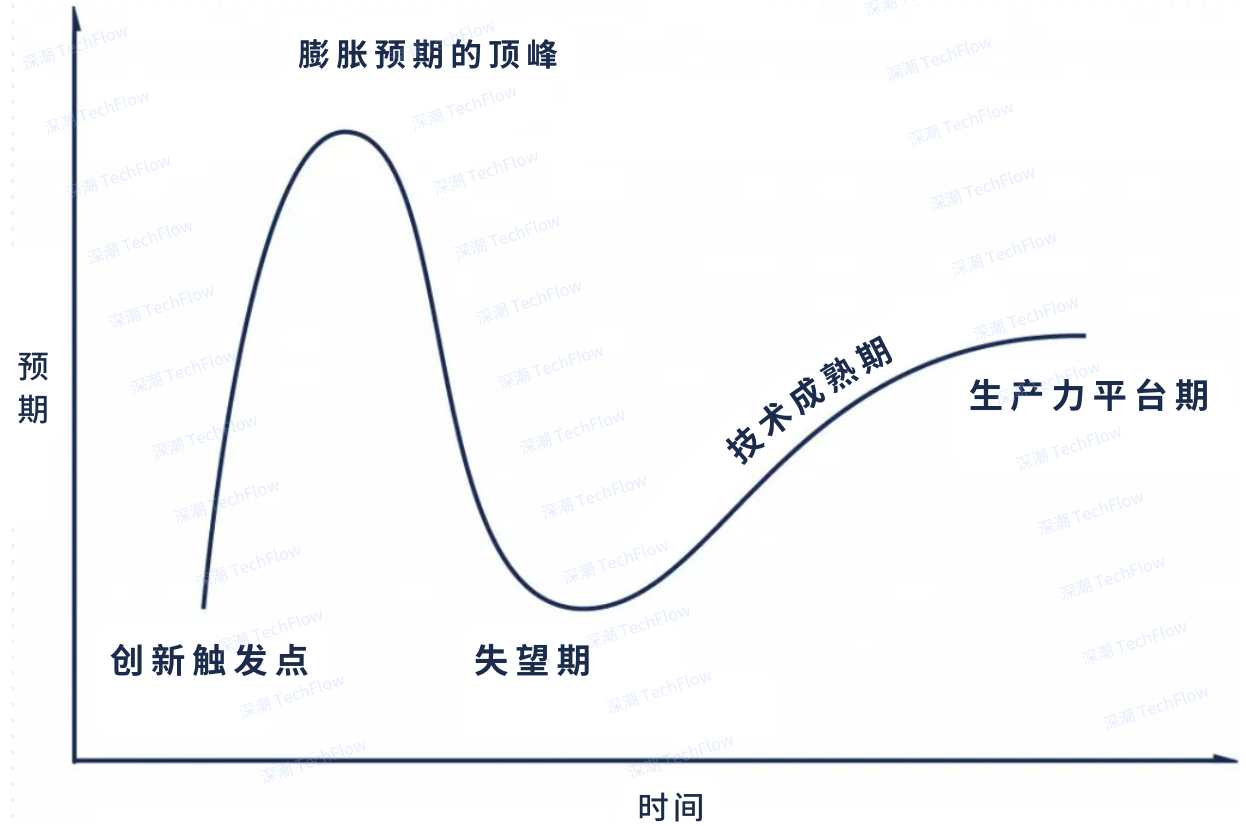
Looking back at history, token issuances in 2016 provided significant investment opportunities. By 2017, the ICO boom reached the peak of market expectations, similar to the explosive popularity of AI agents last December.
Today, token issuance feels more like a gamble. While it can occasionally yield 10 times the return, this is merely an exception. According to Cryptorank data, in January of this year, only 30% of token issuances achieved positive returns. Among this 30%, there are indeed some projects with hidden value.
So, how do you determine whether a token issuance is worth your attention? In this article, I will illustrate my analytical method using Kinto as an example.
Step 1: Analyze the Product
In simple terms, when analyzing a token issuance, you need to break down the protocol into several components and evaluate it from three dimensions: maturity, demand, and innovation.
For product analysis, I mainly focus on the following aspects:
Concept (Narrative)
Product Status
Data Metrics and Market Performance
Competitive Advantage
When analyzing the concept, you can refer to the Gartner Hype Cycle:
(Original image from Stacy Muur, compiled by Deep Tide TechFlow)
If the protocol is at the following stages:
Near Innovation Trigger: 5 points (e.g., this week's BNB meme)
Near Peak of Inflated Expectations: 0 points (e.g., new AI agents or AI agent launch platforms on new chains)
Near Trough of Disillusionment: 1 point (e.g., many current DePIN/GameFi protocols)
Near Slope of Enlightenment: 3 points (e.g., many RWA protocols are currently at this stage)
Near Plateau of Productivity: 1 point (e.g., most DeFi protocols are currently here)
Why do protocols in the disillusionment phase and plateau of productivity only score 1 point? Because when a concept enters the disillusionment phase, it is either forgotten or revived in a new form (e.g., ERC404). In the plateau of productivity phase, the concept tends to be neutral, contributing little to the protocol's dissemination.
Similarly, we score the following parameters (0–5 points):
Is the protocol already a leader in its category by TVL? 5 points.
Is it still in the testnet phase? 2 points.
Are there many competitors, with some clear and well-known leaders? 1 point.
You can ask more questions as needed, but make sure to record all questions and answers for later calculation of the average score.
Kinto Case Analysis
As mentioned earlier, I will use Kinto as an example to illustrate the process of analyzing a token issuance.
Here is a quick overview of the product to help you understand its core features.
Kinto is an institutional-grade modular exchange, positioned as an intermediary layer between traditional bank accounts and Web3 wallets, focusing on providing users with secure on-chain financial services.
Kinto is an institutional-grade modular exchange, situated between traditional bank accounts and Web3 wallets, dedicated to providing secure on-chain financial access.
In simple terms, Kinto connects traditional finance and the blockchain world, characterized by:
Implementing KYC, AML, and fraud monitoring at the blockchain level;
KYC is more private and secure than centralized exchanges (CEX) because no user data is stored, and users can freely choose their KYC provider;
Transactions can only be executed by verified participants, achieving Sybil protection;
Each user is equipped with a smart contract wallet driven by account abstraction, which users are almost unaware of;
Misubi Chain Abstraction Layer:
- Kinto is the first protocol to launch chain-abstracted swaps, chain-abstracted lending, and chain-abstracted perpetual contracts, implemented through @HyperliquidX;
As a 100% KYC Ethereum Layer 2 protocol with built-in insurance, Kinto significantly reduces regulatory and financial risks.
It is important to note that although Kinto implements KYC, it remains a decentralized, user-owned, and non-custodial protocol.
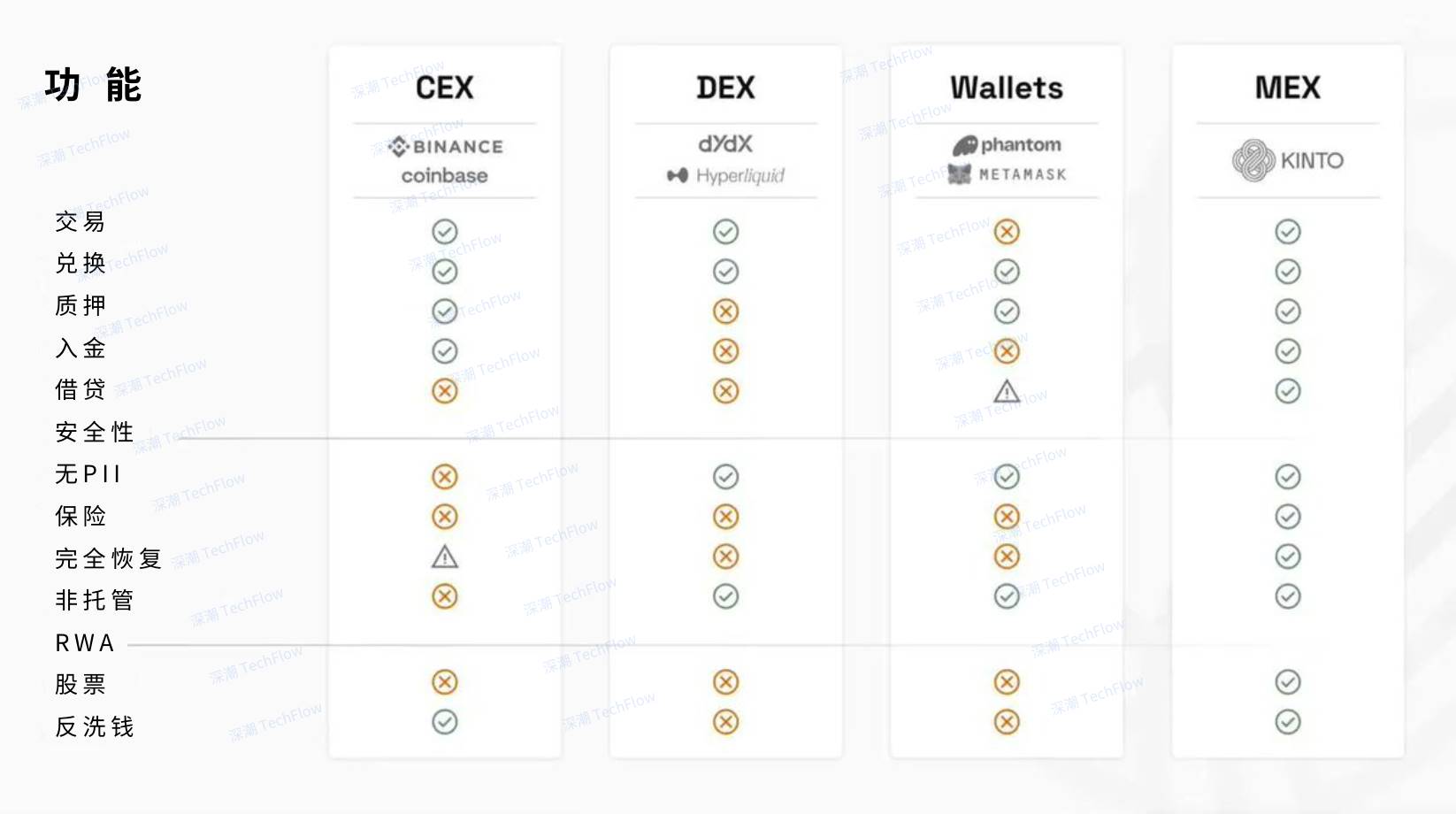
In simple terms, Kinto is a product that combines on-chain wallet and exchange functionalities, with built-in KYC, AML, and support for traditional financial assets.
You might think Kinto is a competitor to Hyperliquid, but that is not the case. Instead, Kinto provides users with direct access to Hyperliquid while supporting cross-chain lending on Aave and allowing users to swap assets on any AMM across chains like Ethereum, Arbitrum, Base, etc. Its positioning is to exist as an abstraction layer for DeFi.
For end users, Kinto functions like a wallet with centralized exchange (CEX) features, such as supporting fiat deposit channels. At the same time, it operates entirely on-chain, is decentralized, permissionless, and gas-free—all these features are currently live.
(Original image from Stacy Muur, compiled by Deep Tide TechFlow)
Now, let’s use the analytical framework to answer a few key questions:
What is Kinto's positioning?
Kinto is at the intersection of infrastructure and trading, with core concepts including "institutional-focused," "financial ecosystem," "chain abstraction," and "aggregator." This positioning does have a certain novelty; currently, apart from Kinto, I personally have not seen other products attempting to build a KYC-enabled DeFi chain. However, how will the demand for this solution compare to centralized competitors? Can it win in the competition with Particle's Universal Accounts (which are also rapidly developing) in the field of chain abstraction? These questions will take time to validate. Therefore, I would give Kinto a score of 3, which may increase in the future as activity levels rise.
What is Kinto's development stage?
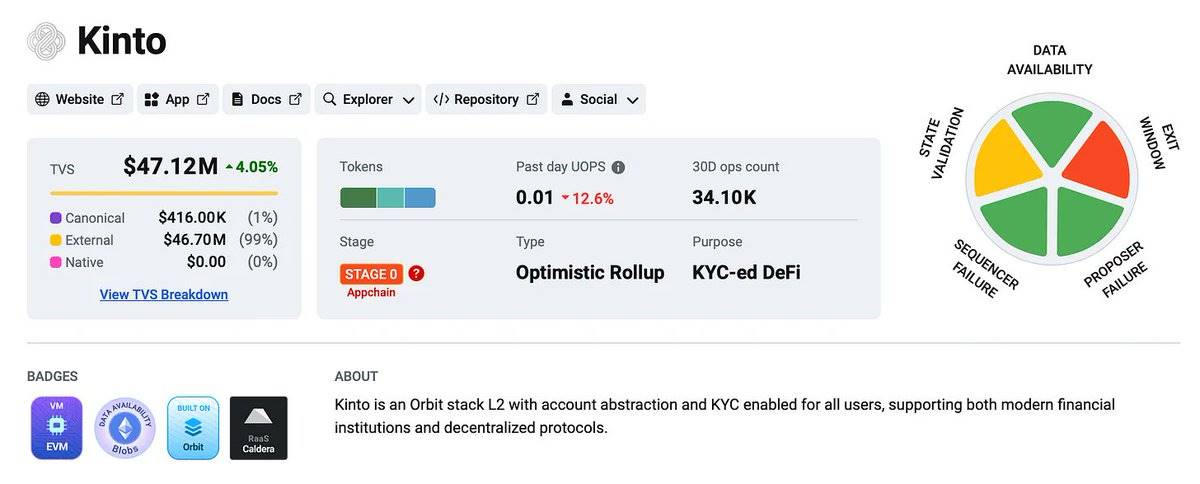
Kinto has been operational for a while since its mainnet launch in March 2024. According to L2Beat data, its TVS (Total Value Secured) is $47 million. However, its operational count in the last 30 days is not high, only 34K, with a total wallet count of 147K. In this regard, I would give Kinto a score of 4.
How does Kinto perform in trading functionalities?
In addition to traditional Web3 assets, Kinto also offers extensive support for popular traditional financial assets. This feature distinguishes it from centralized exchanges (CEX) and decentralized exchanges (DEX), with supported assets including Nvidia, Meta, Uber, and S&P 500. This diversity can attract specific types of users, so I give Kinto a high score of 5 in this category.
The more specific the questions asked, the more accurate the final product score will be. It is important to ensure that each question carries a similar weight; otherwise, the final score may lose precision.
In the case of Kinto, my final product score is 3.6.
Step 2: Evaluate Professional Capability
When evaluating professional capability, I consider all factors that may affect the product's success from the perspectives of human resources, technical strength, and business development (BD). Key areas to focus on include:
Team: Evaluate the past experience of team members, transparency, social media activity, and developer involvement.
Venture Capital (VC): Venture capital is not only an important way to raise funds but also a key to establishing connections with other projects and industry opinion leaders.
Funding Amount: Sufficient funding is crucial for team recruitment and product development.
Partners: A broad network of partners can significantly enhance user onboarding efficiency.
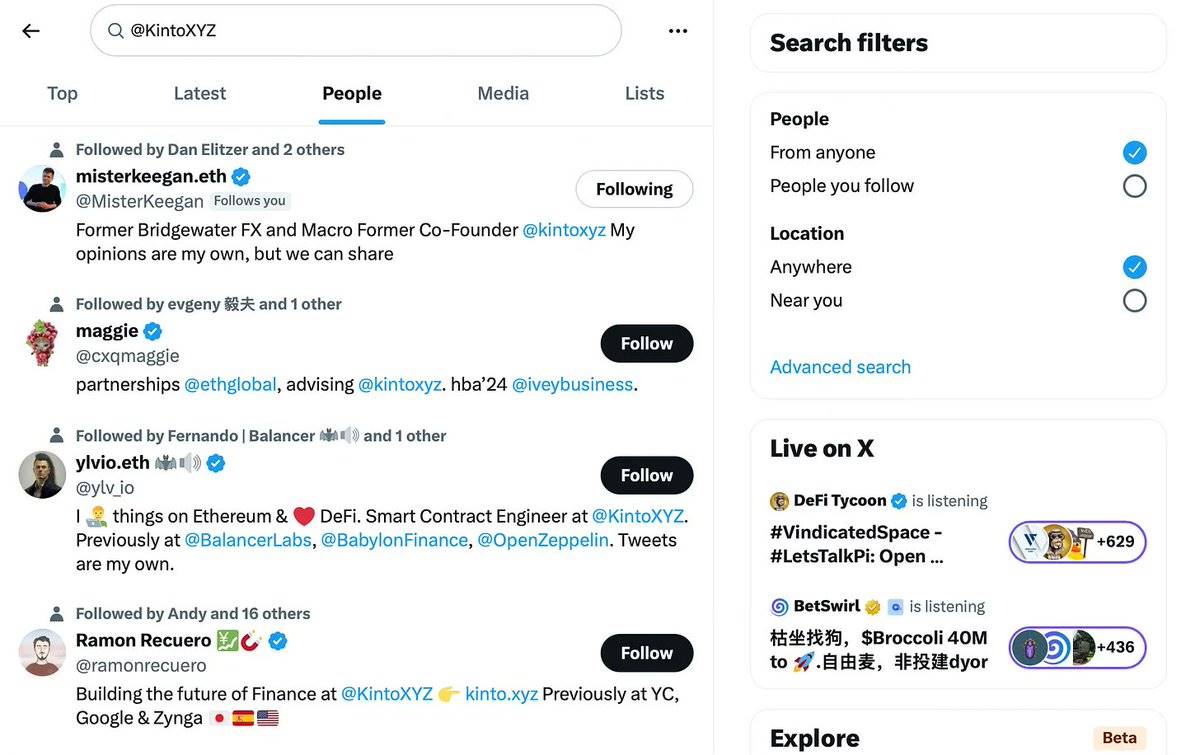
Using Kinto as an example, I want to illustrate several important evaluation points. Many people encounter difficulties when searching for team information, but the method is quite simple. Just search for the brand name on X (Twitter) and LinkedIn, and you can browse the profiles of team members to assess their professional capabilities.
When evaluating funding rounds, there are several key points to note:
Whether the lead venture capital firm (Lead VC) continues to participate in subsequent funding rounds (e.g., Kyber Capital) is a positive signal of investor confidence.
On the Cryptorank platform, venture capital firms are categorized into different levels based on their activity, and you can also check the performance of other portfolio projects of these investment firms for reference.
The more projects you analyze in this way, the higher your research efficiency will be, allowing you to quickly identify potential risks and opportunities.
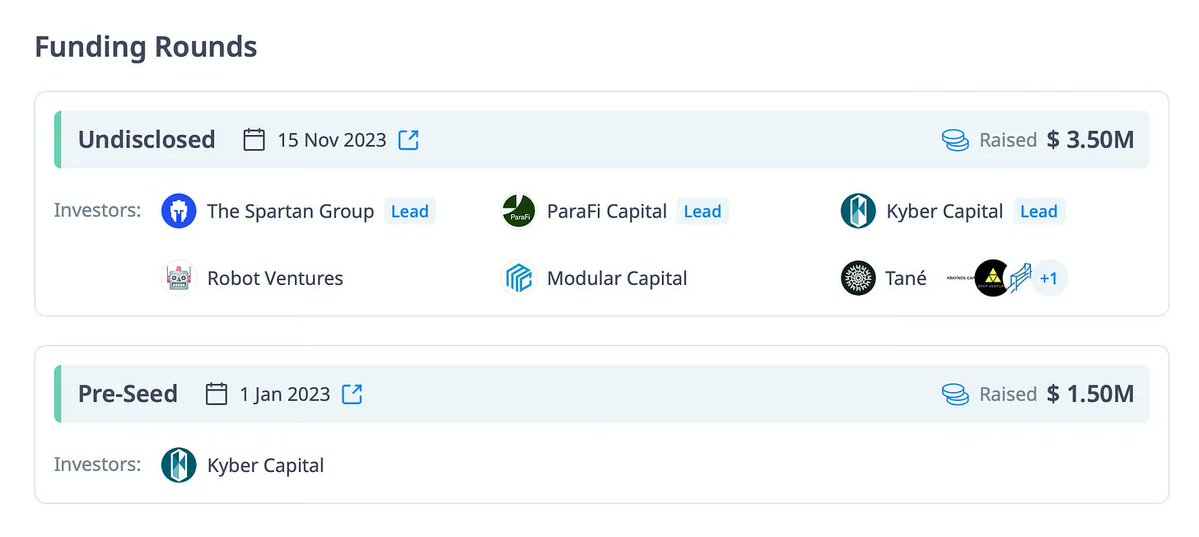
Among Kinto's partners, there are some noteworthy protocols, such as Caldera, Socket, and Arbitrum.
My scores for Kinto are as follows:
Team: 5 points
VC: 4 points
Funding: 4 points
Partners: 4 points
Average Score: 4.25
Step 3: Tokenomics
Tokenomics is one of the most challenging parts of analyzing a project, especially after experiencing many disappointing launches with low circulation and high fully diluted valuations (FDV).
In this section, we need to focus on the following aspects:
Is the FDV of the TGE (Token Generation Event) reasonable? (Previous analysis of the product and team is crucial for assessing FDV reasonableness).
The supply of circulating tokens.
The token distribution model.
The design of lock-up and release periods.
Supply and demand utility.
Short-term and mid-term inflation.
The design scheme of the token issuance.
Our core task is to answer the following three key questions:
Does the project launch with an FDV that can support short-term growth?
Are there factors that may trigger selling pressure after the token goes live (e.g., airdrops, public or whitelist presales, advisor or ambassador tokens, etc.)?
Considering the actual use of the token, does it make sense to hold the token in the mid-term?
Here are the analysis results of Kinto's tokenomics, which I will divide into two parts.
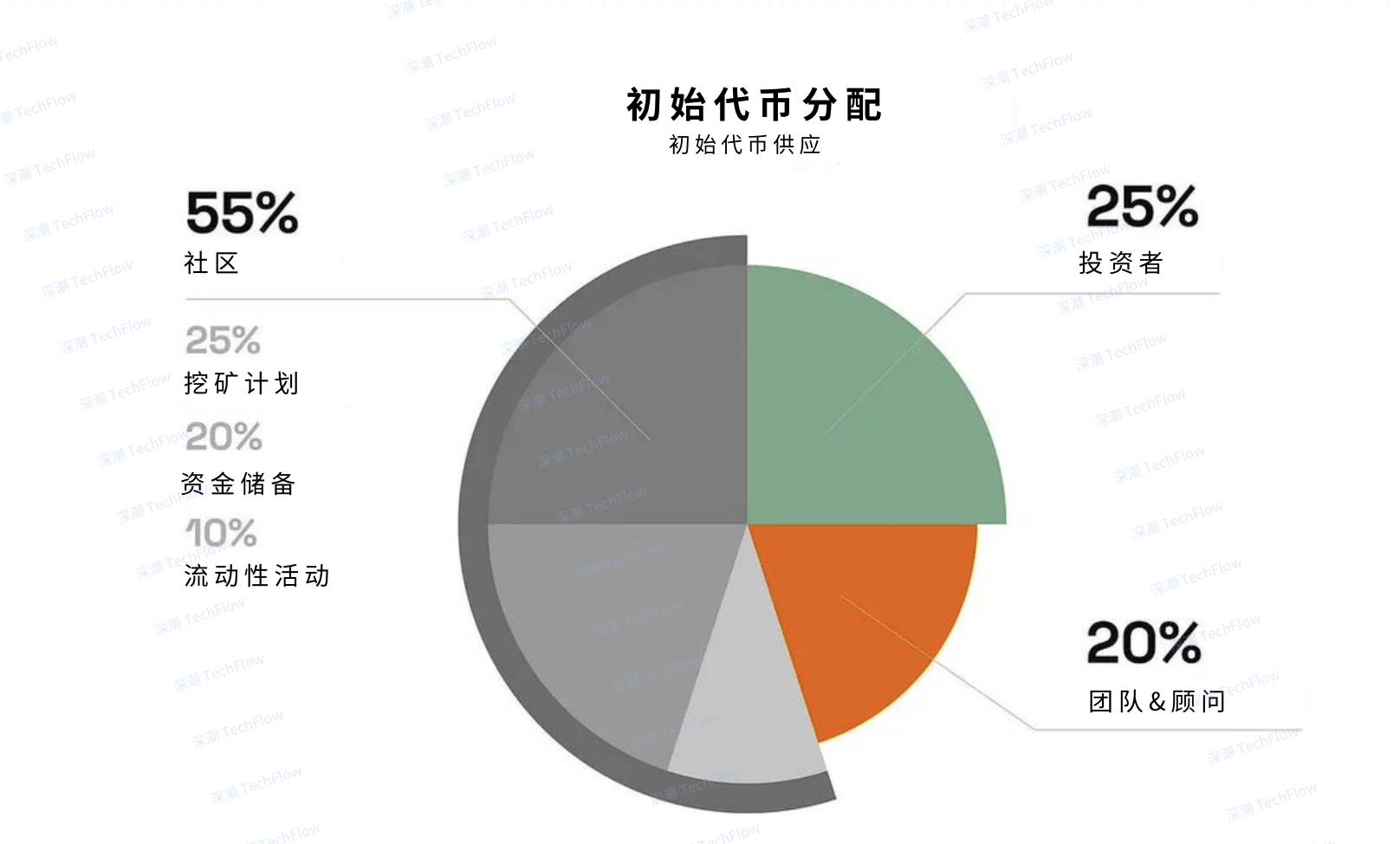
(Original image from Stacy Muur, compiled by Deep Tide TechFlow)
Positive Factors:
The auction mechanism design allows users to set their preferred purchase price and helps in fairer FDV discovery.
70% of the total token supply will be allocated to the community, indicating the project's emphasis on decentralization.
The team's token release period is set for 3 to 4 years, reducing short-term selling pressure.
Participants in the token issuance have no lock-up period, which increases the token's liquidity.
The transparency of the venture capital rounds is relatively high: the token price in Kinto's most recent funding round was $10 (corresponding to a $100M FDV).
Based on market expectations, the auction price may range from $20 to $30, which would bring Kinto's FDV to $300M, relatively reasonable.
The $K token is not just a governance token; its functions include paying for account recovery fees and expanding wallet insurance. Additionally, all revenue from the protocol will go into the treasury, and token holders can manage these funds through on-chain governance.
Issues:
The auction price mechanism may limit the upside potential of the token price after the TGE.
Airdrops may lead to increased selling pressure.
The token will not be immediately transferable; to achieve transferability before March 31, at least two of the following three conditions must be met:
At least 20% of the token circulation: To avoid launching the project with low circulation and high FDV, at least 20% of the tokens need to be fully unlocked and distributed to participants.
Governance enters the second phase: The first Nios election has been held, and the Roll-up has reached Phase 1 (this phase is nearing completion and is expected to be achieved before March 31).
TVL reaches $100 million: The total value locked (TVL) of the network must exceed $100 million and remain above that for more than four weeks.
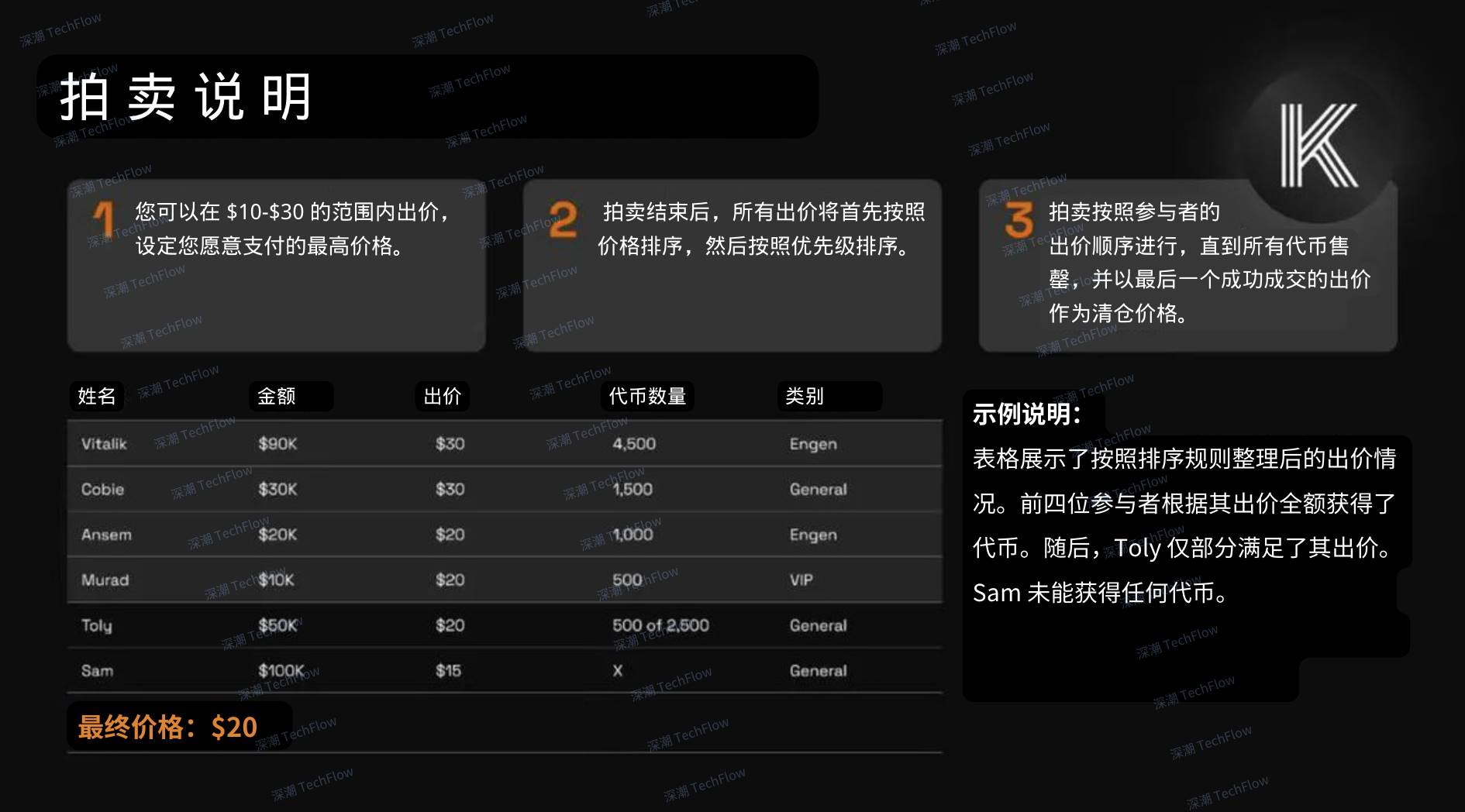
(Original image from Stacy Muur, compiled by Deep Tide TechFlow)
My score for Kinto's tokenomics: 3.25 points.
Step 4: Community
When researching token issuance, the last aspect to analyze is the activity, loyalty, and scale of the protocol's community. A loyal and active community, combined with a successful product, can lead to extraordinary results, and Hyperliquid is a great example. Therefore, this aspect deserves our close attention.
We need to examine the following aspects:
The number of high-quality users: The number of truly influential and contributive users in the community.
Community activity: The interaction, discussion, and participation of community members.
Product activity: By analyzing users' actual usage of the product, assess user retention and token demand after the TGE.
Demand related to the token issuance platform: Some token issuance platforms (like Coinlist) have very active investor communities, which may directly impact token demand.
How to track this information?
Analyze the authenticity of participation data: For example, if a tweet has a high number of retweets but almost the same number of likes, this may indicate fake data or activities caused by similar Galxe tasks. Typically, the ratio of retweets to likes should not exceed 1:5.
Use analytical tools: Tools like Moni Discover, TweetScout, or Kaito can be used to track community engagement and the number of high-quality users. These tools can help understand the actual activity and potential of the community more efficiently.
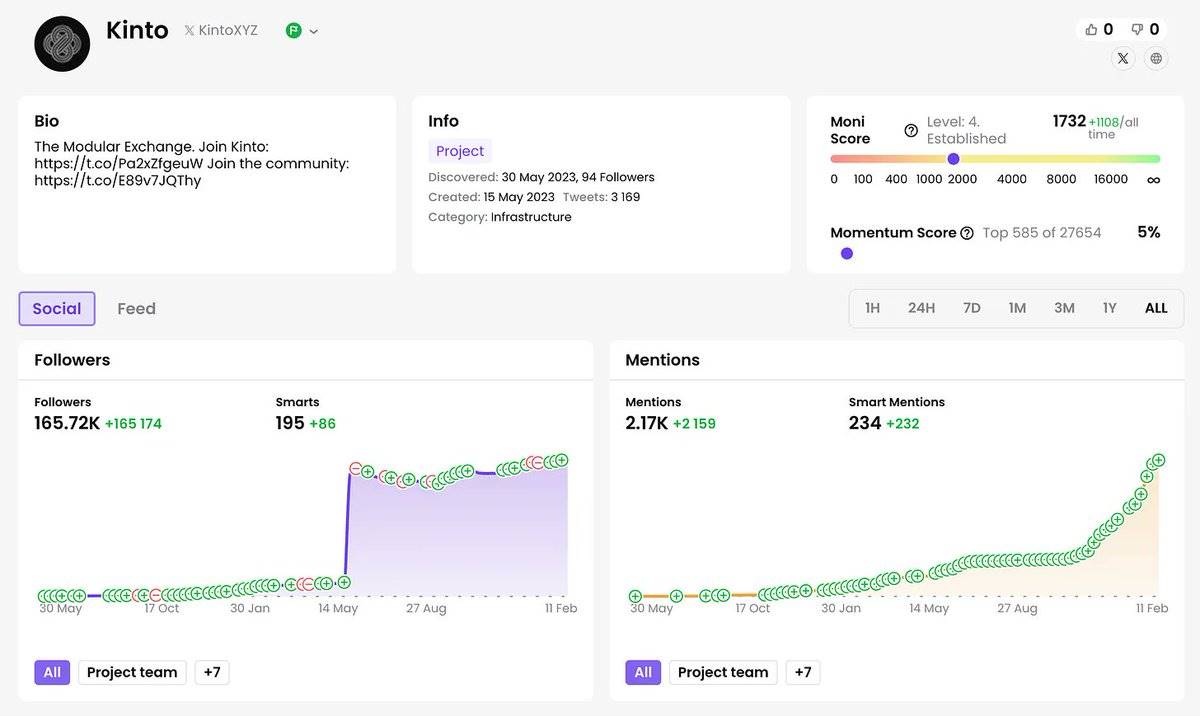
On the Moni platform, Kinto's follower count has seen significant growth. This phenomenon is usually related to two situations:
Fake followers (zombie accounts)
Activities or giveaways similar to Galxe or Zealy promotions
Therefore, we can infer that the number of real and active followers of Kinto on the X platform is approximately 35,000. This number is reasonable compared to other metrics.
From the "Smart Mentions" chart, the performance is good. Thus, my final score for Kinto's community section is 3.75 points.
What to Do Next?
The analysis work done so far is crucial for assessing the reasonableness of the project's launch FDV, analyzing growth potential, and deciding whether the project is worth paying attention to.
Next, you need to calculate the final score of the analyzed protocol and make decisions based on the scoring results. Here are the scoring criteria I typically use:
Below 2.5 points: Skip it directly, not recommended for participation.
2.5 – 3 points: Consider participation only if the project has significant advantages (such as an innovation trigger point or high Kaito platform attention and active community).
3 – 3.5 points: If you decide to participate, only a small amount of funds is recommended due to high risk.
3.5 – 4 points: These projects may belong to third-tier protocols; if they have multiple favorable factors, they may be a good opportunity, but it is not recommended to invest too much.
4 – 4.5 points: This is a quality product, worth participating in the token issuance.
4.5 – 5 points: This is a rare quality project, very worthy of attention.
My average score for Kinto is 3.71 points.
免责声明:本文章仅代表作者个人观点,不代表本平台的立场和观点。本文章仅供信息分享,不构成对任何人的任何投资建议。用户与作者之间的任何争议,与本平台无关。如网页中刊载的文章或图片涉及侵权,请提供相关的权利证明和身份证明发送邮件到support@aicoin.com,本平台相关工作人员将会进行核查。


