With the global popularity of cryptocurrencies and the rapid growth of crypto users in Southeast Asia, the on-chain capital flow in the region has become increasingly frequent and complex. To gain deeper insights into the characteristics of on-chain capital flows, potential financial risks, and connections to illegal industries in Southeast Asia, Beosin conducted this in-depth analysis based on a sample of 10,000 blockchain addresses extracted from 2020 to the present (such as Southeast Asian personal wallets/Southeast Asian exchange users, etc.). By tracking and labeling the flow paths of different types of risk capital, we found that the level of risk involved in the circulation patterns of crypto assets exceeded expectations. This report not only reveals the risks associated with cryptocurrency use in Southeast Asia but also explores the underlying reasons for this phenomenon from a macro perspective and offers relevant recommendations.
Overview of the Southeast Asian Cryptocurrency Market
In recent years, the acceptance and popularity of cryptocurrencies in Southeast Asia have significantly increased.
As an emerging market, Southeast Asia has unique characteristics in terms of economic structure, policy environment, and user behavior, particularly in the following aspects:
Rapid user growth: The region has a high proportion of young people, coupled with the widespread adoption of mobile internet, leading to a rapid increase in the number of crypto users. It is estimated that there are tens of millions of crypto users in the region.
Strong demand for cross-border payments: The large number of cross-border laborers in Southeast Asia has made cryptocurrencies a convenient means for cross-border payments, leading to widespread application.
Varied regulatory environment: The regulatory policies for virtual currencies differ significantly across Southeast Asian countries. Some countries support the legalization of cryptocurrencies, but most regions have yet to establish a clear regulatory framework, resulting in certain compliance risks in capital flows.
Sample Analysis and Key Findings
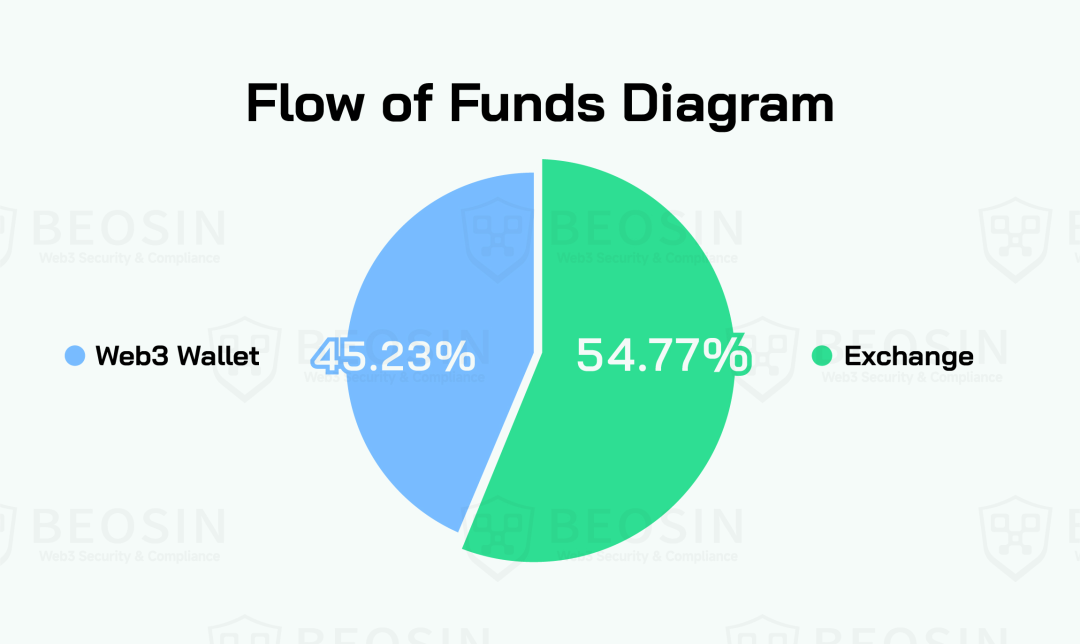 Chart: Capital Flow Diagram
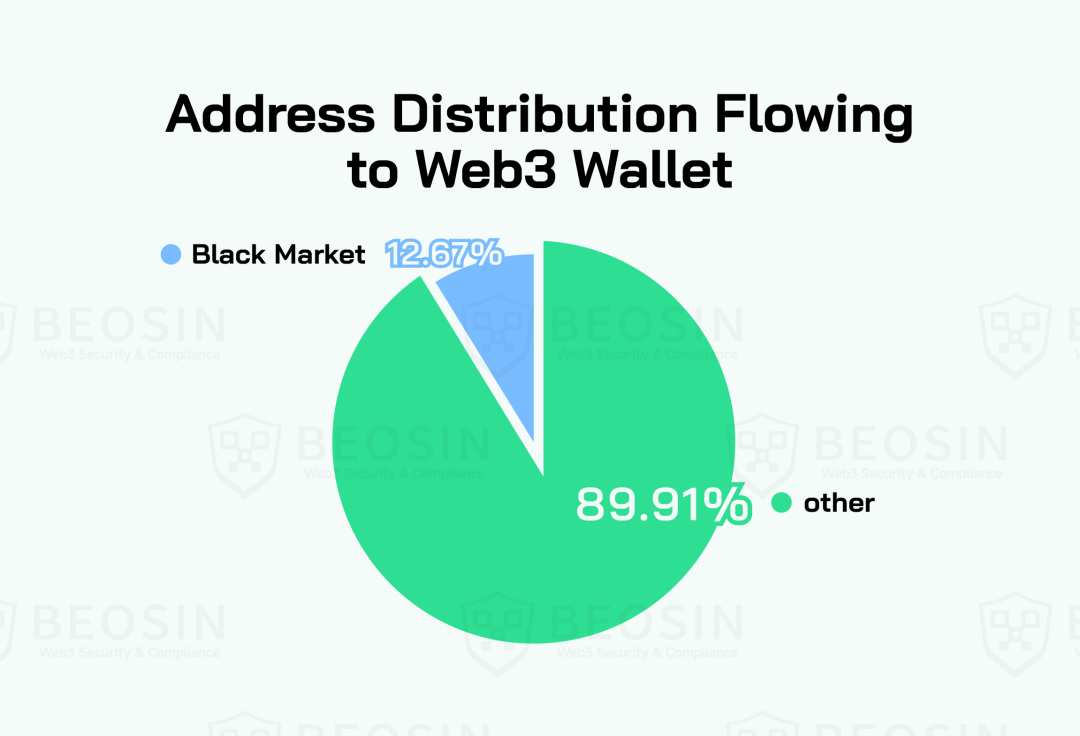 Chart: Distribution of Addresses Flowing to Web3 Wallets
- Free flow of funds
Among the 10,000 blockchain addresses analyzed, approximately 45.23% of the funds flowed freely on public chains through decentralized wallets, demonstrating high liquidity and decentralization characteristics. The total amount of freely flowing funds reached $1.484 billion, indicating that decentralized trading methods have become mainstream among Southeast Asian users.
- Association with illegal industries
Of these addresses, over $110 million in funds directly flowed to addresses related to illegal industries, accounting for more than 12%. Further tracking of the remaining addresses revealed that through secondary or multiple transactions, some addresses also established indirect connections with illegal industries, raising the proportion of addresses associated with illegal industries to 16.82%. This suggests that among the tens of millions of crypto users in Southeast Asia, there may be millions of users who have direct or indirect financial transaction risks with illegal industries.
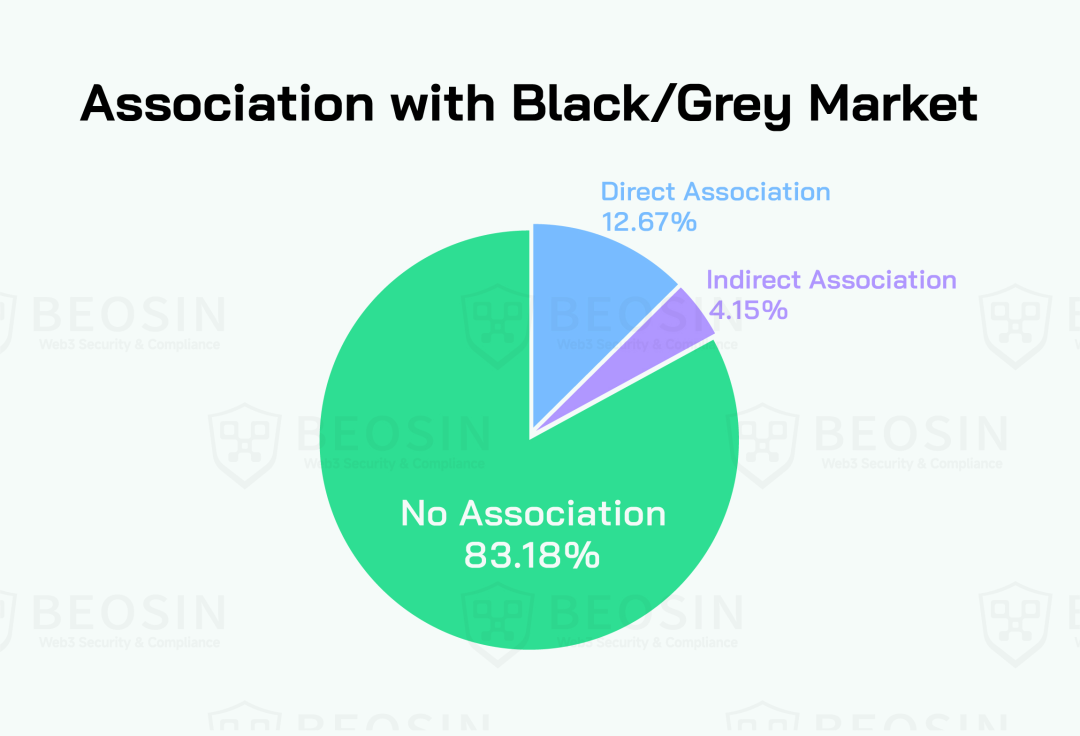 Chart: Association with the Black Market
Analysis of Capital Flow and Risks in Illegal Industries
- Categorization of illegal industry addresses
Beosin categorized addresses closely related to illegal industries into three major categories and 44 subcategories through risk labeling, with high-risk categories mainly including:
● Mixing services: Primarily used for anonymizing fund flows
● Underground banks: Used for cross-border illegal fund dispatch and money laundering
● Fraud platforms: Involving false investments, Ponzi schemes, and other scams
These high-risk address types involve over 240 specific entities in illegal industries.
- High-risk capital flow phenomena
The research results show that certain specific categories of capital flow are particularly significant:
● Over $10 million in funds directly flowed into addresses related to underground banks, with transaction frequencies accumulating to thousands.
● Approximately $11 million in funds clearly flowed to online gambling platforms.
● Over $22 million in funds were directed to fraud platforms.
Such capital flows reveal the complexity and concealment of illegal industry activities, especially under the anonymity and cross-border characteristics of cryptocurrencies, which allow criminals to frequently conduct illegal fund transfers and money laundering activities.
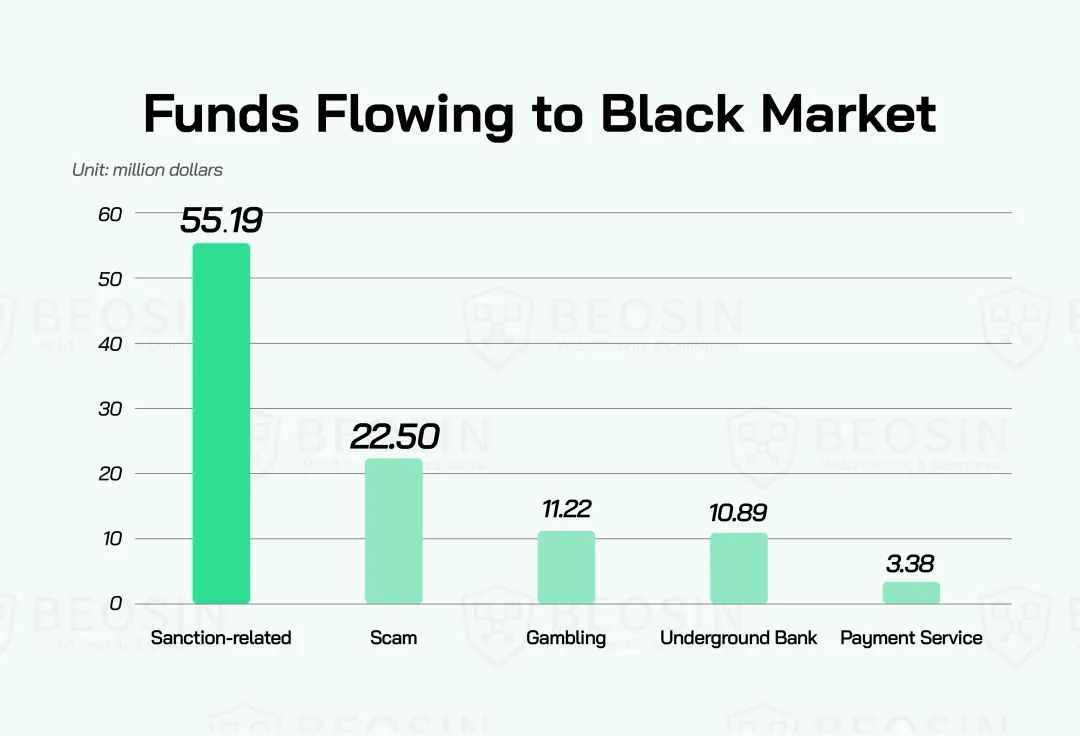 Chart: Funds Flowing to the Black Market
Capital Inflow to Sanctioned Platforms
- Proportion of capital inflow to sanctioned platforms
Among the funds directly associated with illegal industries, approximately 53.49% flowed to sanctioned platforms, with the number of related transactions even being twice that of those flowing to underground banks, totaling over $55 million, indicating that sanctioned platforms remain a major inflow destination for high-risk funds.
- Case Analysis: Tornado Cash
As a commonly used mixing tool, Tornado Cash received over $54 million in funds during this study, accounting for 97.84% of all capital inflows to sanctioned platforms. However, since the U.S. Treasury Department listed Tornado Cash as a sanctioned entity in August 2022, its transaction volume has significantly declined, demonstrating the effective suppression of its capital inflow due to sanctions.
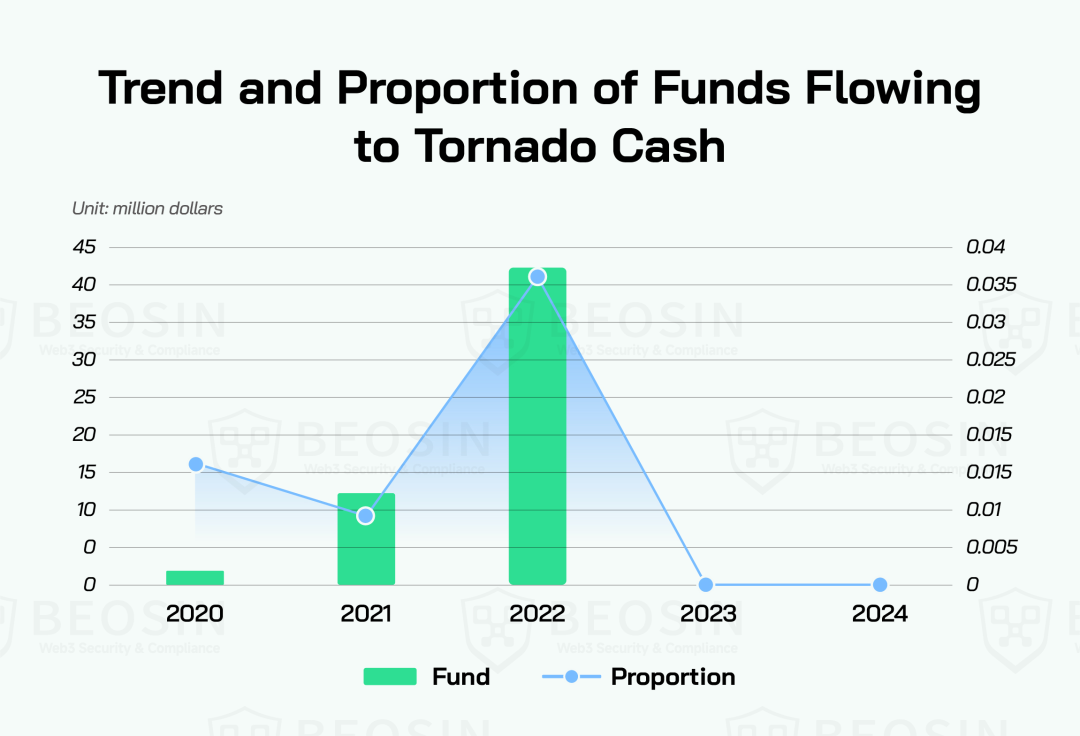 Chart: Trends and Proportions of Funds Flowing to Tornado Cash
Macro Risk Analysis and Cause Exploration
Anonymity and high liquidity of cryptocurrencies: The anonymity of cryptocurrencies makes it difficult to trace illegal funds when they flow on-chain. Even if technical means are used to label risk addresses, funds can still obscure their flow through mixing and other techniques, facilitating money laundering activities.
Lack of regulatory systems in Southeast Asia: The regulatory measures for cryptocurrencies in Southeast Asian countries are still inadequate, leading to increased risks in cross-border capital flows. Some regions remain cautious about cryptocurrencies and have not adopted proactive regulatory measures, providing space for the flow of illegal industry funds.
Socioeconomic environment: The economic development levels in some Southeast Asian countries are low, with significant wealth gaps, leading many scammers and online gambling operators to use this region as a base, primarily attracting foreign participants.
Technical difficulties in regulation: Cryptocurrency exchanges, wallet service providers, and decentralized platforms often struggle to effectively monitor and investigate the risks behind transactions due to technical and structural limitations. Decentralized platforms, in particular, lack direct control over transaction data, making it difficult to timely identify malicious behaviors or risks such as money laundering. Although some centralized platforms attempt to strengthen monitoring through KYC and AML measures, cross-chain transactions and anonymity technologies still complicate the tracking of capital flows, increasing security risks.
Conclusion and Recommendations
The analysis of on-chain capital flows in Southeast Asia indicates that there are significant security risks associated with cryptocurrency use in the region. To effectively reduce the risks of illegal capital flows on-chain, Beosin recommends the following measures:
Strengthen regulatory mechanisms: Governments should formulate and implement comprehensive cryptocurrency regulatory policies, combat illegal on-chain capital activities through international cooperation, and establish clear virtual currency regulatory frameworks tailored to different national conditions.
Enhance user risk identification capabilities: Increase anti-fraud education for ordinary users to help them understand on-chain risks and enhance their ability to identify and prevent illegal industry funds.
Promote technological innovation: Actively develop and apply on-chain tracking and anti-money laundering technologies, using big data analysis, artificial intelligence, and other technical means to accurately identify and combat high-risk capital flows.
Establish a multi-party collaboration mechanism: Encourage cryptocurrency exchanges, wallet service providers, and related institutions in Southeast Asia to collaborate, strengthen information sharing and risk prevention, and improve on-chain security.
As one of the regions with the greatest potential for cryptocurrency development, Southeast Asia still faces challenges related to capital flow risks in the future. Beosin will continue to invest resources and technology, collaborating with various sectors to build a safe, transparent, and compliant cryptocurrency ecosystem. By strengthening regulation, raising user security awareness, and promoting technological innovation, we hope to gradually reduce illegal capital flows on-chain and promote the healthy development of the digital economy in Southeast Asia.
免责声明:本文章仅代表作者个人观点,不代表本平台的立场和观点。本文章仅供信息分享,不构成对任何人的任何投资建议。用户与作者之间的任何争议,与本平台无关。如网页中刊载的文章或图片涉及侵权,请提供相关的权利证明和身份证明发送邮件到support@aicoin.com,本平台相关工作人员将会进行核查。


