Currently, the ETH staked on mETH exceeds 480,000, and the TVL has risen to $1.189 billion.
Written by: 1912212.eth, Foresight News
Three years ago, Dragonfly partner Haseeb Qureshi expressed his anticipation for Rollup while worrying that it might be born at the wrong time, without anyone cheering for it. At that time, chains like Polygon and BNB Chain were thriving and receiving widespread attention. However, the leading L2 mainnets at that time had not yet launched. Who would have thought that just two years later, L2s would be flourishing, with a multitude of options competing for attention.
If the number of emerging public chains is limited, the variety of L2s today could probably be counted on several hands. However, while the cost of building new L2s has become relatively low, very few have truly gained market attention and recognition.
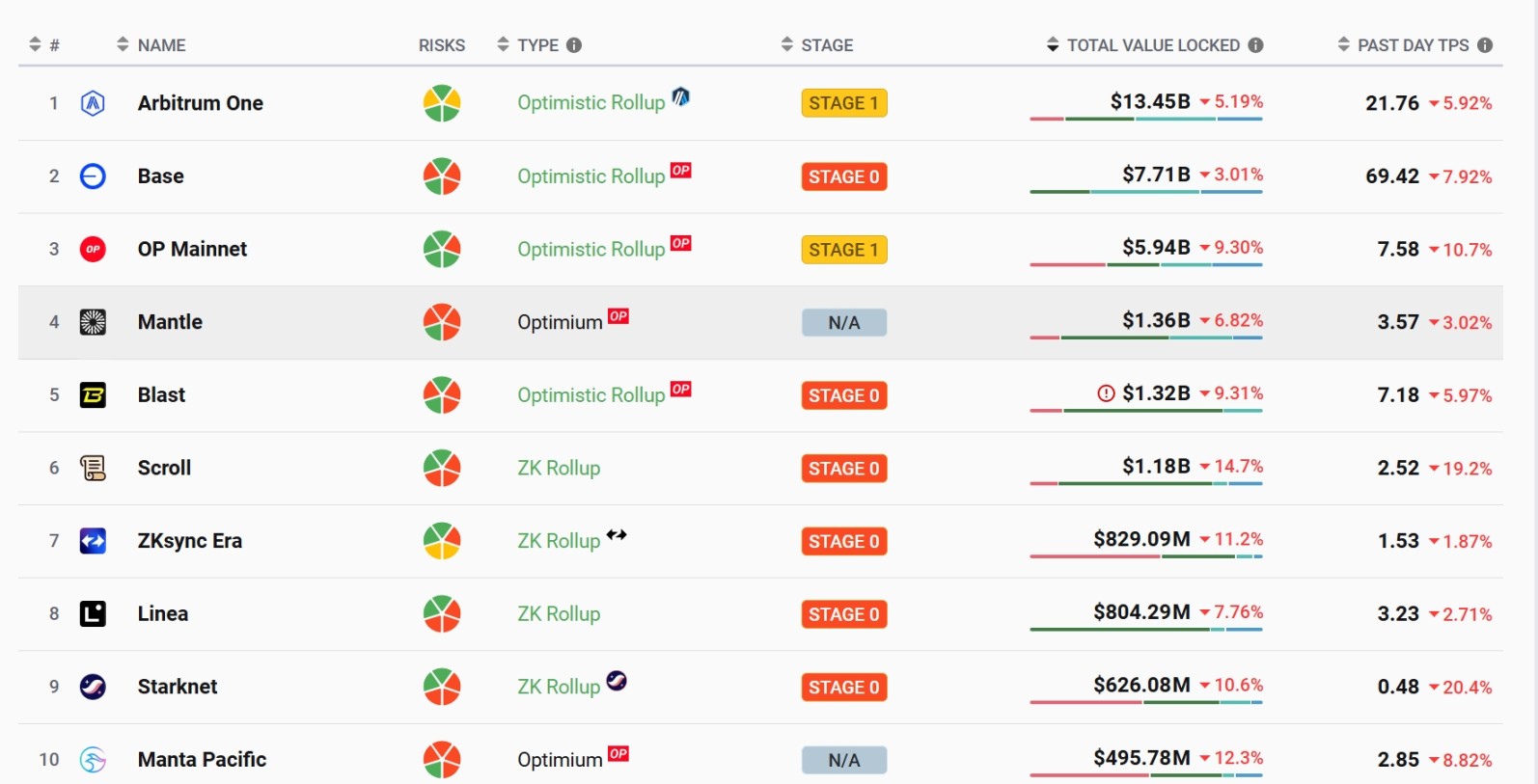
In terms of technology, the differentiation between OP and ZK remains, but the real gap is still in ecological development status, user experience, and liquidity incentives.
Currently, aside from the leading L2s, the gap in TVL among other L2s is not too significant. The differences in finer details seem somewhat tedious, leading to various issues.
One issue is the fragmentation of liquidity. L2s have been criticized for becoming increasingly fragmented as their numbers grow, making it time-consuming and labor-intensive to transfer assets to other L2 chains, which negatively impacts user experience. This is one of the key reasons why some market funds favor and pursue high-performance public chains.
Another issue is the general decline of the wealth effect. Among many L2s, there has been no meme trend; instead, the meme wave has appeared on the high-performance public chain Solana. Even though some applications have developed ecosystems using L2 technology, they still cannot match the attraction brought by the wealth effect. Coupled with the lackluster performance of their token prices, the appeal of L2s to some ordinary players is gradually weakening.
How to solve the problem of fragmented liquidity and find ways to expand revenue channels for players' assets has become a breakthrough path for some L2s.
mETH Protocol Introduction
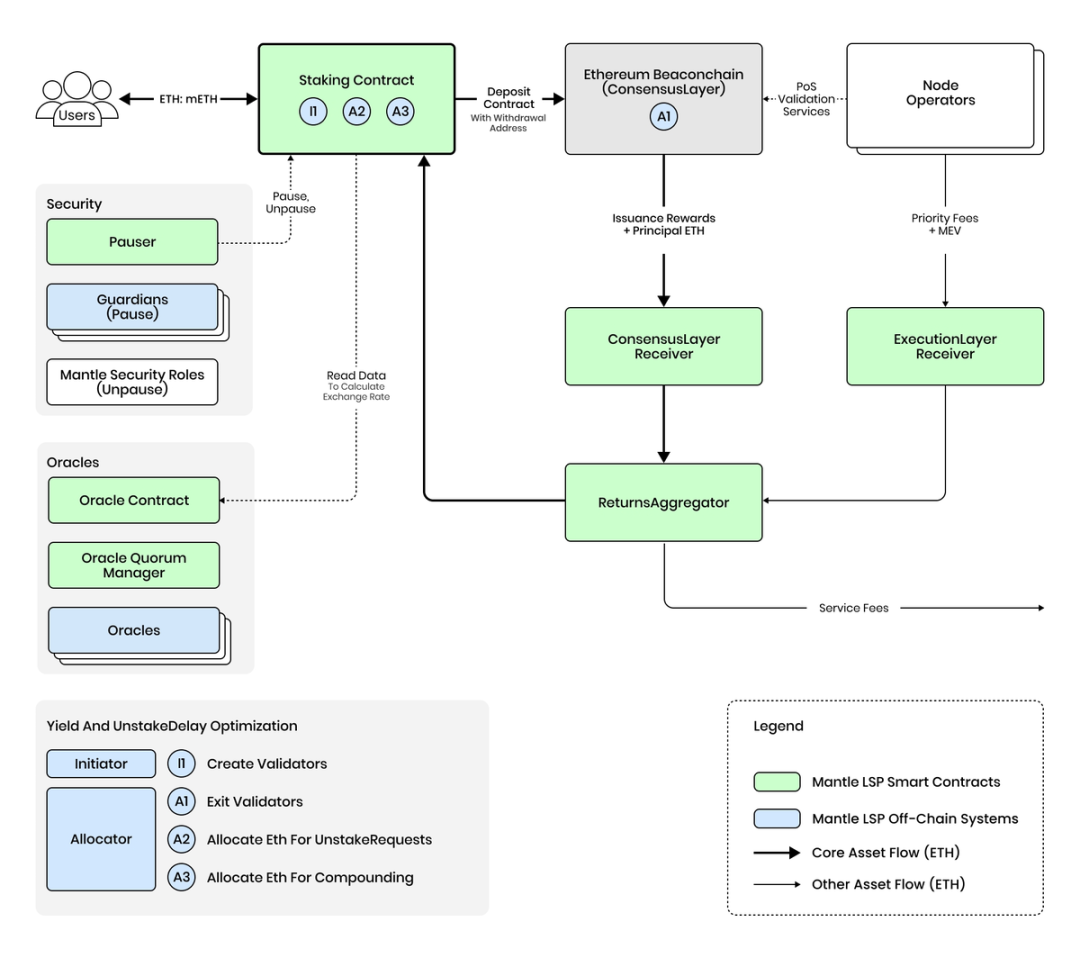
mETH is a permissionless, non-custodial ETH liquid staking protocol on Ethereum. At the end of 2023, Mantle aimed at the opportunity of liquid staking and launched Mantle LSP. In August of this year, its brand name was upgraded from Mantle LSP to mETH Protocol. mETH stands for Mantle staked ether, a more concise and clear representation that aligns better with the brand image.
For every ETH staked, users receive an mETH staking certificate. After unstaking, they can obtain the originally staked ETH along with staking rewards.
Although the liquid staking giant Lido has long dominated the ETH staking market, the rankings of subsequent protocols have changed frequently, indicating fierce competition. Data shows that the ETH staked on mETH has exceeded 480,000, and the TVL has risen to $1.189 billion.
mETH is more than twice the amount of staked ETH on Coinbase. Considering that the second place is held by Binance, a major player, and the third place by the pioneering staking protocol, mETH's achievements are quite impressive.
In its official documentation, mETH is described as aiming to become the most widely adopted and capital-efficient ETH staking token. Currently, various brand collaborations and integrations are indeed playing a crucial role in expanding mETH's boundaries and encroaching on competitors' market shares.
In terms of risk management, mETH's core smart contracts and off-chain services are non-custodial, thus minimizing risk. Additionally, it adopts designs post-Ethereum Shanghai upgrade, emphasizing the integrity of ETH, ensuring that mETH on L1 does not add complexity with other POS tokens and chains. This also opens the door for various integrations in the future.
In the rapidly changing market, the re-staking track represented by Eigenlayer has once again sparked an arms race for liquid staking protocols. In a short time, re-staking protocols like Swell, Renzo, and eth.fi have emerged, stirring up the situation.
Under the trend, mETH's entry into the re-staking track is a natural progression.
Re-staking cmETH
Re-staking allows staked assets in PoS chains to be reused to secure other Ethereum-based protocols. This enables DApps to leverage Ethereum's PoS security without creating their own staking mechanisms, thereby enhancing the utility of staked ETH beyond its primary network security functions.
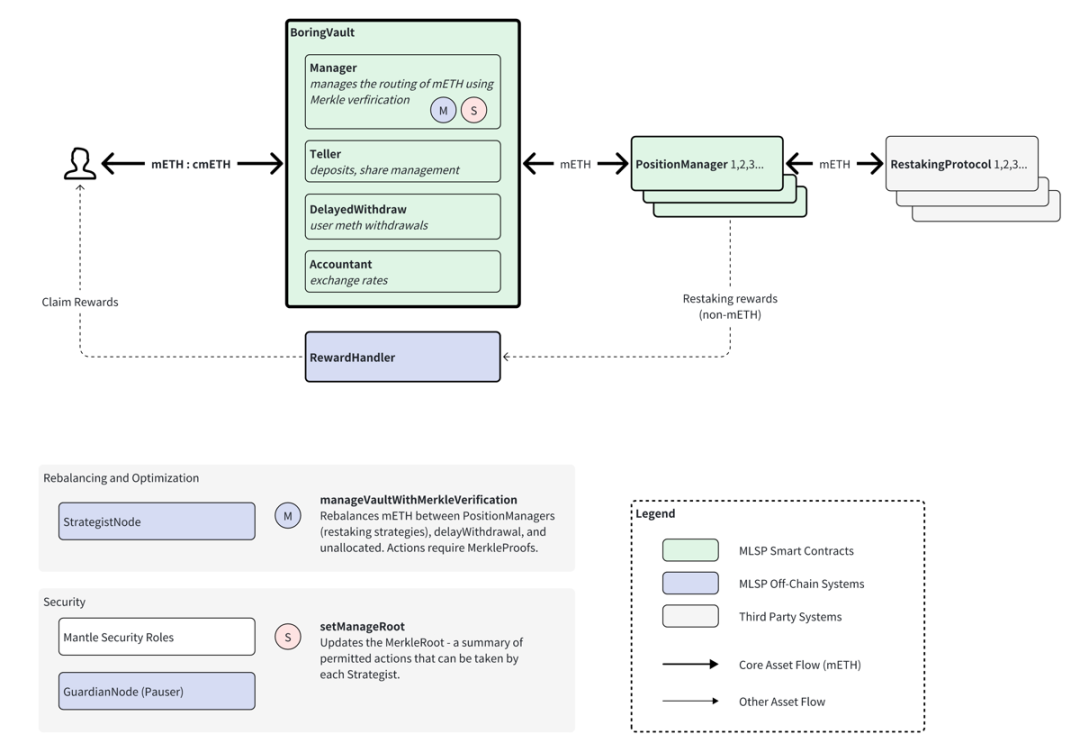
The mETH protocol allows users to benefit from the capital efficiency, convenience, and wide use cases on Mantle. However, staking in DeFi locks assets, reducing some efficiency. Re-staking helps maximize capital efficiency. Following mETH, the re-staking protocol cmETH has also emerged.
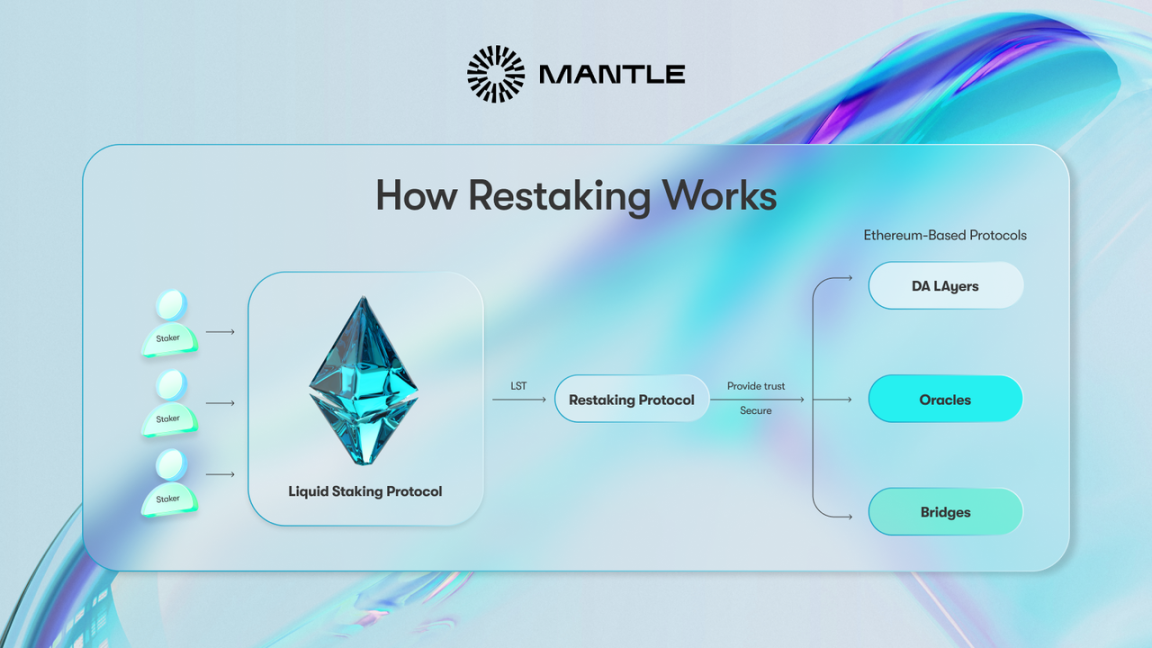
Users' LSTs are deposited into the re-staking protocol, with security provided by oracles, cross-chain bridges, and DA layers. Some staking rewards and income will also flow back into cmETH.
Advantages of Liquid Assets
The crypto market emphasizes capital efficiency. Aside from the 3.43% annual yield from staking ETH itself, the staking receipt token mETH also has native yield functionality. Do not underestimate native yield; when the asset itself has yield attributes, users transferring their ETH to its L2 can automatically enjoy interest, greatly awakening funds sensitive to yield.
In addition, re-staking cmETH is also expanding vigorously, continuously collaborating with other re-staking protocols like EigenLayer, Symbiotic, and Karak. cmETH not only earns points but also enjoys certain yields.
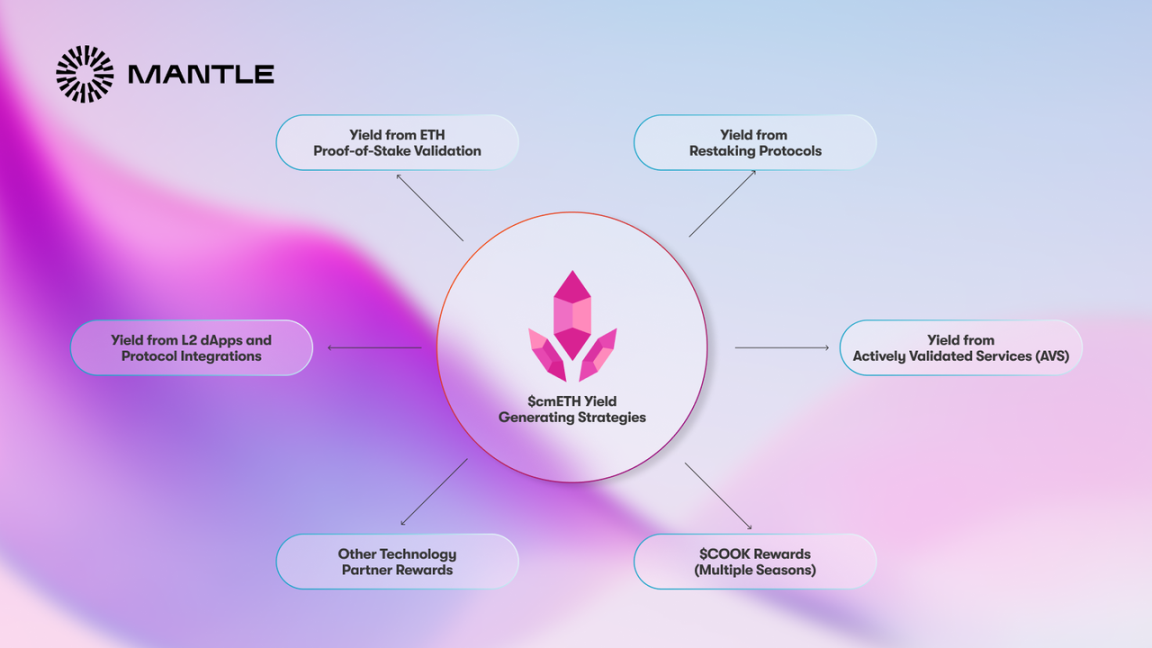
cmETH has achieved good composability within the Mantle ecosystem. Its holders can also enjoy yields from ETH proof-of-stake validation (provided by the underlying mETH), AVS active validation service yields, token COOK rewards, and yields from integrations with other L2 DApps. The on-chain advantages are quite evident.
The level of integration of the protocol is not only tested on-chain; off-chain integration, especially cooperation with exchanges, is crucial. After all, on-chain players do not make up the majority, and many players choose to keep their funds on exchanges due to liquidity and convenience.
Bybit has chosen to open a staking entry for mETH and list mETH. According to CCData reports, as of the end of September, Bybit's spot market share has risen to third globally, while CryptoRank data shows that in the exchange app category, Bybit ranks second globally with 4.5 million downloads, only behind Binance. The traffic boost from major exchanges brings significant exposure to mETH.
It is worth mentioning that mETH can also be used as collateral on Bybit. As is well known, the core function of collateral is to optimize stability in risk control, market liquidity, and credit assurance. For large funds and trading teams, when assets are listed as collateral on exchanges, it greatly expands the use cases of mETH, making hesitant trading teams more willing to deposit funds in mETH. Conversely, as funds continue to flow in, the liquidity of mETH becomes increasingly high, forming a virtuous cycle.
Market hotspots and trends often change rapidly; project teams and protocols must keep up with the heat to continuously amplify their influence. Where will the future hotspots be? The direction of the market may already be indicated. In the future, mETH will also collaborate with Berachain and Fuel, which have been highly anticipated by the market, to strengthen liquidity integration.
COOK Token Economics
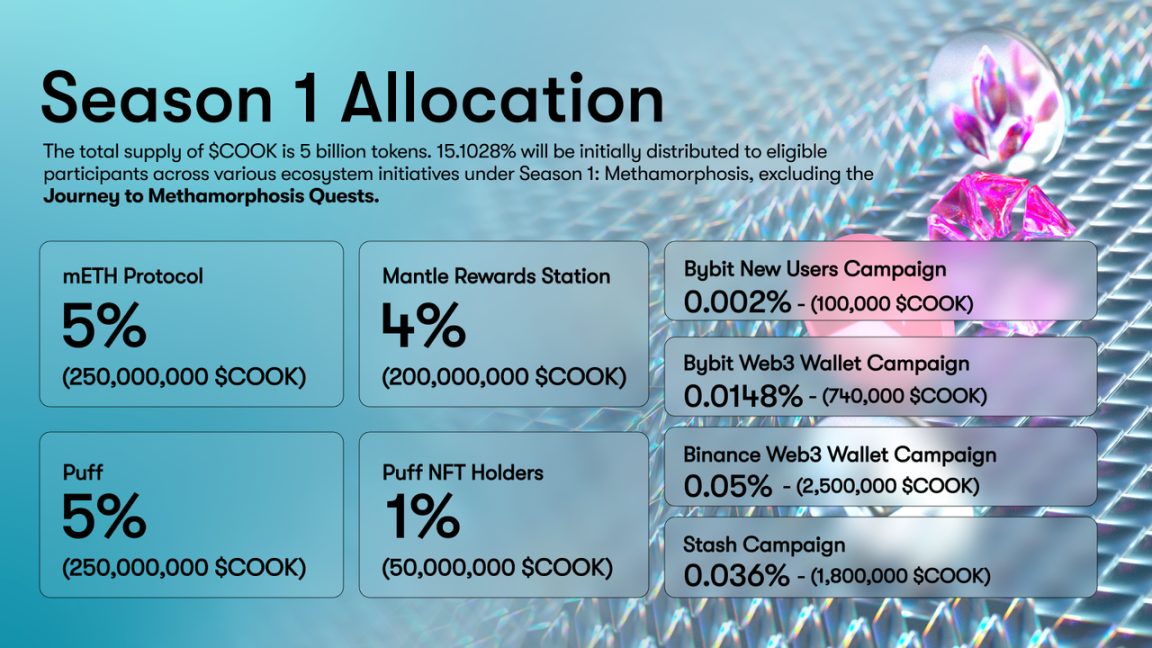
COOK is the new governance token for mETH. It is currently mainly used for voting on the direction of the ecosystem and other strategic matters. The total supply is 5 billion, with 15.1028% allocated to qualified users of the ecosystem activities in Q1.
Among this allocation, 5% of the tokens are distributed to mETH, 4% to the Mantle reward station, 5% to the Puff protocol, 1% to Puff NFT holders, and a small portion to some joint activity rewards.
It is noteworthy that at a time when VC tokens are under constant scrutiny, few project teams are willing to make changes in token distribution. Retail investors are increasingly dissatisfied with the large share of VC tokens, leading to endless selling pressure and being trapped. Fairness, or rather fairness. Allowing community members to participate in the wealth wave and gain profits is the right answer and will increasingly attract attention.
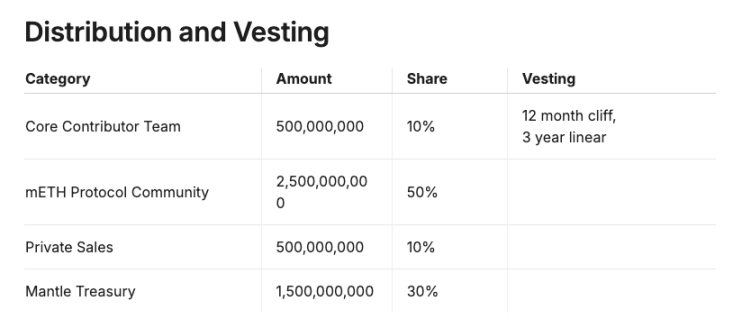
Looking at the total token distribution of COOK, the core team and private fundraising shares each account for only 10%, while the total allocated to the community and protocol treasury reaches 60%, truly aligning with market demands and incorporating fairness into the initial token distribution design.
Comparing with the re-staking leader Eigenlayer, its market cap is around $600 million, while its FDV reaches a high of $5.6 billion. mETH currently has a TVL of nearly $1.3 billion, while Eigenlayer's is $11.15 billion, making the latter over 8 times larger than the former. If calculated solely based on the TVL ratio, the estimated FDV for COOK upon launch could be around $700 million.
COOK is expected to launch this month, with specific details subject to change.
From July 1 to early October, the mETHamorphosis event showed impressive data performance. mETH holders can accumulate points on Mantle by staking, interacting with ecosystem protocols, and adding liquidity, with points ultimately redeemable for COOK.
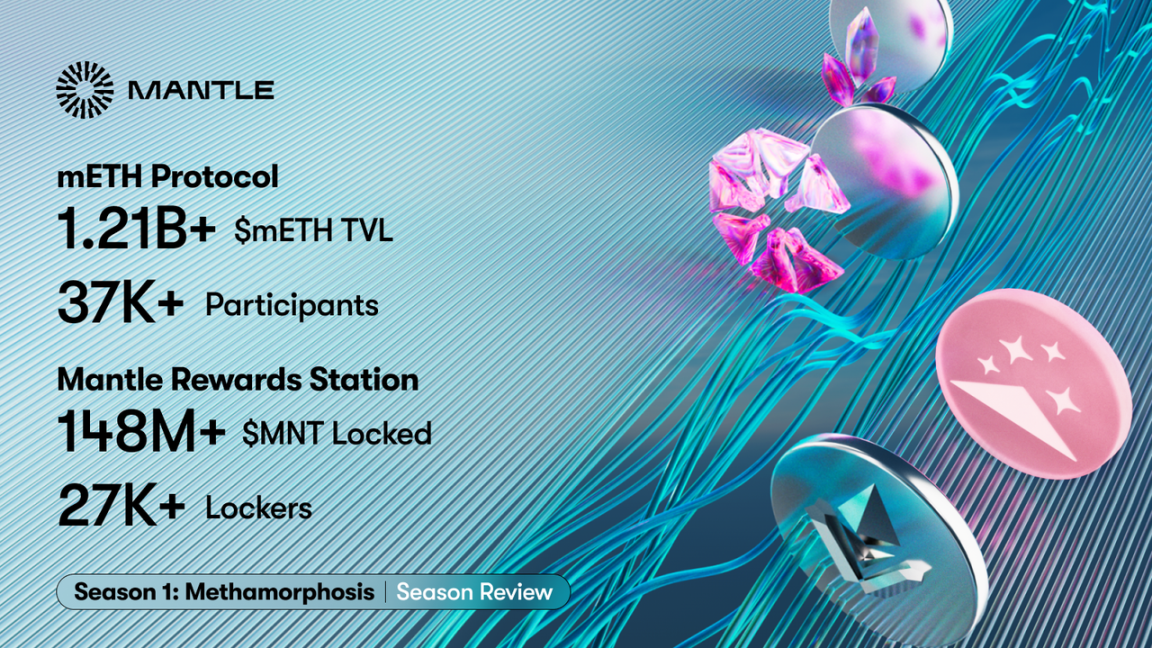
With the official end of the first quarter, activities for the second quarter will soon be announced.
Summary
After months of FUD, the market funds for Ethereum are now warming up. Many re-staking protocols have seen a decline in popularity after issuing tokens, compounded by a sluggish market. With the Federal Reserve's interest rate cuts, more yield funds will flow into DeFi, injecting more liquidity. The performance of the re-staking track and COOK will be worth watching.
免责声明:本文章仅代表作者个人观点,不代表本平台的立场和观点。本文章仅供信息分享,不构成对任何人的任何投资建议。用户与作者之间的任何争议,与本平台无关。如网页中刊载的文章或图片涉及侵权,请提供相关的权利证明和身份证明发送邮件到support@aicoin.com,本平台相关工作人员将会进行核查。


