Discussing the principles of game design and event planning, and how to transform on-chain tasks into more meaningful and engaging interactive experiences.
Author: rileybeans
Translation: DeepTechFlow
On-chain tasks have always troubled me. Although they have not been completed and fully explored, they are extremely popular among certain specific groups. It's time to re-examine the intrinsic meaning behind on-chain tasks, rather than just the phenomenon of clicking farms.
Since 1998, when Joseph Pine and James Gilmore created the term "experience economy," the development of the experience economy has only been accelerating. With the rapid development of the Internet, as well as the rise of social algorithms, artificial intelligence, prediction markets, and cryptocurrencies, the new experience economy is filled with low-quality content, but still has the potential for improvement. Against the backdrop of late-stage capitalism, experience products like AirBnB, Top Golf, and spacious Apple Stores, this new experience economy is being built for a new generation on-chain.
By integrating fun and a closer experience to build new tasks, it is indeed possible to provide cheaper and more caring solutions for the prevalent problem of loneliness, and to point to a path of pursuing goals.
This article explores the principles of game design and event planning on how to transform on-chain tasks into more meaningful and engaging interactive experiences, connecting our physical selves with the new digital world.
However, as a community builder and lifelong gamer, I believe that we seem to be at a standstill in making tasks meaningful. With more emerging technologies becoming more popular, we now have the opportunity to build more integrated and interoperable creative experiences that combine face-to-face journeys with digital selves.
As Daisy Alioto aptly described at this year's FWB FEST, the emerging taste economy provides an opportunity to unfold design patterns that are more adventurous and cooperative. In my opinion, no design pattern is more suitable for redefinition than tasks.
But designing a community for this new internet requires a combination of a variety of emerging skills, far beyond creating an attractive application, equipped with cool backend technology or a regular social club. The combination of expertise in event design and interface, game design, narrative, and human psychology creates the right elements to make tasks both fun and less bothersome.
Before we start, it must be clear that listing NFTs as bait for task platforms where bounty hunters pounce like vultures is definitely not a complete and meaningful task. Task platforms are very aware of this reality, so creative work to complete this cycle needs to be done by various communities.
Now, this is not necessarily the fault of the market or the builders. This kind of thing takes time to get right, especially when dealing with new interfaces.
Game Design for Events
For non-gamers, most non-first-person shooter (FPS) games can now be divided into two types: open world and linear games. In an open world, players can freely explore a vast land, a city, or a virtual scene, just like exploring a new town on vacation. In linear games, players need to complete a series of steps in order—go here, do this, talk to this person.
Both of these types perform well in face-to-face activities.
However, to make these game designs perform well, a group of excellent storytellers must be dedicated to building a coherent, interesting, and carefully crafted narrative. The four steps of game narrative can guide their decisions:
Introduction: Go to a new area (including travel time and adapting to the environment), talk to new people
Expansion: Click or complete objectives, collect items, learn mechanics, and introduce themes
Progression: Make items, use items, interact with the world
Conclusion: Skill tests, Boss battles (or in our case, hackathon judging)
Event designers can use these building blocks (and the corresponding blockchain infrastructure) to create more vivid, seamless, and interoperable experiences that allow communities to thrive. This type of gamification goes beyond leveling up in noisy Discord servers and instead creates rich opportunities for connection, similar to the connections established in classic online games like "World of Warcraft," but can be done face-to-face or on the blockchain.
For example, in the next event with 30,000 members, a Raid (treasure hunt activity, ultimately leading to a more difficult challenge) can be conducted, requiring cooperation from participants. Or using a technology that can read the distance between your phone and resources (goods), when you collect enough items, the box opens automatically. By balancing the positive and negative feedback loops, players of different skill levels can find their place. This cooperative game is beneficial to the community, rather than exploitative.
Now, let's look at how tasks actually perform in events after integrating these game elements.
Task Design for Events
Each narrative step of the game is also replicated in task design, making it very easy to convert into various types of tasks. To see a complete list of nonviolent game design patterns, please refer to Patrick Littell's highly valuable free book on the subject.
The four basic game elements of tasks are:
Exploration: New areas, new characters
Expansion: Discover panels, crafting, new skills
Utilization: Obtain rewards, peripheral goods, and items
Mastery: Enter the next event or level up
So far, as we know, cryptocurrencies in task models have basically only stayed in one part: expansion. I would say that the process of collecting items is the most boring part of any task. If our imagination only stays in the most monetizable part of the task, this clearly explains our purpose. However, we can integrate other steps in the model. Activities that include all task elements can leave lasting memories. After all, the primary goal of an event should be to create an experience worth retelling.
This year, FWB Fest ‘24 is the only event that has correctly implemented this concept, hosting a treasure hunt activity where almost all the IYK tags that need to be collected are within walking distance of where people naturally meet friends. It is worth mentioning that when they designed this treasure hunt, they did not require attendees to pay a fee or download a new mobile app. This expansion experience added a social nature to the task, distributing rewards to successful content creators, players, and additional activity stations to recognize their hard work.
Another emerging project suitable for task design is Amelia Guertin's Soulmates. Soulmates is a pairing questionnaire designed to bring people together in crypto activities. Despite the increasing problem of loneliness, Amelia demonstrated that meeting new friends and dating might be awkward, but it can still be fun by combining positive and negative feedback loops.
Event Designers Need Game Design Skills
The space of emerging technology events has always surprised me, usually not positively. From inviting too many speakers to side events spread throughout the entire city, events often become the focus of controversy. Therefore, before we discuss the problems that tasks solve, we need to ensure that we do not add additional disturbances to already crowded cities, making events unsatisfactory.
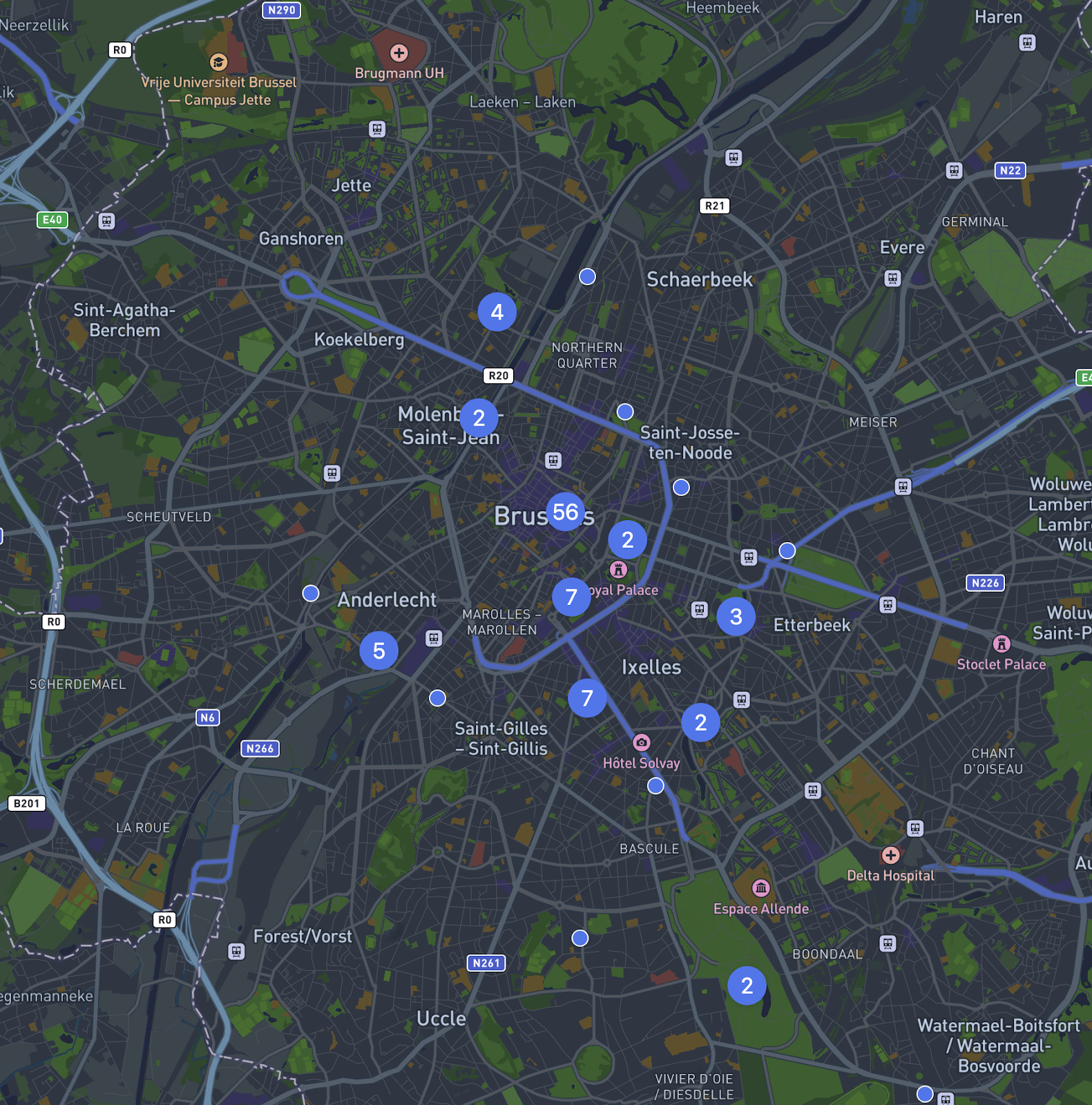
Imagine running around Brussels trying to attend all the important events!!
Take the list of nearly 400 ETHCC '24 side events, assisted in organizing by Michael Williams (Product Lead at Serotonin), as an example. These events were organized with the support of the Serotonin platform. This means there are a lot of events, especially considering other large events like DragonCon, which hosts about 70,000 people annually, with only a few side events hosted by major sponsors. Most of these events require a significant test of transportation, back and forth, and time management skills, especially for over 5,000 people.
The good news is that by building a closer and more diverse on-chain event experience, we can start to assess fun while integrating technology to help creators earn more income. Let's delve into how event designers can build better tasks and events.
How Tasks Promote Better On-Chain and Off-Chain Economies
Despite internet users feeling weary of various social apps and constantly being asked to participate in activities, community fun does require some challenges. Unfortunately, all tasks require effort. We cannot escape this reality. The good news is that tasks are also work that both parties love. As I always say, "I don't invest with money, I invest with love," and this love is mutual.
Whether you're joining a running club, chess club, or survival club, tasks provide opportunities to introduce gamified elements through resources (virtual or real), narratives, and character development, which can translate well in both face-to-face and on-chain collaborations.
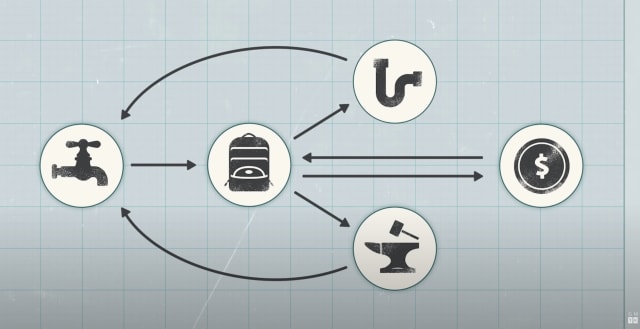
These mechanisms allow collaborative control required by the emerging experience economy:
Clicks: How do we turn token distribution mechanisms into a safe offline experience? Is this necessary? Can this be done during the introduction phase before the event?
Inventory: How do we build a better user experience for loyalty tasks through ERC6551 token binding contracts? How do we reward players through contracts, once players collect enough items to enhance them? Does this appropriately limit players or create unnecessary offline friction?
Converters: How do we exchange one resource for another (usually through a consumption mechanism) to level up? Can we use obtained persuasion checks to help players better obtain offline goods? How does this affect the progress of the event or game?
Churn: Can we remove resources from the economy or adjust a limiter or slow down a difficulty meter for players? Efficiency enthusiasts love this little trick!
Trading Systems: Can we create more interesting in-game and offline store and booth experiences? I love the arbitrage scenario of "this part of the map's store is cheaper"! This is often where cryptocurrencies excel, but are often limited by the diversity of capital and sometimes, frankly, imagination. These are the questions and mechanisms that game designers, event planners, and TGE (Token Generation Event) often think about. However, they have not yet applied on-chain technology at a true scale through interoperability, chain abstraction, cheap L2 alternatives, smart wallets, payment proxies, and extensive AI intelligences.
A side quest in a game might require you to collect 20 stars, while a face-to-face task might require you to collect 20 social links of people. Their triggering methods look completely different, and so do other mechanisms, but the feedback loops are often similar. This time, however, the community determines the meta-rules of the game and manages changes to the game or algorithm, creating a fairer and more consistent experience.
On a side note, tasks provide a unique opportunity for content creators to spread information about communities, games, or events. I find it hard to estimate how many hours I've spent reading articles about meta-rule changes in "Overwatch" or quest guides in "The Elder Scrolls," but it's definitely more than a few thousand hours.
Making Fun a KPI
Even if you're not a gamer, if you watch enough Twitch streams or have kids, you'll start to understand the fun of modern video games. However, determining what behaviors are fun in real life or on-chain is much more complex.
That being said, measuring or building fun as a key performance indicator (KPI) is the difficult part. Games, as well as related tasks, "are fun because they are the fun we have through games," writer and video game designer Ian Bogost said in his 2014 "WIRED by Design" talk. Considering the community aspect of games, he added, "Fun comes from the attention and care you invest in something, something that provides enough freedom—enough game fun—to make that attention matter."
Events have long been an important part of Web3 development. This is also why we are starting to see more brands attempting to measure fun. In my opinion, this is more in-depth than the periodic measurement of atmosphere before. The leverage is infinite when we can measure how happy people are in real life on-chain. For developers like Winny, founder of Chipped Social, their motto is "Making fun a key performance indicator (KPI)," measuring how often you meet new friends with just a tap of an NFC chip on your nail. For many, this is seen as a luxury, much like constantly attending events around the world. This is why Chipped is successful; it offers infinite interaction beyond crypto activities.
Fortunately, we have many top event builders in our ecosystem. Everyone understands "making fun a key performance indicator (KPI)" and how to integrate the experience economy. Some of the well-done communities I see include Lens/AAVE, FWB, Boys Club, and Allships, which know how to evoke senses, be authentic and consistent, and lead with wonder.
In conclusion, seeking meaning
All these words are to illustrate such a simple concept. What do I really want?
Honestly, I really wish there were more puzzle games. I want to brainstorm with friends more often. I want to vote them off the island. Actually, I want more Crypto The Game. But really, to borrow from their approach, to hold a side quest event composed of friends and enemies.
It sounds absurd, whether true or not, the emergence of Ethereum was actually due to dissatisfaction with updates to "World of Warcraft". And we still haven't done justice to the source material by creating truly interesting on-chain tasks.
Layer3 is not just a task platform; it's a tool that we should use together with other similar tools to complete the feedback loop woven through narrative (whether positive or negative, they are equal in importance) and achieve interoperability between communities for maximum fun. Token incentives are just one aspect of the complete task experience.
Why are on-chain tasks better than just relying on XP and endless Google spreadsheets passed around in group chats? On-chain tasks provide a complete marketing channel, not forcing users, players, or community members to win through payment; they help build an interchangeable, interoperable, self-sovereign digital identity, while also serving as a medium for fun. The key here is to shift the narrative towards "completing this task for the sake of fun" rather than "completing this task for the sake of an airdrop", as we have seen, this has not been the focus of a highly financialized, currency-obsessed industry to date.
You see, tasks are fun, especially when done with friends. The question is not whether, but when we start to see unique video game-like experiences emerge in real life, combining on-chain and off-chain technologies, surpassing "Pokemon GO".
免责声明:本文章仅代表作者个人观点,不代表本平台的立场和观点。本文章仅供信息分享,不构成对任何人的任何投资建议。用户与作者之间的任何争议,与本平台无关。如网页中刊载的文章或图片涉及侵权,请提供相关的权利证明和身份证明发送邮件到support@aicoin.com,本平台相关工作人员将会进行核查。