Grayscale hopes to find a more experienced leader in the new growth stage, enabling the company to compete with large companies such as BlackRock and Fidelity.
By Leo Schwartz, Fortune Magazine
Translated by: Luffy, Foresight News
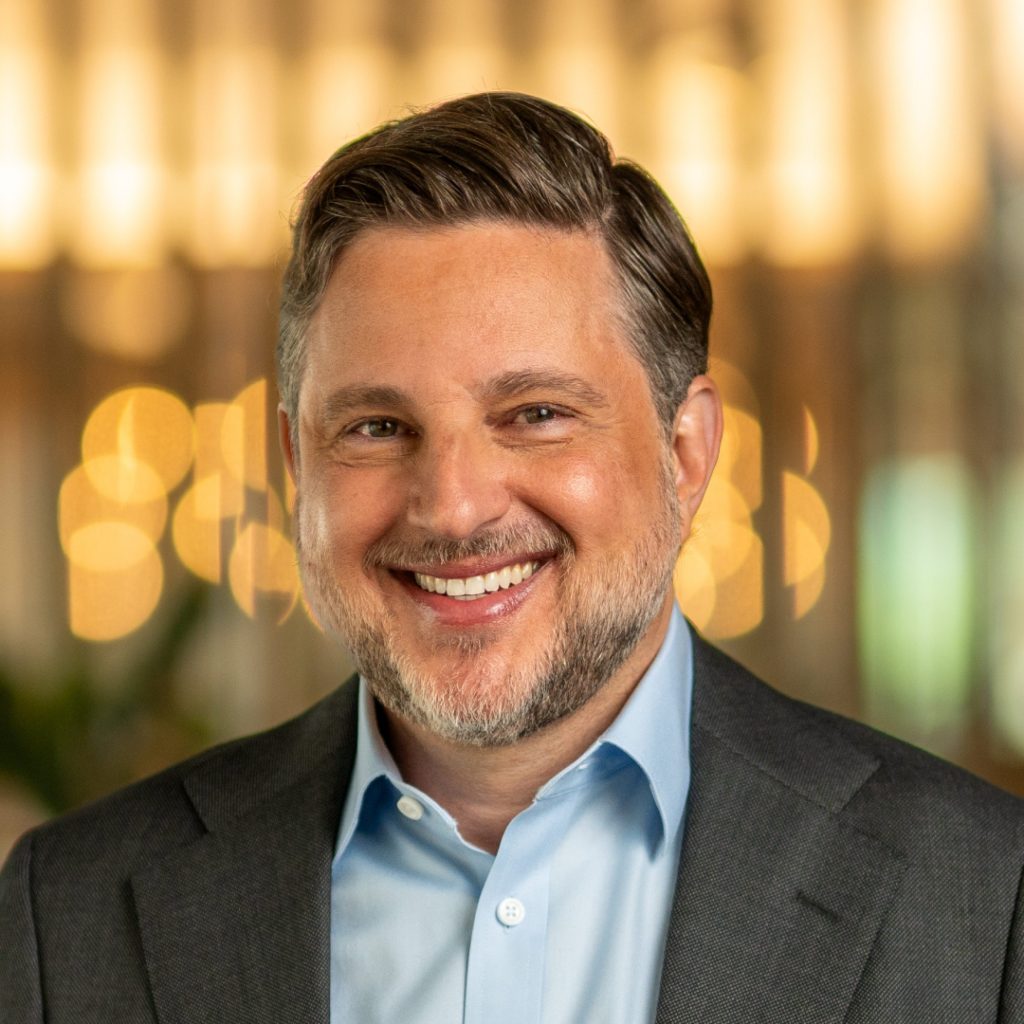
Peter Mintzberg has officially taken over as Grayscale's CEO, one of the oldest companies in the cryptocurrency industry, transferring power to a Wall Street veteran. Mintzberg has held senior positions at Goldman Sachs and BlackRock, and this appointment has raised questions about the future direction of Grayscale and the cryptocurrency industry.
Under the leadership of former CEO Michael Sonnenshein, Grayscale brought traditional investors into the crypto space through its Bitcoin trust products. Then in August 2023, Grayscale won a legal battle with the U.S. Securities and Exchange Commission (SEC), advancing the process of a Bitcoin ETF. Sonnenshein joined Grayscale as a salesperson in 2014 and became CEO in 2021.
However, despite paving the way for the flourishing Bitcoin ETF today, Grayscale has had to face larger competitors such as BlackRock and Fidelity. Since launching the Bitcoin ETF in January, Grayscale has seen continuous outflows of managed crypto assets. Adding to the challenges, its parent company, Digital Currency Group (DCG), has been busy dealing with lawsuits from the New York Attorney General and the SEC.
Mintzberg previously worked for 20 years at a competitor of Grayscale, with an outstanding track record in the traditional finance sector. But as an outsider to the industry, there are questions about whether he is suitable to lead a crypto company that is striving to reshape itself.
Cryptocurrency Arms Race
When Grayscale launched its Bitcoin trust in 2013, it created something truly novel: a way for accredited investors to obtain cryptocurrency in the form of stocks, which was a very attractive alternative for many non-compliant institutions selling cryptocurrency directly at the time.
In 2015, Grayscale's Bitcoin trust began trading publicly on the OTC market, providing early buyers of GBTC (the stock code for the Bitcoin trust) with lucrative arbitrage opportunities. These investors bought GBTC (and later trust products for assets such as Ethereum) ahead of time, then sold them at a premium to retail investors hoping to participate in the crypto boom, reaping substantial profits.
However, the trust structure meant that investors could not redeem their GBTC shares at the actual price of Bitcoin, and these trust products began trading at a discount in early 2021. As a result, several cryptocurrency companies, including Three Arrows Capital and FTX, collapsed the following year. Adding to the woes, investors were angered by Grayscale's continued charging of a high 2% management fee.
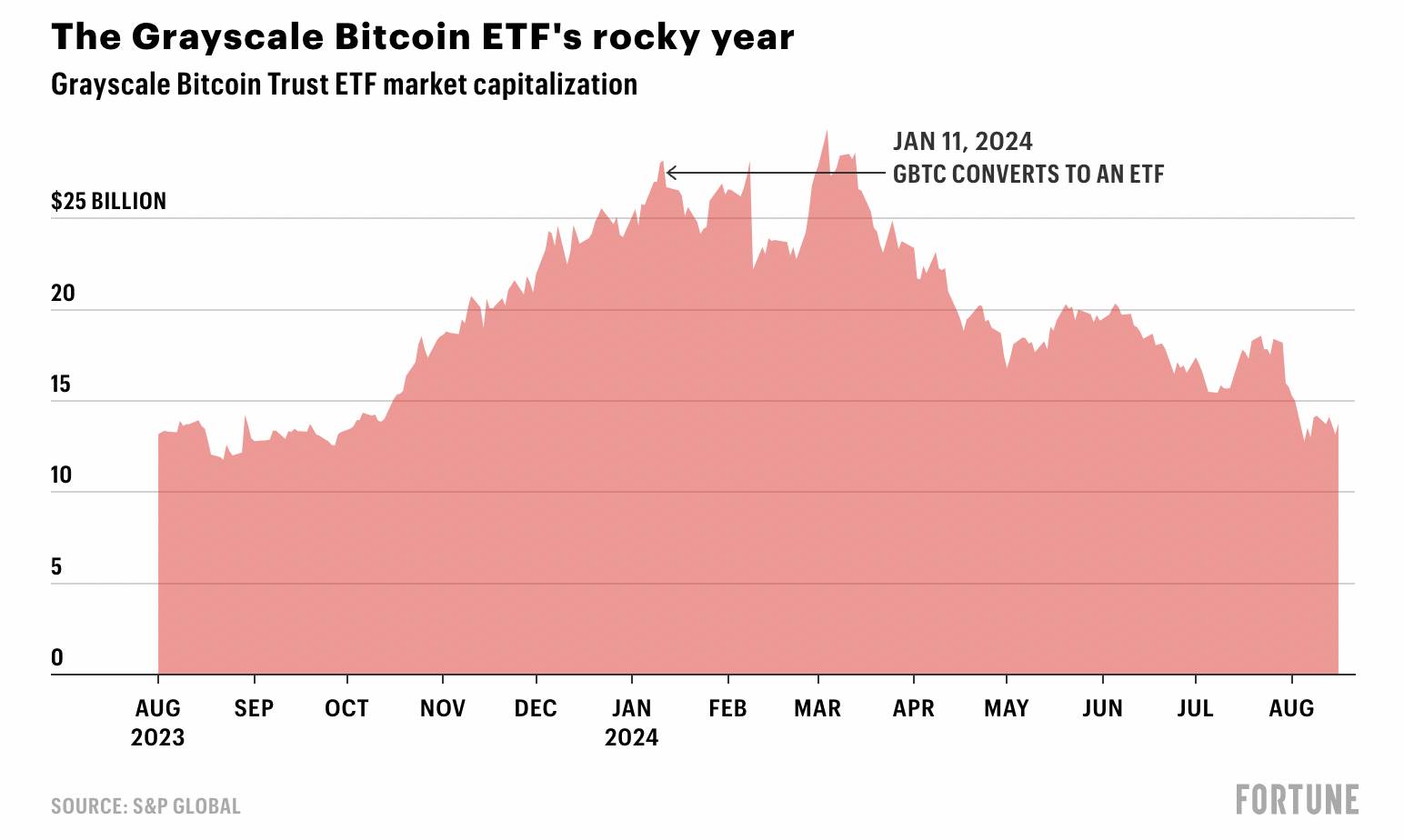
This led Sonnenshein to sue the U.S. Securities and Exchange Commission (SEC), forcing the SEC to approve its long-standing application to convert trust products into ETFs, as ETFs allow investors to redeem physical Bitcoin. In 2023, the court ruled in favor of Grayscale in a landmark decision for the cryptocurrency, ultimately leading to the launch of the Bitcoin ETF in January 2024.
Despite Sonnenshein leading Grayscale to success, the company still faces a series of challenges. Competitors like BlackRock and Fidelity have set ETF fees close to zero, while Grayscale has only reduced its fees from 2% to 1.5%. Investors have flocked away from Grayscale and embraced its competitors. Bloomberg analyst Eric Balchunas told Fortune, "Sonnenshein is in a dilemma. On one hand, the company needs funds, and on the other hand, it wants to remain competitive in the ETF field. These are conflicting."
According to The Wall Street Journal, Grayscale's board and DCG began looking for a new CEO at the end of 2023, when the Bitcoin ETF had not yet been officially approved, but the court victory had paved the way for it.
According to sources, the board decided to dismiss Sonnenshein from his position because they hoped to find a more experienced leader for Grayscale in its new growth stage, enabling the company to compete with large companies such as BlackRock and Fidelity. A person close to Sonnenshein questioned this claim, stating that the decision was made jointly because Sonnenshein had worked at the company for 10 years.
Mark Shifke, CFO of DCG and chairman of Grayscale's board, said in a statement shared with Fortune, "Peter has the experience, vision, and maturity of a seasoned C-level executive, having worked at some of the world's largest asset management companies. Under Peter's leadership, Grayscale will be better positioned for the next stage of growth."
Regulatory Burden
Despite Sonnenshein successfully completing the conversion of trust products, the ETF continues to see outflows of around $20 billion, bringing new pressure to the company. "Grayscale is finding it difficult to withstand this outflow of funds," Balchunas said. "I have never seen a situation like this."
An unnamed executive from another ETF issuer told Fortune that Grayscale may be looking for a leader without the regulatory burden that Sonnenshein had, even though Sonnenshein has never been accused of any financial wrongdoing. As major investment banks like Morgan Stanley began allowing advisors to recommend Bitcoin ETFs to clients, Grayscale hopes its products can be included in the list of trusted products. The executive said, "They want someone with extensive experience in this area, and this person has no regulatory issues."
Steven McClurg, Chief Investment Officer of Grayscale's old rival Valkyrie, once bid to manage Grayscale's Bitcoin trust. McClurg told Fortune that Grayscale has been working hard to prove its legitimacy by recruiting David LaValle. LaValle joined Grayscale in 2021 as the global head of ETFs, having previously worked at Deutsche Bank and Nasdaq. The hiring of Mintzberg represents Grayscale's next move.
McClurg said, "Grayscale needs to make a lot of effort to catch up with Invesco, BlackRock, and Fidelity. DCG already has enough problems, and it may take them several more years to get out of regulatory trouble."
The Arrival of Mintzberg
Mintzberg's arrival at Grayscale comes at a critical time. Grayscale recently launched two key products in the past few weeks, including "mini" versions of Ethereum ETF and Bitcoin ETF with lower fees. According to a letter shared with shareholders by DCG this week, Grayscale managed $28 billion in assets at the end of the second quarter, providing a significant source of revenue for its parent company.
However, the future path for Grayscale is uncertain due to the competitive situation facing its two flagship products. There were rumors of Grayscale being acquired when the Bitcoin ETF was launched, but the high price and regulatory burden made potential buyers hesitant. An unnamed competitor told Fortune magazine that hiring Mintzberg can be seen as a commitment to keeping Grayscale competitive and as a strategy to improve the company's image before a potential acquisition.
Mintzberg is an experienced operator who has held strategic and investor relations positions at companies currently offering crypto ETFs, such as BlackRock and JPMorgan. According to Mintzberg's LinkedIn profile, he also led Goldman Sachs' crypto asset strategy from 2021 to 2023.
Mintzberg also seems satisfied with this career transition. According to a source, last Wednesday, he spent his last day at Goldman Sachs and started his new position at Grayscale a few hours later. Mintzberg declined to be interviewed for this article, showing a very low-key approach for an incoming CEO.
A spokesperson for Grayscale told Fortune, "Peter is a seasoned professional in the asset management industry with deep expertise and leadership in driving customer-centric growth strategies."
Mintzberg was born in Brazil and entered Harvard Business School in the late 1990s, starting his asset management consulting career at McKinsey.
In 2019, Obermeyer Funds was acquired by Invesco, where Mintzberg was working at the time. Loren Starr, former CFO of Invesco, told Fortune that Mintzberg played an important role in helping the new company handle investor relations during the "confusing" phase of communication with investors. Mintzberg will face similar challenges at Grayscale as the company tries to compete with larger competitors offering lower fees.
Balchunas stated that in addition to expanding its product range (including a new product focused on artificial intelligence), Grayscale's main task is to engage in ETF negotiations using relationships with large institutions. He told Fortune, "Sonnenshein is more famous as a crypto fund manager, while Mintzberg has rich experience and background in traditional finance." "If you were to design the perfect CEO for an asset management company, Mintzberg would be the best choice."
免责声明:本文章仅代表作者个人观点,不代表本平台的立场和观点。本文章仅供信息分享,不构成对任何人的任何投资建议。用户与作者之间的任何争议,与本平台无关。如网页中刊载的文章或图片涉及侵权,请提供相关的权利证明和身份证明发送邮件到support@aicoin.com,本平台相关工作人员将会进行核查。


