New things inherently carry a sense of fear, which is part of the brand.
Host: Imran Khan, Co-founder of Alliance
Guest: Mike Solana, Chief Marketing Officer of Founders Fund
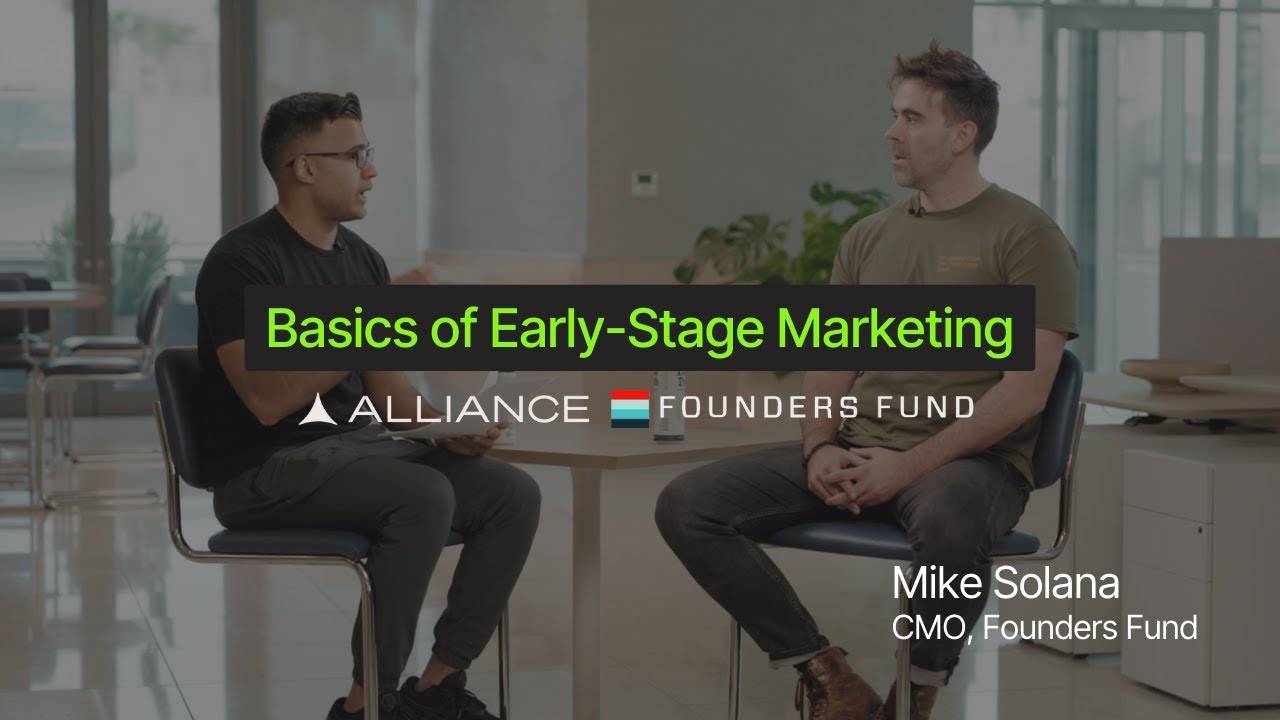
In the field of venture capital, Founders Fund is a legendary presence.
In 2002, Peter Thiel, known as the "Godfather of Silicon Valley," sold the partnership-founded PayPal to eBay for $1.5 billion and founded Founders Fund in 2005. The fund mainly invests in consumer internet companies, with a track record including Facebook, SpaceX, Palantir, LinkedIn, Spotify, and other prominent Silicon Valley enterprises. Currently, Founders Fund's assets under management have exceeded $12 billion.
In April 2024, the largest accelerator in the crypto world, Alliance, announced a strategic long-term investment from Founders Fund, with the investment amount undisclosed. As part of the investment, Founders Fund will provide support to the investment portfolio companies of Alliance.
As a "bonus" of this investment, Imran Khan, co-founder of Alliance, held discussions with several partners and marketing executives of Founders Fund, most of whom have direct entrepreneurial experience, to explore how founders can drive sales and growth of startups, build cryptocurrency brands, and find suitable partners… Condensing various entrepreneurial insights.
TechFlow has translated this dialogue collection into Chinese to share with everyone.
Summary
In this interview, Mike Solana, Chief Marketing Officer of Founders Fund, and Imran Khan, co-founder of Alliance, had an in-depth conversation about Web3 and the cryptocurrency industry, covering how to establish and develop a brand in the current market. In the conversation, Mike discussed the importance of innovative thinking, brand building, and how to effectively utilize existing communication channels in restrictive environments. Mike provided practical advice on how to build a strong network and personal brand through Twitter, podcasts, press releases, and other means.
Mike's Background: Mike Solana is the CMO of Founders Fund, responsible for brand operations and creative marketing, with over 10 years of experience. Before joining Founders Fund, Mike worked in the publishing industry and currently operates a media company called Pirate Wires, involving writing, social media, and podcasts.
Brand Building: In brand building, Mike emphasized the inherent fear of new things, which is part of the brand. Founders need to confront this fear and boldly express their unique views and heterodox thinking. He mentioned that there is a need for a yet-to-be-seen way of dialogue, especially in the tech industry, which is the original intention behind their launch of the hereticon event.
The Importance of Writing: Mike mentioned that not everyone is a natural writer, but everyone should find a way of expression that suits them. For those not good at writing, he suggested using their other strengths, such as video production or podcasts. He also emphasized the importance of writing ability, especially in the professional fields of creative marketing and content creation.
Marketing on Different Platforms: Addressing the special circumstances in the crypto field, Mike discussed marketing restrictions on Facebook and Instagram, and recommended alternative platforms like Twitter and YouTube. He also mentioned that electronic publications are a powerful tool to expand influence through video or audio interviews.
Building Your Network: When building a personal or company brand, it is crucial to establish relationships with people who share common values. Mike suggested that by connecting with these people, your social media influence and overall marketing strategy will be more effective.
Timing of Releases: For founders who are concerned about posting and expressing their concerns publicly, Mike suggested releasing content only when you are fully prepared and willing to bear the consequences. He emphasized the risk of releasing content and advised careful consideration before posting.
Hope in Low-Noise Moments: "Low-noise moments" on social media or public forums, when attention is low, can be seen as an opportunity to establish deep connections with like-minded individuals. Mike believes this is the best time to understand and be understood, and should be cherished.
Mike's Interview Strategy: In the hiring process, Mike focuses more on the candidates' actual experiences and abilities rather than their educational background. He is interested in candidates' project experience and personal achievements, and whether they can independently complete tasks.
Writing for Your Voice: Writing should reflect the author's personality and style. Mike advocates for writing to showcase personal characteristics, allowing readers to feel the author's unique voice. He encourages writers to stay true, express their views, and emotions.
Surrounding Yourself with Excellent People: Mike emphasizes the importance of surrounding oneself with people in both professional and personal life. He believes that being around excellent people with similar values can not only enhance oneself but also mutually drive each other's growth.
The following are the main contents of this conversation:
Mike's Background
Imran: Mike, could you give our audience a brief background about yourself?
Mike:
I am the CMO of Founders Fund, responsible for creative marketing, and I have been doing this for over 10 years. I used to work in the publishing industry, but for most of my adult career, I have been working for Peter. I also operate a media company called Pirate Wires. So my work involves writing, Twitter, and podcasts.
Brand Building
Imran: In your article, there is a concept that attracted me, which is the concept of heterodox thinking, that is, thinking outside the box and being contrary to the mainstream audience's way of thinking. I think this is often overlooked in many places. The reason why cryptocurrency attracts me is that it is an industry that no one really wants to build. Many of our founders are building a space, and they are a bit worried about expressing their opinions and speaking openly. So, what important factors do you need to consider when building a brand?
Mike:
We may first see the heterodox part, and people may be worried about having to express their thoughts. This is a brand building issue. If we only talk about creative marketing, and you are trying to make people see what you are doing, and you think it is important, then why do you think this thing is important? It may be because it does not exist yet, just like Pirate Wires, I think what we are doing there does not exist. That's why I care about it.
At Founders Fund, I found that many of our ideas are heterodox, and I think this is a way of debate, especially in some tech industries that do not yet exist. So this is a scary thing, and new things are generally scary. If you are developing one of them, then that is your brand. What you are developing is your brand. So you may be afraid to speak, but the only way you have is to move in that direction. Many heterodox things you don't have to say out loud. Generally, I advise against doing so. Just like the founders of crypto companies have no reason to talk about abortion or other things. But if there is a publicly controversial belief in economics or cryptocurrency, and if you believe in it and are building it, you should definitely invest in it.
The Importance of Writing
Imran: When it comes to writing and building a brand on Twitter, how did you start? How do you view writing?
Mike:
I have been writing since I was young. Twitter is a bit like a stand-up comedian sometimes going to a club that isn't being recorded, just putting down a little recorder, using it as his creative material. I think of something and then throw it out there, see what I can do, how I can express my ideas. But writing longer articles might be something I have to build up to. I think writing a diary is really helpful. In 2020, I started a newsletter called Pirate Wires, and suddenly I had an audience, people were expecting something every week. So you just, it spreads, the more you write, the easier it becomes.
Imran: So, do you have a general guideline for founders who want to enter the market through writing?
Mike:
Not everyone is a good writer. A few years ago, when I first started working at Founders Fund, I was a writer and an editor, I knew how to write. But everyone around me was completely good at other things, whether it was business or engineering, inventors I really respected, I liked what they were doing. Everyone I met in San Francisco, everyone I thought was great, was doing something I couldn't do. I was uncomfortable with that. In the first free summer after I moved to San Francisco in 2011 or 2012, I tried to learn coding on my own because I had this insecurity. I thought I could do it, just like I play with Javascript, I thought Ruby on Rails and Python were the same. About a month or two later, I realized I could work on this for a long time. But I was already writing, I already had the advantage of writing. When people say, oh, you're a good writer or a tech person, they're not complimenting me. I realized that I already had a slight advantage in what I should focus on, I was already doing better than others, so I should focus on that.
When shaping your brand, you need to learn to use the media. Some people are good at Instagram, some are good at short videos, some are good at podcasts, but not everyone will be a long-form writer, even on Twitter, for example, I really like short-form writing. There are many Twitter users I like, and not all of them can write a long article, not everyone can turn a tweet into a complete article. So my first advice is, if you have the talent for writing, you don't necessarily have to write. You should first examine each of your communication skills and find out which one you are best at and like the most, it could be a podcast, it could be YouTube, there are countless different ways. With the development of technology, new media will also emerge, it could be anything.
Marketing on Different Platforms
Imran: In cryptocurrency, you know, there are many channels that are prohibited for us, you know, marketing on Facebook or Instagram is prohibited. Our only means of communication is Twitter, with a part on YouTube. So, for cryptocurrency founders, should they only use podcasts and writing to shape their brand? If founders are not good at writing or tweeting. Should they enter the podcast? For example, what creative elements should they do that have not been done today, or what would you recommend?
Mike:
Perhaps the assumption here is that Twitter is always the place you can go, but I don't know if that's true. So if you think that this is the only place where you must be creative, there is already a problem, you shouldn't put all your eggs in that basket, because if you build everything there, but tomorrow Elon decides we can't do anything related to cryptocurrency here anymore, then you're done. So you have to be very flexible, and you even need to be a writer to use writing for marketing.
For example, we now have electronic publications, electronic publications are very powerful. There is nothing to stop the authors of electronic publications from interviewing you, whether it's video or audio, and then sending it to all their subscribers, just like you can go to other people, I think there are many opportunities for people in the cryptocurrency field, Facebook, substack, electronic publications, videos, audio, long-form, short-form. I think you can choose one you are good at, then focus on it, and do it regularly, or find someone who is good at it, you don't have to be that person. Maybe you don't want to communicate at all, but your colleague or co-founder is good at it, then I'll give them the resources to do it.
Building Your Network
Imran: So, the consensus in cryptocurrency is to use Twitter as a launchpad. Another way is to break free from conventional thinking and use electronic publications, podcasts, and other methods to leverage your strengths. What tools do founders have in terms of distribution channels, and how should they use them? Or should they use one of them? Your previous answer was, maybe Twitter or writing is not the best way for founders, it just depends on their innate communication abilities, so it could be a podcast, it could be any other marketing channel. So how should founders use these media? You mentioned an electronic publication, should they consider launching their own electronic publication?
Mike:
You can be friends with people who have electronic publications, that's how Twitter works, you will be amplified by your friends on Twitter, that's how everything works, just like you are stronger in a scene than you are alone. So I think in terms of branding and marketing, before you talk about how to shape your personal image online or similar things, you need to work in this field and have friends in this field, just like having a network part is the first thing.
Just like who you are friends with, on Twitter you just talk to those people, when you're early on everyone's personal, you're early on Twitter, the way you grow is almost always talking to your friends, just like a network, you amplify each other, and then you build from there. I think a lot of media works like this. So I think just like you want to focus on what you're doing and what those who are doing what you like are doing, and then you go talk to them.
Imran: So the idea here is to have founders build their network with your hopeful friends.
Mike:
I think so, especially in the cryptocurrency field, there are a lot of people, I think doing this in the cryptocurrency field now might be better than during the peak of the bull market a few years ago, because the people who stay in the cryptocurrency field really care about it, they are like real enthusiasts. So I think now is a good time to make friends in this field, they are communicating with each other online, you just need to participate in the conversation, contribute, provide information, I only tolerate when I mention something smart or interesting. If they are interesting, I'll accept it, if they teach me something, I'll accept it. I think in general these two things are like, enjoying yourself online and sharing real information that is valuable to people and you are also interested in, that is the path to success.
When to Publish
Imran: Alliance operates an accelerator program, one thing we tell them is to talk to the public about what you are building. To some extent. Many founders are actually afraid to just post their first tweet. They are just worried that people will have their own opinions, as you mentioned earlier, they are worried about being attacked. What would you tell founders who are worried about this?
Mike:
If you don't like it, don't do it. I think you have the right to say whatever you want to say, but you have to be responsible for what you say. I am someone who runs a media company and works for Peter, I'm not too worried about the consequences of expressing my thoughts. In fact, it's my job. For me, it's easy to encourage people to speak out. I think you should talk about the conversations you want to have more thoughtfully and strategically. If you really believe something is important and you are actually the one talking about it, then be a little brave and express it boldly. But if you are a founder of a crypto company, do you really need to talk about the war in Israel now? Personally, if you are a little worried about what might happen online, I might stay away from that topic.
Imran: You mentioned a very important point, that the cryptocurrency market operates in bull and bear cycles, with bull markets bringing in many people who are only interested in profit. In bear markets, only those who love the field remain. Many of the friendships I have built over the years have been mainly in bear markets, and we usually care about each other. I want to ask, how do you maximize these relationships?
Mike:
Similar things happened to me when I became a writer, mainly on Twitter, and later through my own company, but that was when my attention and the noise around me decreased a lot. Now if I tweet, I can't really pay attention to all the comments and things. Sometimes people ask, how do you deal with the complaints, I don't think it's all noise to me. But in the early days, I wouldn't get any likes and comments, so you will encounter one or two people like that, who truly understand what you're saying, and you truly understand what they're saying.
I think in these low-noise moments, sometimes it feels like a failure, but it's a huge gift, because when there's less noise, it's easier to catch the signal, it could be a person worth connecting with, or it could be a concept or idea, I think it's easier to share in these moments. So I would say, if you can change your mindset, it's a gift, you should make the most of it, make as many friends as possible, because once the noise comes back, it will be more difficult, you won't make friends.
But I think anytime you're in a bull market, it's like that. It's like a bunch of self-absorbed anti-social people, they only care about profit. So that itself might be interesting, crazy things might be happening, but you won't make friends. Now maybe just focus on that, and in terms of maximizing, I don't think of it that way. I think it's like you're just following your interests and caring about the same things as you, and all the benefits emerge from there. It just happens. I don't think it's a mathematical kind of thing, I think if you're just watering the garden, beautiful things will grow from there.
Mike's Interview Strategy
Imran: I think this is very important for founders in the cryptocurrency field, especially, you actually don't care about their background, but care about their writing. When you read someone's article, what are you evaluating?
Mike:
I care about their personal background, such as their experiences, where they spend their time, but I don't care where they went to school. But when it comes to Founders Fund, it depends on what their job is, if they are looking for a job like video work or design, I don't care how good of a writer they are. But at Pirate Wires, they are often looking for writing jobs, they have to be a good writer. It's important what projects people have been involved in, what excites them, what achievements they have, whether they can accomplish things that many people can't. But I think there's a hidden fact that ordinary people don't get things done, they're just waiting to be told what to do. You should determine what you need to do without being told, these are all important to me.
Writing for Your Ideas
Mike:
In terms of writing, when I read a creator's work, I want to know who this person is. You can feel that they might be writing about a bag of Doritos in Subway. I get a sense of their personality from it. It's a very niche field. For cryptocurrency founders who want to be good writers, good writing should give others the feeling that only this person can write this kind of content. Tech celebrities think good writing is stripping away the information and important parts, and the most famous advocate of this writing style is Hemingway, who did it first, it's a style. Just like when you read someone's work, you can discern their style, I'm someone who only writes important content, others can write like this too, but it doesn't sound like them, they have their own style.
Good writing has style. Not only do you need to say some valuable things clearly, if it's a persuasive argument, you need to present it in a compelling way. But at the same time, I also think that an article that people remember, that they are willing to come back to and share with friends, must have life. When I stop, my writing level improves. We may all have a natural impulse in communication, we might think, I shouldn't do this. I think this is the path to finding your personal style, it's also the starting point. Writing is like music to me, it has a rhythm and melody. I don't just want to say something, I want to take you on my journey, I'm also looking for this feeling in other authors.
Associating with Excellent People
Imran: You mentioned the intuition part, I think that's very important, because sometimes I think about what I've written, and then delete it. For example, you can write a report on Twitter, describing what you're doing or other things, following your intuition to create the feedback you might want is possible, because you just talked about following this process.
Mike:
Some writers want to know people's opinions on certain events. They're not just conveying facts, I'm also interested in their personal views. It's not entirely because of their views, it's more about seeing their framework, the way they speak, you care more about this person, not what they said. A writer writes something great, and then the reader connects with it, I think the connection between two people is like the connection between a writer and a reader, it's a human experience, it's not just about collecting information, we want to know what our friends have to say about things, so in writing, your job is to be that friend.
Imran: So the key is to be yourself, right?
Mike:
You want to be yourself, but you want to be a version of yourself in disguise. I think that's another part, you have to amplify those parts that feel like you to some extent very loudly. You're doing something that others haven't done, that's your specialness.
Imran: One signal I got from our conversation with you is that for founders who want to build a brand on the internet, they can write, they can do podcasts, but one thing that's not very common in our network is being able to enjoy making friends with those who have very strong networks, what are you trying to express? I think you used an example of becoming friends with people who run electronic publications, I don't think that's a common practice. Can you talk more about using it as a marketing or growth strategy?
Mike:
Yes, emphasizing again, I can't talk about it from a strategic perspective, it's just my assumption of how the world works, I want to be with people who are doing what I think is cool. They share common values and also have common people they like, it's very interesting to communicate with them, and it's also very effective for me. This is a network, if you want to learn math, if you want to be an engineer, that's your network, that's your distribution channel, these are the people you're going to collaborate with, these people will sell your product, but they're also like friends. Making friends with those who are doing what you think is important, those you admire, being with these people, they will push you to grow, they will help you, and you will help them, you want your friends to become better versions of themselves, just like you want the best people in the world around you, because you're stronger together, that's how human networks operate.
免责声明:本文章仅代表作者个人观点,不代表本平台的立场和观点。本文章仅供信息分享,不构成对任何人的任何投资建议。用户与作者之间的任何争议,与本平台无关。如网页中刊载的文章或图片涉及侵权,请提供相关的权利证明和身份证明发送邮件到support@aicoin.com,本平台相关工作人员将会进行核查。
