In short, everything is a Meme.
Written by: Yash Agarwal
Translated by: DeepTechFlow
A discussion and insights on how and why Meme provides a fairer distribution compared to governance tokens supported by VCs and TradFi - lessons for crypto founders.
The Chief Technology Officer of A16z recently argued that Meme coins are "not attractive to builders" and "may even be net negative when considering externalities."
- "A series of false promises that mask a casino"
- "Shifted public, regulatory, and entrepreneurial perceptions of cryptocurrencies"
- "Not attractive from a technological standpoint"
And so on.
Meanwhile, Chris Dixon published a more sobering article, emphasizing the systemic absurdity of U.S. securities laws — highlighting how the best projects get caught in regulatory quagmires, while Meme coins are able to stand out because they do not "pretend that Meme coin investors rely on anyone's management efforts." This indirectly acknowledges the masquerade of the rest of the cryptocurrency space — the various teams' management efforts for protocols, which we call governance tokens.
Our goal is not to defend Meme coins (or governance tokens) or to diminish their importance. Our purpose is solely to advocate for fairer token distribution.
Governance tokens are Memes with extra steps
I believe that all governance tokens are essentially Memes, and their value depends on the Meme origin of the protocol. In other words, governance tokens are Memes dressed in suits. Why do I say this?
Typically, governance tokens do not provide any income distribution (due to securities laws), and they also perform poorly as community-oriented decision frameworks (holding tends to be concentrated, participation enthusiasm is low, or DAOs generally suffer from dysfunction), making their role similar to that of a Meme, just with some extra steps. Whether it's ARB (Arbitrum's governance token) or WLD (Worldcoin's token), they are essentially Memes attached to these projects.
This is not to say that governance tokens are useless. Ultimately, their existence serves as a constant reminder of why legal updates are needed. That being said, governance tokens in many cases may cause as much harm as Memes:
For builders: Many well-known VC-backed governance tokens start distribution before the product is even launched, leading to severe disillusionment. This directly damages the reputation of founders who have worked for years to gain adoption. For example, Zeus Network launched with a $1 billion FDV even before product release, making it difficult for many founders to achieve such valuations even after significant progress.
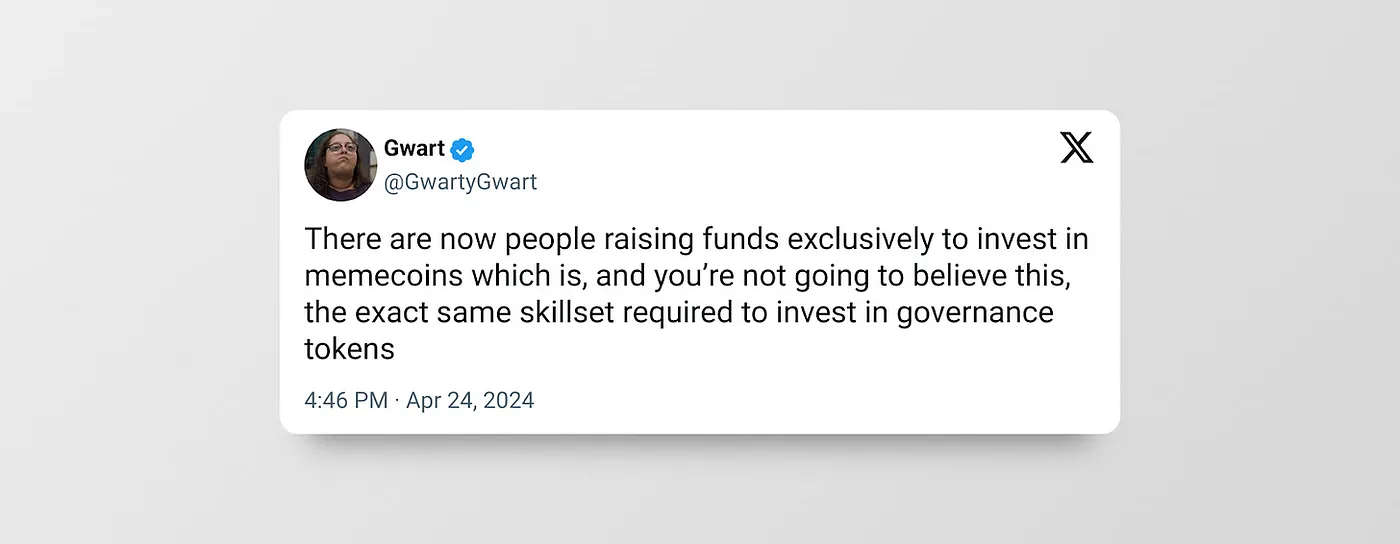
For the community: Most governance tokens are backed by VCs, launched with high valuations, and gradually transferred to retail investors.
Research on ICP, XCH, Apecoin, DFINITY, etc., shows that even ICOs from 2017 are better than the currently VC-backed low-circulating supply tokens, as most of their supply was unlocked at launch.
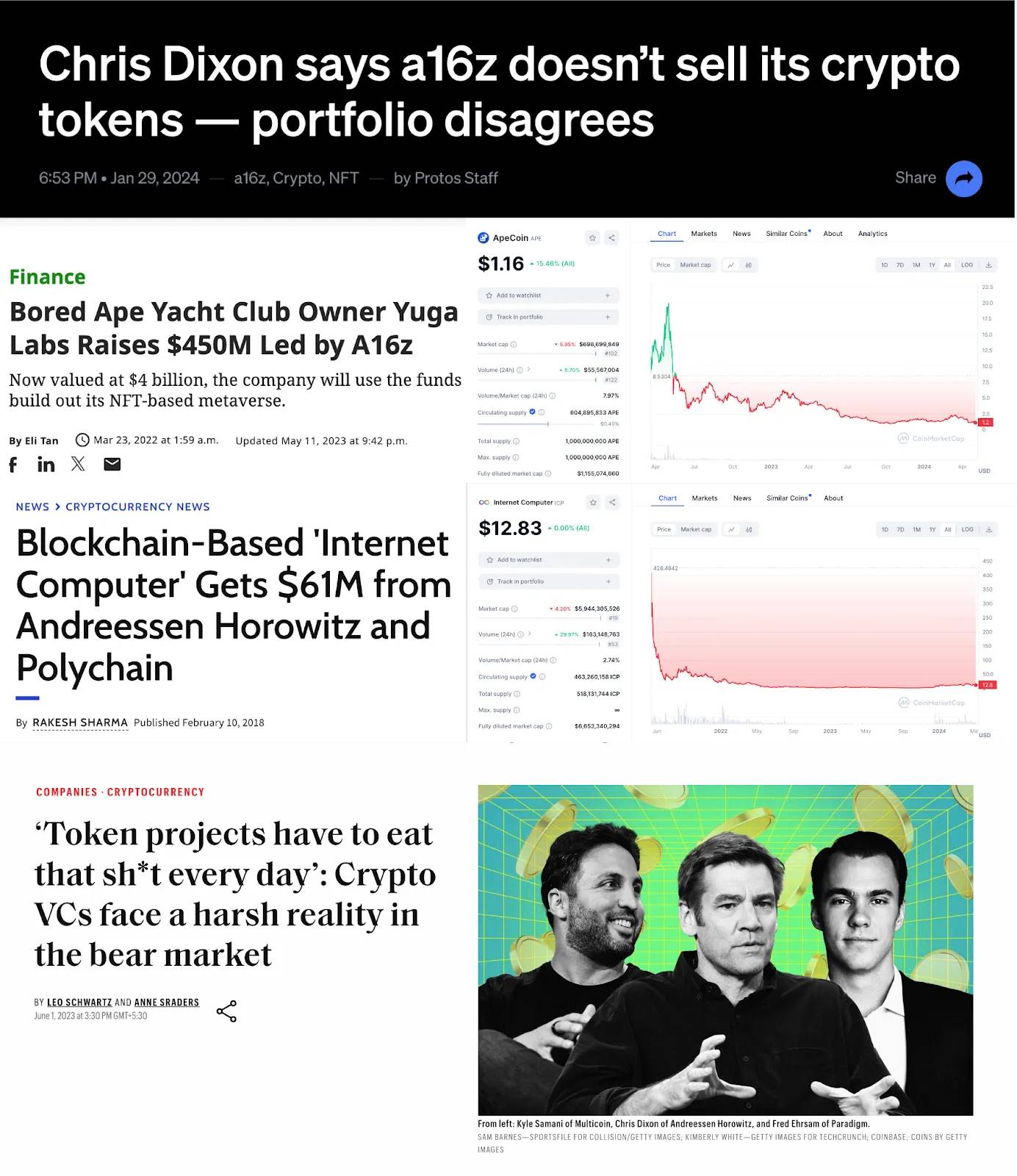
Taking a16z as an example, but researching any large VC with over $300 million funds
Let's take a look at EigenLayer's situation:
EigenLayer, arguably the largest Ethereum protocol in this cycle, is a classic example. Insiders (VCs and the team) hold a significant portion, 55%, while the initial community airdrop is only 5%. This is a typical low-circulating supply, high FDV game, supported by VCs holding 29.5% of the shares. In the previous cycle, we blamed FTX/Alameda, but this cycle, we are no better off.
The EIGENDAO managed by EIGEN is now like any Web2 governance committee, as insiders control the majority of the supply (initial community supply is only 5%). Don't forget, the entire concept of EigenLayer is re-collateralization (leveraged yield farming), making financial engineering as much of a Ponzi scheme as a Meme.
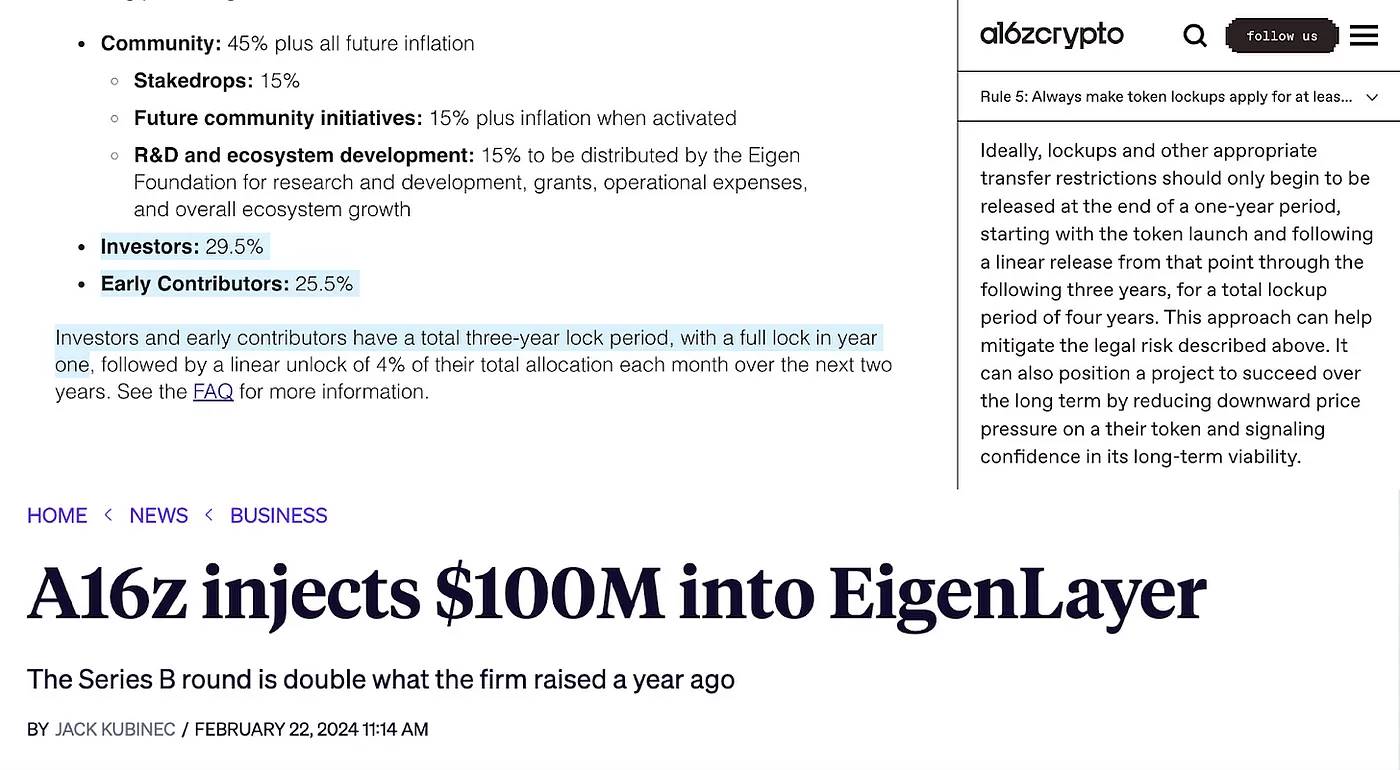
If a group of insiders holds more than half of the supply (in this case, 55%), we severely hinder the redistribution effect of cryptocurrencies, making a few insiders extremely wealthy through low-circulating supply, high FDV issuance. If insiders truly believe, given the astronomical valuations of token issuance, they had better reduce distribution.
Let the real conspiracy groups stand up
Given the absurdity of the capital formation process — we will eventually see VCs blaming Memes, while Meme creators blame VCs for causing regulatory confusion and reputational crises in the field.
But why are VCs so harmful to tokens?
VCs inflating FDV has structural reasons. For example, a large VC fund invests $4 million for a 20% stake, valuing it at $20 million; logically, they must raise the FDV to at least $400 million during the TGE (token generation event) to bring profits to LPs. Protocols are driven to list with the highest possible FDV to maximize returns for seed/pre-seed investors.
In this process, they continuously encourage projects to raise funds at higher valuations. The larger the fund size, the more likely it is to give the project a ridiculously high private valuation, build a strong narrative, and ultimately list at a higher public valuation, forcing retail sell-offs during token issuance.
A high FDV launch only leads to a downward spiral and zero attention. Refer to the case of Starkware.
A low FDV launch allows retail investors to profit from repricing and helps build community and mindshare. Refer to the case of Celestia.
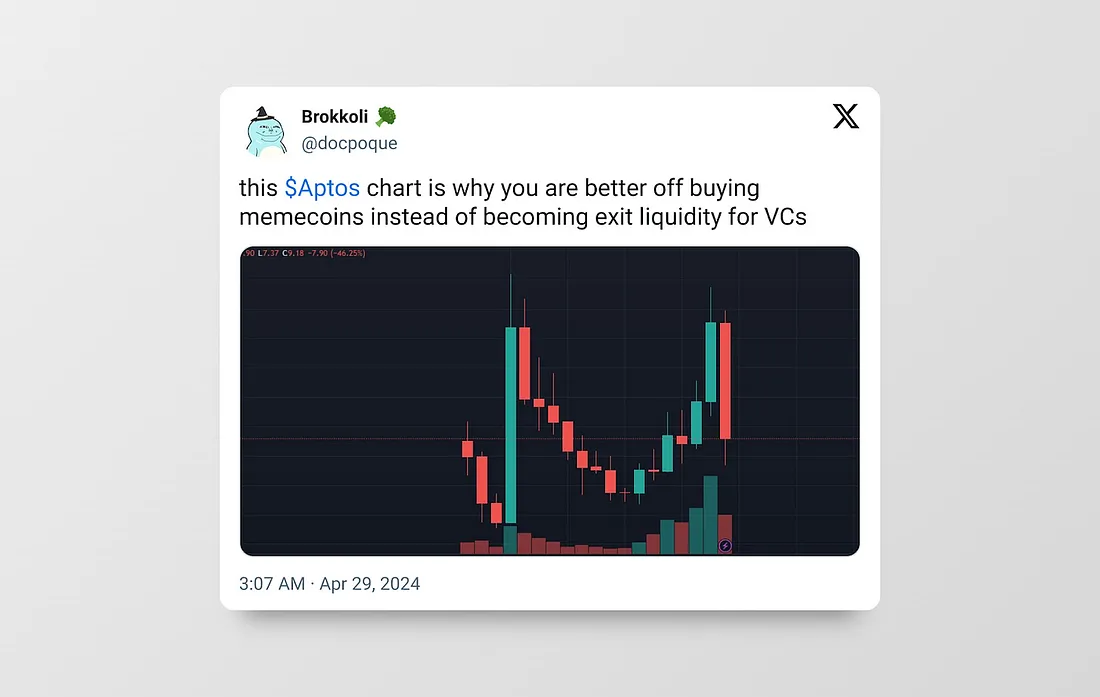
Retail investors are more sensitive to unlocks than ever before. In May alone, Pyth, worth $1.25 billion, will be unlocked, along with hundreds of millions from Avalanche, Aptos, Arbitrum, and others.
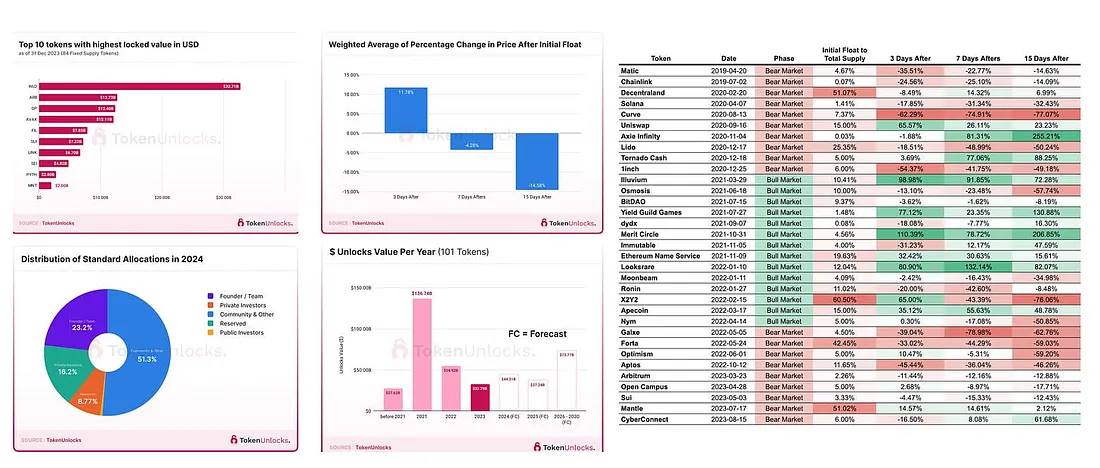
Some unlock data
Memes are a product of the financial system's collapse
It can be said that Bitcoin is the largest and oldest Meme coin, born after the 2008 financial crisis. Negative/zero real interest rates (interest rates - inflation) force every saver to speculate on new shiny asset classes (e.g., Meme coins). The market environment created by zero interest rates is filled with desperados sustained by cheap capital. Even top indices like the S&P 500 have about 5% zombie companies, and as interest rates rise, their situation is about to get worse, making them no different from Memes. What's worse is that they are marketed by fund managers, and retail investors keep buying in every month.
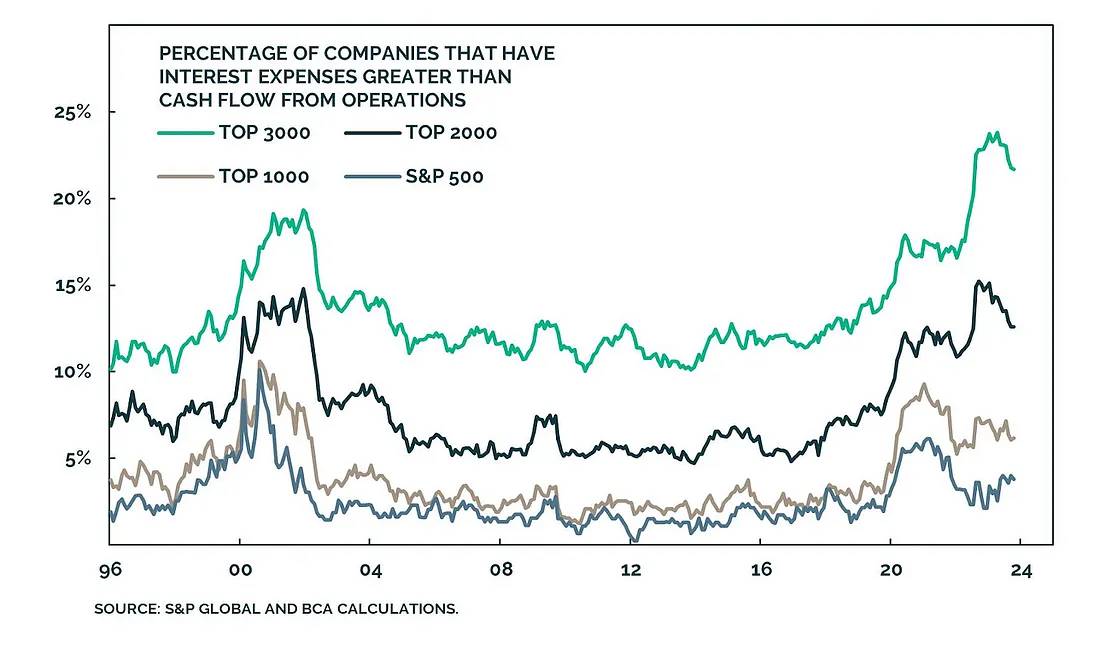
There's a reason why speculation never dies, and in this cycle, they are Memes.
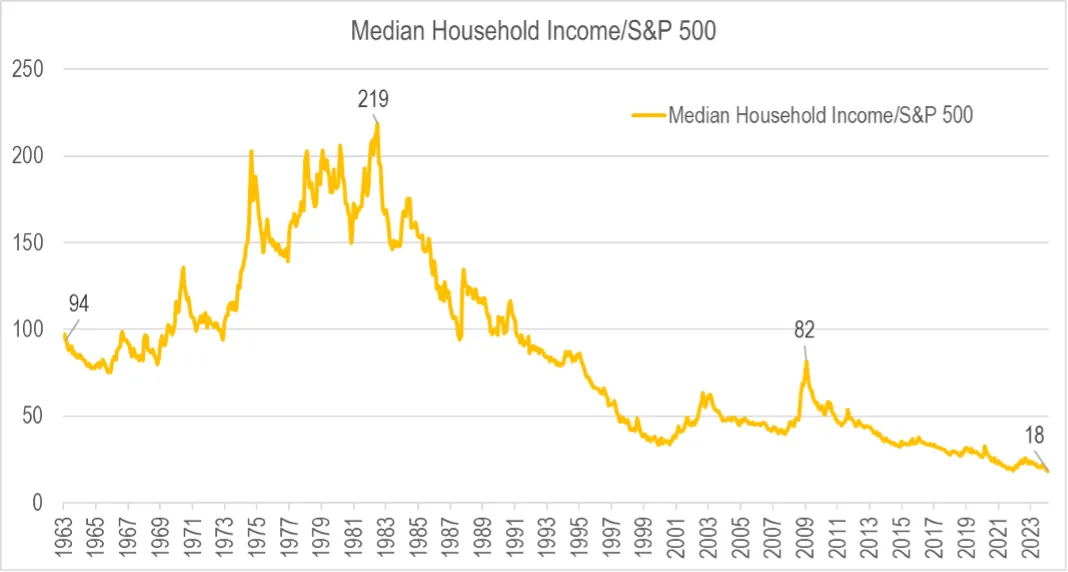
FRED via Kana and Katana
On this basis, the term 'financial nihilism' has recently gained a lot of attention. It encapsulates the view that the cost of living is choking most Americans, with more and more people unable to access upward mobility, the American Dream has essentially become a thing of the past, and the median ratio of house prices to income has reached unsustainable levels. The fundamental driving force of financial nihilism is the same as populism, which is a political method that appeals to ordinary people who are tired of the established elite — 'this system doesn't work for me, so I want to try something very different' (e.g., buying BODEN instead of voting for Biden).
Memes are testing infrastructure
Memes are not only a great entry tool for cryptocurrencies, but also an excellent way to test infrastructure. Contrary to A16z's position, we believe that Memes have a net positive impact on any ecosystem. Without Meme coins, chains like Solana would not face network congestion, and all network/economic vulnerabilities would not come to light. Meme coins on Solana have had a net positive impact:
All DEXs not only handled the highest trading volume ever, but also surpassed their Ethereum counterparts.
Money markets integrated Memes to increase TVL.
Consumer applications integrated Memes for attention or marketing purposes.
Validators can earn substantial fees due to priority fees and MEV.
Network effects in DeFi are more effective due to increased liquidity and activity.
The monthly active devices for the Solana wallet Phantom reached 7 million, and this is for a reason, as it is supported by memecoins, making it one of the most used applications in cryptocurrency at the moment.
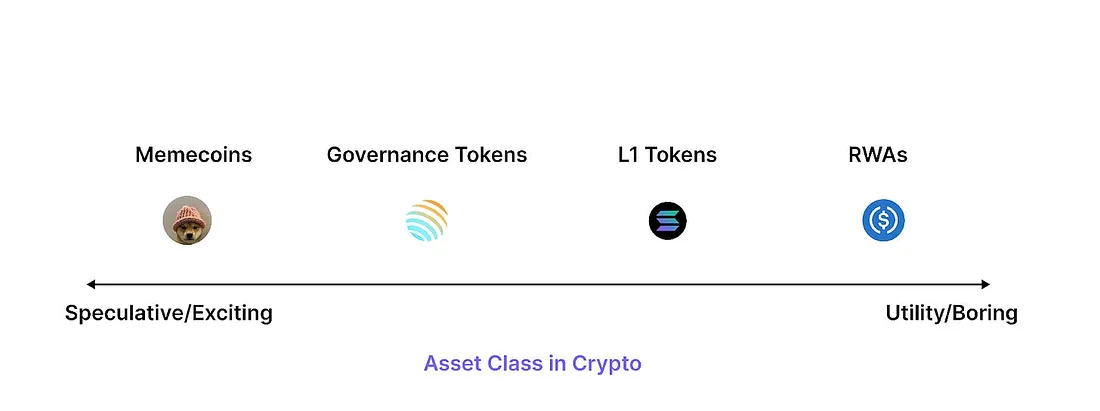
For true RWA, on-chain transactions require infrastructure with sufficient liquidity (look at the top Memes, they have the deepest liquidity apart from L1 tokens/stablecoins), pressure-tested DEXs, and a broader DeFi. Memes do not distract people; they are just another asset class on a shared ledger.
Memes as a fundraising mechanism
Memes have now been proven to be an effective means of capital coordination. Look at Pump.fun, which has facilitated the issuance of close to millions of Memes and created billions of value for Memes. Why? Because for the first time in human history, anyone can create a financial asset in less than $2 and less than 2 minutes!
Memes can serve as an excellent fundraising mechanism and listing strategy. Traditionally, projects raise a large amount of funds by allocating 15-20% to VCs, develop the product, and then issue tokens while building the community through Memes and marketing. However, this often leads to the community being eventually abandoned by VCs.
In the era of Memes, people can raise funds by launching their own Memes (no roadmap, just for fun) and early tribal community formation. Then, they can continue to build applications/infrastructure, continually adding utility to Memes without making false promises or providing roadmaps. This approach leverages the tribalism of the Meme community (e.g., holder bias), ensuring high engagement from community members who become your BD/marketing personnel. It also ensures fairer token distribution, countering the VC's low-circulating supply, high FDV pump and dump strategies.
This is already happening
BONKBot, a Telegram bot (with a daily trading volume of up to $250 million), originated from the BONK Meme, uses 10% of trading fees to buy and burn BONK. It has burned approximately $7 million worth of BONK through accumulated fees, aligning its economy with holders.
Degen, a Meme in the Farcaster ecosystem, allows contributors to reward/tip others for posting quality content with DEGEN rewards. Additionally, they have built an L3 chain for degen. Similarly, one of the most popular Memes from the previous cycle, Shibatoken, is now building an L2.
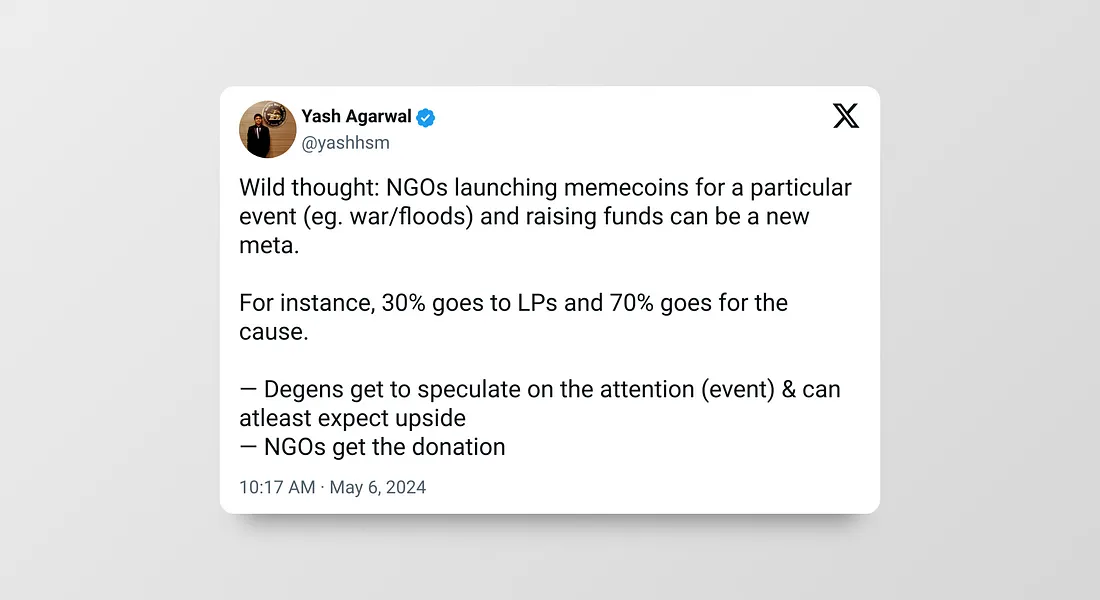
This trend will eventually lead to the fusion of Memes and governance tokens. It is important to note that not all Memes are equal; scams are common, but they are easier to expose than the scams conducted by VCs in silence.
Looking ahead
Everyone wants to be ahead of the next big event, and Memes are one of the few areas where retail investors can get in earlier than most institutions. With access to private transactions by VCs restricted, Memes provide a better potential market fit for retail capital. While Memes do make cryptocurrencies look like a casino, they do empower the community.
So, what's the solution?
Venture capitalists like a16z should pool their trades and allow anyone to participate. Platforms like Echo are perfect for this.
For VCs, put your trades on Echo, allow community participation in pooled trades, and witness the early community gathering magic of Memes.
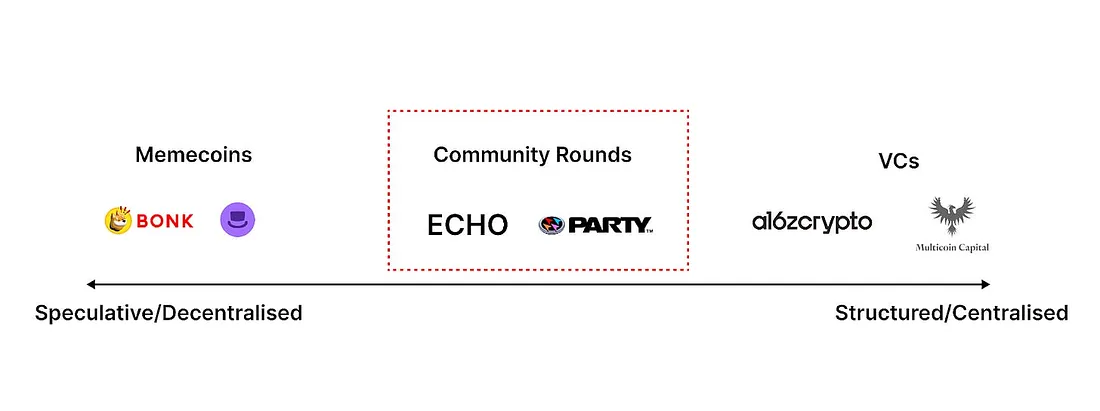
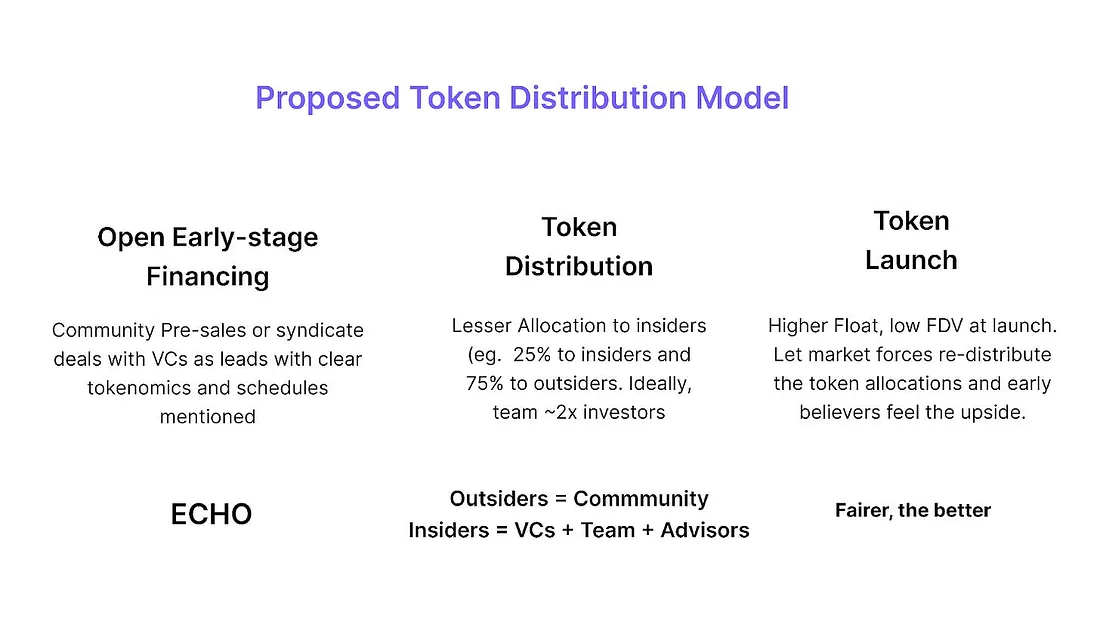
It is important to clarify that we are not against VC/private funding; we advocate for fairer distribution, creating a level playing field where everyone has the opportunity to achieve financial sovereignty. VCs should be rewarded for their early risk-taking. Cryptocurrencies are not just about open and permissionless technology, but also about open early financing, which is currently as opaque as traditional startups.
In conclusion:
Everything is a Meme.
Research Memes as a fundraising and community-building mechanism.
Projects should lean towards fairer launches.
It's time to make early financing more open.
免责声明:本文章仅代表作者个人观点,不代表本平台的立场和观点。本文章仅供信息分享,不构成对任何人的任何投资建议。用户与作者之间的任何争议,与本平台无关。如网页中刊载的文章或图片涉及侵权,请提供相关的权利证明和身份证明发送邮件到support@aicoin.com,本平台相关工作人员将会进行核查。


