Browsing the weekend market, I came up with these four points.
Author: BruceXu, LXDAO
01 Conceptualizing Public Goods - Using the Weekend Market as an Example
First of all, the weekend market is a market held in a square or parking lot on weekends. Vendors can apply for a stall and pay a certain rent to set up a stall, and then everyone can come and visit. Some sell food, some sell flowers or handmade products, and some come to play music. It looks something like this:

The market is a so-called public space, meaning it is an open space where everyone can come to play and enjoy the activities and goods in this public space.
In this public space, there is competitive and exclusionary between the stalls selling goods, especially evident among the breakfast stalls. Because people's appetites are limited, if they eat a hot dog, they are less likely to eat a basket of dumplings. This is competitiveness. Among the limited number of visitors, the more people eat from me, the more I earn.
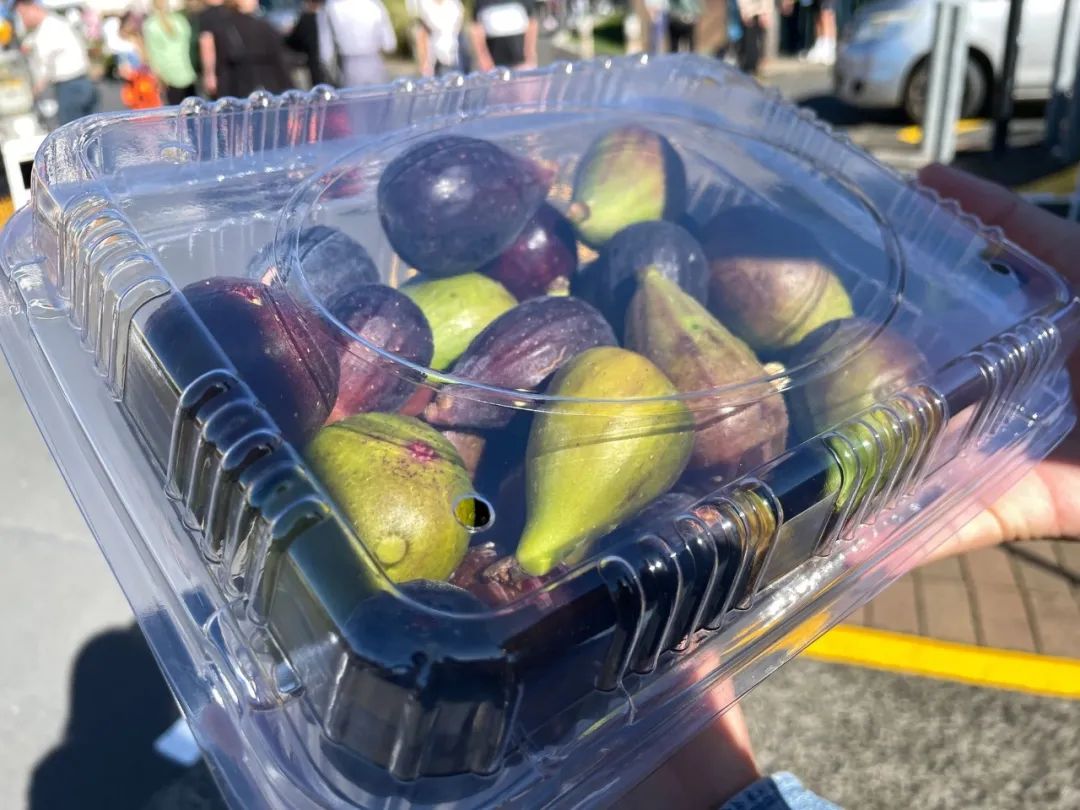
When specific items are bought by others, there is exclusivity. Once a product is sold to buyer A, it cannot be sold to buyer B. Similarly, merchants also have the ability to control whether to sell to a certain type of person, which is the so-called exclusivity. When I went, it was a bit late, so the good figs had already been picked.
In this public space, there is also a type of stall that has both non-exclusivity and non-competitiveness, which is called public goods. Yes, in the context of the weekend market, this is the stall where music is played.
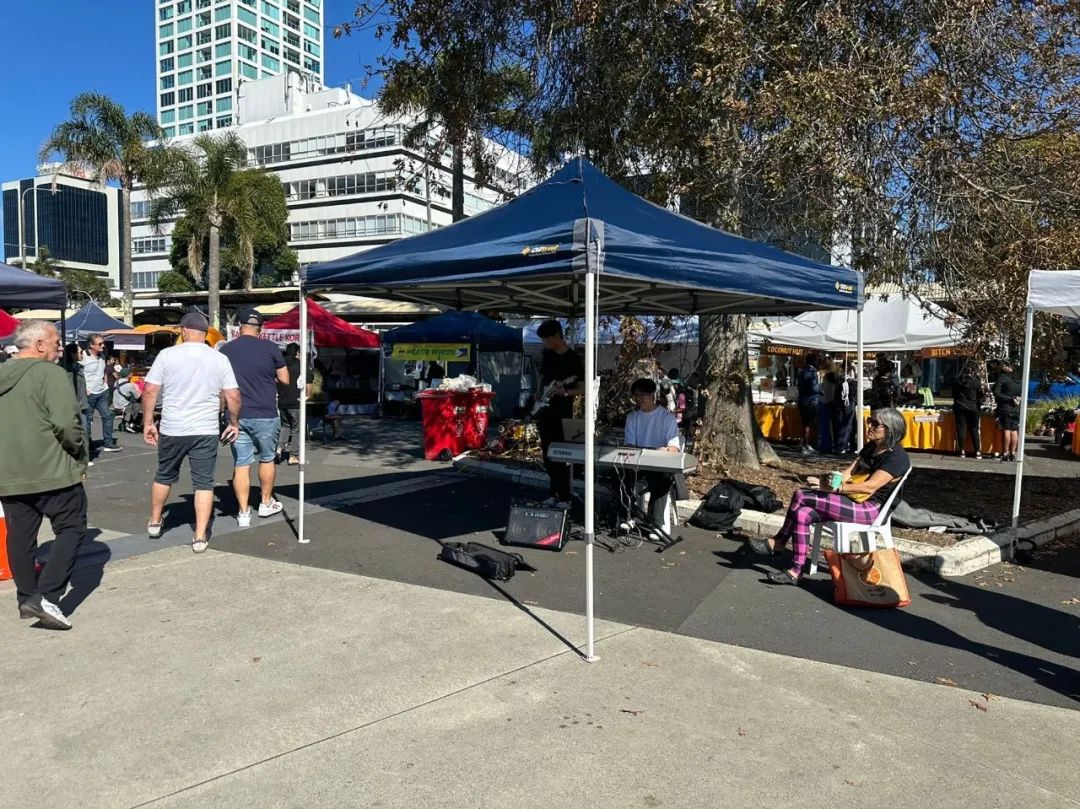
Non-exclusivity is reflected in:
1) You don't need to pay to hear the music.
2) The musician cannot make specific people at the scene hear the music, excluding some people.
Non-competitiveness is reflected in:
1) Whether or not you have eaten breakfast or purchased a certain item, you can still come to listen to the music.
2) There are multiple stalls playing music at the scene, and people will not refuse to listen to another one because they have listened to one.
The main profit model of this music stall relies on donations, meaning there is a guitar case placed in front for voluntary donations.
However, this model has significant uncertainty and sustainability.
If the donated money is not enough to make a living, people may not be able to continue to choose to make music, and then there will be no more music in this public space.
This is another dimension of the tragedy of the commons, where the lack of good support for valuable public goods leads to damage to the entire ecosystem.
Here, we have an assumption that the music is relatively good and not noise. Music can bring pleasant emotional value to people at the scene, possibly attracting more people to this area or making it easier to make consumption decisions.
Based on this assumption, the stalls near the music stall may have more foot traffic and turnover. However, these stalls will not donate to the music stall, which is called free-riding, meaning people tend to freeload on public resources.
So far, the concepts of public goods, tragedy of the commons, free-riding, competitiveness, and exclusivity have been explained, and it is difficult to have absolute public goods. For example, once you leave this square, you can no longer hear this music, so the judgment of public goods is usually based on certain conditions and relative degrees.
02 How to Sustain Valuable Public Goods
How to identify and measure the value of public goods?
First of all, most people recognize the value of public goods, after all, everyone can benefit from it without having to pay actual costs, free-riding is really enjoyable. This leads to the first question: how to identify and measure the value of public goods?
For goods, this is very easy to achieve. I spend money to buy a loaf of bread, eat it, and that is a tangible benefit.
But for music, I feel happy after listening, how do I measure it in terms of money? This is a major issue for public goods. For example, some publicly accessible papers, many people may not understand them and therefore they are worthless, but it is also possible that some research is based on them, leading to the development of new technology that changes humanity.
So how do you price this paper? Patents are a way to protect intellectual property, but they are also a restriction. Lawsuits and legal issues surrounding patents have consumed a lot of resources in human society and have also limited the development of some technologies.
If all research results were completely public goods, would this world be different? This is a topic of research in the decentralized science direction of DeSci.
If a public good has a clear value, things will be easier, such as inviting a band to the scene can increase the stall management fee by $1000, so the stall manager can pay $600 to the band to come to this weekend square. But in reality, we cannot measure it, so our discussion below is based on the premise that public goods are valuable.
How to achieve the sustainability of public goods?
Take the music stall as an example, how does it achieve sustainability as a public good? There are several options below:
1. Donations
If the performance is good, people will consider donating when they feel happy. This is also the most direct and simple way for public goods, but funds are usually scarce because people like free-riding, this is a typical tragedy of the commons.
In the Web3 space, there are solutions such as Gitcoin, GiveETH, JuiceBox, Donate3 (LXDAO), etc. These optimize the donation process and transparency through blockchain technology.
Learn about Donate3: https://lxdao.io/projects/006
2. The venue operator pays the cost.
If it is deemed necessary for a market to have music, the operator can support stalls that are difficult to profit but necessary by collecting stall fees and profits from other stalls.
This is the current tax mechanism, allocating tax revenue to infrastructure construction, schools, and education.
3. A new allocation mechanism
If the output and value of public goods can be quantified - proving that the music stall can increase the turnover of surrounding stalls, then the benefiting stalls should pay a certain fee to the music stall to achieve fair distribution of profits.
In Web3, this method is still in the research and exploration stage, but it is expected to achieve fair and effective resource redistribution.
4. Commercialization
For example, setting up a paid song request service, selling related products, or displaying advertisements at the stall.
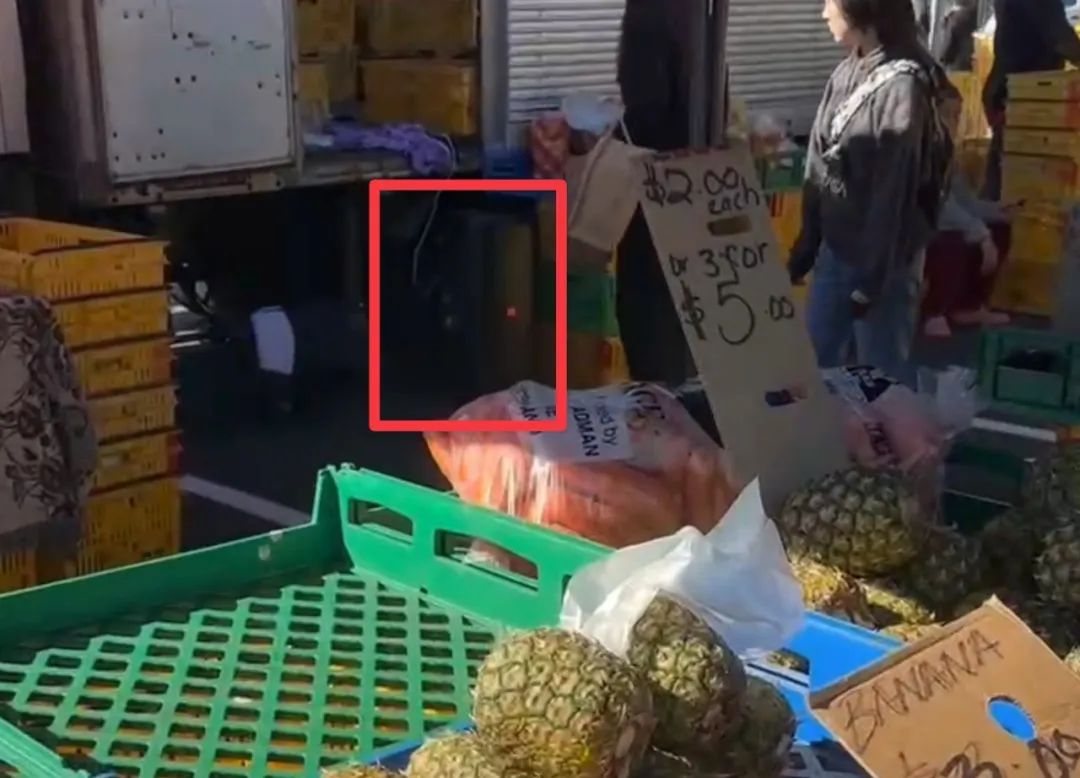
Another method is to cooperate with stalls that have commercial profits to share some operating costs. For example, at the fruit stall below, the stall owner uses a sound system to play music (red box in the picture below) to attract customers, while also providing the public good of music. The music stall only needs to pay the electricity bill to the cooperating stall.
In Web3, some new funds have been established, promising to invest part of the profit into supporting public goods. This may affect everyone's experience during commercialization, so Vitalik created a concept of "evil-revenue curve" (to be discussed another day).
Evil-revenue curve - https://vitalik.eth.limo/general/2022/10/28/revenue_evil.html
03 Why We Need to Pay Attention to the Sustainability of Public Goods
Public goods are everywhere
It seems quite difficult to solve, does the sustainability of public goods have anything to do with me? Or do we really need public goods?
In fact, the issue of public goods is not only happening at weekend markets or in a region or country, but it is everywhere. You may not go to weekend markets, but I believe you go online every day. The internet, as a public space, is full of countless public and non-public goods. Would you be willing to accept an internet like the one below:
Subscribing to any website to view information or download materials requires payment.
Using almost all software requires some payment, and there are not many free software options.
Even if the software and website are free, they are filled with advertisements that pop up every time you click.
Commercial companies can exclusively restrict whether I can use their services, even if I am willing to pay. There are no free open-source software alternatives, and commercial companies set high prices.
The reason you can enjoy the current level of free, open, and shared internet is because of the existence of open-source projects and digital public goods.
Open-source contributors and public goods builders deserve appreciation
Why do these open-source contributors and public goods builders deserve appreciation?
It's because they are not afraid of the tragedy of the commons, willing to contribute voluntarily, and not seeking returns. Just imagine how many people would come to the weekend market and be willing to help clean and maintain the public environment for free?
Despite facing such great challenges, open-source projects and digital public goods have still contributed to creating the current open and free internet, thereby accelerating the development and historical progress of all humanity.
In reverse thinking, if we increase our attention, promotion, and support for public goods, and even personally participate in the construction of these public goods, donate some money, or participate in the development and maintenance of open-source projects, once we solve some sustainability issues and make the sustainability of public goods no less than that of private goods and commercial goods, what kind of world will this be?
免责声明:本文章仅代表作者个人观点,不代表本平台的立场和观点。本文章仅供信息分享,不构成对任何人的任何投资建议。用户与作者之间的任何争议,与本平台无关。如网页中刊载的文章或图片涉及侵权,请提供相关的权利证明和身份证明发送邮件到support@aicoin.com,本平台相关工作人员将会进行核查。


