Mode Network is a modular Layer2 network focused on the DeFi track, built on the Bedrock upgrade of Optimism.
By: Cha Guan Xiao Er
1. Project Introduction
Mode Network is a modular Layer2 network focused on the DeFi track, built on the Bedrock upgrade of Optimism. It supports the rapid development and deployment of Ethereum Virtual Machine (EVM) compatible decentralized applications (DApps) and reduces transaction fees by 95%.
Mode Network is known for its innovative revenue-sharing model, aiming to empower developers and users to create a world-class application ecosystem and directly receive rewards through recommended and contract-guaranteed income. By rewarding developers and users through revenue allocation, it not only increases the decentralization of DeFi, but also benefits more people from network activities.
2. Core Mechanism
2.1 Optimistic Rollup Technology
The Optimistic Rollup technology used by Mode Network is a Layer 2 scaling solution designed to increase Ethereum's scalability and reduce transaction costs. This technology is implemented by running an independent execution layer on top of the Ethereum mainnet, significantly improving transaction processing speed without sacrificing security. Here is a more detailed explanation of the Optimistic Rollup technology used in Mode Network:
2.1.1 Principle and Operation
- Batch Processing:
Optimistic Rollup technology combines multiple transactions into a batch and submits the data of these transactions to the Ethereum mainnet all at once. This method reduces the need for each transaction to undergo independent state transitions and verification, thereby lowering transaction costs.
- Delayed Confirmation:
In Optimistic Rollup, once transactions are included in a batch, they are immediately confirmed on Layer 2 without waiting for confirmation on the Ethereum mainnet. This provides a fast transaction experience. However, the final validity of these transactions still depends on subsequent verification on the mainnet.
- Fraud Proof:
Optimistic Rollup relies on an "optimistic" assumption that all transactions and batch processing are conducted honestly. If someone believes that a batch contains fraudulent behavior, they can submit a fraud proof to challenge the batch. If the challenge is successful, the fraudulent batch will be revoked, and the related transactions will be rolled back.
- Rollback and Security:
Optimistic Rollup provides an additional layer of security, as any transaction must ultimately be resolved on the Ethereum mainnet. This means that even in the event of errors or malicious behavior on Layer 2, corrections can be made on the mainnet, ensuring the security of funds.
2.1.2 Features and Advantages
Scalability: By executing transactions on Layer 2 and only sending batch data to the mainnet, Optimistic Rollup significantly reduces the demand on Ethereum mainnet resources, enhancing the overall scalability of the network.
Cost Efficiency: Reducing the number of transactions that must be directly processed on the Ethereum mainnet significantly lowers user transaction fees.
User Experience: Provides near-instant transaction confirmation, improving user experience, especially for applications requiring fast transaction confirmation such as exchanges or games.
Compatibility: Optimistic Rollup technology supports the Ethereum Virtual Machine (EVM), allowing developers to seamlessly migrate existing Ethereum applications to Mode Network.
2.2 Sequencer Fee Sharing
Mode Network's sequencer fee sharing mechanism is an important component of the network's core economic model, designed to incentivize developers to create and maintain applications on the platform while increasing user engagement.
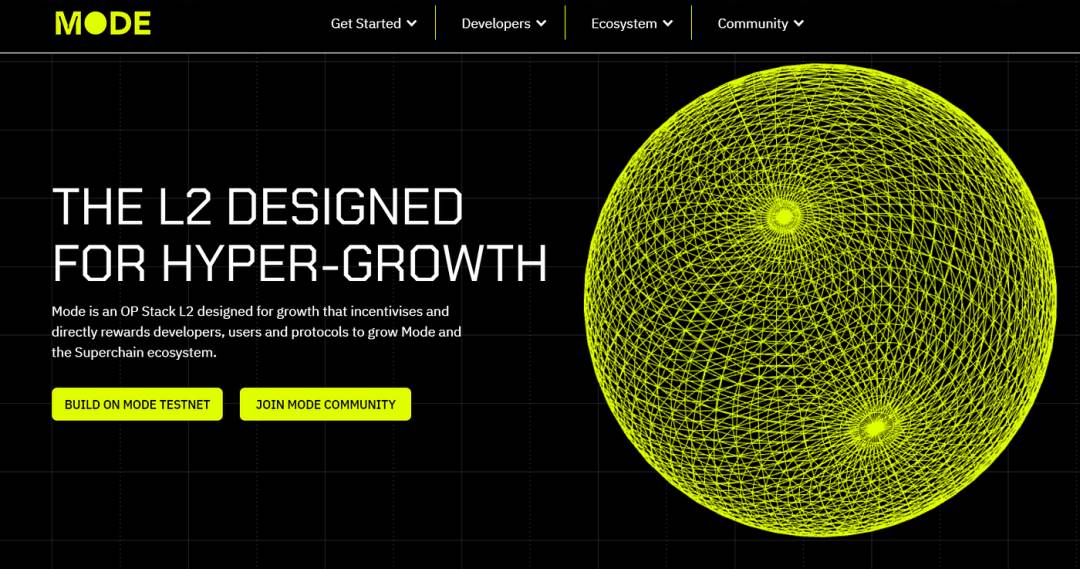
This mechanism is achieved through the following key features:
2.2.1 Concept of Sequencer Fees
In a Layer 2 solution using Optimistic Rollup technology, the sequencer is a key role responsible for collecting and ordering transactions in the network, then batch-submitting them to the Ethereum mainnet. This process requires payment of fees to the Ethereum mainnet, but because transactions are batch processed, the average cost per transaction is significantly reduced. As a result, the sequencer generates income in the network, primarily from user-paid transaction fees.
2.2.2 Fee Sharing Mechanism
- Income Distribution:
Developer Incentives: Mode Network has established a mechanism that allows developers to register their smart contracts with specific fee-sharing contracts to receive a portion of sequencer income. This practice encourages developers to create and maintain high-frequency trading applications, as these applications can generate more transactions, thereby bringing in more sequencer income.
User Rewards: Part of the sequencer income is also used to reward network users, especially those who refer new users to the network. This referral mechanism encourages existing users to promote the network, helping to increase the user base and activity of the network.
- Contract Registration:
Developers must associate their smart contracts with fee-sharing contracts to benefit from them. This typically involves including specific code snippets when programming contracts to ensure that transactions can be properly tracked and rewards allocated.
- Transparency and Automation:
The specific proportions and allocation rules of fee sharing on Mode Network are transparent and executed automatically through smart contracts, ensuring fairness and transparency of operations. This automated allocation mechanism reduces potential disputes and enhances trust in the network.
2.2.3 Advantages and Impacts
Incentivizing Innovation: By providing financial incentives to developers, Mode Network encourages more developers to participate and innovate, bringing in a greater variety of applications.
Increased Engagement: User reward mechanisms increase user engagement, making users more inclined to use and recommend Mode Network, thereby enhancing the network's activity and expansion rate.
Ecosystem Growth: With the emergence of more high-quality applications and an increasing user base, the entire ecosystem experiences rapid growth, enhancing the overall value and attractiveness of the network.
2.3 Modularization and Collaboration Model
Mode Network's modularization and collaboration model are core components of its blockchain architecture and operational strategy, designed to enhance the network's flexibility, scalability, and user engagement. By implementing these strategies, Mode Network aims to establish a multifunctional, efficient ecosystem that supports diverse application development and promotes collaboration among stakeholders. The following is a detailed introduction to Mode Network's modularization and collaboration aspects:
2.3.1 Modular Architecture
- Definition and Purpose:
Modularization in blockchain refers to decomposing network functions into independent components or modules, with each module responsible for specific tasks. This design allows for more flexible development and maintenance, while also enabling the network to better adapt to evolving technological and market demands.
- Implementation:
Consensus Layer: Mode Network may use independent modules to handle transaction verification and consensus mechanisms, ensuring network security and integrity.
Execution Layer: Modularized layer for executing smart contracts and processing transactions, optimizing resource usage and improving processing speed.
Data Layer: Independently handles data storage and access to improve efficiency and scalability.
Interaction Layer: Responsible for interfaces with users and external systems, such as APIs and frontend interfaces, ensuring a good user experience and system interoperability.
3. Advantages:
* Flexibility: Modularization allows for quick adjustments or upgrades to individual parts of the network without affecting other modules.
* Maintainability: Each module is independent, making it easier to manage and optimize, reducing potential errors and security risks in the system.
* Scalability: Certain modules' capabilities can be individually expanded as needed without the need to restructure the entire network.
2.3.2 Collaboration Model
1. Collaborative Ecosystem:
Mode Network encourages and supports collaboration among various stakeholders, including developers, users, investors, and partners, to collectively drive the network's development and value.
2. Incentive Mechanisms:
* Developer and User Incentives: Incentivizing developers' innovation and user participation through the allocation of network income (such as sequencer fee sharing), providing development funding support, and hosting competitions.
* Partner Incentives: Establishing partnerships with industry partners to jointly develop solutions, share resources, and market opportunities.
3. Governance Model:
* Decentralized Governance: Mode Network may adopt a decentralized governance model, allowing network users and developers to participate in the decision-making process, such as deciding key network upgrades and policy changes through token voting.
* Transparent Communication: Regularly disclosing project progress and financial status to maintain transparency and open communication channels within the ecosystem.
4. Technical Collaboration and Integration:
* Standardized Interfaces: Providing standardized programming interfaces (APIs) to allow third-party applications and services to easily integrate with Mode Network.
* Cross-Chain Interoperability: Developing functionality that supports interoperability with other blockchain technologies to expand the application scope and market acceptance of Mode Network.
### 2.4 Mode Network Bridge
Mode Network Bridge is a key component provided by Mode Network in its Layer 2 solution, allowing users to efficiently and securely transfer assets between the Ethereum mainnet and the Mode Layer 2 network. The primary purpose of this bridge is to simplify users' cross-chain operations while maintaining a high level of security and lower transaction costs.
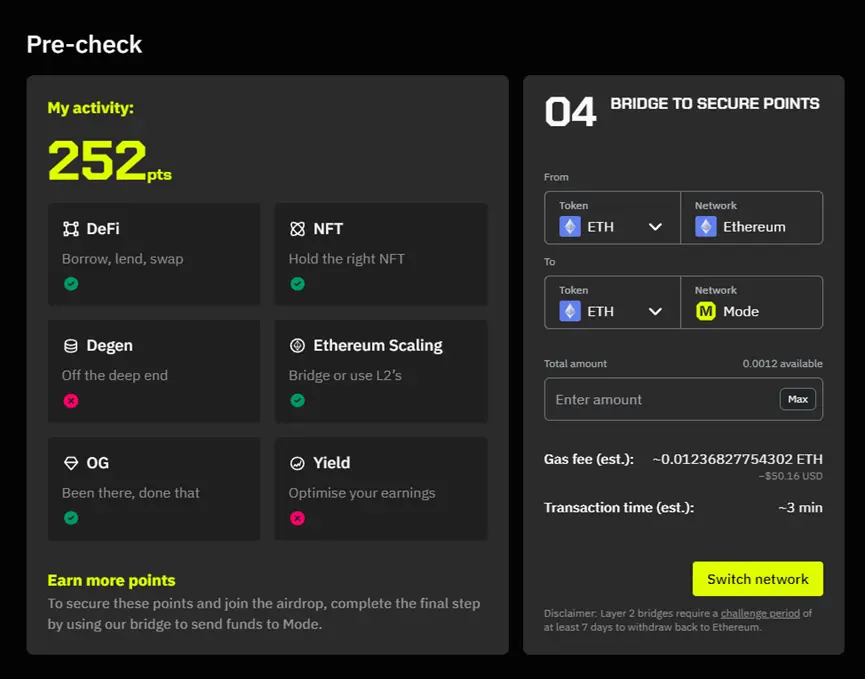
Here is a detailed introduction to the Mode Network Bridge:
2.4.1 Features and Operation Principles
1. Asset Transfer:
Mode Network Bridge enables users to transfer cryptocurrencies such as Ethereum (ETH) and other ERC-20 tokens from the Ethereum mainnet to Mode Network. This transfer is achieved by locking assets on the mainnet and issuing the corresponding amount of tokens on Layer 2, maintaining balance on both sides.
2. Two-Stage Operation:
* Deposit: Users first deposit assets from the Ethereum mainnet into the bridge's smart contract. Once the assets are confirmed to be deposited, an equivalent amount of tokens will be minted on Mode Layer 2 for user use.
* Withdrawal: When users wish to withdraw assets from Mode Layer 2 back to the Ethereum mainnet, the corresponding Layer 2 tokens will be burned, and the smart contract on the mainnet will release an equivalent amount of assets to the user.
3. Optimized Transaction Costs:
By centrally processing cross-chain transactions, Mode Network Bridge significantly reduces user fees for cross-chain asset transfers. This is achieved by batch processing transaction confirmations on Layer 2 and using Optimistic Rollup technology to reduce the demand on the Ethereum mainnet resources.
2.4.2 Security Features
* Smart Contract Security: Mode Network Bridge uses thoroughly tested and audited smart contracts to handle asset locking and release, ensuring transaction security and fund safety.
* Distributed Trust: While the bridge relies on smart contracts, Mode Network may implement additional security measures such as multi-signature or distributed trust mechanisms to further strengthen the security of cross-chain transactions.
2.4.3 User Experience
* Simplified Interface: Mode Network Bridge is designed with a user-friendly interface, making cross-chain operations simple and intuitive, even for non-technical users.
* Fast Transfers: Transfers through the bridge can be completed faster compared to direct transactions on the Ethereum mainnet, leveraging the efficient processing capabilities of Layer 2.
2.4.4 Use Cases
* DeFi Integration: Users can quickly transfer assets to Mode Network using Mode Network Bridge to participate in various DeFi applications such as lending, trading, and liquidity mining.
* Cross-Chain Interoperability: The bridge not only serves between Ethereum and Mode Network but theoretically can be extended to connect with other compatible blockchain networks, enhancing the overall ecosystem's interconnectivity.
3. Ecosystem
Mode Network's ecosystem is built around its Layer 2 solution, aiming to improve Ethereum's scalability and efficiency while reducing user costs.
The ecosystem's design emphasizes innovation, collaboration, and user participation, encompassing several key elements:
### 3.1 Economic Model
* Fee Sharing Mechanism: By the sequencer fee sharing mechanism, the network allocates a portion of transaction fees to developers and users. This mechanism not only encourages developers to create and maintain applications on the platform but also incentivizes users to refer new users to the network.
* Incentive Measures: Including airdrops, reward programs, and referral rewards to increase the network's attractiveness and user activity.
### 3.2 Developers and Applications
* Developer Support: Mode Network provides comprehensive developer support, including documentation, development tools, and software development kits (SDKs), enabling developers to easily build and deploy applications on the network.
* DApps Ecosystem: Existing or under development DApps in the ecosystem include decentralized exchanges (DEXs), lending platforms, games, and other financial tools. These applications leverage Mode's cost-effectiveness and efficiency to provide diverse services to users.
### 3.3 Community and Collaboration
* Community-Driven: Mode Network strongly promotes a community-driven development model, allowing users to directly participate in network governance and decision-making through community voting and feedback mechanisms.
* Partnership Relations: Establishing partnerships with other blockchain projects, development teams, and enterprises to jointly expand the ecosystem's functionality and service scope.
### 3.4 Governance
* Decentralized Governance: Mode Network adopts a decentralized governance model, allowing token holders to vote on key network updates, fund usage, and policy changes.
* Transparency: Maintaining operational transparency of the ecosystem by regularly publishing updates and financial reports, enhancing community trust and participation.
### 3.5 Launched Ecosystem Projects
Mode Network's ecosystem is rapidly expanding, particularly in the DeFi field. Several key projects on the platform have already been launched, each showcasing its unique functionality and market positioning. These projects include:
- Ether.fi: A liquidity re-staking protocol based on Ethereum, allowing users to re-stake ETH or other liquidity assets to generate LRT tokens and obtain eETH. It is a leader in the liquidity re-staking track, with a TVL of $26.7 billion.
- Renzo: Another liquidity re-staking protocol that supports users to re-stake assets to obtain LRT tokens and exchange them at a 1:1 ratio for ezETH. It ranks third in its category with a TVL of $9.9 billion.
- IONIC: A lending protocol aimed at providing the best lending rates and designed to balance the interests of both lenders and borrowers. It has a TVL of $61 million and is supported by MetaCartel Ventures, Ohm, and Mode.
- MODE Token
4.1 Purpose and Function
- Governance: MODE token allows holders to participate in network governance, voting on key network upgrades and governance proposals.
- Incentive Programs: Used to incentivize users and developers to participate in various activities on Mode Network, such as development competitions and user engagement.
- DeFi and Community Sponsorship: MODE token supports integrated DeFi activities and community sponsorship, supporting the development of projects and community activities within the network.
- Ecosystem Development: Used to support the expansion and enhancement of the entire Mode ecosystem, including funding new projects and partnerships.
4.2 Supply / Distribution Ratio

- Airdrop: 35% of MODE tokens are allocated for user and developer airdrop activities to encourage community participation and contributions.
- Investors: 19% of MODE tokens are allocated to early investors for initial capital and development support.
- Core Team: 19% of MODE tokens are allocated to core contributors and team members to incentivize their ongoing work and contributions.
- On-Chain Platform and Treasury: 27% of MODE tokens are reserved in the on-chain platform and treasury to support the long-term development and operation of the project, as well as potential future funding needs.
- Total Supply: 10 billion MODE
- Initial Circulating Supply: 1.3 billion MODE
4.3 Airdrop
4.3.1 Airdrop Overview
- Total Tokens: Mode Network will distribute a total of 550 million MODE tokens for airdrops, with 400 million allocated for point-based airdrops.
- Airdrop Purpose: To encourage early participants and incentivize developers and users to contribute to the ecosystem.
4.3.2 Earning Airdrop Points
- Bridging Assets:
Bridge assets such as ETH, USDT, USDC, or WBTC from the Ethereum mainnet to Mode Network.

The longer the bridged assets are held on Mode Network, the more points are earned.
Within the first seven days of the activity, bridging earns a 12x point bonus.
- Invite Friends:
- Earn a 16% reward of the points earned by the referred user by inviting friends to participate.
- Use DApps:
Interact with specified decentralized applications (DApps) such as Eigenlayer, RenzoProtocol, Layerbank, Ionic, Etherfi to earn double points.
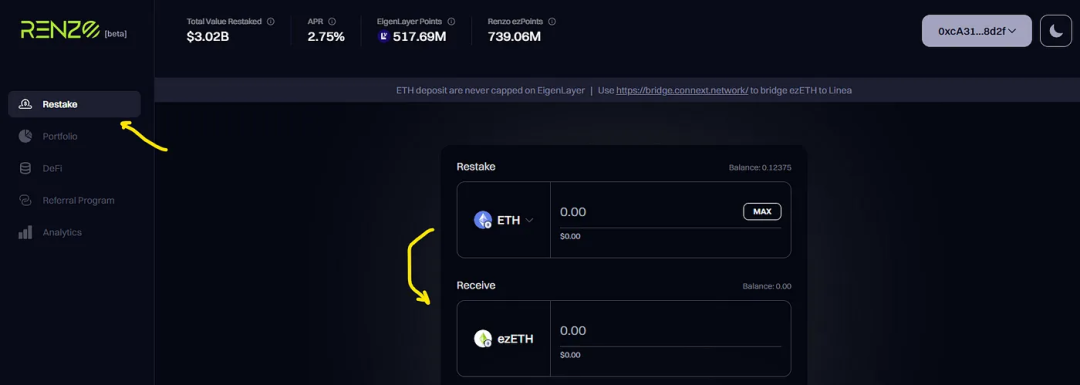
These DApps may involve different interactions such as exchanges, staking, and lending.
Maximizing Airdrop Points Strategy
- Point Optimization Techniques: Maximize point earnings by performing asset operations across multiple DApps within Mode Network, such as staking, lending, and exchanging.
- Exchange Strategy: For example, exchange ETH for EZETH on Kim Exchange, use EZETH for staking and lending on Layerbank, and deposit EZETH on Ionic to earn more points.
- Team / Funding Status
Mode Network's team is led by two key leaders, James Ross and Federico Sarquis, with extensive industry experience and a wide network of resources.
- James Ross: Founder, graduated in Economics and Philosophy from the University of Sussex, UK, previously advised at Hashflow, and invested in Eigenlayer and Ethena.
- Federico Sarquis: CTO, organized events for Ethereum Argentina, with extensive technical and community experience.
- The team consists of 15 members, operating in a remote work mode, enhancing operational flexibility and global collaboration, enabling rapid response to market changes and technological advancements.
Regarding funding, in October 2020, Mode Network completed a $9.75 million financing round. Additionally, the project received a grant of up to 2 million OP tokens from the Optimism Foundation to support user growth incentives.
In April 2024, a seed financing round was also completed, with an undisclosed amount, led by KR1.
- Project Evaluation
6.1 Track Analysis
Mode Network belongs to the Layer 2 solution track, focusing on improving transaction speed and reducing costs by building a Layer 2 network on top of Ethereum while maintaining security and compatibility with the Ethereum mainnet.
Here are some similar projects in the same track as Mode Network:
- Optimism
- Overview: Optimism is a Layer 2 scaling solution using Optimistic Rollups technology, aiming to improve Ethereum's scalability and reduce transaction fees.
- Features: It reduces fees by delaying transaction data availability verification and increases transaction throughput.
- Arbitrum
- Overview: Arbitrum is also a Layer 2 solution using Optimistic Rollups technology, reducing fees by executing transactions off-chain and only submitting result data to the Ethereum mainnet.
- Features: Emphasizes the efficiency and security of its Optimistic Rollup implementation, especially in handling large-scale applications.
- Polygon
*Introduction: Polygon (formerly known as Matic Network) is a Layer 2 solution based on a polygonal architecture, providing a multi-chain system aimed at addressing Ethereum's scalability issues.
*Features: Polygon offers various Layer 2 solutions (such as sidechains, zk rollups, and optimistic rollups), allowing developers to choose the most suitable scaling solution according to their needs.
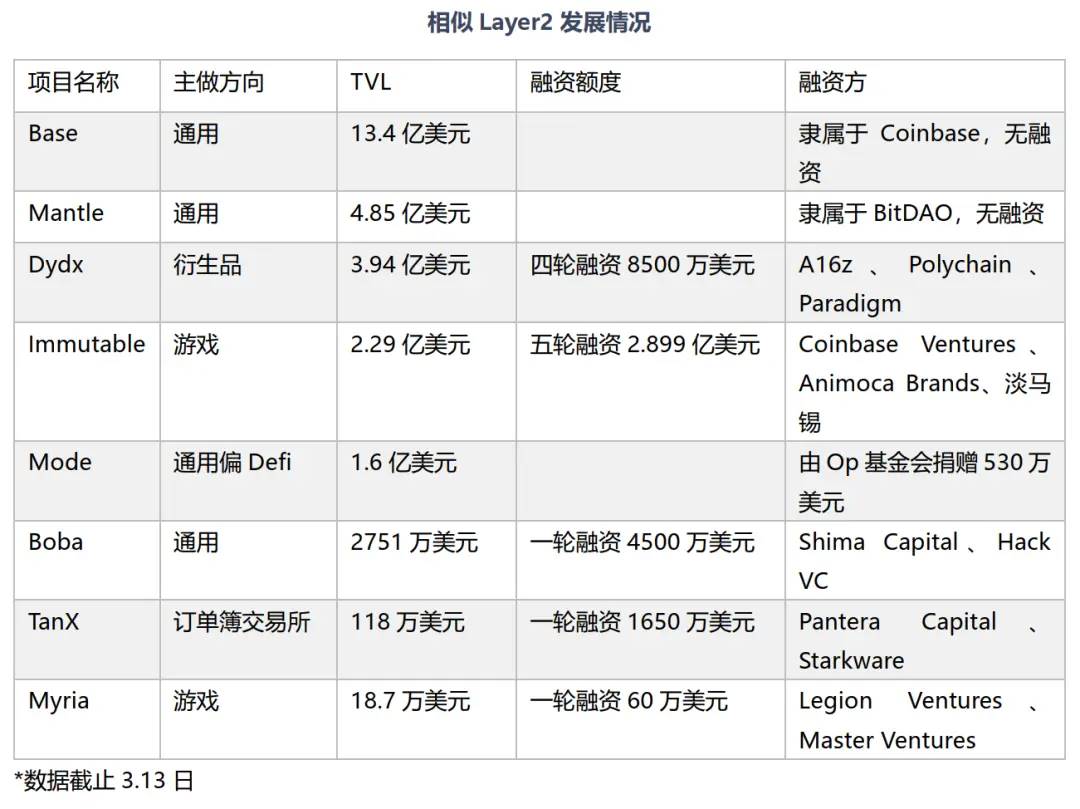
Since its mainnet launch, the TVL has steadily increased. As of March 19, 2024, it ranks 13th in TVL among all Layer 2 networks, with a TVL of $162 million, a daily average TPS of 1.62, a gas median of 0.001 Gwei, equivalent to less than $0.01 in actual cost, and a total of 2.12 million transactions in the past thirty days.

6.2 Project Advantages
- Technical Advantages
- Application of Optimistic Rollup Technology: Mode Network uses Optimistic Rollup technology to improve transaction speed and reduce costs. This technology processes transactions on Layer 2 and only submits batch transaction data to the Ethereum mainnet, significantly reducing the mainnet's burden while ensuring transaction security and integrity.
- Modular Architecture: Mode's modular design allows developers to choose and integrate features as needed, making Mode Network suitable for a variety of applications, from simple payment systems to complex financial products.
- Ecosystem and Community Incentives
- Strong Ecosystem Incentives: Mode Network actively incentivizes community participation and ecosystem expansion through its token economic model and airdrop activities. For example, its airdrop program aims to promote community growth and activity by distributing tokens to early users and participants.
- Developer Support: Mode Network provides robust developer support and funding to encourage innovation and application development on its platform. This includes providing funding, tools, and resources to reduce development difficulty and accelerate time to market for products.
- Performance and Cost Efficiency
- Reduced Transaction Costs: By significantly reducing transaction fees, Mode Network provides users with a cost-effective trading platform, especially for applications requiring high-frequency trading, such as DeFi and gaming.
- Enhanced Transaction Processing Capacity: Compared to traditional Ethereum networks, Mode Network can handle higher transaction volumes, reducing transaction latency and improving user experience.
6.3 Project Disadvantages & Challenges
- Competitive Pressure
- Intense Market Competition: Mode Network faces competition in the Layer 2 solution space. It needs to compete with other established solutions such as Polygon, Arbitrum, Optimism, and zkSync, which have solid user bases and broader market recognition.
- Continuous Need for Innovation: To maintain competitiveness, Mode Network needs to continuously innovate and improve its technology and services, especially in the rapidly changing blockchain industry.
- User and Market Acceptance
- User Adoption Speed: While Mode Network offers significant performance advantages, user migration and adoption speed may be influenced by existing habits and platform dependencies. Users may need time to evaluate and adapt to the new platform.
- Market Education: There is a need to educate the market to increase understanding of Mode Network and its advantages, especially when dealing with non-technical users.
- Economic and Financing Risks
- Dependency on Funding: The development and expansion of Mode Network largely depend on external financing. Market fluctuations or a decrease in investor confidence may affect its fundraising ability.
- Token Value Volatility: As a platform with a native token, Mode Network's development may be affected by the performance of its token in the market. Token value fluctuations may impact the project's stability and attractiveness.
- Conclusion
In summary, Mode Network, as an innovative Layer 2 solution, aims to significantly improve Ethereum's transaction efficiency and scalability through its Optimistic Rollup technology. By introducing a modular architecture and a rich token economy, Mode Network is committed to not only reducing user transaction costs but also actively encouraging community participation and ecosystem development through airdrops and other incentives.
As blockchain technology continues to advance and the crypto market matures, Mode Network's vision is to become a key driver of Ethereum ecosystem growth, providing users and developers with a faster, more economical, and more scalable platform. With its technical advantages and market strategy, Mode Network is poised to play an important role in the future development of blockchain, driving the entire industry forward.
免责声明:本文章仅代表作者个人观点,不代表本平台的立场和观点。本文章仅供信息分享,不构成对任何人的任何投资建议。用户与作者之间的任何争议,与本平台无关。如网页中刊载的文章或图片涉及侵权,请提供相关的权利证明和身份证明发送邮件到support@aicoin.com,本平台相关工作人员将会进行核查。


