Traditional cryptocurrency market no longer has 500 times the price, now there is a more interesting casino.
Author: Regan Bozman
Translation: DeepTechFlow
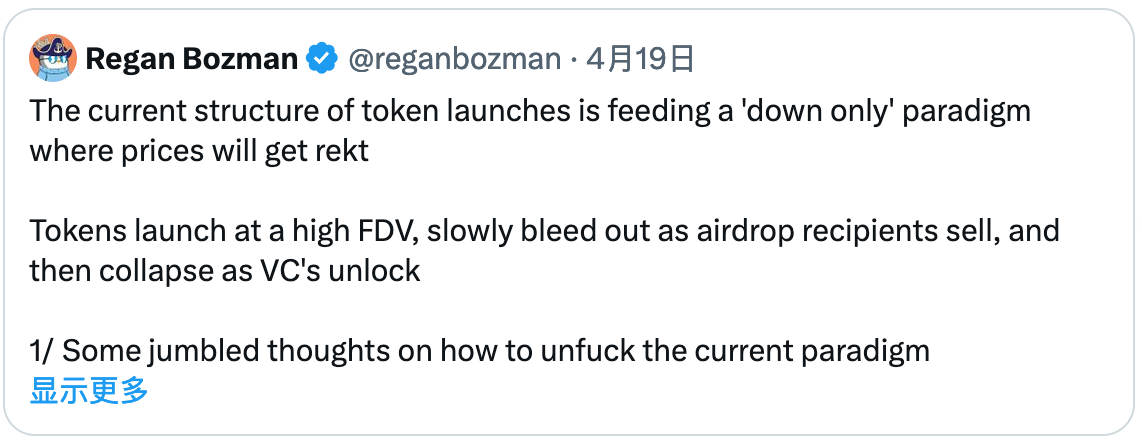
Why do people always say this cycle has ended? Why is everyone feeling pain? We can attribute all the problems to: under the current market structure, retail investors can no longer make real money.
Some discussions about returning to the origin and breaking free from the current cycle
Why are there no retail investors in this round of market? The answer is simple - it's because the "traditional" cryptocurrency market (such as infra tokens) no longer has 500 times the price. Now there is a more interesting casino, with better memes readily available.
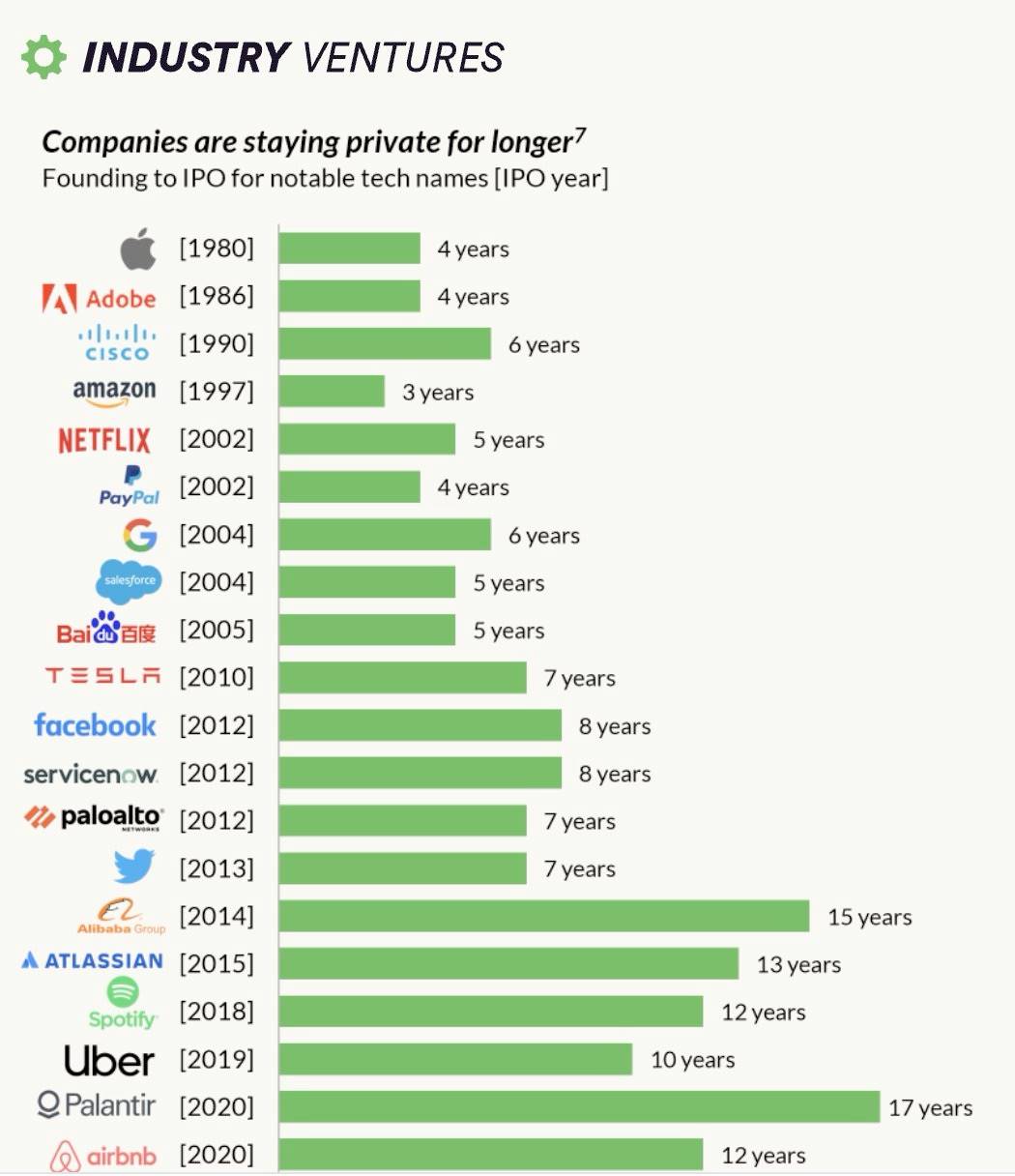
In fact, we are reproducing what is happening in the VC/IPO market, where companies stay private for longer, meaning more upside is kept "private" (e.g. venture capital funds), and retail investors cannot enter.
Cryptocurrencies once reversed this situation and made the acquisition of asymmetric upside more democratic. But not anymore! L1 and L2 have raised more funds from venture capitalists. There are no public token sales. Venture capitalists make money. Retail investors are marginalized. Perhaps it's not so surprising that retail investors' fantasies about this cycle have been shattered.
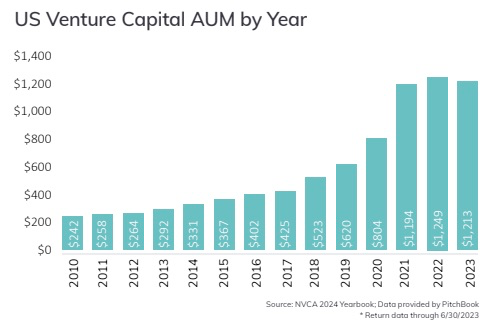
One important reason companies are willing to stay private longer is that venture capitalists now have five times more funds than ten years ago. Companies can now raise over $1 billion in private markets without dealing with the additional expenses of public markets.
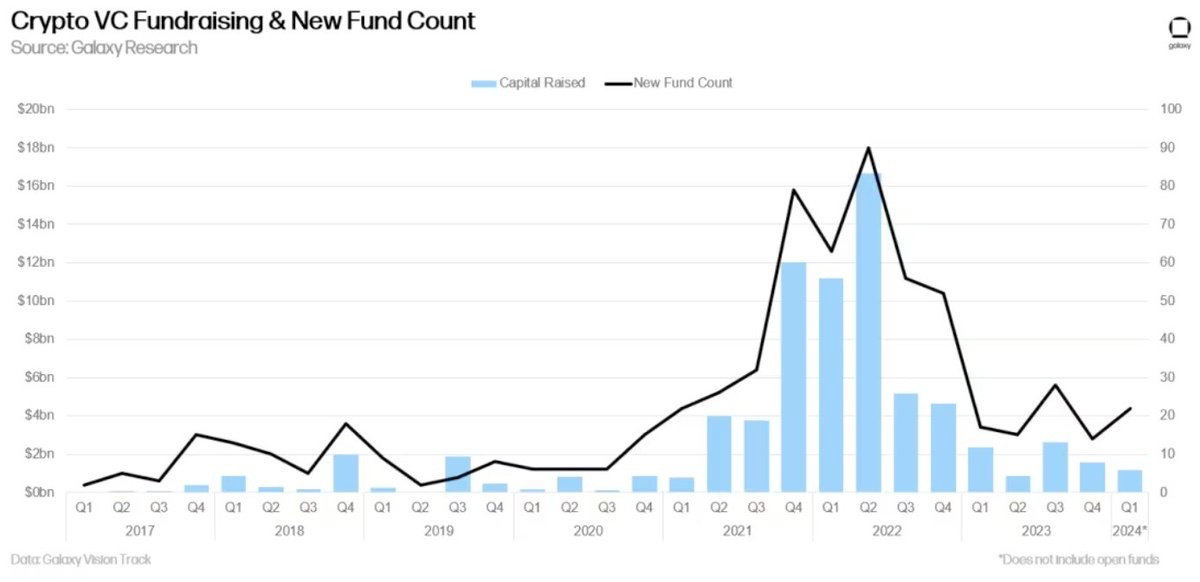
Unsurprisingly, the same trend has emerged in crypto venture capital - there is now more money flowing into crypto venture capital funds than five years ago.
Cryptocurrencies should solve this problem!
ICOs are designed to democratize capital formation and further gain risk returns. They have absolutely succeeded in doing so.
Buying Ethereum at 30 cents in the ICO in 2014 and now it's priced at $3,000, which means a return of 10,000 times in 10 years, absolutely beating any risk investment in the same period. Anyone on Earth can participate, which is great.
Now this industry has clearly grown, so the entry price naturally rises, but these opportunities have not disappeared. The launch price of $SOL in 2020 was $0.22, and now it's $140, which means a return of 636 times in 4 years, possibly beating almost all risk investment returns in the past five years.
In this cycle, we have moved away from this market structure. There are almost no retail investors who have the opportunity to buy tokens before they are issued or to buy tokens at a low price in the public market.
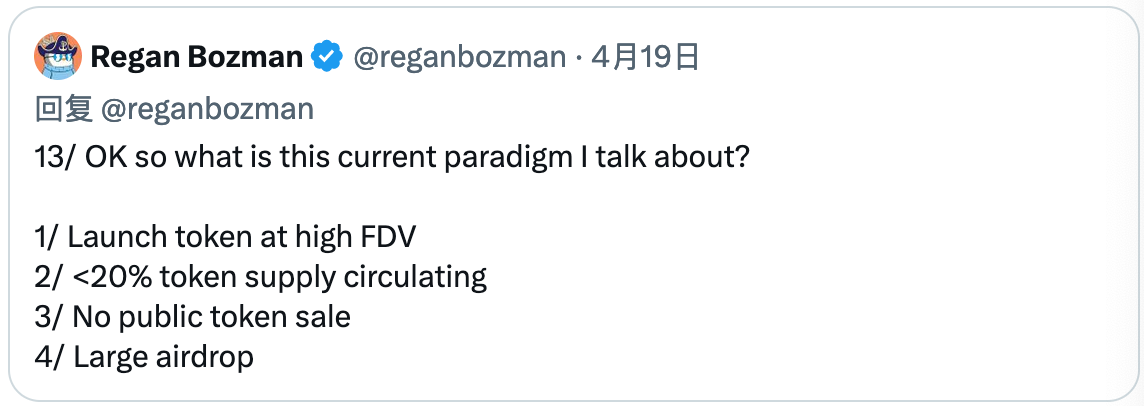
Airdrops are indeed an improvement, and early users can get some financial returns compared to the existing venture capital paradigm. But financially, they are not as good as token sales. By definition, you can only make so much money from airdrops.

We have transitioned from a market with unlimited upside space to a market with a limit - this is a huge change. $1,000 invested in the SOL ICO has now become $636,000;
while $1,000 invested in Eigen can only become about $1,030… even if it has increased tenfold, it's only $1,300. In the previous cycle, you controlled your own destiny; in this cycle, you are waiting for Eigen's generosity.
Financial nihilism means acknowledging that these markets have always been about money. Yes, this money funds technological development, but it is this funding that drives the entire industry. If the money part is weakened, the entire industry will collapse.
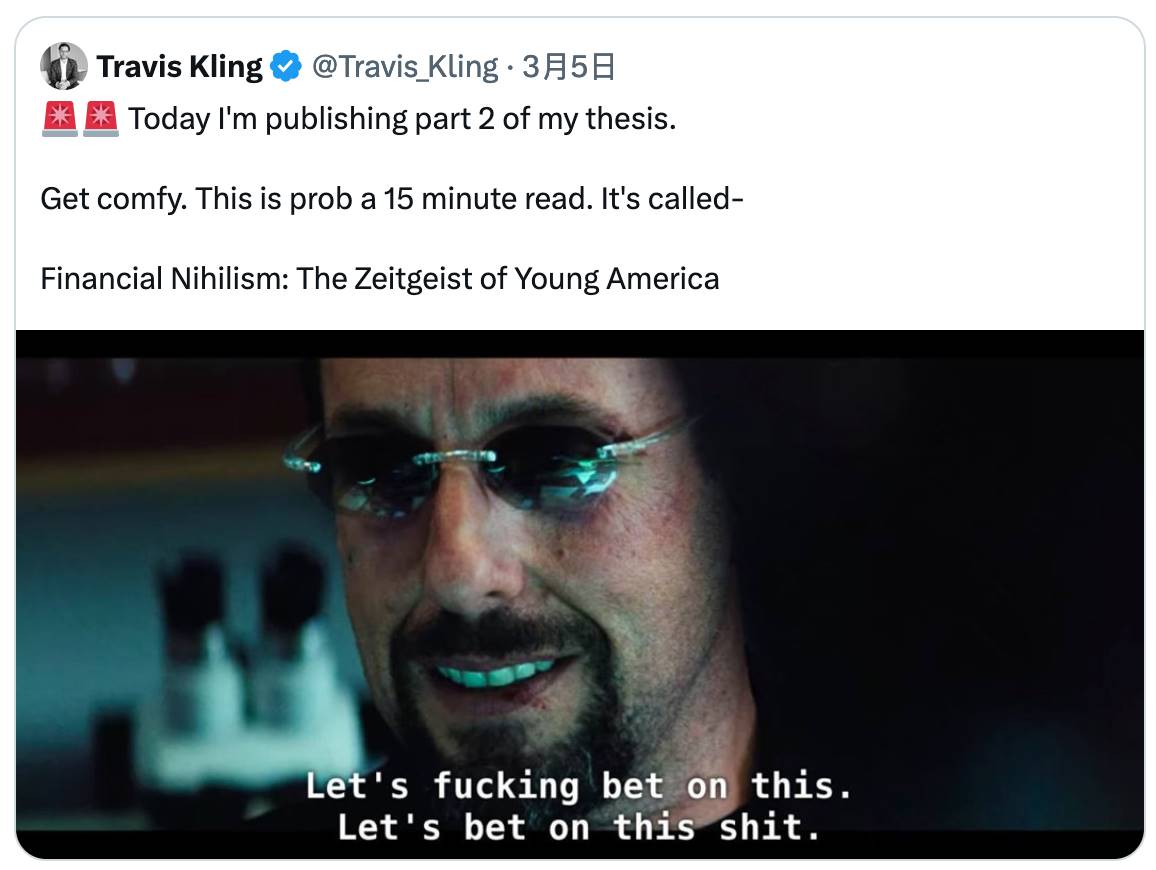
We can do a few things to improve the current issuance structure. The key is to create unlimited upside space for early users and the community.

That is to say, there are bigger structural problems in the market, with L1 and L2 raising large amounts of funds, resulting in valuations of tens of billions of dollars before going online. This brings two problems: (A) a large amount of selling pressure; (B) a lower limit on the issuance price when going online.
I believe that one of the structural problems faced by most altcoins in this cycle is that the selling pressure from venture capital has not been offset by retail inflows. If $500 million is raised before going online, it will create $500 million in selling pressure (if the token price rises, the potential pressure could be even greater).

Raising funds privately at high valuations means you will try to unload at a higher valuation. This may result in a situation where the market can only go downward.
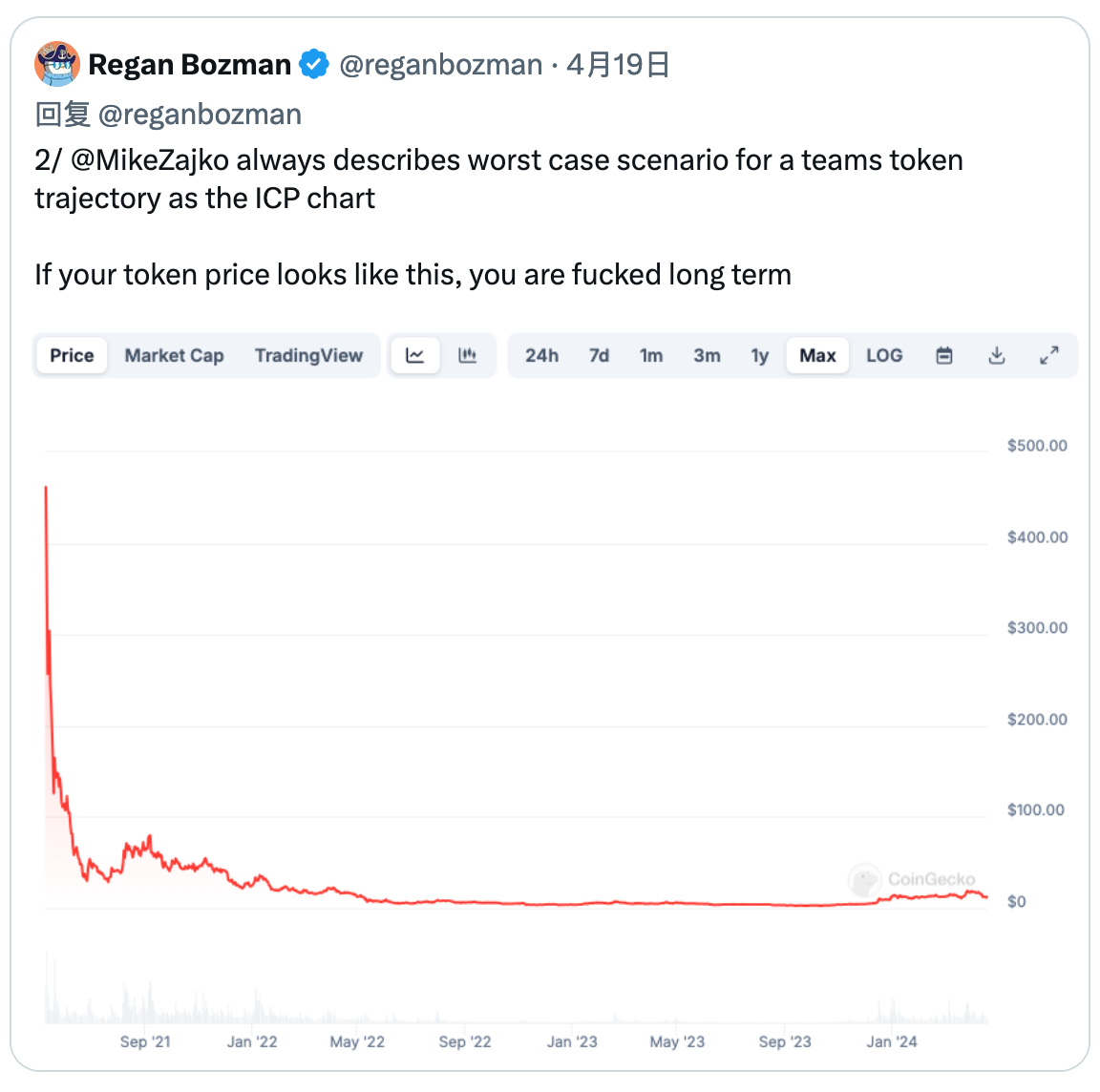
The relationship between venture capitalists and retail investors does not need to be hostile. Everyone on $SOL made money.
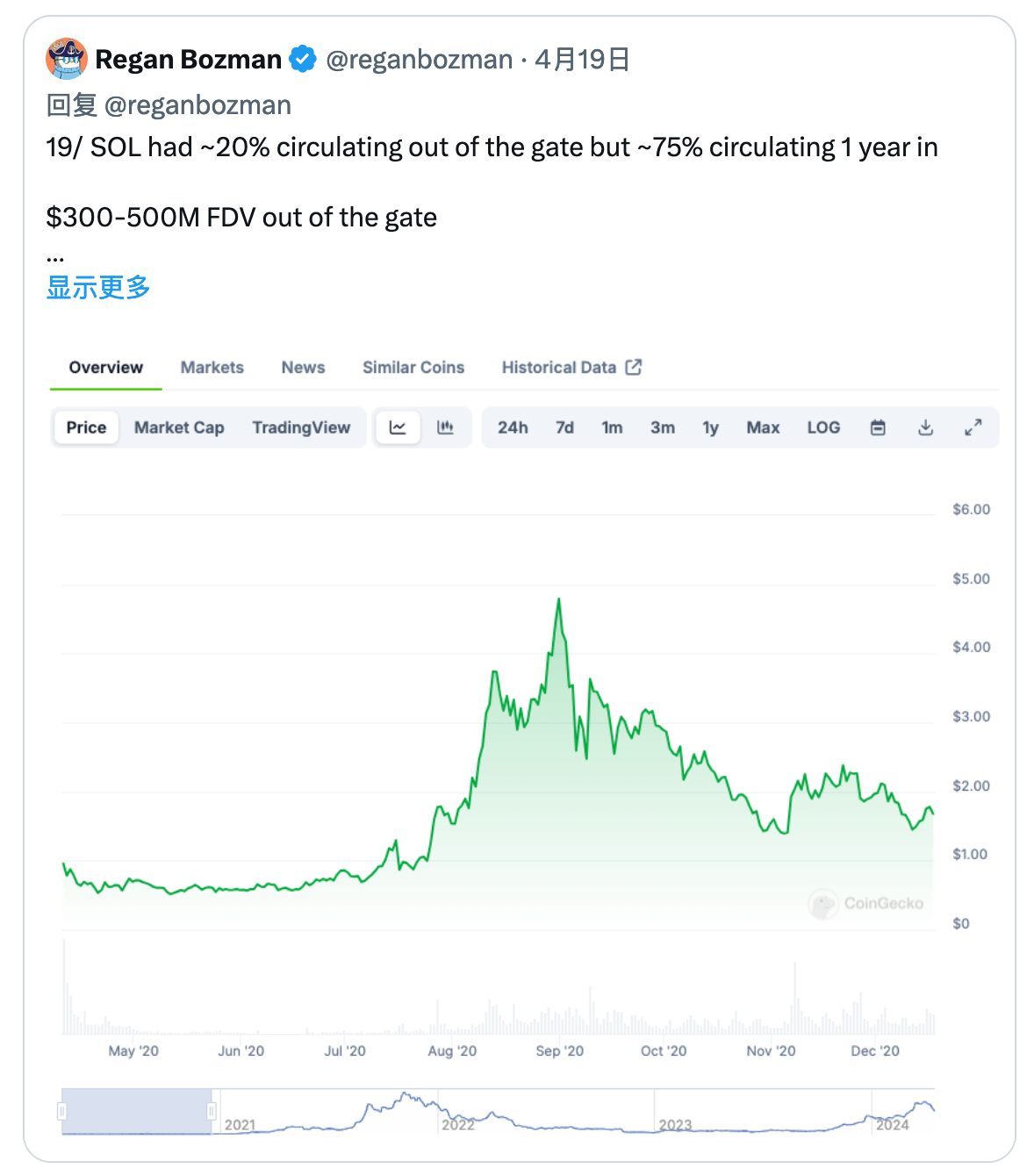
However, it becomes more difficult if you try to pour too much venture capital into a market with low liquidity. If you deprive the most important market participants of unlimited upside space, it is almost impossible.
We can blame and argue about meme coins, but this completely ignores the essence of the problem. Meme coins are not the problem - our current market structure is the problem. Let's return to our democratic roots and solve the problems of the current market.
免责声明:本文章仅代表作者个人观点,不代表本平台的立场和观点。本文章仅供信息分享,不构成对任何人的任何投资建议。用户与作者之间的任何争议,与本平台无关。如网页中刊载的文章或图片涉及侵权,请提供相关的权利证明和身份证明发送邮件到support@aicoin.com,本平台相关工作人员将会进行核查。


