As the CNS mainnet is scheduled to go live on May 7, 2024, it is expected to kick off a new round of wealth effect in the Cardano ecosystem.
"Cardano Connet (CNS) is the identity layer infrastructure of the Cardano ecosystem. With the launch of the CNS mainnet, it will also become an important piece of the Cardano Web3 system and a key catalyst for the explosion of the Cardano ecosystem."
On-chain identity layers are becoming important infrastructure in different blockchain ecosystems. In fact, after the DeFi Summer, on-chain activities and applications have gradually become the mainstream value discovery in the crypto industry. Everyone is tirelessly using on-chain infrastructure to conduct transactions and expecting to profit from potential on-chain activities. In this stage, most Web3 applications are authorized to log in with account addresses, using encrypted accounts with pseudo-anonymity as a feature, and no one knows what kind of user is behind the account. Any Web3 application finds it difficult to establish user profiles.
One example is the lack of an identity layer, which further leads to a lack of a reasonable credit mechanism in the Web3 world. Typically, the main means of restricting malfeasance and gaining credit is through staking tokens, such as the over-collateralization model of DeFi protocols for lending, insurance, and other purposes, which involves over-staking funds to profit from mainstream stablecoins. Similarly, obtaining a Web3 application DAO community identity usually requires staking a certain amount of assets to gain voting rights, in order to increase the cost of malfeasance, which is seen as inefficient and low capital utilization. Likewise, the lack of an identity layer also makes Web3 social interactions dull, as we cannot connect the social graph of the Web2 world with the Web3 world.
In this new stage of the industry, the Cardano ecosystem is also exploring the identity layer through Cardano Connet (CNS) and expects to deeply promote the ecosystem to expand in a more comprehensive narrative direction.

The CNS mainnet goes live, an important piece of the Cardano Web3 system
Cardano Connet (CNS) is a social project in the Cardano ecosystem that empowers users to establish their own social identities, supporting users to use .ada domains as the entry point for social identities. Its introduction of .ada domains is similar to ENS with social business cards on Cardano. Users holding CNS's .ada domains can have a deeper Web3 social experience in the Cardano ecosystem, connect with friends, and further expand the Web3 social graph network. At the same time, CNS is also an achievement system that can issue users with achievement certificates, medals, and embed them into the user's identity to gain a series of benefits from the Cardano ecosystem.
At the same time, CNS has also launched an auction system, reserving rare and meaningful CNS domain names for auction. The domain name registration process is completely on-chain, and is also handled by Plutus scripts to ensure security. The auction process is completely decentralized, and even the CNS team cannot access the funds locked in the auction, ensuring that bidders have no asset security risks during the auction.
CNS can ensure that this information is stored in a decentralized manner on the chain while also improving data storage efficiency. It uses a decentralized domain name registration table, which not only efficiently scales and protects user security, but also its unique data architecture ensures that users fully own their CNS domain names and related data.
These unique technical features ensure that each CNS is a unique NFT guaranteed by Plutus (a type functional language based on Haskell concepts, often used for complex transactions in the Cardano settlement layer, requiring formal verification for high security). With support from the Cardano underlying layer, it allows each UTxO to have more than 4000 minting records. Through further registration splitting methods, CNS V1 can support over 1 million registrations, enough to support the initial social needs of the Cardano ecosystem.
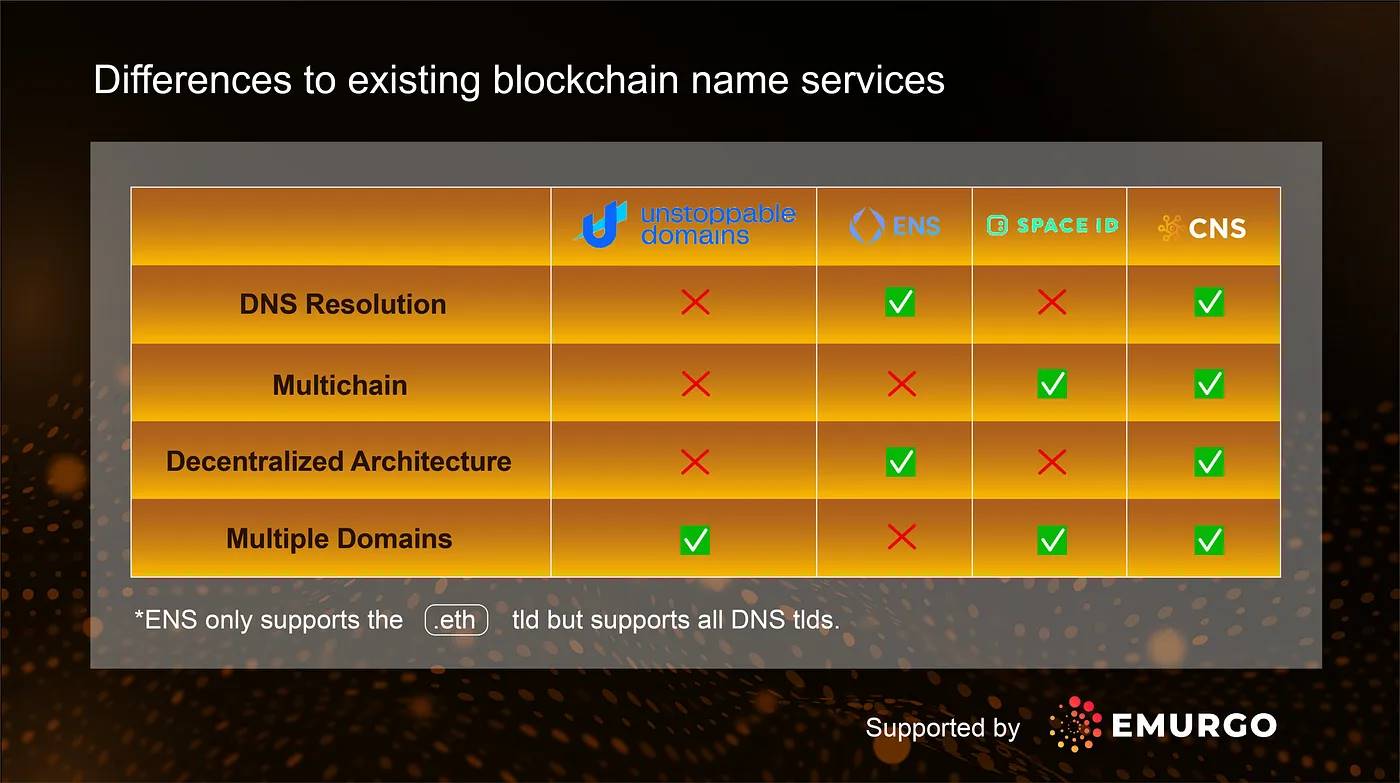
As a new identity layer, CNS not only helps users establish a decentralized identity layer and create a new Web3 social experience, but it is also a SocialFi social protocol layer that redefines digital addressing within the Cardano ecosystem by providing practical solutions, higher security, and unparalleled convenience.
In fact, as a well-established public chain ecosystem in the crypto industry, Cardano has built a large community consensus after entering the market. Currently, its ecosystem token ADA still ranks among the top ten cryptocurrencies by market capitalization. Although Cardano was initially non-Turing complete, after completing the Alonzo upgrade, the ecosystem entered a rapid development stage, encompassing the majority of mainstream industry tracks.

However, from an ecosystem perspective, Cardano, which has certain technical advantages, still lags behind Ethereum, BNB Chain, and others (with only about 60 on-chain Dapps). In this new stage of the industry, seeking outward and bursting into more innovative fields may be the key to further explosive growth of the Cardano ecosystem.
We see that the emergence of Cardano Connet (CNS), especially after its mainnet launch, is expected to not only bring a better on-chain experience for Cardano ecosystem users and help establish a new channel between the Cardano ecosystem and the Web2 world, but also to provide better functional expansion capabilities for Cardano ecosystem on-chain applications and developers, continuously enhancing the competitiveness of the Cardano ecosystem and helping the ecosystem move in a new narrative direction.
It is for these reasons that the CNS project has already received seed funding from Emurgo (the official commercial arm of Cardano) and has long-term support from the official Cardano team.

CNS: An important infrastructure for the Cardano ecosystem
Currently, as an identity layer of the Cardano ecosystem, CNS is also becoming an important underlying infrastructure for the Cardano ecosystem.
Previously, it collaborated with the BHE trading platform to launch .bhe domains, which not only serve as DID identities in the Cardano on-chain ecosystem, but also as digital identities within the BHE trading platform. In practical terms, .bhe DID is a symbol of identity for BHE and the Cardano ecosystem, meaning that .bhe holders can seamlessly interact within these ecosystems using this identity. At the same time, under the promotion of CNS technology, .bhe domains have a similar role to .ada domains, allowing users to seamlessly use various dApps on Cardano and use them as account addresses for transactions.
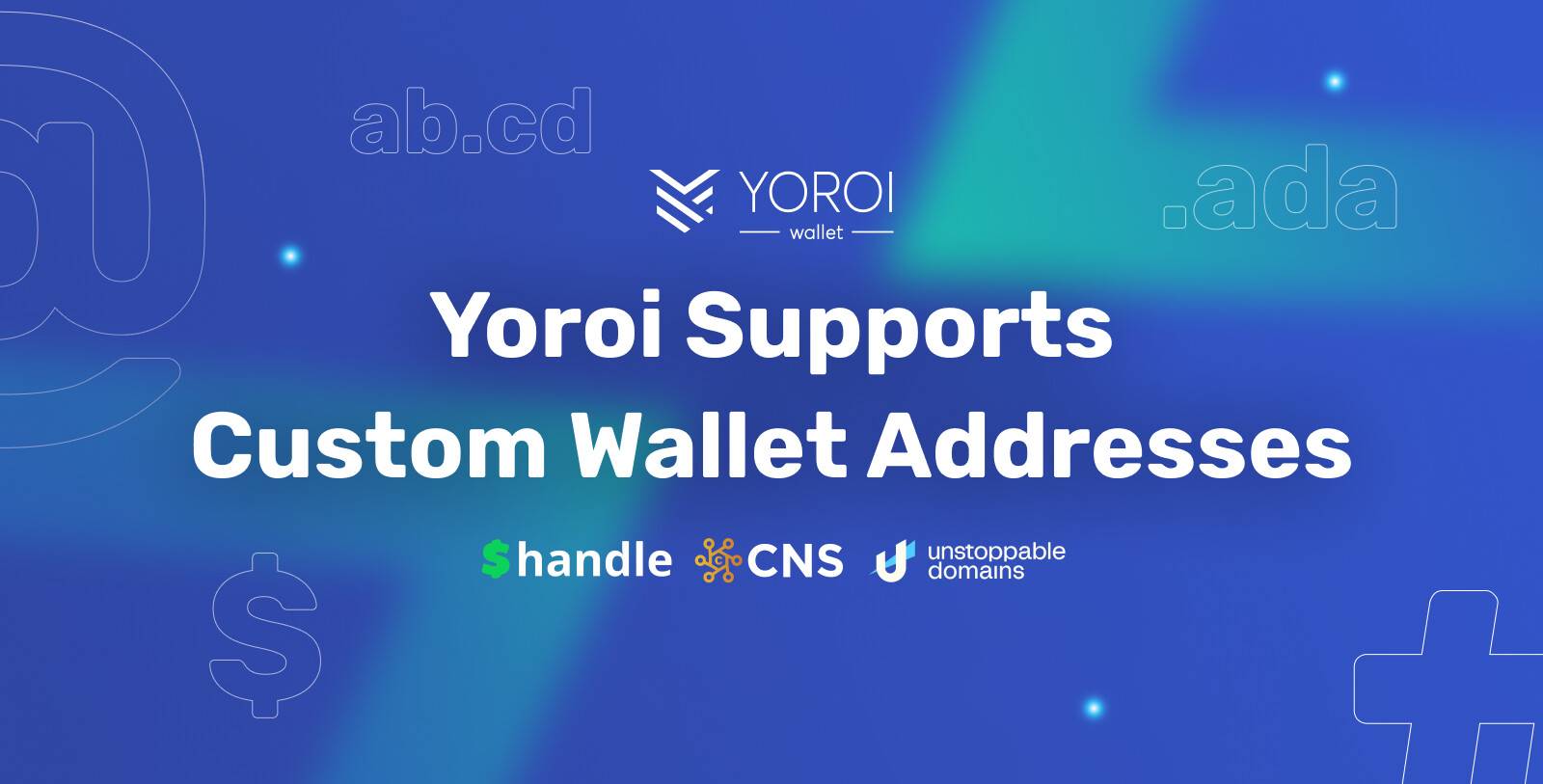
At the same time, CNS has currently integrated with the Yoroi wallet in the Cardano ecosystem. With the launch of the CNS mainnet, users will be able to access various Cardano applications and conduct transactions directly through the Yoroi wallet using .ada domains. In the future, a series of Cardano ecosystem projects, including Minswap, can display users' .ada domains, and .ada will become a smooth pass for the Cardano ecosystem.
In the long run, as CNS expands into areas such as account abstraction and narrative intent, it is expected to become an important link between the Cardano ecosystem and the Web2 world, and provide a foundation for the further expansion of the Cardano ecosystem into potential areas such as RWA, DePIN, AI, and more.
Clear CNS airdrops may bring wealth effects to the Cardano ecosystem
The launch of the CNS mainnet signifies the opening of a new value system in the Cardano ecosystem, and is also expected to bring wealth effects to the Cardano ecosystem users. Previously, CNS announced that it has reserved 15% of its $CNS token economic model (total CNS issuance: 6 billion) for community user airdrops.
Previously, the CNS project introduced CNS points in the testnet as a way to identify and track users participating in CNS. Points are expected to be an important basis for airdrops, and users can earn CNS point rewards through minting, participating in auctions, and recommending users to mint and participate in auctions. In addition, users who purchase CNS domains and participate in ADA token staking pool (SPO) activities are also included in the airdrop range, which means that under the impetus of the airdrop effect, a round of CNS domain name fever is expected to be ushered in, and it is expected to drive the staking rate of ADA tokens.
With the CNS mainnet scheduled to go live on May 7, 2024, it is expected to kick off a new round of wealth effects in the Cardano ecosystem.
Overall, Cardano is a highly promising ecosystem. Although the ecosystem did not enjoy the first wave of on-chain market development dividends during DeFi Summer, it is still able to maintain competitiveness in the new round of competition as its technology continues to improve. With the launch of the CNS mainnet, it will not only promote the further soundness and improvement of the Cardano ecosystem, but is also expected to be a key catalyst for the explosion of the Cardano ecosystem.
免责声明:本文章仅代表作者个人观点,不代表本平台的立场和观点。本文章仅供信息分享,不构成对任何人的任何投资建议。用户与作者之间的任何争议,与本平台无关。如网页中刊载的文章或图片涉及侵权,请提供相关的权利证明和身份证明发送邮件到support@aicoin.com,本平台相关工作人员将会进行核查。


