Article: Terry, Deep Tide TechFlow
What is the main battlefield for Ethereum L2?
The Ethereum ecosystem has always been at the center of the crypto narrative, whether it was the ICO frenzy of 2017, the DeFi boom of 2020, the subsequent NFT craze, or the now crowded L2 battleground.
However, while there are numerous L2 projects on the market, the Ethereum ecosystem is becoming increasingly fragmented. Therefore, what problems does Ethereum L2 need to solve? For many, this seems to be a difficult question to answer, and it has become a must-answer question for L2 projects in the second half of the competition.
The increasingly crowded L2 battleground
As the most fiercely competitive track in Ethereum, the competition for Ethereum L2 has always been intense.
From a data perspective, the L2 track in the past year can be divided into two phases, with mid-October 2023 as the dividing point:
- According to L2BEAT statistics, before October 2023, the overall TVL of the L2 track hovered around the bottleneck of $1 billion for a long time.
- After October 2023, the TVL started to rapidly increase from $1 billion and, at the time of writing, it had surged to the $4 billion level in just half a year, with an increase of up to 300%.
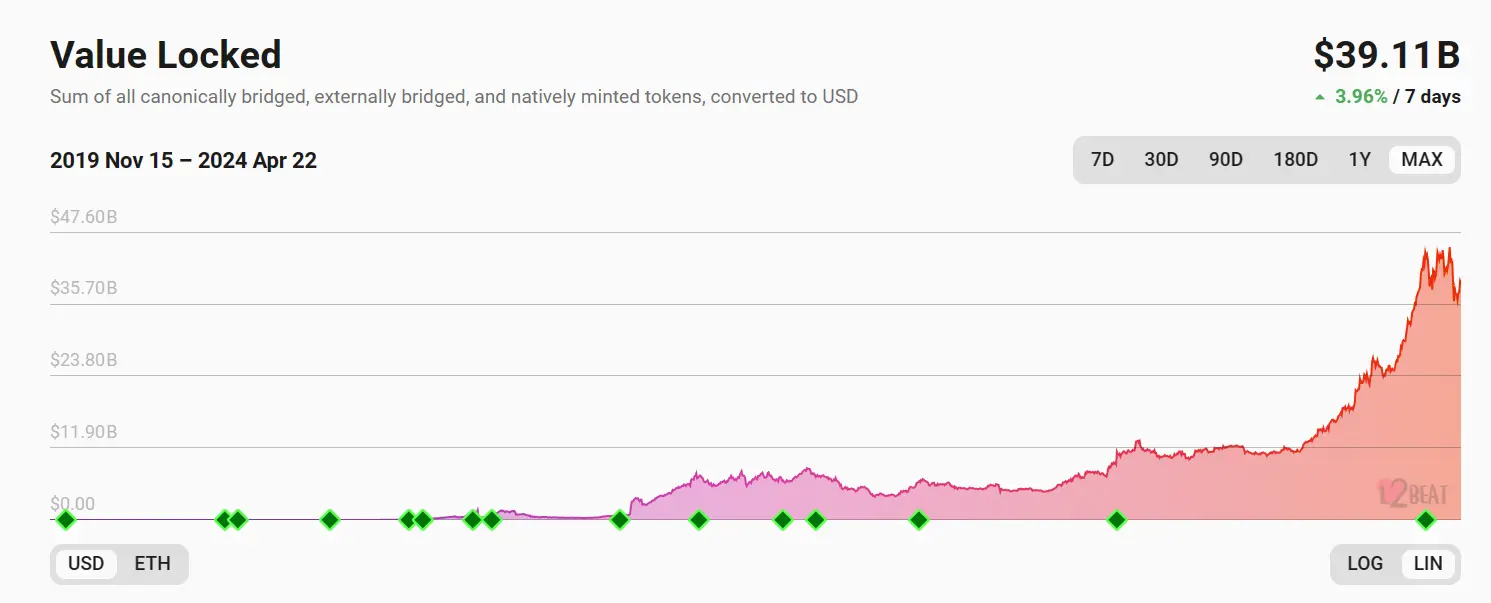
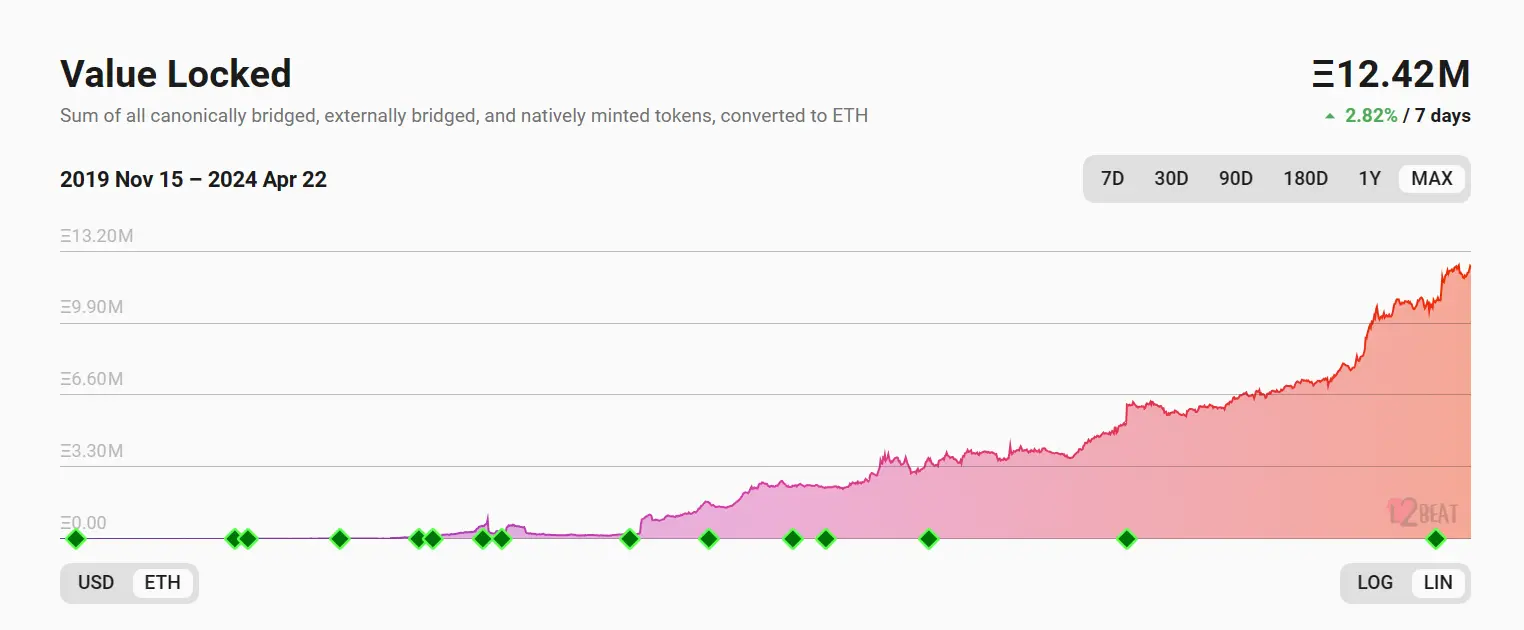
Even when calculated in ETH terms, the growth of the L2 track's TVL from October 2023 to the present has also accelerated significantly, breaking through the bottleneck range of 70,000 ETH and reaching a historical high of 12.5 million ETH, with an increase of up to 80% in the past six months.
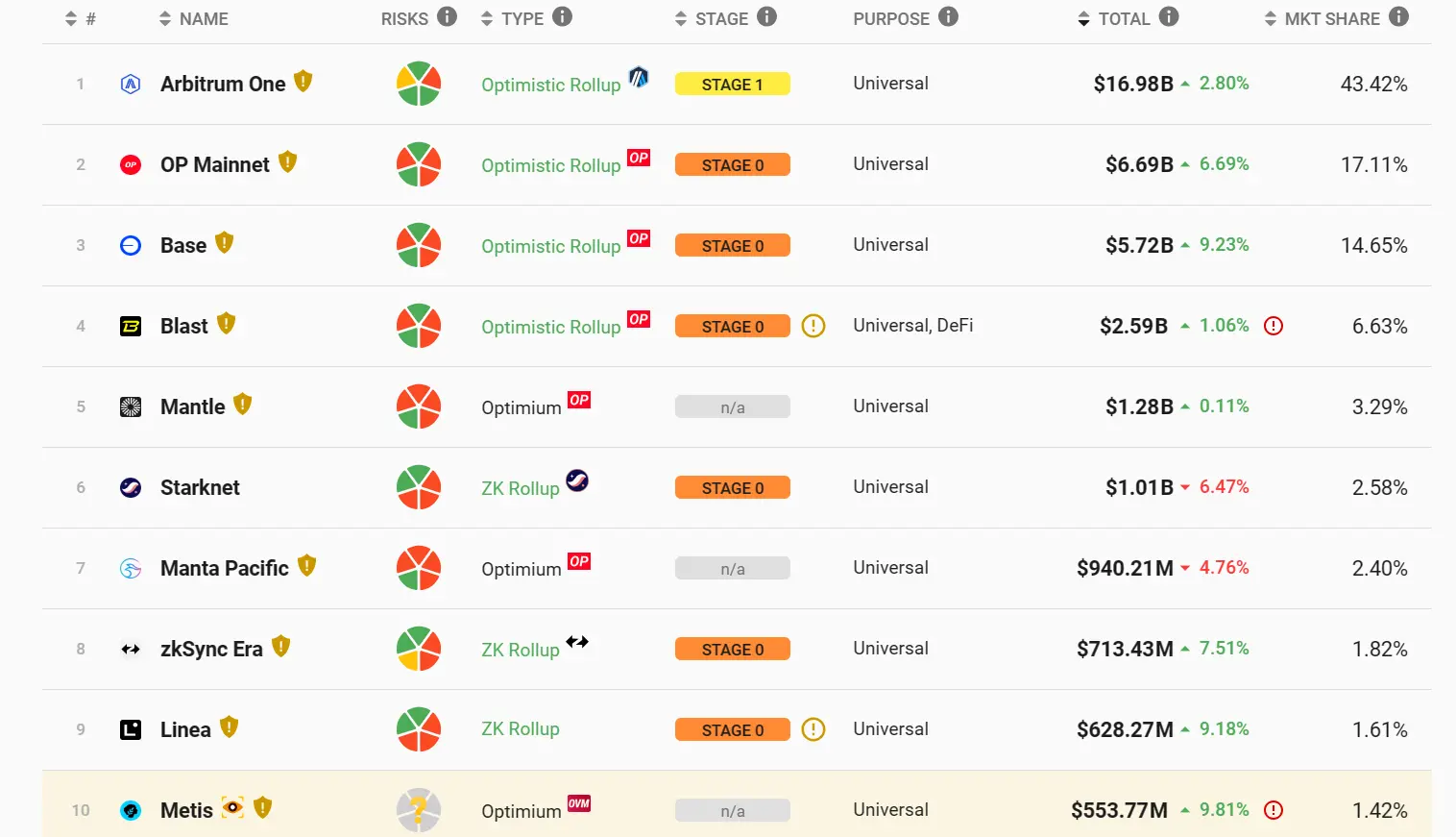
At the same time, in terms of types, L2 projects are mainly dominated by the two mainstream scaling solutions of Optimistic Rollup and ZK Rollup, with OP projects firmly in the lead:
There are a total of 10 L2 projects with a TVL of over $500 million, with the OP series accounting for more than 85% of the market share, far exceeding the ZK series with less than 15% market share.
Among them, the top 5 positions are all occupied by the OP series, and the scale of the leading project in the OP series, Arbitrum (nearly $17 billion), is 17 times larger than that of the leading project in the ZK series (about $1 billion). Therefore, as of now, the competition in the L2 track is fundamentally dominated by the OP series, while ZK is still in a catching-up position.
Let's take a look at the situation where new projects and established players have been growing in the past year.
First, on March 23, 2023, Arbitrum officially issued tokens, directly helping the TVL of the L2 track to surpass the $10 billion mark, and raising the oscillation range of the entire L2 track TVL to around $10 billion. However, it was difficult to surpass this volume bottleneck until the end of 2023.
At the same time, the wave of Ordinals and the fervor of the Bitcoin ecosystem narrative have made the Ethereum L2 heat diminish, and with the resurgence of heterogeneous chains represented by Solana, the development bottleneck faced by L2 itself has led to a major discussion in the industry about Ethereum and L2.
Especially among the L2 projects that have been continuously launched based on the scaling concept, they have caused new problems such as liquidity fragmentation and incompatibility, which have led to a downturn in the Ethereum narrative.
It wasn't until the biggest disruptor in the race, Blast, was launched in November 2023, with three aces in the hole of staking interest, airdrop expectations, and an invitation system, that Blast's TVL surpassed $500 million in just 5 days, surpassing established star L2 projects such as zkSync and Starknet, with a growth rate that can be described as crazy:
As of the time of writing, the TVL had reached $2.6 billion in less than half a year, ranking fourth in the L2 track, second only to Arbitrum ($17 billion), Optimism ($6.7 billion), and Base ($5.72 billion).
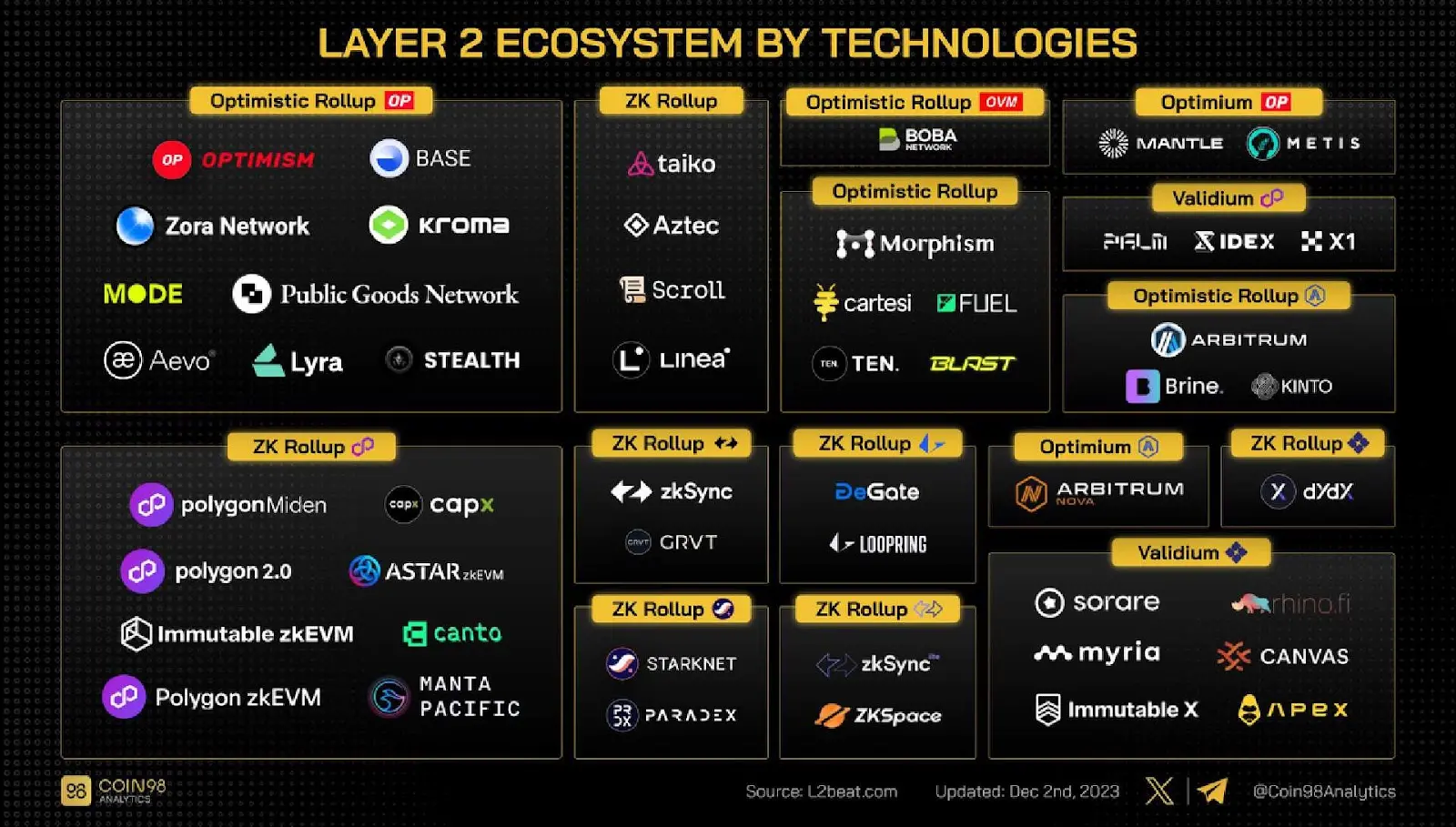
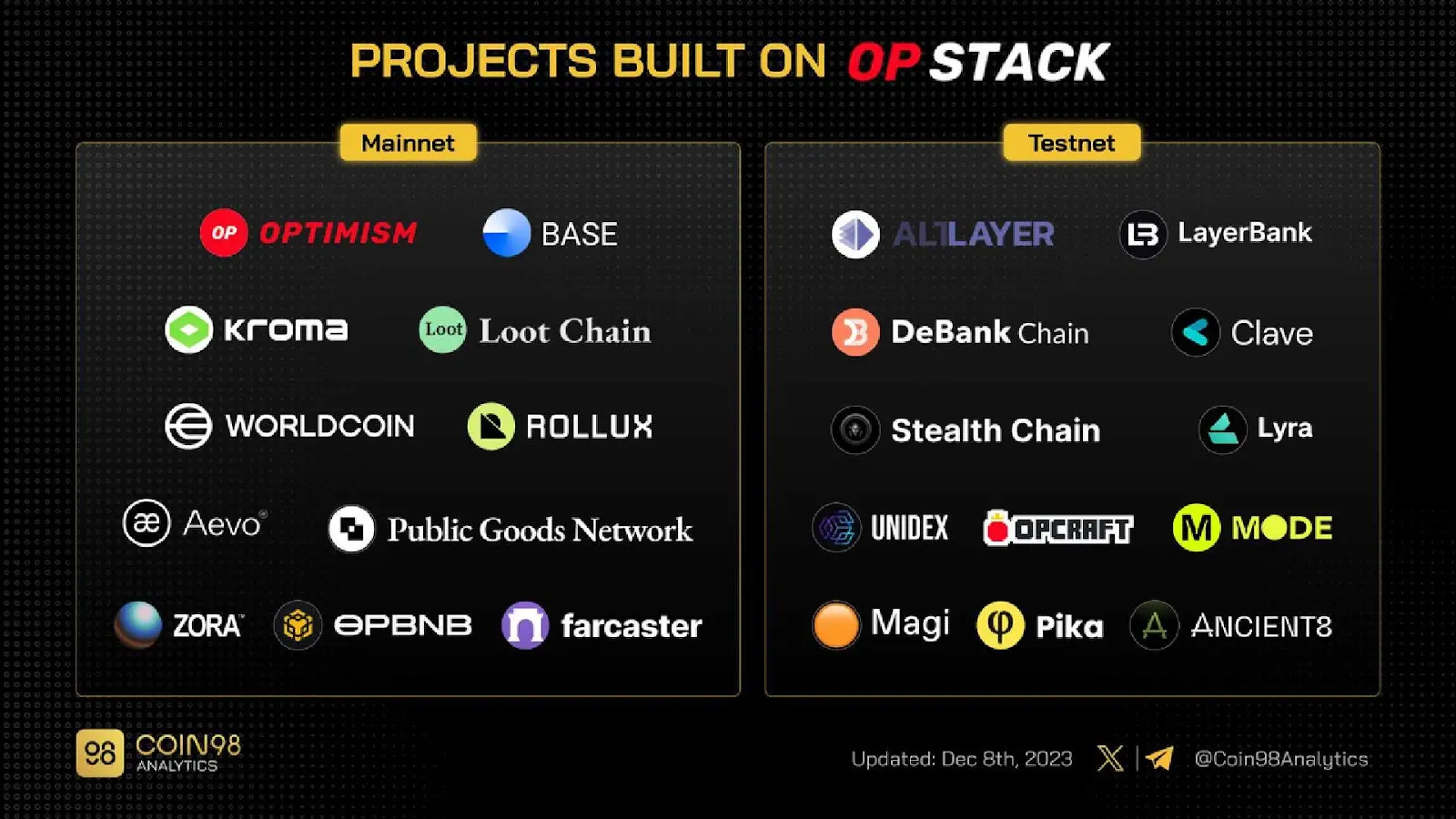
In addition, Optimism's OP Stack superchain narrative also gave birth to the representative project Base in 2023, and accelerated the trend of "one-click chain issuance + modularization." According to incomplete statistics from Coin98 Analytics, by the end of last year, the OP Stack ecosystem already had more than 20 L2 sub-projects (including testnets).
At the same time, various L2 projects have also accelerated their superchain ecosystem processes:
- Arbitrum has laid out a new network, Arbitrum Nova, designed specifically for games, social applications, and high-throughput DApps, as well as an open-source toolkit, Arbitrum Orbit, for building L3 networks, to support developers in deploying and creating their own chains.
- zkSync has launched the modular open-source framework ZK Stack for building custom ZK Rollups.
- At the EthCC conference in Paris, StarkWare co-founder Eli Ben-Sasson also announced that Starknet will soon launch Starknet application chains (Appchains), which can be launched by applications using the Starknet stack, with features such as customizability and decentralization.
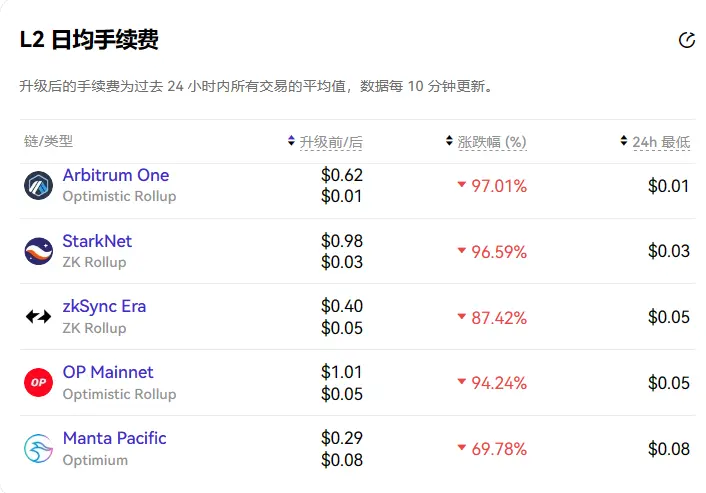
It is worth noting that the Dencun upgrade activated on the Ethereum mainnet on March 15 has significantly reduced the gas fees required for transactions and transfers on L2 over the past month, leading to visible cost reductions. According to OKLink statistics, after the Dencun upgrade, L2 fees have generally decreased by over 80%, with actual costs mostly reduced to $0.1 or even below $0.05.
Against this background, as we enter 2024, the increasingly fragmented and expanding modular narrative + DA concept will undoubtedly become a new trend. Many projects are beginning to consider issuing their own L2/L3, which means that the Ethereum L2 track will become even more crowded, and the problem of homogeneity will become increasingly prominent.
Therefore, finding a differentiated competitive direction has become the key to whether L2 can break through in the second half.
A new interpretation of the development path of the L2 track
From this perspective, the Dencun upgrade is by no means the end of the L2 battleground, and the market is calling for a new interpretation of Ethereum L2.
In this context, some new variables about L2 are beginning to emerge, including new players in the Ethereum L2 space such as Morph, which have been increasingly attracting market attention since the end of last year. Many astute Web3 capital players have sensed the huge opportunities hidden within:
- In November 2023, Blast completed a $20 million financing round with participation from Paradigm and Standard Crypto.
- On March 3, 2024, Taiko, an Ethereum Layer 2 network based on zkRollup, completed a $15 million Series A financing round, with lead investments from Lightspeed Faction, Hashed, Generative Ventures, and Token Bay Capital, and participation from Wintermute, Amber Group, OKX Ventures, GSR, and others.
- On March 20, 2024, Ethereum L2 Morph completed a $20 million financing round (including a $1 million angel round), with participation from top industry VCs such as Dragonfly Capital, Pantera Capital, Foresight Ventures, The Spartan Group, and MEXC Ventures.
- On March 26, 2024, the modular L2 Reya Network completed a $10 million financing round, with participation from well-known VCs such as Coinbase Ventures, Wintermute, and Fabric Ventures. On April 9, HashKey Group announced the launch of the Ethereum L2 network HashKey Chain, which uses ZK Proof zero-knowledge proof technology to provide users with a low-cost, efficient, and developer-friendly on-chain solution.
Amidst the intense competition, the market is further focusing on the Ethereum L2 track, and the discussion volume on the technical aspects of Ethereum is increasing, especially in the current construction of a thriving on-chain application layer on L2, which is a mainstream long-term narrative.
This article will take Morph as an example to briefly analyze the new development path brought to the L2 track by these new players, and what variables they can bring to the Ethereum ecosystem and the L2 track.
The "Horse Racing Mechanism" behind Decentralized Sorters
It is well known that sorters are responsible for controlling the order in which transactions are submitted from L2 to L1, and currently, all mainstream L2 projects operate sorters in a centralized manner to provide users with faster transaction confirmation speeds.
However, this approach also has significant risks. If a few centralized nodes go offline, it can cause the L2 network to be down for a long time. Additionally, these centralized sorters may prioritize transaction sorting based on personal interests to maximize their arbitrage opportunities, capture MEV value, delay user transactions, or even censor and reject user transactions.
Therefore, the advantages of decentralized sorters need no elaboration. They not only eliminate the impact of single points of failure but also ensure the decentralized nature of the network, maintaining network security and stability. They can also share the majority of the sorter fee profits with the entire network of builders.
As the first L2 network on Ethereum to implement a decentralized sorter design from the ground up, Morph has emphasized the importance of establishing decentralized sorters from the beginning and has designed a feasible solution based on principles such as efficiency, low cost, scalability, and ease of maintenance:
In Morph's operating mechanism, a decentralized sequencer network allows multiple nodes (sorters) to participate in transaction packaging and sorting, rather than being controlled by a single node.
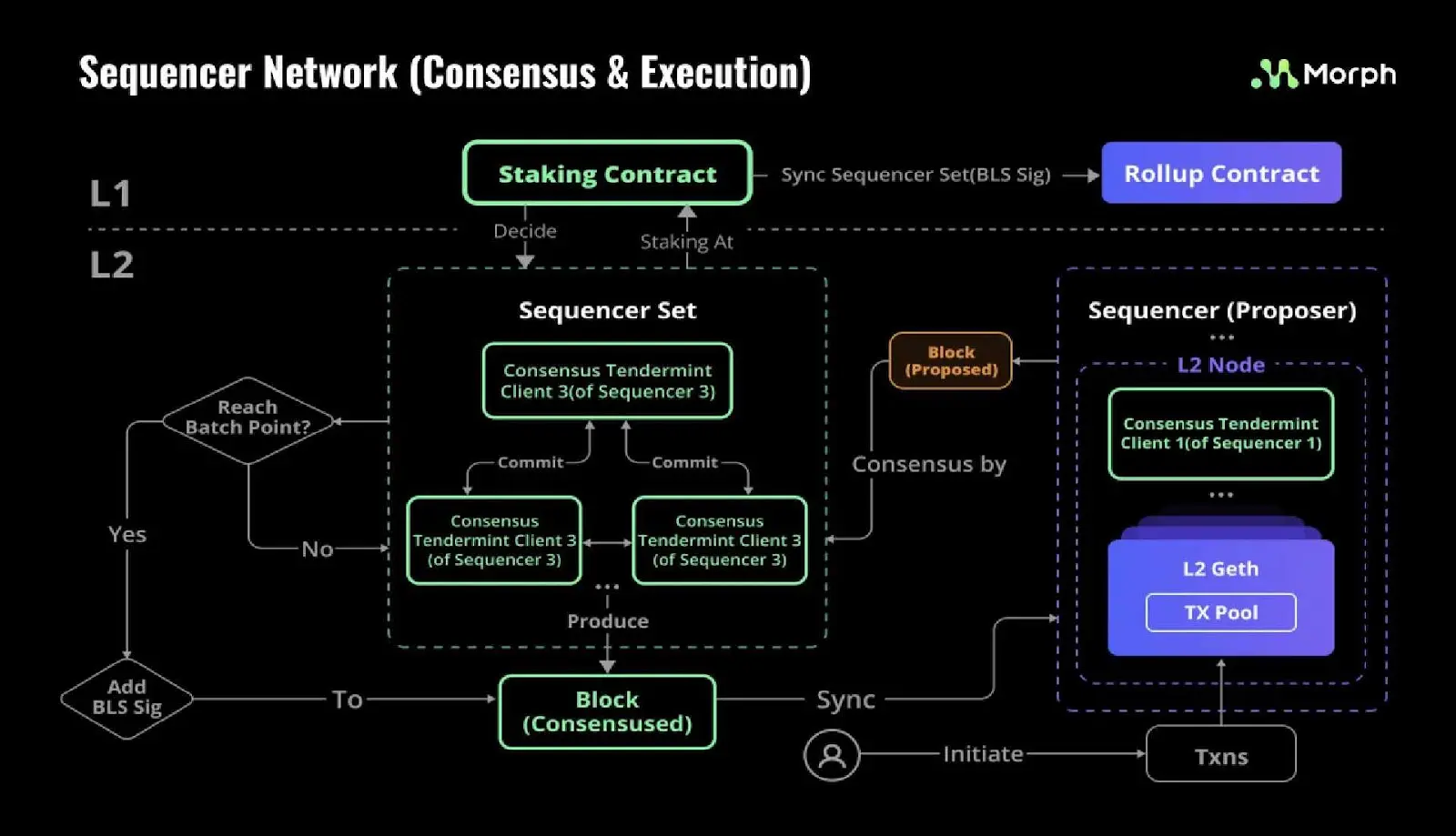
Furthermore, Morph's design of a decentralized sorter mechanism has given rise to another grand potential vision: redistributing sorter profits to on-chain project/DApp developers, providing a more diverse and subjectively proactive on-chain product and user experience.
In other words, after collecting gas fees from users, Morph's sorters can completely redistribute profits to on-chain projects/DApps according to a predetermined allocation mechanism. This can lead to a new incentive mechanism. For example, project developers can receive rewards based on their contributions, allowing them to fairly and transparently receive rewards based on their contributions, similar to a "community horse race" competition mechanism. By leveraging the decentralized sorter mechanism, Morph can use the control of the entire network's sorter fee profits as a baton to incentivize DApps to contribute to the spontaneous ecosystem of Morph.
This fully leverages the advantages of different project developers, achieving a highly market-oriented competition between DApps in terms of market promotion and innovative services for Morph's ecosystem's sustainable development:
For example, if Morph chooses to link incentive measures to the gas fees spent by DApp smart contracts and the number of active users, developers will indirectly receive incentives to maximize their contract gas spending and increase the number of active users for their projects, thus achieving a breakthrough from "0 to 1" and large-scale adoption.
In theory, this design concept can achieve "let a hundred flowers bloom, let a hundred schools of thought contend," helping Morph to quickly open up promotion and implementation at low cost, while also providing users with a differentiated and efficient selection of diverse on-chain services.
Finally, the project/DApp that receives sorter fee income can also distribute this additional profit to different types of individual users as incentives to meet their operational needs. This gives each DApp an additional means of incentivizing users, and Morph achieves its own promotion and large-scale adoption goals, resulting in a "win-win" situation.
According to official disclosures, Morph plans to launch the mainnet in the middle of this year and open up the functionality of decentralized sorters. Given the current progress of the L2 track, this may be the first L2 network where developers/users can experience the actual adoption of a decentralized sorter.
Long-term Development Framework Integrating OP and ZK
As mentioned earlier, almost all mainstream L2 solutions are derivatives of OP Rollup or ZK Rollup. When DApps/project developers decide whether to adopt OP or ZK, their core consideration is the trade-off between low cost and security.
In direct terms, although Optimistic Rollup lacks security, it is easier to achieve Ethereum compatibility, and due to its optimistic challenge feature, it does not require the cost of L2 state verification for the vast majority of the time, resulting in relatively lower costs.
On the other hand, ZK Rollups have extremely high security but lack efficiency. They rely entirely on mathematics to objectively provide higher security and do not require a dispute period to ensure network security. However, achieving ZK Rollups in the short term is more challenging, and it is difficult to make them compatible with the EVM.
Therefore, although the vast majority of OPRs in the OP series have not implemented an interactive fraud proof system, which means that users cannot respond when they discover that an OPR has submitted an incorrect L2 state, and cannot supervise the malicious behavior of OPR operators, at least for high-volume DApps in the current and even the next few years, ZK Rollup still does not have an economic advantage.
Faced with this situation, many DApps may prioritize cost advantages over enhanced security, which is also the current reality that the OP series is dominant. Therefore, there is a widely recognized judgment in the L2 world, similar to a prophetic saying, that the OP series is the present of L2, but ZK is the endgame of Rollup and Ethereum L2.
The key question is, with the development of ZK Rollup, once the economic and security aspects of ZK reach a good balance in the future, what should DApps that originally chose to deploy in the OP series do? How can the technical and time costs of migration be resolved?
This is a long text, so I will provide the translation in parts to ensure accuracy and coherence.
Part 1:
This is why the integration of Optimistic Rollup and ZK Rollup is also seen as the future of Ethereum's scalability, and Morph has innovatively proposed the Responsive Validity Proof (RVP) that combines the advantages of both:
As a method of state verification, RVP combines Optimistic Rollup with Validity Proof and uses ZK-Proof to verify the correctness of the state. After L2 accepts state changes, if a challenge is initiated, the sequencer must generate and submit a ZK-proof to L1 for verification within the challenge period. This design reduces the complexity of verification, theoretically achieving a reduction of the challenge period from 7 days to 1-2 days, to achieve fast, secure, and low-cost transaction processing:
In traditional Optimistic Rollup, malicious sequencers have the motivation to launch DoS attacks on L1 to reject the challenge process. However, in RVP, this motivation does not exist because RVP is generated by the sequencer, completely eliminating this problem and significantly shortening the challenge period.
This can be understood as providing an integrated solution—allowing DApps to start with a more economical configuration (OP) while maintaining the flexibility to gradually enhance security measures (ZK Proof) without the need for major changes to existing infrastructure.
This also highlights the flexibility of Morph's architecture. Counterintuitively, just as alloys often have better performance than pure metals, the current hybrid solution of Morph has achieved the best balance between scalability, low cost, and high performance—lower cost than ZKR, while also having higher security than most OPRs without interactive fraud proofs.
Modular Design for Low Cost & Operational Threshold
Furthermore, from the perspective of attracting project/DApp developers, the migration threshold and usage cost are the core considerations for competition between different L2 solutions.
The degree of modularity is undoubtedly key, and Morph is divided into three important modules: the Sequencer Network responsible for consensus and execution; the Optimistic zkEVM responsible for settlement; and the Rollup responsible for data availability.
Morph adopts a design mechanism similar to Ethereum 2.0, with separate consensus and execution clients to prevent invalid transactions from being included in blocks, avoiding user fee losses.
The Rollup strategy also maximizes efficiency, allowing multiple transactions to be included in a batch, and multiple batches in a block. Additionally, using ZK Proof functionality, the content of the block is compressed to effectively manage the cost of L1 data availability.
The design of Multiple batch submitters also allows each sequencer to submit batches to Ethereum in rotation, solving the single point of failure problem of individual submitters, ensuring the liveness of batch submission, and combining incentive mechanisms to ensure there are no transaction conflicts.
This modular collaborative architecture not only provides developers with highly attractive deployment options but also enables them to quickly adapt to new standards, reduce trial and error costs, and maintain consistency with Ethereum as much as possible.
For example, when undergoing a major Ethereum upgrade like Dencun, Morph can efficiently integrate EIP-4844, join new features at the earliest opportunity, and achieve synchronous compatibility with the Ethereum development path. In contrast, regular Rollups require a mainnet hard fork or contract proxy upgrade, and extensive testing to seamlessly interact with the existing system.
Overall, if Arbitrum and Optimism are the leading actors in the L2 track, and Base and Blast are the fierce newcomers, then Morph seems more like a potential stock that has emerged and has a promising future.
Can Morph and Others Bring about a Turning Point in L2?
Currently, new players like Morph are still only online on the testnet and have not yet issued tokens, so it is possible to objectively look at their competitive advantages and potential growth space compared to other L2 solutions.
As mentioned earlier, in the current Ethereum L2 ecosystem, the competition in underlying performance may not be the mainstream narrative that the public is concerned about. Instead of focusing on scalability and performance improvements, the key consideration is how to attract more developers, project parties, communities, and markets to create a prosperous ecosystem with various use cases in AI, DeFi applications, NFTs, GameFi, and more. This is the key to avoiding the embarrassing situation of "overvaluation" but a stagnant on-chain construction.
After all, time seems to be cyclical. In 2021, we marveled at Axie Infinity sweeping Southeast Asia, bringing a wave of new incremental users to Web3. Now in 2024, we are back to the beginning, with the Web3 world facing its unique traffic dilemma as it continues to accelerate its brutal expansion—Web3's existing user base is reaching its peak, while the entry of new users is fraught with difficulties.
In this context, Morph's positioning as a "consumer-grade L2" seems to fit well with this incremental demand—on the one hand, the scenarios involved in consumer-grade applications are rich enough, with plenty of points for ecosystem development, from meeting the entertainment and leisure needs at the spiritual level to meeting the material needs of on-chain assets, Morph can cover them all through continuous ecosystem development.
On the other hand, the consumer-grade user market is also broad enough. In the current blockchain seeking to break through development barriers, by providing a low-threshold and seamless experience, Morph can become the gateway for a large number of Web2 users to enter the Web3 world.
In particular, the long-term development framework of integrating OP & ZK, the low-cost & operational threshold of modular design, fundamentally speaking, this combination is also a way to use different resources, talents, technologies, etc., to achieve market-driven, transparent, and fair distribution of internal development solutions for L2.
Firstly, the long-term development framework of integrating OP & ZK, and the low-cost & operational threshold of modular design, can effectively reduce the migration and development thresholds for developers and project/DApp developers, providing them with highly attractive deployment options, while also enabling them to quickly adapt to new standards, reduce trial and error costs, and maintain consistency with Ethereum as much as possible.
Secondly, the "horse racing mechanism" behind the decentralized sorter fully leverages the advantages of different project parties, achieving a highly market-oriented competition between project parties in terms of DApp ecosystem development, market promotion, and service usage, incentivizing these community builders to jointly achieve the sustainable development of the Morph ecosystem.
Because it is currently in the early stages of ecosystem development, Morph has launched a series of ecosystem activities and long-term plans in recent months.
- On March 25th, Morph announced the launch of the Sparkloom Builder Program, which will last for 4 months and includes an online hackathon and an incubator program. The hackathon prize pool is $20,000, and the winners will be invited to join the Morph incubator program. The ultimate winners of the incubator program have the opportunity to receive up to $100,000 in funding and share 30% of the total Morph airdrop.
- On April 9th, Morph, along with BeraChain, Solana, and The Graph, jointly organized the Hack.Summit Hackathon competition, providing various workshops and lectures on different Web3 technology application scenarios, and setting up rewards to promote the development and implementation of Web3 technology.
- On April 13th, Morph, along with OpenBuild, Chainlink, SNZ, EthPlanet, and MaskSolidity, jointly held an offline Meetup & Mini-HackerHouse event in Shanghai to help developers interested in blockchain enter the Ethereum ecosystem.
- Additionally, Morph has launched the Sparkloom incubator program, which will run from April 29th to June 30th, mainly targeting AI, DeFi, GameFi, Infrastructure, NFT, middleware/tools projects. Winners will receive comprehensive support, including mentorship from institutions such as Dragonfly, Pantera, LayerZero, The Block, Nansen, Pyth, individual project grants of up to $100,000, and a quarterly refund of the full first-year sequencer fee profit, among other benefits.
This can leverage the mature user base of existing crypto industry participants to help Morph quickly promote and implement from 0 to 1 at a low cost. From the perspective of ordinary users, it is also an effective channel for "Contribution-To-Earn" (C2E):
By encompassing different types of user groups from different chain protocols, providing diversified reward opportunities for on-chain users, where contribution equals reward, ordinary users can receive transparent and fair rewards by contributing to services designed by different B-side institutions (using protocols, holding positions, engaging in lending, etc.).
This provides multiple institutions with a new means of incentivizing users and generating income, while ordinary users have the opportunity to share in the profits from Morph's network sequencer fees. This also helps Morph achieve its own development, promotion, and large-scale adoption goals, achieving a "win-win" situation. If steadily promoted, this could be a good path from self-circulation to positive feedback.
If "2022's Web3 is like 2002's Web2," then now is perhaps the right time to focus on how to tap into consumer-grade scenarios and attract more incremental new users—whoever captures the future billions of users in the Web3 world will win this war.
Conclusion
Of course, new L2 solutions like Taiko and Morph are currently in a very early stage. The core teams are still focused on the development and improvement of underlying infrastructure. However, with the rapid development of the L2 track and the entry of crypto giants like Coinbase and ConsenSys into L2, the second half of the future of L2 may already be unfolding.
Everything in the past is just a prologue. From a macro perspective, if all goes well, whether it's potential stocks like Morph and Taiko or newcomers like Base and Linea, they will lay the foundation for the growth of new DApps, new users, and ultimately the TVL of the Ethereum ecosystem. This may lead to a completely different pace from the previous L2/public chain boom.
Especially, solutions like Morph's integration are stirring up a lot of excitement. Through the long-term development framework of integrating OP & ZK, the "horse racing mechanism" behind the decentralized sorter, and the low-cost & operational threshold of modular design, if steadily promoted, this could be a good path for L2 from self-circulation to positive feedback. This is highly imaginative and also quite challenging.
免责声明:本文章仅代表作者个人观点,不代表本平台的立场和观点。本文章仅供信息分享,不构成对任何人的任何投资建议。用户与作者之间的任何争议,与本平台无关。如网页中刊载的文章或图片涉及侵权,请提供相关的权利证明和身份证明发送邮件到support@aicoin.com,本平台相关工作人员将会进行核查。


