The Runes token protocol was launched on the Bitcoin network, creating immutable symbols and adopting long and unique naming rules to ensure uniqueness.
Author: Jason Nelson
Translated by: Blockchain in Plain Language
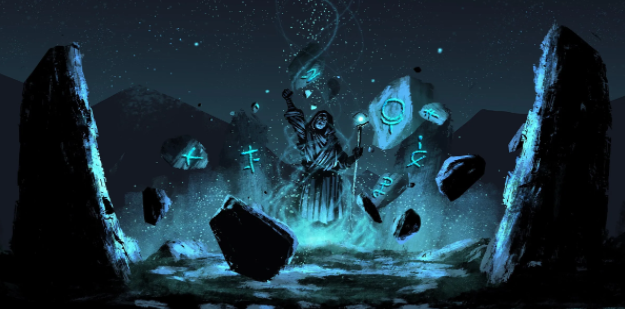
With the Bitcoin halving behind us, the new RunesToken protocol has officially launched on the Bitcoin network. According to data from Ordinals and Luminex, the platform for launching Runes, since its launch on April 20th, the Runes protocol has created over 8,000 "etchings" (the preferred term for RunesToken deployments) on the Bitcoin blockchain.
A trend has quickly emerged among these new digital assets, featuring long and unusual format names. Browsing this emerging category on platforms like Magic Eden reveals tokens labeled as "SYMPATHETIC•PARAMUTUALISM" and "WANKO•MANKO•RUNES."
Runes' names are typically displayed in all capital letters, which may seem strange, but the creators have good reasons for it. The Runes protocol has a built-in minimum name length to prevent so-called name squatting. Name squatting, domain squatting, or network squatting involves registering a name that is typically recognized by others as a brand or trademark in order to profit from its recognized value.
However, the creators of Runes do not see this as a problem.
1. Why use such long names?
"Brian Laughlan, co-founder of OrdinalsBot, told Decrypt, 'The naming requirement starts long and gets shorter.' While this rule may seem strange, it also means that no one can squat 'PEPSI' on the first day." Every 17,500 blocks, the minimum letter count decreases by one character, creating a constantly changing naming environment.
However, this restriction did not stop someone from creating a symbol named THE•NEW•YORK•TIMES, even though it has no apparent association with The New York Times.
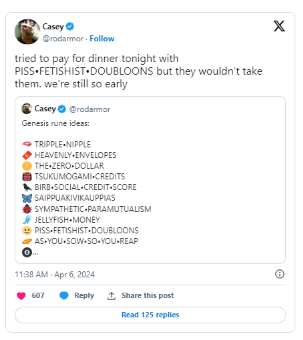
According to the Ordinal Theory Handbook, symbol names must be between 1 and 28 characters. Although the current length limit only allows the use of letters A to Z, the names must be unique, with or without spaces. This means that names like 'UNCOMMON•GOODS' and 'UNCOMMONGOODS' are considered the same. Additionally, even with different spacing, symbols cannot use the same letter sequence as existing symbols.
In an episode of the Hell Money Podcast, Casey Rodarmor, the developer of Bitcoin Ordinal, explained, "When you create a name for a symbol, you reserve that name for it and set the symbol's attributes. The first attribute a symbol can have is its name. The name can be any combination of letters from A to Z, presented in uppercase, with a length of 1 to 26 characters."
2. Symbol names cannot contain numbers.
He explained, "We chose this rule to simplify. Allowing numbers could be confusing because 0 and O are easily confused, or if we allowed Unicode characters, it could be chaotic because symbol names could contain special characters like emojis."
He added, "Symbol names can also include delimiter symbols, such as periods, dots, etc., placed between letters in the name to improve readability."
Rodarmor gave an example: "If you have already created a symbol named GOODMORNING, just like Good Morning, then others cannot create GOOD and add a delimiter, then add MORNING," he explained. "The delimiter is set when creating the symbol and does not change the symbol's name, ensuring that each symbol name is unique."
3. Debate about naming
Rodarmor recalled, "The idea of unique names caused some controversy when I designed the protocol. Many people didn't like the concept. An alternative was to use obscure, unreadable identifiers to identify symbols, allowing symbol names to be repeated."
In this setup, Rodarmor explained, "You can't say 'buy this symbol' and then say the symbol's name; you have to say 'buy this symbol' and then provide a string of meaningless characters."
When asked if popular names and brands can be used as symbol names, Rodarmor is not concerned.
He said, "Some people say this is not good, like if Google wants to get the Google symbol, but can't because someone else already has it. First of all, this is not the stock market—I hope one day… some lunatic gets the Google symbol, and Google can't have it. I would love that."
He further pointed out, "If you really don't care about the symbol's name and just want to reference it with a specific name, you can get a so-called anonymous symbol, which will generate a name for itself. You can think of this as an implementation detail."
The document also explains, "Symbols are created through etching. Etching creates a symbol and sets its attributes. Once set, these attributes are immutable, even for the etcher."
The symbol protocol was announced by Rodarmor in September and is seen as a way to create interchangeable tokens on the blockchain, ranking among the top in market value. He noted that symbols aim to address several issues brought about by last year's BRC-20 token standard, such as wasted block space.
While some non-professional observers may consider symbols and BRC-20 tokens to be the same, Ken Liao, CEO of the Bitcoin wallet Xverse, stated that over time, the differences between them will become more apparent.
Liao told Decrypt, "Some people have been pointing out the same issues with symbols in trading as with BRC-20. But this is mainly because we are basically still in the first-day stage, and most symbol trading markets are directly copied and pasted from their BRC-20 integrations. I think we will start to see improvements over time."
Source: https://decrypt.co/227748/bitcoin-rune-name-rules-long-weird
免责声明:本文章仅代表作者个人观点,不代表本平台的立场和观点。本文章仅供信息分享,不构成对任何人的任何投资建议。用户与作者之间的任何争议,与本平台无关。如网页中刊载的文章或图片涉及侵权,请提供相关的权利证明和身份证明发送邮件到support@aicoin.com,本平台相关工作人员将会进行核查。