On April 20th, as Bitcoin completed its fourth halving at block height 840,000, the long-awaited Runes protocol was introduced. Proposed by Casey Rodarmor, the founder of the Bitcoin Ordinals protocol, the protocol utilizes the UTXO transaction model of the blockchain to efficiently and conveniently facilitate the issuance of alternative cryptocurrencies. Additionally, the OKX Web3 wallet promptly launched its self-developed market for Runes, providing users with a one-stop Rune ecosystem experience, thereby promoting the overall ecosystem's activity and user convenience.
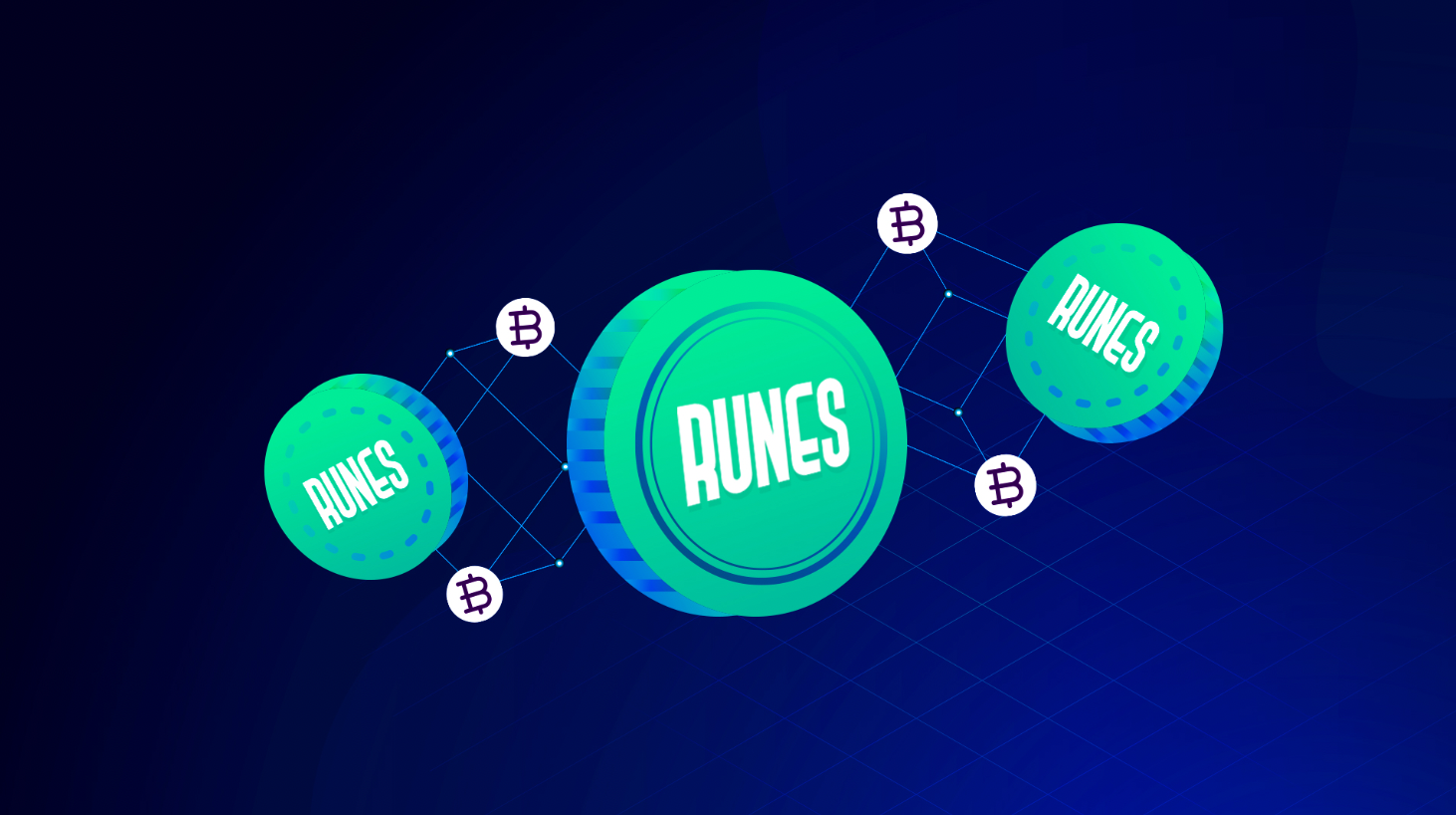
Unlike previous markets, the current "Rune" hot projects mainly appear in the form of Bitcoin NFTs, characterized by fair distribution without pre-mining or pre-allocation. These simple Rune concept images have attracted a lot of attention, especially as the distribution of Runestones and the launch of the Runes protocol mainnet draw near, leading to a continuous increase in market heat. The technical details and market dynamics behind this are crucial for investors, especially when assessing the risks related to the official explanation authority of the Ordinals protocol. The following article will further explore the impact and investment opportunities of the Runes protocol.
Economic Trends and the Crypto Market's Response: A Detailed Analysis of the Market Impact of the Runes Protocol
Economic Indicators and Cryptocurrency Market Response
Retail sales data in the United States for March showed strong performance, exceeding market expectations. However, Federal Reserve Chairman Powell's hawkish speech dampened market expectations for future interest rate cuts. Currently, the market expects the Fed to cut interest rates only once or twice this year, by 25 basis points each time, significantly reducing the earlier expectation of six interest rate cuts at the beginning of the year. In addition, the tension in the Middle East has eased, but this has not prevented the US dollar index from reaching a six-month high. Meanwhile, the US stock market has experienced a significant decline due to adjustments in liquidity expectations.
In the cryptocurrency market, although Bitcoin has shown overall weakness, its market dominance unexpectedly reached a new high in four years. This increase in market dominance is mainly due to the high attention the market is paying to the Runes protocol, which is set to officially launch during this weekend's BTC halving event, attracting significant attention from US funds.
Exchange Dynamics and Market Performance
At the exchange level, Binance and OKEx have respectively launched new tokens such as TAO and MERLIN. TAO tokens are based on AI and machine learning's POW architecture, while MERLIN serves as a BTC EVM Layer 2 solution, with strong technical support and market potential. The OMNI token focuses on cross-chain information transmission between Ethereum Layer 2, solving L2 fragmentation issues, and its market value is comparable to ZETA, both exceeding $25 billion.
Technical Indicators and On-Chain Analysis
From a technical and market indicator perspective, Bitcoin's price cycle pattern shows that the first two bull markets lasted for 3.5 years each and saw price increases of 113 times and 19 times, respectively. In the current cycle, the price has only increased by 4 times so far, indicating a slowdown in acceleration. In addition, the active spot ETF market has brought in new capital, with an estimated additional capital of about $12 billion and ETF-held BTC valued at $60 billion, becoming a key driver of the market.
The market value of stablecoins has grown by 2%, reflecting the continued health of long-term funds. The MVRV-ZScore indicator is currently at 2.1, in the neutral range, indicating that the overall market is in good profit condition, but has not yet reached the extreme market top or bottom range.
Futures and Spot Market Details
In the futures market, the funding rate was close to 0 this week, indicating a bullish advantage, and the short-term market may be approaching a top. The open interest of BTC futures has significantly decreased, indicating partial withdrawal of main funds. The long/short ratio for futures is 2.4, showing a market sentiment leaning towards greed.
In the spot market, the continuous decline in BTC price and the halving event have led to an increase in the minimum shutdown price for miners to $49,000. Bitcoin has fallen by 15% from its peak, while the decline in major altcoins is close to 50%, reflecting buying pressure from continued ETF purchases and selling pressure from the unlocking of altcoins. The overall improvement in market liquidity is expected to come at the end of the year with the formal arrival of the Fed's interest rate cut, when the entire crypto market may experience a general uptrend.
The improvement in macroeconomic conditions, optimization of technical indicators, and adjustments in the futures and spot markets have provided a favorable market environment for the launch of the Runes protocol, indicating that it may trigger a new round of technological revolution and capital flow in the cryptocurrency market. For investors, keeping an eye on these economic indicators and the latest changes in market dynamics is crucial for seizing future investment opportunities and risks.
Runes Protocol: A Revolutionary Asset Management and Issuance Strategy for the Bitcoin Network
The Runes protocol, designed by Casey Rodarmor, the founder of the Ordinals protocol, introduces a new type of asset for the Bitcoin network—Runes. This protocol aims to address the inefficiency and complexity issues caused by the inscriptions on the BRC-20 protocol, providing a more concise and efficient framework for asset issuance and management.
Protocol Compatibility and Scalability
The Runes protocol has outstanding compatibility and scalability, seamlessly integrating with Bitcoin's UTXO model and its second-layer protocols based on it (such as the Lightning Network and CKB). Compared to other homogeneous token protocols like BRC-20, Runes greatly enhances operational efficiency and user experience through simplified transaction processes and token balance management directly bound to UTXO.
Optimization of User Experience
Runes supports Simple Payment Verification (SPV) wallets, providing users with a lightweight transaction experience superior to traditional BRC-20 protocols. It also emphasizes compatibility with existing Bitcoin scripts and address types, providing developers with a more friendly and accessible development environment.
Flexibility in Token Issuance
In terms of token issuance, Runes offers tremendous flexibility. It allows token names to vary in length from 1 to 28 characters and adopts various innovative issuance mechanisms, such as fixed total supply issuance, public inscription issuance, and more expressive issuance methods. These mechanisms not only enrich the token design space in the Bitcoin ecosystem but also enhance its security, effectively avoiding common security risks.
Improvement in UTXO Management
Runes optimizes UTXO management by using the OP_RETURN script to avoid the complexity and security risks that the witness part of transactions may bring, reducing unnecessary UTXO generation. This approach not only enhances the overall health and efficiency of the network but also seamlessly integrates with Bitcoin's infrastructure, encouraging more optimized UTXO usage.
Protocol Implementation and Community Support
With Bitcoin set to undergo the next halving, at the crucial moment of block height 840,000, the Runes protocol is expected to be officially launched. The expected launch date is in late April 2024, marking the formal entry of the Runes protocol into the Bitcoin ecosystem, opening a new chapter for the issuance and management of homogeneous tokens on the Bitcoin network. Additionally, protocols like Merlin have expressed their comprehensive technical support for Runestone and Runes, reflecting not only the Bitcoin community's recognition of the potential of the Runes protocol but also the cryptocurrency community's common pursuit of innovation and progress.
The launch of the Runes protocol signifies an important technological innovation in the Bitcoin ecosystem, opening up new possibilities for the diversified development and technological innovation of the Bitcoin network through the simplification of the UTXO model and efficient token transfer mechanisms.
Activation of the Rune Protocol: A Glimpse of Emerging Market Opportunities
Since the successful launch of the Runes protocol alongside the Bitcoin halving, the activity in the crypto community has significantly increased, resembling a festive atmosphere celebrating the new protocol. Currently, over 4,700 Rune projects have been launched, and miner fees have noticeably decreased compared to the initial launch, providing a more friendly entry condition for investors and participants.
After a detailed exploration of these Rune projects, it was found that they mainly fall into the following categories, each with its own investment value:
First-tier Rune Projects: Such as UNCOMMON•GOODS and other numbered 0-9 Runes, due to their uniqueness and open participation, it is recommended to participate when gas fees are low to obtain the best narrative value.
High-heat projects: Such as DECENTRALIZED and DOG•GO•TO•THE•MOON, these projects are usually airdropped to early supporters and then driven by market heat to push prices up.
Technology and community-driven projects: THE•RUNIX•TOKEN and SATOSHI•NAKAMOTO demonstrate patterns of project development driven by technological innovation or community activities, with SATOSHI•NAKAMOTO attracting attention due to its significant market performance and widespread holding addresses.
Additionally, it is interesting to note that meme-type Runes such as COOK•THE•MEMPOOL and WANKO•MANKO•RUNES have also attracted a lot of attention. They typically have unique cultural value and limited-time minting mechanisms, with large price fluctuations and high investment returns.
Community-based Runes, such as PUPS•WORLD•PEACE and MAGIC•INTERNET•MONEY, continue to attract new participants based on strong community support and rich social media activities.
When investing in these Rune projects, considering the novelty of the Runes protocol and the market's uncertainty, it is advisable for investors to thoroughly understand aspects such as the issuance mechanism, community vitality, and technical support of each project. Although the design of Runes provides higher efficiency and a better user experience, there may still be some technical and cognitive barriers in the early market.
In conclusion, the launch of the Runes protocol has not only brought new vitality to the Bitcoin network but also opened up new paths for the diversification of crypto assets and technological innovation. As these Rune projects gradually unfold, the market will pay more attention to technical practicality and community participation, leading to an expected new wave of cryptocurrency innovation. In this context, are you ready to explore and invest in these promising Rune projects?
免责声明:本文章仅代表作者个人观点,不代表本平台的立场和观点。本文章仅供信息分享,不构成对任何人的任何投资建议。用户与作者之间的任何争议,与本平台无关。如网页中刊载的文章或图片涉及侵权,请提供相关的权利证明和身份证明发送邮件到support@aicoin.com,本平台相关工作人员将会进行核查。


