"Blockchain exists in our modern ecosystem as a software foundation. As long as this ecosystem continues to operate, our software will continue to exist."
Author: Sunny, TechFlow of Deep Tide
Guest: Adam Tyler, CEO of COZ
"Blockchain exists in our modern ecosystem as a software foundation. As long as this ecosystem continues to operate, our software will continue to exist."
- Adam Tyler, CEO of COZ
Blockchain can die, but it is based on humans. As long as humans do not perish, code can exist on the blockchain to achieve the perpetuation of software and hardware.
We have long been committed to building blockchain technology, enough to take a philosophical stance on the use of blockchain.
Our modern ecosystem refers to the era unfolding around human activities on Earth (i.e., the human era). Like other organisms, humans have the ability to reproduce, and reproduction has always been a conservative feature of organisms. Non-living entities such as code, software, text, or rings cannot self-replicate…
Since 2008, Bitcoin has emerged as a private currency that can connect all individuals on Earth with the concept of currency. Currency can be seen as a fractional space that supports the basic economic activities necessary to maintain human nature through supply and demand flow.
Unlike private currency, public currencies such as national currencies are controlled by a few people, mainly governments. Therefore, when supply and demand errors occur due to human factors, a single point of failure in supply and demand economic activities may arise.
Behind Bitcoin is distributed ledger technology, namely blockchain, which enables everyone on Earth to contribute their labor and resources to maintain the operation of the distributed ledger. Since the introduction of smart contracts on Ethereum, the Ethereum blockchain has become a world computer, meaning that smart contracts (essentially code) running on it are also closely linked to humans.
Therefore, for the first time, humans can link their reproductive ability with software (logic, language, code, memes, etc.), and this is achieved through blockchain.
As Tyler described, "Blockchain exists as a software foundation of our era." Now, if we have a software foundation that can reproduce, can we bind it to physical items such as rings, keys, and artworks to make them more 'immortal' through the software layer programmed on the blockchain (absolute immortality would be an exaggeration, as items will gradually wear out after use)?
Now, physical items (non-biological items) can be regenerated… as long as humans can keep the blockchain running consistently.
I found the conversation with Tyler very interesting because we delved into how blockchain has become the software foundation of things on Earth, and how humans behind the operation of this technology keep software and hardware in a regenerative state, giving non-biological items the reproductive characteristics of living organisms.
Tyler Adams' background is deeply rooted at the intersection of medical technology and biological research. Initially, he focused on designing medical devices and centrifuges, with his main work revolving around flow cytometry, a key tool for high-speed cell sorting and analysis in major research fields such as AIDS and cancer. Although not directly involved in diagnostics, his dedication to instrument manufacturing and the broader field of biological research demonstrated his deep connection to this scientific field, providing him with a unique perspective on his later transition to blockchain technology.
In the early stages of Tyler's exposure to blockchain, he joined the Neo ecosystem as a core contributor. It is worth noting that Tyler's team was also the first to introduce Neo technology to the English-speaking community in Western markets.
Decentralized immortal impressions generated by DALL-E3
From Neo ecosystem contributor to founding COZ
TechFlow: How did you transition from being a biomedical engineering application engineer to a core contributor to Neo?
Tyler:
My journey in blockchain has been a long one. It began with my involvement in high-speed cell sorting and ultra-high-resolution technology, utilizing techniques such as seven-laser array submicron cell sorting. This technology led me to join Seagate (a big data storage solutions company), where my focus shifted to numerical modeling of advanced technology reliability. My responsibilities expanded to reverse engineering customer workflows and creating numerical models to simulate new disk technology.
This experience led me to focus on global system testing infrastructure and analysis. It was here that I began exploring consensus algorithms, driven by the challenge of achieving global consistency of data states within large storage arrays. This exploration led me to the forefront of blockchain research, starting with foundational technologies like Bitcoin and Ethereum.
Ultimately, this path led me to the Neo blockchain and its Delegated Byzantine Fault Tolerance (dBFT) algorithm, which resonated with our architecture and industrial needs. Recognizing the limited exposure of Neo technology in the Western world, especially outside the Chinese community, my team at COZ and I began translating the Neo whitepaper into English. We developed tools and infrastructure to increase its visibility in the Western world, marking the beginning of our contributions to the blockchain industry and the Neo platform over the past seven years.
When discussing dBFT or Delegated Byzantine Fault Tolerance, I emphasized how Neo pioneered this protocol, setting a precedent for energy efficiency and computational efficiency in the blockchain space. This innovation is not limited to Neo; it has also attracted interest and adoption from other major players such as Binance Chain. The appeal of dBFT lies in its sharp contrast with energy-intensive proof-of-work solutions, positioning it as a more sustainable and efficient framework for Layer 1 blockchains.
TechFlow: How did you establish this developer team during the Neo era and subsequently transform it into COZ?
Tyler:
I did not start directly from Neo initially. About seven years ago, many individuals like myself independently discovered Neo and recognized its value as a protocol and project. As community members, we united to communicate, organize, and collaborate. We carried out various initiatives, such as translating documents and developing software for the platform.
We initiated the creation of a wallet, which has evolved into a BIP39 multi-protocol wallet. Additionally, we developed a contract compiler for writing smart contracts on the platform, and a software development kit to enable application development. These efforts enabled platforms like Binance and Kucoin to effectively interface with the blockchain.
The Neo team provided crucial support for our efforts, even providing funding to sustain our development work. This financial support helped attract developers to the ecosystem. Essentially, this marked the beginning of COZ and outlined how we started our journey.
Understanding the differences in software development between Web2 and Web3
TechFlow: What do you think is the biggest difference for developers in getting started in Web2 and Web3 development?
Tyler:
There are several key aspects to consider—tools and support.
First, let's discuss the fundamental differences in software architecture.
In traditional software development, we often talk about the front end and back end, these two static constructs define the structure of the application.
However, when it comes to blockchain, we encounter an entirely new architecture. Although blockchain is sometimes used only as a back end, maintaining the front-end-back-end concept, in some cases, this approach is not sufficient to meet the requirements. This is particularly evident in the field of smart contracts, where cryptography and security considerations play a crucial role.
Understanding and exploring these security vulnerabilities is one of the biggest challenges developers face when transitioning from Web2 to Web3 development.
For example, let's consider data storage in the healthcare field. In traditional healthcare software development, encrypted data stored in a database can comply with regulatory standards, ensuring security and compliance.
However, if the same data is encrypted and stored on the blockchain, regulatory issues arise due to the immutability of blockchain data.
Unlike traditional databases that can delete and re-encrypt data to meet new encryption standards, blockchain data remains immutable.
This fundamental difference disrupts many standard practices in software development and requires a thorough reassessment of security protocols.
In addition, COZ focuses on building contract compilers and software development kits, especially in Python, which is widely regarded as a primary programming language in information technology.
Since Python is a language commonly taught in schools, the language barrier is no longer a major concern. Instead, the main challenge lies in understanding these architectural concepts. For example, at hackathons, participants are encouraged to design their own architectures and seek feedback, as many traditional software architectures are incompatible with blockchain technology.
Mission of COZ: Binding real-world assets to the blockchain
TechFlow: Looking ahead to the future trajectory of COZ, how do you see its role evolving in Web3 architecture development, especially in relation to traditional Web2 companies and Web3?
Tyler:
Currently, we provide customized services for Web2 businesses looking to transition to Web3. We position ourselves as partners, leveraging our extensive experience and deep understanding of the ecosystem to ensure that partners' architectures and product concepts are seamlessly and securely implemented in the Web3 environment. Our expertise covers everything from core protocol development and consensus mechanism design to end-user activation, and products have been deployed to thousands of users in various live events on the mainnet.
Through these services, we address specific challenges of non-financial technology blockchain use cases, simplifying processes and removing barriers with insights from proof points and activations.
Recently, we have been focused on developing physical assets linked to blockchain encryption, providing a practical use case without any financial components.
Nevertheless, they offer unique value propositions by leveraging blockchain technology. As an organization, we believe our widespread presence in the ecosystem enables us to pioneer novel use cases beyond financial applications.
This approach aligns with our vision of driving universal adoption by seamlessly integrating blockchain into everyday life, where users may not even realize they are interacting with blockchain technology.
Contrary to the prevalent trend in the industry, where many focus solely on a blockchain-centric narrative, we adopt a customer-centric approach. Our philosophy is to meet customers where they are, prioritizing tangible value propositions over blockchain hype.
Similar to the development of cloud computing, we recognize that early cloud market marketing efforts tended to emphasize the technology itself rather than its actual benefits.
Similarly, in the blockchain space, there is a tendency to boast about blockchain itself. However, we believe the future lies in turning blockchain into an infrastructure layer, similar to cloud computing, seamlessly integrated into everyday applications without drawing attention to its underlying technology.
Essentially, we foresee blockchain evolving into a foundational tool for building products, much like cloud infrastructure. Our goal at COZ is to align with this trajectory and position ourselves at the forefront of this shift towards blockchain as an indispensable part of the technological landscape.
TechFlow: Can you provide an example of a real-world use case where physical objects operate based on your services, but users are unaware that it is based on blockchain technology?
Tyler:
Last year in Denver, Colorado, the renowned mural festival Worldwide Walls took place, attracting 17 muralists from around the world to create stunning artworks. Some of these murals were as tall as five stories, truly grand in scale. Subsequently, copper plaques were installed on them, and here's an example: these plaques embedded with microcomputers allow users to tap or scan them to collect unique signatures. These signatures can then be burned onto the blockchain to redeem rewards from local businesses within the area. We plan to execute this initiative again at the ETHDenver event in three weeks.
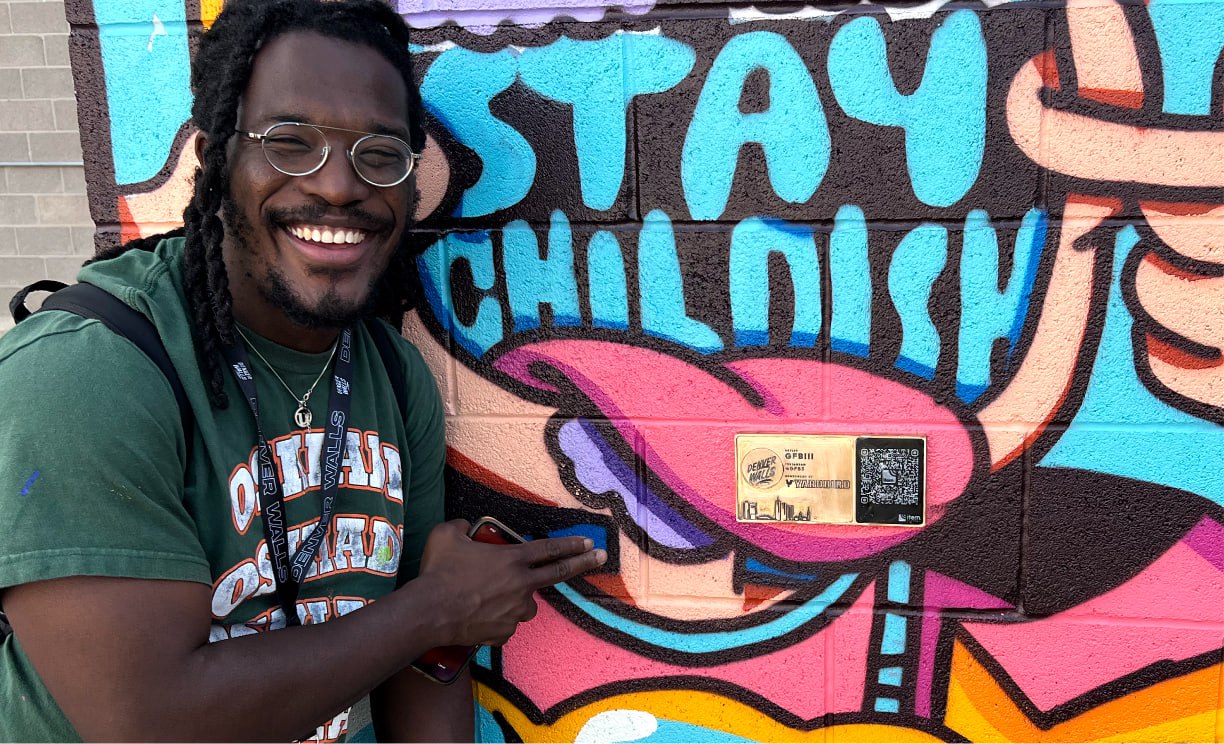
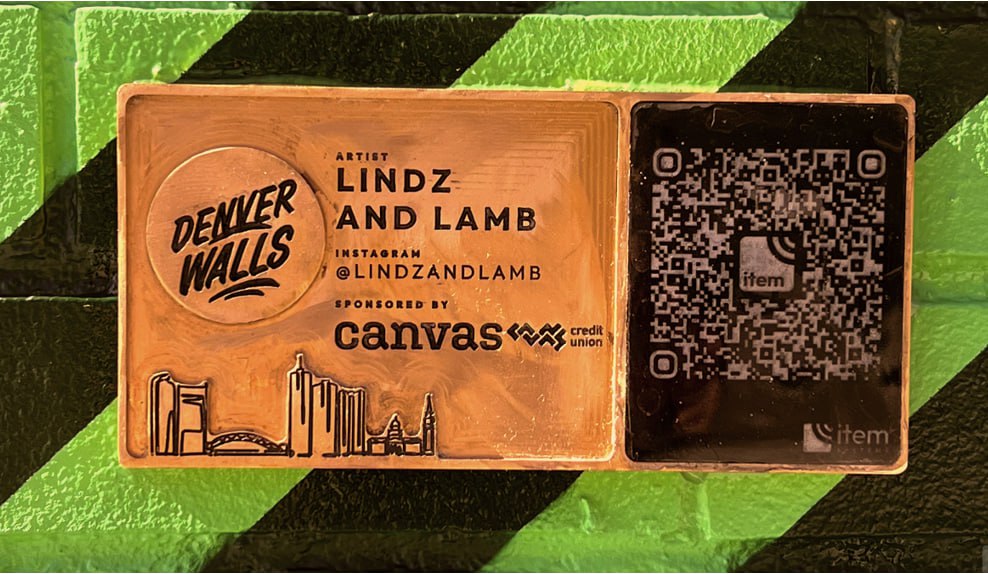
This is a great example that demonstrates how individuals do not necessarily need to be aware. They are not directly interacting with the blockchain, and there is no need to create a wallet or perform any related operations. However, they are leveraging the blockchain to enhance their experience.
TechFlow: Is this similar to POAP?
Tyler:
It's somewhat similar, but it cannot be counterfeited.
It's peer-to-peer, there are no super users. It's direct, it's the merchants, local businesses, and the community interacting. The walls with the murals themselves serve as navigation points.
Another good example is the activation we conducted at the Token2049 event in Singapore, where we distributed rings.
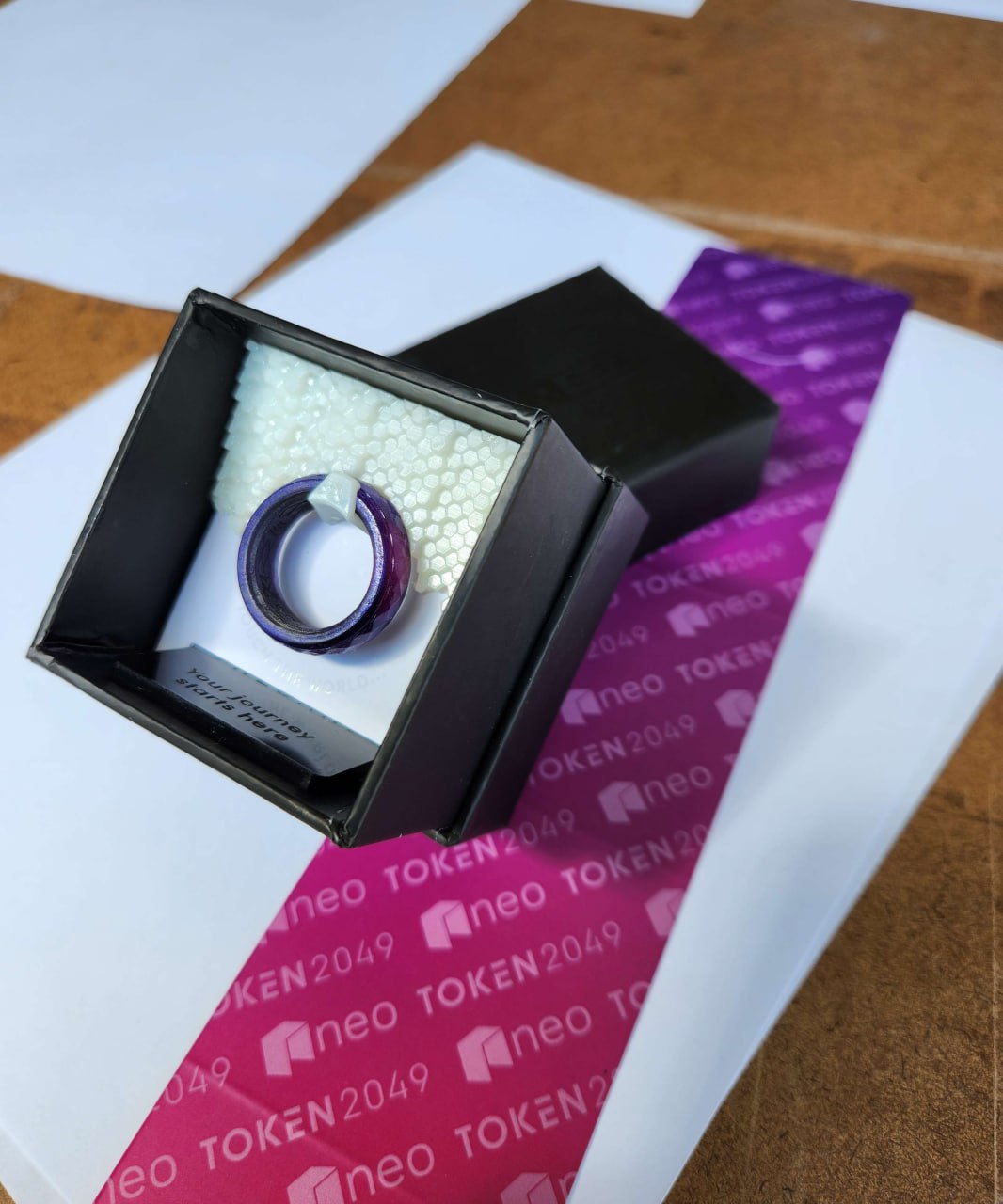
These rings are tamper-proof, making us the sole manufacturer of this type of physical asset on Earth. They utilize the blockchain to provide provenance information and ownership declaration data.
During our Token2049 activation, approximately 300 of these rings were distributed. Participants were able to interact with them at a curated museum experience by tapping or scanning their rings. This interaction facilitated by blockchain technology, without the need for communication, private keys, or registration processes, provided a clear user interface and experience. Similar experiences were also deployed at Consensus last year.
Additionally, we conducted a similar activity at the Tribeca Film Festival, showcasing artwork from a film nominated for an Oscar this year. These artworks were embedded in wax frames with chips behind them. By tapping or scanning these items, users could interact with the blockchain, verifying their encrypted authenticity, making them counterfeit-proof physical assets.

What's particularly interesting is that this setup directly interfaces with the blockchain, making it possible to create decentralized applications that utilize it as a key interaction point. For example, imagine a smart contract wallet where this ring serves as a two-factor authentication device for transaction verification.
It can also be used for access control and various other purposes. In addition to proving authenticity and displaying provenance data for collectibles—a major concern in the art market—it also serves as a tool to serve the broader art community, which often faces issues of piracy and counterfeiting.
TechFlow: Why did you choose to use blockchain in these real-world physical application cases?
Tyler:
It involves the value of encryption. And also because it's decentralized.
We have been developing blockchain technology for a long time. In this process, we have considered the use of blockchain from a philosophical perspective. In this case, blockchain exists as the software foundation of our modern ecosystem.
When you consider a physical asset, such as your headphones. If you hand them to someone, you can now sell them. There is no centralized infrastructure for that transaction. It's peer-to-peer. Fundamentally, the concept of blockchain is the same. It's peer-to-peer. It's permissionless. You can freely transact with your assets.
So for us, we see a lot of similarities between physical assets and blockchain, and we believe this type of product is a very good interface. Our organization could completely disappear from the earth, and our physical assets would still exist. People can continue to write software using our physical assets. They can continue to use them, prove they are real, and continue to operate them, regardless of whether we as producers still exist. This is the same for your headphones. All physical assets are like this.
The people or companies that manufacture your physical assets—your headphones, your clothes—regardless of whether the company still exists, these physical assets still exist. Blockchain is the perfect tool for building physical assets. We have seen other solutions, but that problem has not disappeared. If you have ever purchased a technology product, and then the company disappears, then you can no longer use it. That is a terrible experience. So we are trying to push the concept that physical assets and blockchain are a very good combination.
TechFlow: Could you further explain how software deployed on physical assets can be modified without interacting with the producer organization?
Tyler:
As an organization, we have deployed a series of smart contracts on the blockchain. We have been discussing the difference between the backend and frontend, emphasizing the architectural contrast between traditional software and Web3.
In traditional software, companies typically maintain backend infrastructure. If the company ceases to exist, the backend infrastructure also disappears. However, in our case, our code resides on the blockchain.
We do not manage infrastructure, servers, or any related components. Instead, our code is embedded in the blockchain structure, maintained by the entire ecosystem.
As long as the ecosystem remains operational, our software will continue to exist.
This contrasts with the traditional software model, where the cessation of a company's operations may lead to the cessation of its services. For example, if Microsoft or Apple were to cease operations, all services relying on their backend infrastructure would cease to operate.
In our scenario, physical assets may continue for decades, providing users with a reassuring sense of security. They can trust that the software can continue to be developed for these assets, ensuring their ongoing functionality and authenticity verification. This is the unique value proposition provided by blockchain.
For us, blockchain presents a unique utility and value proposition that cannot be replicated by any other software solution. Without blockchain technology, this product simply could not exist.
TechFlow: This really makes non-organic objects immortal or renewable.
Tyler:
We have spent years enhancing the user experience and making blockchain more accessible, striving to identify the true use cases and value propositions of technology in various industries. When we deconstruct distributed ledger technology, what is its core value proposition for businesses?
To answer this question, we have extensively field-tested our theories.
Over the past seven years, our team has traveled the globe, participating in numerous events and meetings with individuals and organizations launching blockchain projects. Our goal is to gain a deep understanding of the nature of blockchain technology and its potential applications.
Looking ahead 50 years, where will blockchain stand? We anticipate that the discussion of being "on the blockchain" will gradually fade from people's view, much like the discussion about cloud computing. Instead, blockchain will be recognized as a tool that adds value to other products and processes. Our efforts are focused on revealing this intrinsic value proposition.
Knowledge, the internet, open source, and decentralized science
TechFlow: How do you view the intersection of decentralized science (DeSci) with blockchain technology, especially in fields such as medicine that you are very interested in? Currently, many decentralized science projects serve as funding mechanisms for small to medium-sized laboratories in space. However, looking ahead, what potential do you see for the integration of blockchain with more fundamental scientific research, such as using DNA as a data storage format?
Tyler:
Five years ago, a team in our ecosystem submitted a proposal at a hackathon centered around conducting peer-reviewed research on the blockchain. Currently, we have established a DAO (decentralized autonomous organization) within the Neo ecosystem, where individuals can submit funding proposal requests. These proposals are then voted on and discussed entirely on the blockchain by a committee.
The idea of using a DAO to transparently allocate funds and facilitate peer-reviewed research has tremendous potential. This approach addresses the political and bureaucratic issues commonly encountered in academia. Additionally, it allows for anonymity in the peer review process, leveraging blockchain technology to ensure transparency and fairness.
By adopting this model, peer review and voting for academic journals and conferences can be conducted openly, without the secrecy often associated with traditional processes.
Furthermore, extending these principles of transparency and collaboration to other industries has tremendous potential, aligning with the spirit of open source.
In particular, scientific research stands to benefit greatly from this approach, given its alignment with the principles of open collaboration and knowledge sharing.
At COZ, we are staunch supporters of the open source principle. Many of our products and a significant portion of our infrastructure are open source.
We host public nodes for people to use, which has been very successful on the software side. Without open source software, we wouldn't even have this video chat right now. This is a direct rebuttal to anyone claiming that open source software is not responsible for the existence of software infrastructure on earth.
All of this is thanks to the open source software movement. Blockchain opens up similar capabilities for many other fields. I entered the tech field from a mechanical engineering perspective, and a great example is the recent significant advancements in the 3D printing movement. All of this is based on open hardware and open source principles.
One challenge with hardware is how to share information in a way that proves you are the design creator. Blockchain helps in this regard, as we have ECDSA, an immutable ledger that allows you to publish to decentralized storage and record signatures on the chain.
Decentralized science (DeSci) is another example. You can publish papers to decentralized storage, or even store published papers on the chain, including algorithms. This ensures access, proper attribution, and compliance with licensing agreements, as it is managed programmatically.
Historically, the academic field has been mined for technology by private industry, which can then restrict access to content once successful. With decentralized solutions, this becomes more difficult, as data is permanently stored by the author in a specific way, and no one else can alter it except the original author.
In my view, there is a significant value proposition here. I may be biased, as our organization strongly supports open source software and decentralized scientific discovery, but it presents a huge opportunity.
However, it is a tough battle, as traditional academic institutions are resistant to this concept; it is how they distinguish themselves and exist. Certification is also complex. In the United States, when you graduate from a university, you receive a degree, but to verify that degree, you have to request it from the institution, which goes through a third party and usually involves a fee.
In Singapore, they issue digital certificates that allow you to prove your university attendance and degree. There are many infrastructure layers within the academic realm, including research and decentralized scientific advancements, as well as academic achievements, where verifiable credentials through decentralized identity (DID) hold value over time.
Tyler's advice to young people: Go to Gemba
TechFlow: What advice do you have for young people trying to learn how to write smart contracts and enter this industry?
Tyler:
This is not just about software; it's about communicating with people, listening to their frustrations, and finding possible solutions. Becoming a successful participant in this industry does not necessarily require exceptional software development skills. It is more important to identify pain points and have the ability to solve them. Software, whether based on blockchain or not, is a valuable tool for this purpose. Understanding people's needs and frustrations, as well as grasping the basic concepts of available tools and how to apply them, is crucial.
Blockchain and cloud computing are powerful tools, but they are not magic solutions. Understanding their high-level value propositions is crucial. Can they really add value and help solve the current problems? Over the past seven years, I have witnessed many projects fall into this common trap. They identify a problem and seek to develop an application to solve it, but they try to force-fit blockchain or cloud solutions into inappropriate situations. It's like using a hammer on a screw—a completely wrong tool.
This situation is likely to be repeated with AI. While AI is an extremely powerful tool, it is not suitable for every situation. Understanding their high-level value propositions is crucial before attempting to apply these technologies. It is unwise to blindly hope that they will work without understanding this.
There is a concept from Motorola and Toyota about "going to Gemba" (meaning "the actual place" in Japanese), which is where things happen. This applies not only to blockchain but also to engineering in general. Engaging with your users and learning from them is invaluable.
More information about COZ:
免责声明:本文章仅代表作者个人观点,不代表本平台的立场和观点。本文章仅供信息分享,不构成对任何人的任何投资建议。用户与作者之间的任何争议,与本平台无关。如网页中刊载的文章或图片涉及侵权,请提供相关的权利证明和身份证明发送邮件到support@aicoin.com,本平台相关工作人员将会进行核查。


