Written by: Reflexivity Research
Compiled by: Frank, Foresight News
Maker has a TVL of over $8 billion, which is one of the largest success stories in the history of crypto, and has been a spokesperson for DeFi since its inception, still maintaining a dominant position. Despite numerous successes, Maker and MakerDAO have been seeking continuous evolution, and the "Maker Endgame" proposal is one of the boldest moves taken by a DeFi protocol in crypto history.
Before delving into Maker subDAO, the Endgame proposal, Maker's RWA layout, and the complexity of Spark, it is necessary to go back in time and learn more about Maker's origins and how it has come this far in such a short time.
Early Days of Maker
Back in 2017, we found ourselves in an era where DeFi was just another buzzword spread through cryptocurrencies, a new place for sending digital currencies, on-chain transactions, and participating in the decentralization of traditional financial systems. Maker began in 2014, with its founder Rune Christensen envisioning the idea of supporting traditional financial systems on a large scale based on blockchain.
A permissionless, decentralized financial system for everyone.
The core of MakerDAO combines decentralized autonomous organization (DAO) with credit protocols and the decentralized stablecoin DAI.
The main function of Maker is to manage the DAI stablecoin, which is pegged to the value of the US dollar, similar to Tether's USDT or Circle's USDC, but with differences. The peg of DAI is maintained through collateralized debt positions (CDPs), stability fees, and a dynamic system of decentralized governance, all of which collectively ensure the stability and reliability of DAI as a stablecoin.
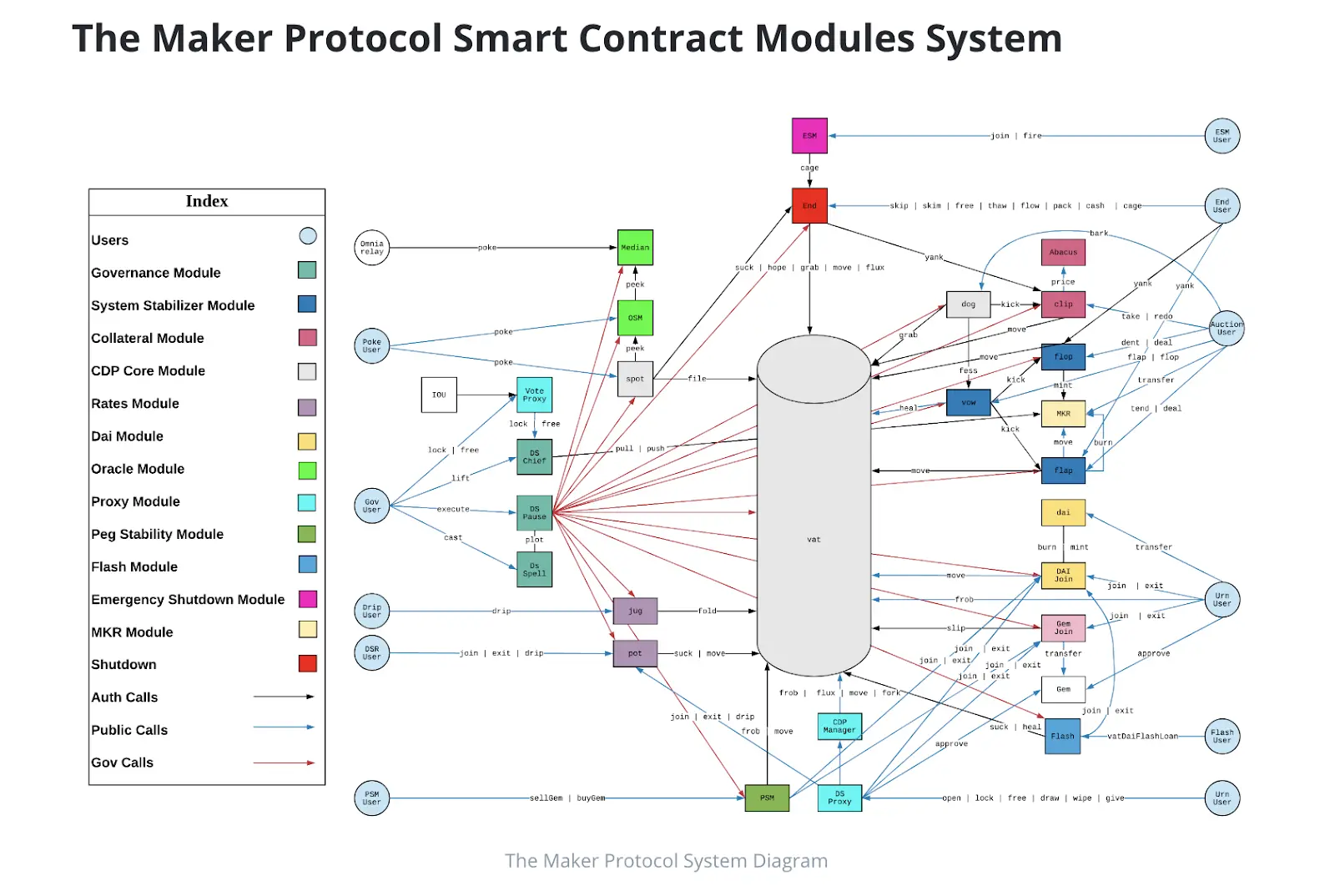
The foundation of the MakerDAO system is CDP, a smart contract mechanism where users can lock collateral assets (such as Ethereum) to generate DAI. This process is crucial as it introduces DAI into circulation while maintaining its supply. The amount of DAI that users can generate is determined by the collateral-to-debt ratio, ensuring that the system holds more collateral value than the DAI issued. This mechanism ensures the value of DAI, especially during market fluctuations. Unlike stablecoins like USDC and USDT, which are backed by a 1:1 reserve, DAI's mechanism provides greater flexibility and has become a cornerstone of DeFi.
MakerDAO adopts a dual-token model—DAI and the Maker token MKR. MKR holders are an integral part of the MakerDAO system governance, with voting rights on critical decisions such as stability fees (charged on DAI generated from CDPs) and other risk parameters.
The decentralized governance model allows for collective decision-making and risk management, contributing to the system's resilience and adaptability as DeFi has undergone various changes since its inception. Through a balance of immutable smart contracts and decentralized governance, MakerDAO has demonstrated the potential that the financial system can unleash in the near future.
Overview of DAI
DAI stands out in the stablecoin world due to its unique stability and decentralization. As mentioned earlier, compared to other stablecoins, especially those collateralized by fiat currencies, DAI presents a fundamentally different model. While USDC and USDT maintain their peg to the US dollar through holding equivalent fiat reserves, this approach provides a direct stability mechanism but relies on centralization and traditional financial systems. What are the benefits of a decentralized financial system led by centralized participants? Maker sets out to address this issue.
These stablecoins are typically issued and regulated by centralized entities that hold fiat reserves and have significant control over the issuance and redemption of the tokens. While this may not be a barrier for many, as it does not introduce any additional risks to the stability of its value (the maximum value stablecoins can provide is stability), it does offer a choice to those who prefer decentralization.
On the other hand, DAI is fully decentralized and operates without the need for centralized institutions.
Its stability is not achieved through holding fiat reserves but through overcollateralization with various cryptocurrencies. The MakerDAO ecosystem and its governance model allow for community-driven decisions, making the system more resilient and capable of handling market fluctuations. If users and governance participants wish to have more forms of collateral or different weights of DAI collateral, the governance mechanism allows for a fair and transparent modification process.
Of course, this level of decentralization may inadvertently lead to complexity in understanding and interacting with the system, potentially making it inaccessible to those unfamiliar with cryptocurrencies.
In comparison to other decentralized stablecoins, DAI's distinction lies in its mature ecosystem, Maker's strong track record, and one of the most focused and active governance forums in all of DeFi.
Other decentralized stablecoins, such as Synthetix's sUSD, employ different mechanisms to maintain their peg. For example, sUSD is backed by Synthetix Network Token (SNX) and other assets within the Synthetix ecosystem, which operates independently from Maker and DAI. This system has its own advantages and challenges, particularly in terms of scalability and resilience in extreme market conditions.
A more cautionary tale of a decentralized stablecoin comes from Terra's UST, where its decoupling led to the collapse of Terra, evaporating billions of dollars. Building decentralized stablecoins is one of the most challenging endeavors in the cryptocurrency space, and DAI's resilience is a true success story, highlighting the importance of judiciously using decentralized systems.
DAI maintains its peg to the US dollar through a dynamic collateralized debt position (CDP) system, now also referred to as the Vault in the Maker protocol. Users lock collateral assets (such as ETH or other supported cryptocurrencies) into these smart contracts to mint DAI. The system ensures that the value of the collateral always exceeds the value of the minted DAI, maintaining a safe level of overcollateralization. If the value of the collateral falls below a certain threshold, the CDP is automatically liquidated to ensure the system's solvency.
In addition to collateralization, the MakerDAO system uses stability fees (similar to interest rates) and the DAI Savings Rate (DSR) mechanisms to maintain DAI's peg. Stability fees are paid by users generating DAI, and the fee rate can be adjusted through governance decisions by MKR token holders to respond to market conditions. On the other hand, the DSR provides an incentive for holding DAI, as users can lock their DAI in smart contracts to earn additional DAI, reducing its circulating supply and contributing to its stability.
While DAI may not have the simplicity of fiat-collateralized stablecoins or some of the new mechanisms of decentralized stablecoins, it combines decentralization, community-driven governance, and validated stability mechanisms, making it a significant player in the stablecoin space. Its approach strikes a balance between the ideals of decentralization and the practical needs of stablecoins, making it a cornerstone of the DeFi ecosystem.
Latest Developments
MakerDAO and its stablecoin DAI have become an integral part of the broader DeFi ecosystem, playing a pivotal role in its growth and development. The success and influence of MakerDAO can be attributed to several key factors and strategic decisions, enabling it to thrive in the rapidly evolving DeFi environment.
Providing stability in turbulent markets: In the inherent volatility of the crypto world, DAI offers much-needed stability as a stablecoin pegged to the US dollar, providing a reliable medium of exchange and store of value crucial for various DeFi applications. This stability is particularly valuable for users looking to hedge against the volatility of other cryptocurrencies, engage in liquidity mining, or participate in decentralized lending platforms;
Other DeFi Protocols' Foundation
DAI has become the foundational asset for numerous DeFi protocols, and its integration across various platforms reflects its versatility and utility. For example, DAI is widely used in popular DeFi applications such as lending on Compound and Aave, providing liquidity on decentralized exchanges like Uniswap, and in liquidity mining protocols where users can earn returns from their holdings of DAI. This widespread adoption highlights its importance as a cornerstone in the DeFi ecosystem.
Decentralized Governance and Community Participation
A key factor in MakerDAO's success is its decentralized governance model supported by the MKR token. MKR holders have voting rights, allowing them to participate in critical decisions regarding system parameters, such as stability fees, debt ceilings, and the addition of new collateral types. This community-driven approach fosters a sense of ownership and aligns the interests of stakeholders, contributing to the protocol's adaptability and resilience.
Innovation and Adaptability
MakerDAO has consistently demonstrated its innovative capabilities and adapted to the evolving needs of the DeFi market. For example, the introduction of Multi-Collateral DAI (an upgrade from Single-Collateral DAI) allows various cryptocurrencies to be used as collateral, not just Ethereum. Diversifying collateral types enhances the system's robustness and increases its appeal to a broader user base.
Proven Resilience
MakerDAO's system has demonstrated resilience in various market conditions, including market downturns and high volatility periods. This resilience has enhanced trust in the system, attracting more users and integrations. For example, during the crypto market crash in March 2020, despite facing challenges due to extreme market conditions, the system ultimately persevered and underwent necessary adjustments through its governance process to strengthen the protocol.
Let's take a look at some specific examples of MakerDAO's impact:
Decentralized Lending
Platforms like Compound and Aave have integrated DAI, allowing users to borrow this stablecoin, showcasing its utility in the decentralized lending market.
Liquidity Mining
DAI has been a popular choice for liquidity mining strategies, providing stable returns for users' investments across various DeFi protocols.
Payment and Remittance Services
The stability of DAI makes it an excellent choice for digital payments and remittances, reducing the volatility risk for users looking to transfer value across borders.
In conclusion, MakerDAO's success in the DeFi space can be attributed to its innovative approach to maintaining a stable cryptocurrency, integration with numerous DeFi applications, and its robust and decentralized governance model. These factors have not only contributed to its own success but also played a significant role in shaping the broader DeFi ecosystem.
Spark, subDAO, and Maker's Endgame
Now that we have covered the basics of Maker and its current position in DeFi, we can explore some interesting aspects of the Maker ecosystem, particularly Spark, subDAO, and Maker's Endgame.
Spark Overview
Since its inception, Spark has accumulated over $1 billion in TVL. The protocol aims to foster the development of the Maker ecosystem while allowing for more innovation outside the traditional Maker governance structure.
Spark focuses on enhancing the DAI ecosystem within the MakerDAO community, as outlined below:
1. SparkLend: DAI-Centric Money Market Protocol
SparkLend is designed as a decentralized, non-custodial liquidity protocol where users participate as lenders, borrowers, or liquidators, directly integrating liquidity from Maker and other DeFi protocols to ensure optimal liquidity management.
Lenders provide liquidity to the market and earn interest from their crypto assets, while borrowers can obtain loans with overcollateralization, including options for flash loans without the need for overcollateralization.
2. sDAI and SparkConduits
sDAI (Savings DAI) is introduced as an interest-bearing stablecoin, representing DAI in the DAI Savings Rate (DSR) module, which redistributes Maker protocol revenue to DAI holders.
SparkConduits is another key feature that facilitates direct liquidity management from Maker to various protocols as part of the Maker allocation system.
3. Efficiency and Risk Management of SparkLend
SparkLend introduces efficiency modes (eMode) and isolation modes to optimize asset yield generation and lending capacity. eMode allows borrowers to maximize lending capacity using related assets, enabling high leverage trading and efficient liquidity mining.
Isolation mode is designed to list new assets in a controlled environment. Borrowers can only use isolated assets as collateral and are limited to borrowing certain stablecoins, as per Maker Governance regulations.
Introducing isolated borrowing for assets with potentially manipulable oracles limits borrowing to a single asset to reduce risk.
4. Advanced Risk Parameters and Governance Functions
SparkLend implements advanced risk parameters set by Maker Governance, such as supply and borrowing limits, to regulate asset borrowing and supply, reducing bankruptcy risk.
The protocol allows for fine control of borrowing capacity and can flexibly reduce it to as low as 0% without affecting existing borrowers.
Risk managers can be granted the authority to dynamically update risk parameters, ensuring the system's responsiveness to market changes.
5. Decentralization and Accessibility
SparkLend adopts a decentralized governance model, with roles such as ASSETLISTINGADMIN_ROLE for managing asset lists.
The Spark interface is hosted on IPFS, ensuring decentralized access. Users can connect to the Spark interface through various IPFS gateways, ensuring reliability and security.
Savings DAI (sDAI) allows users to deposit DAI and earn returns from the Maker protocol, further enhancing the liquidity and utility of DAI within the ecosystem.
Spark Protocol represents a significant step forward in the DeFi space, aiming to optimize capital efficiency, strengthen risk management, and promote a more decentralized governance structure within the MakerDAO ecosystem. By providing innovative lending mechanisms and closely integrating with MakerDAO, Spark is poised to make a significant contribution to the development and growth of the DAI ecosystem.
The Endgame
The "Endgame" proposal for MakerDAO is an ambitious and comprehensive roadmap aimed at increasing the efficiency, resilience, and participation of the MakerDAO ecosystem. The proposal outlines a multi-stage transformation process designed to significantly increase DAI supply and cultivate a robust organization capable of effective scaling. Here is an overview of how it works and its potential impact:
Phase 1: Beta Release
The initial phase of Maker's Endgame revolves around rebranding and unifying the MakerDAO ecosystem, involving the introduction of a new brand and website aligned with the vision of Endgame, which includes AI-assisted governance and enhanced stablecoin security.
Of course, key elements such as DAI and MKR remain unchanged, but users have the option to upgrade to the updated, slightly modified versions - NewStable (the new ERC20 wrapper for DAI) and NewGovToken (the renamed version of MKR). These are placeholder names specified in the Maker governance proposal, and these suggestions will undergo significant adjustments in due course.
NewStable introduces new features such as native farming of NewGovToken and other subDAO tokens, as well as a distribution system for deploying liquidity on major exchanges as needed. The NewStable accessibility rewards system will incentivize platforms integrating NewStable to further expand Maker's influence in the DeFi space. NewGovToken offers features such as a smart burn engine and access to governance AI tools, enhancing the governance process.
Phase 2: subDAO Launch
This phase introduces the first six Maker subDAOs, which function as decentralized specialized departments within MakerDAO. These subDAOs are responsible for user acquisition, decentralized frontends, and governance.
The subDAOs are divided into FacilitatorDAO (focused on governance processes) and AllocatorDAO (specifically allocating NewStable collateral and managing operational efficiency).
The launch of subDAOs aims to streamline MakerDAO's governance, reduce operational complexity, and focus on risk reduction. More information about subDAOs will be discussed in the next section.
Phase 3: Governance Artificial Intelligence (AI) Tools Release
The launch of governance AI tools and Atlas is specifically designed for Maker to serve as a comprehensive governance rulebook, aiming to further democratize governance participation and expand access for those with economic constraints. These tools enable all stakeholders to effectively participate in governance decisions. Immutable files in Atlas ensure the permanence of core principles, protecting the ecosystem from centralized or misplaced influences.
Phase 4: Governance Participation Incentive Launch
The Sagittarius Lockstake Engine (SLE) incentivizes NewGovToken holders to participate in governance by locking tokens and delegating voting rights. SLE participants will receive rewards in NewStable or subDAO tokens, promoting active governance participation.
Phase 5: NewChain Launch and Endgame Status
The final phase involves the launch of NewChain, a blockchain dedicated to supporting the token economics of subDAOs and ensuring governance security. NewChain allows for hard forking as a governance mechanism to recover from catastrophic disputes, ensuring the ecosystem's resilience.
Impact and Implementation:
The Endgame proposal is impactful as it aims to significantly expand the MakerDAO ecosystem while maintaining decentralization and resilience. Maker's phased approach allows for gradual implementation and adjustments, ensuring stability and community support at each step.
By introducing AI tools and advanced token economics, Endgame positions MakerDAO at the forefront of DeFi innovation, potentially setting new standards for DAO governance and operations.
Attention to decentralized governance, public interest, and scalability may position MakerDAO as a leading example in the DeFi space, influencing how other projects handle governance and growth.
In conclusion, Endgame is visionary, aiming to develop MakerDAO into a more efficient, resilient, and scalable ecosystem. Its successful implementation could have a lasting impact on the broader DeFi space, setting new benchmarks for decentralized governance and innovation.
subDAO
The subDAOs in the MakerDAO ecosystem represent a novel and decentralized governance and innovation approach within the broader Maker protocol. These semi-independent entities, while associated with Maker governance, have their own unique characteristics and roles. The overview is as follows:
1. General Features of subDAOs
SubDAOs are specialized DAOs that operate semi-independently but are still connected to Maker Governance. Each subDAO has its unique governance token and governance process, reflecting its autonomous values and desires. While they operate largely independently, subDAOs aim to reduce complexity and risk within Maker Core through sandbox operations. Their governance processes are built on top of the MakerCore governance infrastructure, with MKR holders retaining control over many subDAO assets.
2. Types of subDAOs
SubDAOs are divided into three types: FacilitatorDAO, AllocatorDAO, and MiniDAO, each with different functions.
FacilitatorDAO
These entities manage the internal mechanisms of MakerDAO, AllocatorDAO, and MiniDAO, with responsibilities including interpreting and facilitating specific governance-related processes. FacilitatorDAOs can hire Facilitators, who have direct access to governance processes and smart contracts related to their responsibilities. They operate based on scoped work artifacts and receive rewards through a token economics system based on their responsibilities and performance.
AllocatorDAO
AllocatorDAO is responsible for generating DAI directly from MakerDAO and allocating it to the broader DeFi ecosystem. They serve as public entry points for the Maker ecosystem and have the ability to spin off MiniDAOs. Their allocation of DAI is guided by broad objectives defined within stable ranges and is subject to restrictions from Maker governance. AllocatorDAOs have specific capitalization requirements and face penalties if these requirements are not met.
MiniDAO
MiniDAOs are experimental entities split off from AllocatorDAO. Due to their experimental nature, MiniDAOs may be temporary, especially if they fail to achieve product-market fit. They focus on exploring innovative concepts and products to further drive the development of the Maker protocol. They represent the most diverse and dynamic aspects of the subDAO structure, allowing for rapid testing and iteration of new ideas.
3. Impact and Significance
The introduction of subDAOs in the MakerDAO ecosystem marks a shift towards more decentralized and experimental forms of governance and innovation.
By dividing responsibilities among specialized entities, subDAOs aim to simplify governance processes, reduce cognitive load, and promote faster growth and experimentation.
This structure allows for a balance between maintaining stability and security within the core MakerDAO system and achieving flexibility and adaptability through subDAOs.
This model may set a precedent in the DeFi space, demonstrating how large, complex protocols can manage growth, innovation, and risk in a decentralized and scalable manner.
SubDAOs represent an innovative step in decentralized governance within the MakerDAO ecosystem, providing a structured yet flexible approach to managing various aspects of protocol operations and growth strategies. The model demonstrates how large-scale DAOs can effectively distribute and decentralize responsibilities while maintaining a cohesive overall governance structure.
Next Steps for Maker and RWA
With all of this in place, we can take a look at Maker's Real-World Assets (RWA) enterprises and discuss the potential of this promising new industry. Real-world assets (RWAs) in the cryptocurrency space, especially those related to MakerDAO, constitute an important and evolving aspect of DeFi. RWAs are tangible assets, such as real estate, corporate debt, or other revenue-generating assets, typically integrated into the blockchain ecosystem through tokenization.
In the context of MakerDAO, these RWAs provide a pathway for diversifying collateral beyond traditional cryptocurrencies, thereby reducing overall risk and volatility associated with crypto-backed loans. By integrating RWAs, MakerDAO enhances the stability and attractiveness of its platform, providing DeFi participants with exposure to more traditional assets.
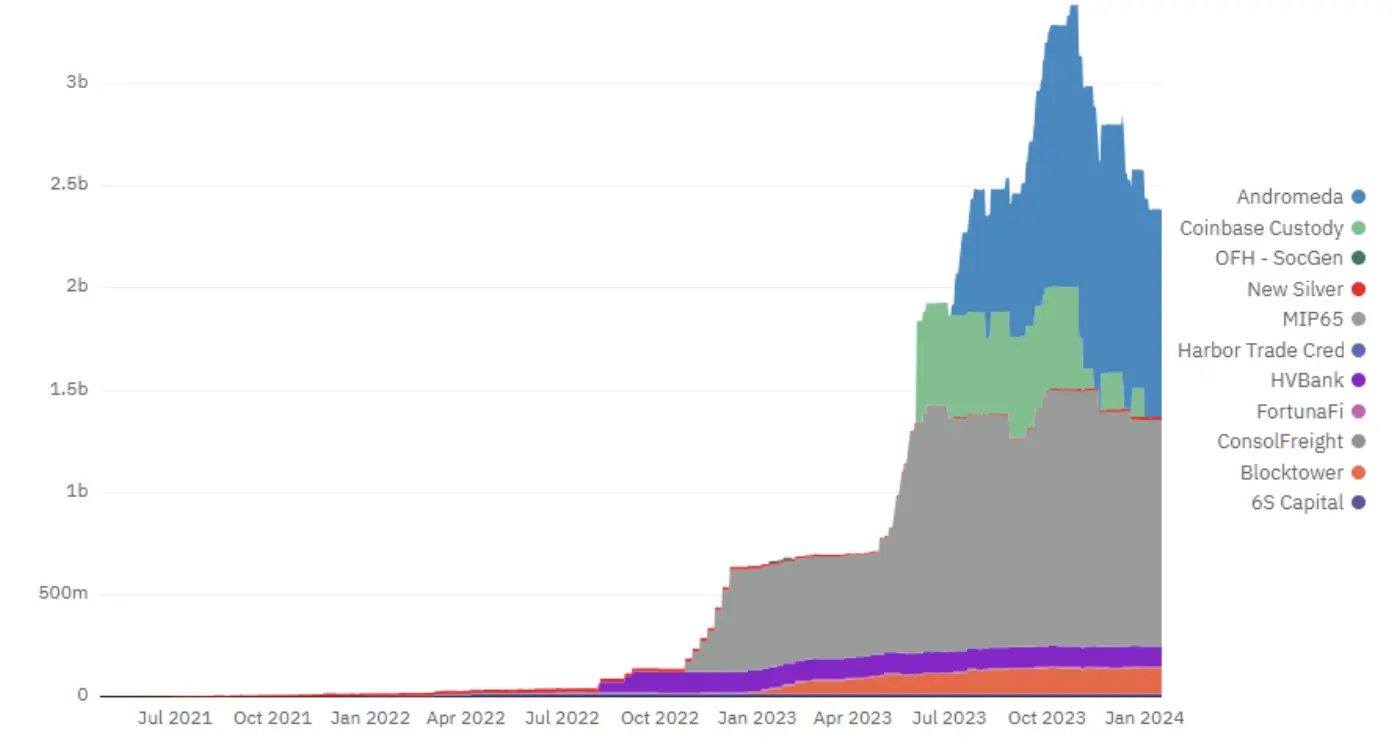
As of December 2023, MakerDAO's RWA investment portfolio has experienced significant developments, reflecting the dynamic nature of the DeFi space and the specific challenges and opportunities inherent in integrating RWAs into decentralized protocols.
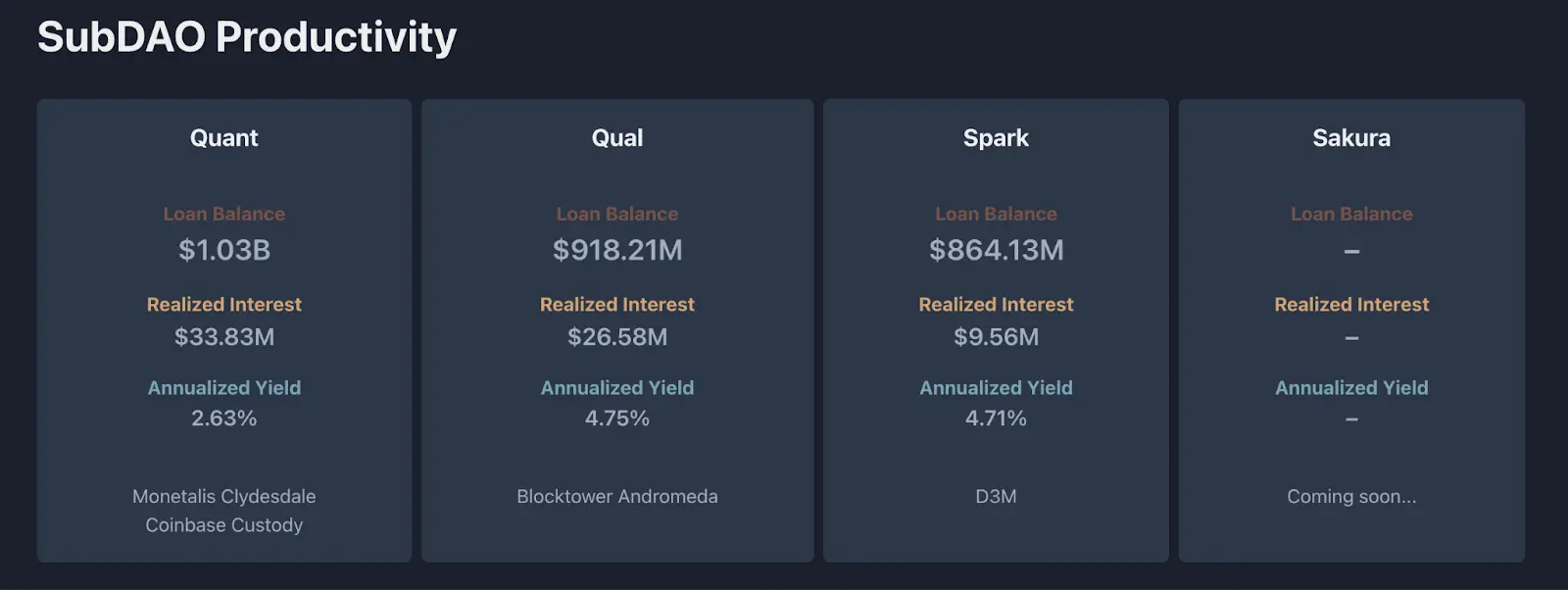
Portfolio Changes and Stability Fee Contributions:
The RWA risk exposure of MakerDAO (excluding the pegged stable module PSM) decreased by approximately $222 million. This decrease is primarily due to withdrawals from Clydesdale, Andromeda, and Coinbase Custody to support USDC-PSM liquidity.
Despite the decline, RWAs continue to make significant contributions to Maker's stability fees, accounting for approximately 48% of all stability fees generated in December 2023. This contribution highlights the growing importance of RWAs in the Maker ecosystem and the continued reliance on RWAs as a sustained and extremely powerful source of income for Maker.
Specific Updates:
Fortunafi Challenge: The Fortunafi Centrifuge liquidity pool encountered a minor error, resulting in the artificially low redemption of Drop tokens. While Centrifuge largely resolved the situation, this event highlighted the complexity of managing RWAs and the potential issues that may arise when dealing with large decentralized systems.
Harbor Trade Default: As of the last report released in December 2023, the default situation with Harbor Trade is ongoing, and the process of recovering value from defaulted assets is still in progress. The default began in April 2023 and is currently being addressed through legal and negotiation strategies, with more information making progress.
ConsolFreight Paydowns: ConsolFreight received multiple payments, accounting for 21% of the restructured assets. This development signifies positive progress in recovering the value of problematic loans, demonstrating foresight in traditional and decentralized finance.
Vault-Specific Developments:
Monetalis Clydesdale (RWA-007): Monetalis' latest report indicates an adjustment in the estimated fees for Clydesdale.
BlockTower Andromeda (RWA-015): Andromeda reduced its holdings of government bonds and returned stability fees to the DAO.
Huntington Valley Bank (RWA-009): Notice has been issued to terminate future loan purchases and transition to a new exchange agent.
BlockTower Credit (RWA-012 & RWA-013): BlockTower increased its treasury positions and ensured compliance with all contracts through ongoing monitoring.
6s Capital Partners (RWA-001): No new loan activity reported, and the current loan balance remains at $12.8 million.
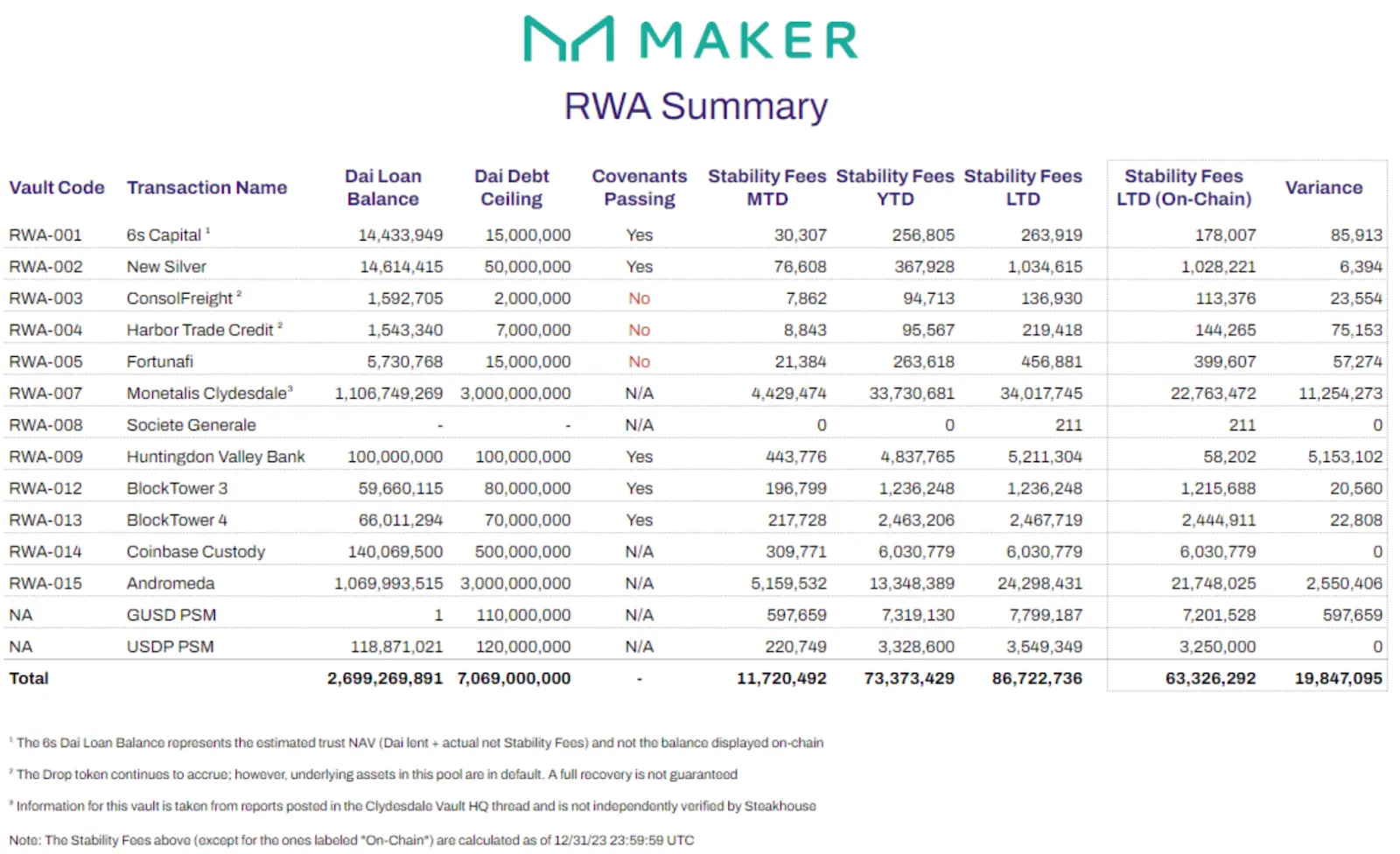
In conclusion, the December 2023 updates to MakerDAO's RWA investment portfolio illustrate ongoing efforts to integrate real-world assets into the DeFi ecosystem. These efforts are not without challenges, as evidenced by events such as Fortunafi's pricing error and Harbor Trade's default. However, the significant contribution of RWAs to Maker's stability fees and the proactive management of these assets reflect the potential of RWAs to provide stable and diversified collateral sources for platforms like MakerDAO in the DeFi space.
免责声明:本文章仅代表作者个人观点,不代表本平台的立场和观点。本文章仅供信息分享,不构成对任何人的任何投资建议。用户与作者之间的任何争议,与本平台无关。如网页中刊载的文章或图片涉及侵权,请提供相关的权利证明和身份证明发送邮件到support@aicoin.com,本平台相关工作人员将会进行核查。


