Author: Yash Agarwal
Translation: Plain Language Blockchain
Solana is the preferred chain in the DePIN field. The story of its dominance began in Q2 2023 when projects like Helium migrated from their own L1 to Solana.
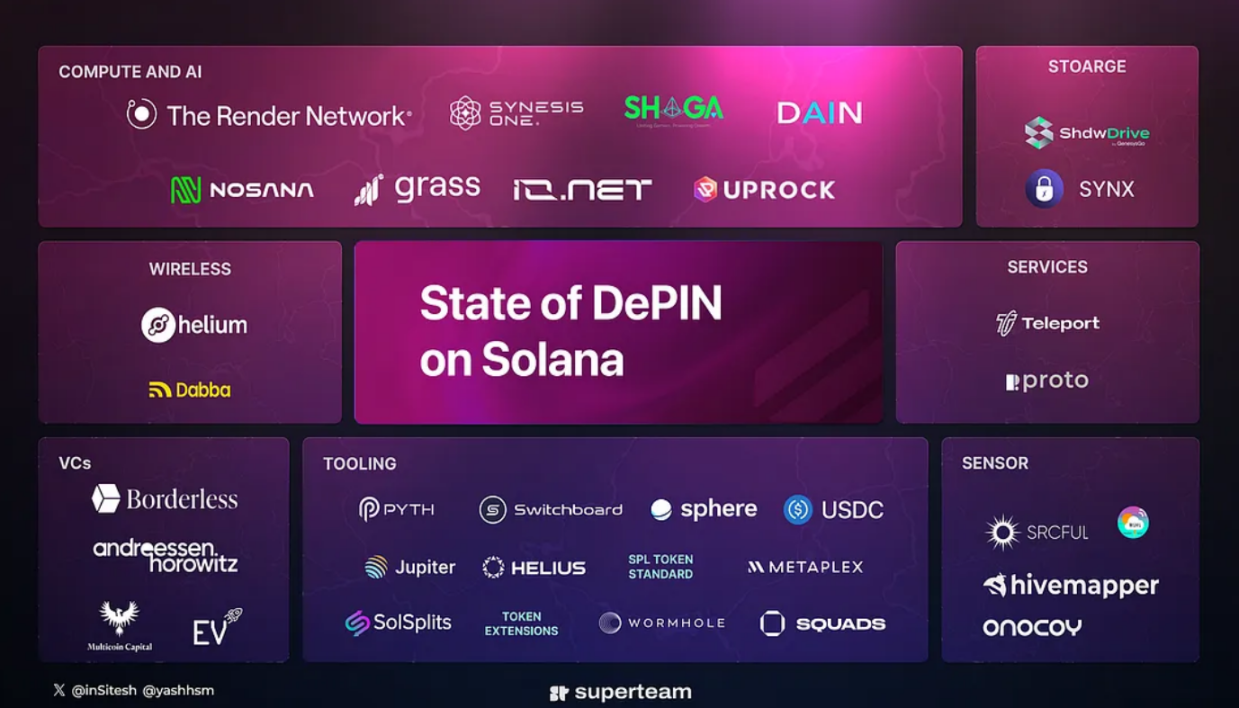
Today, Solana has become the home of industry leaders such as Helium, Hivemapper, and Render (imagine the 3 FAANG companies in the DePIN field) - Solana DePIN represents over $100 billion in FDV and a $40 billion market value! (FAANG is an acronym representing the five major US tech giants: Facebook, Apple, Amazon, Netflix, and Google.)
Solana's integrated infrastructure and developer community are now attracting DePIN projects at various stages of their lifecycle. While Solana is a general-purpose chain with a thriving DeFi and NFT ecosystem, its rise as a leader in the DePIN field is indeed remarkable. Many believe that DePIN is one of the most promising bets in the Solana ecosystem, thanks to its large TAM and Solana's first-mover advantage in the DePIN field.
Messari estimates that the total TAM of DePIN exceeds $22 trillion, expected to reach $35 trillion by 2028. This forecast assumes that most physical infrastructure will be incentivized by tokens, which may lead to inflated numbers. Nevertheless, it represents one of the boldest bets in the cryptocurrency space.
In this article, we will briefly explore DePIN, analyze why Solana is chosen as the DePIN chain, briefly discuss various Solana projects, and ultimately summarize why Solana and DePIN are worth paying attention to overall. Through this article, you will gain all the necessary insights into Solana DePIN.
1. What is DePIN? Why?
DePIN (Decentralized Physical Infrastructure Networks) consists of token-incentivized networks that use cryptoeconomics to coordinate incentives and encourage individuals to invest their capital or unused resources. From Bitcoin to Solana, we have seen that tokens have proven to be an outstanding mechanism for coordinating large-scale human activities and creating tribalism.
In short, DePIN helps rapidly build efficient real-world infrastructure driven by encrypted local capital.
According to Messari's data, the DePIN ecosystem had developed to over 650 projects in 2023, covering six sub-industries: computing (250), artificial intelligence (200), wireless (100), sensors (50), energy (50), and services (25).
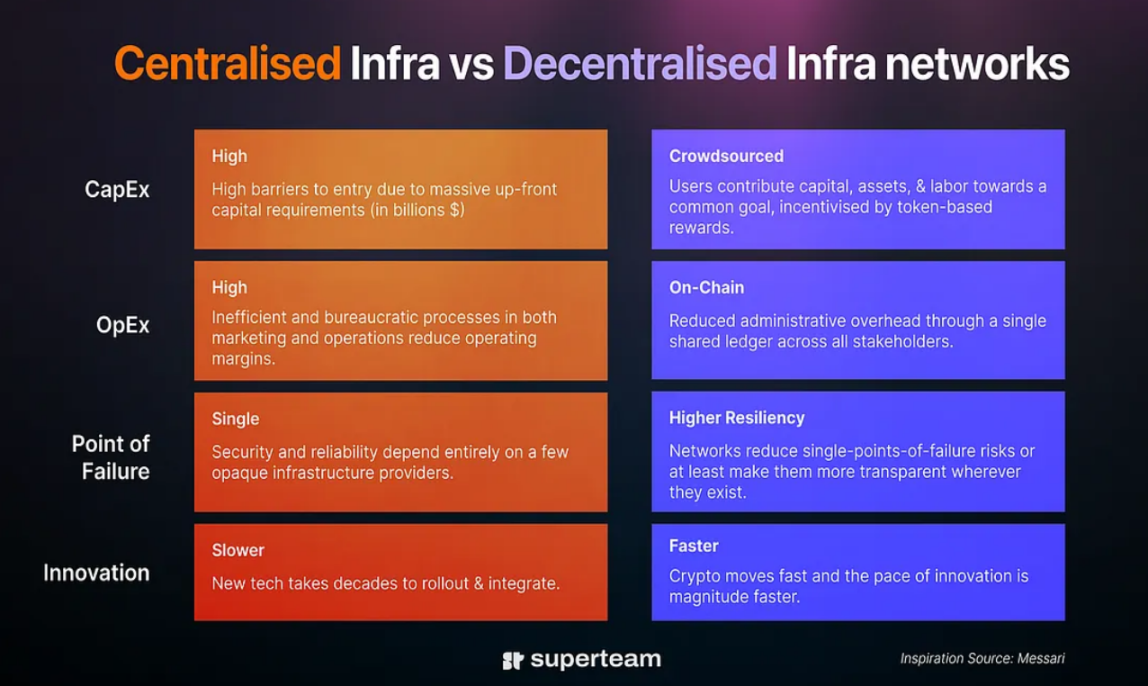
Like any network, the DePIN network has two aspects: supply and demand. Throughout this article, we will delve into both aspects of each project.
2. Supply Side - Token Incentives
The supply side of DePIN coordinates capital, equipment, and labor for global infrastructure scaling through cryptographic incentives. According to Messari, in 2023, DePIN added 600,000 nodes (supply side) in wireless, computing, and sensor networks. For Helium, this means adding more hotspots, while for Hivemapper, it involves adding more map data.
So far, DePIN has proven to be very efficient in expanding the supply side. However, capital efficiency will determine long-term sustainability, i.e., tokens used to expand the supply. Token economics can be based on various parameters, such as:
Time-based - Helium undergoes halving every two years.
KPI-based - Hivemapper's token economics are based on the percentage of global road mapping, with city-level multipliers and time-based KPI, making its token economics very detailed.
Demand-based - Based on consumer usage of the network.
Clearly, tokens are crucial as a product for the operation of any DePIN network. Considering that tokens can only be issued once, managing token issuance becomes crucial. Additionally, token price (and therefore speculation) plays a significant role, making the system also cyclical.
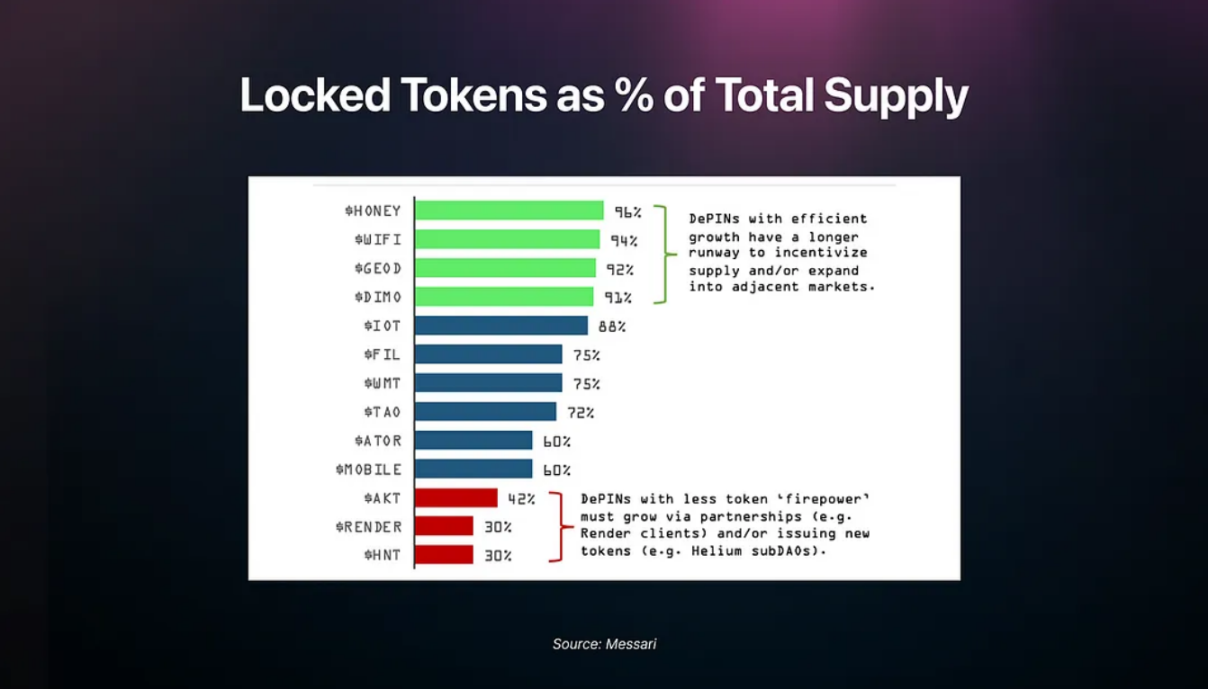
Recently, non-DePIN projects have started using "points" to drive usage of their protocols instead of directly distributing tokens - this trend may also gain more attention in DePIN (to be discussed specifically later).
3. Demand Side - B2B vs B2C
While the supply side is incentivized by tokens, speculation plays a crucial role. The demand side is entirely driven by real-world utility and is independent of cycles, bringing in revenue for tokens and thereby adding value.
As much of the demand is off-chain, such as Web2 companies using Hivemapper maps, on-chain and off-chain generated revenues differ. For example, Hivemapper's clients will pay in fiat currency, contributing to off-chain revenue, while their native token HONEY will be burned, contributing to on-chain revenue.
In addition to demand, on-chain revenue is significantly influenced by the buyback mechanism (purchasing native tokens with fiat currency or stablecoins). Are these tokens being burned or locked? Are buyback decisions based on a percentage of revenue or "profit"?
Many DePIN projects like Render use the Burn and Mint Equilibrium (BME) model to balance payments and rewards. Here's how it works:
Customers want to pay in dollars, but the network needs to distribute a certain amount of governance tokens regularly. In the BME model, the funds paid by the customer in dollars are converted behind the scenes into the network's native token, such as RENDER. At the end of each period (called an epoch), these operators receive RENDER tokens as a reward based on their share of work completed on the network. The RENDER paid by customers and the points accumulated by node operators are then "burned" (removed from circulation). According to a predefined inflation schedule, new RENDER tokens are created and distributed to node operators as their revenue.
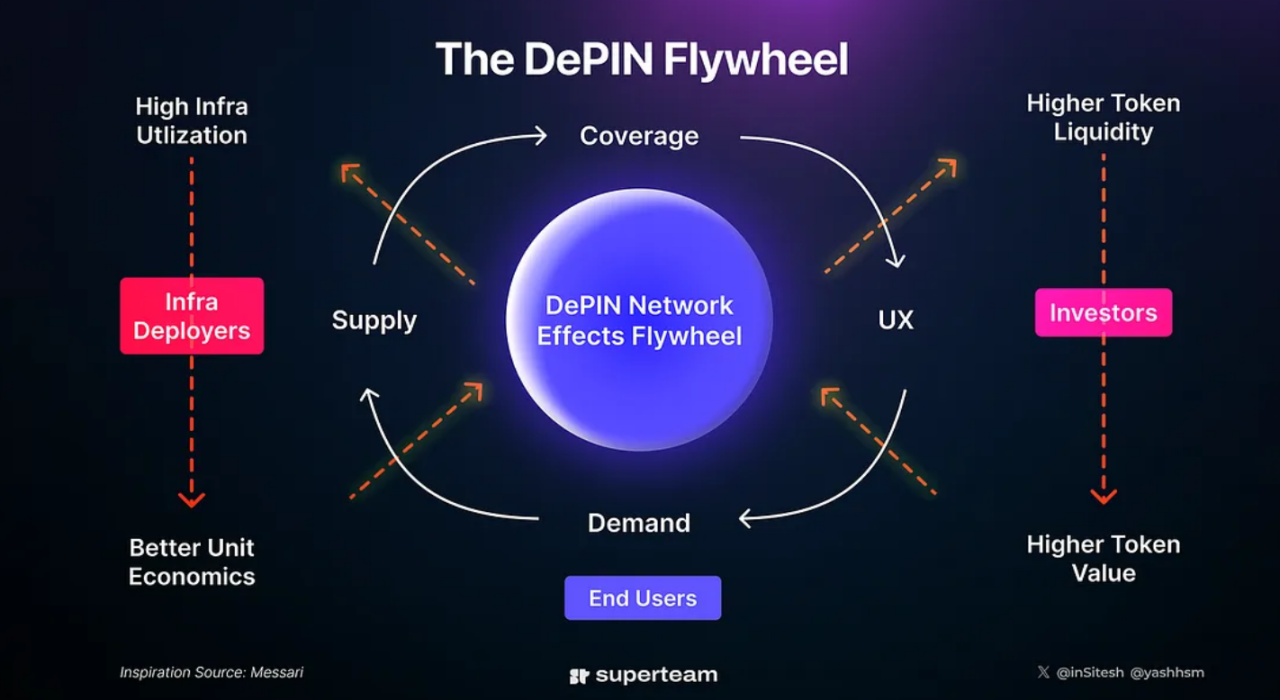
Furthermore, demand can be categorized as B2B or B2C. For example, Hivemapper's demand is B2B, meaning it is utilized by enterprise clients in need of map data. Conversely, for Helium, the demand is B2C, indicating it is used by consumers in need of connectivity.
4. Solana's Secret in the DePIN Field - Is it actually OPOS?
DePIN projects prioritize high throughput and low fees. While I may be biased towards Solana as the most efficient blockchain, the DePIN team has chosen Solana for the following reasons:
Performance: Unsurprisingly, Solana stands out for its low transaction costs, high processing speed, and scalability. For example, low fees are crucial for large-scale incentivization of contributors and microtransactions. Additionally, the upcoming Firedancer expected to launch later in 2024 will enhance the network's speed and resilience.
Network Effects: The transition of Helium from its native blockchain to Solana marks a significant moment for the Solana DePIN community. They have developed open-source tools that many other DePIN projects can utilize. From a business development perspective, the presence of existing DePIN project communities is advantageous.
Unlike DeFi, DePIN projects have not experienced the same level of capital network effects, as most demand is generated off-chain.
Strong Token Standards and Ecosystem: A vibrant ecosystem with well-tested DEX and established standards such as cNFTs (compressed NFTs), pNFTs (programmable NFTs), Token Extensions, etc., provides the fundamental components for DePIN projects to develop and launch their on-chain products.
Solana Mobile: Solana's uniqueness lies in having its own mobile phone, highlighting its commitment to mobile integration. Solana Mobile 1 already has 20,000 users, and Solana Mobile 2 has over 50,000 pre-orders. This provides a direct distribution channel for DePIN projects to address the challenge of initial user acquisition. For example, Helium offers one month of free service to Solana Mobile users, while projects like Grass can launch their applications on Solana Mobile.
Solana Foundation: The Solana Foundation has been a staunch supporter of DePIN, providing dedicated tracks and active grants for DePIN in hackathons, demonstrating the foundation's commitment to DePIN. Additionally, venture capital firms like Mult1C0in have played a crucial role in bringing DePIN projects to Solana.
Another aspect to consider is the value DePIN brings to the Solana ecosystem:
Users: Projects like Helium have significantly increased the number of active wallets. Helium alone reports over 60,000 active wallets participating in activities such as claiming rewards, staking, delegating, or burning tokens monthly, while over 30,000 wallets use other SPL programs, highlighting Helium's impact on the Solana ecosystem.
Legitimacy and Brand Awareness: From a regulatory perspective, DePIN demonstrates practical applications of Solana to regulatory agencies and policymakers, enhancing its legitimacy and brand awareness.
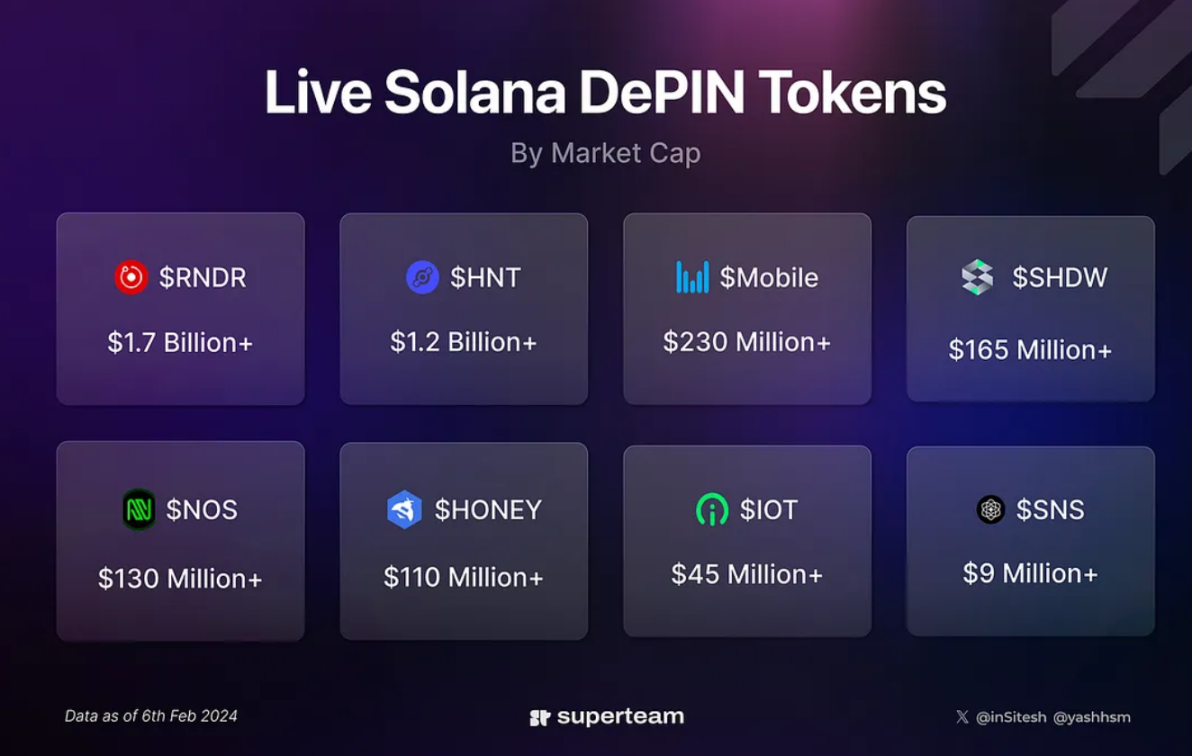
5. DePIN Projects on Solana
Let's take a look at different DePIN projects in each category on Solana:
1) Wireless Networks
Also known as DeWi (Decentralized Wireless) networks, this approach involves building various types of wireless networks, such as:
- Cellular 5G - providing high download speeds and low latency.
- WiFi - providing network connectivity in specific areas.
- Low Power Wide Area Network (LoRaWAN) - facilitating communication in the Internet of Things (IoT).
- Bluetooth - enabling short-range data transmission.
Problem it solves - Traditionally, establishing wireless network infrastructure requires significant investment, leading to domination of this field by a few large telecom companies with necessary scale and financial resources.
DeWi networks provide an alternative by allowing many independent entities or individuals to collaborate in building token-incentivized wireless infrastructure.
A. Helium - Pioneer of DeWi
Arguably one of the first significant and largest DePIN projects, its migration from the native blockchain to Solana marks the revival of the Solana DePIN ecosystem. The network is managed by HNT, the native token of Helium, which plays a crucial role in incentivizing network usage as it is burned to obtain "data credits" for data transmission. Hotspot hosts can also convert network tokens (e.g., IOT, MOBILE) into HNT.
It offers two main services:
Helium IoT Network: Launched in 2019, Helium hotspots provide wireless connectivity for IoT devices.
Managed by IOT - Helium IoT Network's token is mined through data transmission revenue and coverage proof via LoRaWAN hotspots.
Helium 5G Network: This network combines large operators with crowdsourced 5G hotspots.
Managed by MOBILE - Token rewards for providing 5G wireless coverage and verification in the Helium 5G Network.
Supply Side: The crowdsourcing model eliminates site acquisition costs and allows users to contribute to high-bandwidth coverage. For example, operators interested in joining the network and providing cellular coverage can purchase FreedomFi gateway hardware and receive MOBILE tokens as a reward.
With the launch of Helium Mobile offering a $20 per month unlimited data, text, and call plan, and the increase in sales of Solana Saga smartphones (including a free 30-day Helium Mobile subscription), the number of new hotspots on the Helium network has significantly increased in recent months.
Demand Side: Data consumers pay usage fees using data credits. With more data transmission and consumption of data credits, subnetworks (e.g., IoT network) earn more HNT tokens, thus rewarding and incentivizing activity.
Overall, HNT is the primary token, while IOT and MOBILE are sub-DAO tokens associated with HNT.
B. WiFi Dabba - Helium for WiFi in India
Similar to Helium but focused on consumer WiFi, especially in India. Despite relatively low mobile data prices in India currently, there has been a trend of increasing mobile data prices, making it challenging for traditional telecom companies to expand WiFi infrastructure in India. WiFi Dabba aims to deploy WiFi in densely populated areas such as residential neighborhoods. WiFi Dabba has received support from top-tier venture capital firms Y-Combinator, Mult1C0in, and Borderless, and is set to launch on the Solana platform, providing tokens as incentives for the installation of WiFi hotspots - token economics.
Demand Side: Unlike most decentralized peer-to-peer networks (DePINs), Dabba starts with addressing demand, i.e., customers paying for the service provided.
Supply Side: Dabba empowers Local Cable Operators (LCOs) across India. There are approximately 150,000 LCOs nationwide, and they have started piloting and training with the first batch of 5 LCO partners.
C. Storage Networks
Decentralized storage systems operating on a peer-to-peer (P2P) network model allow users to allocate unused resources as storage providers or miners and earn tokens as incentives.
Problem it solves - Enhancing security by encrypting and sharding data, dispersing it across the network. Supported by on-chain primitives, the system offers features such as permanence, encryption, and verifiable storage.
Genesys' ShdwDrive - A better Filecoin on Solana
As a competitor to Filecoin, Shdw Drive leverages high-performance traditional and mobile computing to reduce the cost of enterprise data center storage - calling this technology "D.A.G.G.E.R". Its native token $SHDW is used to pay for services within the ecosystem, and the roadmap includes more network mechanisms such as staking, halving, penalties, and recovery.
Supply Side: Supported by Shdw operators providing storage.
Demand Side: Projects can utilize Shadow for cloud services, such as:
Web hosting and content management (storing files)
Social media platforms (for immutable historical records)
Archival purposes (preserving valuable records)
Datasets (an on-chain library accessible to everyone)
Personal editable storage space (an alternative to Google Drive).
Synx is a private cloud storage solution supported by mobile and desktop applications, leveraging ShdwDrive.
D. Sensor Networks
Facilitate monitoring and capturing of data related to environment, mobility, and location:
Environment: e.g., weather conditions.
Mobility: e.g., traffic or vehicle-related data.
Location and mapping: e.g., maps of local streets.
Problem it solves - Decentralized sensor networks reduce the possibility of data manipulation or review, thus enhancing reliability, through a bottom-up approach.
E. Hivemapper - Fastest-growing Mapping DePIN
A global mapping network collecting the latest high-resolution data (4K street-level images) using vehicle-mounted cameras in a permissionless manner. Managed by HONEYToken. The network has over 50,000 contributors, including rideshare drivers, couriers, and enthusiasts, collectively mapping over 125 million kilometers of roads!
Supply Side: Hivemapper offers vehicle-mounted cameras priced between $300 to $650, rewarding contributors with HONEYToken for sharing videos and metadata with the network. This model enables contributors to share the value generated from the demand for map data, incentivizing them to expand the network. As a result, in 2023 alone, the Hivemapper community mapped over 10% of global roads, while the total token supply used was less than 5%.
Data validation - Hivemapper's AI training community provides an additional layer of validation, earning HONEYToken for accurately categorizing map features and transforming them into valuable information needed by clients.
Demand Side: Companies use HONEY to pay for map images and data. They can also choose to purchase existing maps or request new areas through bounties for sudden events, allowing companies to request the latest data as needed. In this process, the demand side consumes HONEY, with the value of consumed HONEY being approximately $250,000.
Example use cases for companies: insurance (timely access to exterior condition data for homes, aiding in home insurance assessment), autonomous vehicle developers (latest road conditions and construction zone information), and real-world assets (RWA).
Overall, the rapid feedback loop between map contributors rewarded by tokens and map clients is crucial in creating highly useful digital maps.
F. Onocoy - Emerging Location-based DePIN
GPS satellites are highly effective in many positioning use cases and help determine location, but they lack high precision. To enhance accuracy, additional sensors like RTK (Real-Time Kinematic) utilize ground receivers to increase GPS precision from meters to millimeters.
Supply Side - To establish a robust supply and ensure broad coverage, Onocoy plans to incentivize the deployment of these relatively expensive RTK receivers. Currently in beta testing, the project already has over 2000 participants. New users are encouraged to identify and map areas lacking coverage, with the reward structure aimed at reducing rewards in areas with overly dense signals (3 overlapping signals).
Demand Side - High-quality location data is crucial for applications such as deformation monitoring, agriculture, mining, natural disaster alerts (tsunamis/earthquakes), drone/robot positioning, and autonomous driving. Similar to other projects, onocoy adopts a BME model, allowing clients to pay service fees in cash, while network participants earn $ONOToken rewards based on their contribution proportion.
G. WiHi - Weather and Climate Forecasting
Large-scale weather monitoring has been a practice since 1873, and the establishment of the World Meteorological Organization provided an opportunity for this. Today, sharing weather data involves a complex network comprising public and private entities. These organizations operate various sensor networks, develop weather models, and provide forecasts. WiHi aims to be a unified platform connecting all these entities, simplifying data sharing, improving forecast accuracy, and enhancing climate monitoring.
Supply Side - Any entity operating weather sensors can apply to contribute data to WiHi. An interesting prospect is the potential for weather data collection using Solana Mobile. While the quality of mobile sensors is relatively lower, their sheer quantity can compensate for this limitation.
Demand Side - Accurate weather data is of immense value to financial and insurance companies, who derive economic benefits from accurate weather forecasts. Additionally, WiHi is in line with the growing ReFi narrative, aiming to monitor climate changes in real-time.
Another upcoming project on Solana is Srcful, aiming to create a decentralized energy network. It enables homeowners to participate in energy transition and earn rewards for their contributions.
Solana Mobile may also become an interesting DePIN area in the near future, as mobile phones are powerful sensor devices. There are similar projects on other chains, such as Silencio, allowing collection of noise pollution data from any smartphone.
2) Computing Networks and Artificial Intelligence
Computing networks supported by cryptoeconomics enable unique scaling and contraction of computing resources as needed, without concerns about expenses or contractual constraints associated with centralized providers.
Problem it solves - With demand for artificial intelligence reaching historic levels, users seeking computing power find it difficult to obtain machines due to uneven distribution. DePINs here act as a marketplace, where hardware owners can lend computing power to users seeking to utilize it. Akash, built on Cosmos, is a leader in this category, providing services for a general-purpose computing network for CPU/GPU.
A. Render - GPU's Airbnb
One of the oldest computing networks providing a GPU network for 3D artists to render graphics for games or movies. The network offers a software suite called Octane, allowing 3D artists to outsource their rendering tasks to the GPU network.
Originally an Ethereum project, Render recently shifted to Solana, a move widely seen as a significant improvement by the community. Additionally, Render has expanded its service range, covering artificial intelligence/machine learning and spatial computing, bringing very positive narratives.
B. Io.net - GPU Aggregator
Io.net is building a network to utilize computing power for machine learning applications by integrating GPU networks from data centers, crypto miners, and established projects like Render, positioning itself as a "GPU aggregator". Unlike traditional GPU aggregators, which only provide access to individual instances without clustering capabilities, io.net is pioneering the creation of clusters containing thousands of GPUs. These clusters, as a unified instance, are specifically designed to handle machine learning workloads. ```
Supply Side - As an aggregator, anyone can plug their hardware into the network and start earning.
Client Side - Anyone looking to create or run ML models or AI applications is a potential client. Unlike competitors, launching an io.net instance takes only a few minutes (demonstrated at Solana Breakpoint 2023).
C. Nosana - GPU Grid
Nosana is a market connecting user-provided GPU networks with consumers aiming to develop AI products.
Supply Side - Individuals with idle consumer GPUs can become nodes in the Nosana network. In the Nosana ecosystem, the token $NOS serves as a means of transaction, allowing consumers to use $NOS to pay for services and provide collateral for node operators.
Demand Side - Developers creating AI applications can utilize Nosana's proprietary AI interface. The interface integrates Stable Diffusion and Llama 2 workloads, providing significant cost savings. According to Nosana's testnet data, developers may reduce expenses by up to 85% compared to traditional cloud infrastructure providers.
The main grid of Nosana is expected to be released in the second quarter of 2024, including a comprehensive development toolkit for more experimentation within the Nosana network.
D. Grass - Crowdsourced Data Collection for AI
AI training involves handling large datasets, and many AI training labs prefer to obtain data from the internet to accelerate the process rather than relying on manual data input. However, most scraped data lacks contextual information, such as device location. To address this issue, Grass raised $3.5 million in seed funding and established a "decentralized AI data provisioning layer".
Supply Side - Individual users can opt to download the Grass browser extension and become a node in the network. Companies can then pay fees to utilize the idle bandwidth of these nodes, effectively paying for access to the data. Supported by a point system, it has grown to over 600,000 users and is growing rapidly. It has not yet launched a token!
Notably, Grass has started supporting mobile, starting with Solana Mobile, marking a unique service only possible on the Solana platform.
Demand Side - Network crawlers seeking reliable and verified sources of data.
E. Synesis One - Crowdsourced Data Collection for AI
Addresses the data problem for training AI models. Synesis One is a data crowdsourcing platform where anyone can earn SNS by completing microtasks for training AI.
Supply Side - Contributors can earn by:
Active: Choosing a task and providing raw data/data labeling/data annotation.
Passive: Synesis's Kanon NFT series allows users to purchase "keywords and earn from the Mind AI client".
Demand Side - Clients like Mind AI.
F. UpRock - Bandwidth for AI
UpRock is a mobile-centric platform that creates an automatic earning wallet for its users by providing token rewards for sharing internet access and additional earnings from automatic staking. In addition to just earning tokens automatically, these tokens can also be used to redeem flights, call minutes, and more. It has met the growing user base, with 160,000 installations and approximately 10,000 new users added weekly, processing over 16 million transactions!
Supply Side - UpRock leverages the untapped potential of user bandwidth as AI resources. By contributing unused internet capacity, users can earn tokens, democratizing the creation of data value. This strategy not only incentivizes participation but also supports ecosystem growth by enhancing AI agents and professional model capabilities.
Demand Side - Demand for the UpRock network comes from companies seeking unique IP addresses to access real-time, uncensored data crucial for AI agents. UpRock goes beyond just being a wallet, evolving into an AI agent that provides conversation support, reveals complex crypto concepts, and promotes entry into Web3.
G. Hyperdrive Winners - Shaga and DAIN
Shaga - Personal computer lending - The winner of the Solana Hyperdrive hackathon is another noteworthy project as they attempt to solve the issue of cloud gaming. Historically, cloud gaming has mostly underperformed due to expensive services and latency issues accessing servers. Shaga makes it possible to lend personal computers on a local level without trust, addressing these cost and latency issues more effectively.
DAIN Protocol - AI agents - Another upcoming project (participant in the Hyperdrive hackathon) aiming to solve the issue of autonomous agents. Building an ecosystem and platform that allows anyone to build and deploy internet-connected AI agents. These agents can connect to any device and conduct business on the blockchain securely and transparently. Integrated with Solana, it provides identity and reputation, supporting era scoring and reward systems to encourage high performance. Through secure agent-to-agent (A2A) communication, DAIN ensures task completion, including payments and transactions, enabling meaningful interactions.
3) Services
A. Teleport - Tokenized Uber
Teleport (raised $9 million) is similar to Uber but driven by token incentives. Both drivers and passengers are frustrated with Uber due to the lack of effective coordination between them.
Teleport calculates the minimum density required to launch services in a new city and provides incentives for drivers and passengers before launch.
Similar to Teleport, there is potential to explore concepts like "crypto Airbnb" and "crypto Amazon". For an insightful example, consider a case study of a token-incentivized Amazon proposed by Superteam Members!
B. Proto
Proto is a user-generated, token-incentivized world map, reducing the barriers to entry and unit cost of map building. It provides high-quality, regularly updated data from around the world.
Supply Side - Users contribute map data through the app to earn rewards. Currently, the focus is on India, particularly Mumbai and Bangalore.
Demand Side - The Proto SDK enables enterprises to obtain accurate, real-time map data for various needs, including navigation and digital marketing.
4) DePIN Infrastructure
Tools enabling DePIN on Solana:
Payments:
Sphere: Has become a payment gateway for DePIN projects, providing payment support for top projects like Helium, ionet, and others. For example, Helium uses Sphere to recharge DePIN computing points.
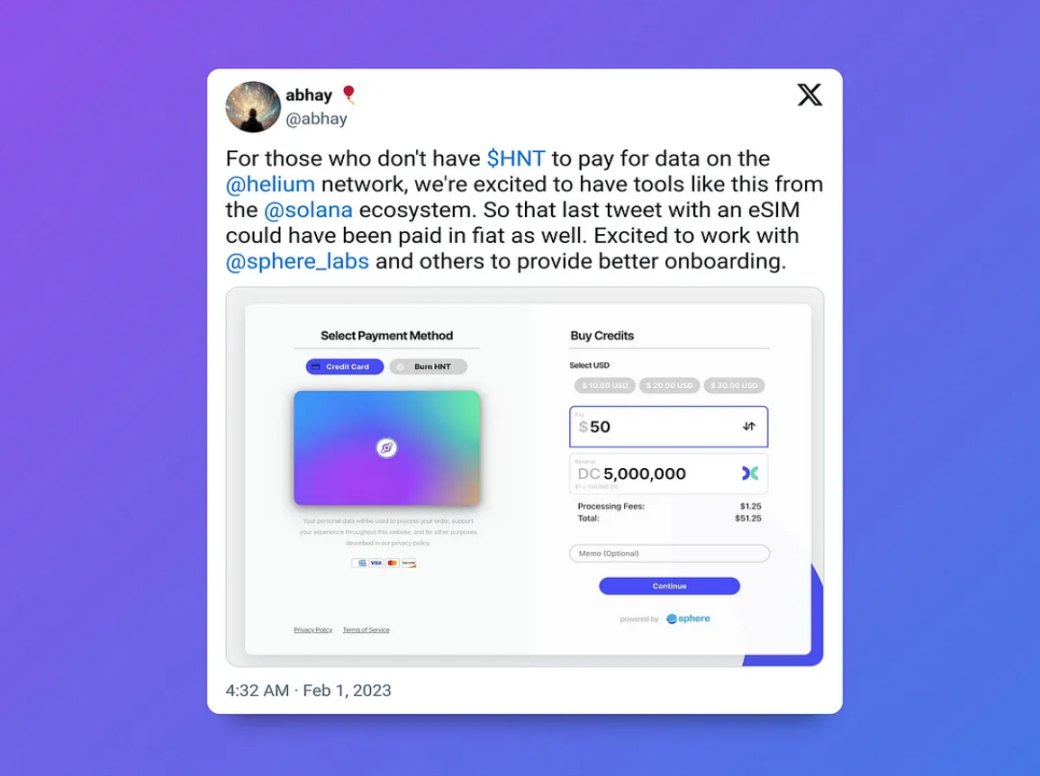
Solsplits: Solsplits is a composable standard for on-chain revenue splitting on Solana, providing pseudo-privacy mechanisms for contributors through contract flow income. It's worth noting that Solana has a rich ecosystem, including over 50 major on/off ramps, which are crucial payment infrastructure facilitating fiat-to-crypto conversions. GetCode could also be a valuable protocol for enabling scalable micro-payments in DePIN projects.
Token Standards: Token standards play a crucial role in the following areas:
a. Compressed NFTs: Solana is one of the few chains capable of mass NFT minting at very low cost (5 SOL or approximately $500) for example, minting nearly 1 million NFTs for each of its nearly 1 million hotspots was a highlight of Helium's shift to Solana. Additionally, other DePIN networks can use NFTs to represent contributors as they are an ideal mechanism for demonstrating ownership and distributing rewards on a large scale.
Furthermore, Metaplex has a set of other NFT standards, such as programmable NFTs, which can also allow DePIN participants to represent their nodes.
b. SPLToken Standard and Token Extensions: Token Extensions are the next-generation SPL (Solana Program Library) Token standard with advanced features such as confidential transfers, transfer hooks, transfer fees, non-transferable tokens, interest-bearing tokens, etc.
Oracles and Interoperability: Oracles are crucial sources of off-chain asset data. Solana has two main oracles—Pyth (licensed) and Switchboard (unlicensed)—which can be used to stream off-chain data (e.g., sensor data) to Solana for on-chain computation.
Considering the migration of DePIN projects from other chains, cross-chain message transfer protocols (such as Wormhole) have also played a crucial role in facilitating the migration of RNDRToken.
Additionally, Solana has a vibrant set of tools such as privacy (Elusiv and Light Protocol), DEXs (native token trading), multisig (Squads), and development tools (Helius).
6. Opportunities and Trends Forecast for Solana DePIN
More DePIN Areas: In the coming months, we will see more projects emerging in DePIN areas such as:
1) Clean Energy Infrastructure and Virtual Power Plants: Energy infrastructure is unpredictable due to the intermittent nature of energy sources like wind and solar, and batteries can mitigate this by storing excess energy for future use. As more batteries connect to the public energy grid, their effectiveness will increase. DePIN networks use token incentives to encourage households to deploy their batteries and aggregate them for future use. However, regulatory expenses in the energy sector may slow down and make experiments expensive. Projects like Daylight and Etheos are at the forefront of addressing these challenges—I expect them to integrate/migrate to Solana in 2024!
2) Advanced On-Chain Artificial Intelligence: While we are still far from this stage, ideas like verifiable zero-knowledge GPU clouds (currently expensive) make on-chain inference economically viable, something centralized providers cannot offer.
The entire LLM and neural network stack can be placed on decentralized infrastructure. Most of the generative AI movement, similar to cryptocurrencies, is open-source, making it conceptually feasible to deploy and maintain a large number of open-source models on decentralized computing load protocols. This approach also creates incentives to provide first-class machine intelligence services.
Using DePIN for AI agents like Olas. PIPIN (Points Incentivized Physical Infrastructure Network): Points are considered the most important innovation of this cycle, so why is DePIN lagging behind? This impact has become evident, with entities like Grass attracting 150,000 users primarily through points in a few months, even before launching a token. The advantage of points is their familiarity with web2 concepts like airline miles, which everyone can understand. For projects, in the early stages, points provide greater control, allowing fine-tuning of mechanisms before the eventual token release. Another related concept is gamification. Besides token incentives, providing proof of achievement for contributions and creating a pleasant experience is crucial for increasing engagement and contributions. For example, contributors to Hivemapper feel satisfied mapping streets and sometimes engage in this activity as a game (similar to Pokemon Go). Leaderboards can further enhance this gamified aspect. Platformization of DePIN networks: Major DePIN platforms on Solana are experiencing their platform moment: Helium as a platform has led to the emergence of two sub-DAOs and innovations using Helium for mobile cellular plans and DIMO. Render has attracted clients such as Octane video rendering and io.net. While this represents a long-term strategy, I expect all major DePIN projects to evolve into platforms to enable smaller DePIN projects to develop on them.
SVM-based Rollups/L1s for DePIN: While Solana is a highly scalable chain, it is likely that projects will develop specialized SVM forks specifically for DePIN, or DePIN projects may create their own versions. This approach will provide greater control, especially in regulatory compliance, while still leveraging existing SVM tools and developers. We have already seen two EVM/substrate chains specifically for DePIN, such as Peaq and IoTex. Additionally, one of the blue-chip DePIN projects, Dimo, is also building their chain using the Polygon CDK, demonstrating the demand for application chains.
However, newer DePIN projects may choose to deploy directly on Solana to save time and resources involved in maintaining L1.
Abstraction and Aggregation: As large DePIN networks solve supply-side issues, the focus will inevitably shift to the demand side. Clearly, most of the demand will come from mainstream users who may find DePIN protocols too complex. This means users may interact with Web2 frontends while being unaware of the underlying use of DePIN, with the backend handling all aspects of token purchase and destruction. For example, Helium's collaboration with T-Mobile demonstrates "aggregation" to enhance network coverage, while Helium Mobile serves as an "abstraction" of the Helium Protocol.
DePIN and Memecoins: Solana has recently become the preferred chain for Memecoins, thanks to its strong community and robust DEXs like Jupiter. While this may seem unusual, Memecoins have made important contributions to the adoption of DePIN:
The airdrop of $BONK, valued at over $600 at its peak, led to the sale of over 20,000 Solana Saga units.
Within the Memecoins community, MOBILE is considered a Memecoins, which also led to a significant price increase.
DePIN and DeFi: DeFi's momentum is stronger than ever, and considering that all DePIN projects have a token, they will start experimenting with more token integrations (e.g., integrating HNT into lending protocols like Marginfi). This will further increase the composability and additional income and speculation for token holders, increasing utility.
DePIN and the Integration of RWAs: DePIN networks are equipped with assets such as sensors, drones, and wearable devices, providing real-time, highly reliable data, while RWAs address their financing needs. The integration can pave the way for a new supply chain that integrates physical, financial, and legal elements, all supported by DePIN and RWAs.
A noteworthy initiative, Entheos, has made progress in the DePIN x RWA space by enabling investors to fund a decentralized physical infrastructure network (such as smart battery assets). The use of RWAs to provide hardware financing for DePIN is an area worth close attention!
Another interesting application of RWA x DePIN composability is seen in Baxus, which is a tokenized whiskey market that uses Helium devices to monitor whiskey temperature over time. Similarly, real estate projects like Liquidprop and Homebase can compensate Hivemapper contributors for recent property photos around the area.
DePIN as an Entry Point for Cryptocurrencies: For most DePIN projects, the supply mainly comes from non-crypto individuals and entities earning native crypto tokens on-chain. As Akshay BD said, "earning is a powerful niche" and is the best entry point for the next wave of users.
7. Conclusion: DePIN will build parallel infrastructure systems
In a world filled with unreliable institutions and ineffective bureaucracies, DePIN directly redistributes wealth and power to individuals and their communities. If you have confidence in crypto-economics, then DePIN should resonate with you as well. Of course, in its current state, DePIN does have a certain number of flaws. However, fields like DePIN and RWA promote bidirectional flow between crypto (synthetic) and real-world (physical) assets.
DePIN represents a bold bet to use crypto-economic incentives to solve real-world problems, and many believe it may even disrupt traditional infrastructure models. However, I believe DePIN will coexist with traditional infrastructure participants, as the latter have significant capital resources, established infrastructure and coverage, and better economic efficiencies. DePIN is likely to create a parallel system that complements rather than completely replaces existing infrastructure, providing last-mile coverage in cases where traditional entities may not be financially viable.
免责声明:本文章仅代表作者个人观点,不代表本平台的立场和观点。本文章仅供信息分享,不构成对任何人的任何投资建议。用户与作者之间的任何争议,与本平台无关。如网页中刊载的文章或图片涉及侵权,请提供相关的权利证明和身份证明发送邮件到support@aicoin.com,本平台相关工作人员将会进行核查。


