This article mainly focuses on two things: private order flow and Order Flow Auction (OFA).
Author: Jiawei, IOSG Ventures
Preface
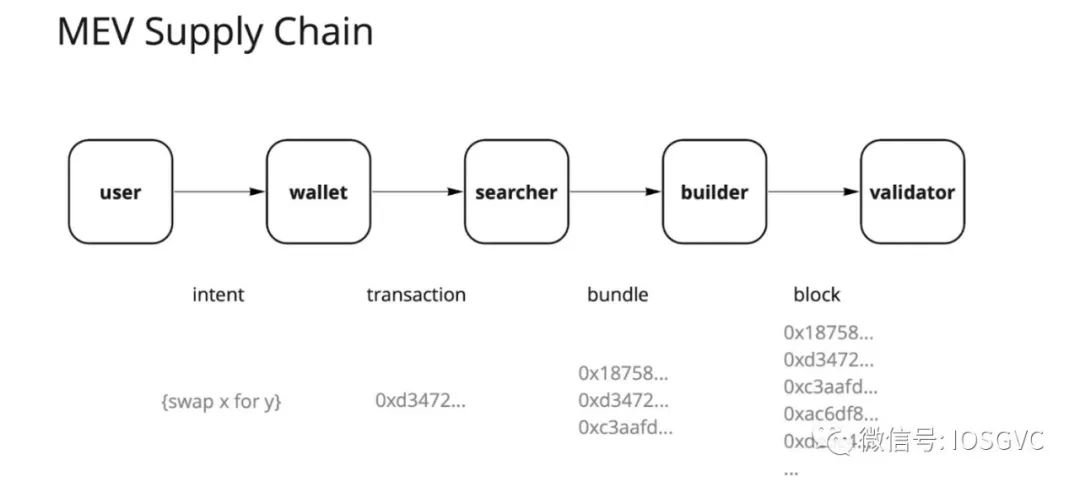
Source: Flashbots
I often use this picture when sharing the investment logic of Infra with others - it is interesting to look at different Infra projects from the perspective of the MEV supply chain (or transaction lifecycle).
Thanks to the relentless efforts of many researchers, we have transitioned from a few years ago MEV anti-utopia to a relatively clear supply chain, although there are still many challenges to be solved.
In the context of this supply chain, order flow plays a crucial role. If we compare the supply chain to a riverbed, then the order flow is the river flowing on it. In this article, we will elaborate on some key points of the order flow.
Orderflow…wat do?
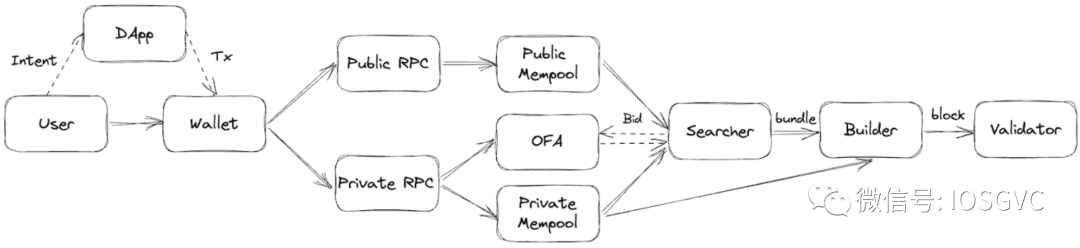
Source: IOSG Ventures
Quintus defines "order" as anything that can change the blockchain state in Ethereum. In simpler terms, we can also understand a transaction as an order. In the above picture, we attempt to depict the journey of the order flow on the supply chain. However, the actual situation may be like this…
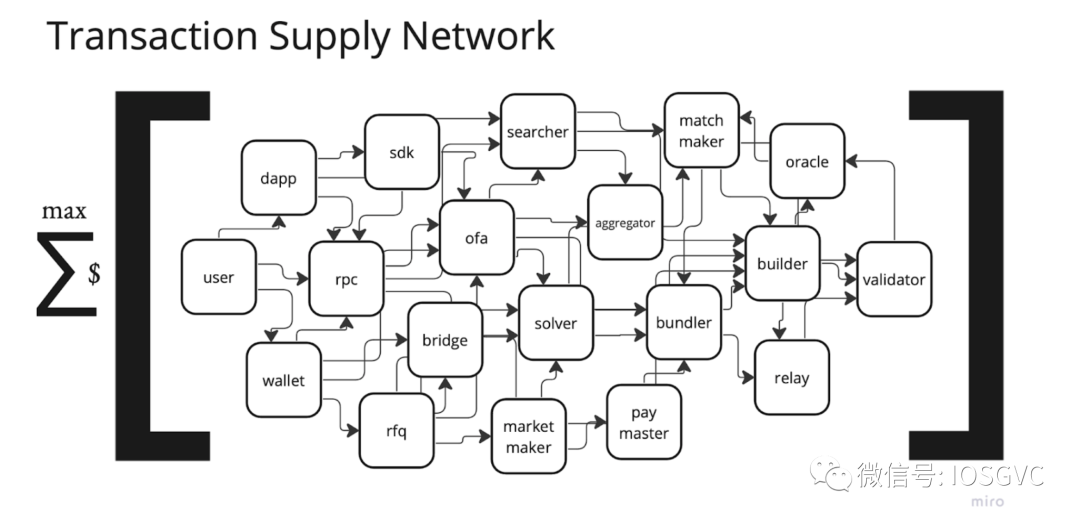
Source: Frontier
Of course, this article will not attempt to dissect all the details. The MEV supply chain has become very large and complex, and it is almost impossible to explain all the details in a short time. Therefore, in this article, we mainly focus on two things: private order flow and Order Flow Auction (OFA).
Private Orderflow Dominance
Public mempools will dry up… - Hasu
When talking about private order flow, we usually see two terms - private order flow and exclusive order flow. These two terms have semantic differences. For example, MEVBlocker bypasses the Public Mempool and directly sends the order flow to Top Builders. At this time, the order flow is private, but not exclusive to any Builder. In addition, OFA is often not "private" transactions, as people can subscribe to the order flow of OFA (although there may be permission controls) and observe the transactions in it. This is usually to maximize the competition between different roles in the auction.
The community has had many discussions about private order flow and how it has become a driving force for centralization.
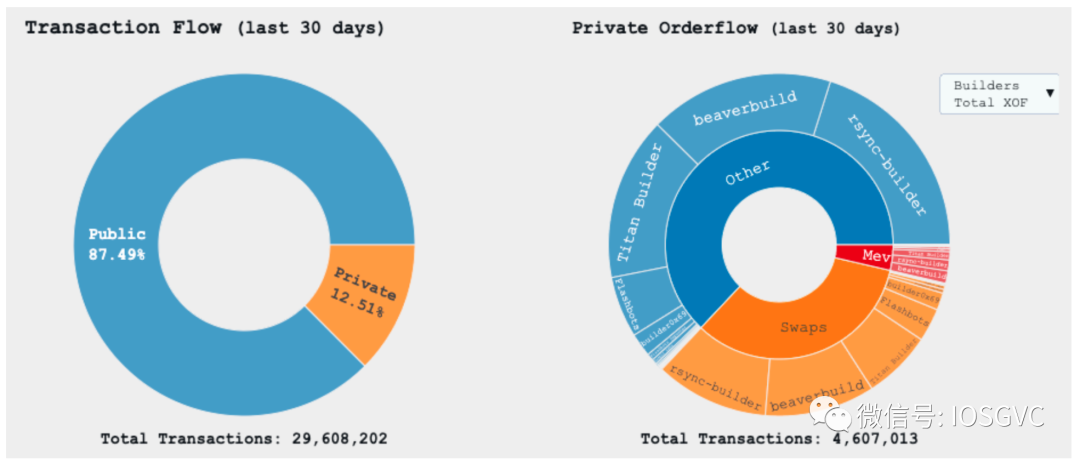
Source: IOSG Ventures
In the entire MEV supply chain, Builders are a fiercely competitive market. As the most basic means of production in block construction, the order flow naturally becomes a battleground. In this case, Builders usually provide various services to attract order flow from upstream:
- Transaction pre-confirmation: For example, Vitalik mentioned in his SBC 2022 speech that Builders can publicly declare that if a user sends a transaction with a Priority Fee greater than 5, the Builder will immediately send a message that can be enforced to commit to including this transaction; if the Priority Fee is greater than 8, the user can even get a Post-state Root. This is effective in some use cases that require competition for block space.
- Front-running protection, which is also the main selling point of most OFAs.
- Revert protection. If a Bundle fails or Reverts, the Builder will not include it (meaning the user does not need to pay Gas for the transaction). MEVBlocker's RPC endpoint provides this protection by sending the user's general transactions as a Bundle. Blocknative's data shows that only about 4.2% of private transactions revert on-chain, while about 13.8% of public transactions revert. This highlights the benefits of Revert protection.
Source: Danning Sui (@sui414)
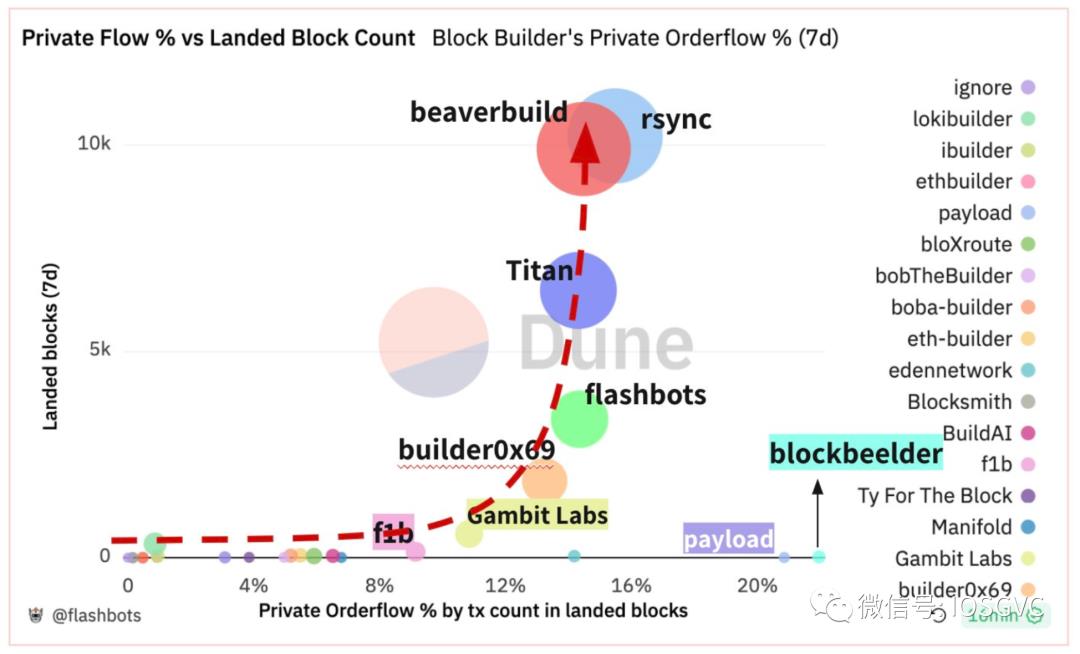
In the above picture, we can easily see the relationship between Landed Blocks and private order flow.
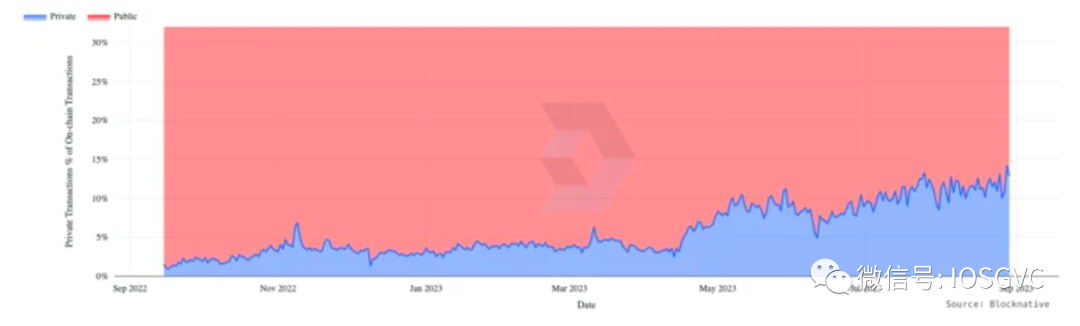
Source: Blocknative
Recently, many studies have shown that the problem of private order flow is worsening. Blocknative's data shows that the number of private transactions has grown from about 5% before the merger to about 15% now, meaning that currently 15% of Ethereum transactions are sent through private channels.
Basically, private order flow can be divided into Searcher Flow and User Flow.
Searcher Flow
- Atomic Flow
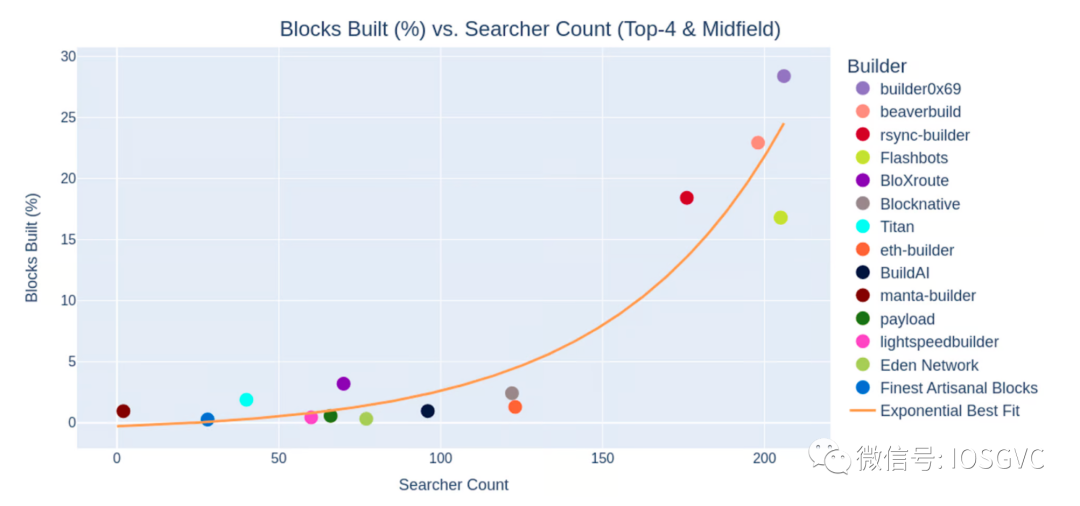
Source: Titan Builder
Atomic Flow refers to DEX-DEX arbitrage, sandwiching, and liquidation transactions.
Some time ago, Titan complained on Twitter that despite having a 15% market share and over 50,000 constructed blocks in 7 days, they still did not receive about 50% of the Searcher's order flow.
Titan's research indicates that the market share of Builders is positively correlated with the Searcher connected to them, and this correlation is often exponential.
- Non-atomic Flow
Non-atomic Flow refers to CEX-DEX arbitrage.
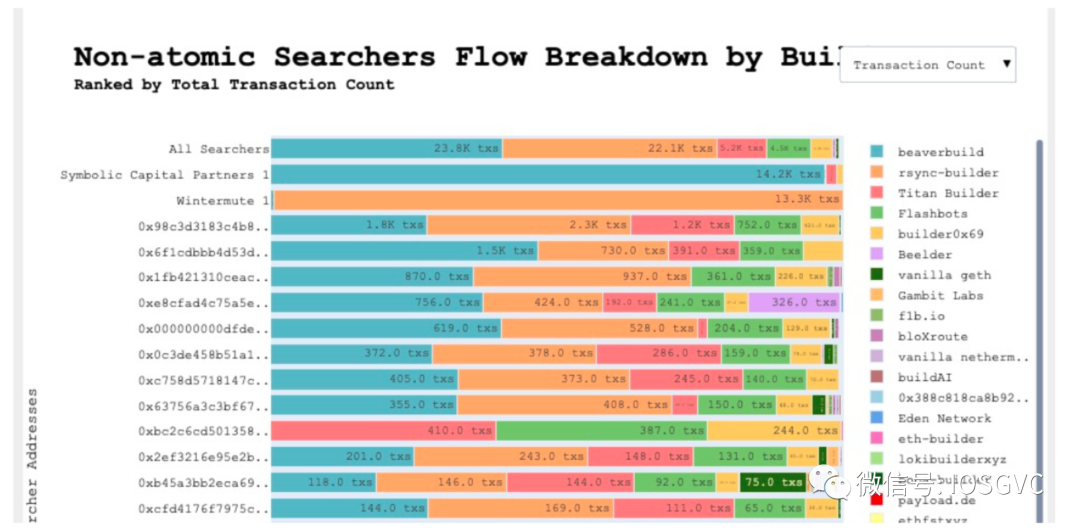
Source: searcherbuilder.pics
In the case of Atomic MEV, we can see that all Searchers basically submit their Bundles to the top three Builders. However, in the case of Non-atomic MEV, Titan, as one of the top three Builders, only has approximately 8.8% of the order flow share. The significant difference is evident in the above picture. This demonstrates the exclusive access to order flow from vertically integrated Searcher-builders.
Overall, the Inclusion Guarantee is the most important consideration for Searchers in deciding who to send their Bundle to. This depends on whether they believe the MEV opportunity they have discovered can be realized on-chain.
In addition, Searchers also face some trade-offs. If a Searcher submits the Bundle to all Builders, they can maximize the chances of their Bundle being included. However, Titan has indicated that this also comes with certain risks, such as Bundle being split and leakage of information about some tail strategies, and so on.
For Searcher Flow, most Searchers currently submit their Bundle to the Top Builder. When considering submitting the Bundle to Searcher-builders, potential conflicts of interest also need to be considered. Mid-field Builders currently hold about 16% of the market share, and it is also necessary to consider whether to send the Bundle to them.
- To mitigate EOF…
Exclusive order flow has a solution. - Stephane
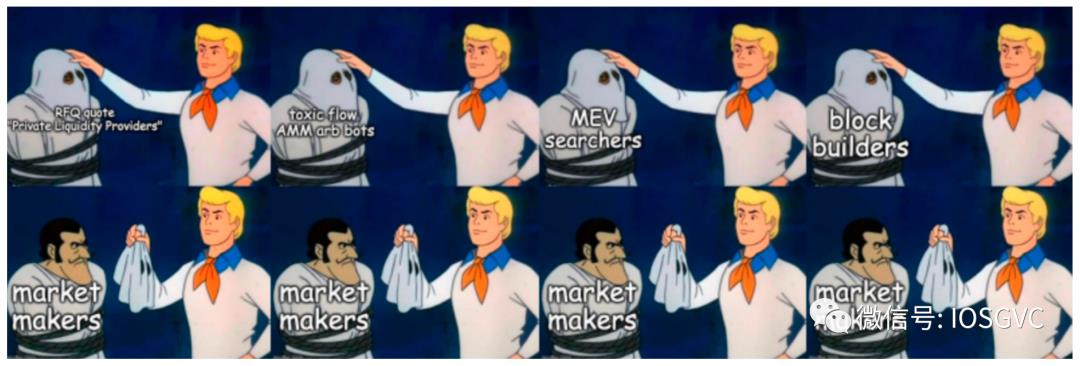
Quintus mentioned some solutions here.
- Neutrality of large infrastructure. Like the watchtower of Optimistic Rollup, the community needs to closely monitor the actions of large infrastructure. Under potential public pressure, we believe that Metamask and Infura will act cautiously. However, "relying on agents to do the right thing is not in the spirit of blockchain."
- Decentralized role of Builders. Vitalik shared his views at the SBC MEV Workshop. Jon later further explained in his article, discussing algorithms, resources, Builder services, and order flow. Indeed, distributed Builders can provide resistance to censorship and stronger trust guarantees compared to a single entity. However, to achieve specific goals, there are always trade-offs in technology. When it achieves one benefit, there are inevitably other aspects sacrificed, such as efficiency and low latency. Distributed Builders may indeed be a potential solution, but we believe that this solution is challenging to take a leading position in a competitive market. Especially in situations where all roles in the supply chain are extremely time-sensitive. Of course, this is the inevitable cost of achieving decentralization.
- Default settings. Upstream players need to have some flexibility in sending order flow, not just defaulting to the Top Builder, but also supporting and encouraging newcomers.
In terms of compliance, Alex mentioned in a tweet: Integrated Searcher-builders obtaining private order flow may inadvertently engage in insider trading. In traditional finance, using material non-public information (MNPI) for personal advantage in stock and securities trading is illegal.
Evan provided a detailed analysis of OFAC risks in the MEV supply chain in this article. For Builders, their OFAC risk is similar to that of Searchers. However, they need to more actively assess the order flow they receive and refuse to touch orders from specially designated nationals and blocked persons (SDN List).
Pay For Order Flow has always been controversial in traditional finance. In the crypto world, we believe that more compliance exploration is still needed.
User Flow
Currently, MEV flows through wallets, dApps, RPC, Searchers, Builders, and Validators, and users do not have much control over the MEV they generate.
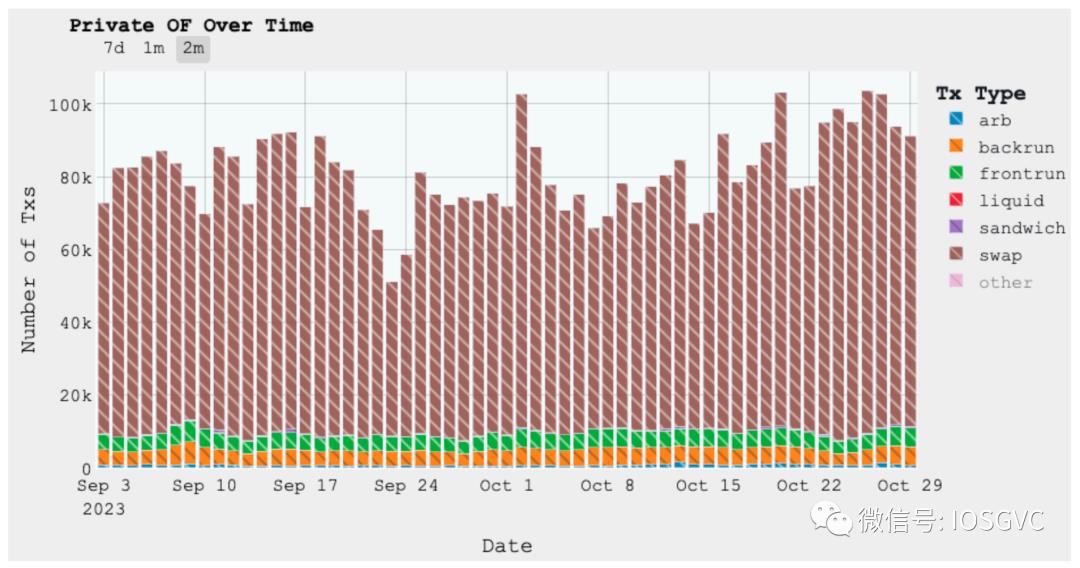
Source: mempool.pics
Frontier's research shows that over a six-month period, about 71% of payments to Validators came from transactions that included at least one Swap. In the above picture, we can also see that when we split private order flow by different types, Swaps still account for the vast majority compared to Atomic Searcher Flow.
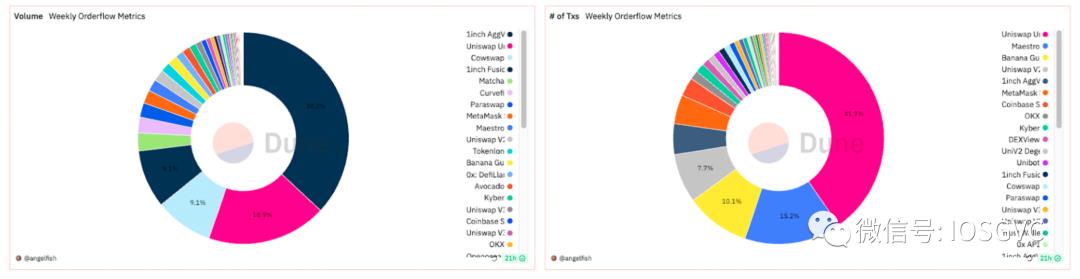
Source: Dune@angelfish
Angelfish's Dashboard shows that the main order flow still comes from DEX, such as 1inch and Uniswap. It is worth mentioning that vertical integrations such as Metamask Swap and Tokenlon (by imToken) also have a certain share.
In addition, the growth of Telegram Bots including Unibot, Maestro, and Banana Gun is also interesting. The main selling point of TG Bot is usability, wallet abstraction, and simplified interaction with dApps. They also provide features such as Front-running Protection and Revert Protection.
The traffic of these Bots in the order flow has significantly increased in the past few months. Maestro and bloXroute signed an exclusive agreement a few months ago, where all orders sent by Maestro flow through bloXroute's private RPC. Interestingly, Stephane (Frontier) and Vadym (Kolibrio) recently launched TG Bot Alfred, which has gained a lot of attention.
Telegram has a large user base. Although it is still early to say that Mass Adoption through TG Bot is feasible, we expect that through continuous iterations of TG Bot, many interesting things will appear in the order flow and will impact the entire supply chain.
Current State Summary of Orderflow Types
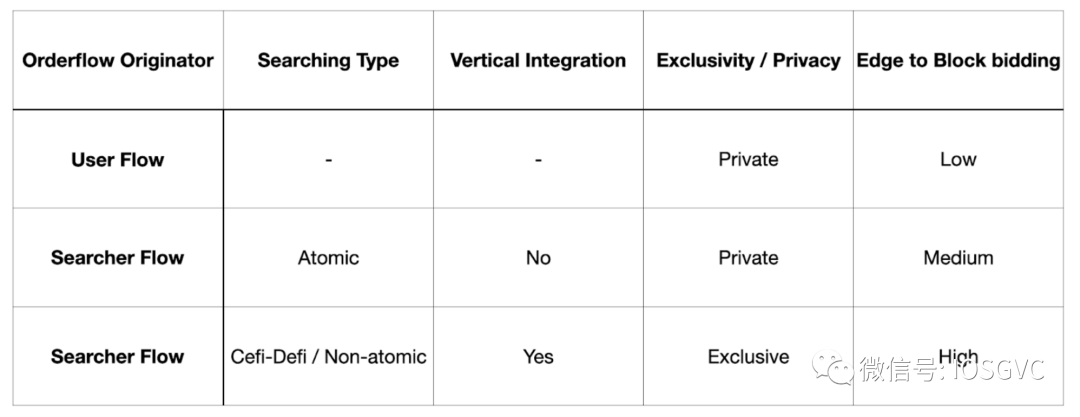
Source: Danning Sui (@sui414)
In summary, the above table shows the differences between different types of order flow.
As mentioned earlier, compared to Neutral Builders, Integrated Searcher-builders have a significant advantage in Non-atomic Searcher Flow. This is because they have exclusive access to internal order flow and can use the profits generated by their own Searcher to support the Builder and increase bids in auctions.
By consolidating their market share, they can also gain more Atomic Searcher Flow. On the other hand, Neutral Builders typically do not receive Non-atomic Searcher Flow, and smaller Atomic Searchers do not run their own Builders and have to submit their Bundle to everyone. In summary, various factors make Integrated Searcher-builders dominant in today's block construction market.
Orderflow Auction (OFA)
- Overview
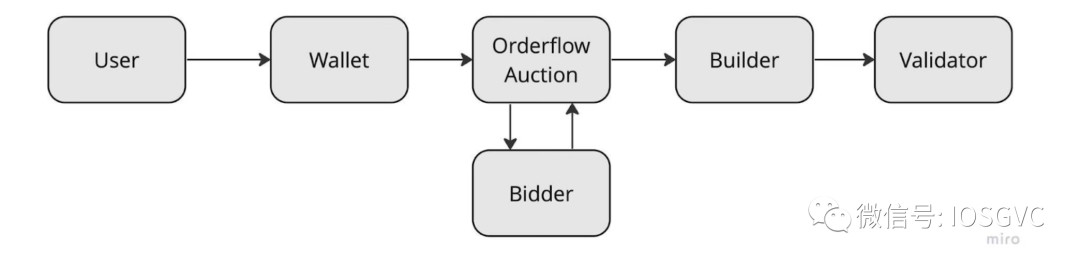
Source: Frontier Research
OFA is a method for achieving price discovery for order flow. It involves the interaction of buyers and sellers of order flow to determine the approximate pricing of order flow.
Frontier and Monoceros have provided quite detailed explanations of OFA, including design space, trade-offs, and more. Frontier's research has allowed us to think about the design of OFA from scratch. Many companies such as Kolibrio, DFlow, and others are actively exploring this area. In this section, we will not go into these details.
Source: Dune@cowprotocol
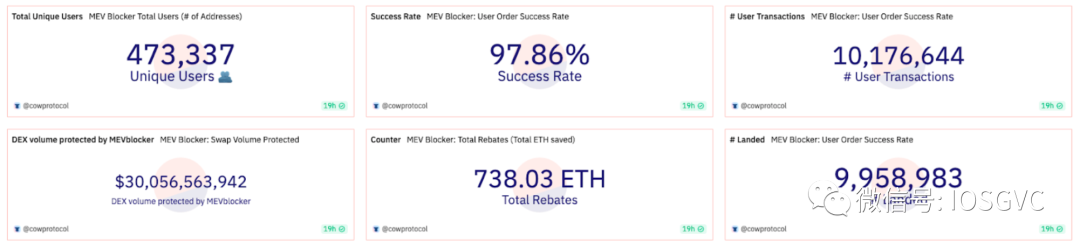
In terms of data, according to the MEV Blocker Dashboard, transactions through MEV Blocker account for approximately 3%-4% of all Ethereum transactions. There are about 470,000 users, generating a rebate of 738 ETH. Builder0x69 and Beaverbuild have returned the most rebates, both exceeding 200 ETH.
Currently, there are many OFAs in operation, actively engaging in business development with upstream players such as wallets.
Although OFA promises "comprehensive protection," Blair's article points out that private transactions with Front-running Protection do not necessarily mean better settlement or better execution speed compared to public transactions.
The article mentions that while OFA ensures that users' transactions are not affected by Front-running, it does not guarantee optimal execution, and users' transactions may still be unexpectedly affected by slippage.
The article also emphasizes that sending private transactions through "ethsendBundle" and "ethsendRawTransaction" is different. Bundles without MEV are not competitive compared to other Bundles, and this will cause Builders to perform additional and unnecessary simulations, potentially leading to worse execution speeds.
Finally, Blair mentioned the Observability Gap in current OFAs in a tweet. That is, as a user or wallet, how can one verify that the auctioneer and Builder are both honest? In this case study, they found that 19 different transactions from users could have received rebates, but were claimed by the Builder's Backrun bot. This reveals the Observability Gap that currently exists in OFA.
- Takeaways
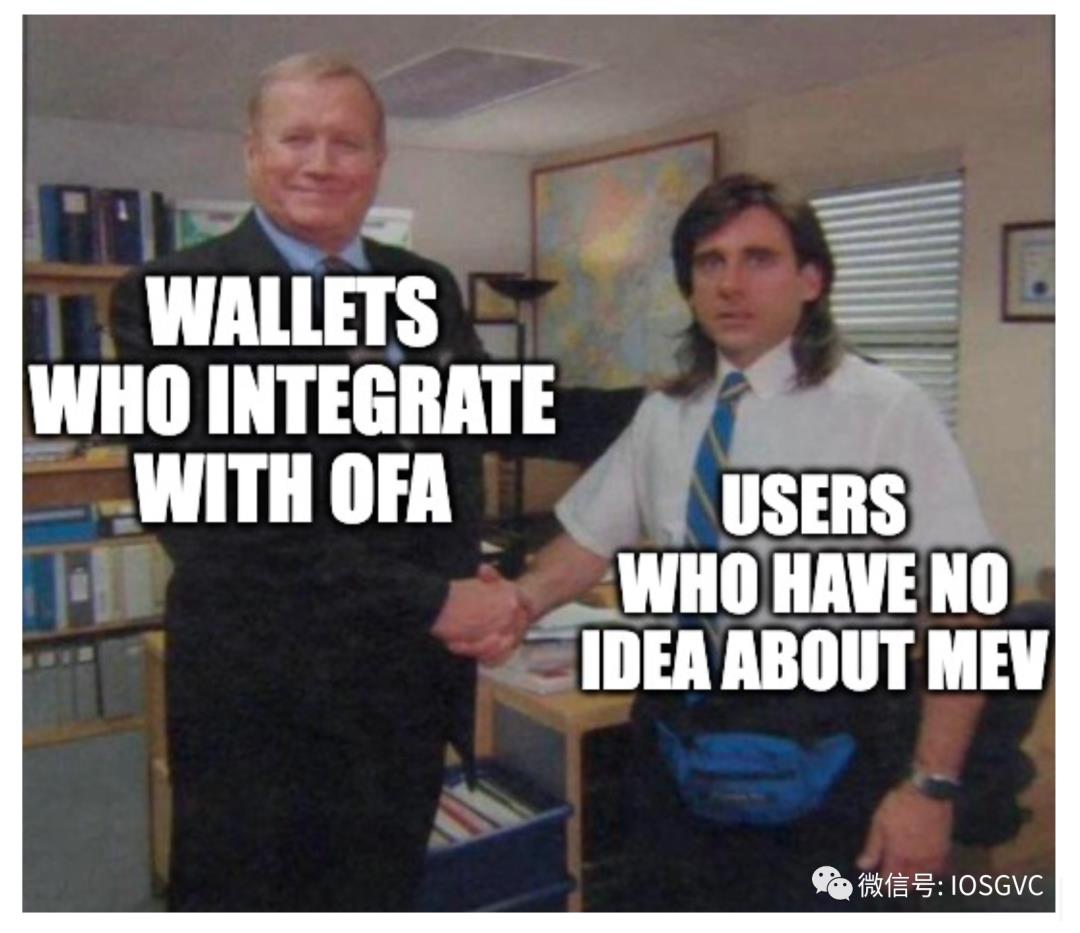
In this section, we will share the market situation observed in the Asia-Pacific region.
- Users
According to imToken's 2023 Crypto Wallet Report, 63% of respondents believe that trading on exchanges is more convenient or cheaper than trading in wallets. In addition, 38% of users believe that wallets are not as secure as exchanges because they are concerned about being hacked (29%) or losing cryptocurrency due to their own mistakes (18%).
This indicates that many users may still lack sufficient understanding of on-chain matters. Therefore, there is still a lot of work to be done in user education to make users voluntarily switch from the default RPC settings of wallets to OFA. People still have a lot of work to do in user education.
- Wallets
To adopt OFA, wallets may need to make decisions on behalf of users. Based on our conversations with wallets, we found that:
- Most wallets see OFA as a vitamin rather than a painkiller.
- Some wallets are not very clear about MEV and its potential impact.
- Some wallets believe that OFA is still in its early stages and lacks transparency. This lack of transparency is a key factor affecting their decision to integrate OFA, as they cannot assess the related risks behind it.
- Although some wallets recognize this as a monetization opportunity, integrating with OFA is still not their top priority. In fact, since its launch in April this year, the total rebate from MEV Blocker is only 783 ETH, which is not much for the overall wallet. For these wallets, the inclusion speed and success rate of transactions are more important than potential rebates.
- Overall, wallets tend to be optimistic but cautious—currently, they do not have a strong motivation to actively adopt OFA.
According to Chainalysis' The 2023 Geography of Cryptocurrency Report, countries in Central Asia and South Asia are leading in grassroots cryptocurrency adoption compared to most other countries. Based on our observations in the Asia-Pacific market, wallet adoption also tends to show geographical trends. For example, mobile wallets in the Asia-Pacific region usually timely support multi-chains and consumer applications, making them particularly suitable for the Southeast Asian market.
Therefore, with key infrastructure like Metamask remaining neutral, tail wallets focused on specific regions are more likely to be the first to adopt OFA than other wallets. This should be the primary focus of OFA platform expansion. In a market with multiple existing OFA competitors, competition in the wallet field will become extremely fierce.
OFA has various trade-offs in its design, and the main challenge is to convince upstream players in the supply chain to adopt this solution. Public education is certainly a slow and long-term process. Looking ahead, we believe that OFA will gradually be adopted and may account for more than 30% of all Ethereum transactions. Wallets play a crucial role in facilitating this transition. In this process, a cautious approach to centralized drivers is important.
Closing Thoughts
Source: Max Resnick (@MaxResnick1)
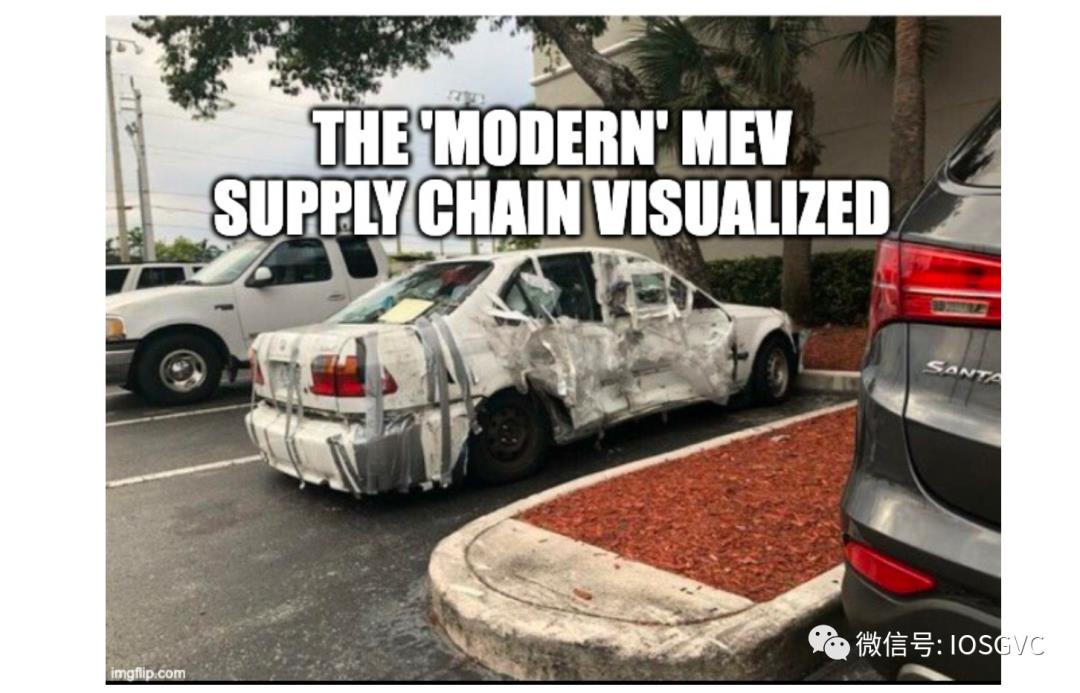
In community discussions, the centralization risks brought by large mining pools/validator pools have always been a concern. However, upstream in the supply chain, the centralized risks associated with order flow are even more covert. Large infrastructure entities, such as Metamask and Infura, need to be mindful of potential biases in their decision-making. Smaller infrastructure can engage in more cutting-edge exploration, promoting the expansion of the ecosystem.
In the future, we expect stakeholders to become more competitive in the order flow. Players upstream in the order flow will firmly grasp and gradually strengthen their pricing power. The emergence of OFA and TG Bot indicates that the entire infrastructure is continuously exploring the upstream of the supply chain. In this process, we also find that developers are increasingly focusing on user-oriented and MEV-aware design.
In the order flow, many challenges still need to be addressed. In the MEV Researchathon hosted by Flashbots, researchers proposed the creation of orderflow.pics. Recently, Toni released mempool.pics, a website displaying private order flow and participant statistics. Winnsterx also launched the Transparency Dashboard searcherbuilder.pics. More and more researchers and developers are paying attention to the development and future of the order flow, and are promoting the competitiveness, fairness, and censorship resistance of the supply chain. We will also be actively monitoring.
Stay tuned!
免责声明:本文章仅代表作者个人观点,不代表本平台的立场和观点。本文章仅供信息分享,不构成对任何人的任何投资建议。用户与作者之间的任何争议,与本平台无关。如网页中刊载的文章或图片涉及侵权,请提供相关的权利证明和身份证明发送邮件到support@aicoin.com,本平台相关工作人员将会进行核查。


